Respiratory Responses I - Ventilation, Ventilatory Thresholds
 Call Kai
 Learn
Learn Practice Test
 Spaced Repetition
 Match
Match Flashcards
 Knowt Play
1/28

Earn XP
Description and Tags
Semester 1, week 9
Name | Mastery | Learn | Test | Matching | Spaced | Call with Kai | Chat |
|---|
No analytics yet
Send a link to your students to track their progress
29 Terms
What are the two chemoreceptors involved in the mechanisms of respiratory regulation?
Central chemoreceptors
Peripheral chemoreceptors
What are central chemoreceptors?
They are stimulated by high CO2 in cerebrospinal fluid = rate and depth of breathing increases to remove excess CO2 from body
What are peripheral chemoreceptors?
Found in aortic bodies, carotid bodies = sensitive to blood PO2, PCO2, H+
What is the structure of the heart’s arteries and carotid bodies?
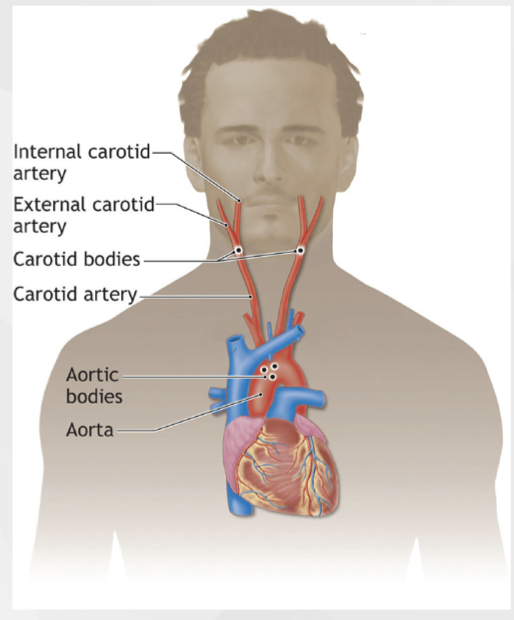
What do carotid and aortic bodies do?
These receptors alone protect the organism against reduced oxygen pressure in inspired air
Where are carotid and aortic bodies located?
They are located close to the heart as this is central and near the aorta which provides the whole body with blood
What happens to ventilation at altitude?
Increased ventilatory drive because ventilation is increased when PO2 decreases
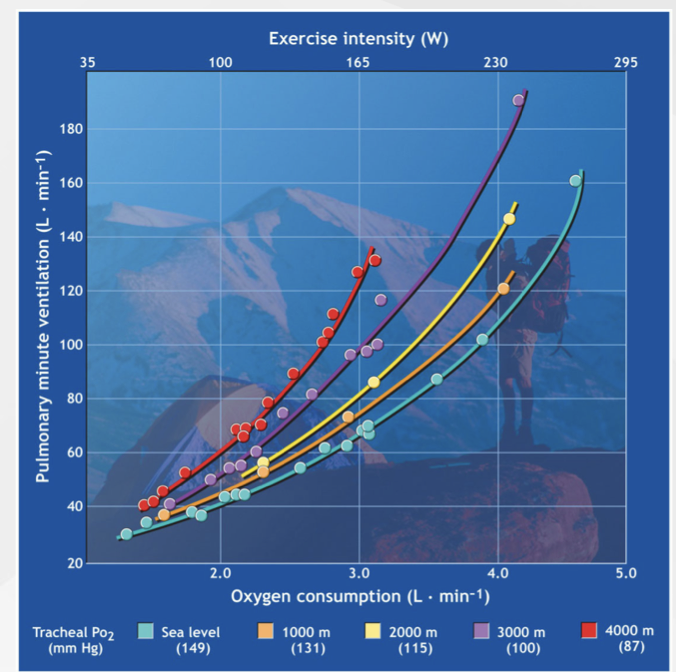
How is pulmonary ventilation regulated?
Body must maintain homeostatic balance of blood PO2, PCO2, and pH
Requires coordination between respiratory and cardiovascular systems
Coordination occurs via involuntary regulation of pulmonary ventilation
What is ventilation and acid-base balance?
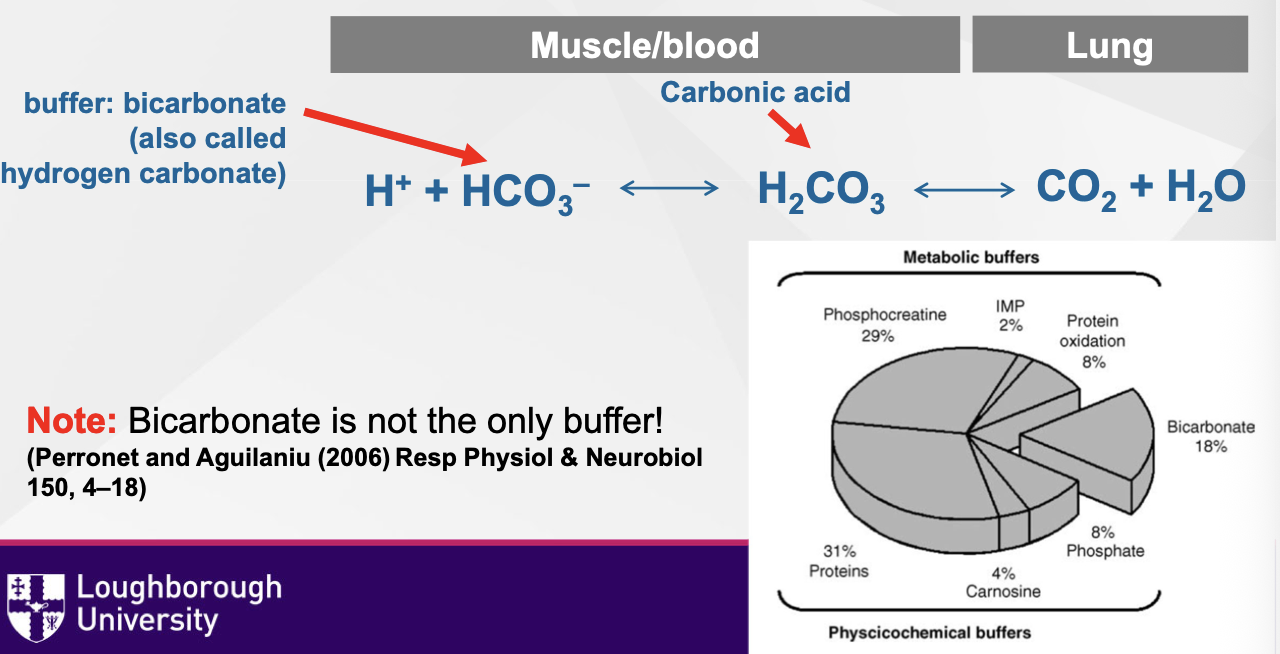
The harder the exercise, the more H+ (anaerobic metabolism)
Pulmonary ventilation can help remove H+ from blood
Increased ventilation results in CO2 exhalation = reduces PCO2 and H+ concentration (protons)(pH increase)
Decreased ventilation results in build-up of CO2 = increases blood PCO2 and H+ concentration (pH decrease)
What are ventilatory thresholds (VTs)?
The point during progressive exercise intensity when ventilation increases disproportionately to oyxgen consumption
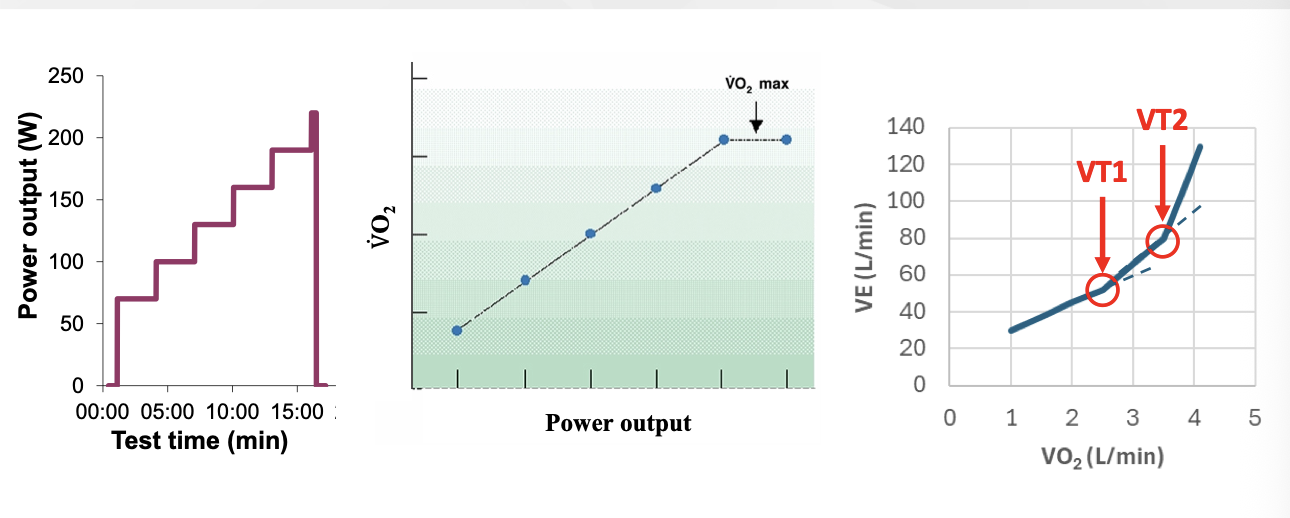
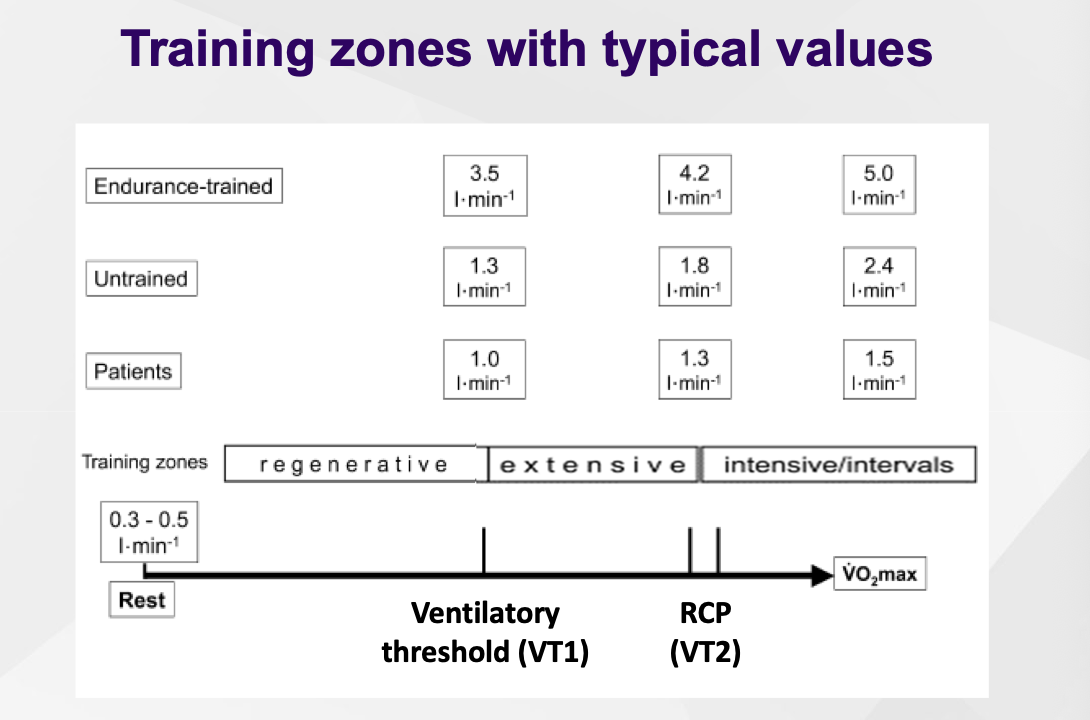
What is the aerobic ventilatory threshold (VT1)?
The intensity point during exercise where breathing begins to increase noticeably to compensate for rising metabolic byproducts
Determining the first ventilatory threshold (VT1) using the V-slope method involves identifying the point during an incremental exercise test where carbon dioxide production begins to increase faster than oxygen consumption, indicating the onset of lactic acid buffering
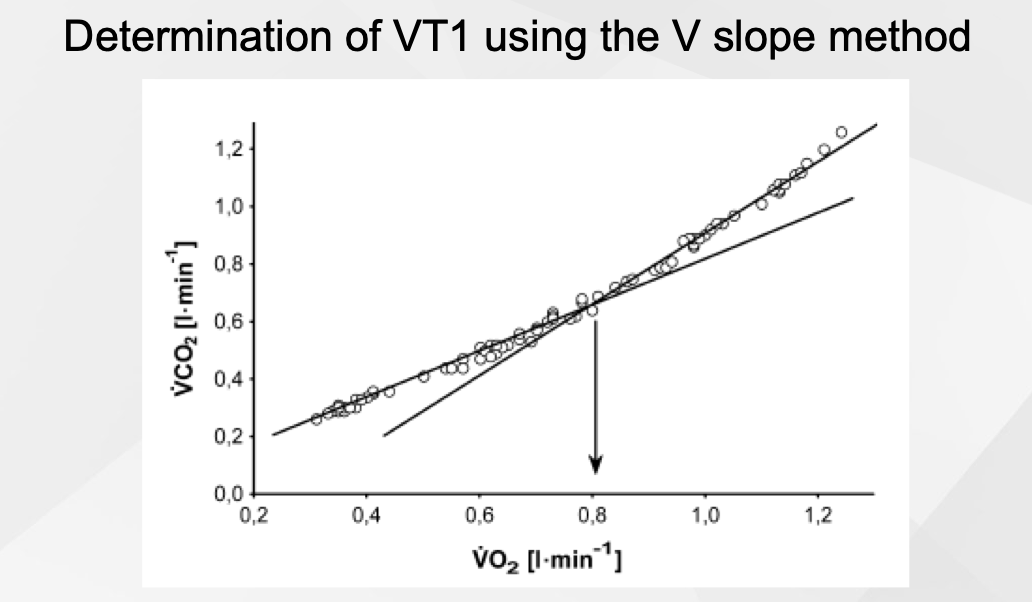
What is the disproportionate increase in ventilation during incremental exercise associated with?
Venous blood PCO2 increase which needs removing
What is the ventilatory equivalent for oxygen?
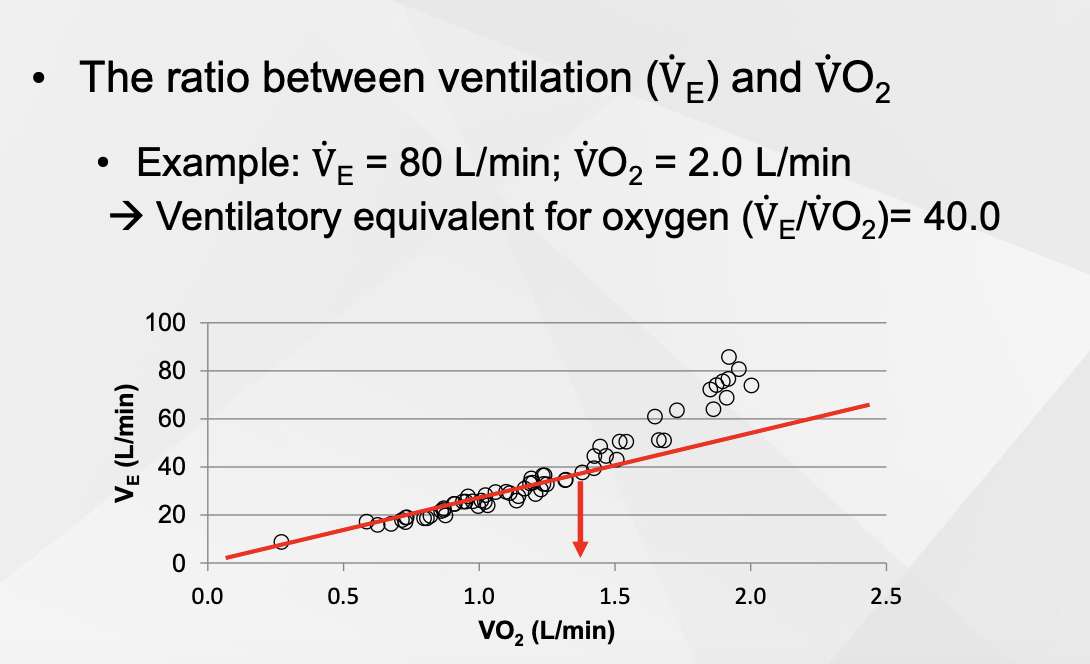
What happens to VE/VO2 over a wide range of submaximal intensities?
VE/VO2 remains relatively constant over a wide range of submaximal intensities and starts to increase at the aerobic threshold
Reason = oxygen demand keeps increasing linearly, whilst there is a break point in VE
Breath more to get CO2 out, not more oxygen in
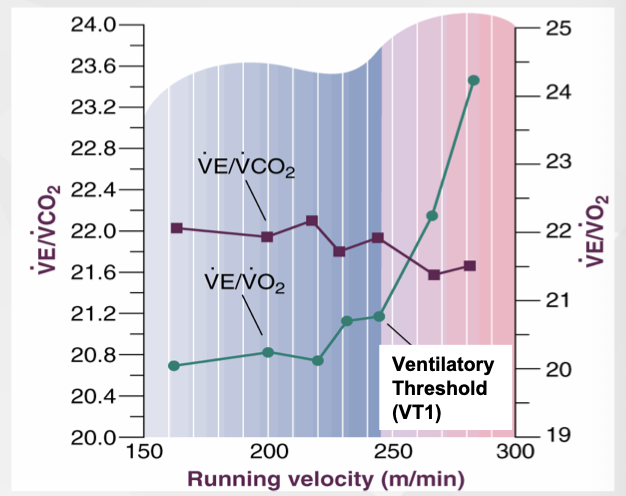
Where is the aerobic ventilatory threshold (VT1) found?
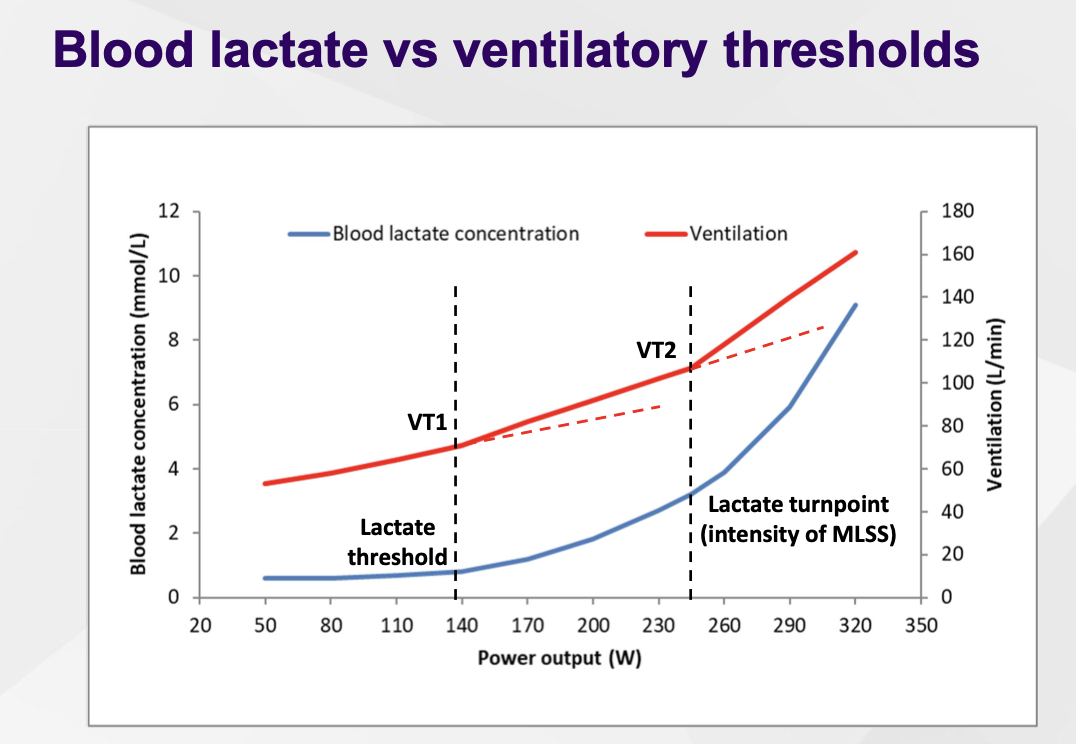
At approximately the same intensity lactate begins to accumulate in the blood because hydrogen ions are formed and buffered, the resulting CO2 needs to be blown off
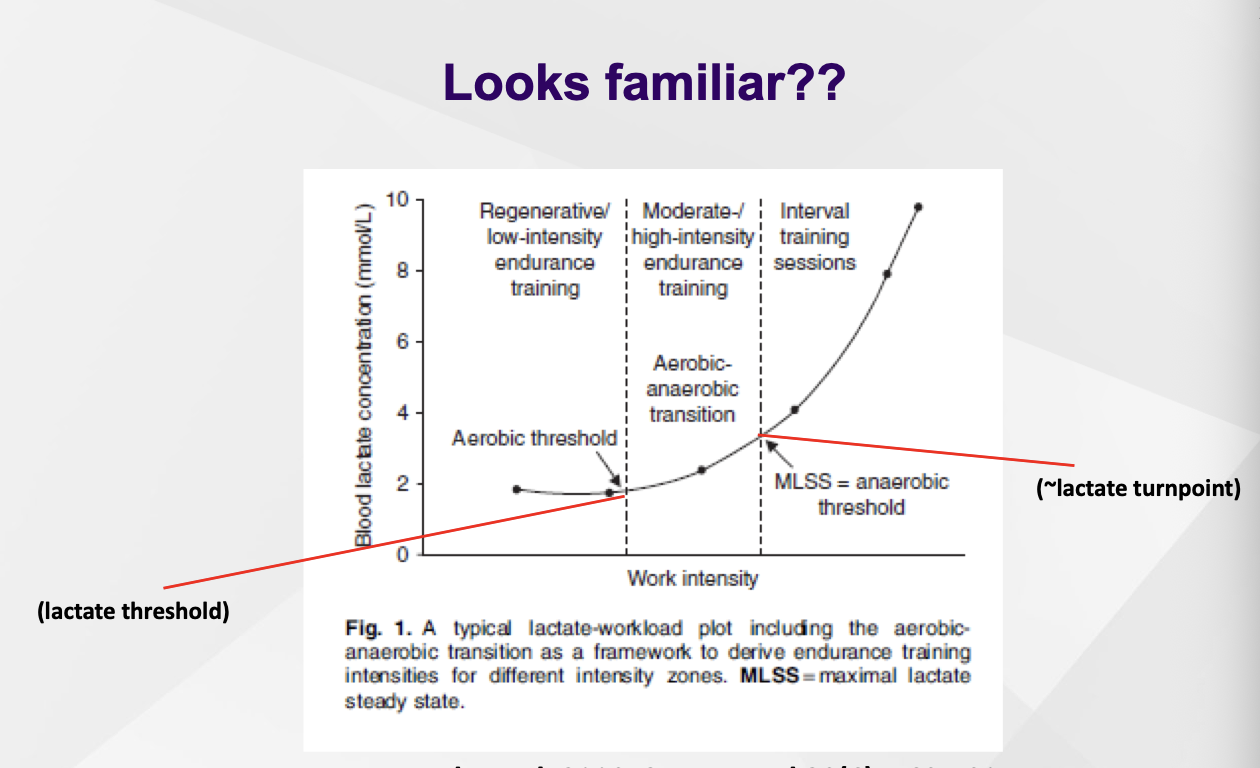
What is maximal lactate steady state?
MLSS is the highest intensity at which lactate production equals lactate removal
What happens at higher intensities?
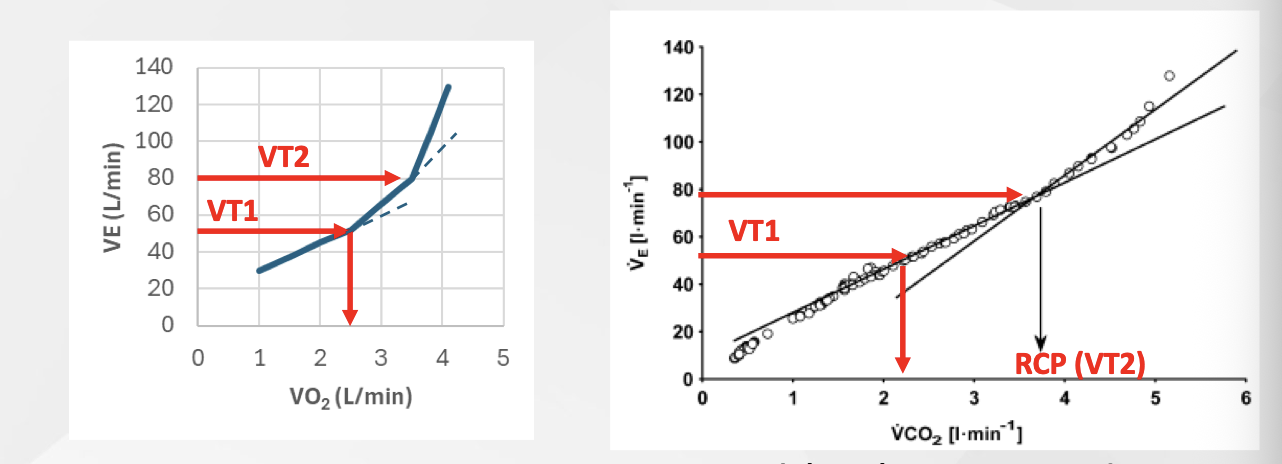
There is progressive lactate accumulation and enhanced CO2 production (H+ + HCO3- → CO2 + H2O) and ventilation is further increased
What is the respiratory compensation point?
Another break point in the ventilation curve
Up to RCP (RCP or VT2), ventilation increases linearly with CO2
After RCP, even more pronounced hyperventilation (lower CO2 output per litre of exhaled air)
Until eventually too much waste product and have to stop
What are the other mechanisms that result in increased ventilation during hard exercise?
CO2 accumulation may not be the main reason for increased ventilation at high exercise intensities:
Increase in core temperature
Potassium
Mechanical receptors in muscles
However, ventilatory thresholds may be affected by the above and may hence not occur at the same intensities as their "corresponding" lactate thresholds - indeed, there is controversy whether lactate and ventilatory thresholds are mechanically linked at all
How does blood lactate compare with the ventilatory thresholds?
The respiratory compensation point occurs at a similar intensity as the lactate turnpoint
What are the other names for aerobic ventilatory threshold?
Ventilatory threshold
Aerobic threshold
Aerobic gas exchange threshold
Ventilatory threshold 1 (VT1)
What are the other names for respiratory compensation point (RCP)?
Anaerobic ventilatory threshold
Anaerobic gas exchange threshold
Ventilatory threshold 2 (VT2)
What are the training zones with typical values?
Where is lactate threshold and lactate turnpoint on the exercise domains/work intensity graph?
What are the advantages of using ventilatory thresholds for training prescription?
Less invasive
No blood sampling required for lactate thresholds
What are the disadvantages of using ventilatory thresholds for training prescription?
Has to be done in a lab
Mouthpiece is uncomfortable, face mask is better but can also be uncomfortable/annoying (could cause hyperventilation)
More expensive than lactate testing equipment (breath by breath analysis)
Mask/mouthpiece may not be tolerated well by all participants
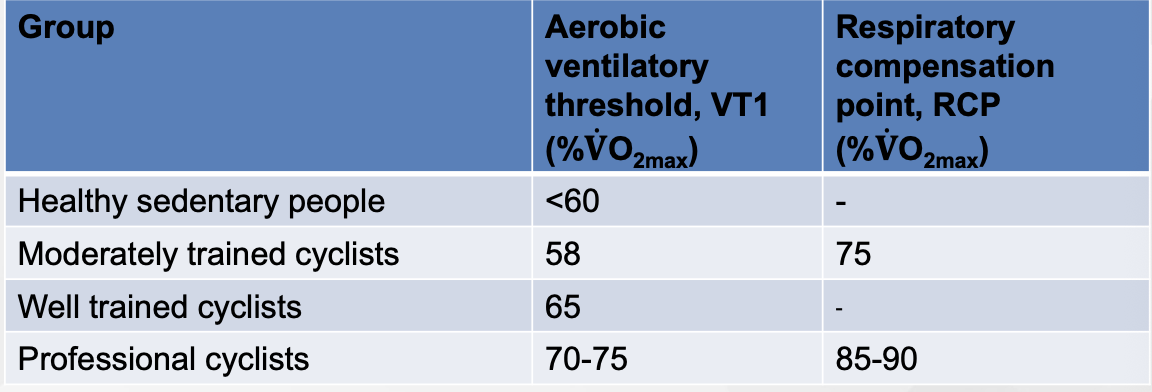
What are the effects of training on ventilatory thresholds?
The better trained, the higher the threshold
Will be closer to VO2max
Absolute threshold VO2 (in L/min) increases
Relative threshold VO2 (in %VO2max) increases
Are ventilatory thresholds used to track performance?
Yes. Similar to blood lactate thresholds, better predictors of performance than VO2max. VO2max may remain constant, whereas aerobic ventilatory threshold and RCP increase during season:
By ~8% (VT1) and 6% (RCP) in world class cyclists
By ~10% (VT1) in top-class endurance runners
What is a summary of ventilation and ventilatory thresholds?
CO2, H+ and O2 are all involved in regulating pulmonary ventilation
Higher exercise intensities result in a greater contribution of anaerobic metabolism and an increased formation of hydrogen ions that are buffered, increasing PCO2 (however some criticise this explanation)
Ventilatory thresholds are a result of hyperventilation occurring at higher exercise intensities, blowing off CO2
Exercise training results in ventilatory threshold and respiratory compensation point occurring at higher relative and absolute intensities