WAS3 image review
 Call Kai
 Learn
Learn Practice Test
 Spaced Repetition
 Match
Match Flashcards
 Knowt Play
1/30

There's no tags or description
Looks like no tags are added yet.
Name | Mastery | Learn | Test | Matching | Spaced | Call with Kai | Chat |
|---|
No analytics yet
Send a link to your students to track their progress
31 Terms
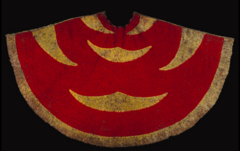
1. hawain
2.Ahu'ula
3. feathers and fibers
4. Hawaii
5. worn to mark high class/authority
6. power/rank
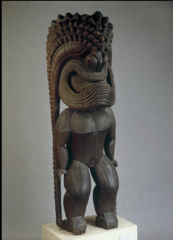
1. native Hawaiian
2. statue of the war god Kū
3. wood
4. Hawaii
5. statue used for worship
6. symbolizes strength, warfare, and divine power
1. cook island
2. staff god
3. wood paper bark and feathers
4. Māori
5. carried in religious rituals
6. represents a god

1. cook island
2. Tangaroa
3. wood
4. Māori
5. depiction of the sea god
6. believed to be brought on fishing trips for divine help

1. new zealand
2. TAPA
3. mulberry bark
4. Samoa
5. used in ceromancies worn as clothing and given as gifts
6. Represents Samoan cultural identity, status, and tradition; patterns can carry cultural meanings and connect the cloth to community and ancestry.

1. European made depicting the Marquesan
2. Tattooed Marquesan warrior
3. print on paper
4. Marquesas Islands
5. illustrative record of the Marquesan tattoos for Europeans
6. Shows the importance of tattooing as an expression of identity, status, and cultural affiliation in Marquesan society

1. Marquesas Islands
2. Wooden arm with tattoo designs
3. wood
4. Marquesan
5. Used as a model/reference for traditional Marquesan tattoo designs
6. Demonstrates the importance of tattooing as identity, status, and cultural expression in Marquesan society

1. European (depicting Māori)
2.Waka
3. print on paper
4. new zealand
5. shows canoe used for transportation, fishing, and warfare
6. documentation of Māori craftmanship

1. Māori
2. Pātaka (storehouse)
3. Wood and thatch
4. new zealand
5. used for storage elevated to prevent pest and theft
6. carvings often represented ancestors and spiritual power

1. Raharuhi Rukupo
2. Te Hau-ki-Tūranga
3. wood and thatch
4. New Zealand
5. Community meeting house used for gatherings, ceremonies, and receiving guests
6. has sybolism of Māori ancestry, genealogy, community, and spiritual identity.

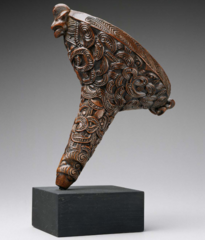
1. Māori
2. feeding funnel
3. wood
4. new zealand
5. used to feed people during sacred act like tatooing when solid food and feeding yourself isnt allowed
6. show Māori strict following of their spiritual laws
1. rapa Nui
2. Hoa Hakananaiʻa
3. stone
4. easter island
5. Ancestor figure used in religious and ceremonial contexts
6. represents the ancestors believed to hold their mana

1. rapa nui
2. dance paddle
3.wood
4. easter island
5. Used in dance and ceremonial performances
6. represent ancestors or spiritual beings

1. Abelam people
2. men's house
3. Wood, thatch, mud, and pigments
4. Papua New Guinea
5. space for men for meeting and rituals
6. has symbols of Papua New Guinea

1. Abelam
2. yam mask
3. Wood, pigments, and feathers
4. papua new guiea
5. Used in ceremonies associated with yam cultivation and harvest put on yams not people
6. shows devotion to harvest gods

1. Malanggan
2. Malangan Figure
3. Wood, pigments, and natural fibers
4. Papua New Guinea
5. Used in funerary ceremonies to honor and commemorate the dead
6. spiritual energy of the diseased transferred into it
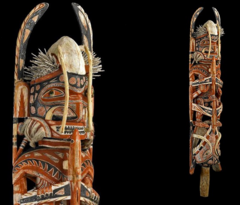
1. Vanuatu
2. Slit gongs
3, wood
4. Melanesia
5. Percussion instruments used for communication
6. open moth+ musical instrument = voice of the ancestors

1. Qing
2. Summer Chaofu
3. Silk, embroidery, gold thread
4. china
5. worn to show high rank
6. Represents rank, imperial authority, and the wearer's place within the Qing social hierarchy 5 toe dragon = power/authority.

1. Br. Giuseppe Castiglione
2. The Qianlong Emperor as Manjushri, the Bodhisattva of Wisdom
3. ink and gold on silk
4. qing
5. Portrait used to present the emperor in a religious and political context
6. emperor depicted as a buddha to show wisdom enlightenment establish authority

1. Ren Xiong
2. self portrait
3. ink and pigment on paper
4. qing
5. personal portrait
6. self-portrait balancing craft with expression

1. Katsushika Hokusai
2. The Great Wave off Kanagawa
3. woodcut print
4. edo japan
5. mass produce print for cosummers
6. Represents the power of nature and the contrast between human vulnerability and the enduring presence of Mount Fuji.

1. Andō Hiroshige
2. Plum Garden in Kameido
3. woodcut print
4. edo japan
5. mass produced print for consumers
6. Celebrates the beauty of nature and seasonal life in Edo japan

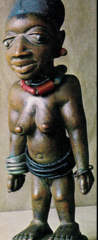
1. Yoru na
2. Ere Ibeji
3. wood
4. Nigeria
5. religious object for a deceased twin
6. shows spiritual well being of the deceased twin and show spiritual power of twins
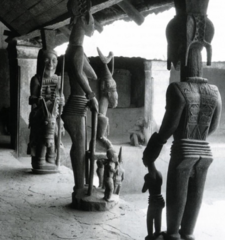
1. Olowe of Ise
2. Veranda Posts at the Ikere Palace
3. wood
4. nigeria
5. decorated support beams
6. represent ancestors and linage of authority
1. Nnanji Ndiama Obube Ulakwo
2. Mbari to Obiala
3. clay wood pigment natural materials
4. nigeria
5. shrine
6. represents multiple gods and links the community to the spirit world

1. mende
2. sowei mask
3. wood
4. Leone
5. women's ceremonial mask worn during dances after female "circumcision"
6. show female wisdom and idealized female form represents a baby for purity

1. Kongo
2. nkisi
3. wood nails spatial herb ssupplies/materials
4. democratic republic of congo
5. religious item of healing
6. represents healing power aka nkisi container holds spiritual herbs

1. kongo
2. kozo nkisi
3. wood nails blades and cloth
4. democratic republic of congo
5. religious item of order and justice
6. dog sniffs out justice nails are spiritual commitment to an agreement. two heads = living and dead or bush and city

1. Mousgoum
2. Teleuk
3. clay dirt grass and animal waste
4. chad
5. homes
6. shows traditional architecture

1. Bamum
2. mask
3. wood beads fiber
4. Cameroon
5. royal ceremonial mask worn on top of their head
6. Royal authority, prestige, and Bamum cultural identity

1. Bamum
2. Elephant Society Mask
3. wood copper beads and shells
4. Cameroon
5. warriors, and other elite mask worn on the face of members of the elephant society (consultants of the king)
6. Royal authority, prestige, and Bamum cultural identity
