NMAT Physics | Work & Energy
 Call Kai
 Learn
Learn Practice Test
 Spaced Repetition
 Match
Match Flashcards
 Knowt Play
1/18

There's no tags or description
Looks like no tags are added yet.
Name | Mastery | Learn | Test | Matching | Spaced | Call with Kai | Chat |
|---|
No analytics yet
Send a link to your students to track their progress
19 Terms
Work

A force (N) that causes an object to move
3 things needed
Force
Displacement
Direction
Unit: Joules (J)
Energy
Ability to do work
If something has energy, it can make something happen
Kinetic Energy
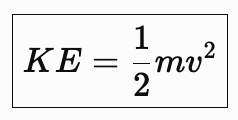
Energy of motion
If something is moving, then there’s KE
2 double the speed = 4x the energy
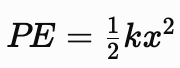
Potential Energy (PE)
Potential to move
Higher the object = more PE
Total Mechanical Energy
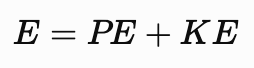
Stored energy + moving energy
Conservation of Energy
Energy cannot be created nor destroyed
What happens to KE, PE, and total energy when an object falls?
PE decreases, KE increases, total E stays the same
Work-energy Theorem
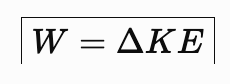
Doing work changes energy
Power
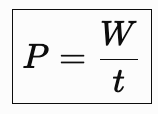
Answers how fast work is done; speed of doing work
Unit: Watts
Efficiency
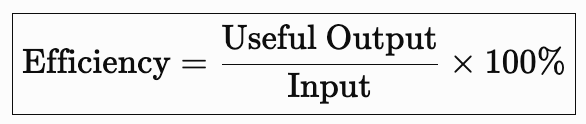
How much useful energy we have
Momentum
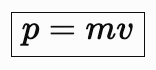
How hard is something to stop?
Impulse
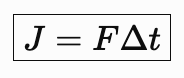
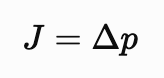
Factor that changes momentum
Collisions
Momentum is conserved where the energy before the action is equivalent to the energy after
ex: Pool balls where momentum transfers
Elastic collision

Momentum and KE is conserved
ex: Billiard balls
Inelastic Collision

Momentum is conserved but KE is not conserved
ex: Car crash; some of the energy becomes heat, sound, and deformation
Perfectly Inelastic Collision

Objects stick together after collision
ex: Football tackle
Conservative Forces
Mechanical energy is conserved
ex: Gravity, spring force
Non-conservative Forces
Some mechanical energy is converted into heat or sound
ex: Friction, air resistance
Hooke’s Law
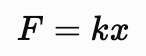
Force needed to stretch or compress a spring is directly proportional to the distance it moves
If it’s about the PE: