Plant microbiome below ground
 Studied by 0 people
 Call Kai
 Learn
Learn Practice Test
 Spaced Repetition
 Match
Match Flashcards
 Knowt Play
1/31

There's no tags or description
Looks like no tags are added yet.
Name | Mastery | Learn | Test | Matching | Spaced |
|---|
No study sessions yet.
32 Terms
Root microbiome
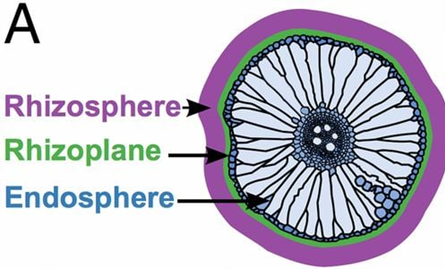
3 main compartments
Rhizosphere – the soil tightly attached to the roots
Rhizoplane – microbes physically attached to the surface of the root
Endosphere – all the microbes that live in the internal compartments (within and between cells)
Microbial filtering
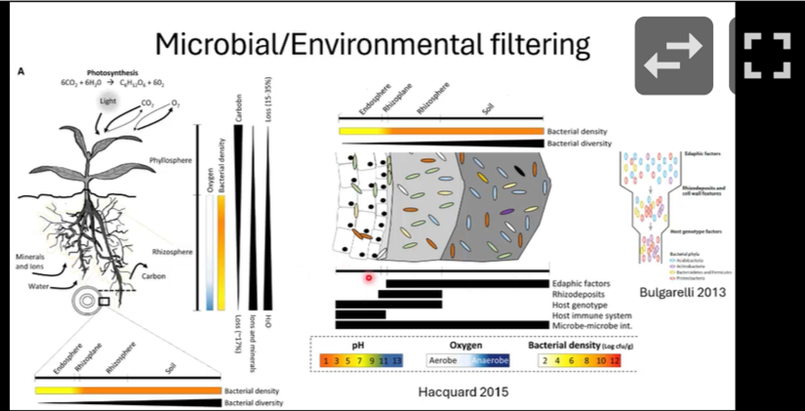
Plant will select subsets of microbes which survive in its environment
Factors that control the structure of the microbiome include:
edaphic factors (soil factors like pH)
rhizodeposits
host genome
host immune system
microbe-microbe interactions.
These factors have varying degrees of importance from the rhizophere through to the endosphere
Soil microbiome very diverse, only a small portion can survive in the rhizosphere, of those only a small portion can colonise the plant roots etc. With each level closer to the plant, you get increased selectivity of microorgansims
The rhizosphere
Hotspot of microbial activity
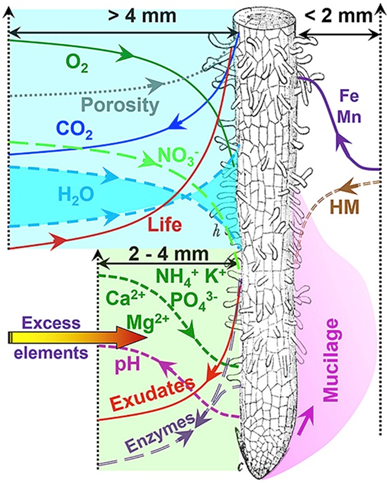
Includes soil 2mm from the root surface
Interface between the plant and the environment – lots of nutrient transfer
Some plants can release up to 40% of their photosynthetic carbon into this space
Plants are able to alter their rhizosphere depending on who they want to colonise their roots or what they need
Difficult to define as its made up of lots of gradients, which makes it difficult to standardise across studies
E,g: as you move closer to the roots, you change oxygen concentration, the influence of different exudates present etc.
components of the rhizosphere: rhizodeposits
Term which includes anything a plant does to alter its rhizosphere
Includes:
Sloughed off root cap and border cells – acts as a lubricant to help cells move through
Mucilage
Exudates – carbons pumped out to feed microbes
Enzymes – pick up plants own nutrients
Other forms of carbon exchange:
Volatiles – released when plants are attacked and used to signal to other plants that there are predators nearby
Symbioses
Cell death – carbon sequestered into soil
rhizodeposits: carbon excahnges
Carbon exchanges
Typically categorised in 2 broad groups of ways of releasing carbon
Active
Usually secretions
High Mw
Passive
Usually occurs via diffusion (can be passive or facilitated)
Low molecular weight
Rhizodeposits: Exudates
Exudates are typically categorised into high molecular weight like mucilage and low Mw like the rest of them.
High molecular weight exudates - mucilage
High molecular weight and active secretion
Functions:
Lubrication for a growing root
Reduces dessication
Soil aggregation – alters water and oxygen dynamics
Can help keep moisture gradient in drought
Certain types of roots house nitrogen fixers
Can help with microbial defence – traps pathogens
Low molecular weight exudates
Hundreds of low Mw carbon compounds
High diversity
Chemical fingerprint of the plant – use it figure out the species, lifestage, stress state etc.
Generally grouped into organic acids, amino acids, proteins, sugars and phenolics (free and bound to lignins)
Exudate function:
Nutrient acquisition
Antagonism/allelopathy – carbon compound that is toxic for other organisms
Microbial attraction
Allows for resource partitioning
Each plant has a chemical fingerprint, things that influence this includes:
Breeding
Plant genotype
Theories on why exudates exist: could be excess carbon but most likely has a role in shaping the symbioses
Physiological role of exudates
Exudates as a defence – some of the physiological roles of exudates
Mucilage – physically traps pathogens
Phytoalexins – compounds that plants release in response to infection
Phytoanticipins – compounds that plants release all the time that act as antimicrobial peptides, such as benzoxanoids (nitrogen containing compounds)
Phenolics – including flavonoids and phenylpropanoids
Terpenoids
Microbial attraction – chemotaxis
Exudates allows for chemotaxis to occur – recruitment of microorganisms through chemical gradients
Bacteria localise to the root tips where the most exudates are
Exudates: phenolics
Phenolics are antimicrobial but specialised slow growing microbes consume these phenolics – these microbes called oligotrophic
Some phenolics, such as caffeic acid, are very inhibitory – each phenolic has a different role
Some of them can cause an increase in respiration in microbes, some of them cause a decrease in respiration in microbes
Example of changes in exudate profile
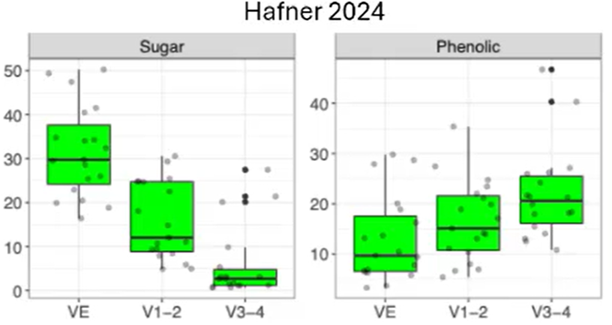
Correlation between sugars and phenolics
In the emergent stage the root is flooded with sugars but as it grows, levels of sugars decrease as instead of forming the rhizosphere the plant is focused on maintaining the rhizosphere
how do we study exudates
In the lab
Put plant roots in a hydroponic solution and they release their exudates
Can analyse these using mass spec, liquid chromatography
In the field
Dig up the root of tress and place them in syringes containing solution
Can now analyse solution using same techniques
function of the rhizosphere
Physically structures the abiotic environment which alters the biotic environment.
See a different chemical profile depending on the life stage of the plant – this environment that the plant generates controls which bacteria can survive – how they shape the rhizosphere.
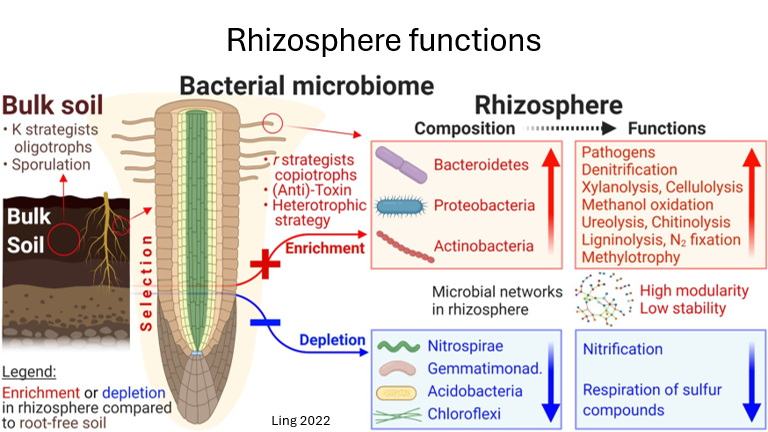
Typical rhizosphere composition
Microbes enriched: r strategists which are copiotrophs (fast growing organisms with high turnover rate.
depleted microbes: nitrogen fixing bacteria
enriched bacteria:
Bacteroidetes
actinobacteria
proteobacteria
depleted bacteria
nitrospira
acidobacteria
chloroflexi
Common functions:
denitrification
nitrogen fixation
urolysis
chitinolysis
decreased functions:
nitrification
respiration of sulphur compounds
the rhizoplane
Tightly attached microbes to the surface of the root itself
Selective as microbes have to be able to survive and colonise the root morphology —> limitation of space forces microbes to compete
Now we have difficulties occurring with the plant immune system and the presence of:
PRRS
PAMPs
Flagellin proteins – lots of bacteria have flagella but not all flagellin proteins will set off the plants immune system, quite a high degree of sensitivity
root endosphere
Internal environment of the root itself, made up of endophytes
Problems associated with the plant immune system
Contamination makes it difficult to study – usually when you want to study the endosphere crush up the root and do 16SRNA amplification using PCR to identify colonisers. But chloroplasts and mitochondria also carry 16SRNA genes which contaminate your sample
Internal microbes
Can colonise intercellular and intracellular spaces
Require specialised genes
Usually have an enrichment of polymer-degrading enzymes (cellulases and pectinases for example)
Also often have secretion systems
Plant associated taxa in the endosphere
Lots of commensals
Plant growth promoting rhizobacteria (PGPR) – umbrella term for microbes that help the host grow
Mycorrhizal fungi
Pathogens
plant-microbiome interactions
Microbiomes have a lot of control around plant health physiology, can:
Alter root structure
Alter plant immune responses
Impact plant nutrition
Reduce abiotic stress
Alter plat nutrient status
Examples:
Auxin (indole 3 acetic acid) – microbes produce or degrade auxin to influence growth pathways
Jasmonic acid and salycilic acid – growth hormones important for tsress signalling and immunity. Microbes can inhibit the production or produce more of it.
Ethylene – important for stress responses in drought. ACC oxidase or ACC deaminase can increase or decrease ethylene levels.
Giberellins – growth hormones which can be produced by some microbes
Nutrient availability of phosphorous, nitrogen, potassium and iron
Specific example: example of pseudomonas syringae manipulating signaling
Produces phytotoxin coronatine (mimics jasmonic acid) which supresses siacylic acid defence signalling
By manipulating salicylic acid pathway means that it can manipulate the host immune system to be less effective
Does this by stiulating auxin production and using a T3SS promotes lateral root formation, which allows the bacteria to invade more easily.
collecting the microbiome
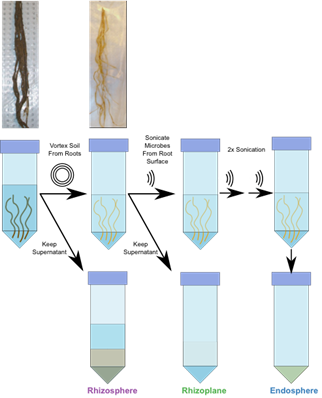
To extract the rhizosphere – dig up the roots, shake the roots and vortex the solution
Rhizoplane – requires sonication of the clean roots which helps the helps the bacteria attached to the roots detach
Root endosphere – use the whole sonicated, cleaned root and crush it up to extract the DNA. Can then vortex this to create a pellet
plant symbioses
Not just one interaction, involves 3 different types of interaction:
Mutualism – both organisms behefit
Commensalism – one benefits, the other is unaffected
Parasitism – one organism benefits, the other is negatively affected
most common plant mututalisms are
mycorrhizal fungi
legume forming bacteria
mycorrhizal fungi
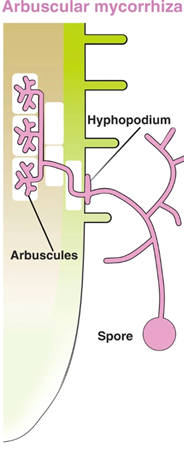
Invade and create arbuscules inside the plant which allows for nutrient exchange
Mutualistic relationship with plants
Extension of the root system – allow a greater SA to reach nutrients
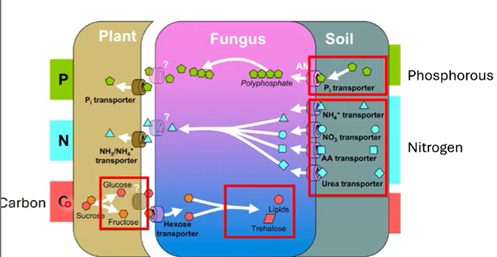
Exchange P and N for carbon
Can improve plant stress tolerance as well as water access
99% of all plants form this relationship – plants that don’t do this are abnormal
Evolved around 400-500mya
Vital for this territorialisation of plants
4-20% of the photosynthetic carbon is transferred to the fungus in the form of sugars and lipids, in exchange the fungi exchange phosphorus and nitrogen
mycorrhizal groups
Endomycorhhizal fungi
Arbuscular mycorrhizal fungi
Ericoidmycorrhizal fungi
Orchid mycorrhizal fungi
Ectomycorrhizal fungi
Ectendomycorhizal fungi
Arbutoid mycorrhizal fungi
Endomycorhhizal fungi
Arbuscular mycorrhizal fungi
Ericoidmycorrhizal fungi
Orchid mycorrhizal fungi
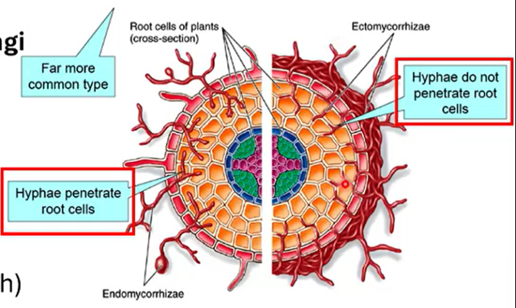
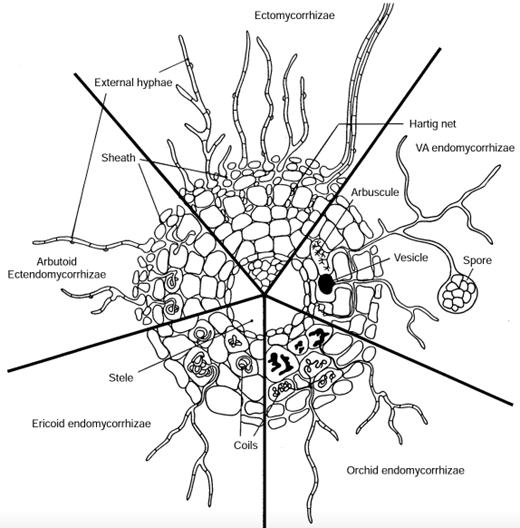
Key interaction structures are arbuscules inside the cells of the roots
80% of plants have this type of fungi
Vital for territorialisation alongside other fungi, mucoromycota
Obligate – fungus cannot get carbon from anywhere else – requires carbon from the pant
Invade the cell but plant cell wraps a membrane around the arbuscules so they don’t enter the cytosplasm
Endomycorhhizal fungi
Arbuscular mycorrhizal fungi
Ericoidmycorrhizal fungi
Orchid mycorrhizal fungi
Primarily ascomycota and some basidiomycota
Associated with Ericaceae species (blueberries)
Acidic and infertile soils
Produce coils inside of the cells
Some of them can also form ectomycorrhizal associations
Can still pick up carbon themselves due to degradation genes
obligate interaction
Endomycorhhizal fungi
Arbuscular mycorrhizal fungi
Ericoidmycorrhizal fungi
Orchid mycorrhizal fungi
Primarily restricted to the Basidiomycota (specifically Agaricomyces)
Associated with orchids – orchids are partially mycoheterotrophic which means that it relies on the fungus to feed it in certain parts of its lifecycle. For an orchid seed to germinate it must associate with this fungi.
Produce coils as their interaction structure
Retain more degradation genes than ectomycorrhizal fungi
coils
are the interaction structures for ericoid and orchid mycorrhizal fungi
Orchid seeds may absorb carbon from hyphae, forming coils inside the cell
Coils are degrade and release the nutrients into the host
stimulating this interaction
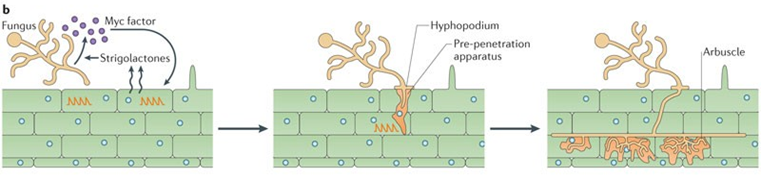
When plants are phosphorous starved, they produce strigalactones
Fungal spores sense the striga lactones using lipochitooligosaccaride mycorrhizal factor (Myc factor) which cause them to germinate and colonise the host
Causes this calcium spike known as common symbiosis pathway
Fungus invade into the root and cause the production of arbuscules
So obligate that the fungi don’t even produce its own lipids for growth (E.g: beta monoacylglycerol is a lipid required for fungal growth but can’t be produced by the fungi)
Ectomycorrizal fungi
Not restricted to one taxonomic group, can be ascomycota or basidiomycota
Does not penetrate into the cell itself – intercellularly
Particularly associate with temperate trees due to nitrogen acquisition – as plants move further north theres less of a phosporous depletion and more depleted in nitrogen
Key features are mantle and Hartig net
Mantle is a fungus layer covering the entire surface of the root. Exudates and water have to pass through this mantle
Hartig net is the fungus that forms between cells
Still have the genes and the enzymes to degrade soil organic matter so are not obligate
Can produce fruiting bodies – mushrooms
Ectendomycotizal fungi: Arbutoid
Basidiomycota
Associate with a subset of plant species within the Ericaceae species
Form this mantle but can also go inside the cells (aspects of both)
Other groups: Monotropoid
Basidiomycota
Also associate with the Ericaceae
Associate with plants without chlorophyll
Key characteristics include the Hartig net and fungal peg
No penetration into the cytoplasm
Mycoheterotrophy – as these plants don’t photosynthesise, they acquire carbon from the fungi
comparing interaction structures
root traits and mycorrhizal fungi
Nice relationship between root traits and microbiome associations
Roots that are thicker, tend to be associated with more mycorrhizal fungi
Other trees make really thin roots which are less reliant on the mycorrizal fungi due to the increased surface area – also means that they’re less invested in their symbiotic partner
Some tree species tend to invest more into a partner, some tend to be more independent
plant parasitism
Mycoheterotrophy
fungi which obtain nutrition from other plants (e.g: achlorophyllous fungi)
Striga
Parasitic plant which responds to striga lactones and colonises it and takes the carbon
Could consider mycorrhizal fungi in some instances to be parasites
Where you have a less co-operative fungal partner, costs more carbon to get the nutrients
Not parasitism in the classical sense because one of the partners not being harmed
Important when we use these fungi to stimulate growth as we want to use the fungal partner which will be the most co-operative
root nodule symbiosis (legume forming bacteria)
Nitrogen fixing root nodule symbiosis (rhizobia)
Paraphyletic: alphaproteobacteria and betaproteobacteria
Ancient relationship
Nodules vital for nitrogen acquisition
Rhizobia fixes nitrogen and sends it back in exchange for carbon and safety.
stimulating the rhizobial partenership
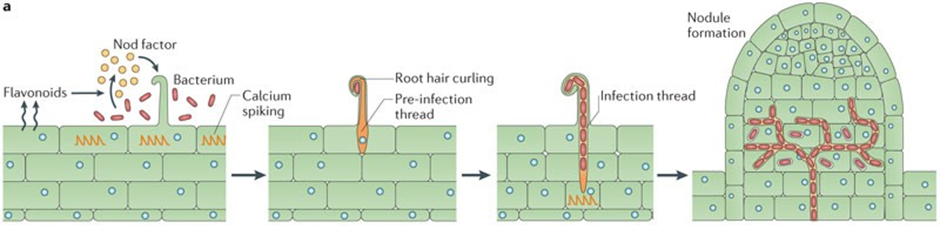
Stimulated by flavonoids
Lipochitooligosaccharides (Nod factors) are released and recognised by Nod factor receptor 1 (NFR1) and NFR5
Common symbiosis pathway causes calcium spikes
Rhizobium associated with a speciifc area of the root hair and Nod signalling causes localised calcium spiking. This causes the growth area to curl towards the attached bacteria.
These continuously repeated, localized shifts in growth direction—driven by the shifting calcium gradient—cause the root hair to grow around the bacterial colony, eventually leading to the formation of a tight curl that entraps the bacteria
This mechanism is also what allows the plant to form a structure called an infection thread which facilitates the entry of the nitrogen fixing bacteria into the root
ecosystem services - the bigger picture of plant symbioses
Forests that are full of arbuscular-associated plants produce higher quality litter
More nitrogen in litter
Breaks down faster
Results in overall changed ecosystem function in the forest
Form and quality of the exudates in the rhizosphere imacts global carbon budgets
Mycorrizal fungi can pull carbon from multiple plants at one time (proved by radiolabelled isotopes)
Applied potential
Use microorganisms to change the nutrient cycling dynamic of that environment
Phosphorous is a limiting nutrient
So much phosphorous is fixed or washed away from the soil and so only a small portion of it is available to the plant host
We can leverage microbial activity to make phosphorous more bioavailable
Can use ectomycorrhizal fungi to understand which tree species will thrive when trying to restore certain forest areas.