Chapter 3 - Agile Software Development
 Call Kai
 Learn
Learn Practice Test
 Spaced Repetition
 Match
Match Flashcards
 Knowt Play
1/49

Earn XP
Description and Tags
CS 3354
Name | Mastery | Learn | Test | Matching | Spaced | Call with Kai |
|---|
No analytics yet
Send a link to your students to track their progress
50 Terms
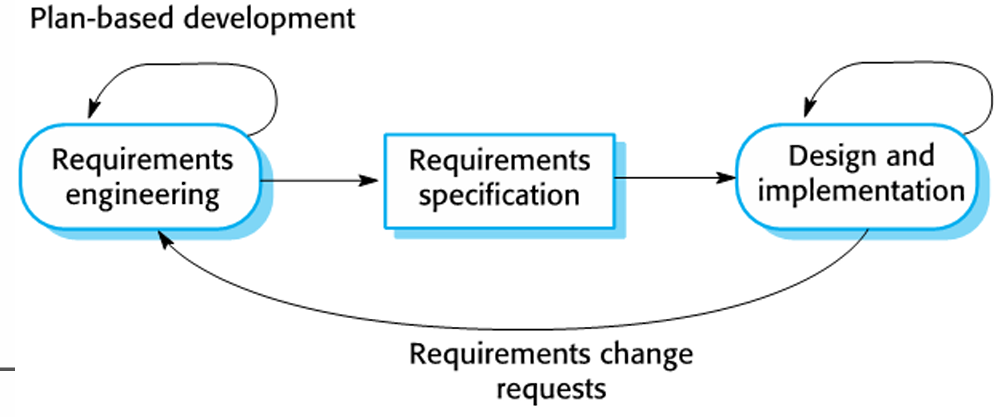
Plan-driven Development
An approach to SWE that’s based around separate development stages.
Outputs are to be produced at each of these stages that are planned in advance.
Not necessarily Waterfall Model (plan driven, so incremental development is possible)
Iteration occurs within activities
Agile Development
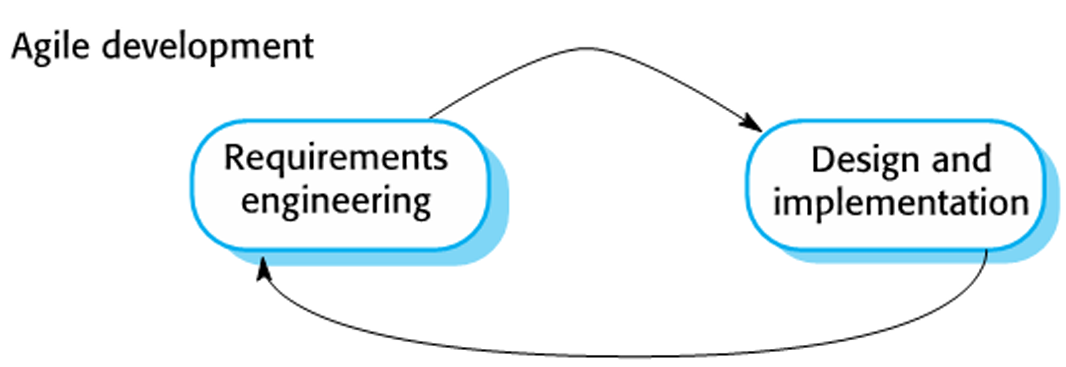
Emerged in the late 1990s with an aim to radically reduce delivery time for working software systems
Program specification, design, and implementation are interleaved
System is developed as a series of versions/increments with stakeholders involved in version specification and evaluation
Frequent delivery of new versions for evaluation
Extensive tool support is used to support development
Minimal documentation (focused more on working code)
When to use Agile instead of Plan Driven Methods?
When its realistic to have an incremental delivery strategy, where you deliver the software to customers and get rapid feedback
When the system can be developed with a small co-located team who can communicate informally (smaller systems with smaller teams)
When to use Plan Driven instead of Agile Methods?
When it’s important to have a very detailed specification and design before moving to implementation
When creating large systems that require larger development teams
Agile Methods
Focused on code rather than design
Based on iterative approach to software development
Intended to deliver working software quickly and evolve this quickly to meet changing requirements
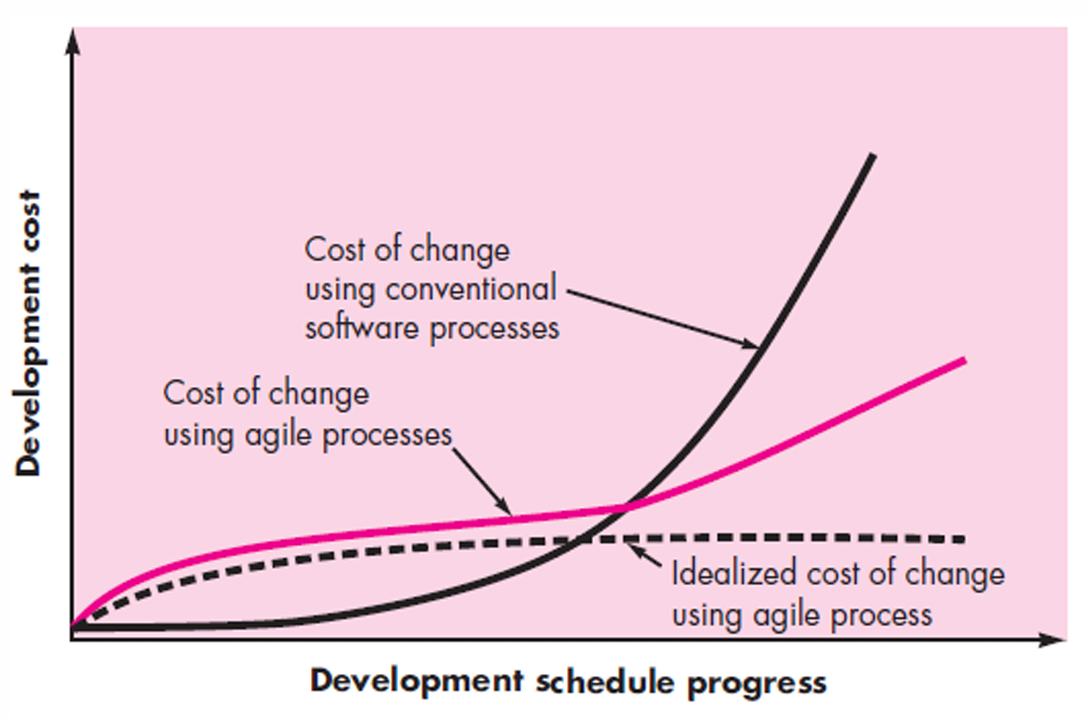
Aim is to reduce overheads in the software process by limiting documentation and being able to evolve quickly to new requirements without much rework
Principles of Agile Methods
Customer involvement, incremental delivery, “people not process”, embrace change, maintain simplicity
Agile Manifesto
Values individuals and interactions over processes and tools
Values working software over comprehensive documentation
Values customer collaboration over contract negotiation
Values responding to change over following a plan
Issues Addressed by Agile
High requirements volatility
Bureaucratic, heavyweight processes and methodologies
Communication with the customer and other stakeholders
Communication with the team
Poor estimating and planning (ie a shift to adaptive lifecycle)
Agile Methods/Techniques
Extreme Programming (XP)
Adaptive Software Development (ASD)
Dynamic Systems Development Method (DSDM)
Crystal
Lean Software Development (LSD)
Agile Modeling (AM) (includes Scrum, Feature Drive Development (FDD) and Kanban)
Agile Unified Process (AUP)
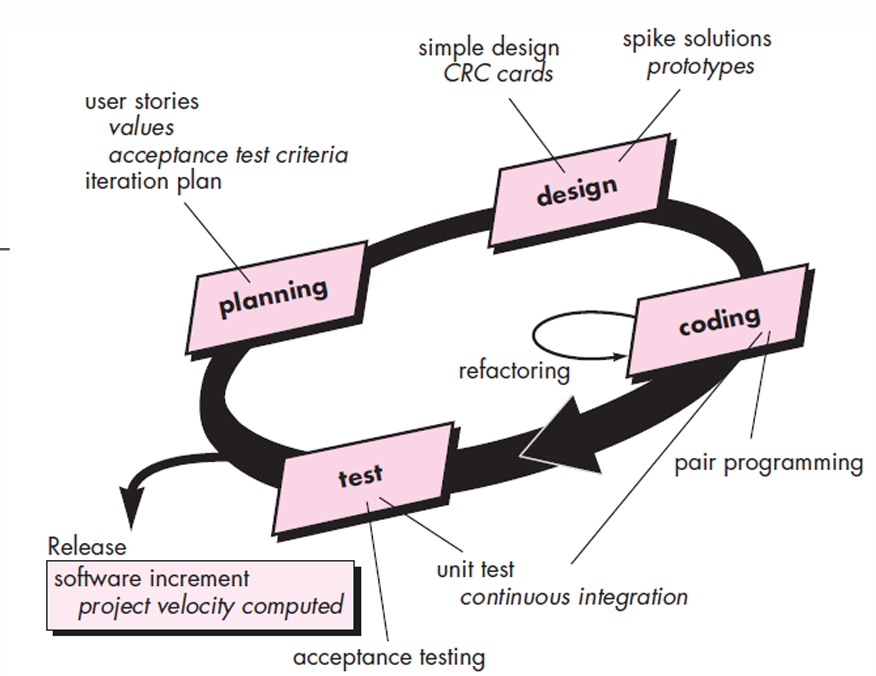
Extreme Programming (XP) Technique
An Agile technique that takes an “extreme” approach to iterative development
New versions must be built several times per day and increments are delivered to customers every 2 weeks. All tests must be run for every build and builds are only accepted if tests run successfully.
CRC: class-responsibility-collaborator
Agile Project Management
Responsibility of software project managers is to manage the project so that software is delivered on time and within the planned budget
Standard approach is plan-driven, where managers draw up a plan for the project’s deliverables (what they are, when to deliver, and who works on it)
HOWEVER, in Agile Project Management, this is adapted to incremental development and the practices used in Agile Methods.
Scrum Agile Technique
An agile method/technique that focuses on managing iterative development rather than specific agile practice, helping to generate value through adaptive solutions for complex problems.
3 Phases of Scrum
1) Outline planning where you establish general objectives and design architecture
2) Series of sprint cycles where you incrementally develop the system
3) Project closure phase that wraps up the project and completes required documentation (system help frames, user manuals) and assesses lessons learned
6 Characteristics of Scrum
Dedicated developers
Must have experienced developers
Small co-located team (less than 10)
Tools to support testing and configuration
Easy access to users (answers questions)
Short increments and frequent delivery to real users
Scrum Development Team
Self-organizing/managing group of software developers (<= 7 people, or 7+-2 members) responsible for developing the software or other essential project documents
Cross-functional (includes testers and non-developers too)
Negotiates commitments with Product Owner, one sprint at a time
Has autonomy regarding how to reach commitments
Intensely collaborative
Most successful when located in 1 team room (especially for first few sprints) and with long term, full-time membership (moves work to flexible team instead of moving/splitting people to work)
Has a leadership role
Potentially shippable product increment
A software increment that is delivered from a sprint; idea is for the increment to be “potentially shippable” (ie in a finished state with no further work).
Not always achievable.
Product Backlog
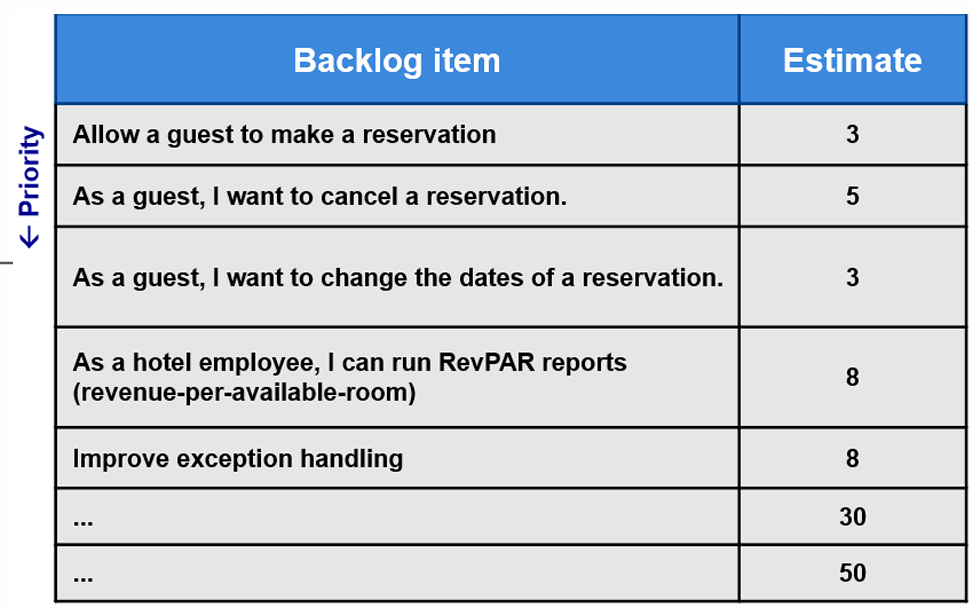
Master list of all “to-do” items desired in the product that the Scrum team must tackle (software and/or documentation).
Developers who will be doing the work are responsible for the sizing of smaller more precise items during Refinement, but Product Owner may influence them by helping them understand and select trade-offs.
Each item in it has:
a description
a priority (ordering)
an estimation of the effort needed to complete it
Items usually are captured in the form of “user stories”
Item = Feature = Requirement = User Story
Priority = Ordering = Importance
Product Owner
An individual or small group whose job is to identify product features/requirements, prioritize these for development, and continuously review product backlog and expectations as final arbiter to ensure project continues to meet critical business needs.
Can be a customer, product manager, or other stakeholder representative.
Has a leadership role and is accountable for maximizing value of product or ROI resulting from work of Scrum Team
Responsible for accepting/rejecting each product increment, deciding on when to ship and when to continue development, and for considering stakeholder interests
Still contributes as a team member
Scrum
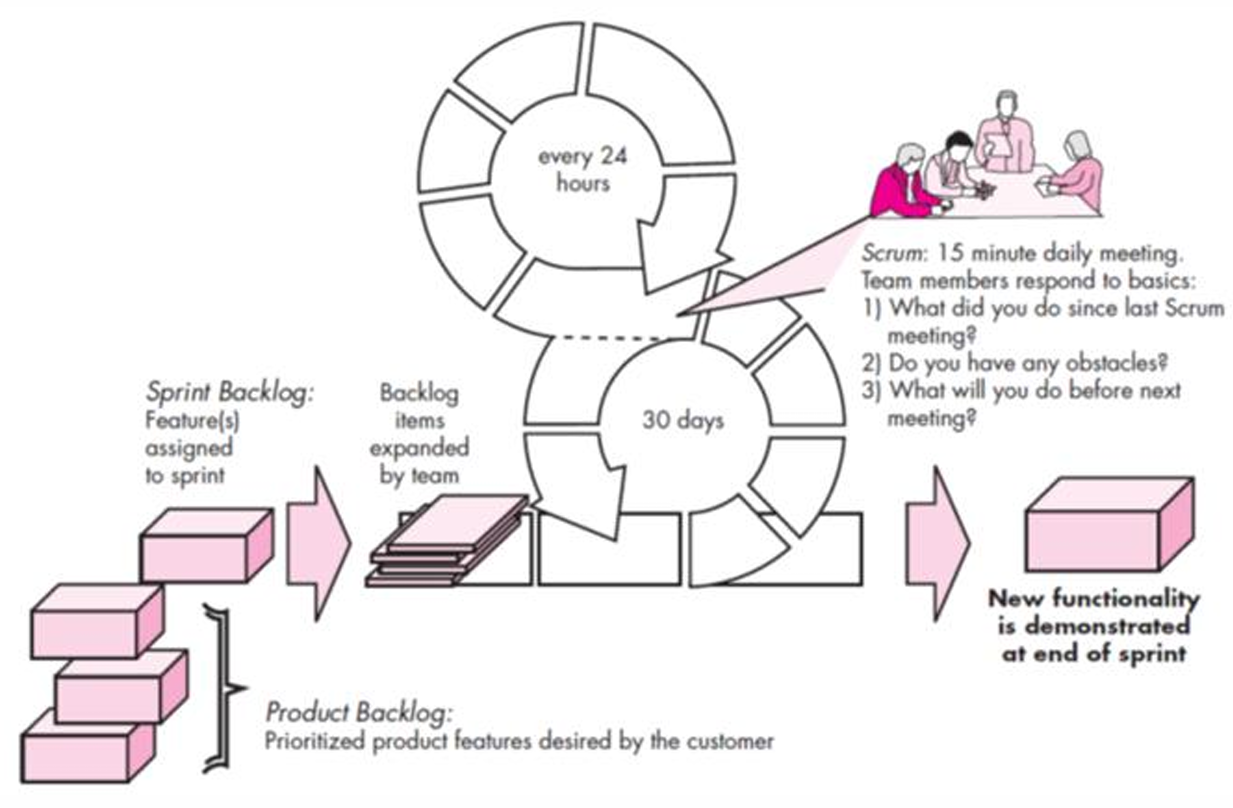
A daily meeting of the Scrum team that reviews progress and prioritizes work to be done that day
Ideally short and face-to-face that includes the whole team
Scrum Master
Facilitates the Scrum process by arranging daily meetings, tracking backlog of work to be done, recoding decisions, measuring progress against the backlog, and communicating with customers and management outside the team.
Responsible for interfacing with the rest of the company and for ensuring that Scrum team is not diverted by outside interference
Has leadership role and creates an environment conductive to team self-organization
Captures empirical data to adjust forecasts and enforces timeboxes
Keeps Scrum artifacts visible and promotes improved engineering practices
Has NO management authority over the team (anyone with authority over the team is not its Scrum Master). Scrum developers are adamant that Scrum Masters should not be thought of as a project manager (though its not easy to see the difference to others)
Sprint
A development iteration of fixed length events, usually 2-4 weeks long
During the sprint:
no changes are made that would endanger Sprint Goal
quality doesn’t decrease
Product Backlog refined as needed
Scope clarified and renegotiated if needed with the Product owner as more is learned
Sprint could be cancelled if Sprint Goal becomes obsolete (can only be done by Product Owner)
Velocity
Estimate of how much product backlog effort that a team can cover in a single sprint, rather than duration, in terms of story points per iteration.
Understanding team’s velocity helps estimate what can be covered in a sprint and provides a basis for measuring improving performance
Scrum Guide
Requires Scrum Master to foster an environment in which:
1) Product Owner orders work for complex problem into a Product Backlog
2) Scrum Team turns a selection of the work into an Increment of value during a Sprint
3) Scrum Team and stakeholders inspect results and adjust for next Sprint
4) Repeat
Scrum Process Flow
Scrum Team
Development team consists of 1 Scrum Master, 1 Product Owner, and developers
No sub-teams or hierarchies
Cross-functional (members have all skills necessary to create value in each Sprint)
Self-managing
Small (<=10 people)
Large projects may have multiple, cohesive Scrum Teams (Scrum of Scrums, Team of Teams) with the same product goal, product backlog, and product owner
Team Building
Strategies for allocating people into teams:
1) let a designated person do the allocation
2) let the teams do it themselves
Combination of both works best as:
1) Cross-component teams rather than component-specialized
2) Having part-time team members is NOT GOOD IDEA
3) Designated fire-fighting team was basically an attempt to solve a Scrum bootstrapping problem
Scrum Events
A sprint is a container for all other events, such as:
1) Sprint Planning
2) Daily Scrum
3) Sprint Review
4) Sprint Retrospective
Sprint Planning
Why?: Sprint goal communicates why sprint is valuable to stakeholders
What?: Through chats with Product Owner, developers select items from Product Backlog to include in current sprint, which the Scrum Team may refine during this process
How?: Work is often done by decomposing Product Backlog times into smaller work items of 1 day or less
Sprint Backlog = Why + What + How
Usually timeboxed into a max of 8 hours for a 1-month sprint.
Negotiating the Sprint Plan
Developers decide how many stores to include in the Sprint based on gut feel and velocity calculations
To fit a story in, Product Owner could reprioritize, change scope of different story, or split another story
This face-to-face negotiation occurs during Sprint Planning Meeting (ie the What? of Spirit Planning)
Sprint Backlog
The Sprint Goal, the Product Backlog items selected for the Sprint,
plus the plan for delivering them are together
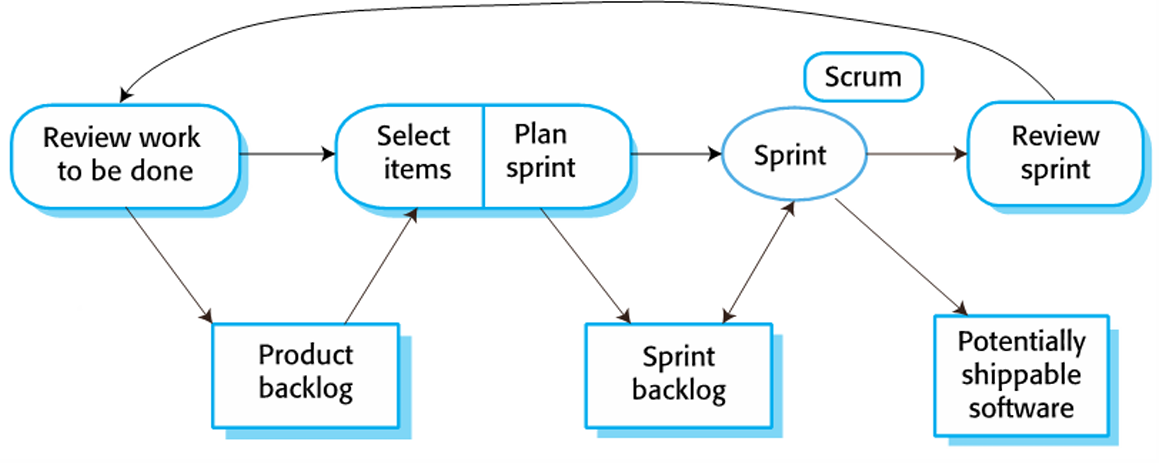
Scrum Sprint Cycle
Starting Point: Product backlog
Selection Phase: involves all the project team who works with customer to select features and functionality from backlog to be developed during the sprint
Once these are agreed, team organizes themselves to develop the software. During this, team is isolated from customer and organization, with all communication channeled through the Scrum Master.
At the end of the sprint, work done is reviewed and presented to stakeholders. The next sprint cycle then begins.
Sprint Rules
Use small interdisciplinary teams
Build clean interface software
Intelligent management required
Solid systems architecture and framework upfront
Prototype all new tools and technology
Develop infrastructure first
Each Sprint results in an executable
Develop, document, and test in parallel
Daily Scrum
Short daily meetings (usually 15 min) where all team members share info, describe progress since last meeting, problems that have arisen, and what is planned for the following day (can use this to replan short term work)
Purpose: inspects progress towards Sprint Goal and adapt Sprint Backlog as necessary to adjust upcoming planned work
Three Questions:
What did you do since last Scrum?
What got in your way?
What are you going to do before next Scrum?
All pigs (committed) must respond
All chickens (involved) can attend, but must be silent
No new backlog can be introduced externally, backlog can only be added internally
Sprint Review
Purpose is to inspect outcome of Sprint and determine future adaptions, usually timeboxed into a max of 4 hours for a 1-month sprint
Focused outward on product (work completed, feedback from stakeholders, adjusting product backlog)
Sprint Retrospective
Purpose is to plan ways to increase quality and effectiveness, usually timeboxed into max of 3 hours for a 1-month sprint
Focused inward on process (reflect on how the team worked together and improve, goal is to increase team efficiency for future sprints)
Scrum Team inspects how last Sprint went with regards to individuals, interactions, processes, tools, and their Definition of Done
Scrum Team discusses what went well, what problems were encountered, and how those problems were (or weren’t) solved
Scrum Artifacts
Product Backlog, Sprint Backlog, Increment
Each artifact contains a commitment:
Product Backlog → Product Goal
Sprint Backlog → Sprint Goal
Increment → Definition of Done
User Story
Describes functionality that will be valuable to either a user or purchaser of a system; a “promise” to have a discussion, not every detail needs to be included.
Parts of User Story:
Card: written description of story used for planning and as reminder
Conversation: about the story to flesh out details
Confirmation: details used to determine when story is complete
Template Format:
“As a <type of user [role]>, I want <capability [feature]> so that <business value [benefit]>.”
Factors in Prioritizing User Stories
Financial Value
Cost of developing
Learning and new knowledge (both product and project knowledge)
Risk
Business value + high risk + architecture spanning
INVEST Properties
A guide to write effective user stories, includes:
Independent
Negotiable
Valuable to users or customers
Estimable
Small (can be completed in single sprint w/ <=25% of the team)
Testable
Tech Stories
Focus:
Technical improvements
Value:
Indirect benefit to user
Priority:
Essential for long-term health but often lower priority
Example:
Upgrade database to newer version, install new security patch, optimize app performance
Support Stories
Focus:
Maintenance and bug fixes
Value:
Directly benefit user by preventing issues
Priority:
High priority if it impacts user experience or system stability
Example:
Fix critical bug, code refactoring, update documentation
Agile Estimation Concepts
Story Size, Story Points, Velocity
Story Size
Normally strive for stories weighted around 2-8 days
Around 10 stores per sprint, usually someone between 5-15 though.
Stories vs. Tasks
Time estimates are easier to do and more accurate if story is broken down into tasks.
Stories = deliverable stuff that Product Owner cares about
Tasks = non-deliverable stuff, or stuff Product Owner doesn’t care about (no need to involve them)
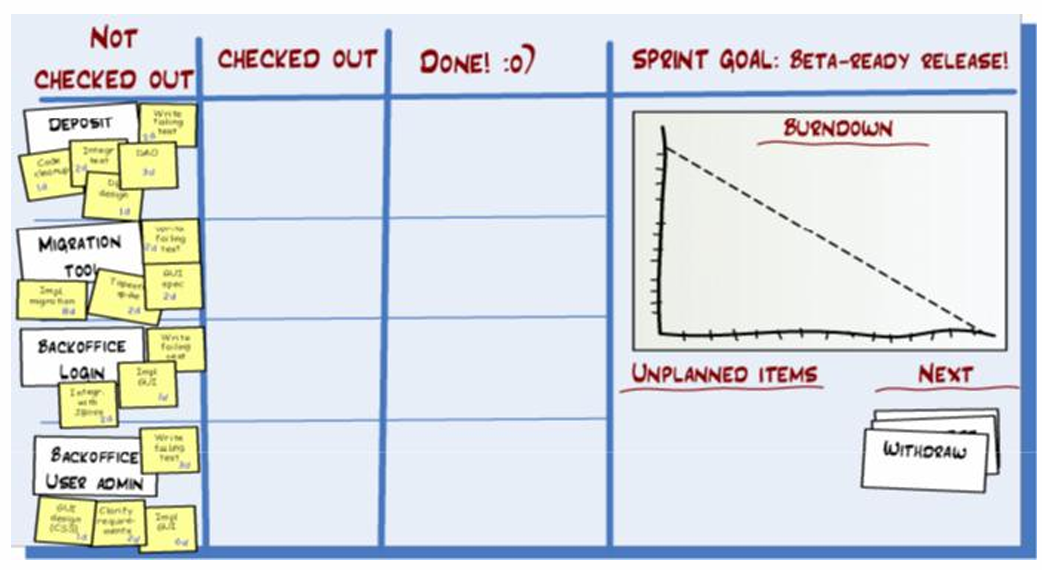
Scrum Board
Division of Concerns (Kniberg)
Setting relative importance of requirements and the estimates for doing the work are divided.
Product Owner: sets scope and importance of requirements
Development Team: sets estimates for doing the work
Definition of Done (DoD)
Set of criteria that must be met for a product increment to be considered complete and ready for release (Ken Schwaber)
If Product Backlog item doesn’t meet DoD, it cannot be released or presented at Sprint Review
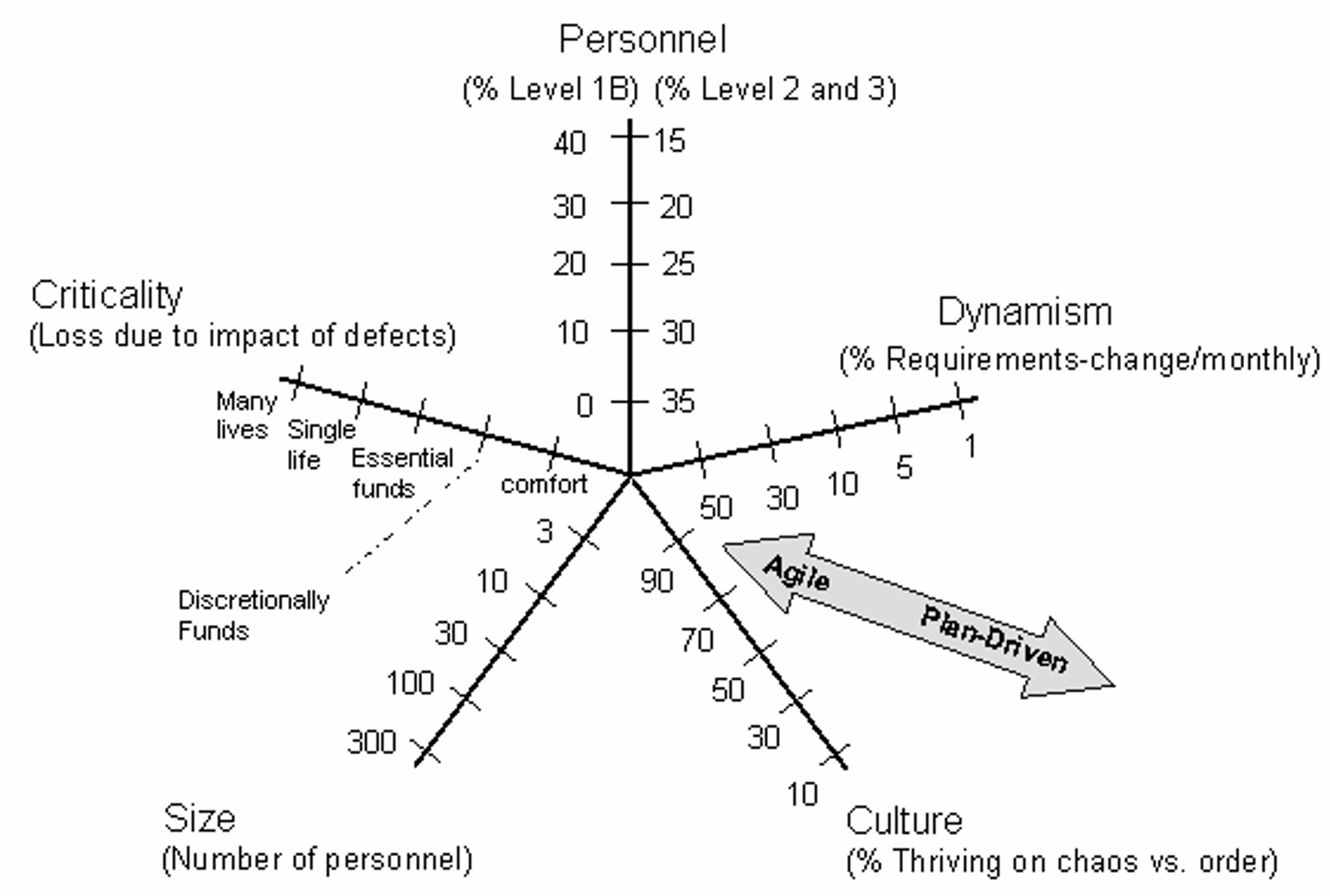
Does Agile Fit Your Needs? (Boehm)
Based on Personnel, Criticality, Dynamism, Size, and Culture
Barriers to Success of Agile
Customer who insists on big specification
Culture that requires long hours to prove commitment
Environment with a long time to gain feedback or realistically test software
Why Scrum is Powerful
Focus and autonomy
Transparency
Adaptation
Breaks down complexity
Delivers value incrementally
Trust
Positive culture

