Learn: NHA PCT Exam: Phlebotomy
 Call Kai
 Learn
Learn Practice Test
 Spaced Repetition
 Match
Match Flashcards
 Knowt Play
1/181

There's no tags or description
Looks like no tags are added yet.
Name | Mastery | Learn | Test | Matching | Spaced | Call with Kai | Chat |
|---|
No analytics yet
Send a link to your students to track their progress
182 Terms
arteries
blood vessels that carry oxygenated blood away from the heart to other parts of the body

Diaphoretic
Characterized by profuse sweating.
pallid
pale
veins
Blood vessels that carry de-oxygenated blood back to the heart

Arterioles
small vessels that receive blood from the arteries
Capillaries
Microscopic vessel through which exchanges take place between the blood and cells of the body
are permeable and function as exchange vessels

coronary arteries
supply blood rich in oxygen and nutrients to the heart

femoral arteries
supply blood to the lower extremities

jugular veins
return deoxygenated blood from the head and neck to the heart
saphenous veins
return deoxygenated blood from the lower extremities to the heart
pulmonary veins
carry re oxygenated blood back to the heart from the lungs
standard precautions during venipuncture
-use PPE when handling body fluids, non intact skin or mucous membranes
-practice hand hygiene before and after contact
-safely dispose of all used equipment
how to properly confirm a pts indenity?
-Full name
-DOB
-SS
-Last 4 of phone #
-Physical ID
what is the first step you take before performing veinipuncture?
confirming consent
before uncapping needle what do you observe?
-expiration date
-label and seal intact
-safety device and bevel is intact
normal needle
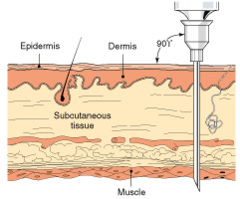
bent needle
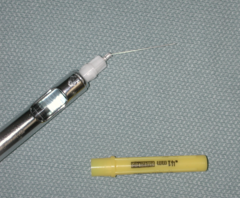
are adapters single or multi use?
single
are tourniquets single or multi use
both
antispetic
germ-killing substance
How to label a specimen?
-using a pen write pts full name
-DOB
-date/time
-ID number
-write legibly
when to perform dermal punctures?
-for tests that require a small amount of blood
-when a patient does not have an accessible vein but blood collection is essential
-when a lab test requires capillary blood
-for a patient at risk of latrogenic anemia
iatrogenic anemia
anemia caused by excessive blood draws that leads to a deficiency of red blood cells or of hemoglobin in the blood -> pallor & fatigue
blood tests that call for dermal punctures
-glucose testing
-cholesterol testing
-hematocrit determinations
capillary pipettes
Small glass pipettes with one calibration mark used for very small blood samples

microcollection tubes
small tube used to collect dermal puncture samples; also called a "bullet"

what type of blood test is preferable for pts younger than age 1?
dermal puncture, requires less blood
3 types of blood dermal puncture blood specimens contain
-arterial
-capillary
-venous
preferred fingers for fingerstick
third/fourth finger, using fleshy off center sides of fingers

equipment for fingerstick
isopropyl alcohol wipes, gauze, lancet, micro container
fingerstick procedure
1) Have pt sit or lie down
2) Check warmth pf pts hand. If needed have pt open and close hand a few times or rub hands vigorously.
3) Identify site
4) Rub area with 70% isopropyl alcohol, allow to dry
5)Puncture site with lancet, puncturing perpendicular to fingerprint lines.
6) Dispose in biohazard sharps container
7) Wipe away first drop of blood
8) Allow blood to drip into collection tube, cap when full. If blood flow stops or slows have pt drop hand below the level of heart and apply pressure to first joint of finger with a press-and-release technique. Take max 2 mins to fill each tube. Cap and gently invert.
9) Use gauze and apply pressure to puncture site for several mins. When bleeding stops put adhesive bandage, tape and gauze, or folded gauze pad and self-adhesive wrap over puncture site.
why shouldn't you use povidone-iodine on fingerstick cleanse?
will have adverse affect on results of bilirubin, uric acid, phosphorus or potassium tests
heel stick
Pediatric phlebotomy procedure that requires puncturing one of specified areas of an infant's heel, or when veins cannot or should not be used for adults and dermal is not a option
best site for heel stick
medial/lateral side of plantar surface of heel
hematoma
a solid swelling of clotted blood within the tissues.

equipment for heelsitcks
-gloves
-heel warming device
-isopropyl alcohol swab
-sterile lancet
-micro collection tubes
-gauze pad
Heel stick procedure
1) Choose right lancet, no deeper than 2mm (preferably the smallest one available)
2) Position pt (ideally supine), ask nurse about any positioning restrictions
3) Apply heel warming device for 3 to 5 mins
4) Select and cleanse site
5) Place lancet on skin and puncture. Use your thumb and fingers to apply gentle pressure to heel, do not squeeze or use excessive pressure
6) Wipe away first drop of blood
7) Touch open tip of tube to puncture site, do not scoop and let blood flow into tube
8) If flow stops wipe any surface clots with a guze
9) When tube is filled apply gauze and pressure to stop bleeding
10) Bandage if necessary, avoiding adhesive bandages
Before blood collection, review the _______
requisition
optimal veinipuncture postition
full arm extension with palm facing upwards
antecubital area
anterior surface of elbow

first choice for venipuncture
median cubital vein

second choice for venipuncture
cephalic vein
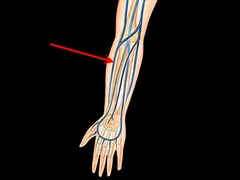
when performing veinipuncture on an IV site
-perform puncture distal to the IV catheter's insertion site
can you collect blood from a site where blood transfusion is taking place?
no
mastectomy considerations of veinipuncture
avoid using the arm on the affected side of a pt who
tattoo considerations of veinipuncture
avoid performing puncture in any skin that has a tattoo if possible
hematoma considerations of veinipuncture
do not collect blood through a hematoma because it could affect test results and cause more pain for the pt
edema considerations of veinipuncture
avoid area altogether, excess fluid could be included accidentally in blood collection
scars considerations of veinipuncture
do not collect blood from an area of scaring, can be difficult to find vein and painful for pt
sclerosis considerations of veinipuncture
do not collect blood from sclerotic vein, blood flow is likely to be inadequate and painful for pt
sclerotic veins
becoming rigid and unresponsive; losing the ability to adapt
edematous
swollen
Phlebitic veins
Tender and warm with a red area around them

Tortuous veins
these are winding or crooked veins. These are very susceptible to infection and since blood flow is impaired, the collection may produce erroneous test results.

how to stop epistaxis
lean forward and hold bridge of nose (10-15 minutes)
Tourniquet Application
-position 3 to 4 in. above antecubital area for collections in that region, or above the wrist bone for dorsal hand collections
-apply gently yet firm
-remove within 1 min, after this hemoconcentration begins and can yield inaccurate results
-remove gently while needle still in vein and blood flow is established, or 1 minute has passed
-if no tourniquet is available inflate a bp cuff to 40 mmHg and release at 1 minute mark of when blood flow is established
what degree should be used for a Venipuncture
15-30 degree
10 degree for dorsal sticks
lumen
space within a tubular part or organ, such as the space within a blood vessel
Transfixing of the vein
When the needle enters the top of the vein and then punctures the bottom of the vein too.
needle gauge for routine veinipuncture
20-23 gauge hollow needles, 1 to 1.5 in beveled edge (21 most common)
Light Blue Tube
Contains Sodium Citrate. Used in Coagulation dept. Tests for PT, PTT, Fibrinogen, clotting factors (coagulation)
Green tube
Stat Chemistry
Sodium/Lithium/Ammonium Heparin (chemistry)
Lavender Tube
Contains EDTA. Used in Hematology & tests CBC, WBC, RBC, Platelet counts, any blood counts (hematology), dermal samples
Gray tube
potassium oxalate and sodium fluoride, EDTA
Glucose Tolerance Test, Fasting Blood Sugar, Lactic Acid, Blood alcohol (chemistry)
Royal blue tube
no additive, EDTA or heparin
Used got toxicology, trace metals, and nutritional analysis (chemistry)
light yellow tube
Contain acid citrate dextrose (ACD) and are used for blood bank studies and DNA testing (blood bank)
Red tube top
No additive; used for blood chemistries or any test requiring serum (chemistry)
Gold Tube Top
Gel Separator Tube
Additive: none
Mode of Action: serum separator tube, gel at the bottom to separate blood from serum when centrifuged
Uses: immunology, serology, chemistry
evacuated tube system procedure
- position patient's arm in a slightly bent, downward position
- apply tourniquet. palpate and choose most accessible vein
- cleanse with a friction scrub back-and-forth
- uncap needle, and inspect it
- stabilize the vein
- alert patient to feel poke or pinch
- insert at 15-30 degree angle
- gently push evacuated tube in place, label down, using the proper order of draw
- make sure blood is flowing into tube
- remove tourniquet before 1 min
- remove each tube and invert immediately
- remove needle swiftly and at same angle
- provide pressure at the site of insertion
- apply an adhesive bandage
Evacuated Tube System (ETS)
A closed system in which the patient's blood flows directly into a collection tube through a needle inserted into a vein.

patients arm during butterfly needle venipuncture?
arm extended, slightly bent, palms facing down
syringe method procedure
-have pt lie or sit down
-assemble equipment, test plunger and push out to release air
-calculate how much blood is necessary to fill tubes for test required by determining how much blood you will collect in syringe and rounding up
-position pt arm slightly bent, palm facing down
-apply tourniquet
-uncap needle and inspect
-stabilize vein
-insert needle at 15 to 30 degree angle (10 for hand collection)
-pull back slowly on the plunger
-collect blood
-remove needle
-apply pressure
-use transfer device to move blood from syringe to tubes
venipuncture steps summarized
-equipment selection
-select and prep site
-observation and palpation
-antiseptic application
-venipuncture insertion and removal
-post procedural care
cerebrospinal fluid (CSF)
plasma-like clear fluid circulating in and around the brain and spinal cord
amniotic fluid
fluid within the amniotic sac that surrounds and protects the fetus
pH
hydrogen ion concentration
Specific gravity of urine
compares the density of urine to the density of water
how much urine needed for testing?
30-60mL
Timed Urine Specimen Collection
Time required may be 2, 12. or 24 hour collections. The timed period begins after the client urinates and ends with a final voiding at the end of the time period.
begins at specific time first urinating into toilet then beginning collection every hour
must keep container on ice or in fridge
must not place any water or toilet paper in container
glucose tolerance test (GTT)
test for initial diagnosis of diabetes mellitus; patient is given dose of glucose; patient fasts then blood samples are taken at regular intervals to determine patient's ability to use glucose properly
postprandial test
blood test performed after eating to determine the blood glucose level
urinate, eat meal then collect urine speciment 2 hrs after pt has ate
clean-catch midstream urine specimen
a type of urine specimen that requires special cleansing of the external genitalia to avoid contamination by organisms residing near the external opening of the urethra an is used to identify the number and types of pathogens present in urine
first pee into toiler then pee in container
expected range for specific gravity
1.010-1.030
SG less then 1.010 indicates
diluted urine
SG more than 1.010 indicates
concentrated urine, higher levels show dehydration
WBC in urine indicate
infection
blood in urine indicate
-infection
-cancer
-kidney disease
-chemical poisoning
ketones in urine indicate
-diabetes
-lipolysis
-starvation
-vomitting
Bilirubin in urine indicates
liver disease or red blood cell destruction
Lipolysis
breakdown of fat
protein in urine indicates
-inflammation or infection
-kidney disease
-chemical poisoning
glucose in urine indicates
diabetes mellitus
expectorate
cough or spit out phlegm from the throat or lungs
what time of day should you collect a sputum specimen from a pt?
first thing in the morning
occult blood
blood present in such minute quantities that it cannot be detected with the unassisted eye
fecal occult blood test (FOBT)
test of feces to discover blood not visibly apparent
How to perform a throat swab
-wipe both tonsils, throat and all areas that look inflamed or infected with the swab
buccal swab
A swab of the inner portion of the cheek; cheek cells are usually collected to determine the DNA profile of an individual
Blood Culture Collection
-Sterile blood specimen for blood cultures for a patient suspected of having septicemia.
-Site to be cleaned with Iodine, not alcohol.
-BCCs are always done FIRST, before any other tubes.
what antiseptic should you use for patients with shellfish allergy?
Chlorhexidine gluconate or benzalkonium chloride