Building Utilities 3: Acoustics, Sound Isolation, and Environmental Noise Control
 Call Kai
 Learn
Learn Practice Test
 Spaced Repetition
 Match
Match Flashcards
 Knowt Play
1/46

There's no tags or description
Looks like no tags are added yet.
Name | Mastery | Learn | Test | Matching | Spaced | Call with Kai | Chat |
|---|
No analytics yet
Send a link to your students to track their progress
47 Terms
What is the fundamental difference between noise cancelling and noise isolation?
Noise cancelling is an active electronic process, while noise isolation is a passive method that blocks sound using materials and design.
What is noise cancellation?
An active approach to block external noise using microphones and electronic signal processing to generate anti-noise signals.
What is noise isolation?
A passive method that uses construction materials and ergonomic design to prevent surrounding noise from entering the ear canal.
What is sound isolation?
The process of separating assembly materials to prevent the transfer of sound energy between environments.
Why is sound isolation required?
To ensure privacy, prevent negative health impacts from noise, and facilitate acoustic modulation in studios.
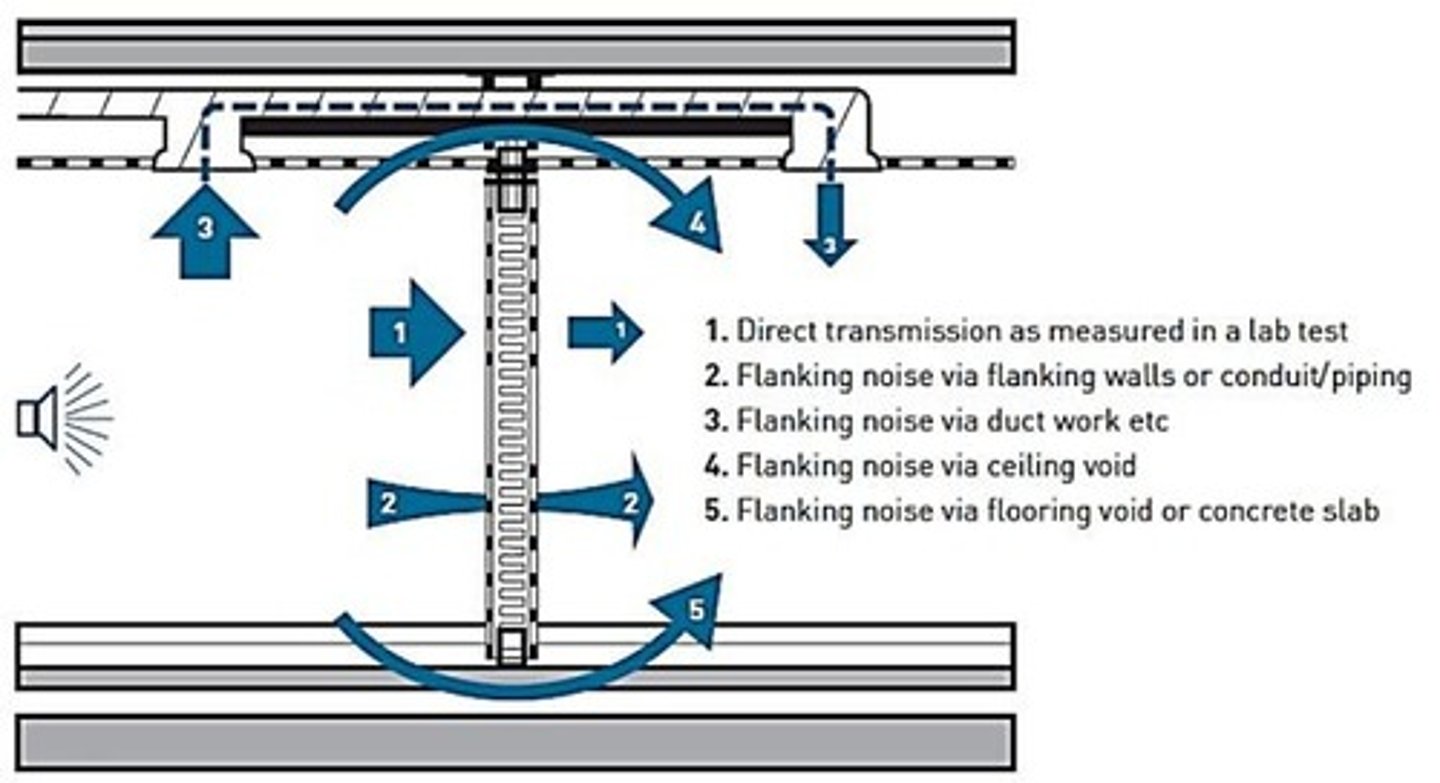
What is flanking sound?
Sound transmitted between spaces through indirect paths, such as floor voids, despite good acoustic insulation in partitions.
What are common flanking paths?
Partitions extending above ceilings, joint spaces where floors meet walls, unsealed penetrations for ducts, and doors/windows.
What is one solution to minimize flanking sound?
Ensure tight seals along cracks where walls meet floors and ceilings, using non-hardening caulk and packing.
What should be done before finalizing wall or floor-ceiling assemblies?
Conduct preliminary tests to check for effectiveness and visually inspect for cracks or gaps.
What type of electrical outlet boxes perform better in acoustic tests?
Plastic vapor-barrier electrical outlet boxes outperform metal ones.
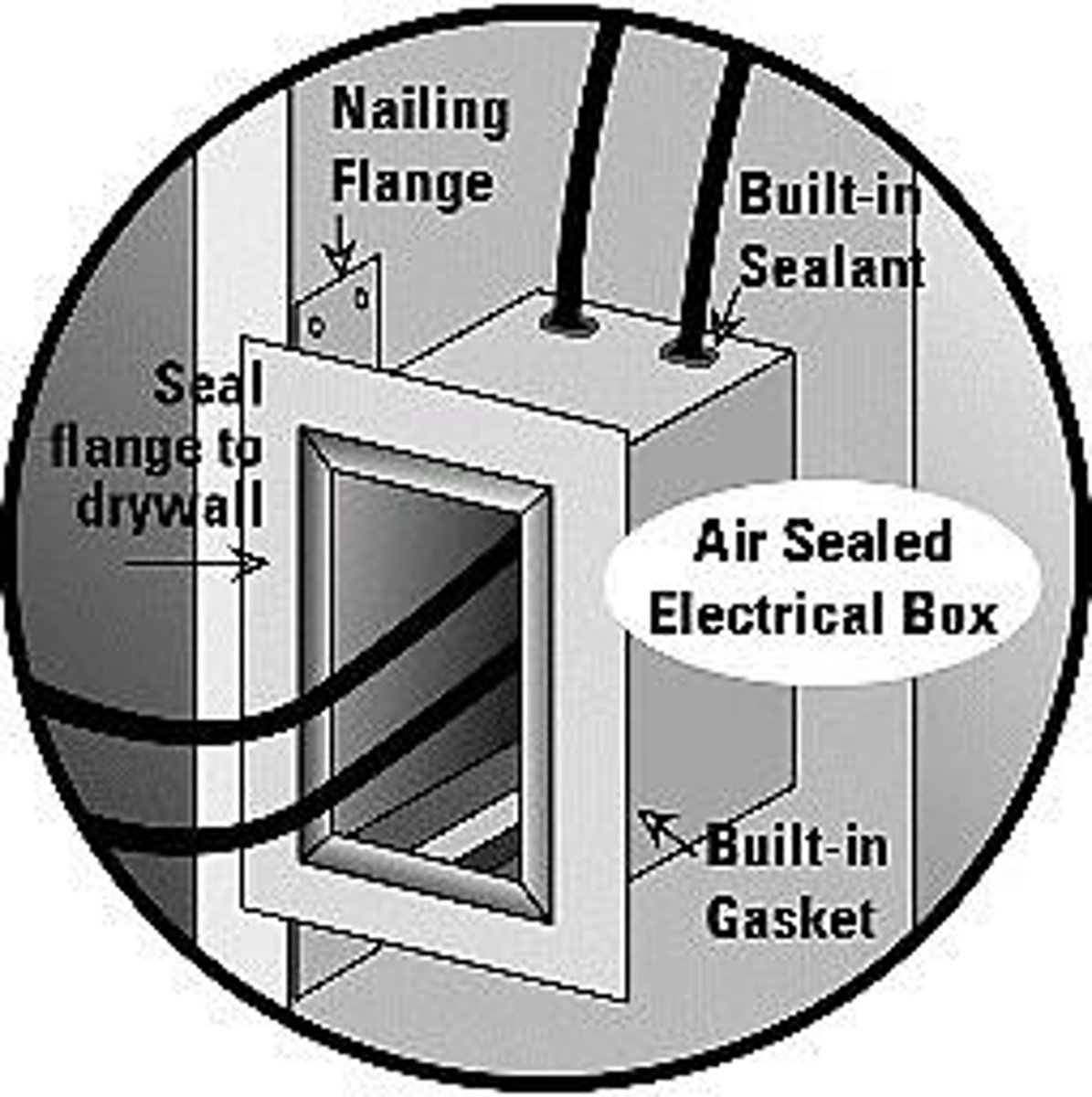
How can control joints help with sound isolation?
They account for differential expansion and contraction, minimizing cracking and potential sound flanking.
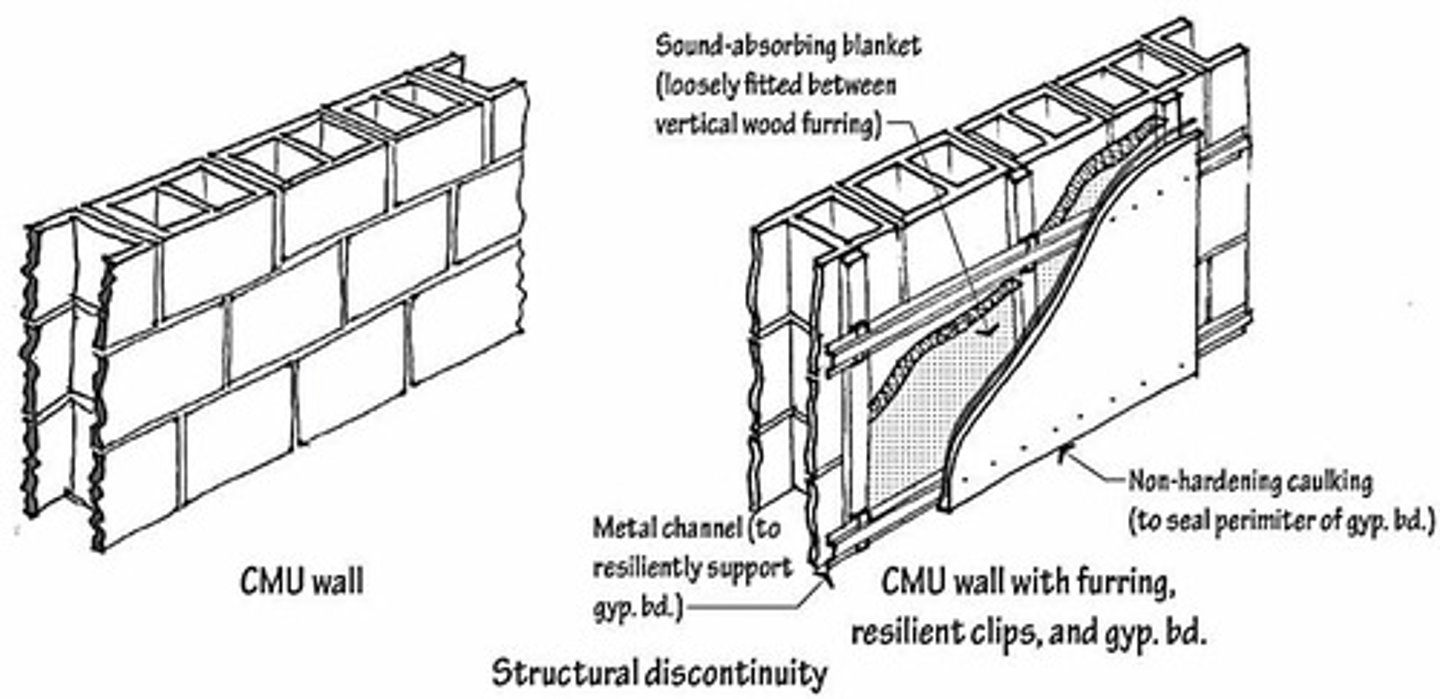
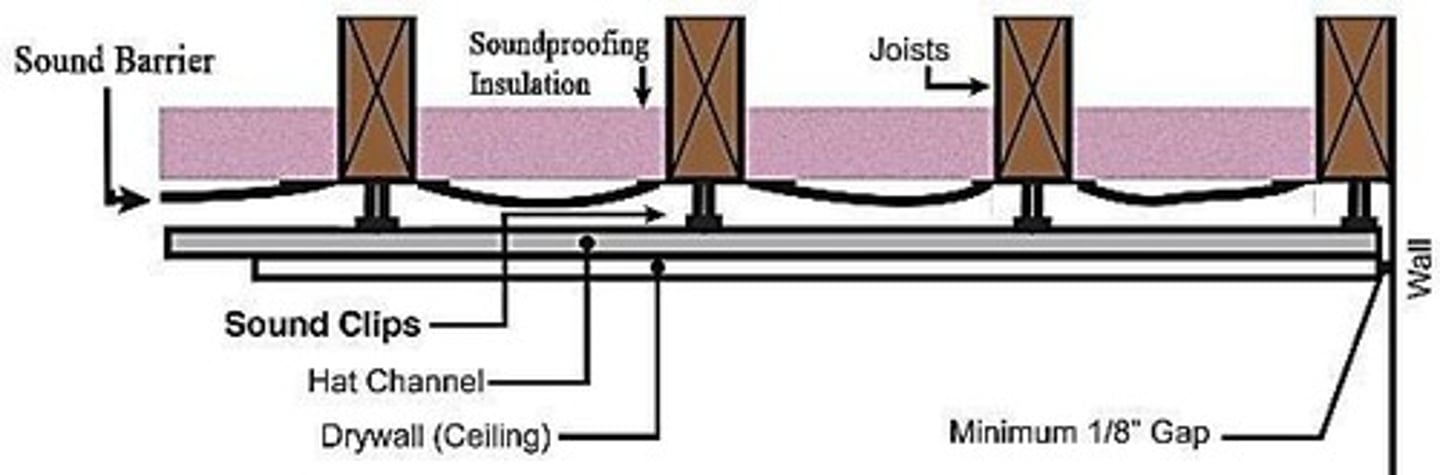
What is the benefit of using resilient sound isolation clips?
They outperform resilient channels in acoustic tests and reduce the risk of short-circuiting sound isolation.
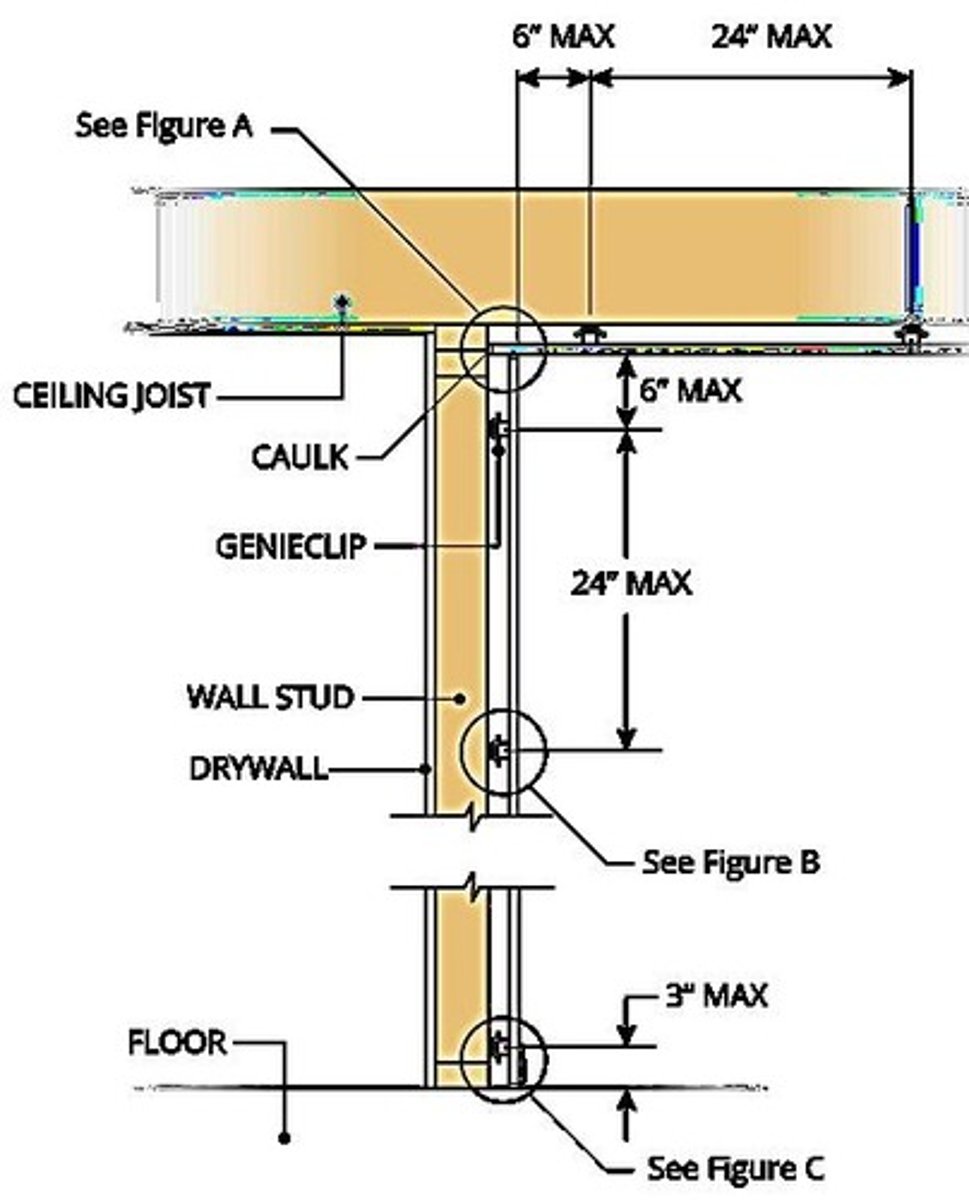
What should be avoided in noise-sensitive rooms?
Doors with louvers, as they can allow sound leakage.
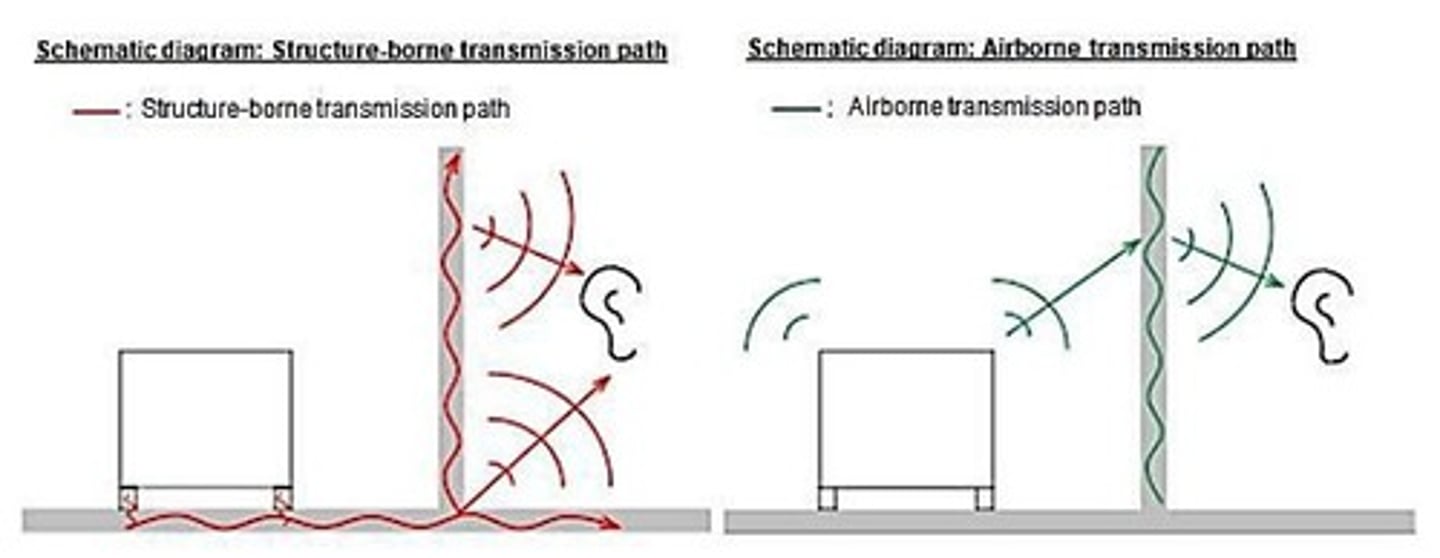
What is airborne sound?
Noise transmitted through air, causing building elements to vibrate and radiate sound.
What are examples of airborne sound?
Music, conversations, traffic noise, and barking dogs.
What is structure-borne sound?
Noise transmitted through building elements due to the impact of objects, causing vibrations.
How can airborne noise be quantified?
By using speakers to emit noise in a space and measuring the difference in sound levels between rooms.
What does Transmission Loss (TL) measure?
The airborne sound-insulating properties of a building element; higher TL values indicate better sound attenuation.
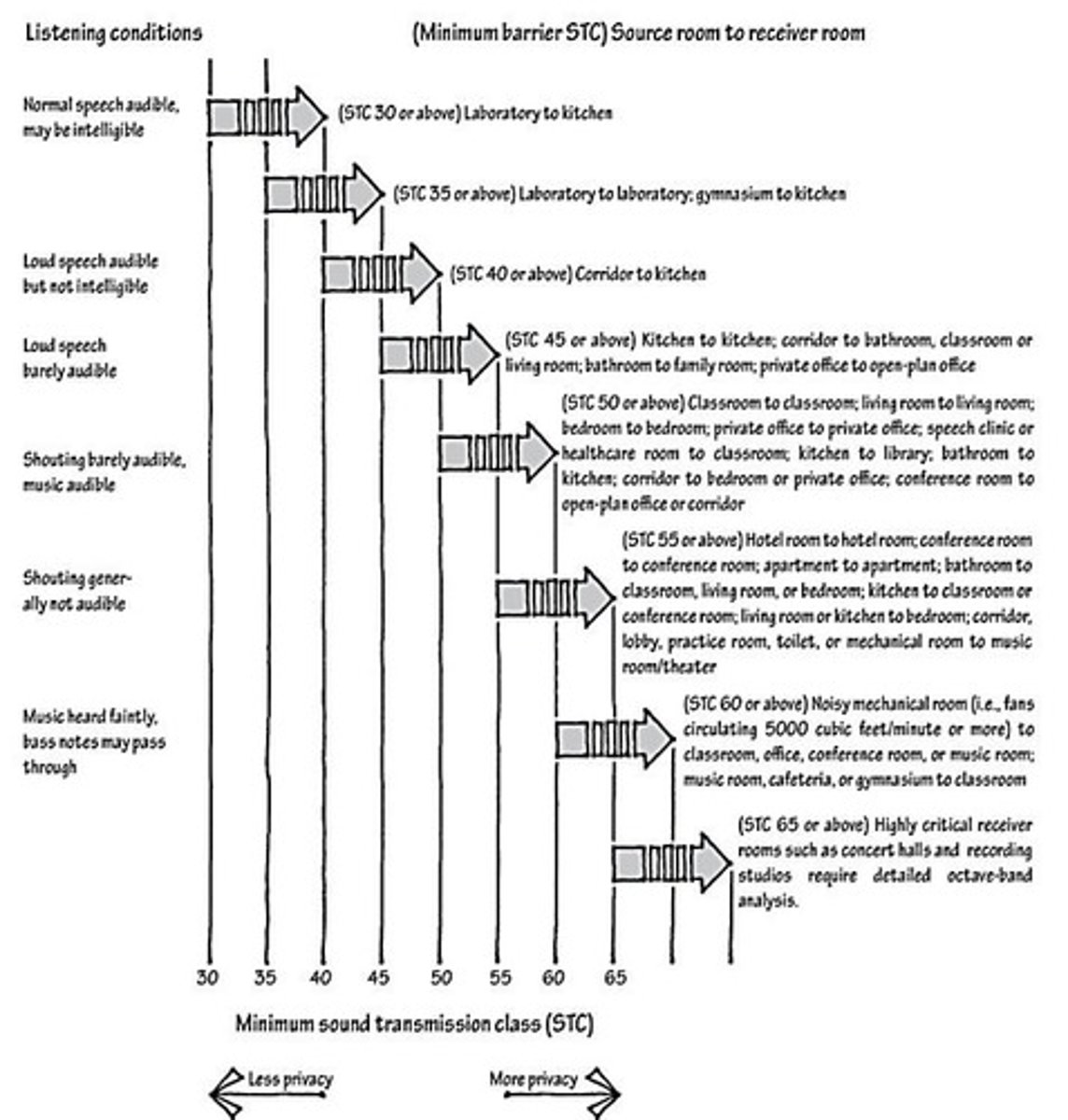
What is Sound Transmission Class (STC)?
A single number rating that evaluates the performance of building elements in preventing sound transmission.
What does a higher STC rating indicate?
More effective sound insulation performance of a building assembly.
What types of building partitions does STC apply to?
Ceilings, floors, doors, windows, and exterior wall configurations.
What is the minimum STC rating for normal speech to be audible?
STC 30 or above
What STC rating indicates that loud speech is barely audible?
STC 45 or above
What STC rating is required for shouting to be barely audible?
STC 50 or above
What are the adverse effects of low-level environmental noise exposure?
Interference with communication, annoyance, sleep disturbance, anxiety, and hearing damage.
What health issues can high exposure to environmental noise lead to?
Cardiovascular disease, hypertension, stress, and stroke.
What are some fixed sources of environmental noise?
Pumps, compressors, fans, and emergency generator sets.
What is one method for reducing industrial noise?
Attaching sound-absorbent material to soffits.
What are examples of moving sources of environmental noise?
Automobiles, trucks, railroads, and aircraft.
What factors contribute to noise generation near roads?
Volume of traffic, traffic mix, permissible maximum vehicular speed, and type of road surface.
What is noise mapping?
The process of creating a visual representation of noise levels and patterns in an area.
What is noise mitigation?
The process of minimizing the adverse effects of noise on receivers using techniques like zoning and soundproofing.
What are some strategies to reduce noise at the building level?
Using sound-attenuating walls, roofs, windows, and doors.
What is the purpose of sound-attenuating external walls?
To keep out airborne sound and minimize structure-borne sound from impact or vibration.
What is the role of urban planners in noise control?
To consider noise sources, land use, population density, and topography in planning.
What is a key strategy for controlling noise in building design?
Grouping noisy and quiet activity spaces together.
How can traffic management help reduce noise levels?
By reducing the volume of traffic and implementing speed limits.
What is low-noise asphalt?
A special open-pore mix that reduces noise levels compared to normal asphalt.
What should be considered when designing sound-attenuating roofs?
Using concrete slabs instead of metal roofing and incorporating sound-absorbing materials.
What is the significance of sound control glass?
It provides significant sound reduction when properly sealed and used in fixed windows.
What are the two types of noise that building envelopes must block?
Airborne sound and structure-borne sound.
What is the effect of noise on emotional and psychological well-being?
It can lead to annoyance, anxiety, and sleep disturbances.
What is a common source of noise in urban areas?
Traffic, industrial activities, construction, and entertainment.
What are the benefits of noise zoning in urban planning?
It helps to minimize noise exposure and create healthier living environments.
What is a common technique for soundproofing in buildings?
Using solid core doors with proper seals to minimize sound transmission.
What is the impact of high blood pressure related to environmental noise?
It is a potential health effect of prolonged exposure to high levels of environmental noise.
What is the importance of noise monitoring?
To collect and analyze noise data over time for effective noise management.