Genetics - Structure and mitosis
 Call Kai
 Learn
Learn Practice Test
 Spaced Repetition
 Match
Match Flashcards
 Knowt Play
1/49

There's no tags or description
Looks like no tags are added yet.
Name | Mastery | Learn | Test | Matching | Spaced | Call with Kai | Chat |
|---|
No analytics yet
Send a link to your students to track their progress
50 Terms
What is a nucleotide
Nitrogen base + sugar (ribose or deoxyribose) and phosphate group
Bond between phosphate and sugar
covalent bond
bond between sugar and base
covalent bond
Bond between bases
hydrogen bond
What are the four bases
Adenine, Thymine, Guanine, Cytosine
Gene
A segment of DNA on a chromosome that codes for a specific protein
Complementary base pair
A with T and C with G
Mitochondria
organelle that is the site of ATP (energy) production
plasma membrane
defines cell boundaries, protects organelles
nuclear membrane
membrane that separates the nucleus from the cytoplasm
Which stage of Mitosis is this
Telephase
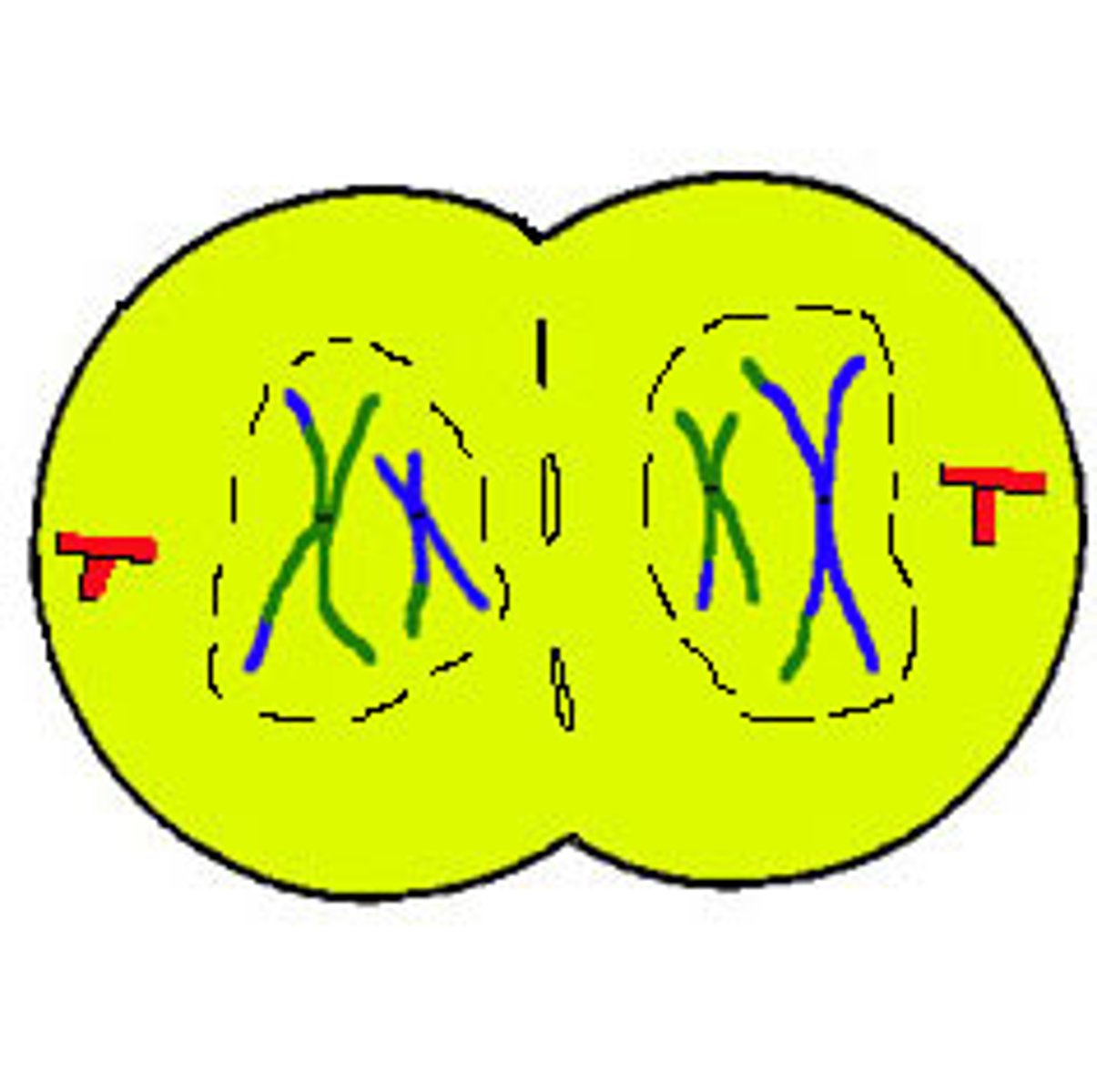
Which stage of mitosis is the following picture?
Metaphase
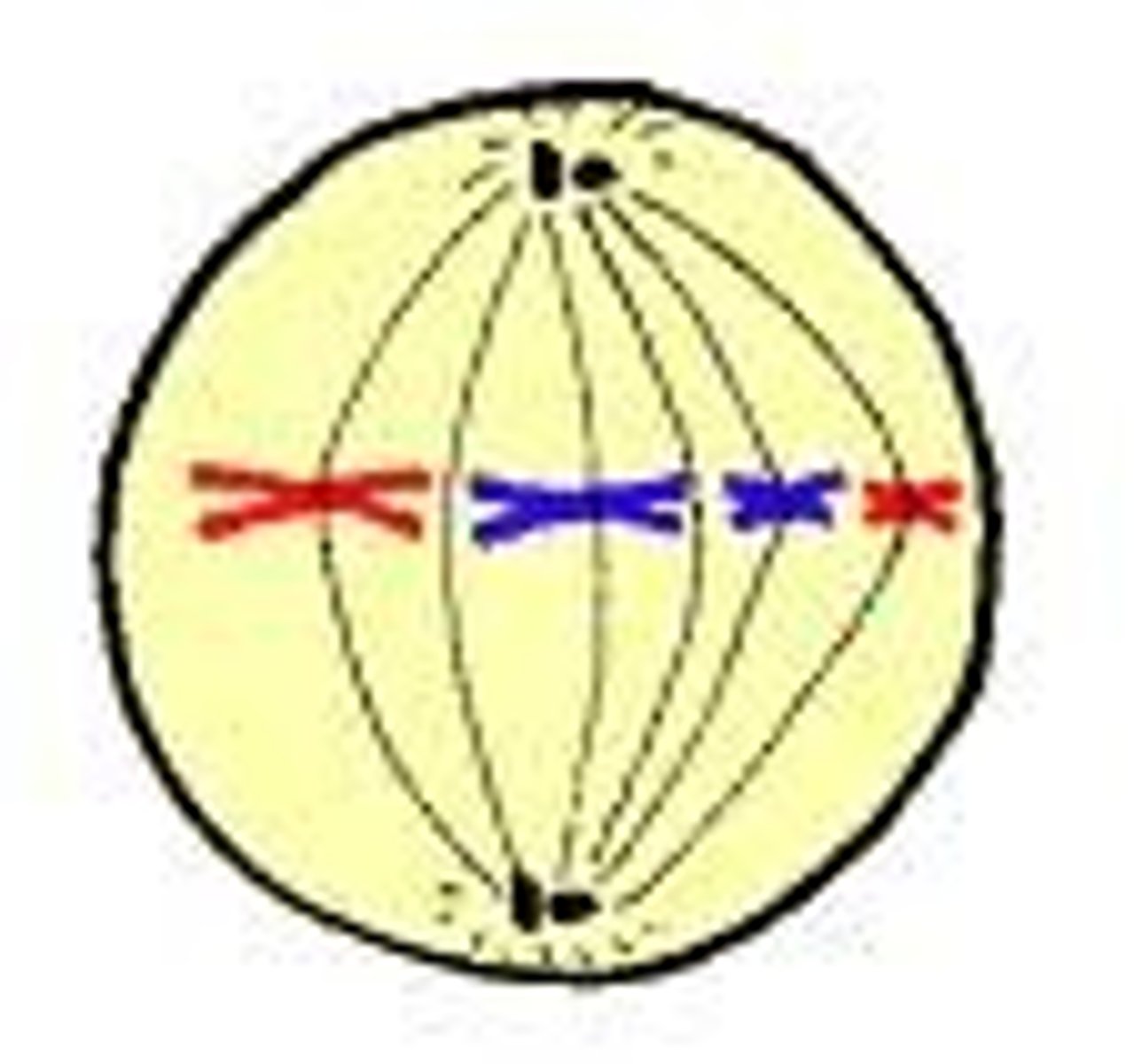
Which stage of mitosis is this
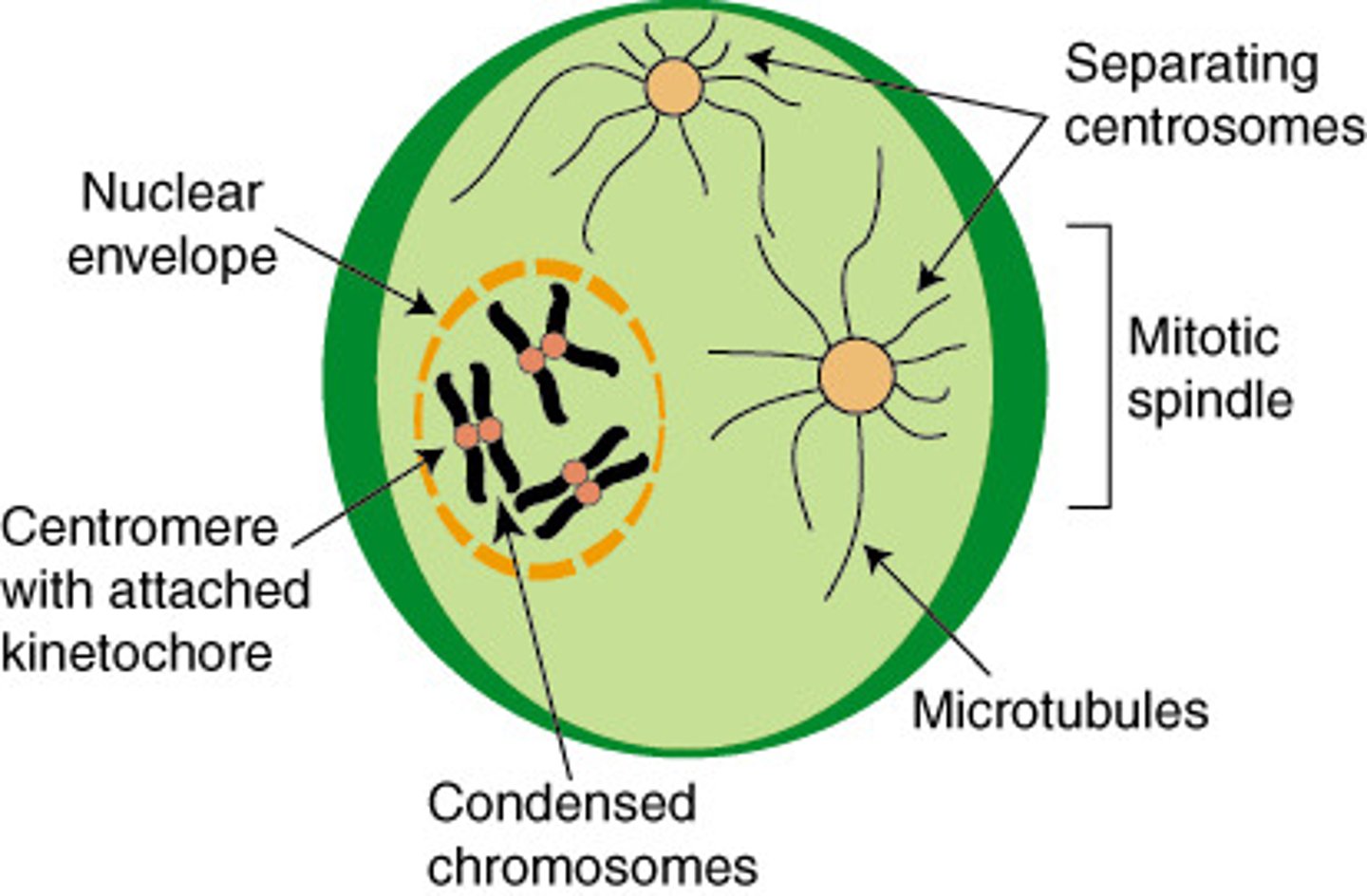
Which stage of mitosis is this
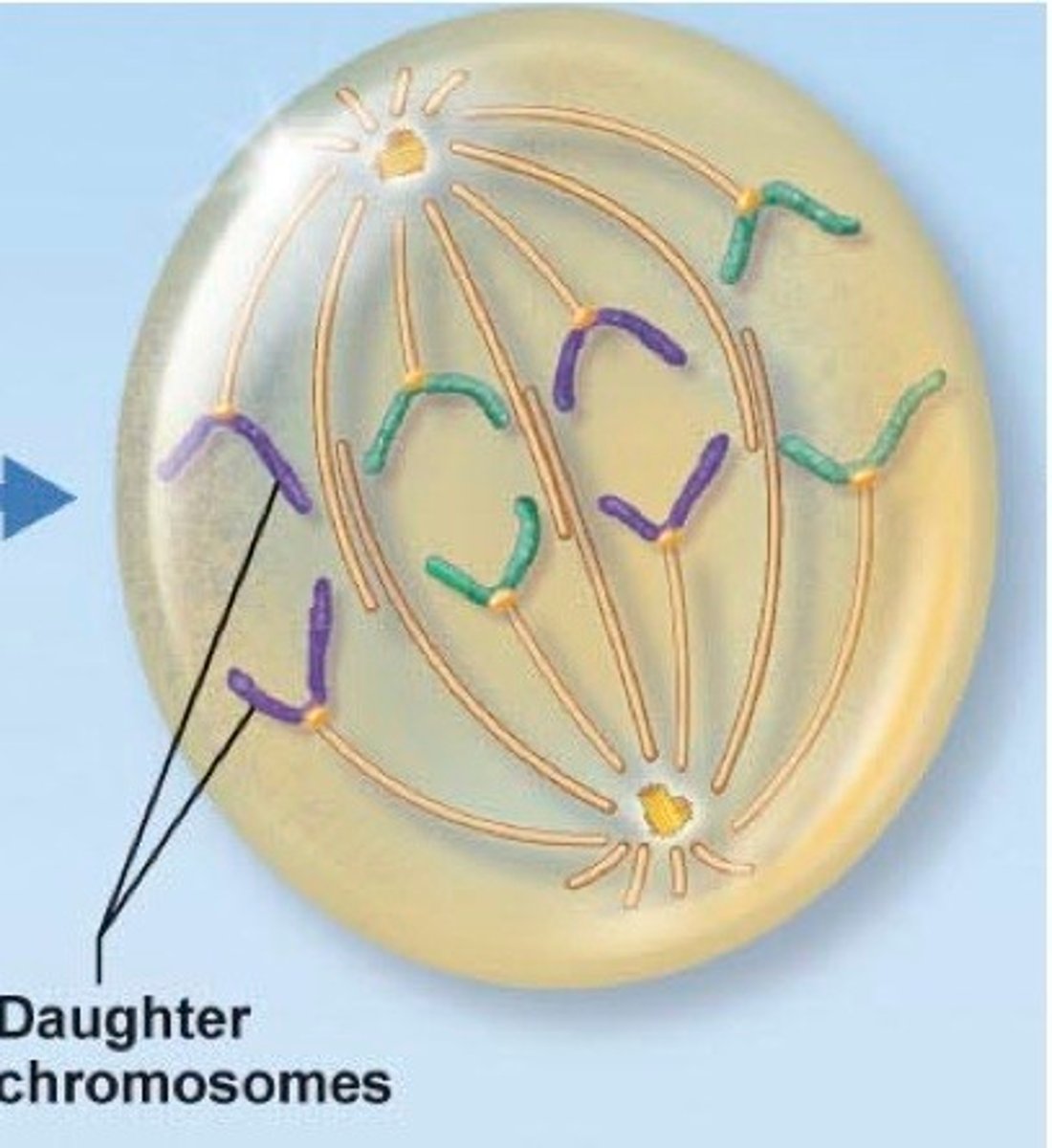
What stage
is cytokinesis part of mitosis
No, cytokinesis is not part of mitosis but it is a part of the M phase.
What is in the M Phase (Mitotic Phase)
Mitosis, cytokinesis
Direction of DNA strands
Opposite directions (antiparallel); one 5' end and one 3' end.
Helicase
Enzyme that unzips the two strands of DNA by breaking hydrogen bonds.
Template strand
Each separated DNA strand serves as a template for making a new strand.
Primase
Enzyme that makes a small piece of RNA called a primer.
Primer
Marks the starting point for the construction of a new DNA strand.
DNA polymerase
Enzyme that binds to the primer and builds the new DNA strand.
Direction of DNA synthesis
Bases can only be added in the 5' to 3' direction.
Leading strand
The DNA strand that is made continuously.
Lagging strand
Strand made in small sections because it runs in the opposite direction.
Okazaki fragments
Small sections of DNA made on the lagging strand.
Exonuclease
Enzyme that removes all RNA primers from both DNA strands.
DNA ligase
Enzyme that seals up DNA fragments in both strands to form a continuous double strand.
Semi-conservative replication
Each new DNA molecule consists of one conserved (old) strand and one new strand.
DNA stands for
Deoxyribonucleic acid
Amino acid
Building blocks of protein
How many chromosomes do humans have?
46 (23 pairs)
Chromatin
granular material visible within the nucleus; consists of DNA tightly coiled around proteins
What happens to chromatin during prophase?
It condenses into visible chromosomes.
Nucleolus during prophase
The nucleolus disappears.
Centrioles during prophase
They begin to move to opposite poles of the cell.
Spindle fibers during prophase
The spindle fibres start to form from the centrioles and attach to the centromere
chromosome vs chromatid
Chromosome is 2 chromatids together with a centromere in the middle of the chromatids and chromosome. .
Alignment in metaphase
Chromosomes line up along the metaphase plate (equator) of the cell as pulled by spindle fibres
Spindle fibers in metaphase
Fibers from opposite poles attach to the centromeres
Centrioles in metaphase
complete movement to oposite poles
Metaphase equator
end to end alignment of chromosomes results in a sister chromatid on each side of the cell
Anaphase
Phase of mitosis in which the chromosomes separate and move to opposite ends of the cell
What is the order of cell division phases
Prophase, Metaphase, Anaphase, Telophase
Once separated, each chromatid is called a
chromosome
telophase
Nuclear membrane reforms around each set of chromosomes (two nucleus) Inside chromosomes decoil into chromatin
Cytokinesis
division of the cytoplasm
inward movement of cell membrane pinches into the daughter cells (animal)
DNA molecule
double helix
major cell organelles
nucleus, central vacuole, mitochondrion, ribosomes