Final Exam - Pressure Profiles
 Call Kai
 Learn
Learn Practice Test
 Spaced Repetition
 Match
Match Flashcards
 Knowt Play
1/19

There's no tags or description
Looks like no tags are added yet.
Name | Mastery | Learn | Test | Matching | Spaced | Call with Kai | Chat |
|---|
No analytics yet
Send a link to your students to track their progress
20 Terms
Single Point Source
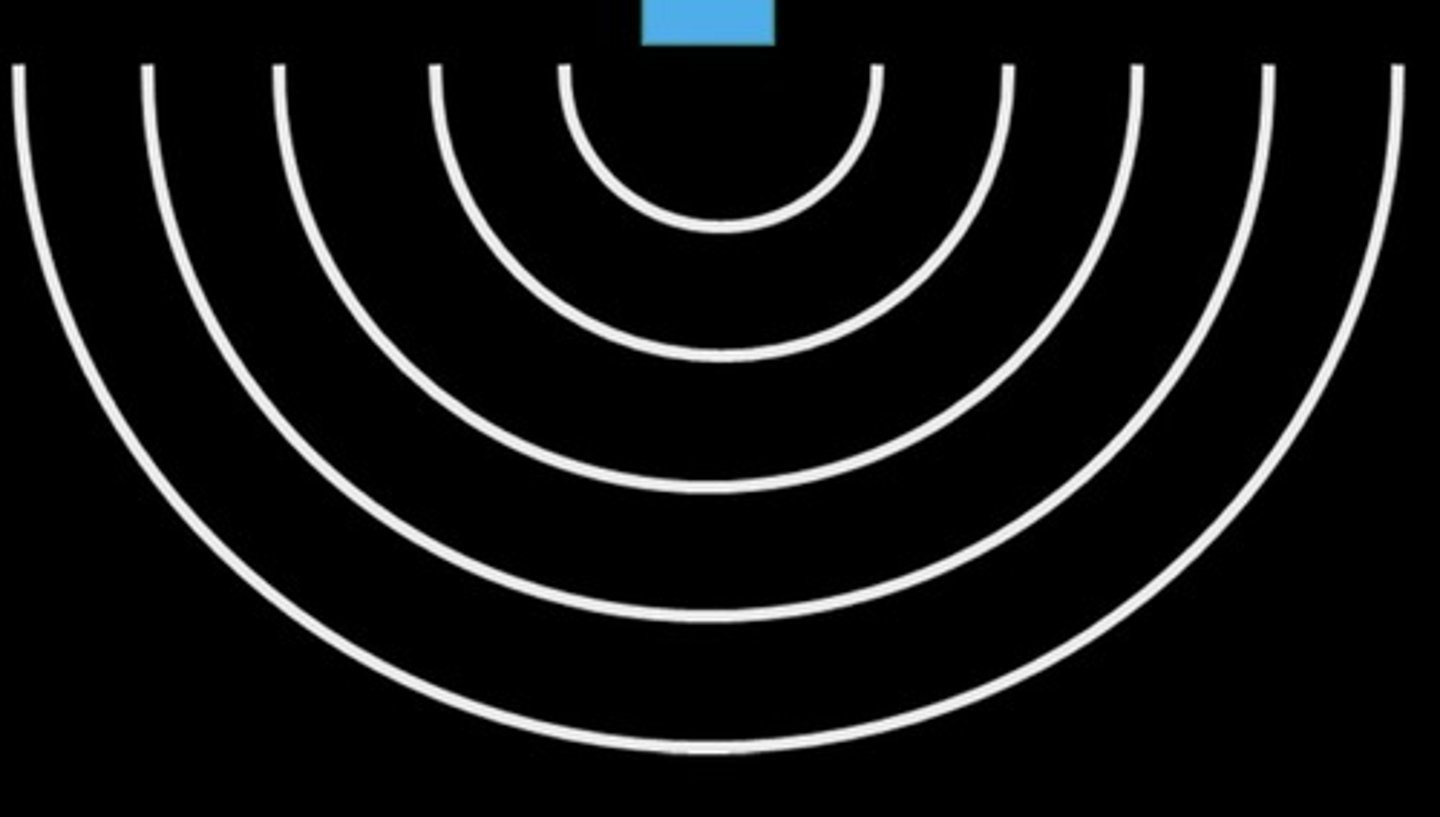
Multi-Point Source
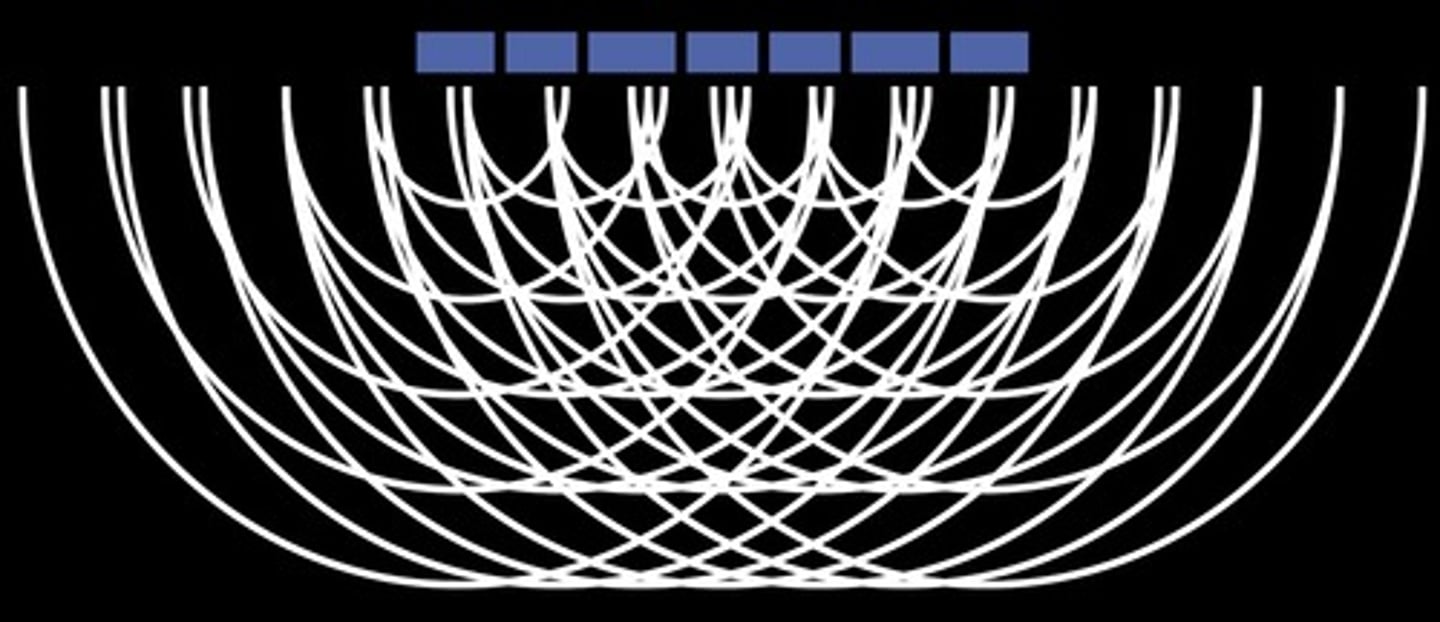
Wavefronts
Undergo constructive and destructive interference
Result in complex wavefront
Huygen's Principle
Increased distance from wave source & superposition of wavelets
Results in planar front that represents even pressure distribution
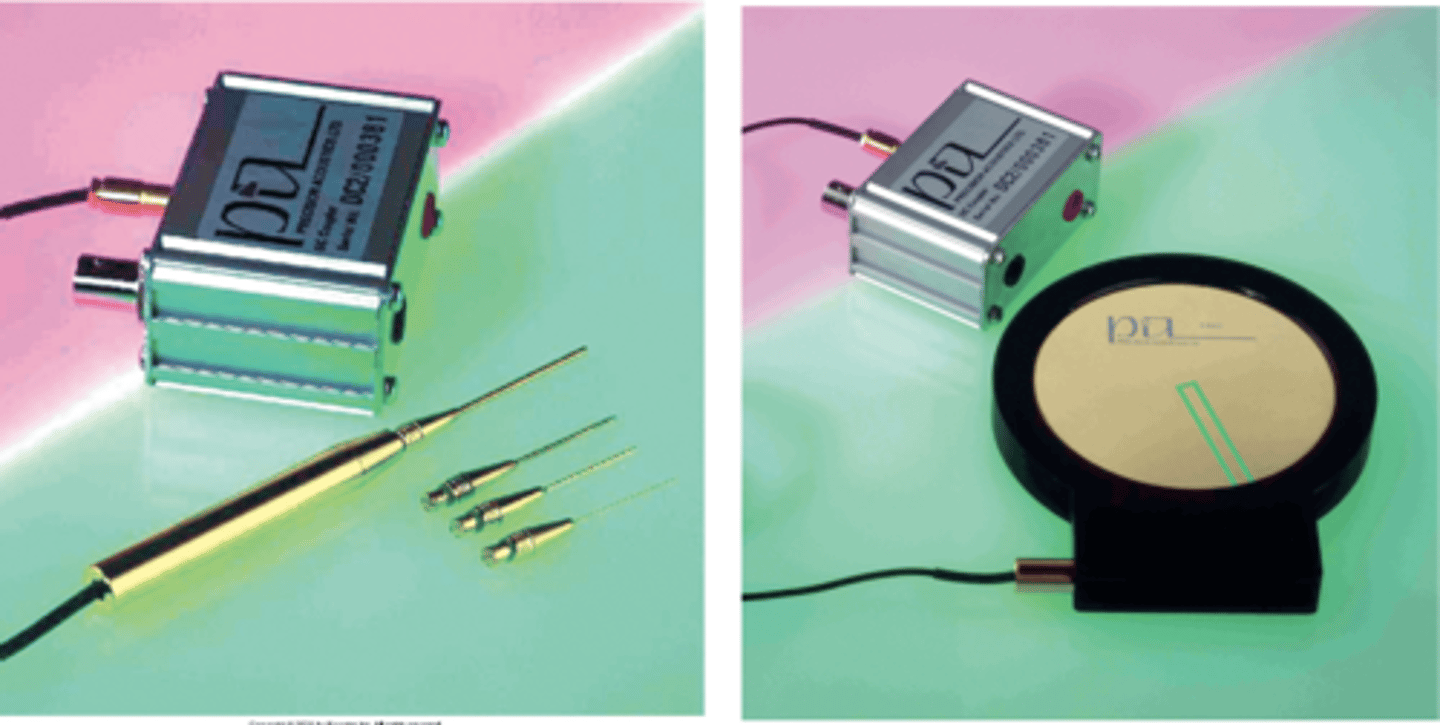
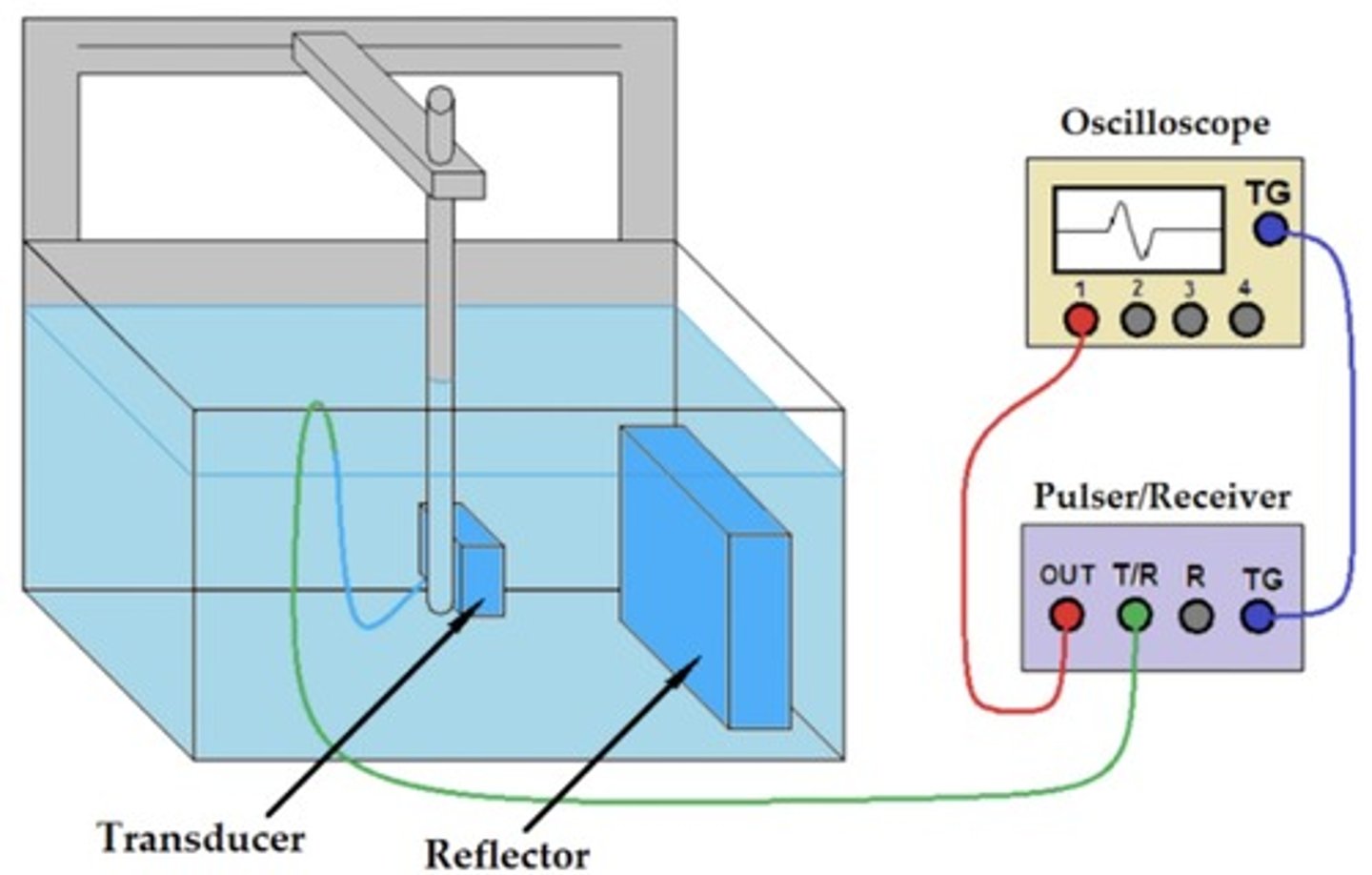
Hydrophone
Very small TX (0.5mm)
Can send and receive sound energy - interested in received energy
Calculate intensities at different points in beam
Reflector
Measures the amount of received sound at different
points of the beam
TX is moved to different distances from target
Axial Pressure Profile
Different bandwidths
Maximum pressure variations
Along the central beam axis
More frequencies
CW Axial Profile
Very strong null points
May reach zero
Single frequency
Long PW Axial Profile
Narrow bandwidth
Short PW Axial Profile
Broad bandwidth
More uniform echoes
Sum of all frequency components
Transverse Pressure Profile
Infinite number of transverse sections per beam
Maximum pressure value plotted against transverse coordinate x at a fixed axial coordinate value of z
CW Trans Profile
Single frequency
Expect lobulations
Increased variations in amplitude
PW Trans Profile
More frequencies
Less lobulations
Profile smooths out
LAM - Last axial maxima
Corresponds with focal point
Near field boundary (NFB) extends to the focal point
Focal point in focal plane
Polar Plots
Considers energy along the central beam and to the side of the beam
Plots maximum pressure against an angle theta
Examines side lobes of pressure energy
Due to constructive and destructive interference
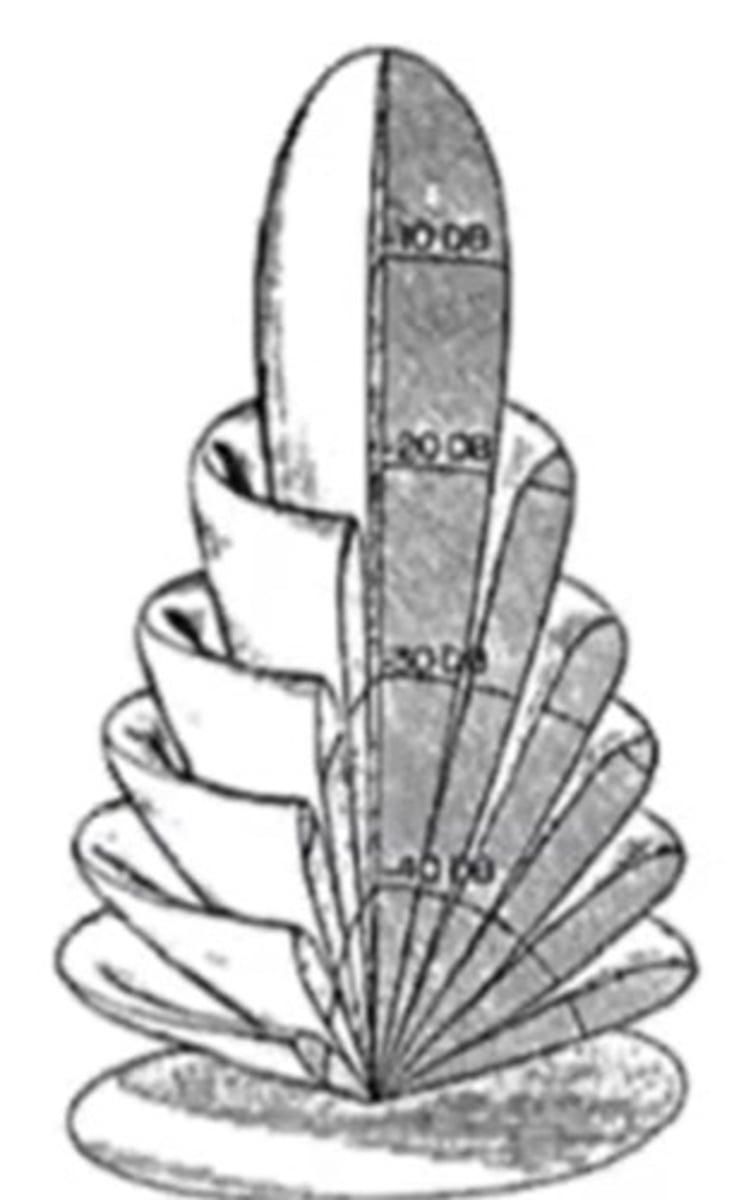
Polar Paper
Spherical plot
Relationships between beam and side lobes
For each line there is a radius, angle, and LAM
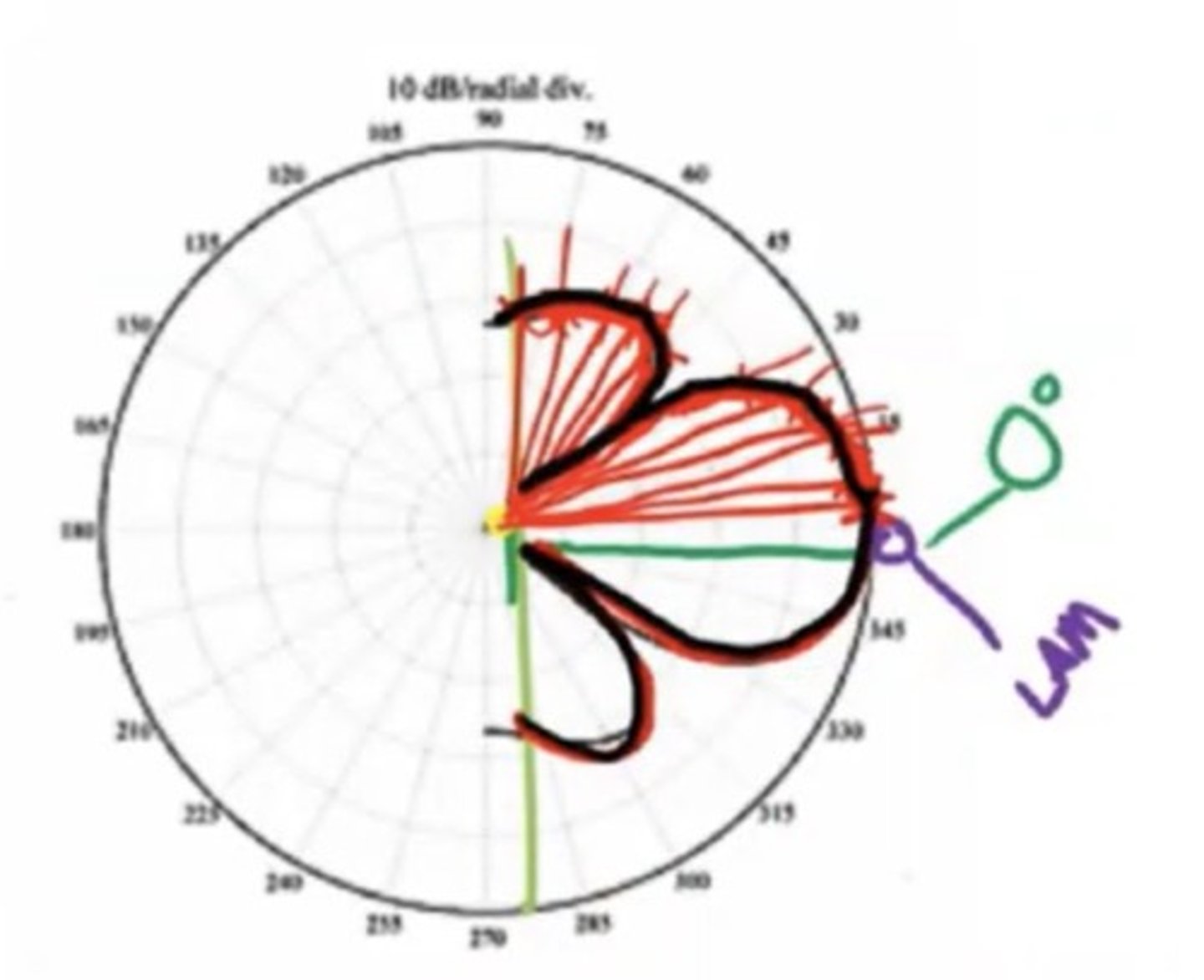
Side Lobes
Significant energy outside of main beam
Create artifacts or noise i
"Grating lobes" in linear transducers
Best seen in anechoic structures
More in CW transducers
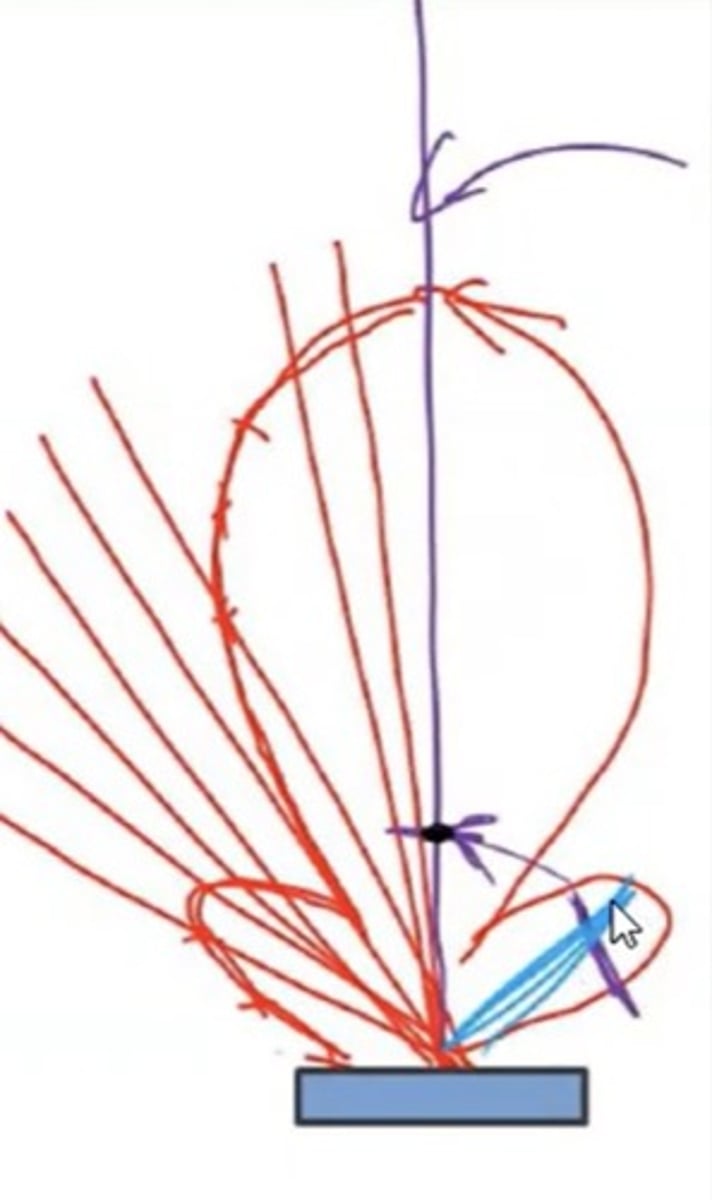
Increasing TX diameter & Frequency
Increases # of side lobes
Increases directionality
Rreduced divergence
May increase related artifacts
Low Q TX
Broader bandwidth
Fewer and less intense side lobes
Main lobe intensity pattern is widened
Apodizing
Process in electronic arrays to reduce side lobes