NHA CCMA Focused Review Body Structures and Organ Systems
 Call Kai
 Learn
Learn Practice Test
 Spaced Repetition
 Match
Match Flashcards
 Knowt Play
1/216

There's no tags or description
Looks like no tags are added yet.
Name | Mastery | Learn | Test | Matching | Spaced | Call with Kai | Chat |
|---|
No analytics yet
Send a link to your students to track their progress
217 Terms
anatomical position.
Standing erect, arms at the sides of the body with eyes and palms facing forward, legs parallel with toes pointing forward

midline.
Divides the body into equal halves from head to feet
Superior (cranial):
Above or closer to the head. The esophagus is superior to the stomach.
Inferior (caudal):
Below or closer to the feet. The bladder is inferior to the kidneys.
Anterior (ventral):
Toward the front of the body. The sternum is anterior to the spine.
Posterior (dorsal):
Toward the back of the body. The sacrum is posterior to the pubis symphysis.
Medial:
Closer to the midline of the body. The tibia is the medial bone of the lower leg.
Lateral:
Further away from the midline of the body. The radius is lateral to the ulna.
Proximal:
Closer to the trunk of the body. The proximal femur articulates with the pelvis to form the hip joint.
Distal:
Farther away from the trunk.The distal humerus helps to form the elbow.
Superficial:
Closer to the surface of the body. Veins are superficial to arteries.
Deep:
Farther from the body's surface. Arteries are deeper than veins.
Sagittal plane:
Divides the body into left and right sides. Midsagittal refers to an equal division of left and right sides, running along the midline of the body.

Transverse plane:
Divides the body into upper and lower sections, not necessarily equally.

Frontal plane:
Also called coronal plane, divides the body into anterior and posterior sections.

Cranial cavity:
Within the bony cranium, houses the meninges (brain)

Spinal cavity:
A continuation of the cranial cavity as it travels down the midline of the back

Thoracic cavity:
Within the chest, houses the lungs, heart,
and major vessels

Abdominal cavity:
Within the abdomen, houses several major organs

Pelvic cavity:
Inferior to the abdominal cavity, houses the bladder

The human body can be divided into ................ or .............. regions
quadrants, 9
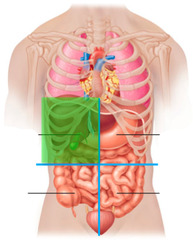
right upper quadrant
RUQ
The gallbladder is located in the right upper quadrant of the abdomen.
It also contains the major portion of the liver.
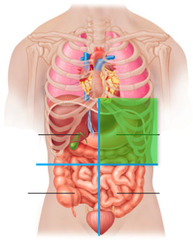
left upper quadrant
LUQ
The stomach and spleen are located in the left upper quadrant of the abdomen.
It also contains the left lobe of the liver.
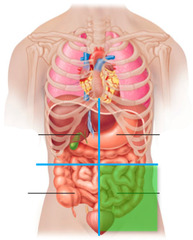
right lower quadrant
RLQ
The cecum and appendix are located in the right lower quadrant of the abdomen.

left lower quadrant
LLQ
The left lower quadrant contains the descending colon and a portion of the small intestine.
right hypochondriac region

right lumbar region

right iliac region
epigastric region

umbilical region

hypogastric region

left hypochondriac region

left lumbar region

left iliac region
homeostasis.
A balanced, stable state within the body
Integumentary system is made up of
⦁ Skin
⦁ Hair follicles
⦁ Sebaceous (oil) glands.
⦁ Fingernails and toenails
⦁ Sudoriferous (sweat) glands
⦁ Epidermis layer
⦁ Dermis layer
⦁ Subcutaneous layer
⦁ Skin:
Responsible for protection, temperature regulation, sensation, excretion, and vitamin D production.
⦁ Hair follicles:
Generate hair.
⦁ Sebaceous (oil) glands:
Produce sebum to keep skin and hair soft, and prevent bacteria from
growing on the skin.
⦁ Fingernails and toenails:
Protect the ends of fingers and toes.
⦁ Sudoriferous (sweat) glands:
.
Produce sweat to aid in cooling the body.
⦁ Epidermis layer:
Outermost layer of epithelial tissue, covers the external surface of the body.
⦁ Dermis layer:
Thick layer beneath the dermis that contains arteries, veins, nerves.
⦁ Subcutaneous layer:
Loose, connective tissue composed of adipose tissue and lipocytes.
The largest organ of the integumentary system
is the skin.
Hair, nails, and glands are considered
accessory organs of the integumentary system.
The skin has several important functions, which the accessory organs also aid in. These functions are..........
Protection, Temperature regulation,
Excretion, Sensation,
and Vitamin D production
Protection:
The skin is the body's first defense against illness and injury. It also prevents exposure of the body's internal structures from dehydration and UV exposure.
Temperature regulation:
The skin plays a significant role in the body's ability to maintain and regulate its temperature. When a person is hot or cold, superficial blood vessels in the skin dilate or constrict to control the flow of blood to the surface of the skin, aiding in warming or cooling.
Excretion:
Perspiring aids in cooling the body but also results in the loss of water and minerals.
Sensation:
The skin is loaded with nerve receptors to detect sensations (heat, cold, pain).
Vitamin D production:
The body needs vitamin D in order to absorb calcium (needed for bone strength). Vitamin D comes from sun exposure to the skin.
The skeletal system's purpose is to
give the body structure and posture, as well as protect the soft internal organs from injury.
The skeletal system also plays a key role by serving as
attachment points for muscles in the body.
The symbiotic relationship between bones and muscles often results in the systems being referenced as
one (the musculoskeletal system).
Bones of the skeletal system are classified by their
shape.
⦁ Axial skeleton:
The adult axial skeleton has 80 bones including the skull, vertebrae, and ribs.
⦁ Ligament:
Attaches bone to bone for joint stability.
⦁ Appendicular skeleton:
The adult appendicular skeleton has 126 bones including arms, legs, and pelvic girdle.
⦁ Long bones:
Have epiphysis, diaphysis, and medullary cavity containing yellow bone marrow. The ends of long bones are covered by articular cartilage to allow joint movement without causing friction. Examples: femur, humerus, tibia, fibula, ulna, radius
⦁ Short bones:
Found in the wrists and ankles, typically small and round. Examples: carpals, tarsals

⦁ Flat bones:
Majority of surface area is flat or slightly curved. Examples: skull, ribs

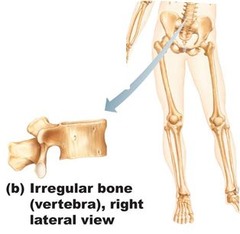
⦁ Irregular bones:
Unusual shape that is typically related to their function. Examples: vertebrae, pelvis
⦁ Sesamoid bones:
Small, round bones found in joints that are held in place by tendons. Example: patella

Red bone marrow, found within bones, is responsible for
producing new blood cells.
The process known as hematopoiesis is
Red bone marrow producing new blood cells.
Bones store calcium, which is essential for
proper cell function.
BONES OF THE UPPER EXTREMITIES
Scapula, Clavicle, Humerus, Radius, Ulna, Carpals, Metacarpals, and Phalanges
BONES OF THE LOWER EXTREMITIES
Pelvic girdle, Femur, Patella, Tibia,
Fibula,Tarsals, Metatarsals, and Phalanges
BONES OF THE AXIAL SKELETON
Skull, Cervical vertebrae, Thoracic vertebrae, Lumbar vertebrae, Sacrum, Coccyx, and Ribs
The muscular system is made up of
⦁ Skeletal muscle
⦁ Smooth muscle
⦁ Cardiac muscle
⦁ Tendon
⦁ Skeletal muscle:
Responsible for body movement, and is also called voluntary muscle or striated muscle.

⦁ Tendon:
Ends of skeletal muscles that attach the muscle to a bone.
⦁ Smooth muscle:
Found within the walls of hollow organs, blood vessels, and in the iris of the eye. Also called involuntary muscle.

⦁ Cardiac muscle:
Found only in the heart, cross-fibered to allow the heart to contract from the top and bottom in order to pump blood.
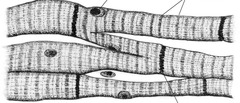
The muscles of the body are responsible for movement, both ........ and ............
voluntary (like walking), involuntary (like digestion).
The heart is also a muscle made of
specialized fibers that allow it to function as a pump.
The muscles and skeleton work together to provide
posture, movement, and other essential body functions.
lymphatic system includes
⦁ Lymph nodes
⦁ Lymph nodules
⦁ Thymus
⦁ Spleen
⦁ Interstitial fluid
⦁ Lymph nodes:
Small, glandular structures concentrated in the neck, axilla, and groin, which produce and store lymphocytes, and are home to macrophages that filter lymph.
⦁ Thymus:
Located posterior to the sternum. The thymus is large in children and atrophies (shrinks) after adolescence. It is responsible for the production and maturation of T-cells.

⦁ Lymph nodules:
Masses of lymphoid tissue comprised of macrophages and lymphocytes. Lymph nodules are not encapsulated like lymph nodes.
⦁ Spleen:
Largest lymphoid organ, located in the upper-left abdominal quadrant. It is home to macrophages that filter the blood. [B in this picture]
![<p>Largest lymphoid organ, located in the upper-left abdominal quadrant. It is home to macrophages that filter the blood. [B in this picture]</p>](https://assets.knowt.com/user-attachments/67a35c98-4b1c-40d9-bc74-4553f5701cb9.png)
⦁ Interstitial fluid:
Tissue fluid found between cells. Once collected and filtered, it's called lymph.
The immune system relies greatly on what system to prevent infections in the body?
the lymphatic system
When a pathogen is detected, the lymphatic system begins activating
the body's defenses. A major component of these defenses are B-cells and T-cells.
The immune system includes
Antigens,
Antibodies,
Immunoglobulins,
B-cells,
T-cells,
Monocytes, and the four primary types of immunity:
Naturally acquired active immunity,
Artificially acquired active immunity,
Naturally acquired passive immunity,
and Artificially acquired passive immunity.
Antigen:
Foreign substance within the body.
Antibody:
Protein the body creates in response to specific antigens.
Immunoglobulins:
Antibodies.
B-cells:
Type of lymphocyte that can recognize antigens and responds by turning into plasma cells. These plasma cells then create antibodies against specific antigens.
T-cells:
Type of lymphocyte that can recognize antigens and attaches to them to attack the invading cells directly.
Monocytes:
Engulf and destroy pathogens that have been coagulated with antibodies.
Creating immunity, or the ability to resist pathogens, is an essential function of the
immune system.
People are born with some immunity and
develop more over time.
Some immunity occurs from being exposed to
pathogens
Other types of immunity are developed through
immunizations.
There are four primary types of immunity.
Naturally acquired active immunity,
Artificially acquired active immunity, Naturally acquired passive immunity, and Artificially acquired passive immunity.
Naturally acquired active immunity:
This occurs when a person has an infectious disease and then develops antibodies against the pathogen that caused the disease. The antibodies have a memory that prevents future infections by the same pathogen.
Artificially acquired active immunity:
This type of immunity is the result of administering a vaccination. The antibodies are activated by the vaccine and develop memory to recognize the pathogen in the future.