SBM
 Call Kai
 Learn
Learn Practice Test
 Spaced Repetition
 Match
Match Flashcards
 Knowt Play
1/63

There's no tags or description
Looks like no tags are added yet.
Name | Mastery | Learn | Test | Matching | Spaced | Call with Kai | Chat |
|---|
No analytics yet
Send a link to your students to track their progress
64 Terms
What does oligo refer to?
General prefix for more than 2 monomers
Peptide bond formation
Condensation reaction
Peptide sequences written from N (-NH2) to C (-COOH) terminus
amino acids can be L or D depending on the stereochemistry at the α-carbon
Most stable conformation of hexose sugars?
Ring in chair conformation. Equatorial favoured.
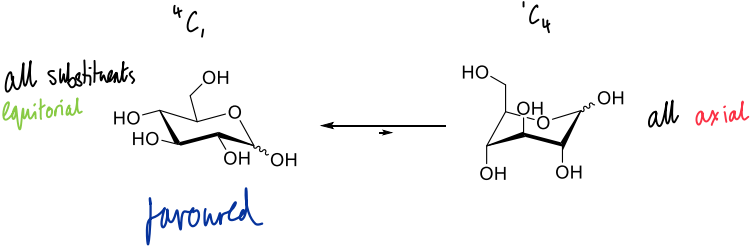
In solution, free monosaccharides exist as an equilibrium of two dif anomers
Determined by hydroxyl group at the C1 (anomeric) position
Occurs through mutarotation where the ring converts to an acyclic aldehyde intermediate and back
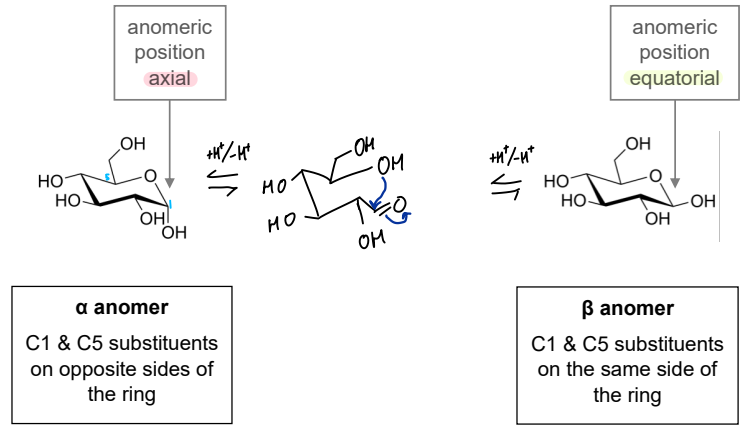
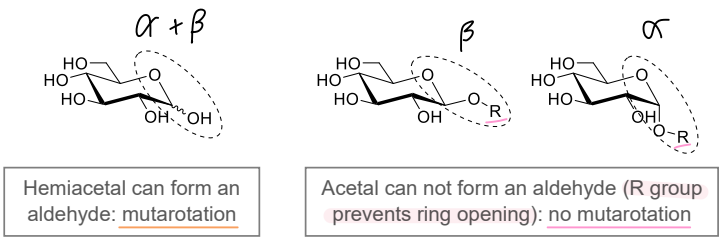
Mutarotation requires a _______ at the anomeric position. The anomeric stereochemistry (α or β) is fixed once a ____________ is formed, i.e. there is a substituent other than __ at the anomeric position:
free OH, glycosidic bond, OH
For efficient & selective coupling between AAs for peptide synthesis, we need to:
1) increase reactivity by activating the -COOH by turning the carboxylic -OH into a better leaving group
2) encourage regio-/chemoselectivity by protecting groups
3) avoid loss of stereochemistry / racemisation
What groups need protecting (on amino acids)?
N terminus on one
C terminus on the other
Functional groups on the side chains (R groups) - especially nucleophiles (OH/SH), acids (carboxylates) & bases (NH groups)
Activation of the C-terminal carboxylic acid as an acid chloride
Causes racemisation of the activated amino acid so don’t use acyl chlorides
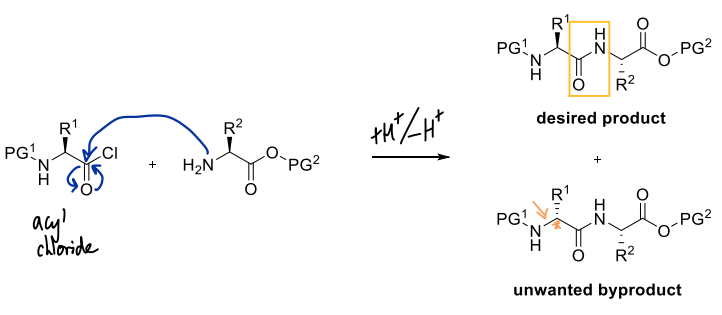
How does racemisation happen?
Oxazolone formation leads to keto-enol tautomerisation, which causes the chiral center at the α-carbon (adjacent to the carbonyl group) to racemise
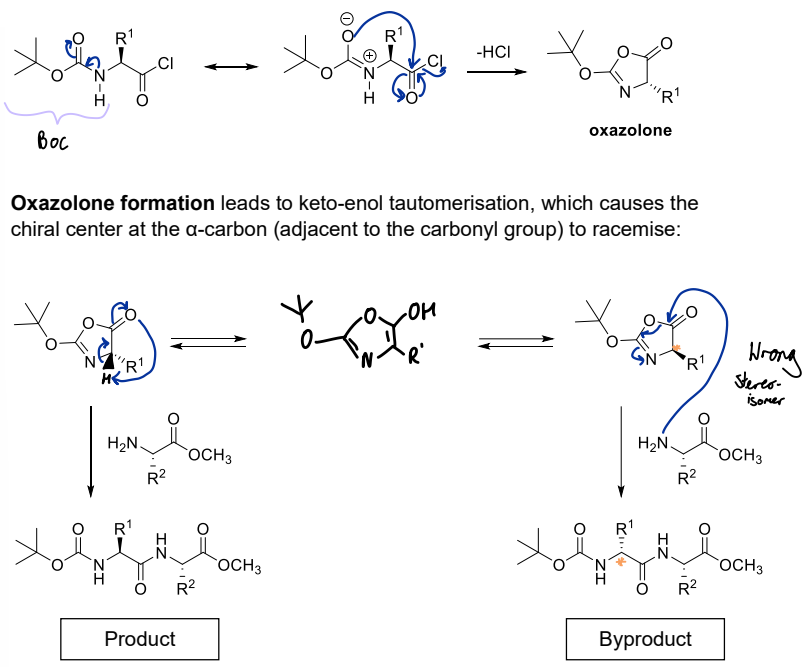
Can minimise racemisation by using a coupling reagent to activate the C terminus
generates a less reactive leaving group (but still better than OH)
allows one-pot reaction without isolation of the activated species
Peptide synthesis is preferred in the ______ terminal direction:
C to N
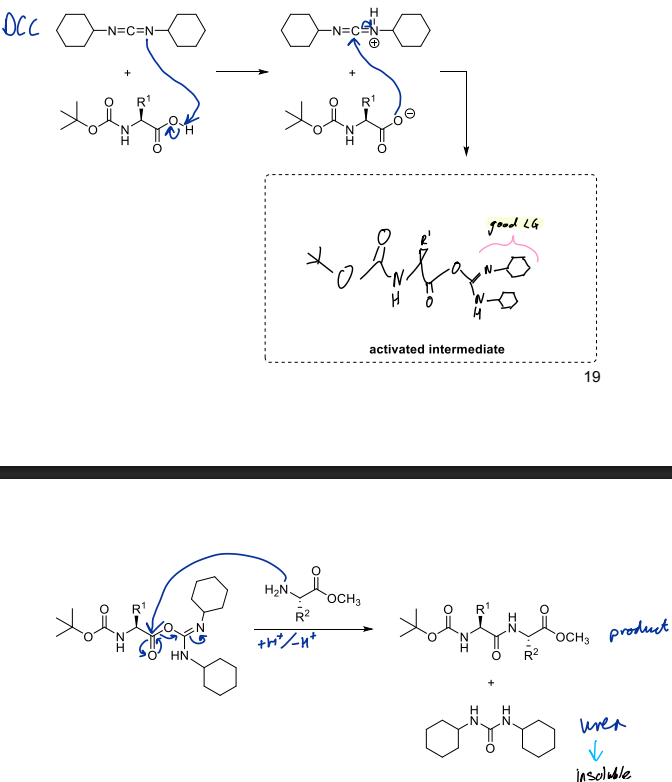
Coupling reagents: DCC
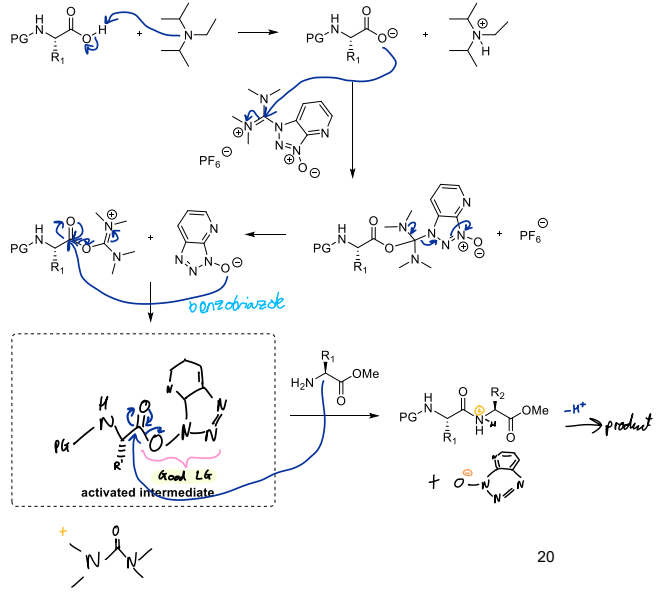
Coupling reagents: HATU + base (DiPEA)
Base lp to H to O on AA’s -OH (carboxylate)
O- to C=N
Cleave AA off by forming a pyridine
O- from benzobriazole goes to C on C=O on AA forming activated intermediate which has a good leaving group
AA + AA makes peptide
Protecting group criteria
1. Stability towards the conditions used in subsequent steps (all assessed are)
2. Orthogonality: being able to remove protecting groups separately, i.e. without affecting other groups that are present.
3. Selectivity for installation of protecting groups at specific positions.
Protection of the amino acid N-terminus (carbamates): General
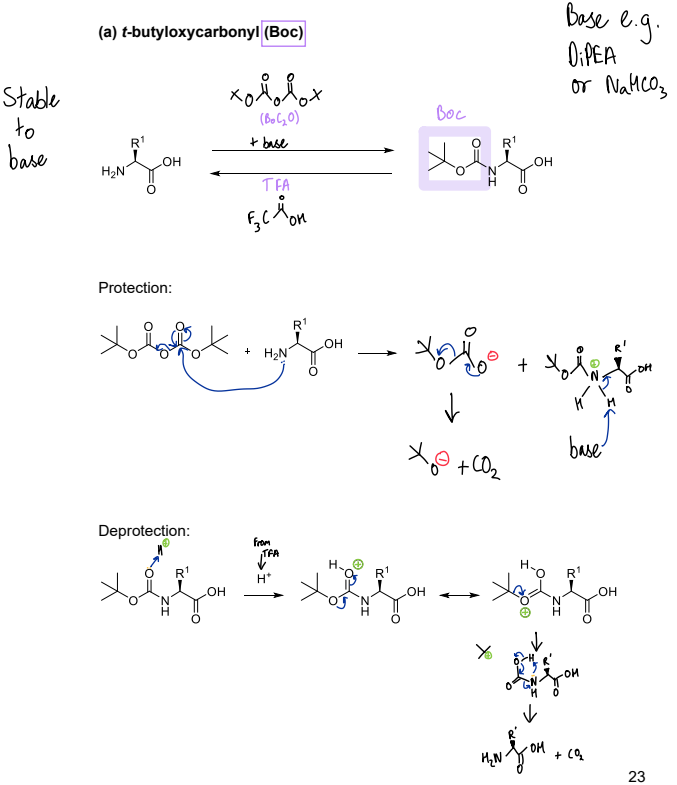
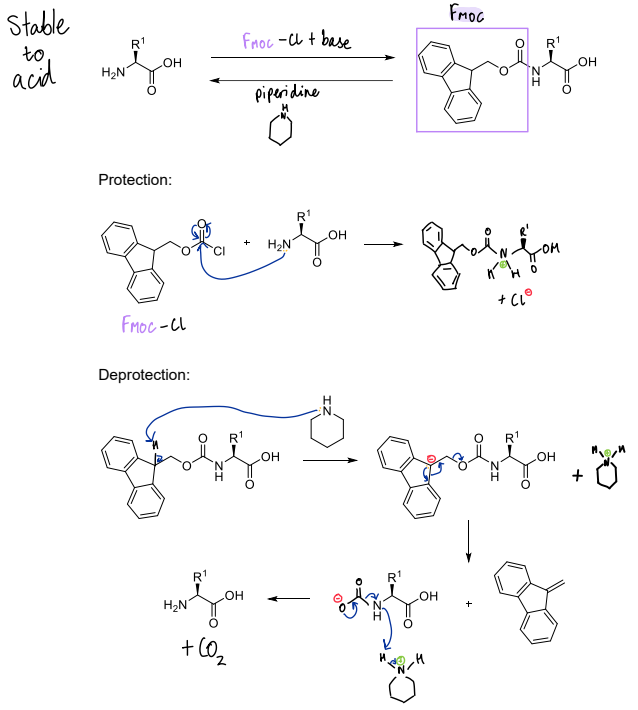
Installation of the protecting groups: acylation with an acyl chloride or dicarbonate under basic conditions
Deprotection conditions: variable, dependent on the structure
Protection of the amino acid N-terminus (carbamates): Boc
Protection of the amino acid N-terminus (carbamates): Fmoc
Protection of the amino acid C-terminus (esters): General
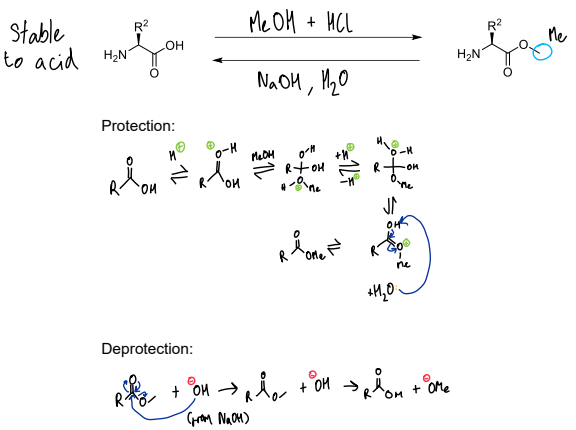
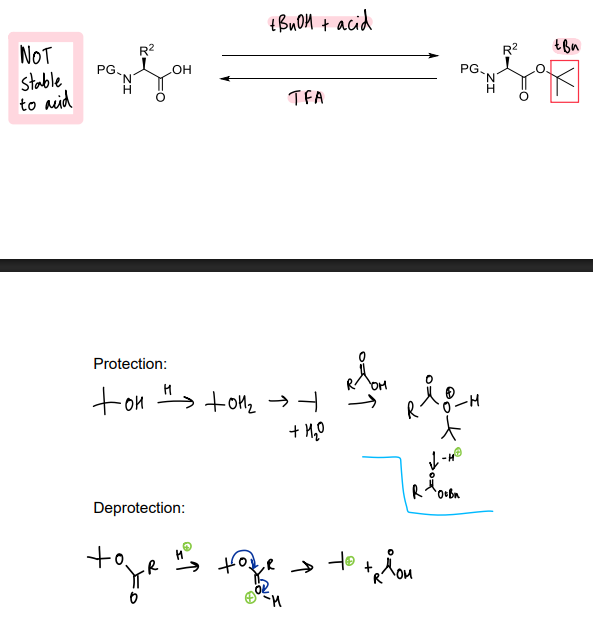
Installation of the protecting groups: generally by acid-catalysed esterification w/ an alcohol
Deprotection conditions: variable, dependent on structure
All esters are sensitive to hydrolysis with aqueous base
Protection of the amino acid C-terminus (esters): methyl ester
Protection of the amino acid C-terminus (esters): tert-butyl ester
Protection of amino acid side chains: R = carboxylic acid
Same protective groups as for C- terminus: methyl ester, tert-butyl ester
Protection of amino acid side chains: R = amines
Same protective groups as for C- terminus: Boc & Fmoc
Protection of amino acid side chains: R = hydroxyl groups - general
Installation of the protecting groups: by nucleophilic substitution of an alkyl/silyl halide under basic conditions
Deprotection conditions: depend on structure
Alkyl ethers are more stable than analogous esters & not sensitive to hydrolysis. Ethers can be removed using specific conditions.
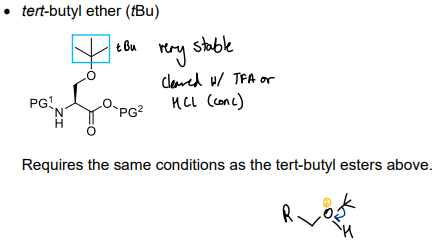
Protection of amino acid side chains: R = hydroxyl groups - tert-butyl ether
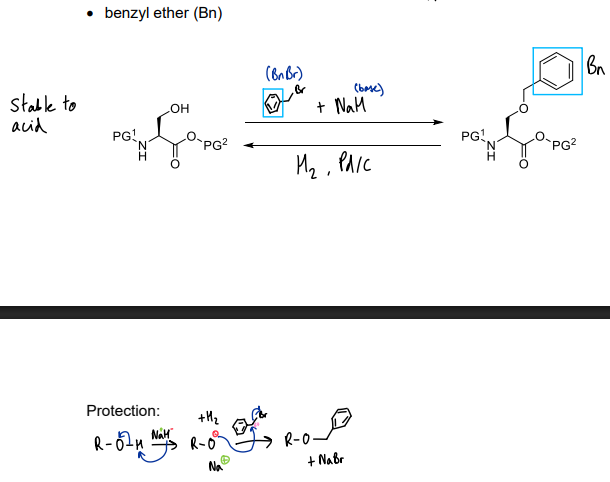
Protection of amino acid side chains: R = hydroxyl groups - benzyl ether
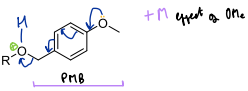
Why is PMB more sensitive to acidic hydrolysis than the benzyl ether?
+M effect of OMe
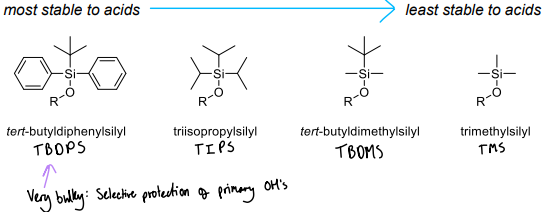
Protection of amino acid side chains: R = hydroxyl groups - silyl ethers
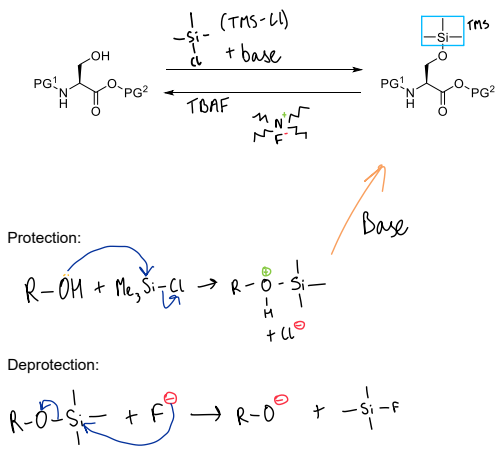
Other silyl ethers carry different substituents that change their relative stability:
Solid phase peptide synthesis (SPPS):
Construction of peptides on insoluble functionalised polymer beads (‘resin’)
• Resin immobilises peptide
• Reagents are in solution & can be washed away after reaction (no work-up required)
• Product can be cleaved off after synthesis is complete
What is a resin?
A crosslinked polystyrene
C-terminus of the first amino acid is used as the site of attachment to the solid support
Need a functionalised resin that can be covalently linked to the carboxylate of an amino acid
Merrifield Resin
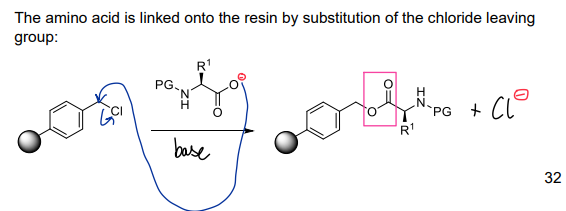
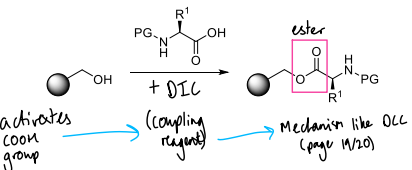
Wang resin and Sasrin resin:
OH functionalised
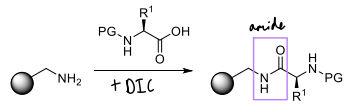
Rink amide resin:
NH2 functionalised
Peptides are commonly released from the resin under _____ conditions.
acidic
Cleavage from Merrifield resin requires __
HF
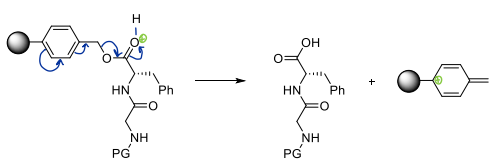
Wang & Sasrin resins can be cleaved using ___ instead of HF
TFA
Sarsin requires less TFA conc as it is more acid labile due to having more +M effects
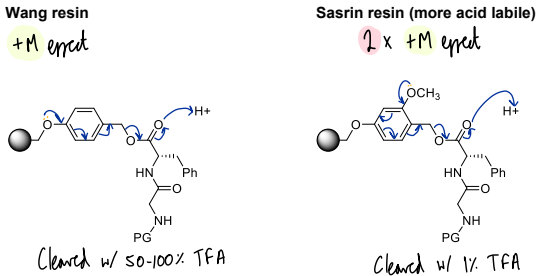
Will the N-terminal protecting group be removed concurrently with peptide release from the resin?
• if PG = Fmoc No
• if PG = Boc Yes
In SPPS, the N-terminus of the amino acids is protected with Fmoc, not Boc. Why?
Cleavage of Boc would cause release of the peptide
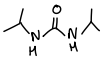
In SPPS, we use DIC as a coupling reagent instead of DCC. Why?
DCC would produce an insoluble urea byproduct, which precipitates with the solid support.
• DIC follows the same activating mechanism as DCC
• The urea byproduct that forms is soluble:
In SPPS, protecting groups for side chains are chosen so that deprotection and release of the peptide (from the resin) simultaneously
So they have to be labile under acidic conditions
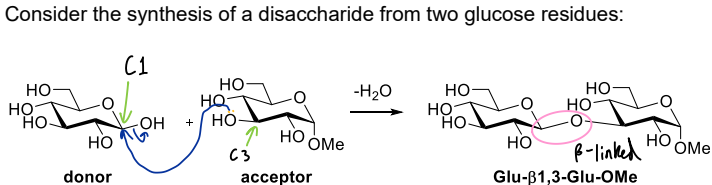
Challenges in glycosidic bond formation: Reactivity
OH- is a poor leaving group
Need to increase donor reactivity by activation of the anomeric hydroxyl group
Challenges in glycosidic bond formation: Regioselectivity
Need to react at the correct hydroxyl groups so need to install appropriate protecting groups
Challenges in glycosidic bond formation: Stereoselectivity
Need to control formation of the α or β anomer
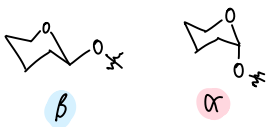
β-anomer favoured if PG1 =
ester (e.g. acetyl group)
α-anomer favoured if PG1
= ether (e.g. benzyl ether)
Protection of (non-anomeric) hydroxyl group
Similar to peptide synth
Selective protection of the primary hydroxyl group
Triphenyl methyl ether (Trityl)
Very sterically demanding → selectively added onto the least hindered OH
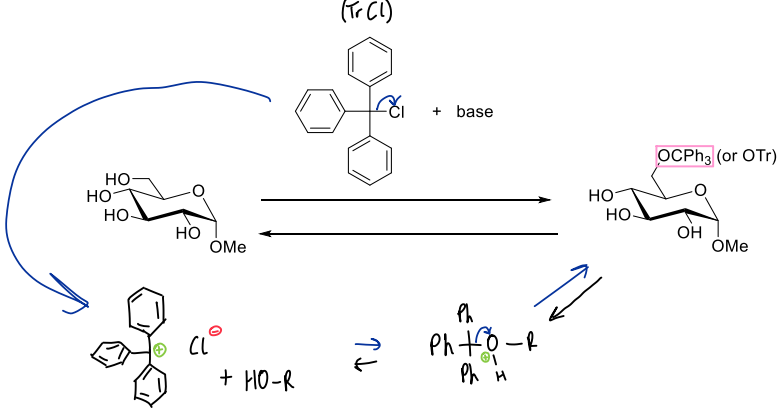
Non-selective protecting groups: Acetyl esters
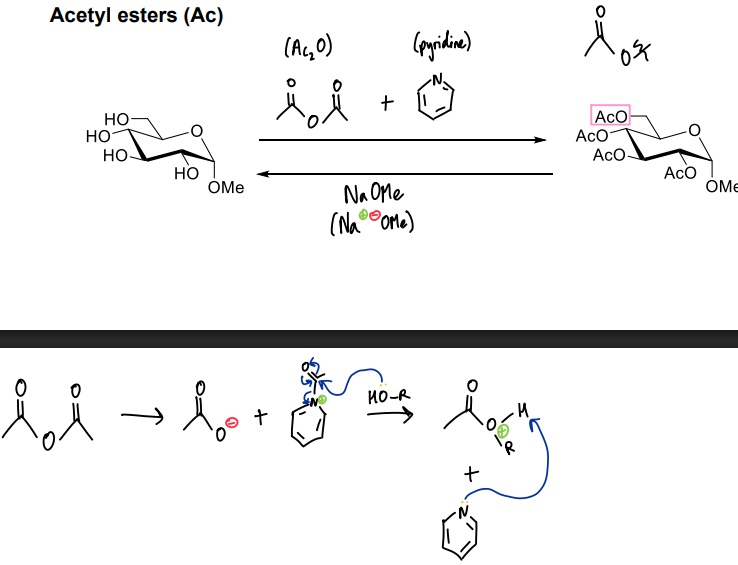
Non-selective protecting groups: Benzyl ethers
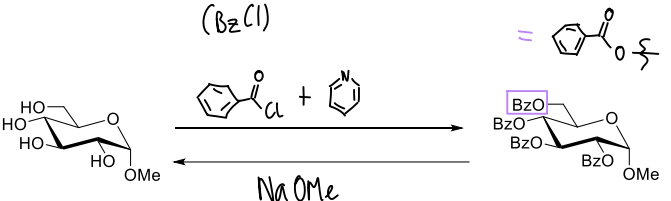
Selective protection & deprotection of the anomeric hydroxyl group:
Anomeric hydroxyl group is a _________ with unique reactivity so can use for selective protection/deprotection
hemiacetal
Fisher glycosylation:

Deprotection of anomeric acetyl ester

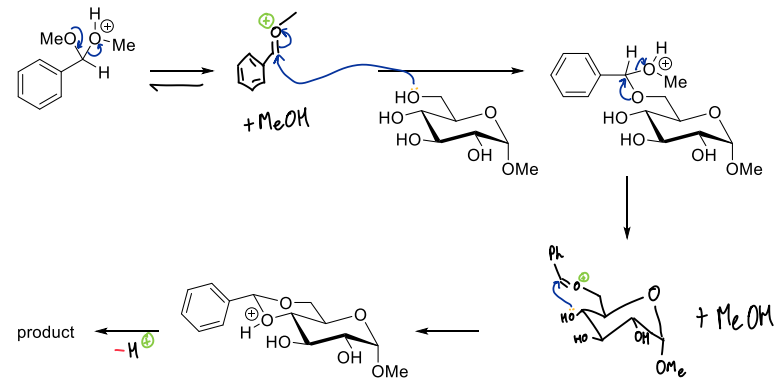
Selective protection of 1,3-diols: Benzylidene acetal
Prefers 1,3 over 1,2-diols → adds onto the hydroxyl groups at C4 & C6
Can selectively deprotect C4 or C6 & leaves the other hydroxyl group protected with a benzyl ether
Selective cleavage of the benzylidene acetal from only one of the two hydroxyl groups is possible by using specific reducing agents:
C4 - OH, C6 - OBn requires _________ + AlCl3
C4 - OBn, C6 - OH requires _______ + AlCl3
NaCNBH3, LiAlH4
Activation of the anomeric hydroxyl group
Install a good leaving group (‘X’) at the anomeric position of the glycosylation donor to enable reaction with the acceptor molecule.
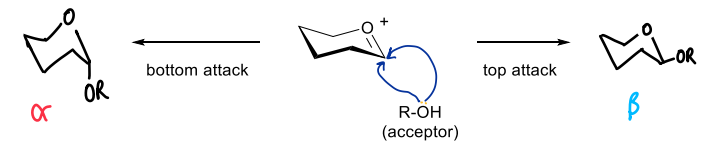
Activation gives a oxocarbenium ion (reactive carbocation intermediate)
The oxocarbenium ion can be attacked by an acceptor from __________ of the sugar ring, generating ____ the α & β anomers via an ___-type mechanism
either face, both, SN1
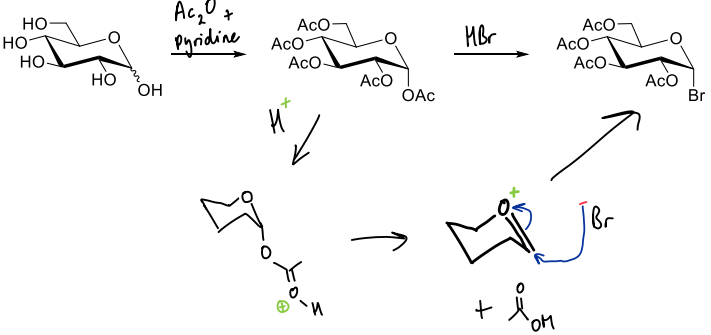
Leaving groups for glycosylation? Glycosyl bromide
Donor can be activated with silver salts to enable reaction with an acceptor molecule (ROH)
(Keep in mind that equivalent reactions with non-participating donors like Bn will involve direct attack of the acceptor at the oxocarbenium ion)
Leaving groups for glycosylation? Thioethers
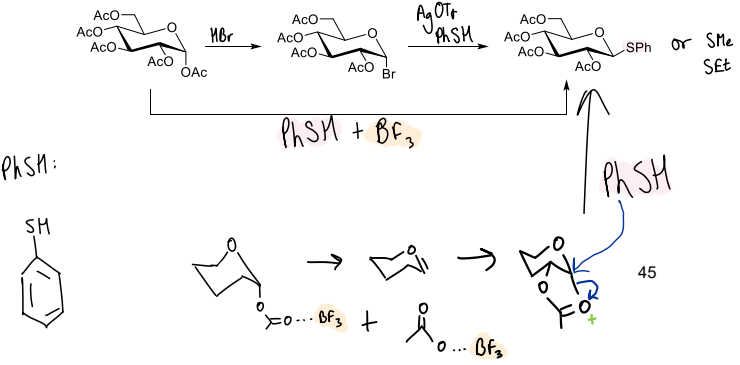
Thioethers can be made into good leaving groups by:
Iodination with NIS + acid
Methylation with MeOTf or TMSOTf
Oxidation followed by Tf2O
Each can eliminate the activated leaving group to form an oxocarbenium ion which then reacts w/ the acceptor
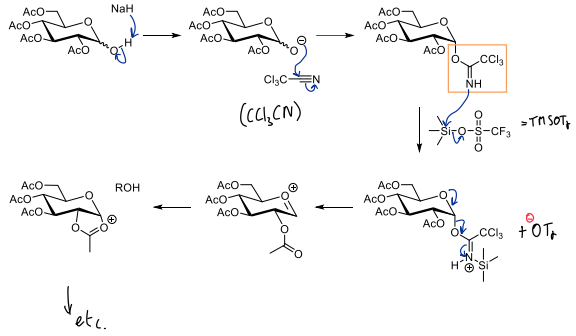
Leaving groups for glycosylation? trichloroacetimidate
Installed using trichloroacetonitrile (CCl3CN) + NaH
Activated by a Lewis acid such as TMSOTf
Factors driving stereochemical outcome of glycosylation to consider
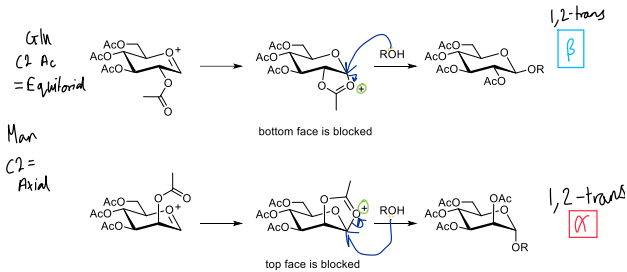
1. Is there neighbouring group participation? (favours 1,2-trans products)
2. Is there intramolecular aglycon delivery? (favours 1,2-cis products)
3. If not, assume the anomeric effect drives formation of the α-anomer
Stereochemical outcome of glycosylation: anomeric
α is most stable so major product
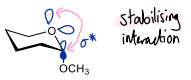
Explanation for anomeric effect
Dipole minimisation: In β, dipoles are partially aligned causing repulsion
Hyperconjugation: Orbital overlap between axial lp on the endocyclic oxygen & the σ* of the axial (α) C-O bond leads to a stabilising interaction
Stereochemical outcome of glycosylation: neighbouring group participation
Activation of donors w/ an ester protecting group at C2 causes formation of a bicyclic oxonium ion intermediate, sterically hindering attack by the acceptor (ROH) from 1 side, leading to exclusive formation of the 1,2-trans isomer
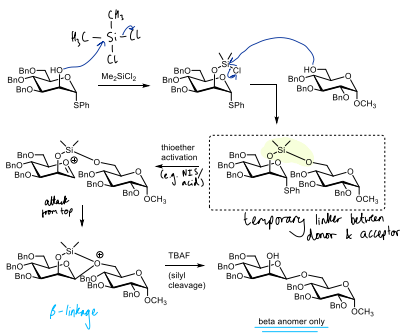
Stereochemical outcome of glycosylation: intramolecular aglycon delivery
Used to make 1,2-cis glycosidic bonds
A temporary linker between donor & acceptor molecules is positioned so that it restricts attack by the acceptor to the correct face of the donor ring