principles of psychopharmacology
 Call Kai
 Learn
Learn Practice Test
 Spaced Repetition
 Match
Match Flashcards
 Knowt Play
1/33

There's no tags or description
Looks like no tags are added yet.
Name | Mastery | Learn | Test | Matching | Spaced | Call with Kai | Chat |
|---|
No analytics yet
Send a link to your students to track their progress
34 Terms
what is a drug?
exogenously administered
without nutritional value
not produced by the body
what is a psychoactive drug?
exogenously administered
without nutritional value
not produced by the body
AND
causes changes in mood and/or behavior
AKA psychotropic
what is psychopharmacology?
the study of the effect of drugs on behavior
neuropsychopharmacology
effects of drugs on neurons
psychotropic/psychoactive
changes in mood and behavior
what is psychopharmacology responsible for?
understanding drugs
psychotherapeutic medications for neurological disorders and diseases
autonomic nervous system
addiction
site of action
where a drug interacts with our cells
drug effects
observable changes
physiology
behavior
mood
“effects”
drug action vs drug effects
therapeutic effect vs side effect
specific effect vs nonspecific effect
drug action vs drug effect
changes produced at the target site (da)
observable change (de)
therapeutic effect vs side effect
desired physical/behavioral effect (te)
everything else (se)
specific effect vs nonspecific effect
directly due to the chemical interaction (se)
subjective changes (nse)
placebo effect
an example of a nonspecific effect
has both therapeutic and side effects
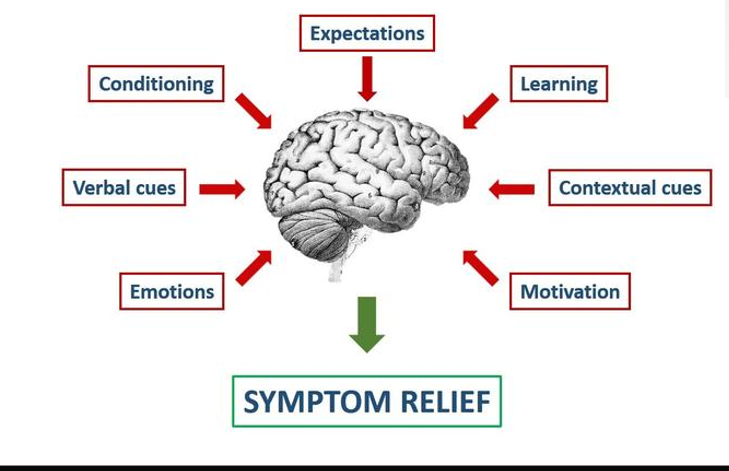
what is a nocebo effect?
makes you feel worse
pharmacodynamics vs pharmacokinetics
what the drug does to your body vs what the body does to the drug
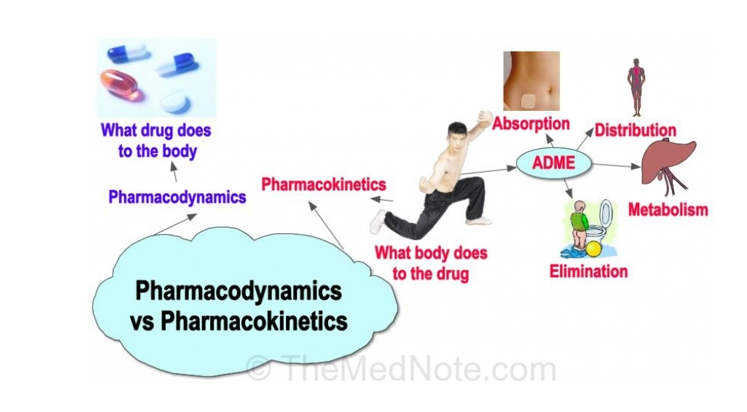
what is absorption?
how the drug gets into the blood stream
what is vocab related to pharmacokinetics?
bioavailability
routes of administration
absorption/distribution
binding
inactivation
what is bioavailability?
the amount of drug in the blood stream
routes of administration
Oral
Rectal
Intravenous
Intramuscular
Intraperitoneal
Subcutaneous
Inhalation
Topical/Transdermal
Intranasal
Epidural
Intracerebroventricular
Gene Therapy (Viral Vectors)
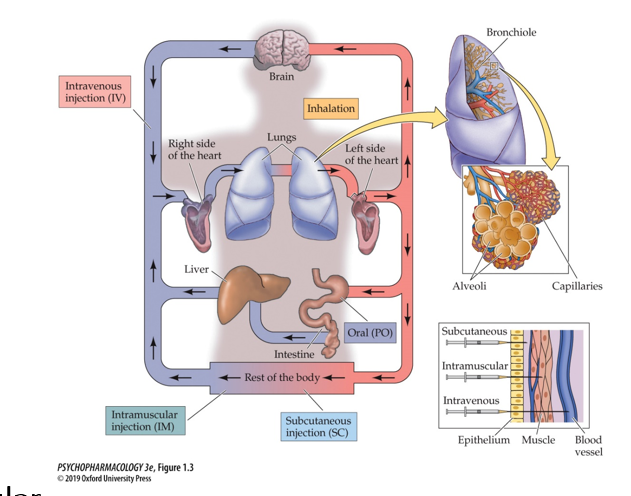
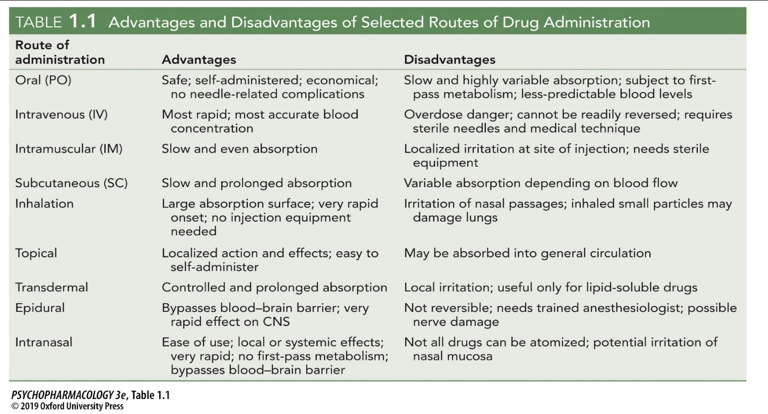
adv and disadv of dif routes of admin
how are lipid bilayers formed?
fat and water do not like eachother
water loving (hydrophilic) heads like water content of intra and extra cellular fluid, but the hydrophobic tails do not. the tails turn toward eachother and do not contact outside fluid
what must happen to the chemical in order to move via diffusion?
intra and extra fluid is charged - so in order to move via diffusion, the chemical must be non-ionized (uncharged)
what is lipid solubility?
easily crosses the membrane
i.e. steroid hormones
heroin more lipid soluble than morphine
what affects lipid-solubility?
ionization
what is ionization?
the process of losing or gaining an electrons
what does lack of electrical change do?
increases lipid-solubility
what does it mean that women have more fat than water?
women have a higher drug concentration at the target site
what does passive diffusion across lipophilic membranes depend on?
degree of ionization
what do the ionized form of a drug carry?
a charge and is polar so it cannot pass through membranes
what is active transport limited to?
drugs that are similar to endogenous substances

explain the figure
FIGURE 1.6 Effect of ionization on drug absorption
On the right side of the cell barrier in stomach acid (pH 2.0), aspirin molecules tend to remain in the non-ionized form (1), which promotes the passage of the drug through the cell walls (2) to the blood. Once the intact aspirin molecules reach the blood (pH 7.4), they ionize (3) and are “trapped” in the blood to be circulated throughout the body. In the lower portion of the figure, when the aspirin has reached the intestine, it tends to dissociate to a greater extent (4) in the more basic pH. Its more ionized form reduces passage (5) through the cells to the blood, so absorption from the intestine is slower than from the stomach.
how long does it take drug to circulate
circulated completely within 2 minutes
what do more vascularized areas mean?
higher drug concentration
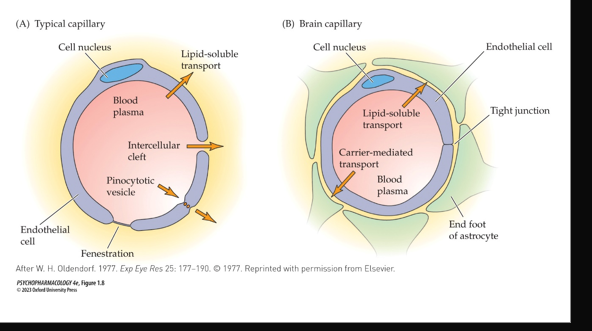
BBB - what gets in and how is it dif from blood
contents of CSF are stable unlike blood
only gets in if small and lipid-soluble