HESI Health Assessment Nightingale College Fall 2022
 Studied by 0 people
 Call Kai
 Learn
Learn Practice Test
 Spaced Repetition
 Match
Match Flashcards
 Knowt Play
1/76

There's no tags or description
Looks like no tags are added yet.
Name | Mastery | Learn | Test | Matching | Spaced |
|---|
No study sessions yet.
77 Terms
A 29 year old male client informs the nurse that he came to the clinic to see if, "Maybe I have lung cancer or something," and wants to get checked out since, "I can't seem to get rid of this body-wracking dry cough that has been hanging around for the last six weeks." Which computer documentation of this client's concerns should the nurse enter?
Describe having a "body-wracking dry cough" of 6 weeks duration.
A 75-year-old client with a recent history of a cerebrovascular accident (CVA) presents with right hemiparesis. The nurse tests the deep tendon reflexes on the right side and elicits a brisk 4+ response. Which interpretation of this finding is accurate?
Hyperactive response consistent with an upper motor neuron disorder.
The nurse examines a client's abdomen. Which finding indicates an abnormal response when palpating the spleen?
Firm mass palpated at bottom of left rib cage.
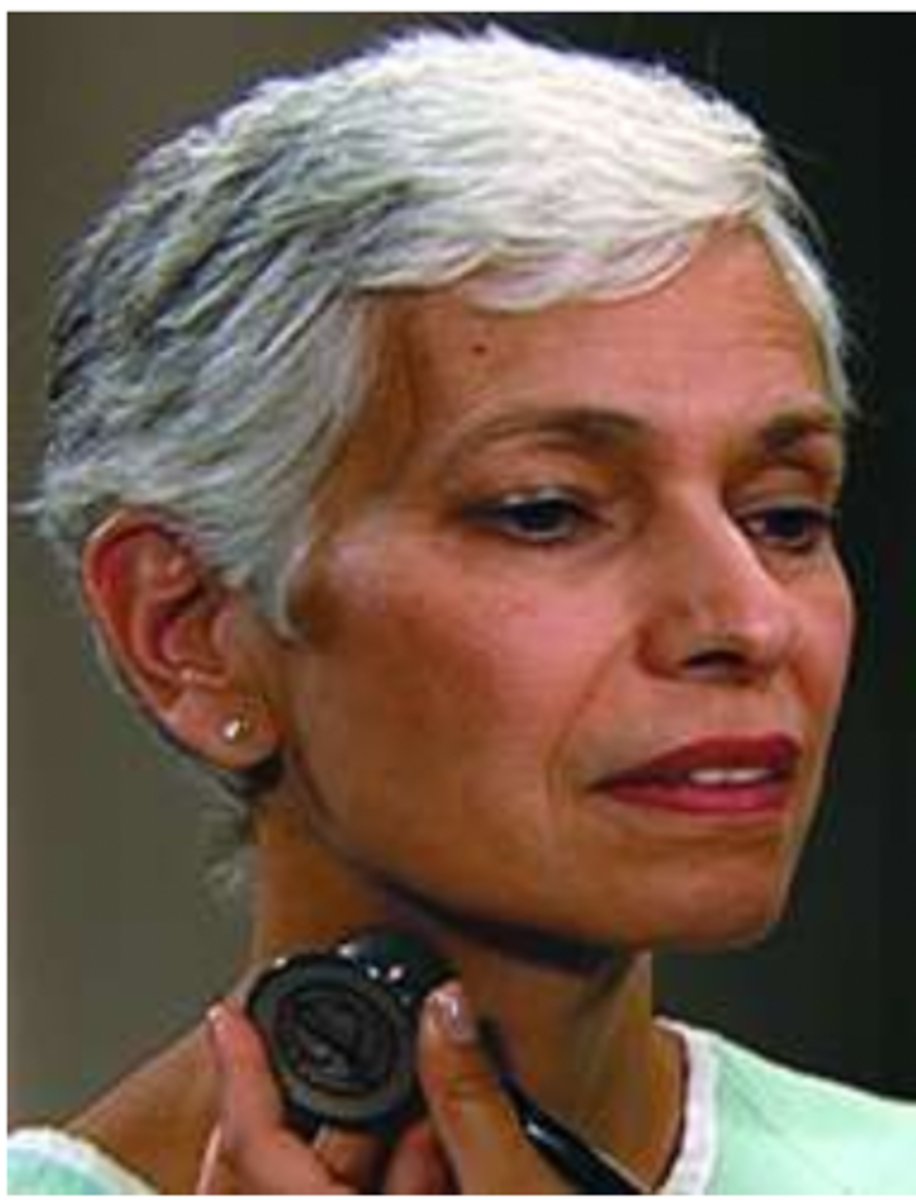
In auscultating for the presence of a carotid artery bruit, the nurse places the bell of the stethoscope at which location?
Place bell of stethoscope over carotid artery
A male client arrives at the clinic for follow-up health assessment after recent antibiotic treatment for pneumonia without hospitalization. Which technique should the nurse implement to assess for adventitious lung sounds?
Press the stethoscope's diaphragm firmly on the skin over each lung field.
A client with streptococcus pharyngitis reports high fever, difficulty swallowing and a muffled voice. Which complication should the nurse suspect?
Peritonsillar abscess.
The nurse is obtaining a health history for a client prior to a scheduled cholecystectomy. While interviewing the client, which assessment technique should the nurse use when asking about the client's use of illegal drugs and alcohol?
Ask specifically about alcohol, marijuana, cocaine, heroin, and amounts.
The nurse applies pressure over an area of the lower abdomen where the client reports pain. The client denies pain upon palpation, but reports pain when the pressure is released. What action should the nurse implement?
Notify the healthcare provider of the rebound tenderness.
The nurse is assessing an ulcer on a client's lower extremity, which is likely the result of either venous or arterial insufficiency. Which assessment technique should the nurse use to differentiate the pathophysiology causing the ulcer?
Observe the specific location and appearance of the ulceration.
A. What type of ulcer is this? Which pathophysiology? venous or arterial?
Venous leg ulcers usually develop on the inner lower leg, above the medial malleolus.
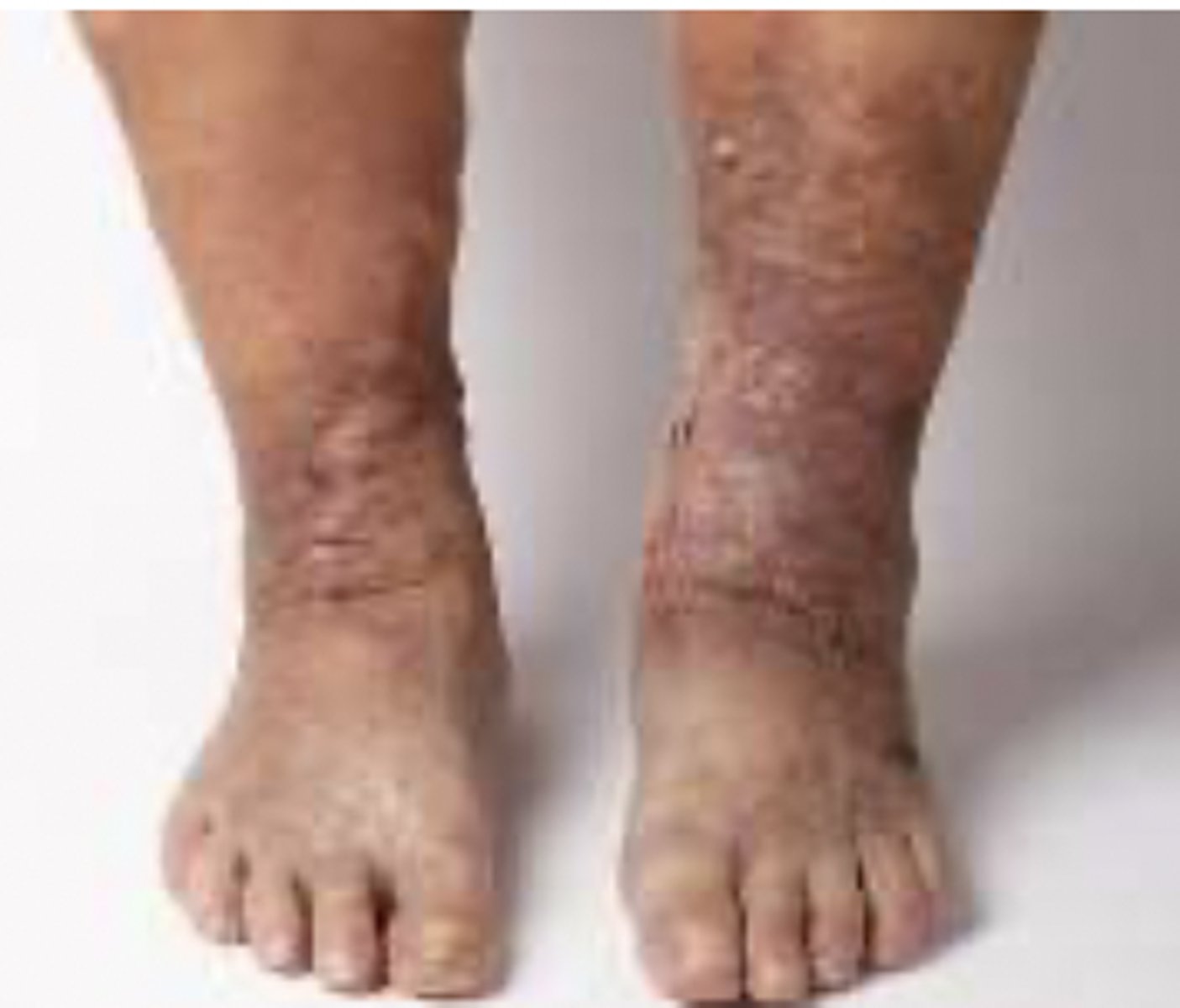
B. What type of ulcer is this? Which pathophysiology? venous or arterial?
Arterial wounds occur most often on the foot, in between or at the tips of the toes, at pressure points from foot wear, on the heels and around the lateral malleolus (the bone on the outside of the ankle joint).

The nurse is conducting a physical assessment of a young adult. Which information provides the
best indication of the individual’s nutritional status?
Condition of hair, nails, and skin.
The nurse is assessing a healthy adult male during an annual physical examination. The nurse auscultates the client's abdomen and hears gurgling sound every ten seconds. What action should the nurse take in response to this finding?
Document this normal bowel sound activity in the record.
In observing a client's face, which assessment finding requires the most immediate intervention by the nurse?
Oral mucosa is cyanotic.
While obtaining a health history, a male client tells the nurse that he sometimes experiences shortness of breath. The nurse determines that the client's respirators are regular and deep, and his respiratory rate is 14 breaths/minutes. What is the best nursing action?
A. Ask the client to perform light exercise and observe the respiratory effect.
B. Document "dyspnea on exertion" in the client's medical record.
C. Ask the client to describe the episodes of dyspnea in more detail.
D. Explain to the client the possible causes of dyspnea or "shortness of breath."
Ask the client to describe the episodes of dyspnea in more detail.
When assessing a male client's respiratory status, which technique should the nurse use to assess his anterior- posterior (AP) chest diameter?
A. Auscultation.
B. Percussion.
C. Palpation.
D. Observation.
Observation.
Which assessment finding supports the client statement, "My feet swell all the time?"
2+ pitting edema of ankles bilaterally.
The nurse is performing a cranial nerve exam on an 87-year-old client. The nurse notes that the client has a reduced upward gaze, a decreased corneal reflex, a high frequency hearing loss, and a reduced gag reflex. What action should the nurse take next?
A. Review past history for any episodes of a cerebral cortex lesion.
B. Implement neuro vital signs every 2 hours to detect Cushing's Triad.
C. Continue the assessment to the next pairs of cranial nerves.
D. Assess the spinal reflexes for demyelination symptoms.
Continue the assessment to the next pairs of cranial nerves.
When performing a neurologic assessment on an alert client, the nurse observes that the client's pupils are both round, 3 mm in size, and respond briskly to light. Which notation should the nurse use when documenting the assessment?
PERRL.
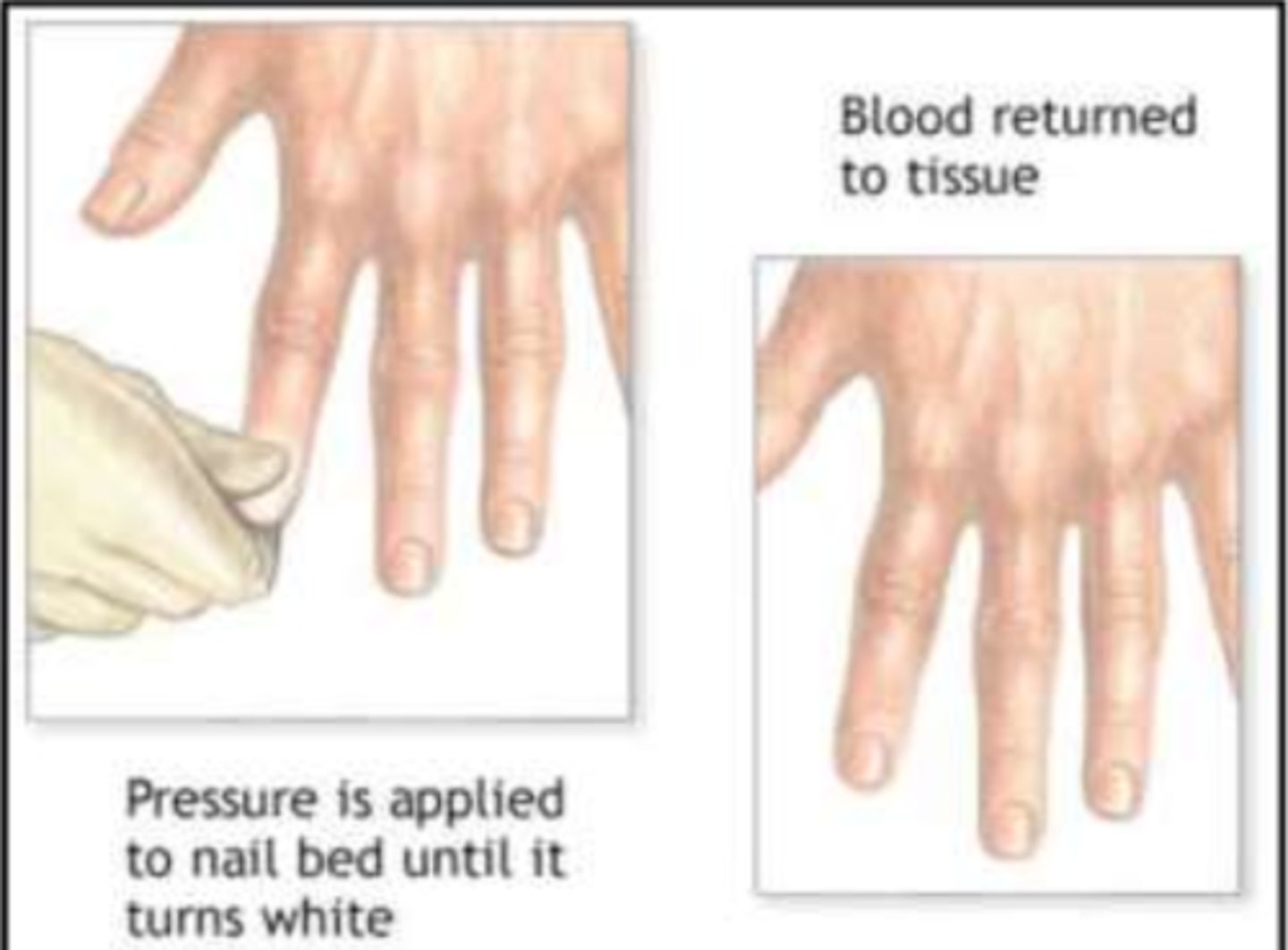
Which assessment technique provides the nurse with the best data related to the client's level of peripheral perfusion?
capillary refill
The nurse is assessing a female client who states that her hemorrhoids are inflamed and hurt constantly. Which intervention is best for the nurse to complete a focused assessment?
Position client in left lateral position to inspect perianal area for fissures or sacs.
The nurse is performing an initial assessment of a client who has an expressionless facial affect, slurred speech, and red conjunctivae. What question should the nurse ask first? "Have you
Been sleeping well?"
After checking a client's pupillary response to light, the practical nurse (PN) tells the nurse that the client's pupils are constricted with minimal response to light. Before verifying the PN's findings, which action should the nurse take?
Assess the client's visual fields.
The nurse completes inspection of the abdomen on an adult client. Which finding is considered normal for this client?
Homogeneous color.
Which skill should the nurse have an older client demonstrate to evaluate performance of daily living activities?
Sorting a collection of socks.
A client sustained a subconjunctival hemorrhage. The presence of which set of symptoms indicate that the client needs to be seen for further evaluation by an ophthalmologist?
Diminished ability to focus on close work and excessive illumination required.
To assess a female client for hirsutism, which action should the nurse take?
Assess the appearance of the client's face.
An older adult client is admitted to the medical unit because of loss of appetite and generalized malaise. To analyze the client medical condition, which laboratory value is most important for the nurse to review?
Hemoglobin.
A male client returns to the clinic for a follow-up visit after being treated for a bladder infection. While examining the client, which finding indicated an expected response to the treatment?
Pain score of 1 out of 10 with urination.
The nurse completes palpitation of the abdomen on an older adult client. Which finding is considered normal for the client?
Peristaltic waves.
The nurse has just completed palpitation maneuvers for lymph nodes on a 75-year-old female client. Which findings are considered normal for this elderly client?
Nodes are non-palpable.
A women comes to the clinic for her first prenatal visit. The nurse is conducting a health history and the women begins to cry when asked about previous pregnancies. Which response is best for the nurse to provide?
Allow the client to compose herself then change the subject.
While performing a physical assessment, the nurse is unable to palpate the client's pedal pulses. Which action should the nurse take?
Use a doppler ultrasonic stethoscope.
A homeless male client with a history of alcohol abuse had a cerebrovascular accident (CVA) 10 years ago that resulted in left hemiparesis. Today he is complaining of pain in his left leg, is afebrile, has 4+ pitting edema in the lower left leg, and minimal swelling of the right leg. Which action should the nurse implement first?
Inspect legs for infection of trauma.
The nurse is assessing a client for goiter and is unable to observe the thyroid gland. Which action should the nurse take?
Ask the client to swallow while palpating along the sides of the trachea
While completing an admission assessment for a client with gastrointestinal bleeding, the nurse inspects the perineal area and anus. Which findings indicates a normal appearance of the anus?
Increased pigmentation and coarse skin.
Which focused assessment technique should the nurse use for a client admitted with possible dehydration?
Grasp skin fold of the posterior forearm.
he nurse begins a client's musculoskeletal assessment. While using the technique of inspection, the nurse assesses for which possible findings? (Select all that apply)
Kyphosis.
Atrophy.
Contracture.
A client comes to the clinic due to shoulder discomfort and intermittent pain while swimming today. To assist normal range of motion (ROM) of the client's shoulder, which assessment techniques should the nurse ask the client to perform?
Hold arms up at 90 degree while arms are pushed downward.
A client reports to the healthcare provider's office for a routine post-surgical evaluation six weeks after a hysterectomy. Which history-taking approach should the nurse use to gather the needed information?
Collect information about the client's activities since surgery.
In assessing a male client's level of consciousness, the nurse determines that the client does not open his eyes spontaneously. What should the nurse do next?
Observe for eye opening to a painful stimulus.
In assessing a client's sensory nerve function, the nurse prepares to assess the client's response to temperature. What action should the nurse include during this assessment?
Cover the client with a warmed blanket.
The nurse is obtaining a health history for a client during an annual physical examination. When evaluating the client for menopausal symptoms, which finding indicates the client is perimenopausal?
Drenching night sweats.
A client states that he is legally blind. Which assessment techniques should the nurse use to obtain data to support the client's statement?
Assess the client's ability to read a Snellen chart from a distance of 20 feet.
Which question by the nurse is likely to elicit the most information regarding a client's use of medications to treat a chronic cough?
What medications are you currently taking?
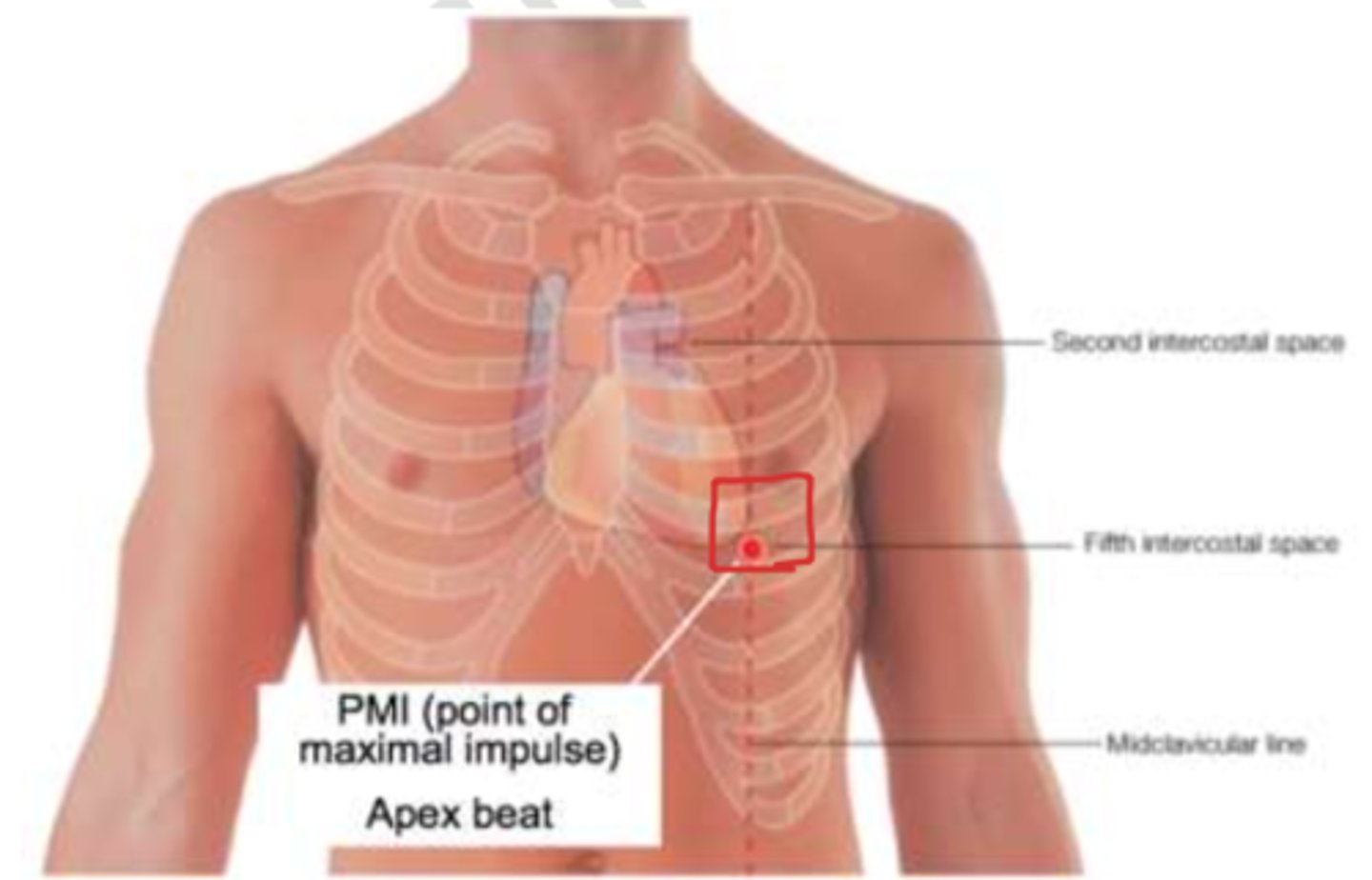
After a young adult woman describes feeling palpitations when she lies on her left side it is most important for the nurse to auscultate heart sounds at which anatomical location?
Apex of the heart at the left fifth intercostal space at the midclavicular line.
While assessing the legs of a female client, the nurse observes leathery-looking skin. The client reports aching tired legs that swell if she stands for long periods of time. To screen for venous insufficiency, the nurse should ask the client if she has experienced which subject finding?
Decreased pain when legs are elevated.
During an abdominal assessment, a client with a temperature of 103 F (39.4 C) experiences pain and abruptly stops inhaling during deep palpation. Which prescription is most important for the nurse to implement?
Nothing by mouth.
After placing a client in a supine position, the nurse uses the diaphragm of the stethoscope to auscultate bowel sounds and hears a loud, high pitched almost continuous gurgling in two quadrants. What action should the nurse implement?
Auscultate the remaining two quadrants.
To objectively confirm the presence of fever, before taking the client's temperature, which action should the nurse take?
Use both hands to hold and palpate the client's hands.
A male client who is admitted for an acute brain attack reports the onset of a burning sensation in his hands and legs. Which action should the nurse implement to identify additional findings that are consistent with the client's paresthesia?
Evaluate client's muscle strength and hand grips.
A client is being evaluated for environmental allergies. While examining the client's nasal passage, which finding suggests to the nurse that the client is experiencing allergic rhinitis?
Intranasal edema and swelling of turbinates.
To confirm the presence of a barrel chest documented in the client's medical record, which action should the nurse take?
Observe the appearance of the thorax.
When auscultating a client's lung sounds, the nurse hears rhonchi in the upper lung fields anteriorly. Which action should the nurse take first?
Ask the client to cough.
During a health assessment, the client reports being treated for osteoarthritis. The nurse examines a client's hands and finds Heberden's nodes. Which finding should the nurse document in the client's medical record?
Distal interphalangeal joint nodules that deviate.
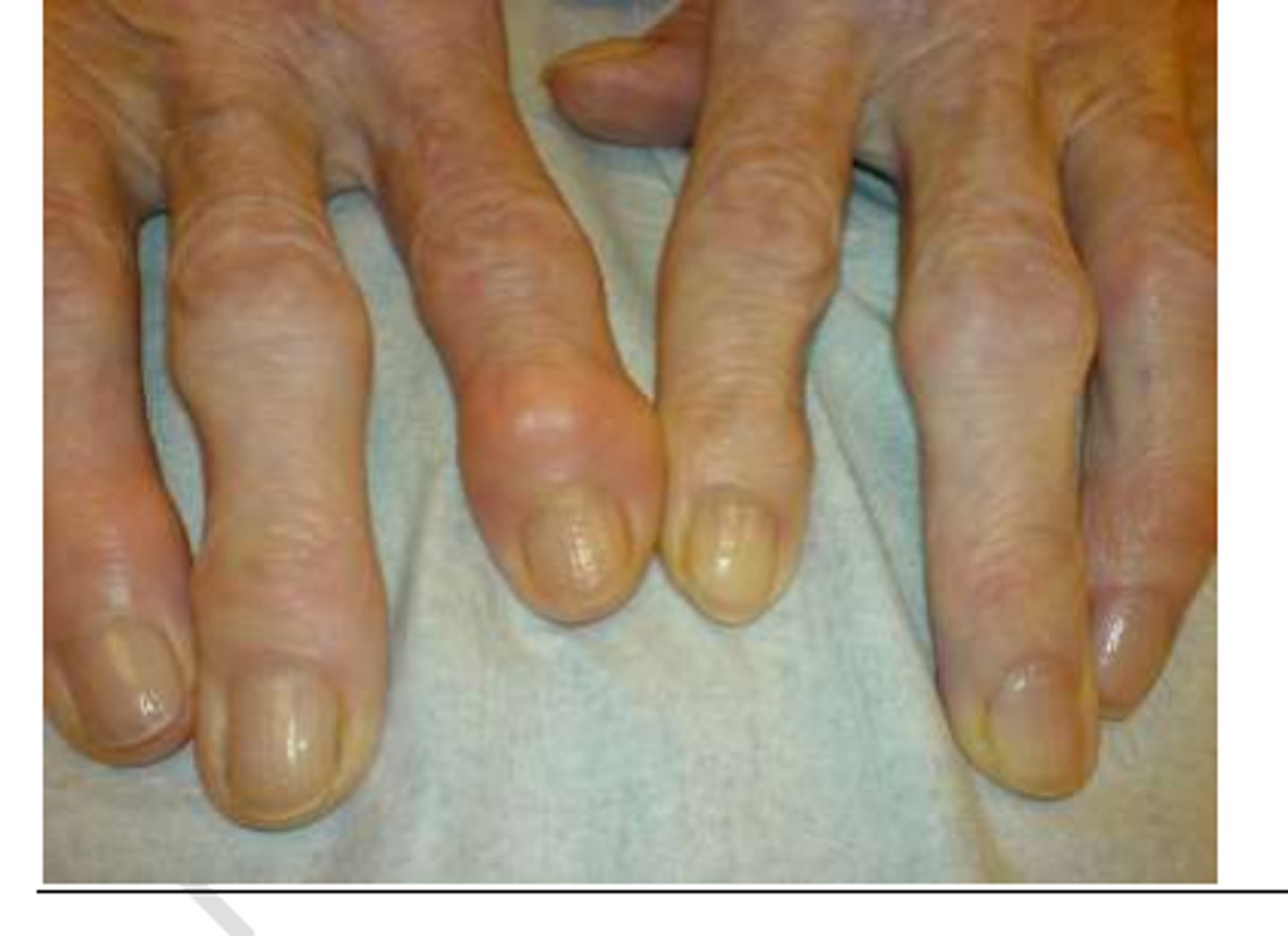
The nurse asks a 50-year-old female client what her natural hair color is. The client replies, "I've been dying my hair for so long, I'm not even sure, I just know that this month it's ravishing red." Based on this information, the nurse expects to obtain which finding when palpating this client's scalp hair?
Coarse, dry, brittle texture.
The school nurse is interviewing a 13-year-old girl who wants to go home from school because of "back pain". Which question should the nurse ask the adolescent first?
"Do you remember ever having this type of pain in the past?"
During a health assessment for a young adult female client's gynecological annual screening, the client reports amenorrhea. The nurse calculates the client body mass index (BMI) as 16. Which finding should the nurse document in the electronic medical record that indicates an expected rationale for this condition?
Received an implanted intrauterine device (IUD) last month.
A male client reports the onset of a burning sensation in his hands and legs. How should the nurse document this finding in the electronic medical record?
Paresthesia reported.
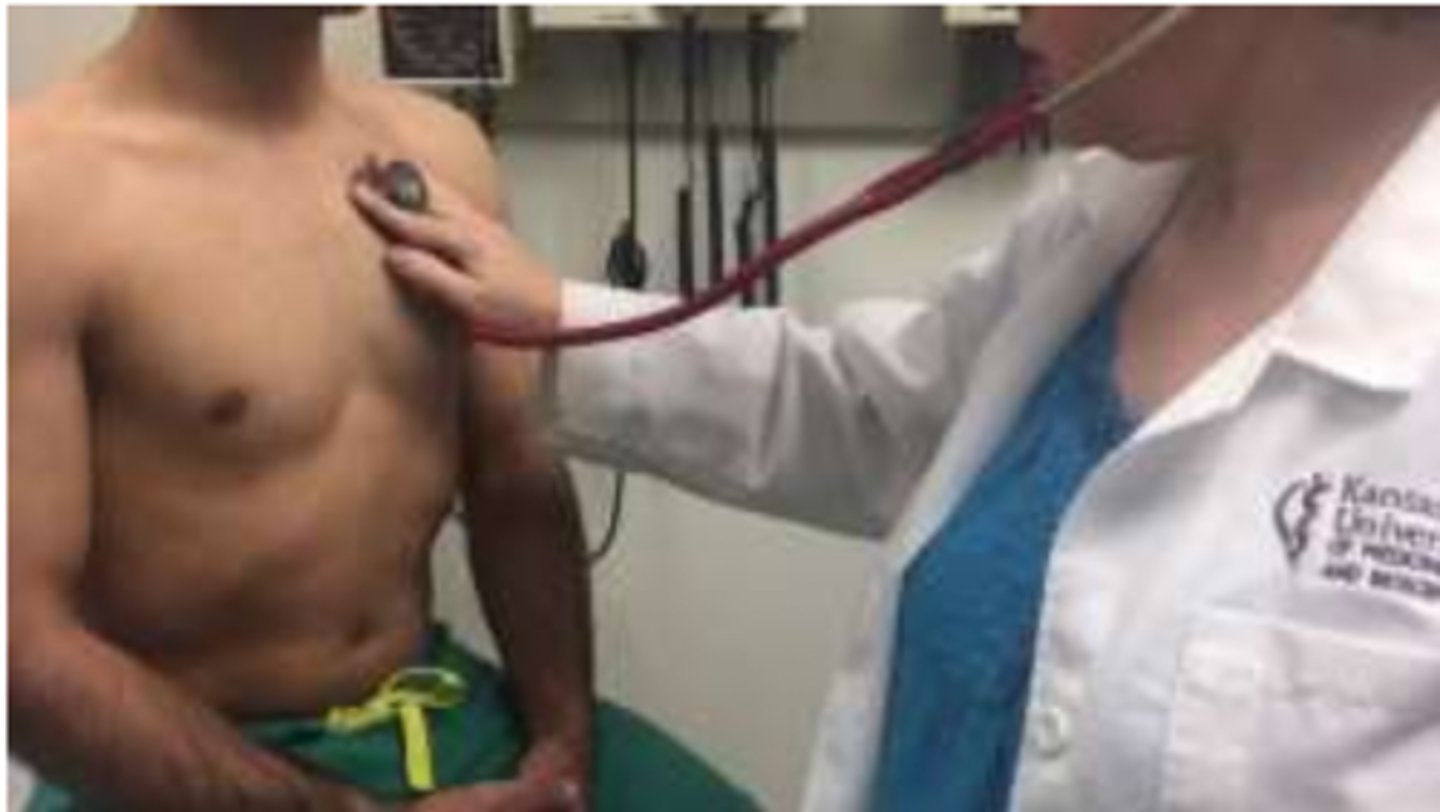
The nurse prepares to begin a systematic assessment of a client's heart sounds. Upon positioning the stethoscope as seen in the picture what should the nurse do first?
Identify S1 and S2 heart sounds.
The nurse observes an unlicensed assistive personal (UAP) begin to provide oral care to an unresponsive client who is at risk for aspiration as seen in the picture. What instruction should the nurse provide the UAP? (Select all that apply).
Turn the clients head to the side.
Remove the gloved finger from the mouth.
Elevate the head of the bed to semi fowlers
During the admissions assessment, the nurse auscultates heart sounds for a client with no history of cardiovascular disease. Where should the nurse listen when assessing the client's point of maximal impulse (PMI)
4th intercostal left side.
The nurse finds a client at 33 weeks gestation in cardiac arrest. What adaptation to cardiopulmonary resuscitation (CPR) should the nurse implement?
Position a firm wedge to support pelvis and thorax at 30 degree tilt.
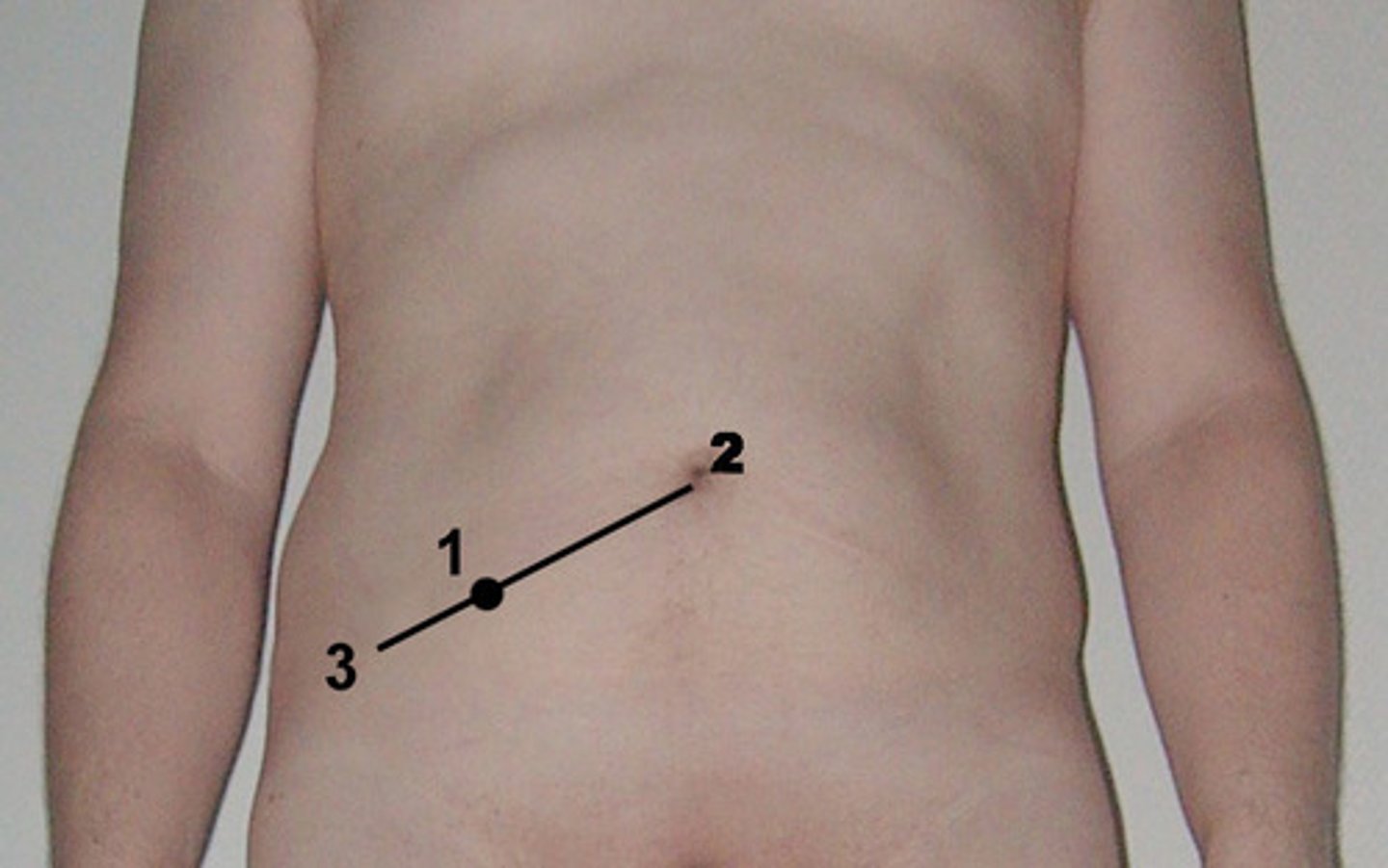
McBurney's point
Pain in RLQ with appendicitis
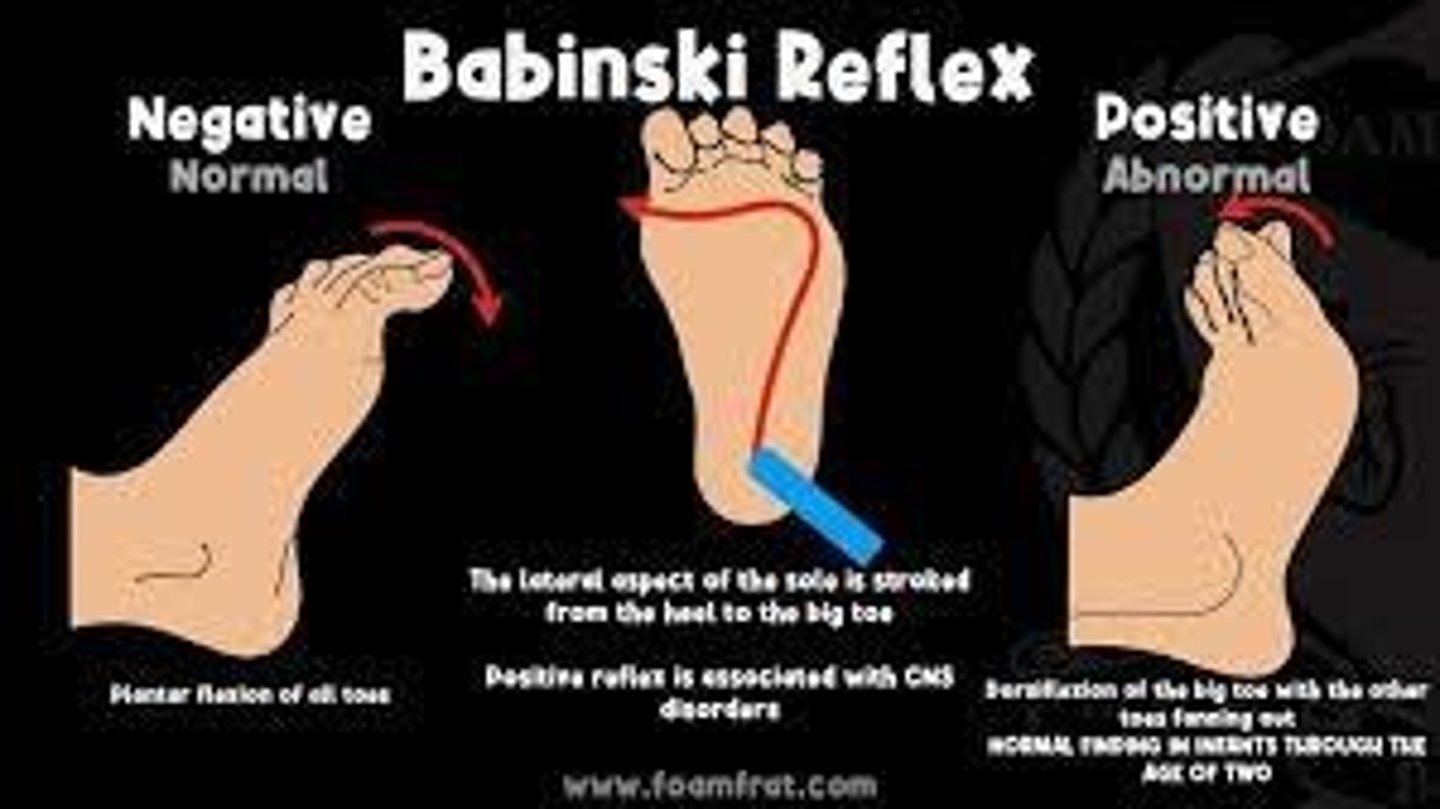
Babinski sign
- This is used to test for brain damage or upper motor neuron damage. It is considered positive if the toes flare up upon stroking the plantar aspect of the foot.
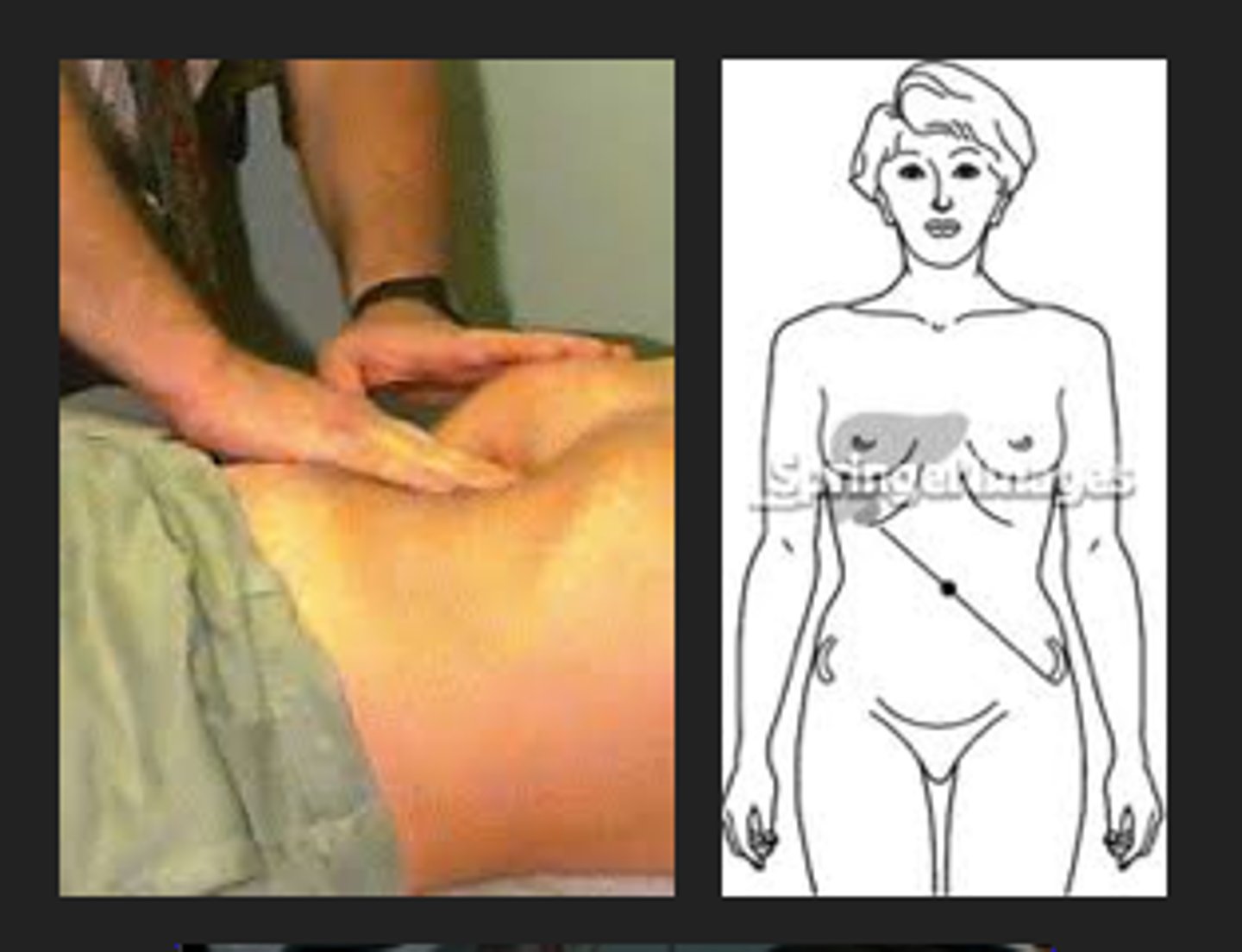
Murphy's sign
pain with palpation of the RUQ during inspiration, indicative of cholecystitis
Stages of Labor: First Stage
Dilation of the cervix - mom's body is preparing for delivery
Stages of Labor: Second Stage
Delivery of the infant - child is in the birth canal
Stages of Labor: Third Stage
Delivery of the placenta
Stool color: black
- upper GI bleeding; iron supplements
Stool color: Red
lower GI bleeding;
Stool color: green
medical conditions- food moving too quickly in GI tract; Crohn's disease;
Stool color: Grey/Tan
cirrhosis
stool color: yellow
Excess fat in stool.
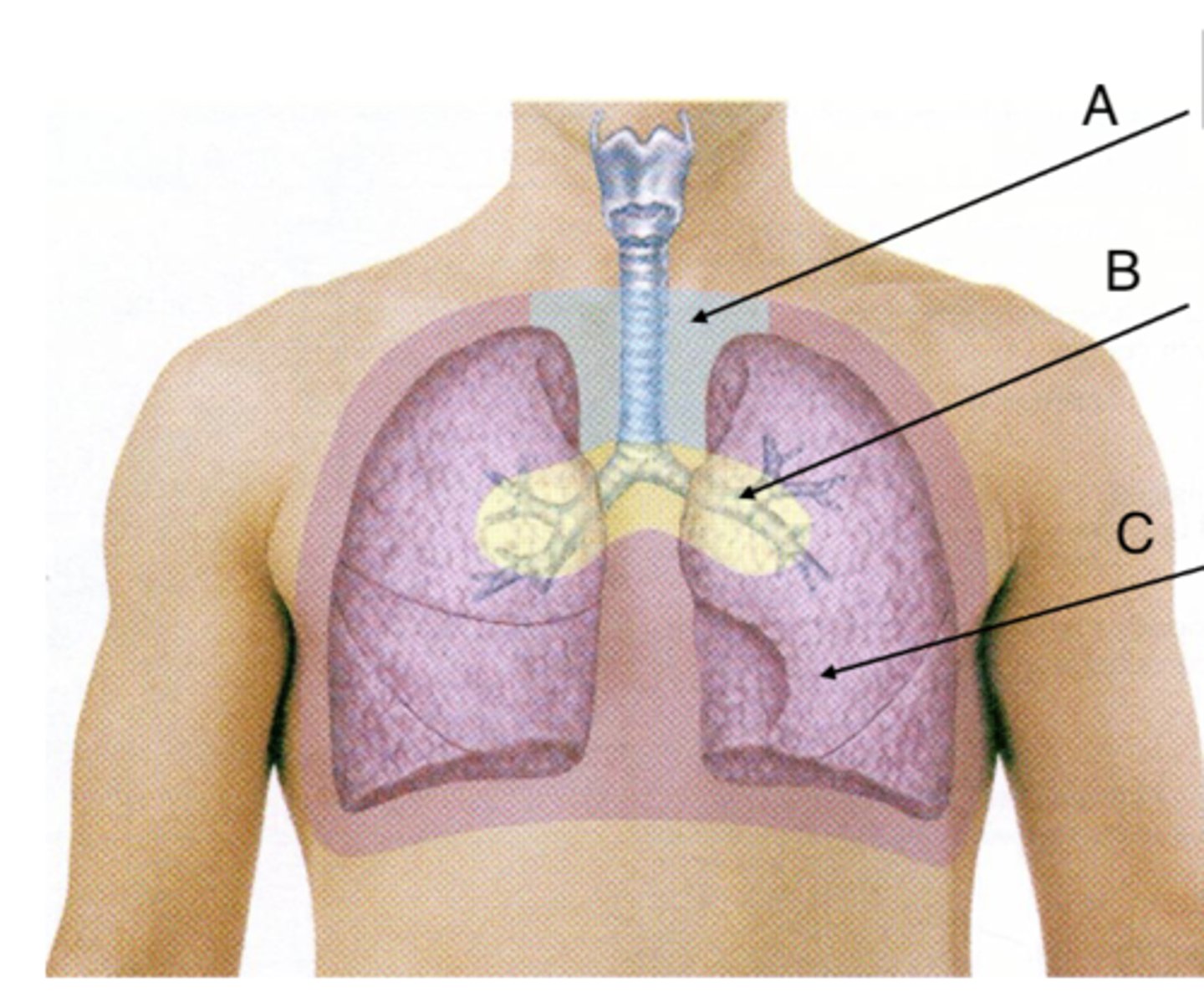
Identify where to listen for Bronchovesicular breath sounds
B
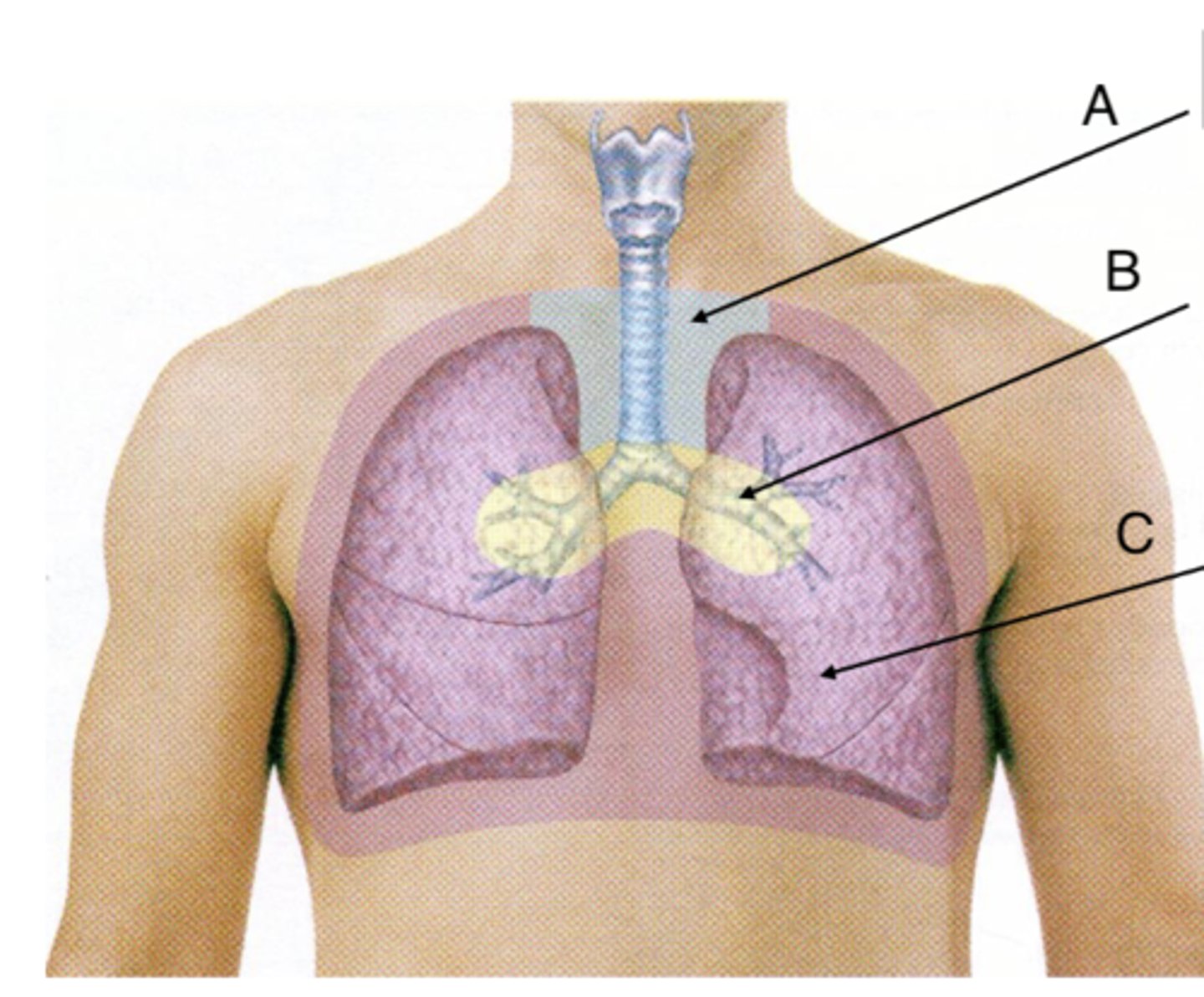
Identify where to listen for Vesicular breath sounds
C
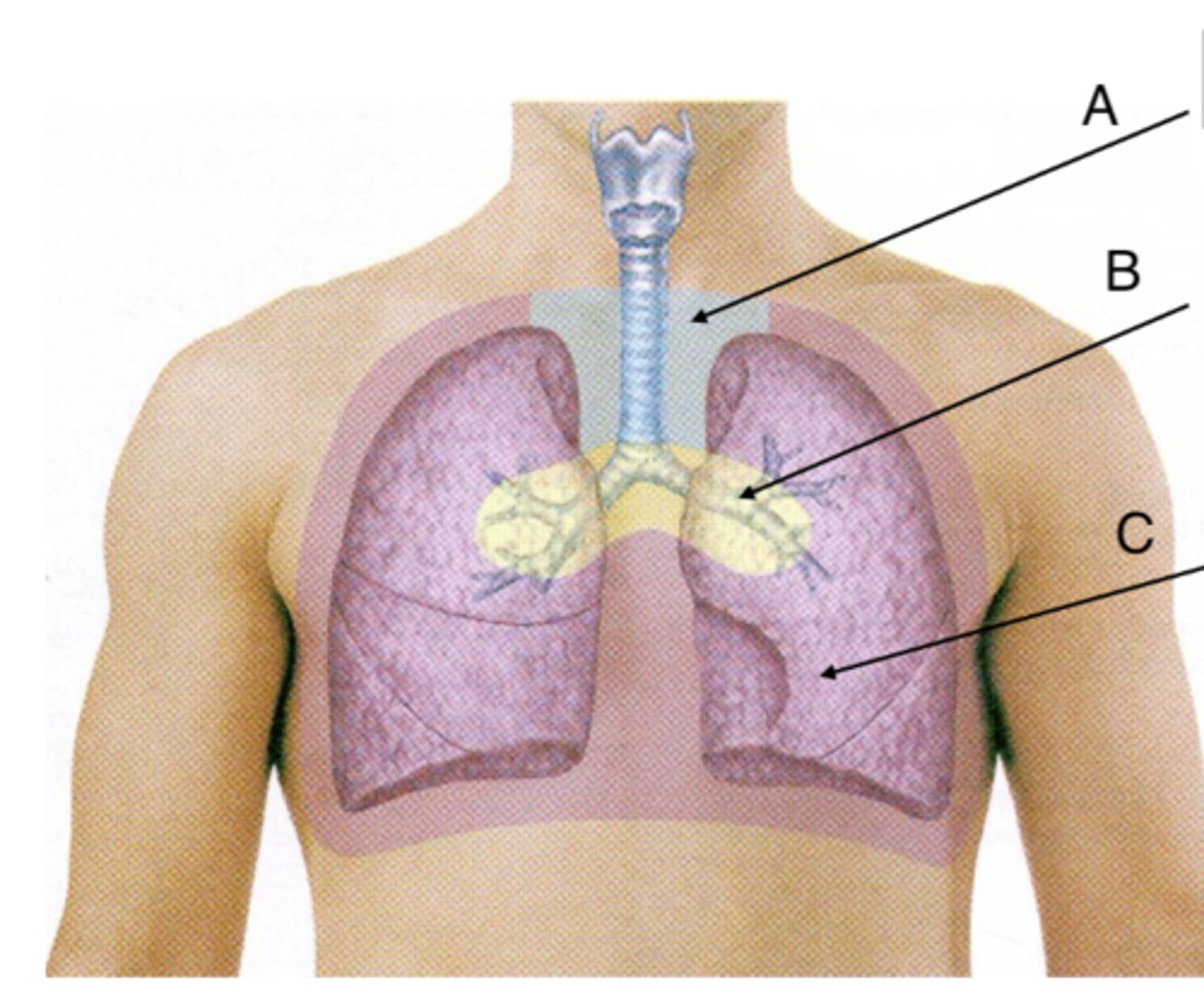
Identify where to listen for Bronchial breath sounds
A