Ch. 4 THE SUBDIVISION OF LAND AND TITLE REGISTRATION IN BRITISH COLUMBIA
 Call Kai
 Learn
Learn Practice Test
 Spaced Repetition
 Match
Match Flashcards
 Knowt Play
1/7

Earn XP
Description and Tags
Who owns the land in British Columbia? How is land divided in British Columbia? How does one register an interest in land in British Columbia?
Name | Mastery | Learn | Test | Matching | Spaced | Call with Kai | Chat |
|---|
No analytics yet
Send a link to your students to track their progress
8 Terms
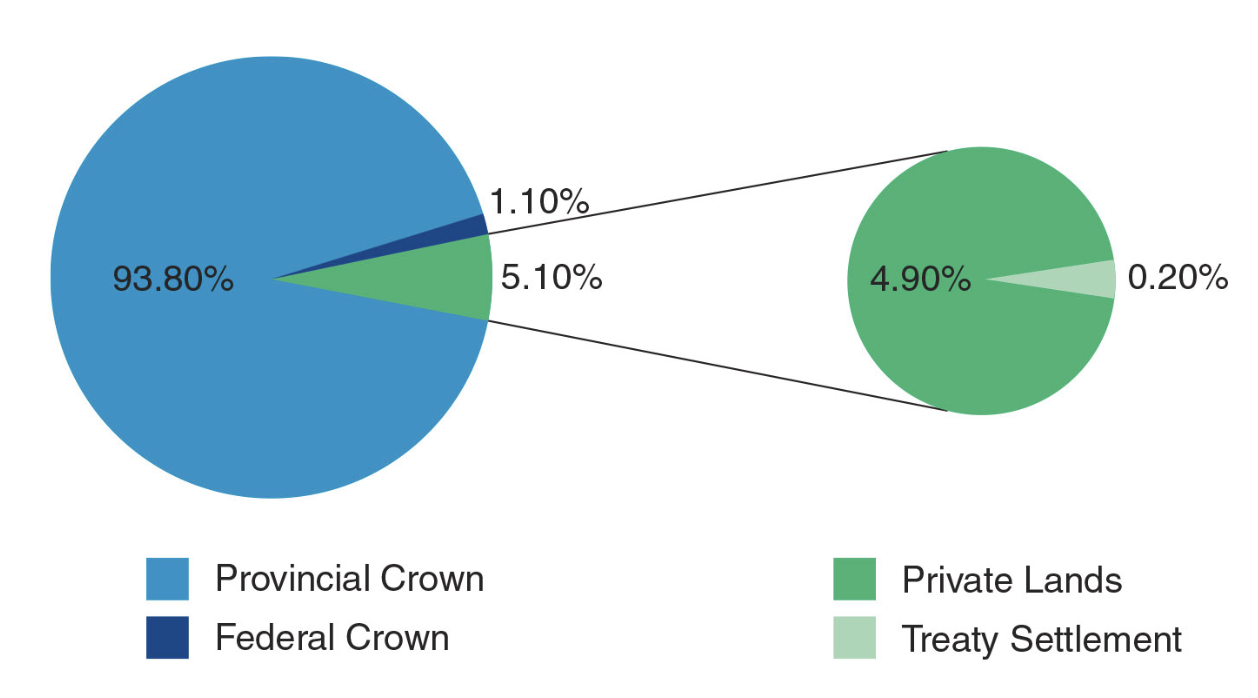
Land ownership in British Columbia falls under five categories
provincial Crown lands; federal Crown lands; privately owned lands; treaty settlement lands; and Aboriginal title.
Crown Lands: Provincial and Federal
“Crown land” is defined as any land or interest in land, whether covered by water or not, that is vested in the government.
-divided for record keeping purposes into parcels called district lots, but they are generally not subdivided under the Land Title Act.
-The Crown may grant land or interests in land to individuals, corporations, or municipal governments. At its discretion, the Crown may grant leases, licenses, permits, rights of way, and fee simple interests
-All privately held land interests in British Columbia were at one point held by the Crown
Tantalis
Crown land system
Federal Crown Land
-Approximately 1% of the land in British Columbia, including Indian reserves, national parks, national defence areas, and federal harbours.
Indian Reserves
Reserves under the Indian Act are lands owned by the Federal Crown for the use and benefit of First Nations.
-individual members of a First Nation may be given an “allotment”, which is the right to use and occupy a piece of land within the reserve
-not subject to the Land Title Act and they are generally not subdivided with some exceptions
Private Lands
-granted or sold in fee simple by the provincial Crown to individuals, corporations, and local governments
-about 5% of the total lands in BC
Treaty Settlement Land
-treaty agreements with Aboriginal groups were not frequently carried out in British Columbia in the early stages of European settlement. For this reason, British Columbia is involved in an ongoing, modern treaty-negotiation process
-The penultimate stage of the treaty negotiation process in British Columbia is the creation of a “Final Agreement,” which sets out the terms of the treaty prior to ratification
-Pursuant to the four implemented treaties, each First Nation owns its treaty lands (comprising former Provincial Crown lands and former reserves) in fee simple. Each First Nation also has extensive governance authority over the treaty lands.
Aboriginal Title
-while the Crown acquired the underlying title to all land at the time of sovereignty, this title is burdened by Aboriginal peoples’ pre-existing legal rights to use and occupy certain lands
-“the right to decide how the land will be used; the right of enjoyment and occupancy of the land; the right to possess the land; the right to the economic benefits of the land; and the right to pro-actively use and manage the land.”
-inherently collective land right, meaning that those who hold it cannot put it to uses that would destroy the ability of future generations to benefit from the lands in a communal manner
-due to the independent and communal nature of the interest, Aboriginal title cannot be alienated (i.e., sold) except to the Crown
-may be established either by court declaration or by way of contractual agreement between the Crown and an Aboriginal group