Handout 10a) Chapter 3: Surveys & Samping
 Studied by 0 people
 Call Kai
 Learn
Learn Practice Test
 Spaced Repetition
 Match
Match Flashcards
 Knowt Play
1/8

There's no tags or description
Looks like no tags are added yet.
Name | Mastery | Learn | Test | Matching | Spaced |
|---|
No study sessions yet.
9 Terms
What is a sample?
A smaller group of individuals selected from the population
rely on this sample to draw conclusions about the population
What is bias?
When a sample is misrepresentative of the population
What is randomization?
Purposeful effort to allow chance to determine sample
best way to avoid bias
ensure that, on average, sample represents population
What is census & issues with it?
Surveying everyone
uncommon method
difficult & costly to complete
populations are changing
What is a statistics & the notations used?
Statistic - any summary found from the data
statistics estimate paraments are called sample statistics
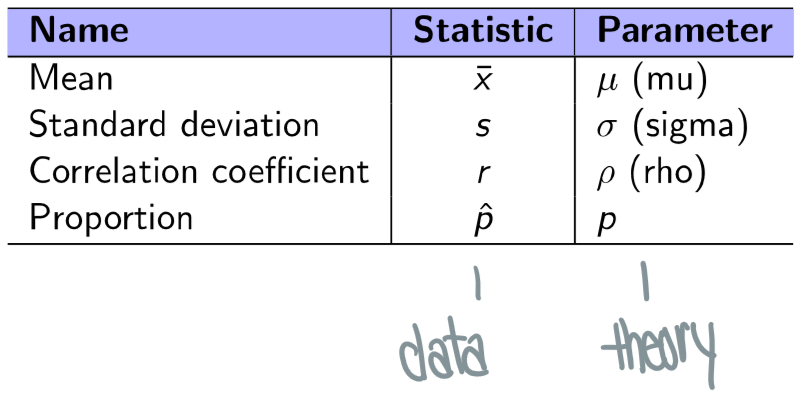
What are simple random samples (SRS)?
An approach to choosing samples
SRS implies that every possible sample has an equal chance to be selected
Representative sample is only possible through randomization
What is a sample frame & sampling variability?
Sampling frame:
those eligible of being sampled
random number generator can help select sample
Sampling variability:
differences between one sample to another
What are some other approaches (other than SRS) to choosing the sample?
All statistical sampling designs leave it up to chance, rather than human choice
stratified random sampling (most common)
cluster sampling
multistage sampling
systemic sampling
What can go wrong/what makes a bad sample?
Selection bias
Volunteer bias → sample of only those who want to (info is useless/taken with grain of salt)
Convenience sampling → include individuals who are at hand (lacks randomization)
Incomplete sample frame (unrepresentative)
Non-response bias (those who don’t respond may provide meaningful insight)