head and neck disorders
 Call Kai
 Learn
Learn Practice Test
 Spaced Repetition
 Match
Match Flashcards
 Knowt Play
1/19

There's no tags or description
Looks like no tags are added yet.
Name | Mastery | Learn | Test | Matching | Spaced | Call with Kai | Chat |
|---|
No analytics yet
Send a link to your students to track their progress
20 Terms
diffuse thyroid enlargement
Includes isthmus and lateral lobes. There are no discretely palpable nodules.

diffuse thyroid enlargement causes
graves disease, hashimoto thyroiditis, and endemic goiter
single thyroid nodule
May be a cyst, a benign tumor, or one nodule within a multinodular gland. It raises the question of malignancy

single nodule risk factors
prior irradiation, hardness, rapid growth, fixation to surrounding tissues, enlarged cervical nodes, and occurrence in men.
multinodular goiter
enlarged thyroid gland with two or more nodules suggests a metabolic rather than neoplastic process

multinodular goiter risk factors for malignancy
family history
continuing nodular enlargement
facies
expression or appearance of face and features of the head and neck that, when considered together, is characteristic of a clinical condition or syndrome
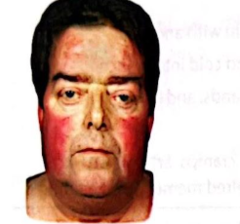
cushing syndrome
round or "moon face"
red cheeks
excessive hair growth
(located on upper lip especially)

hyperthyroidism
fine hair, moist skin
fine hair
prominent eyes & lid retraction
staring/startled expression

myxedema
dull, puffy skin
non-pitting periorbital edema
dry, course, thin eyebrows
loss of lateral third of eyebrow

bell palsy
asymmetry of one side of face
eyelid does NOT close completely
dropping lower eyelid and corner of mouth
loss of nasolabial fold
(can be associated with viruses)

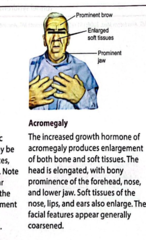
acromegaly
Elongated head
Bony prominence of forehead, nose,
and lower jaw
Enlargement of soft tissues
Coarse facial features

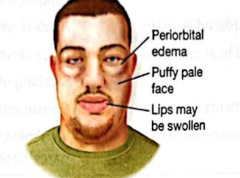
nephrotic syndrome
Periorbital Edema Puffy pale face• Swollen lips
Slit-like eyes
Usually occurs in morning

parotid enlargement
• Swelling anterior ear
• +/- Pain
• +/- Infection/tumor

cushing syndrome (book)
nephrotic syndrome (book)
myxedema (book)

parotid gland enlargement (book)

acromegaly (book)
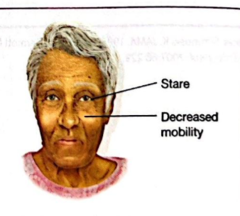
parkinson disease
neurodegenerative disease
linked to the loss of dopamine
DECREASED facial mobility
masklike facies
decreased blinking
characteristic stare
neck and upper trunk tend to flex forward
pt seems to peer upward toward observer
facial skin: oily
drooling may occur