B1.1 Carbohydrates and lipids
 Call Kai
 Learn
Learn Practice Test
 Spaced Repetition
 Match
Match Flashcards
 Knowt Play
1/33

Earn XP
Description and Tags
hate this
Name | Mastery | Learn | Test | Matching | Spaced | Call with Kai | Chat |
|---|
No analytics yet
Send a link to your students to track their progress
34 Terms
Carbon
Carbon forms the basis of organic life due to its ability to form large and complex molecules.
Carbon atoms have 4 electrons in their outer shell but require 8 to be most stable
Will consequently form 4 covalent bonds in order to fill its valence shell
What is the difference between organic and inorganic molecules?
Organic molecules contain carbon and hydrogen and are found in living organisms (e.g. glucose, lipids and proteins). Inorganic molecules generally do not contain carbon (e.g. water and salts).
Chemical Compounds
Can form up to 4 single bonds with other atoms or multiple bonds with a single atom
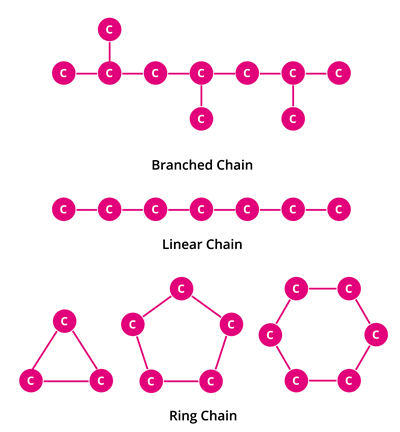
Can produce molecules of various shapes, including chains (straight or branched) or rings
Why does carbon allow variety?
It can forms 4 covalent bonds with different atoms and groups (H, O, N, C, S) - different combinations!
It can bond to carbon atoms. Carbon compounds includes molecules with branched or unbranched chains, single or multiple rings.
It can have double bonds!
If there are different groups attached to each of the four bonds around a carbon atom, there are 2 different ways of arranging the groups for example Alpha and Beta glucose (Isomers)
functional groups give unique properties to biomolecules.
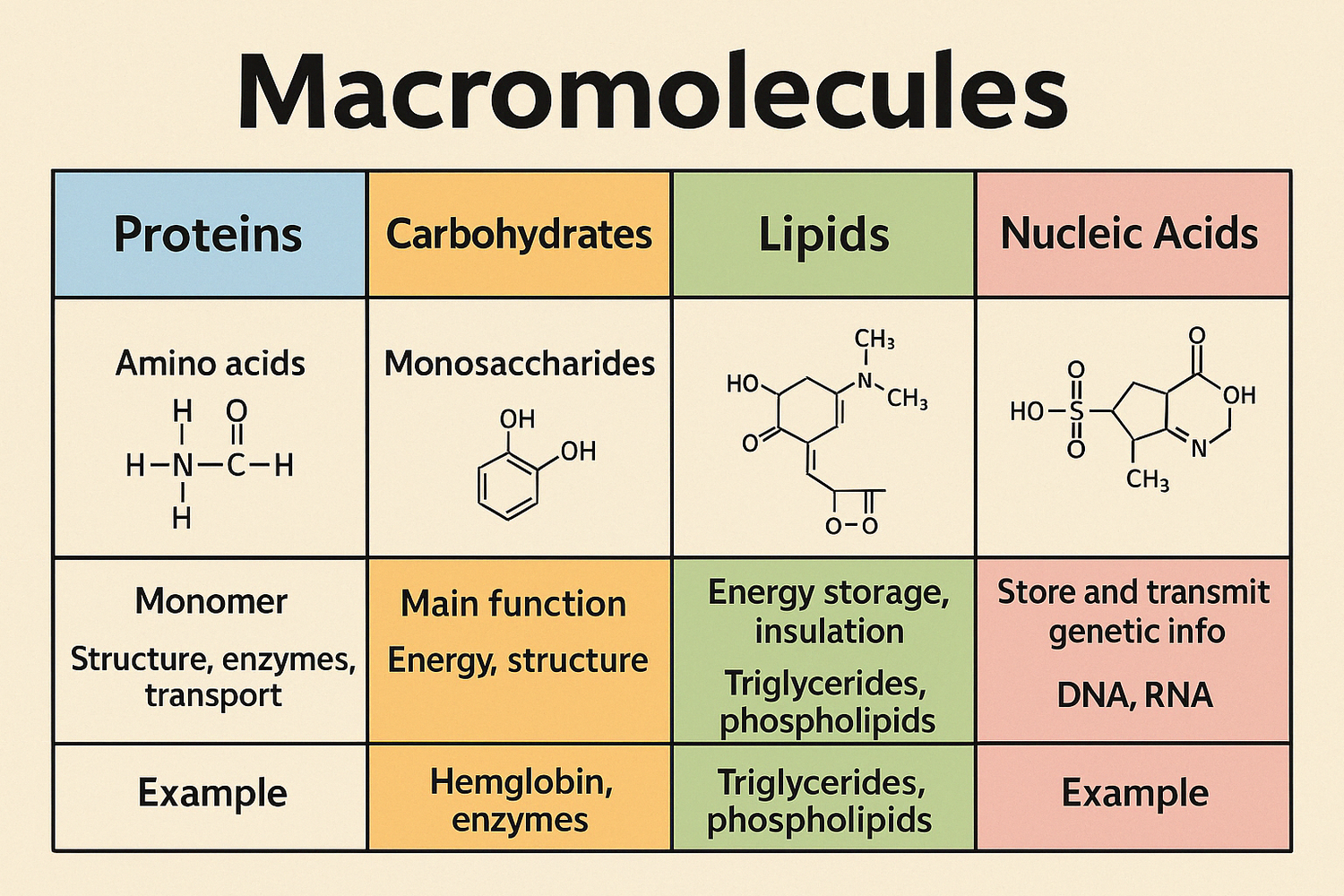
4 types of biomolecules
Biomolecules
often occur as complex molecules (macromolecules) made from simpler units
Monomer
Monomers
Organic compounds are typically composed of recurring subunits (monomers) which are covalently joined to form polymers
The monomeric subunit of carbohydrates is a monosaccharide (single sugar unit)
Nucleic acids are composed of repeating nucleotides (containing a sugar, phosphate and nitrogenous base)
Proteins consist of linked chains of amino acids which differ according to a variable side chain (‘R’ group)
Lipids do not contain monomers but certain types may be composed of distinct subunits (fatty acid chains)
Form and function of monosaccharides
Pentose (5 C)
Hexose (6 c)
Heptose (7C)
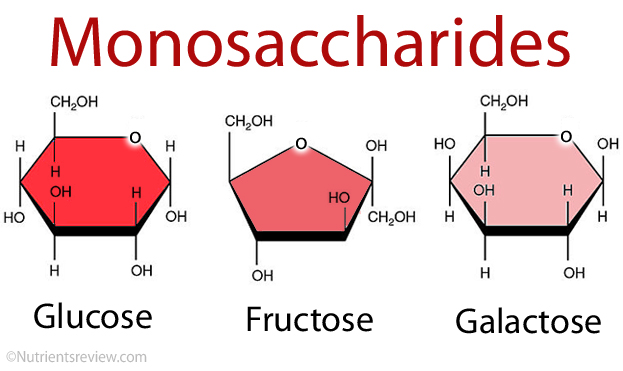
The name describes the number of carbons – not the shape (e.g. fructose is a hexose sugar but forms a pentagon)
Carbohydrates
Carbohydrates
Carbohydrates are molecules consisting of carbon (C), hydrogen (H) and oxygen (O) – typically in a consistent ratio of (CH2O)n
The monomeric subunit of a carbohydrate will commonly adopt a closed ring structure that can form different stereoisomers
Carbohydrates are commonly used in nutrition as an energy source, but can also be used in cell recognition (glycoproteins) and structure (cellulose)
The monomeric subunits are also used as components in a range of different molecules, including DNA and coenzymes (ATP and NADH)
Monosaccharides
Glucose, Fructose, Galactose
Disaccharides
Maltose, Sucrose, Lactose

Function of Monosaccharides
Function of Monosaccharides
The primary role of most monosaccharides is to function as a source of energy for the cell
Monosaccharides are oxidised (broken down) to produce large quantities of biological energy (ATP) via cellular respiration
Why is glucose the most common monsaccharide
Glucose is the most common monosaccharide to be used as an energy source due to its various chemical properties:
Solubility: Glucose is a polar molecule (due to –OH groups) and so will dissolve in water (it is hydrophilic)
Stability: Glucose is a very stable molecule as cyclic structures are generally more energetically favourable than straight chains
Transport: Because glucose is soluble and stable, it is easier to transport within aqueous solutions (like blood or cytosol)
Potential Energy: Glucose has many high energy electrons (between C–C and C–H bonds) which can be released via oxidation
ATP Yield: Glucose can by oxidised to produce a large yield of ATP via aerobic cell respiration
Why are starch in plants and glycogen in animals effective energy-storage molecules?
Compact: Coiling and branching during polymerization make them compact, so lots of glucose can be stored in a small space.
Relatively insoluble: Their large molecular size means they do not dissolve easily in water, so they have little effect on water potential.
Easy to mobilize: α-glucose monomers can be quickly added by condensation to build stores or removed by hydrolysis when energy is needed.
Starch = plants, glycogen = animals.
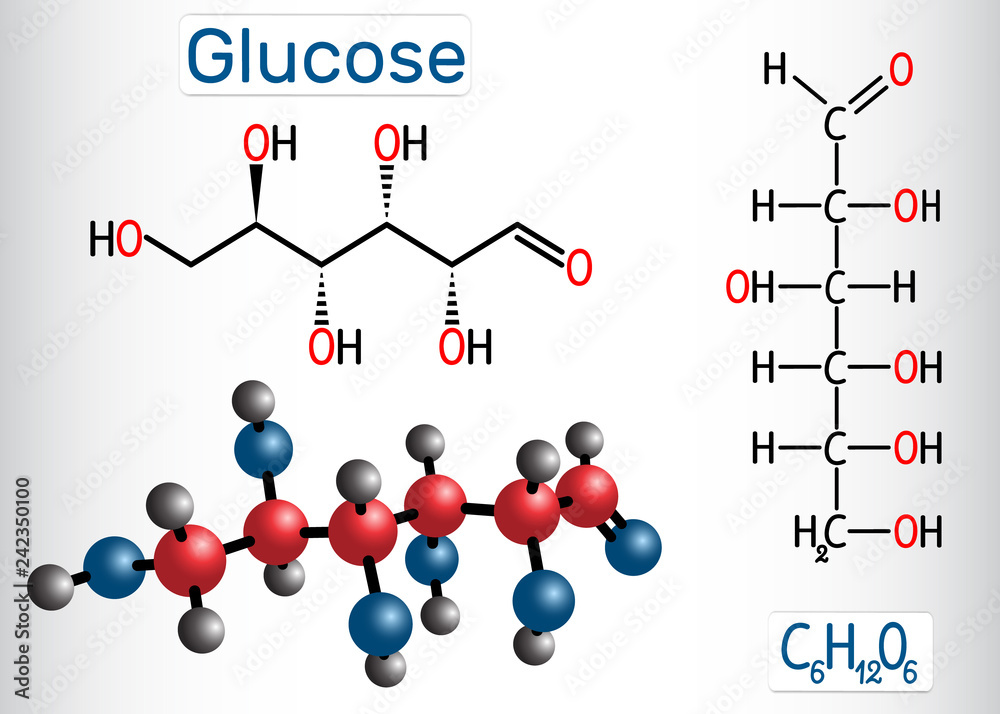
Glucose
Monomer/Monosaccharide
It is a stable molecules
Its polar and soluble in water
it yields energy when oxidized (loss of hydrogen)
it exists in different forms - Isomers
A hydroxyl group (-OH) links to a carbonyl group (=O) to form a cyclic structure connected by an oxygen atom.
What is the difference between α-glucose and β-glucose, and why does it matter?
α-glucose: The OH group on carbon 1 points down in the ring structure.
β-glucose: The OH group on carbon 1 points up.
This difference affects how glucose molecules bond together and therefore the structure and function of the polymers they form.
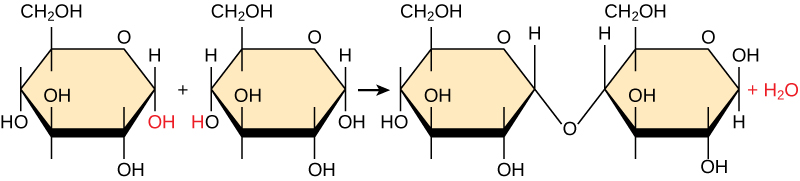
What is a condensation reaction?
A reaction that joins two monomers together to form a larger molecule, producing water (H₂O) as a by-product.
What happens to monomers during polymerization
Monomers are repeatedly joined together by condensation reactions, forming a polymer.
What is a glycosidic linkage?
covalent bond between monosaccharides formed during a condensation reaction.
What happens when two monosaccharides are joined together?
They form a disaccharide through a glycosidic linkage, releasing one molecule of water.
Monosaccharide + monosaccharide → disaccharide + H₂O
hat happens when many monosaccharides are joined together?
They form a polysaccharide through multiple glycosidic linkages, with water released each time a linkage forms.
Give examples of polysaccharides.
A: Starch, glycogen and cellulose.
What are polypeptides?
A: Polymers made from many amino acids joined together by peptide bonds through condensation reactions.
What are nucleic acids?
A: Polymers made from nucleotides joined together by phosphodiester bonds through condensation reactions.
Examples include DNA and RNA.
What are the three main types of biological polymers you need to know?
A:
Polysaccharides → made from monosaccharides
Polypeptides → made from amino acids
Nucleic acids → made from nucleotides
What bond joins amino acids together in a polypeptide?
A: A peptide bond.
What bond joins nucleotides together in nucleic acids?
A: A phosphodiester bond.
What is the relationship between condensation and hydrolysis?
A: They are essentially opposite processes:
Condensation → joins monomers and produces water
Hydrolysis → uses water to break bonds between monomers.
How does a disaccharide differ from a polysaccharide?
A: A disaccharide contains two monosaccharides, while a polysaccharide contains many monosaccharides joined by glycosidic linkages.
How are macromolecules produced by condensation reactions?
Monomers are joined together through condensation reactions, forming covalent bonds and releasing water as a by-product. Repeated condensation reactions produce polymers such as polysaccharides, polypeptides and nucleic acids.