(4, 5, 6) 025 Test, connect transformers
 Call Kai
 Learn
Learn Practice Test
 Spaced Repetition
 Match
Match Flashcards
 Knowt Play
1/12

There's no tags or description
Looks like no tags are added yet.
Name | Mastery | Learn | Test | Matching | Spaced | Call with Kai | Chat |
|---|
No analytics yet
Send a link to your students to track their progress
13 Terms
How does impedance act on transformer and what does high- vs low- impedance do?
Impedance caused by core and windings drops secondary voltage when under load and limits short circuit current in fault. When low- voltage drop is limited, when high- short circuit current is limited
What is the transformer short circuit test? What is it used to find?
Drop voltage on variac to minimum, then increase until full rated load of secondary current flows. Voltage required is Short Circuit Voltage. Find Copper Losses by ammeter across the primary.
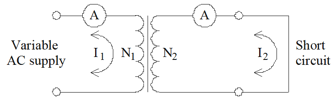
How is impedance percentage calculated?
Z% = (Vsc/V)*100, where Z% = percentage impedance, and Vsc = short circuit voltage applied to transformer, V = rated voltage of transformer winding test voltage applied to

How is prospective short circuit current calculated?
Isc=(100/Z%)*Irated where Isc= short circuit current, Z%= percentage of impedance, Irated = current transformer’s rated for
How are 1ph and 3ph output power calculated?
1ph Pout = V2*I2*λ2, 3ph Pout = √3*V2*I2*λ2
When is maximum efficiency of a transformer achieved?
When iron losses = copper losses

What does MEPS stand for?
Minimum Energy Performance Standards, star system on washing machines etc.
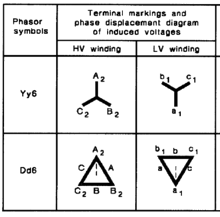
What is the phase displacement?
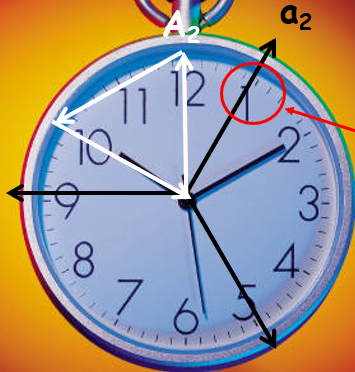
Clock hour displacement = 6, 180 degrees displacement
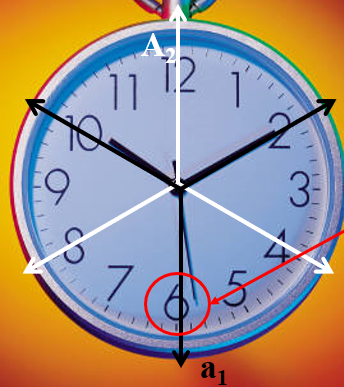
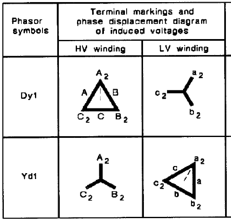
What is the phase displacement?
Clock hour displacement = 1, 30 degrees displacement
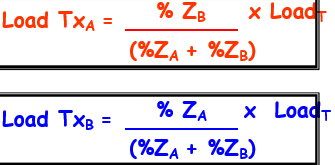
How is parallel load sharing of transformers calculated?
Load TX? = load taken by ? transformer, LoadT = overall load supplied, %Z? = impedance of transformer ?
What conditions have to be met for transformers to be compatible for parallel operation?
For 1ph, same secondary voltage, polarities, percentage regulation. For 3ph, same secondary voltage, polarities/vector grouping, percentage impedances, phase sequences, voltage change per tap on tap chargers.
How to test transformer polarity?
Wires across both windings, then Voltmeter connected across one primary to secondary winding. If voltage lower than supply, subtractive polarity, A1 and a1 have same polarity. If opposite, additive polarity.

How is a zero phase displacement check usually performed before paralleling single-phase transformers?
Connect one secondary terminal of each transformer together and check for zero volts between the remaining terminals