Pharm MT 1 Drugs - OPT 6180
 Call Kai
 Learn
Learn Practice Test
 Spaced Repetition
 Match
Match Flashcards
 Knowt Play
1/62

There's no tags or description
Looks like no tags are added yet.
Name | Mastery | Learn | Test | Matching | Spaced | Call with Kai | Chat |
|---|
No analytics yet
Send a link to your students to track their progress
63 Terms
Hydrocholorthiazide (Microzide)
preventing reabsorption in the DCT
increased excretion of Na+, Cl-, K+, H2O
INEFFECTIVE if GFR is low
risk of dehydration and hypokalemia

Furosemide (Lasix)
Loop diuretic → Inhibits Na+ and Cl- reabsorption in the ascending loop of Henle
increased excretion of Na+, K+, Cl-
EFFECTIVE even if GFR is low or kidney damage present
most effective diuretic

spironolactone (Aldactone)
direct antagonist of aldosterone
inhibits ENac and Na+/K+-ATPase
reduces NA+ reabsorption and K+ secretion
potassium sparing
vasodilator too (RAAS system)
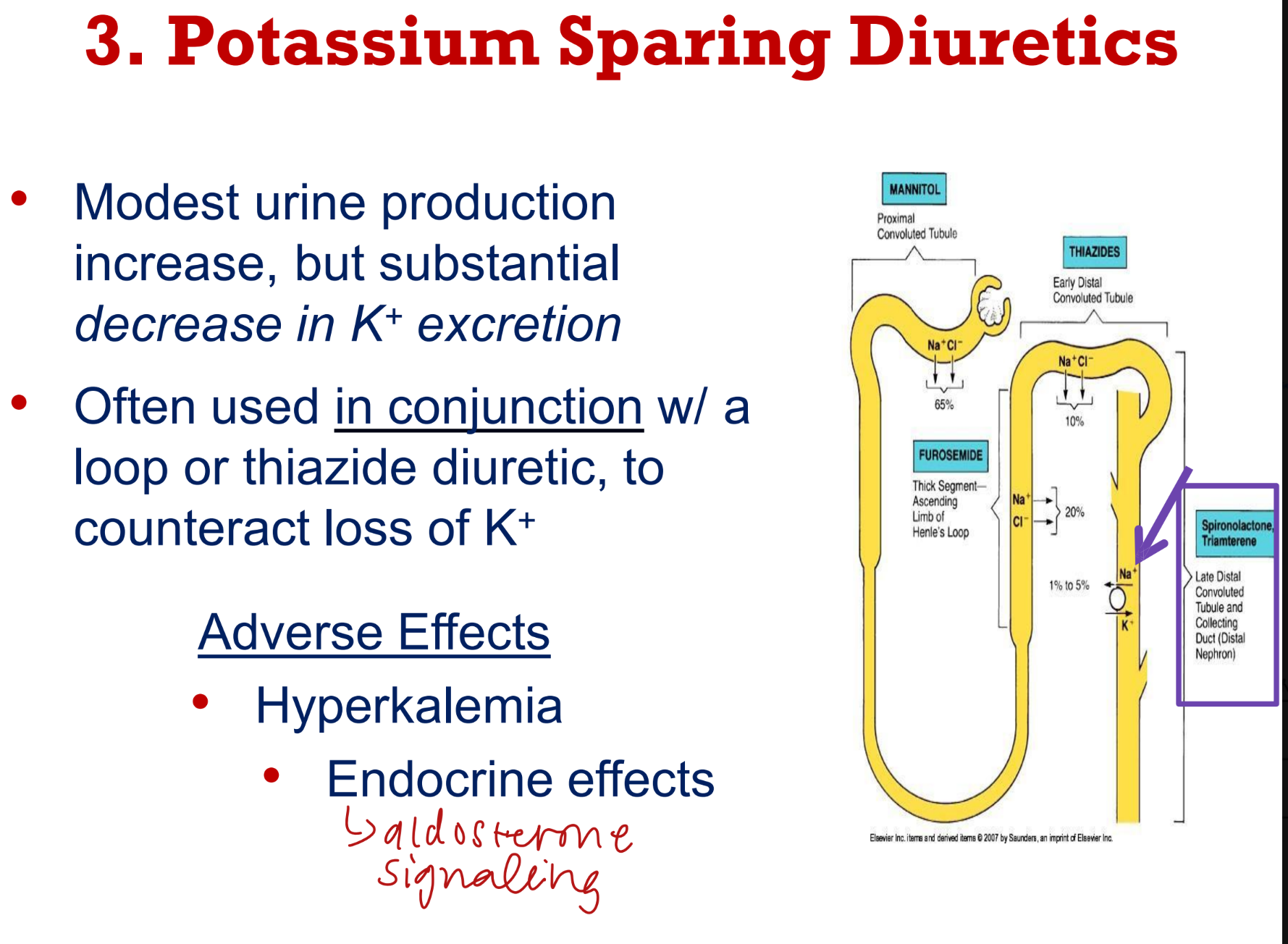
Triamterene (Dyrenium, Amiloride)
inhibit ENac on lumen membrane
keeps Na+ in tubule to reduce abosrption
potassium sparing

Chlorthalidone (Hygroton)
preventing reabsorption in the DCT
increased excretion of Na+, Cl-, K+, H2O
INEFFECTIVE if GFR is low
loop diuretics to know (2)
Furosemide (Lasix), Bumetanide
thiazides to know (2)
Hydrochlorothiazide (Microzide), Chlorthalidone (Hygroton)
potassium sparing diuretics to know (3)
Spironolactone (Aldactone), Triamterene (Dyazide), Amiloride
side effects (2) of potassium sparing diuretics
hyperkalemia and endocrine effects (anti-androgen)
Lisinopril (Prinivil), Benazepril (Lotensin), Enalapril (Vasotec), Ramipril (Altace)
ACE inhibitors → “pril”s
RAS antagonist
blocks Angiotensin I → Angiotensin II
blocks breakdown of bradykinin

side effects of ACE inhibitors
hypotension
dry cough
hyperkalemia
name the ACE inhibitors (4)
Lisinopril (Prinivil)
Benazepril (Lotensin)
Enalapril (Vasotec)
Ramipril (Altace)
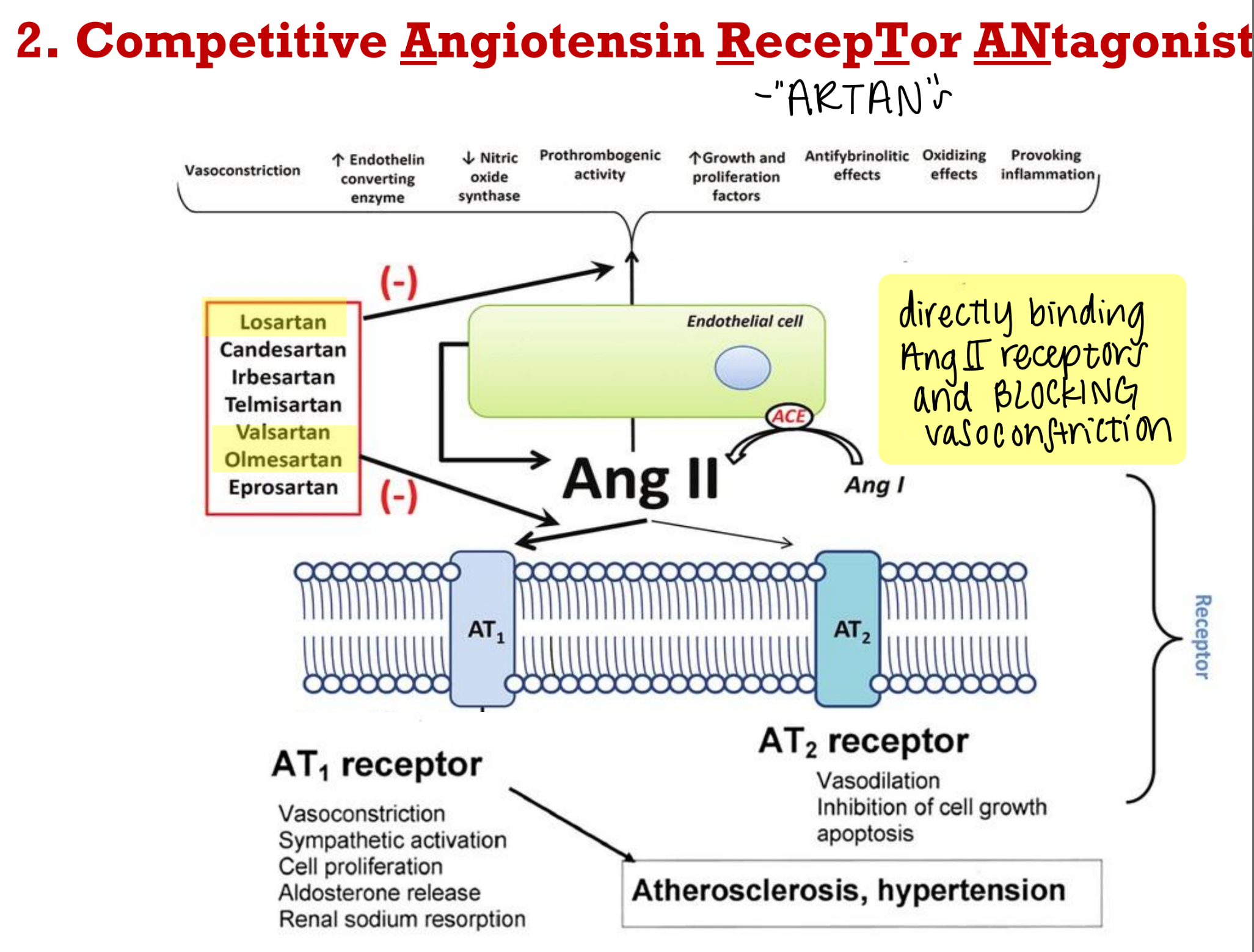
name the Competitive Angiotensin Receptor Antagonists (4)
“artan”s
Losartan (Cozaar)
Olmesartan (Benicar)
Valsartan (Diovan)
Irbesartan (Avapro)
Losartan (Cozaar), Olmesartan (Benicar), Valsartan (Diovan), Irbesartan (Avapro)
Competitive Angiotensin Receptor Antagonists (“-ARTAN”s)
RAS antagonist
directly binds Ang. II receptors and blocks vasoconstriction
preference to AT1 receptor
Tx for atherosclerosis and hypertension

side effects of competitive angiotensin receptor antagonists
hyperkalemia, hypotension
Aldosterone receptor antagonist (1)
spironolactone (RAS antagonist and diuretic)

Classes of drugs (2) that decrease peripheral vascular resistance (PVR) or cardiac output (CO)
nitrates and calcium channel blockers
Calcium channel vasodilators to know (4)
Nifedipine (Procardia XL), Amlodipine (Norvasc), Dilitazem (Cardizem CD), Verapamil (Isoptin)
what happens to the vasculature when more cGMP is synthesized?
upreg. MLCP → less myosin activated → relaxation of the vasculature

How do calcium channel blockers work?
Decreased calcium influx causes relaxation of smooth muscle, cardiac muscle, and blood vessels

low doses of what two drugs will cause primarily vasodilation, but in higher concentrations will cause both reduction of caridac work load and vasodilation
Dihydropyridines → Nifedipine and Amlodipine
What two CCB drugs will cause decreased cardiac output and vasodilation
Verapamil and Diltazem
adverse effects of calcium channel blockers
hypotension, headache, nausea, edema, palpitations, flushing, heart rate effects (Verapamil and Diltazem)
Sympatholytics - blocking selective adrenoreceptors
Beta blockers can diminish cardiac output and renin production
Beta-1 selective antagonists (2)
Metoprolol (Lopressor, Toprol XL) and Atenolol (Tenormin)
most widely used
Tx of abnormal heart rhythm and secondary MI/heart attack protection
non-selective Beta antagonists (1)
Propanolol (Inderal)
HTN treatment
liver, cardiac, lungs

Why is Carvedilol (Coreg) not like other Beta Blockers/Antagonists?
Beta (non-selective) and Alpha blocking activity
vasodilatory and cardio selective
no reflexive tach thanks to Beta blocking
CHF and HTN treatment
stimulation of alpha receptor causes an increase in…
increase in blood pressure
stimulation of beta-1 receptor
increased cardiac effect → increase HR and contractility

stimulation of beta-2 receptor
bronchodilation
Nitroglycerine
nitrate used in treat acute, variant angina in ischemic heart disease
acute vasodilation (nitric oxide release from endothelium relaxes vascular smooth muscle) to decrease BP
do NOT combine with other vasodilators/HTN Rx
Isosorbide Mononitrate
nitrate used to treat longer lasting angina symptoms
longer vasodilaton and more stable than nitroglycerin
Side effects of nitrates
orthostatic hypotension → reflex tach
throbbing headache
flushing

Drug classes that reduce cardiac workload and used to treat HF (3)
ACE inhibitors, B-blockers, vasodilators
Drugs that control excessive fluid and used to treat HF
diuretics
Drugs that enhance contractility and used to treat HF (3)
Digoxin, Sympathomimetics, PDE Inhibitors
classes of drugs used to treat ischemic heart disease (3) and goal of treatment
nitrates, CCBs, B-blockers
decrease demand and increase supply of O2

drug classes used to treat hypertension
diuretics (all), ACE inhibitors, Competitive Angiotensin Receptor Antagonists, Calcium Channel Blockers
heart failure drug Tx options (7)
ACE inhibitors, B-blockers, vasodilators, diuretics, Digoxin, Sympathomimetics, PDE Inhibitors
Anti-Arrythmia Drugs - Class I definition and examples (3)
Sodium channel blockers
blocks Na+ entry during depolarization and slows depolarization in fast AP cells (atria, ventricles, His/Purkinje bundles)
Lidocaine, Flecainide, Propafenone

Anti-Arrythmia Drugs - Class II definition and example (1)
increase action potential duration and effective refractory period
Beta Blockers → propranolol for tachycardia
blocks Na+ entry during depolarization and slows depolarization in slow AP cells (sinus and AV nodes)
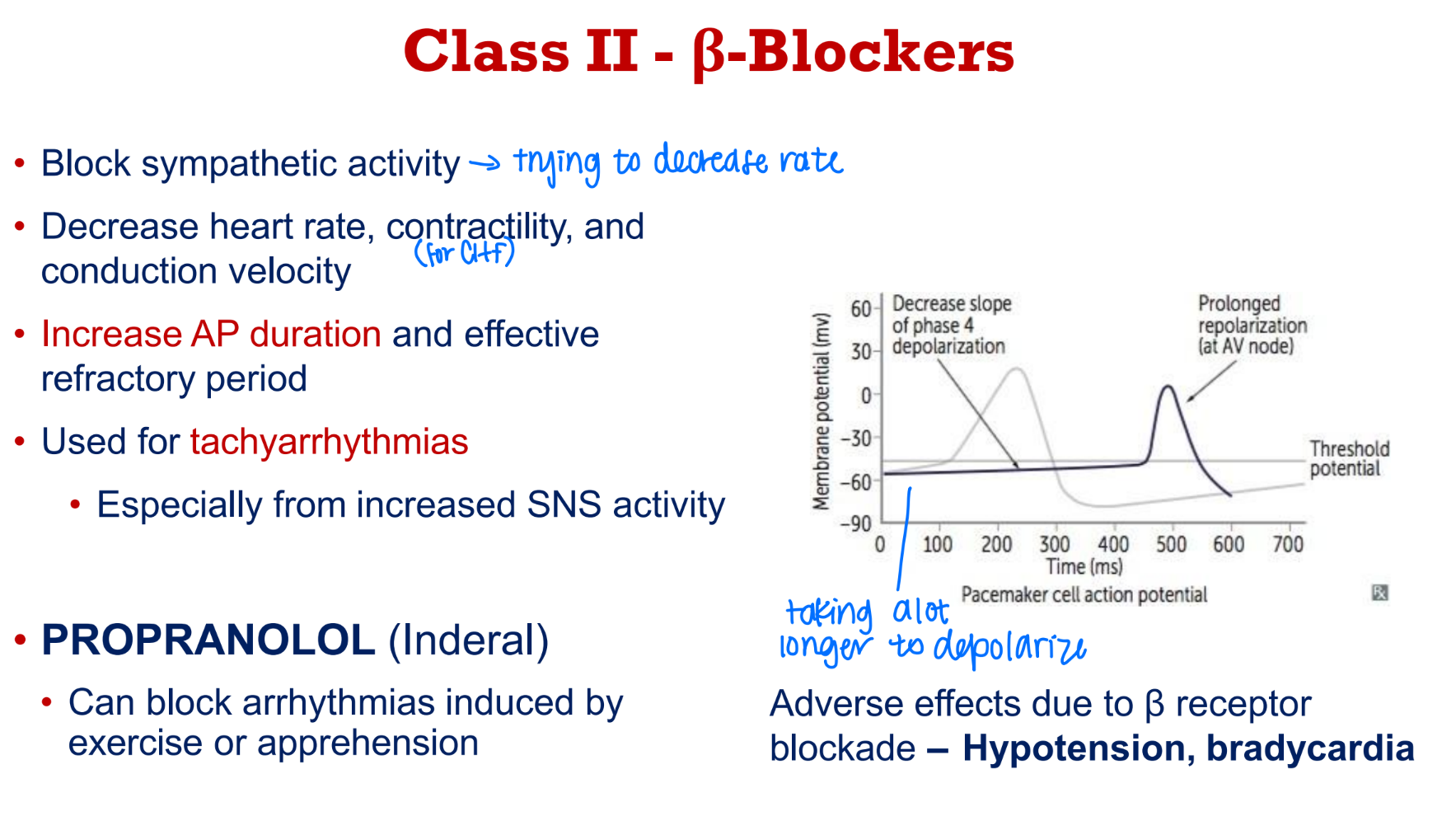
Anti-Arrythmia Drugs - Class III definition and example (1)
Potassium channel blockers prolong the repolarization phase by blocking efflux of K+
Amidarone (coradarone)
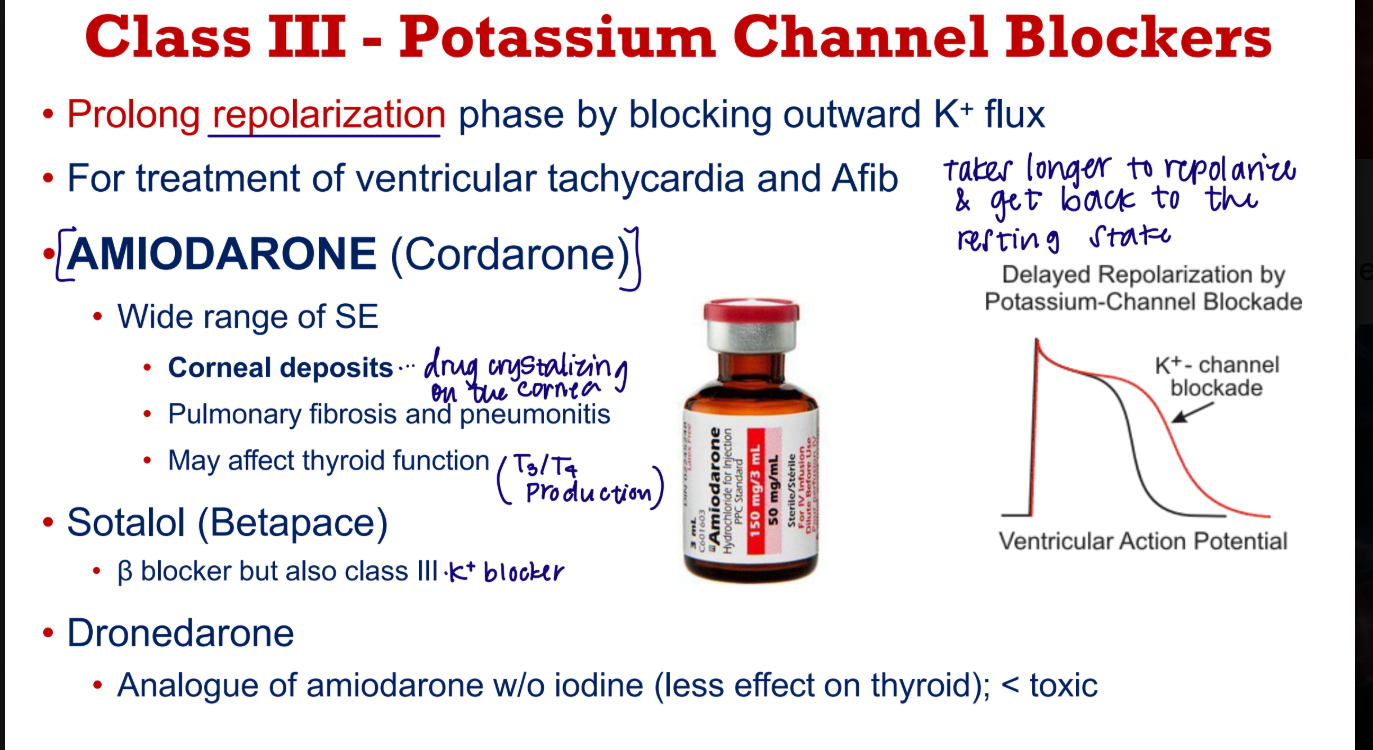
Class II Antiarrhythmic drug side effects
Hypotension, bradycardia
Class I Antiarrhythmic drug side effects
blurred vision

Class III Antiarrhythmic drug side effects
corneal deposits of Rx

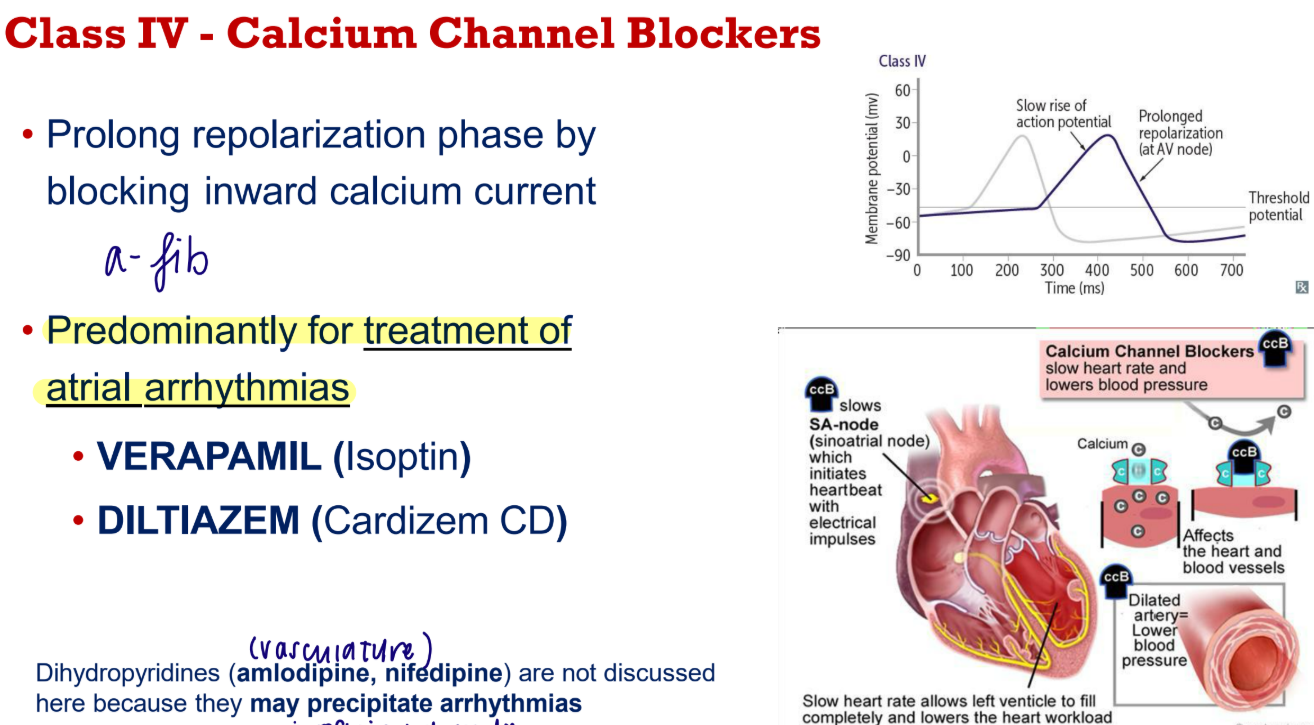
Anti-Arrythmia Drugs - Class IV definition and examples (2)
blocking inward calcium current → calcium channel blockers predominantely used for atrial arrythmias
Verapamil
Diltiazem
Anti-Arrythmia Drug - Unclassified
Adenosine used for paroxysmal supraventricular tachycardia
extremely short half life, IV only
hyperpolarization by increase K+ conductance and decrease Ca2+ influx
anti-platelet drugs (2) and side effects
NSAIDs → Aspirin
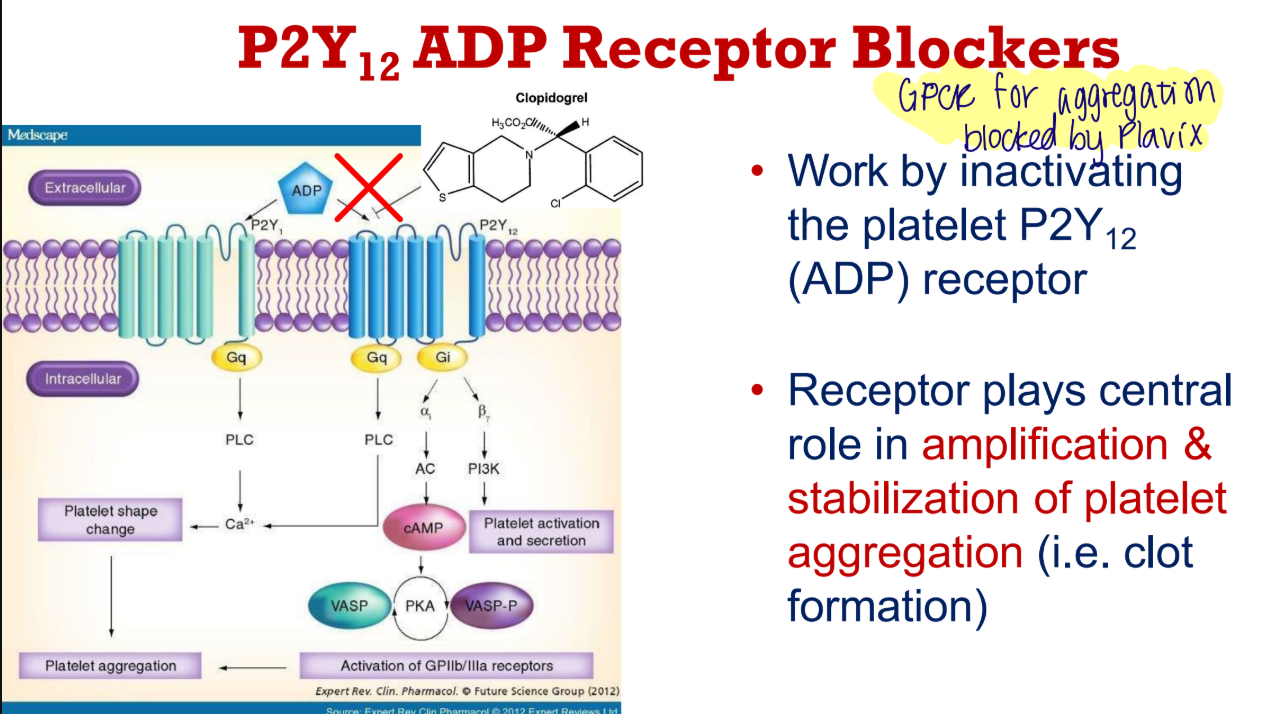
Clopidogrel (Plavix) → P2Y12 ADP receptor blocker
uncontrolled bleeding
reminder that these have NO effect on existing clots/thrombi
Anti-Platelet NSAID: name and MOA
Aspirin
irreversibly binds COX enzyme
decrease thromboxane (TxA2) aggregation

P2Y12 ADP Receptor Blocker: name and MOA
Clopidogrel (Plavix) works by inactivating the platelet P2Y12 ADP receptor, which is responsible for amplification and stabilization of platelet aggregation and clot formation (see pic)
Anticoagulants (5) - definition and names
provides prophylaxis against of venous and arterial thrombosis
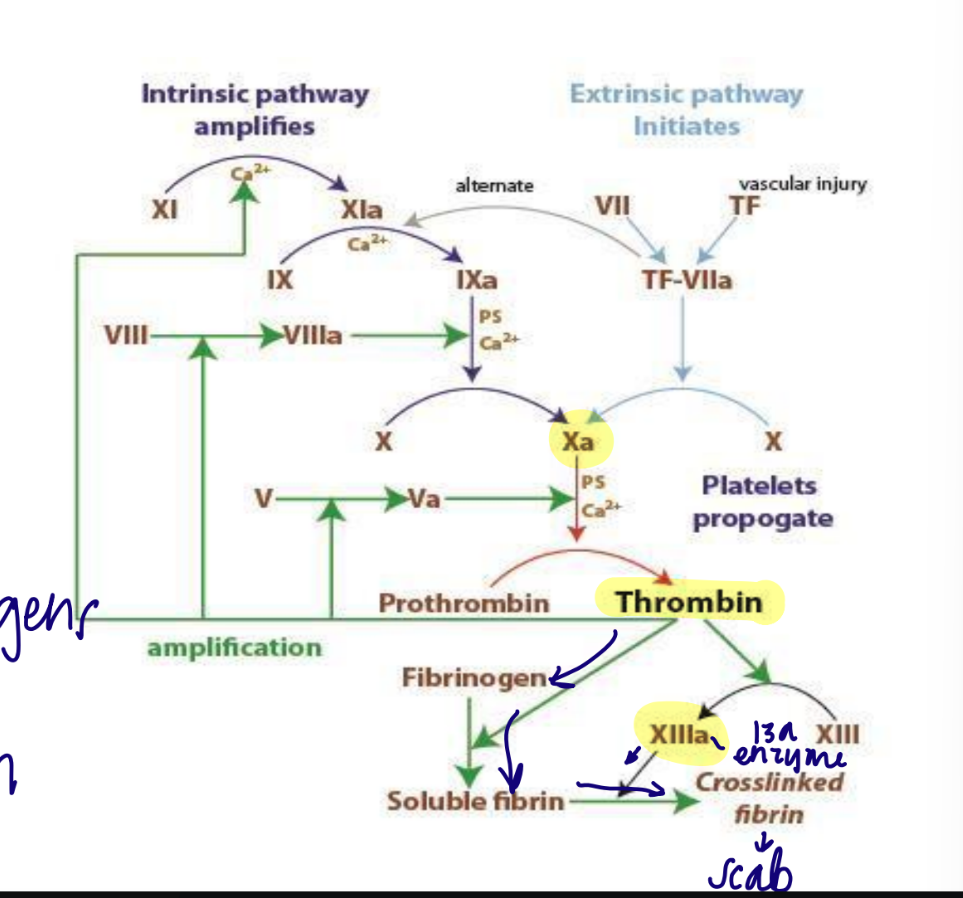
Warfarin (Coumadin), Heparin, Fondaparinux, Rivaroxaban (Xarelto), Apixaban (Eliquis)
Warfarin (Coumadin) MOA and side effects
Vitamin K inhibitor
vit. K is required for coagulation cascade factor activation
factors that have already been activated are NOT affected, delay in onset of Warfarin
side effect: hemorrhage
Rivaroxaban (Xarelto) & Apixaban (Eliquis) MOA and side effects
Direct factor Xa inhibitors → no thrombin formation
side effect: hemorrhage
Anemia and Treatments (4)
low concentration of hemoglobin and RBCs
Iron, Cyanocobalamin (Vitamin B12), Folic Acid, Darbepoetin alfa
what type of anemia does iron treat?
iron deficiency anemia
what type of anemia does Vit B12/Cyanocobalamin and/or folic acid treat?
Vit B12, Folate, and Megaloblastic anemia
What is Darbepoetin alfa (Aranesp)?
Tx for anemia → hematopoietic growth factor (recombinant erythropoietin)
5 types of dyslipidemia treatments
1. Derivatives of fibric acid (fibrates)
2. Nicotinic Acid
3. Bile Acid sequestrants
4. Inhibitors of HMG CoA Reductase (statins)
5. Cholesterol Absorption inhibitors
Dyslipidemia treatment name, MOA, and side effects: Fibric acid derivatives (2)
Decrease hepatic triglyceride production
Gemfibrozil (Lopid)
Fenofibrate (Tricor)
SEs: GI disturbances
Dyslipidemia treatment name, MOA, and side effects: Bile Acid Sequestrants (3)
Bind bile acids & remove from enterohepatic circulation (excreted in feces) → Lowers LDLs, raises HDLs
• Cholestipol (Colestid)
• Cholestyramine (Prevalite)
• Colesevelam (Welchol)
Side Effects:
• Constipation, Diarrhea, Bloating, Flatulence, Bind fat-soluble vitamins
HMG CoA reductase inhibitors (5) MOA and side effects
Decreasing LDL synthesis and increasing LDL receptors in the liver
PRAVASTATIN (Pravachol)
SIMVASTATIN (Zocor)
ATORVASTATIN (Lipitor)
ROSUVASTATIN (Crestor)
LOVASTATIN (Mevacor)
SEs: myalgia - muscle aches and pains, teratogenic - harmful for fetal development
Dyslipidemia treatment and MOA: cholesterol absorption inhibitors (1)
Prevents cholesterol reuptake in the small intestine by blocking cholesterol transport and inhibiting reabsorption of cholesterol excreted in bile
Ezetimibe (Zetia)

Alirocumab and Evolocumab are used to control cholesterol. How do they do this?
Monoclonal antibodies inhibit the PCSK9 protein, allowing LDL receptors to be recycled (instead of degraded). The PCSK9 protein is responsible for degrading LDL receptors that clear LDL cholesterol, so inhibition will promote LDL receptors to clear cholesterol from plasma.