Host–Parasite and Microbial Interactions: Pathogenesis and Resistance
 Call Kai
 Learn
Learn Practice Test
 Spaced Repetition
 Match
Match Flashcards
 Knowt Play
1/46

There's no tags or description
Looks like no tags are added yet.
Name | Mastery | Learn | Test | Matching | Spaced | Call with Kai | Chat |
|---|
No analytics yet
Send a link to your students to track their progress
47 Terms
What factors influence host-pathogen interaction?
The host's immune system and microbial factors inherent to the invading organism.
What does colonization refer to in microbiology?
The growth of microbiota in or on a body site without causing damage or notable symptoms.
Define symbiosis.
A relationship where two organisms live together.
What is commensalism?
A relationship where the microorganism benefits while the host is not harmed.
What is mutualism?
A relationship where both the microorganism and the host benefit.
Define parasitism.
A relationship where the microorganism benefits while the host is harmed.
What are indigenous (normal) flora?
Microorganisms commonly found on or in healthy persons.
What is resident flora?
Microorganisms that colonize an area for months or years.
What is transient flora?
Microorganisms temporarily colonizing a host.
What is a carrier state?
The condition of hosts capable of transmitting an infection.
What influences the composition of usual microbial biota?
Specific nutritional and environmental factors.
What is the significance of low pH in the GI tract?
It helps maintain a sterile environment in the stomach.
What are some defenses of the GI tract?
Antimicrobial factors and a highly acidic pH.
What is the role of normal flora on the skin?
To prevent pathogens from colonizing.
What is the impact of antibiotics on microbial biota?
They can significantly alter the usual flora.
What are opportunistic infections?
Infections that occur when the habitat of normal flora is changed.
What can cause opportunistic infections?
Weakened immune systems, trauma, or immunosuppressive treatments.
What are true pathogens?
Organisms that cause disease in healthy immunocompetent hosts.
Define iatrogenic infections.
Infections that occur as a result of medical treatment or procedures.
What is the role of normal microbial flora in the immune system?
They prime the immune system and block colonization of extraneous pathogens.
What is pathogenesis?
The ability of an organism to produce disease.
What are opportunistic pathogens?
Microorganisms that usually do not cause infection but may under special circumstances.
What is the estimated number of possible GI microbial residents?
Over 35,000 species.
What is the significance of the sterile sites in the genitourinary tract?
They include kidneys, bladder, and fallopian tubes, which are normally free of microorganisms.
What are some examples of chronic conditions that may lead to opportunistic infections?
Diabetes and severe hepatic disease (e.g., cirrhosis).
What are the common routes of transmission for pathogens?
Airborne, food and water, close contact, cuts and bites (non-arthropod), arthropods, zoonoses.
What are zoonoses?
Diseases that can be transmitted from animals to humans.
What does microbial virulence refer to?
The relative ability of a microorganism to cause disease, measured by the number of organisms required to cause disease.
What are virulence factors?
Traits that determine pathogenicity and virulence, such as capsules and toxins.
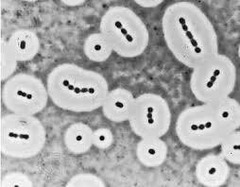
How do capsules contribute to microbial virulence?
They inhibit phagocytosis by masking cell structures recognized by phagocytes.
What is Protein A and its role in Staphylococcus aureus?
A protein that interferes with the binding of host antibodies to the organism, preventing opsonization and phagocytosis.
What are leukocidins?
Substances produced by some bacteria that are lethal to leukocytes and inhibit chemotaxis.
What is the function of fimbriae (pili) in bacteria?
They serve as the main adhesin, enabling bacteria to attach to host surfaces.
What mechanisms do pathogens use to survive intracellularly?
They may use secretory antibodies, IgA proteases, antigenic variation, and prevent fusion with lysosomes.
What is the difference between localized and disseminated invasion?
Localized invasion occurs in a specific area, while disseminated invasion spreads to distant areas and organs.
What are exotoxins?
Toxins secreted by organisms into the extracellular environment that disrupt cellular functions.
What are endotoxins and their composition?
Endotoxins are composed of lipopolysaccharides (LPS) from the outer membrane of gram-negative bacteria.
What effects do endotoxins have on the body?
They stimulate proinflammatory cytokine release, affecting blood pressure, temperature, and immune response.
What are some consequences of endotoxin exposure?
Fever, hypotension, septic shock, coagulation initiation, and immune system disturbance.
What are physical barriers in host resistance?
Intact skin and cleansing mechanisms like tears and urine that protect against pathogens.
How do cilia contribute to host defense?
They clear debris by locomotion, aiding in the removal of pathogens.
What role do antimicrobial substances play in host defense?
They include fatty acids, hydrochloric acid, and immune proteins that help kill pathogens.
What is the function of indigenous microbial flora?
They prevent pathogen colonization and contribute to host health by synthesizing vitamins.
What is phagocytosis?
The process by which cells engulf and digest pathogens, primarily performed by neutrophils and macrophages.
What is chemotaxis?
The movement of phagocytes towards a site of infection, necessary for mobilizing the immune response.
What is antigenic variation?
A mechanism by which pathogens change their surface proteins to evade the immune response.
What is the significance of diapedesis in the immune response?
It refers to the movement of immune cells from blood vessels to tissues at the site of infection.