Driving test
 Call Kai
 Learn
Learn Practice Test
 Spaced Repetition
 Match
Match Flashcards
 Knowt Play
1/32

There's no tags or description
Looks like no tags are added yet.
Name | Mastery | Learn | Test | Matching | Spaced | Call with Kai | Chat |
|---|
No analytics yet
Send a link to your students to track their progress
33 Terms
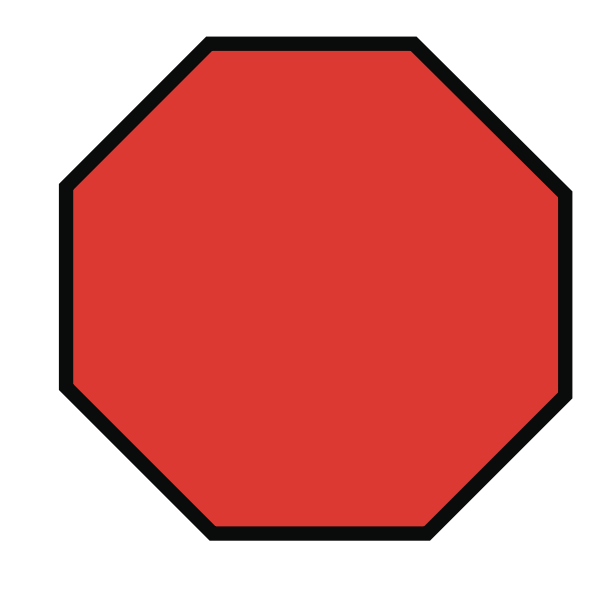
STOP
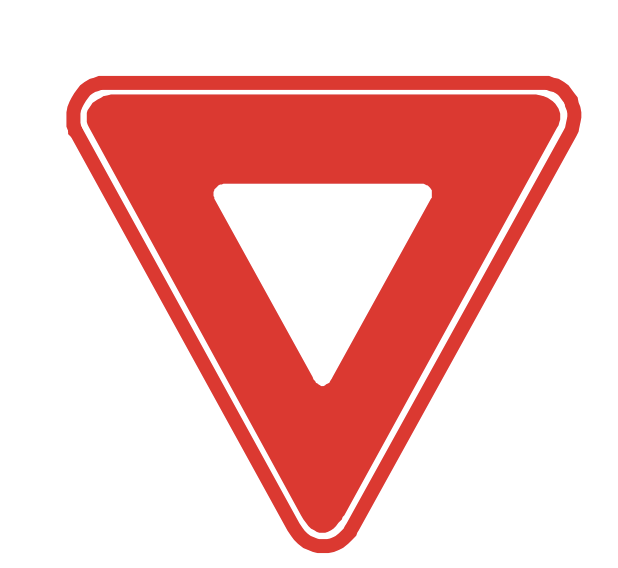
YIELD

RAILROAD CROSSING
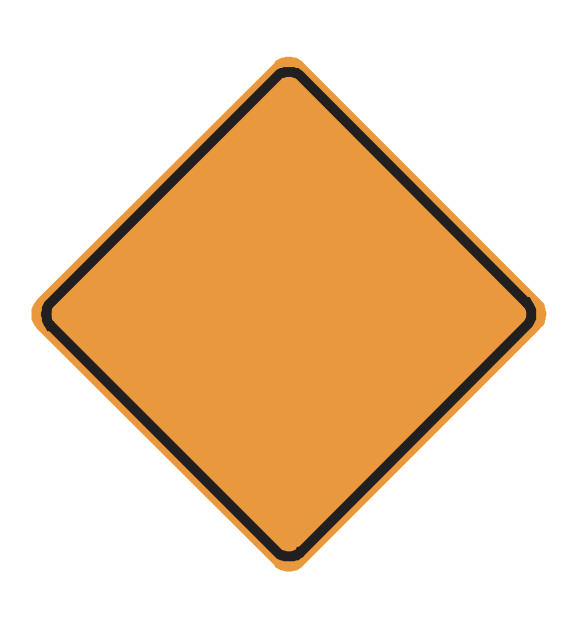
WARNING
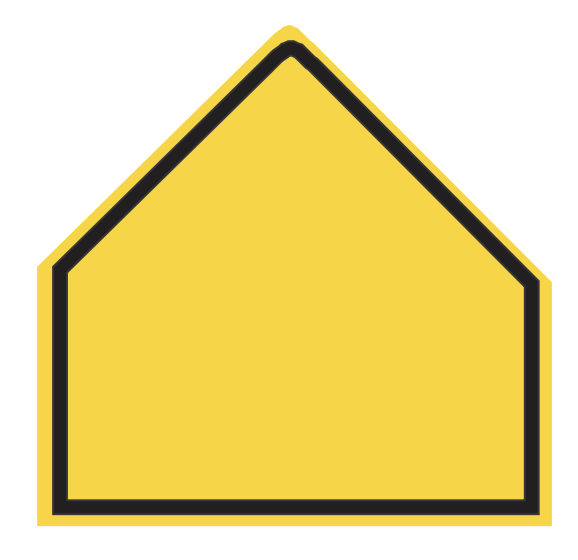
SCHOOL ZONE or SCHOOL CROSSING
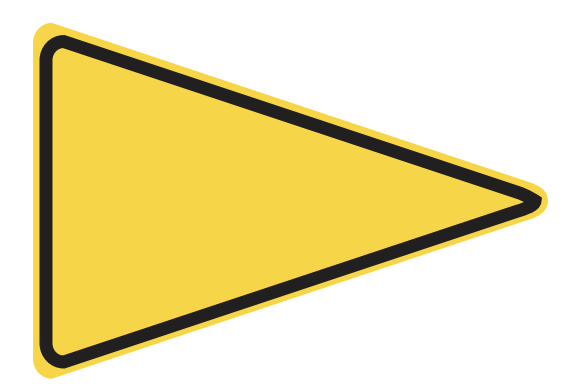
NO PASS ZONE
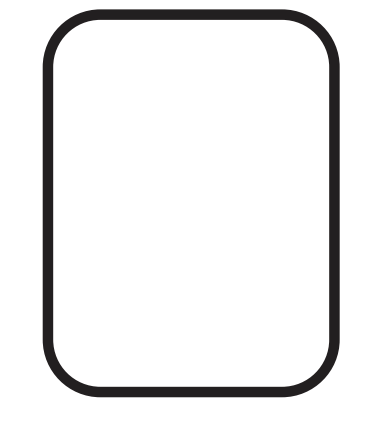
REGULATORY SIGN

RED signs are regulatory signs and must be obeyed. They include STOP, YIELD, DO NOT ENTER, or WRONG WAY.
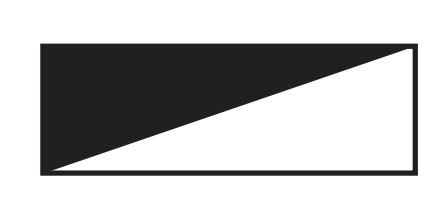
Some BLACK and WHITE signs are regulatory signs and must be obeyed. Others are used as route markers

YELLOW is used for warning signs. These signs tell you of road conditions and dangers ahead.

YELLOW-GREEN can also be used for warning signs. These signs alert you to pedestrian and bicycle crossings, playground areas, school bus stops, and school zones.
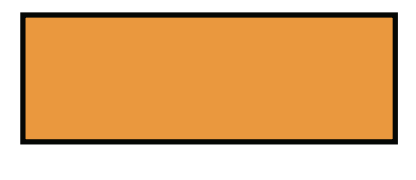
ORANGE is used for warning signs, usually found in construction or maintenance zones along streets and highways. These signs alert you to possible dangers ahead due to construction and maintenance projects.
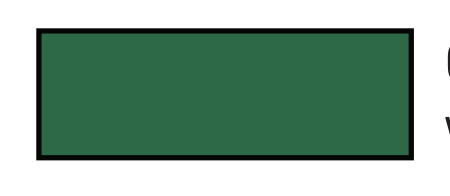
GREEN is used for guide signs. These signs tell you where you are, which way to go, and the distance to upcoming destinations.

BLUE is also used for guide signs. These signs tell you about services along the roadway

BROWN is used for parks and recreation signs
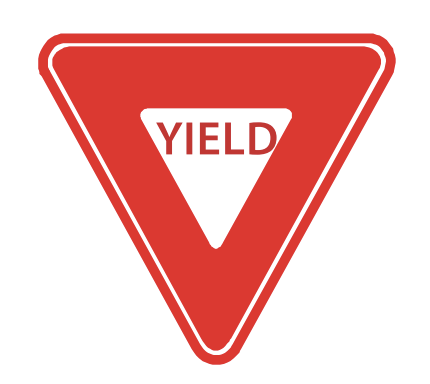
The three-sided (triangle) sign tells you to give the right of way to all vehicles and pedestrians before proceeding. Slow down to a safe speed and stop if necessary. When stopping, do so at a marked crosswalk or before entering the intersection. You also may see YIELD signs on expressway ramps. These signs may be posted when there is no extra lane, where a driver may speed up to merge with expressway traffic. There is no regulatory sign associated with merging lanes; there are only advisory and warning signs. Late merge is not typically used due to operational concerns.
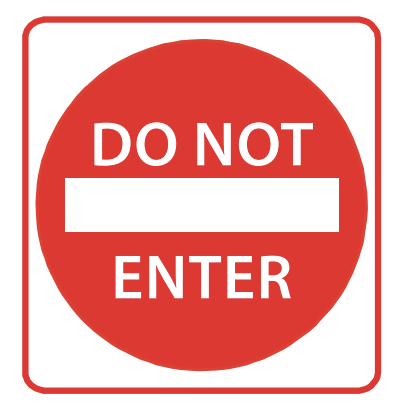
This sign is posted on one-way streets and other roadways where you are not allowed to enter. You may see this sign if attempting to enter an expressway ramp in the wrong direction.
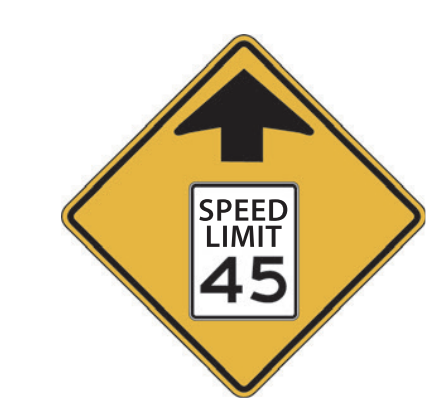
This sign warns you that there is a speed zone ahead. Be prepared to alter your current speed.
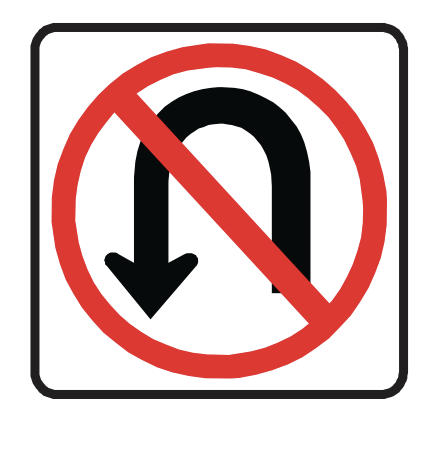
No U-Turn These signs are posted on divided highways or expressways. You may see one where there is an opening in the divided highway that leads to the other side. These openings are only for authorized vehicles, such as police cars, ambulances, snow plows, construction/ maintenance equipment, and other emergency vehicles. Other types of vehicles may not use this opening.
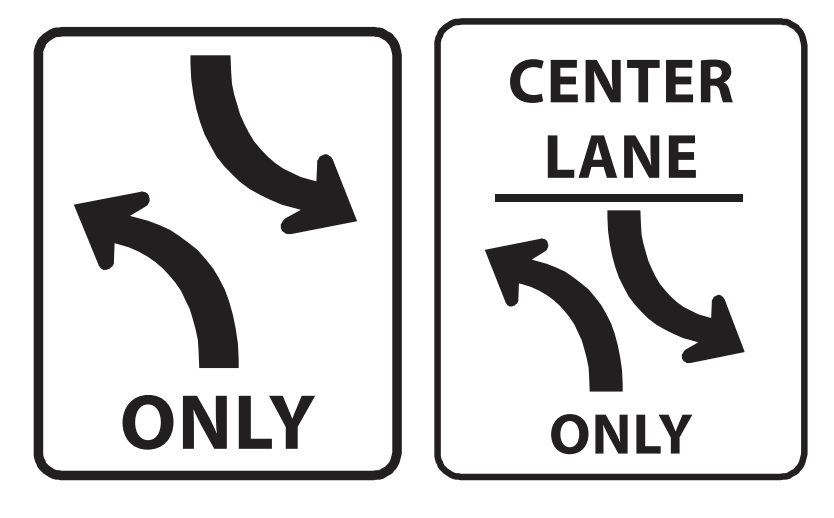
Two-Way Left Turn Lanes Either of these two signs can be used to indicate that a two-way left turn lane is in the center of a highway. Along with a sign, the two-way left turn lane is marked with yellow lines and white arrows.
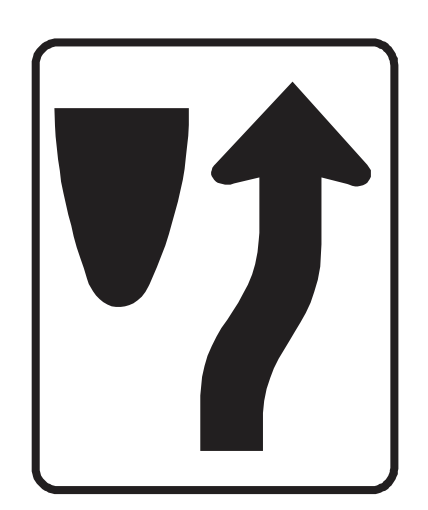
Keep Right This sign tells you where to drive when approaching traffic islands, medians, or other obstructions in the middle of the roadway. You must drive to the side indicated by the arrow.
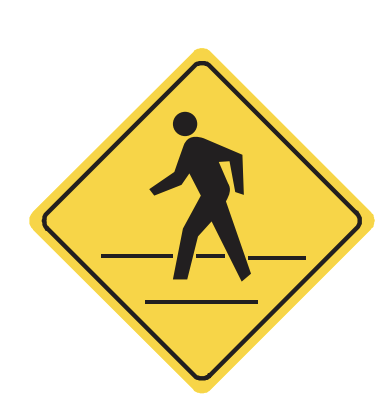
Warning signs alert you to conditions ahead. These signs are usually diamond-shaped and warn about road hazards, construction sites, schools, or other situations that require special attention. While most warning signs are yellow, some communities may use fluorescent yellow-green pedestrian, bicycle, and school signs. Construction and maintenance warning signs are orange.
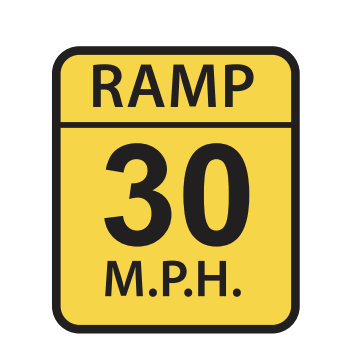
Exit Ramp These signs are posted at freeway and interstate exit ramps. This sign shows the maximum safe speed at which a vehicle can be driven on the ramp.
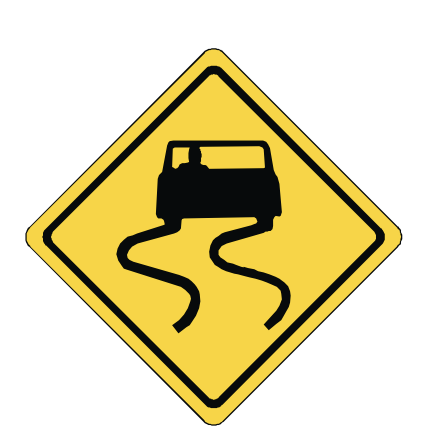
Slippery Pavement All roads are slippery and dangerous when wet. This sign warns you of conditions that can cause you to lose control of your car. Slow down when coming upon wet pavement because it takes longer to stop.
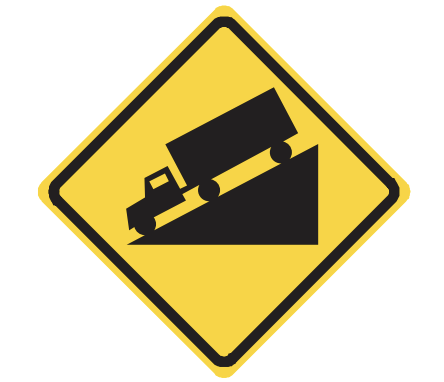
Downgrade This sign warns you of a dangerous hill. It may be very long or steep, or have sharp curves. Slow your speed before starting down the hill.
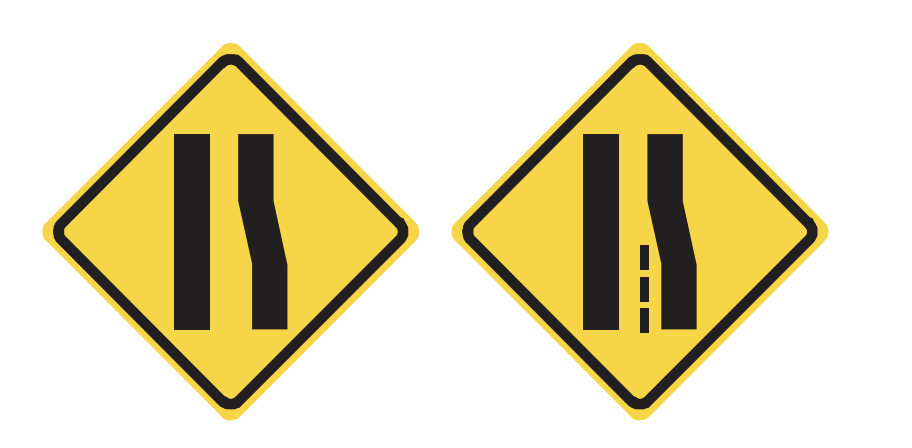
Reduction in Lanes These signs are used on multi-lane highways to warn you of a reduction in the number of traffic lanes in the direction of travel. Reduction in lanes can be temporary, due to construction or maintenance activities, or permanent. Be prepared to change lanes or to allow other vehicles to merge into your lane. Drivers of all vehicles may need to adjust their speed and position to avoid a crash with another vehicle. When the road is not congested, merge into the open lane as early as possible. During times of congestion, it is advised that you use both lanes to advance to the lane reduction point and merge at that location, alternating turns. This is also known as the “zipper merge,” as two sides merge into one like a zipper.
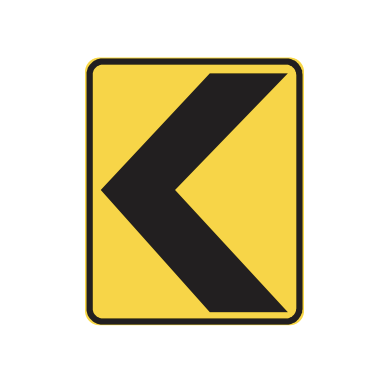
Change in Direction This sign warns you of a change in direction or narrowing of the road. You may find several of these signs on the outside of a sharp curve or on approaches to a narrow bridge.
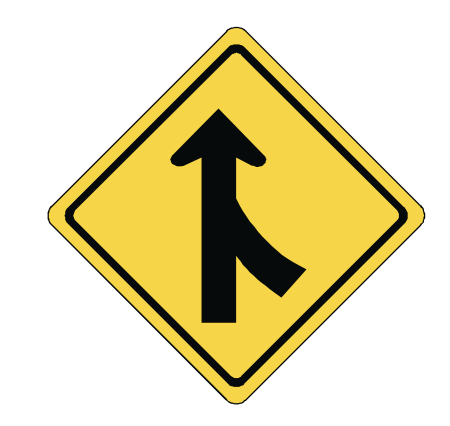
Merging Lanes This sign tells you that two lanes of traffic going the same direction will soon merge into one lane. Be ready to either change lanes or allow other traffic to merge into your lane. Merge signs may appear on expressways just before expressway ramps. The driver on the expressway should slow down to let the driver on the ramp merge.
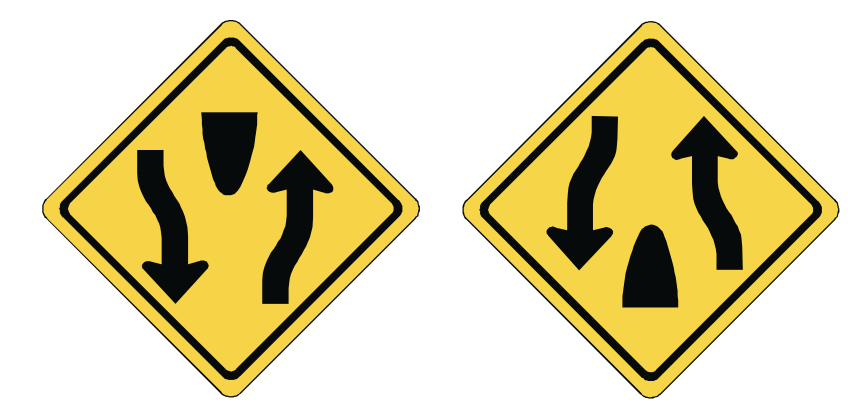
Divided Highway Divided highways have a center strip that separates traffic going in opposite directions. The first sign is posted before a divided highway begins. The second sign is posted just before the divided highway ends. Be careful nearing the end of a divided highway.
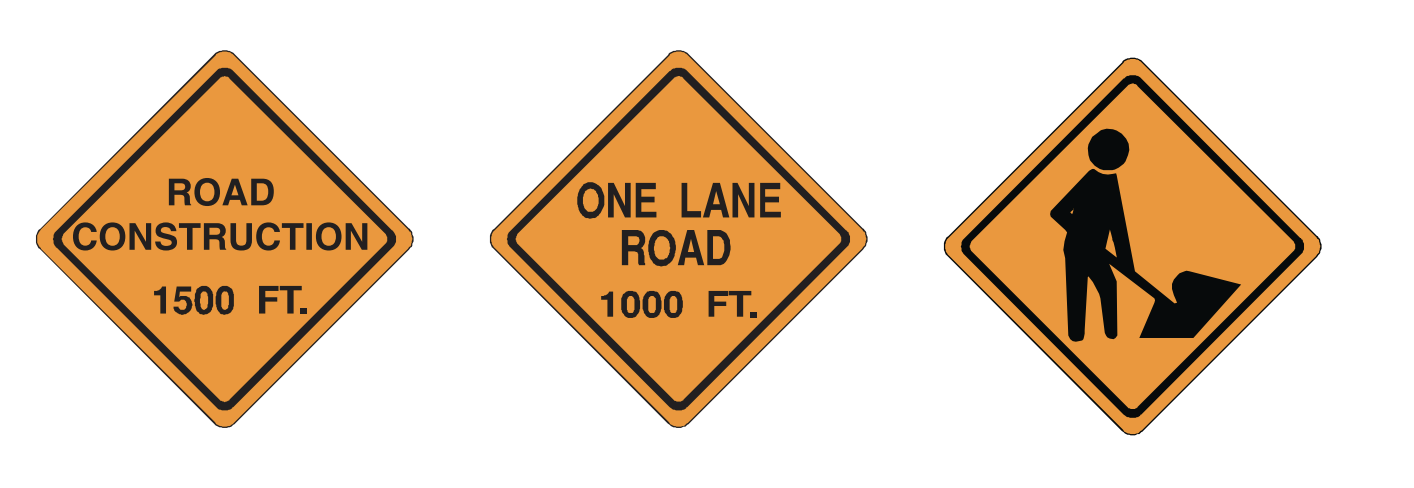
Workers Ahead These signs are posted far enough ahead to give you time to adjust your vehicle speed for any unusual conditions. When you see these signs, workers may be working close to your traffic lane. Follow the signs and adjust your vehicle speed to the posted construction zone speed limit, stay alert, and keep a safe distance between your vehicle and all traffic barriers.
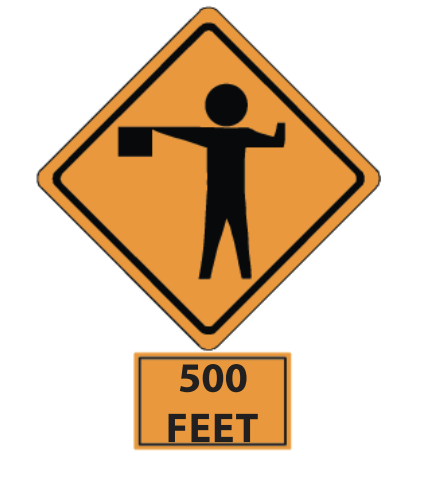
Flagger This sign warns that there is a flagger ahead. Use caution when approaching a flagger, as the individual will be working close to traffic. Slow down and be prepared to obey the signals of the flagger. You must stop if signaled to do so.