Bio Module 1 - Chemistry of Life
 Call Kai
 Learn
Learn Practice Test
 Spaced Repetition
 Match
Match Flashcards
 Knowt Play
1/44

There's no tags or description
Looks like no tags are added yet.
Name | Mastery | Learn | Test | Matching | Spaced | Call with Kai | Chat |
|---|
No analytics yet
Send a link to your students to track their progress
45 Terms
basic unit of life
cells
cells are made up of ____________
molecules
proton charge
positive
neutron charge
neutral
electron charge
negative
mass of atom determined by
(number of) protons and electrons
electron cloud
electrons around the nucleus
atoms contain equal # of
protons and electrons
atomic number is determined by the # of _____ and therefore could also determine the _____________
protons, name of element
mass number is determined by the # of
protons and neutrons
electrons orbit the
proton
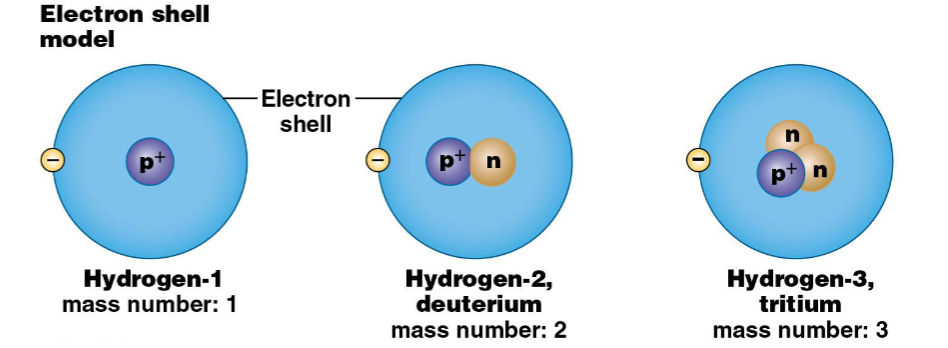
isotopes are atoms with ______ and therefore have a different ______
different # of neutrons but same # protons, mass number
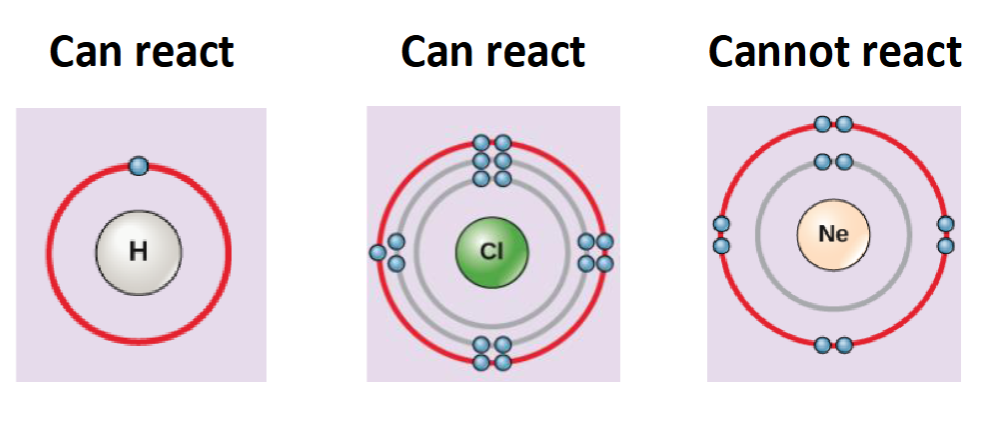
distribution of electrons determines
element reactivity
octet rule states that
elements are most stable when their outermost energy level (valence shell) has exactly 8 electrons
____ has only one electron shell which can only hold _____ electrons
helium, 2
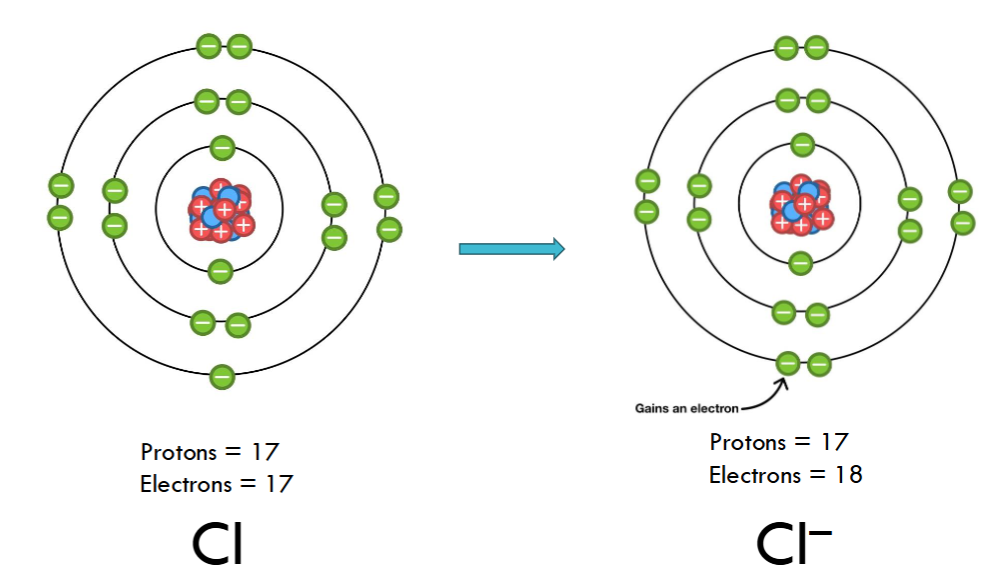
anions
become negative when gaining electron(s)
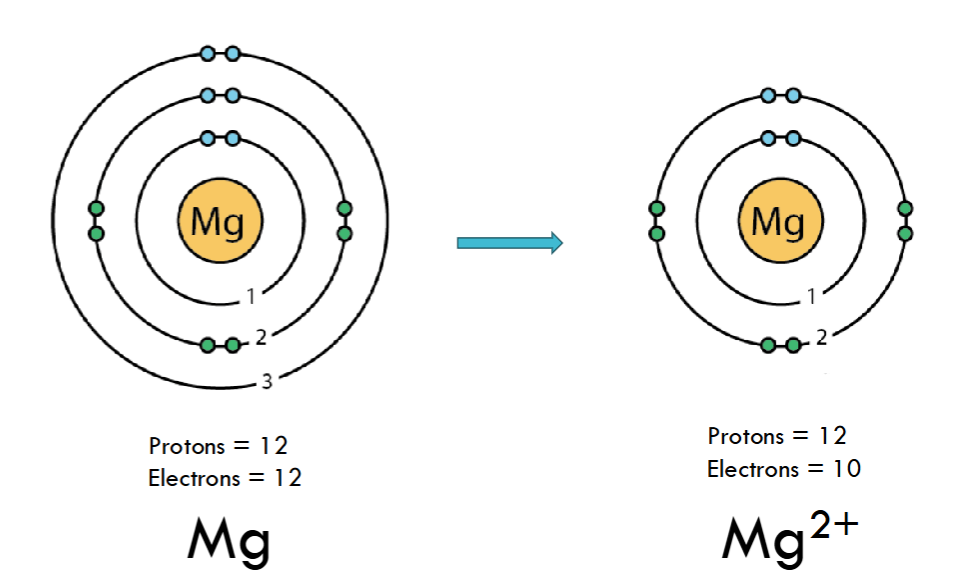
cations
become positive when losing electron(s)
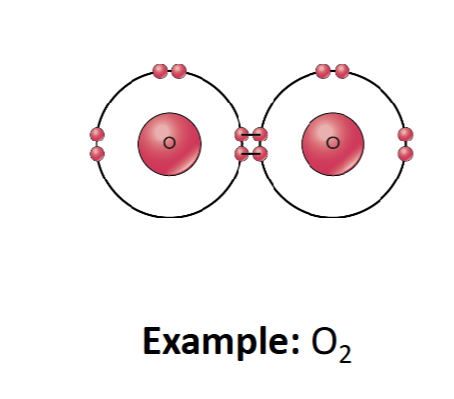
molecules are a
group of (same element) atoms
chemically bonded
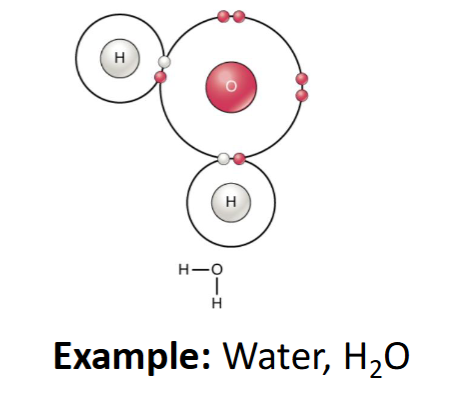
compounds are a
group of (different element) atoms
chemically bonded
Intramolecular forces (in cells)
Covalent + Ionic bonds
Intermolecular forces (between cells)
Hydrogen bonds + Vanderwaals forces
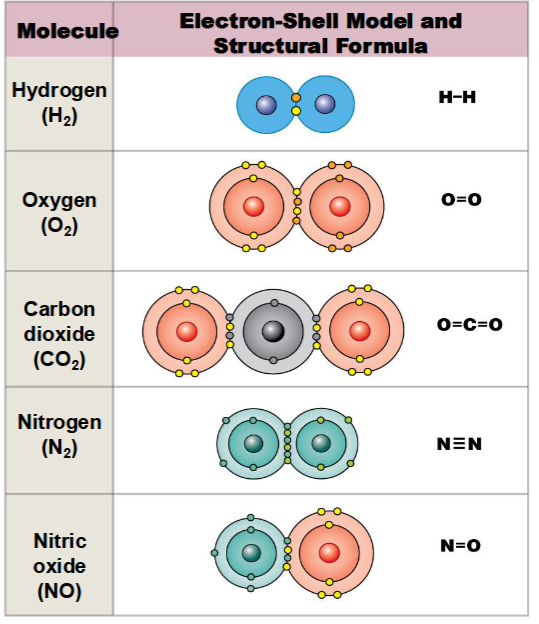
Covalent bond
sharing electrons between two atoms
Ionic bond
“donated” electrons
hydrogen bonds
“magnetic attraction” between hydrogen and another molecule (no electron sharing/donating)
Van der Waals Forces
“magnetic” attraction between positive and negative charges; distance dependent
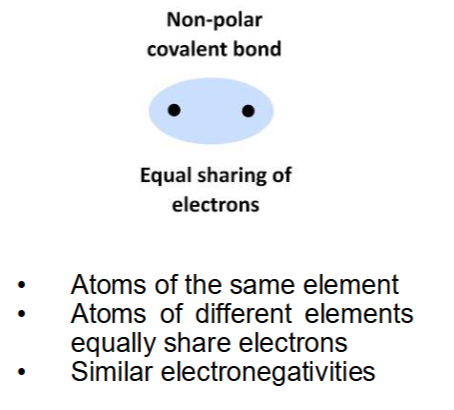
nonpolar (covalent bond)
equal sharing of electrons
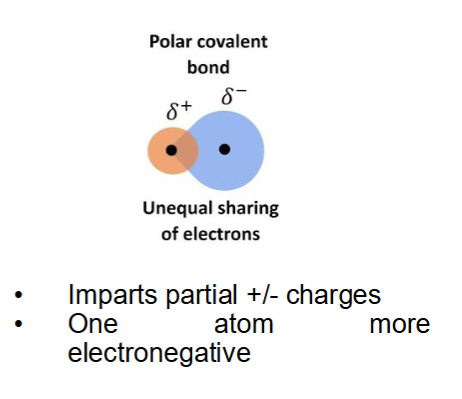
polar (covalent bond)
unequal sharing of electrons
properties of water
cohesion/adhesion
high specific heat capacity + heat of vaporization
solid water floats (water molecules expand in ice)
transparent (photosynthesis of plants)
good solvent
cohesion
molecules staying close due to hydrogen bonds
adhesion
clinging of one substance to another (stickiness)
solution
homogenous mixture
eg. salt water
solvent
dissolving agent
eg. water
solute
substance being dissolved
eg. salt
aqueous solution
solution in which water is the solvent
acidic solutions
less than 7 (pH value)
basic solutions
more than 7 (pH value)
Isomers
compounds with same molecular formula but different structures
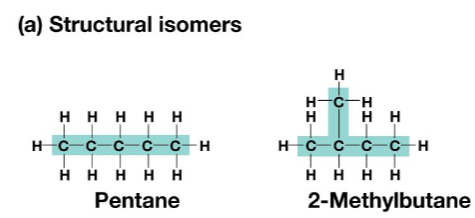
structural isomer
have different covalent bond arrangement
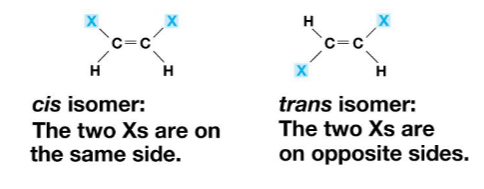
cis-trans isomer
have different arrangement around a double bond
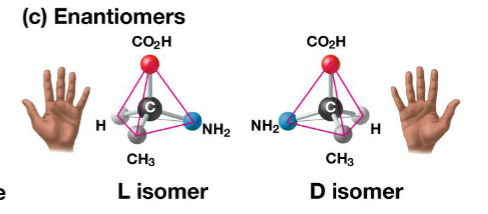
enantiomers
“left” and “right” handed versions of each other
acids
increase H+ concentration
bases
decrease H+ concentration
buffers
substances that minimize fast changes in pH
hydrocarbons
molecules (like fat) that contain only carbon and hydrogen
undergo reactions that release large amounts of energy
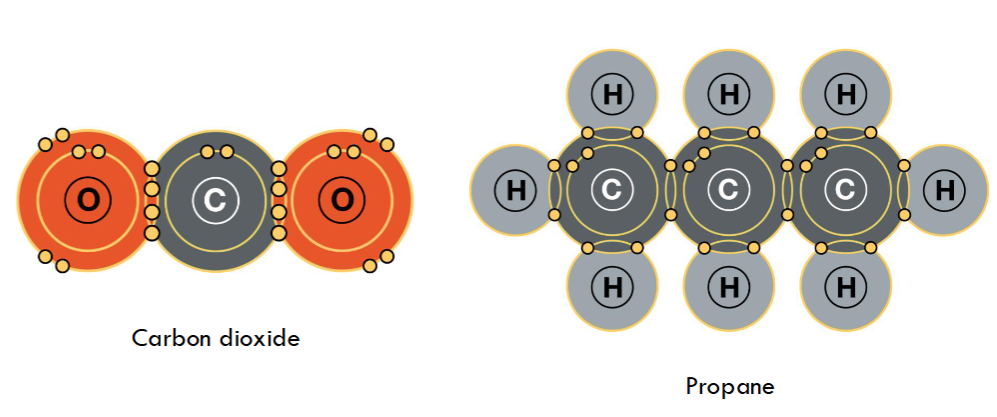
carbon is good at ______ due to its ____________
forming strong covalent bonds, electron distribution