Plant reproduction and pollination and stuff
 Call Kai
 Learn
Learn Practice Test
 Spaced Repetition
 Match
Match Flashcards
 Knowt Play
1/45

There's no tags or description
Looks like no tags are added yet.
Name | Mastery | Learn | Test | Matching | Spaced | Call with Kai | Chat |
|---|
No analytics yet
Send a link to your students to track their progress
46 Terms
what is reproduction and why is reproduction existing
the process of producing new organisms
it ensures the continuity of a species
what is asexual reproduction
the process resulting in the production of genetically identical offspring (clones) from one parent, without the fusion of gametes
what is sexual reproduction
the process involving the fusion of toe gametes to form the zygote. it produces genetically dissimilar offspring
differences between asexual and sexual reproduction
number of parents: one, two (opposite sex)
sex cells involved (no, yes)
zygote formed (no, yes)
offspring (genetically identical to each other and to parents, genetically dissimilar to each other and parents)
genetic variation (no, yes)
survival rate in unfavourable conditions (low, high)
population growth rate (fast, slow)
organisms involved (unicellular, flowering plants and animals)
advantages of asexual reproduction
one parent only
if parent can survive well in a particular environment, genetically identical offspring should be well suited to the same environment
relatively certain method of reproduction
offspring are produced in large numbers, quick and with known characteristics
does not depend on pollinators for reproduction
disadvantages of asexual reproduction
identical offspring lack in genetic variation, preventing evolution
characteristics are identical to parents. if environment changes and parents cant adapt, daughter will also not adapt
overcrowding and competition for resources such as water, air, food
what is a sepal

a modified leaf that protects the flower in the bud stage
what is a petal and what are its functions
modified lea that forms the most obvious part of a flower
function
brightly coloured to attract insects for pollination
large petals provide a landing platform for insects
whats the receptacle and the pedicel

the enlarged end of the flower stalk that bears parts of the flower
the pedicel is the flower stalk
what does the filament do
holds anther in a suitable position to disperse pollen grains
what does the anther do and what is its structure
It produces pollen grains, and is made up of two lobes, each containing two pollen sacs. also contains a vascular bundle made up of a phloem and a xylem
what does pollen grain cells consist of
haploid set of chromosomes
each pollen grain has 2 nuclei
generative nucleus
pollen tube nucleus / vegetative nucleus
what sex is the carpel
female
what sex is the stamen
male
what is a stigma and what is its function
stigma → the swollen structure that receives pollen grains. a mature stigma secretes sugary fluid to stimulate the germination of pollens
what is a style and what is its function
style → connects the stigma to the ovary and holds the stigma in a suitable position to trap pollen grains
what does the ovary contain of
one or more ovules
tell me more about the ovules
ovule container ovum, which has a haploid set of chromosomes
ovule is attaches to the placenta by a stalk called the funicle
what is pollination and what is its function
the transfer of pollen grains from the anther to the stigma
important to help bring together the male and female gametes to enable fertilisation to take place
what is self-pollination
the transfer of pollen grains from the inter to the stigma of the same flower or a different flower on the same plant
adaptations to promote self pollination and discourage cross pollination
flowers are bisexual with anthers and stigmas maturing at the same time
stigma is situated directly below the anther
certain flowers in bisexual plants never open and only self-pollination can happen
benefits of self-pollination
only one parent needed
beneficial qualities are passed down from parent plant to offspring
not dependent on external factors for pollination
more likely to take place since stigmas are closer to anthers
less pollen and energy wasted
disadvantages of self-pollination
offspring produced are genetically similar to parents causing fewer varieties of offspring
probability of harmful recessive alleles being expressed in offspring Is higher as compared with cross-pollination
what is cross-pollination
involves the transfer of pollen grains from anther to stigma of a flower of another plant of the same species
how to promote cross-pollination?
plants bear either male or female flowers making self-fertilisation impossible
in bisexual plants:
anthers and stigmas mature at different times
stigmas of plants are situated at a distance away from the anthers
advantages of cross-pollination
more genetic variation in offspring / increased probability of offspring being heterozygous
seeds produced are capable of surviving longer before germination
probability of harmful recessive alleles being expressed offspring is lower as compared with self-pollination
offspring can inherit beneficial qualities from both parents
disadvantages of cross-pollination
two different pants of the same species are required
dependant on external factors for pollination
less likely to occur as compared to self-pollination
more energy and pollen are wasted
what is the calyx and epicalyx
the calyx consists of five green sepals
the base of the calyx is enclosed by the epicalyx consisting of two leaves
function of keel petal
enclose reproductive organs of the flower
what kinds of petals are there in the corolla of an insect pollinated flower
keel petal
wing petal
standard petal
what are the nectar guides and what is it used for
lines on the standard petals
guide insects to where the nectar is located
where is the nectar located in the clitoria flower and how can it be reached?
collects at the bottom of the stamen trough
can be reached only by insects with long tubular mouth (proboscis)
process of insect pollination
insects land on the standard petal
it follows the nectar guide into the flower
in order to collect the nectar, insect forces its way in between the two wing petals
insects back forces the keel petal upwards to expose the anthers and stigma
pollen grains from the anther stick onto the back of the insect and get transferred to a stigma
when insects leaves flower, the keel petals spring back into its original position
]what does the non-flowering bracts of the ischaemum muticum do
protect the two flowers in the spikelet
what does the lodicules do in ischaemum muticum
when ready to reproduce, the lodicules swell and force the two flowering bracts apart
adaptations of the stamens of a wind-pollinated flower and why
mature stamens have long filaments that ang downwards and can swing freely / pendulous
this is so that
when filaments sway, the pollen is shaken free and carried by the wind
adaptations of the stigma of a wind-pollinated flower and why
a mature stigma is large, extended and feathery to provide a large surface area for the capture of pollen floating in the air
difference between petals of insect and wind pollinated flower
Insect: large with brightly-coloured petals
Wind: small, dull-coloured and without petals
take note: if exam questions asks you to refer to a non-coloured diagram, dont talk about colour
difference between nectar of insect and wind pollinated flower
Insect: nectar present
Wind: nectar absent
difference between scent of insect and wind pollinated flower
Insect: sweet scent, fragrant
Wind: scent absent
take note: if exam questions asks you to refer to a non-coloured diagram, dont talk about scent
difference between stigmas of insect and wind pollinated flower
insect: small, compact and do not protrude out of flower
wind; large, feathery and protrude out of flower
difference between stamens of insect and wind pollinated flower
insect: not pendulous and do not protrude out of flowers
wind: long, pendulous filaments with protruding anther. sway freely
difference between pollen of insect and wind pollinated flower
insect: fairly abundant. pollen grains are large with rough surfaces (to cling onto insect hairs easier)
wind: more abundant, pollen grains are tiny with smooth surfaces
difference between nectar guides of insect and wind pollinated flowers
insect: present
wind: absent
process of fertilisation in a flowering plant
after pollination, pollen grain germinates in response to sugary fluid secreted by mature stigma
a pollen tube grows out from the pollen grain. growth pollen tube is controlled by the pollen tube nucleus
the cytoplasm and the two nuclei pass into the pollen tube
the pollen tube secretes enzymes to digest the surrounding tissue of stigma and style
pollen tube enters the ovule through the micropyle
the generative nucleus divides into two male gametes, while the pollen tube nucleus disintegrates
when the pollen tube reaches the ovule, its tip absorbs sap at the micropyle and bursts, releasing the two male gametes
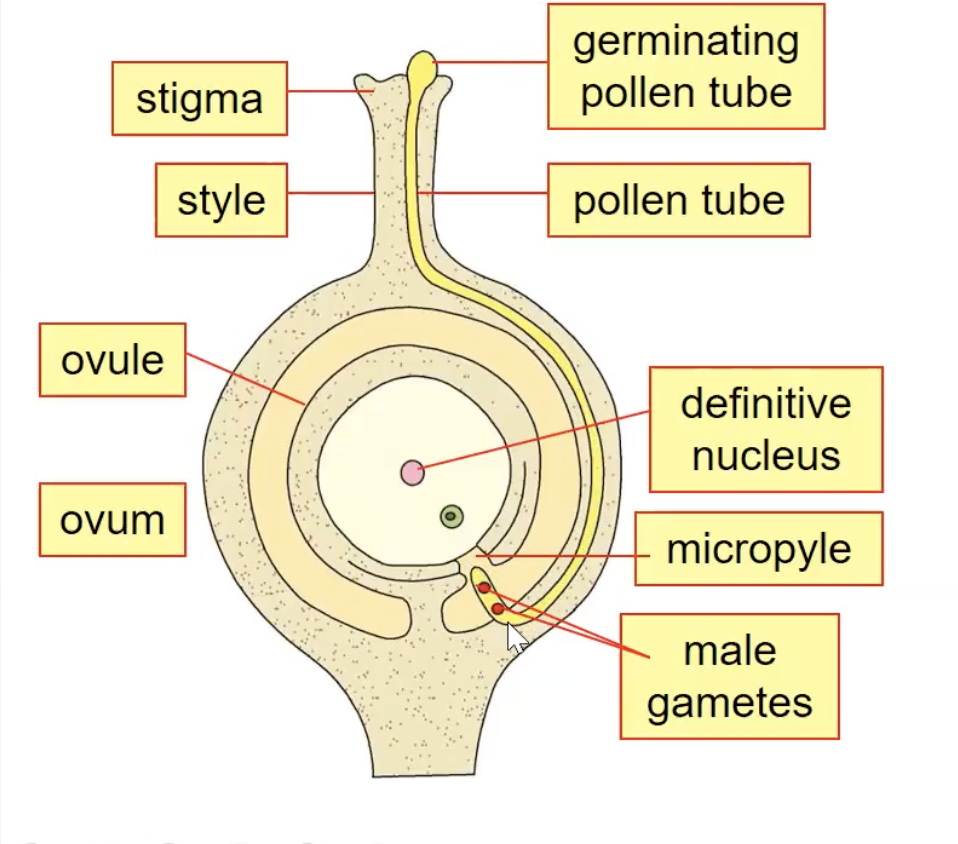
one male gamete fuses with the ovum to form zygote. the other male gamete fuses with the definitive nucleus to form the endosperm nucleus
zygote divides and develops into the embryo and the endosperm nucleus will give rise to an endosperm

what happens to plant parts after fertilisation?
ovule develops into a seed
ovary develops into a fruit
zygote develops into an embryo