trans transmitted dse
 Call Kai
 Learn
Learn Practice Test
 Spaced Repetition
 Match
Match Flashcards
 Knowt Play
1/69

There's no tags or description
Looks like no tags are added yet.
Name | Mastery | Learn | Test | Matching | Spaced | Call with Kai | Chat |
|---|
No analytics yet
Send a link to your students to track their progress
70 Terms
HBsAg
o Anti-HBc
o Anti-HCV
o Anti-HIV 1/2
o Anti-HTLV-I/II
o Syphilis
Once donor passes the medical screen and donor
questionnaire, required serologic testing is
performed.
HBV DNA
o HIV-I RNA
o HCV RNA
o WNV RNA
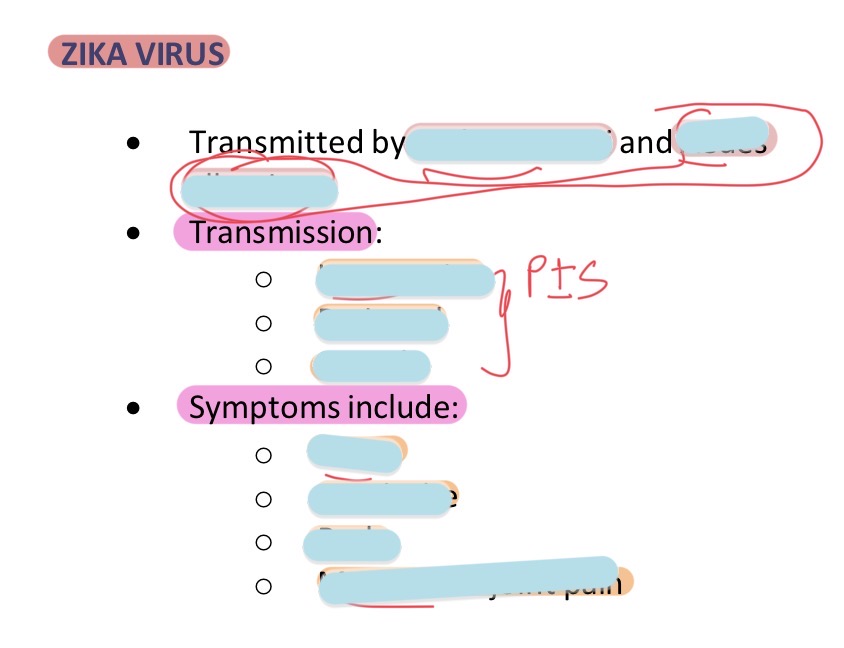
o ZIKV RNA
Nucleic Acid Testing (NAT) is performed for:
PCR
o Western Blot
o Radioimmunoprecipitation assay (RIPA)
Confirmatory tests include:
Hepatitis
Inflammation of the liver.
Jaundice
o Dark urine
o Hepatomegaly
o Anorexia
o Malaise
o Fever
o Nausea
o Abdominal pain
o Vomiting
symptoms of hepatitis
Viruses
o Bacteria
o Noninfectious agents
Drugs and alcohol
▪ Ionizing radiation
▪ Autoimmune processes
hepatitis Can be caused by:
EBV, CMV, parvovirus, and HSV.
hepatitis Can be caused by:
fecal-oral route or
parenterally.
hepatitis Can be transmitted through
HEPATITIS A
also known as Infectious hepatitis”
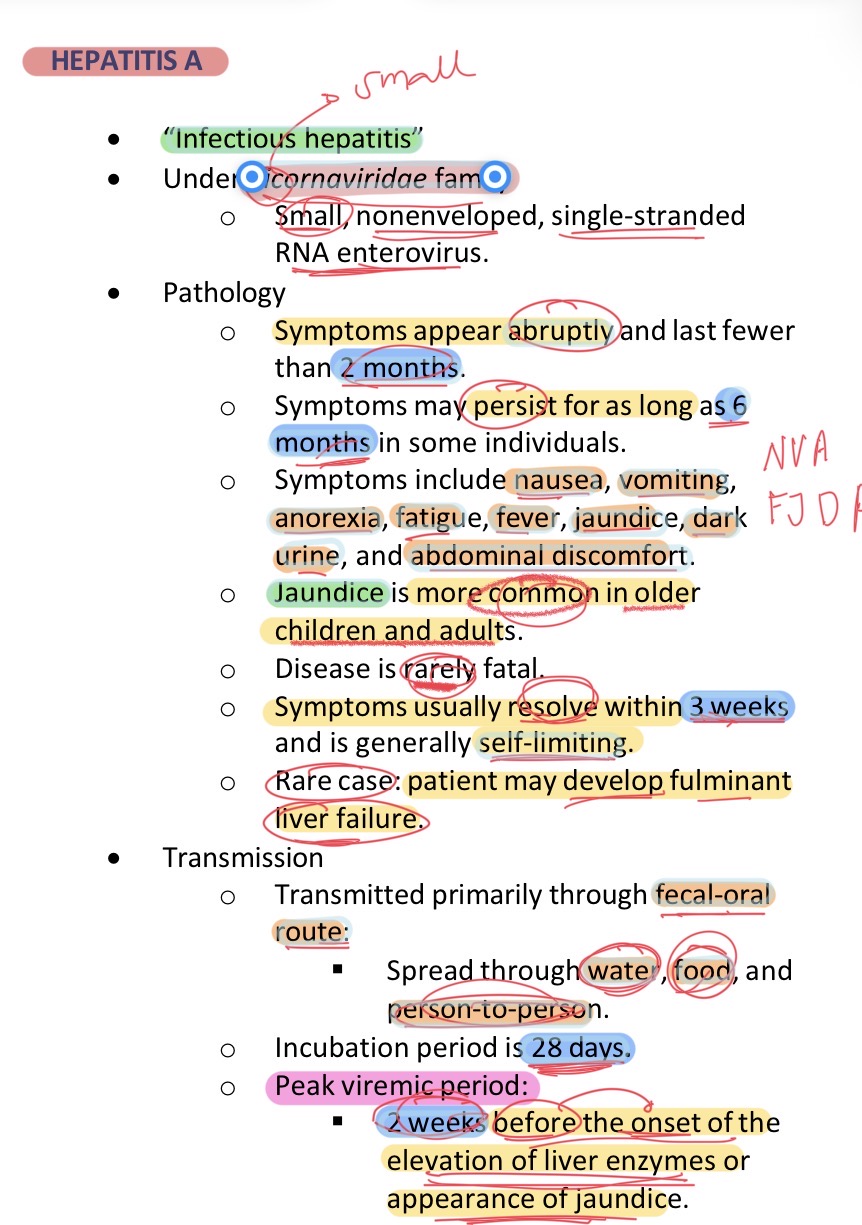
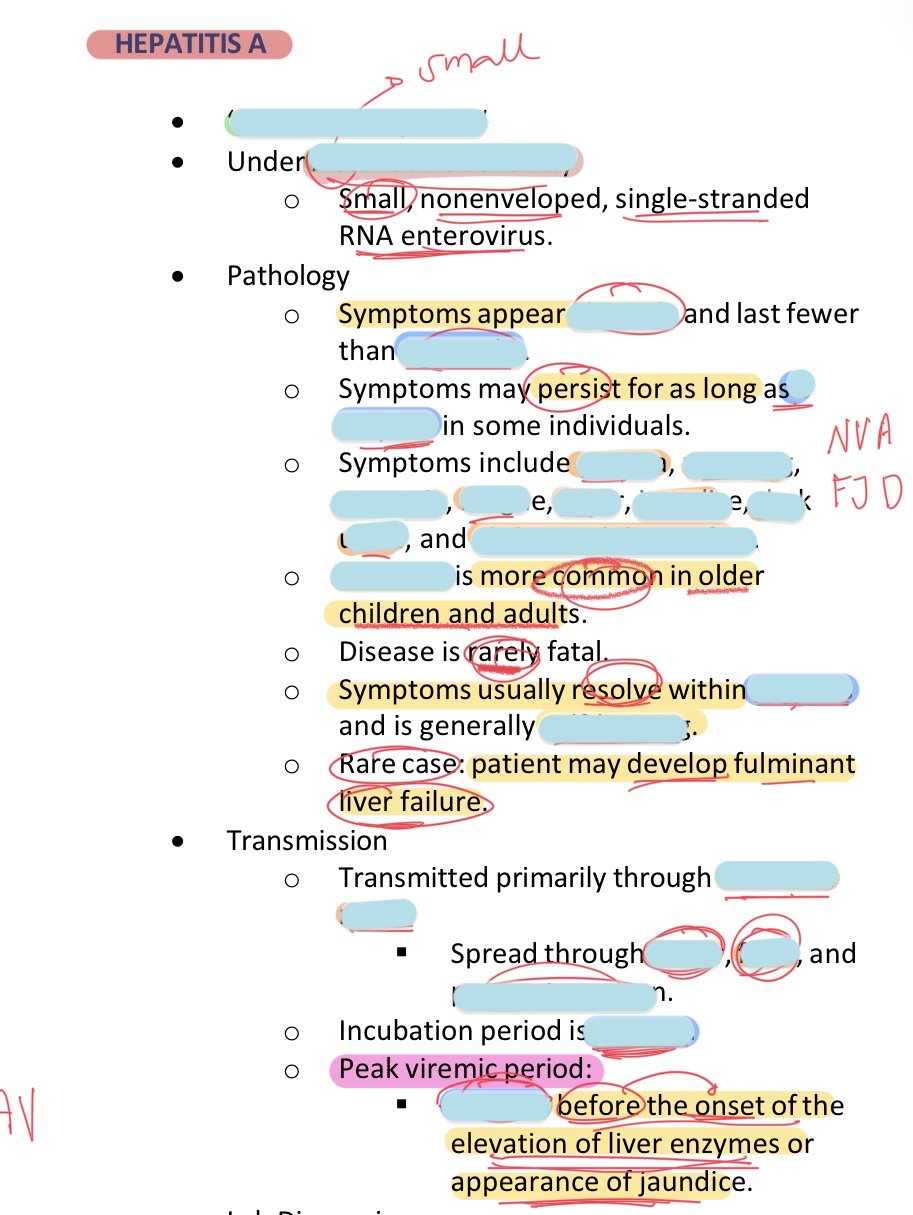

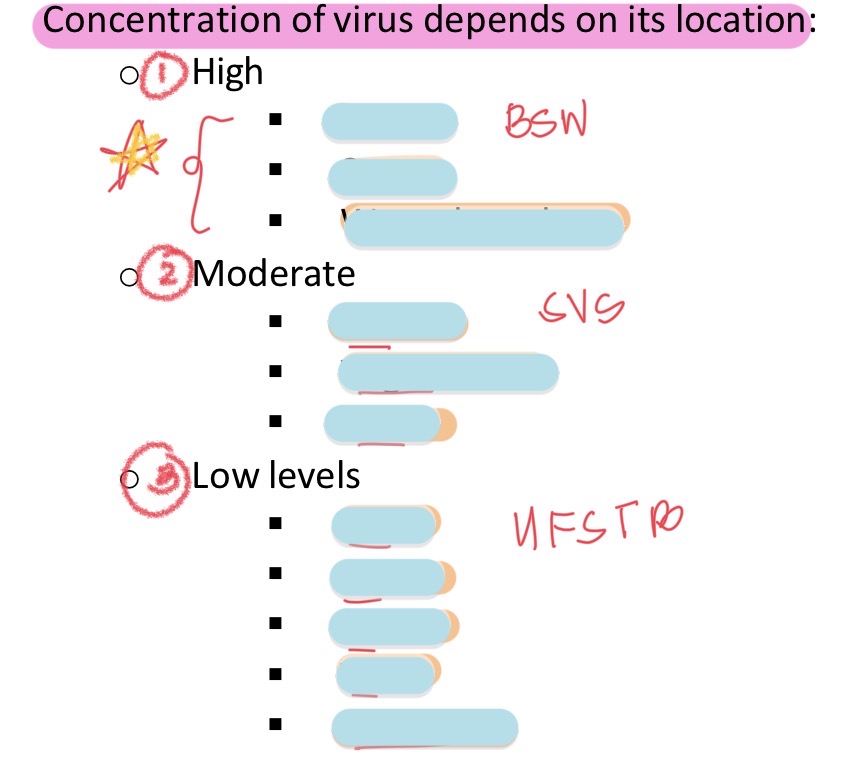
in hepa A


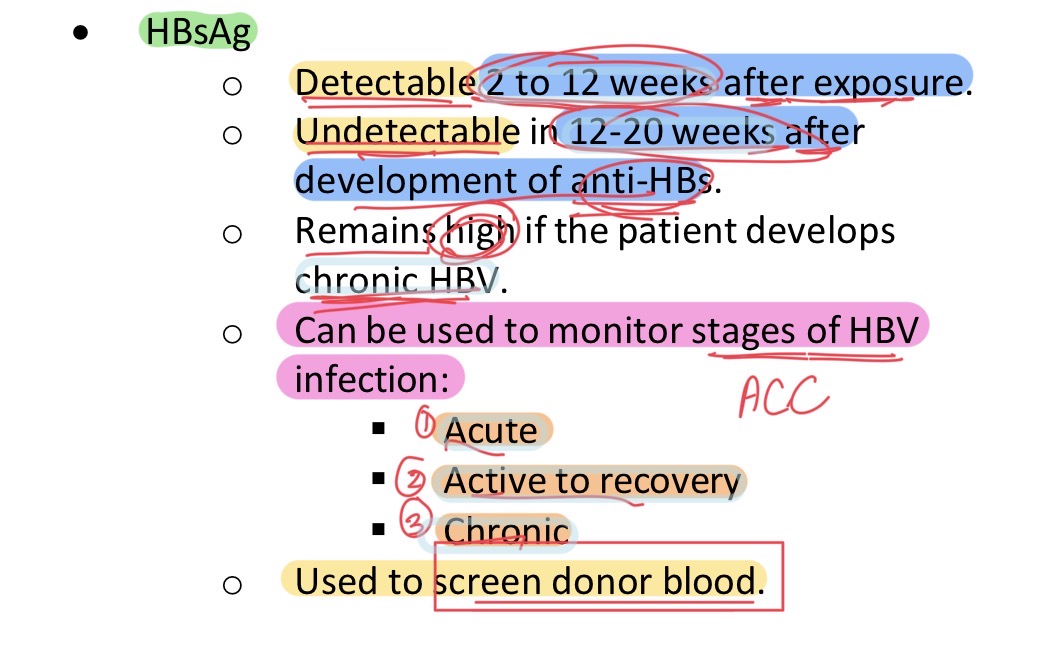
in hepa B
HBV DNA
First marker to appear before HBsAg
reach detectable levels.

HBeAg
Appears after HBsAg
HBeAg
Disappears before HBsAg (in recovering
patients)
HBeAg
Remains elevated in patients with chronic
hepatitis.
HBeAg
Present during the time of active
replication of the viru
HBeAg
Considered as marker of high
infectivity.
IgM anti-HBc
First antibody to appear
IgM anti-HBc
Presence of this will indicate current or
recent acute infection.
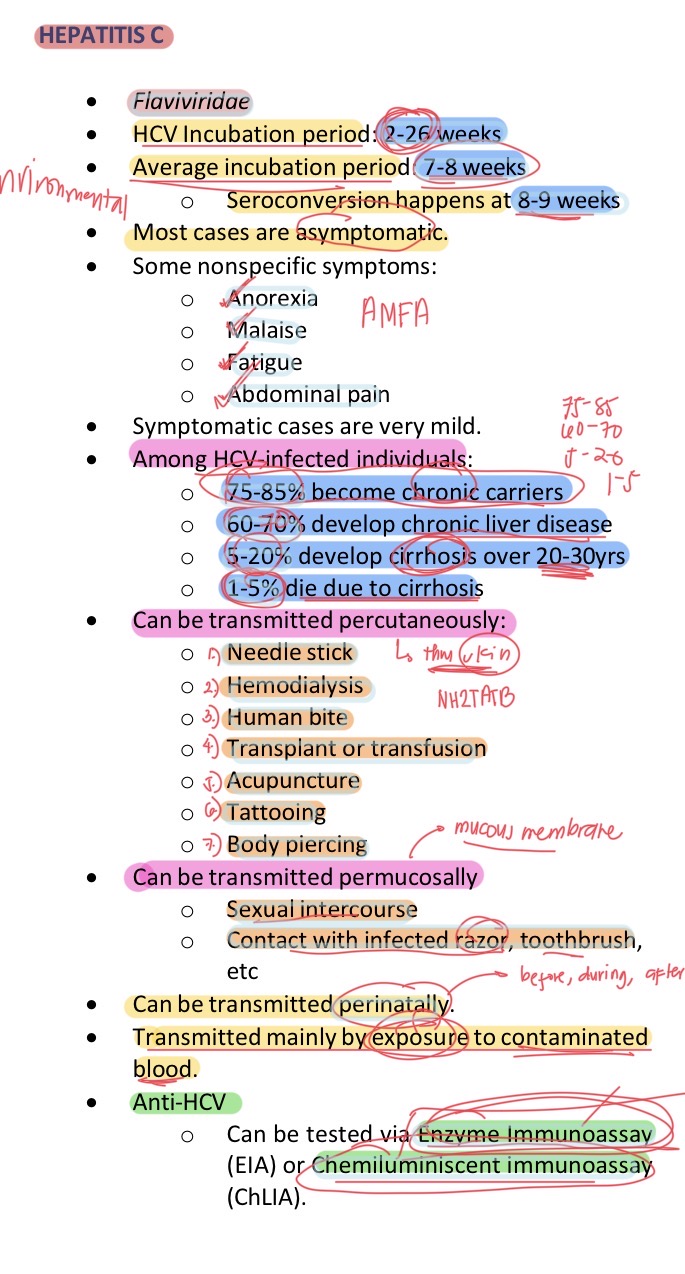
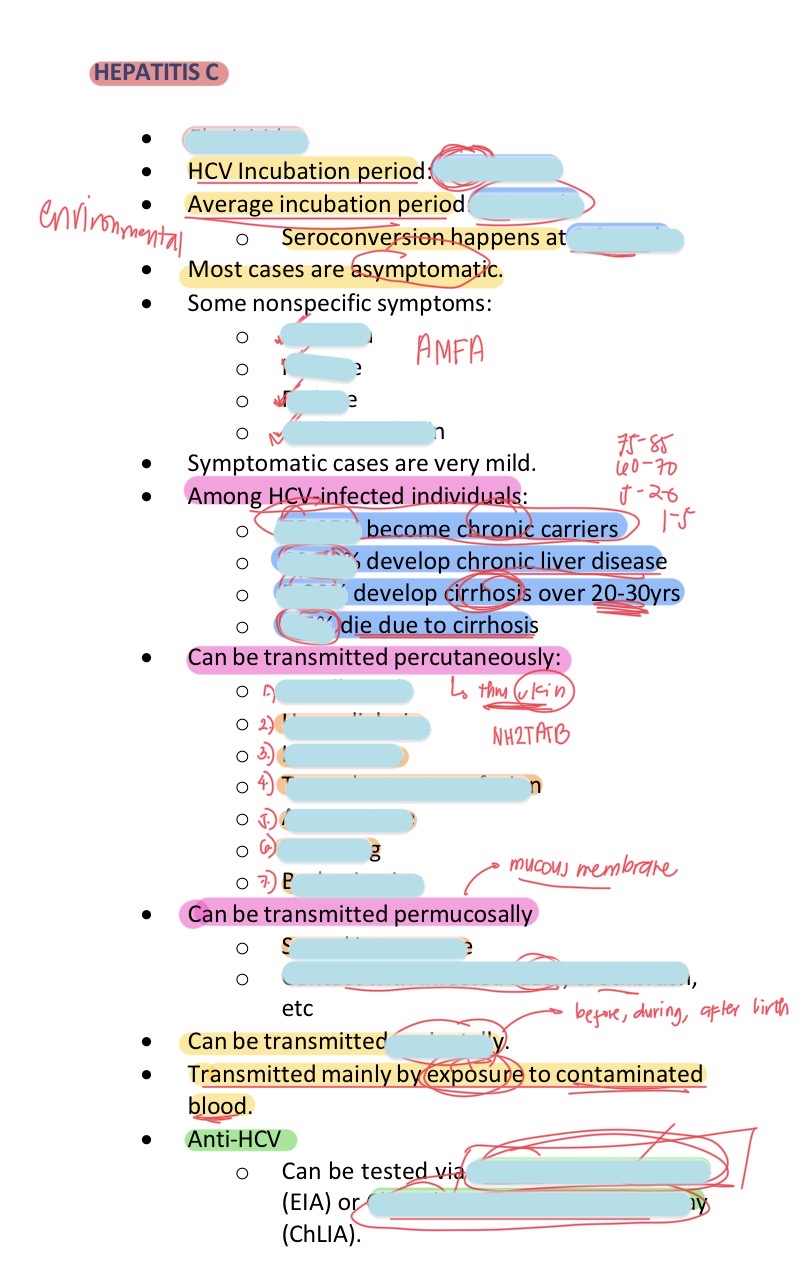
HEPATITIS D
Defective single-stranded RNA virus found in
patients with HBV infection
delta antigen”
HEPATITIS D prev known as
HEPATITIS D
Higher risk of fulminant hepatitis
HEPATITIS D
Lesser risk of developing chronic hepatitis.
IgM or IgG anti-HDV
or HDAg and HDV RNA in the serum.
HDV is detected by testing for
Calciviridae
HEV is a member of ___ family.
HEPATITIS E
Leading cause of hepatitis in UK.

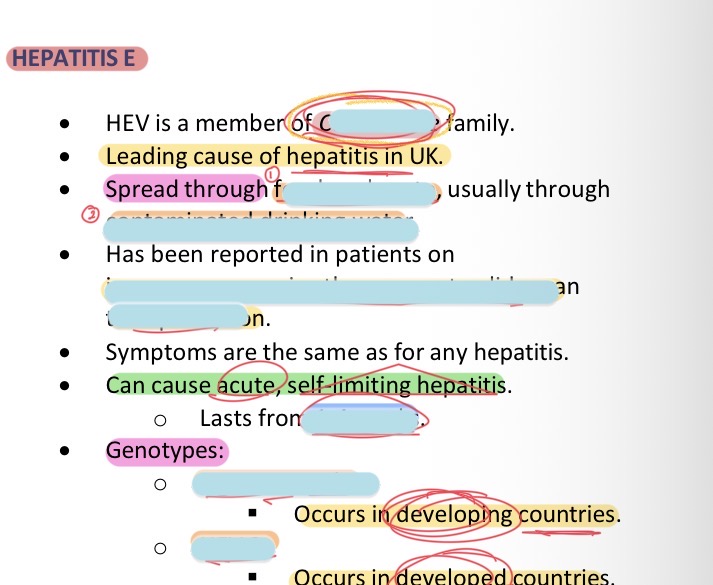
Fecal-oral route
Most common form of transmission for
G1 and G2.
Foodborne
Most common form of transmission for
G3 and G4.
Ribavirin
Used to effectively treat chronic
HEV.

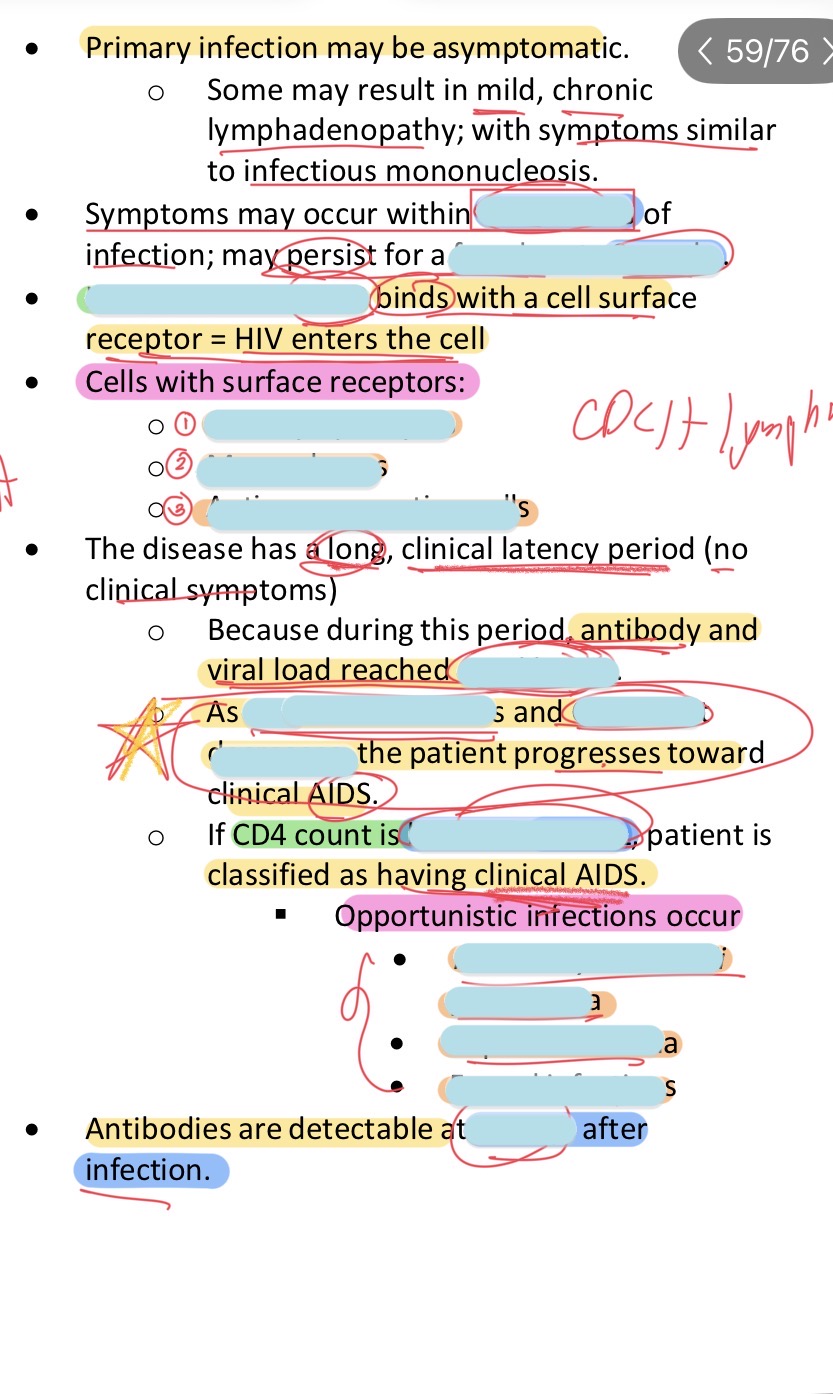
HIV 1 & 2
Etiologic agents for AIDS.
HIV 1 & 2
retrovirus, spherical in shape.
Envelope
▪ Made up of glycoproteins
o Core
▪ Made up of proteins
o Inner core
▪ Made up of viral RNA and
reverse transcriptase.
HIV 1 & 2 consist of

in hiv 1 and 2
HTLV-I and II
Both are RNA viruses.
HTLV-I
Causes T-cell proliferation with persistent
infection.
HTLV-I
The first retrovirus to be associated with
human disease.
adult T-cell
lymphoma/leukemia (ATL)
HTLV-I is associated with
HTLV-associated myelopathy or
▪ Tropical spastic paraparesis
(HAM/TSP)
what are the Associated with progressive neurological
disorder of htlv 1?
breastfeeding; sexually; and parenterally
(blood transfusion)
htlv 1 is Transmitted vertically through
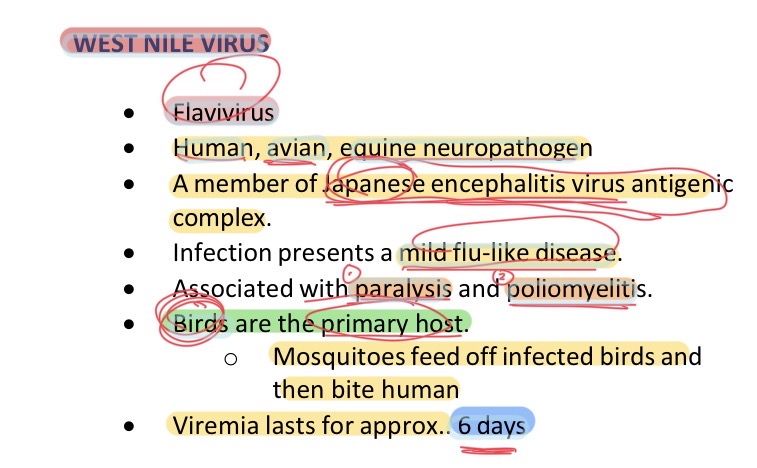
WEST NILE VIRUS
A member of Japanese encephalitis virus antigenic
complex.


Cytomegalovirus
• Epstein-Barr Virus
• Parvovirus B19
• Human Herpesvirus 6 and 8
Other Viruses
Chikungunya virus (CHIKV)
• Dengue Virus (DENV)
• Ebola virus
Emerging Viruses
Platelets
Most frequent source of septic
transfusion reactions
▪ Room temperature storage
promotes bacterial growth
Bacterial Contamination
Morbidity and mortality rates are high.
Rigors
o Fever
o Tachycardia
Signs and symptoms of transfusion-associated
sepsis:
Bacterial Contamination
Most common risk of infection due to transfusion
of blood.
S. epidermidis
o S. aureus
Most common bacterial contaminants:
Yersinia enterolitica
Most common isolate found in RBC units,
followed by Pseudomonas
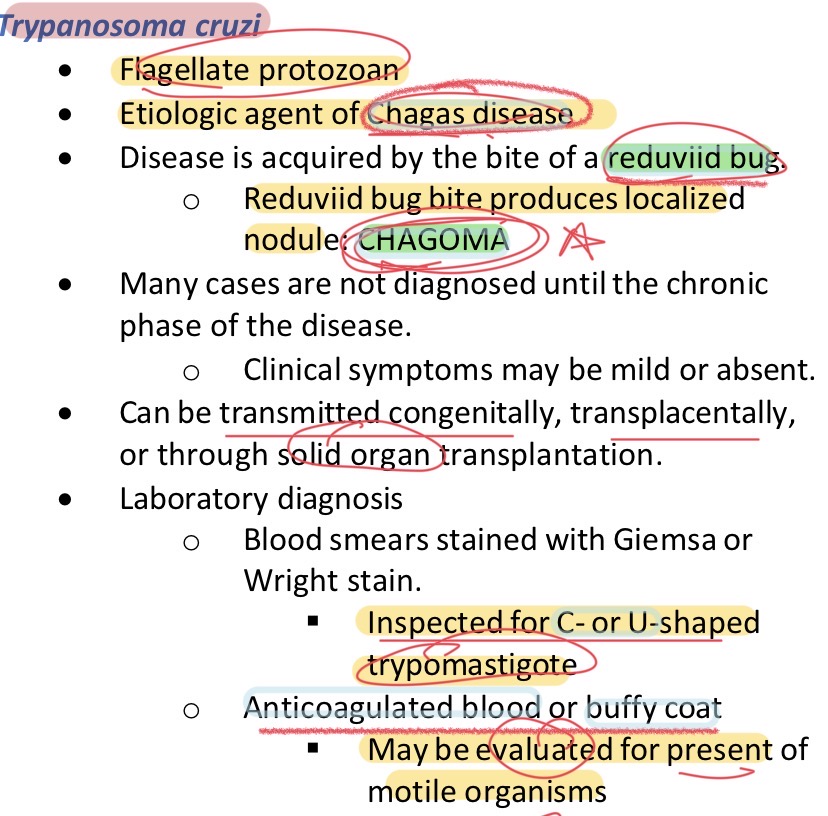
Treponema pallidum
Syphilis is Caused by
sexual contact
blood transfusion
syphilis is Spread through ______; can be transmitted
through ______




Creutzfeldt-Jakob Disease
One of the transmissible spongiform
encephalopathies.
Creutzfeldt-Jakob Disease
Rare disease characterized by fatal
neurodegeneration resulting to sponge-like lesions
of the brain
PRION
Causative agent of Creutzfeldt-Jakob Disease
PRION
Self-replicating protein
Heat inactivation
The first pathogen inactivation method
used.
Heat inactivation
s been used to treat albumin
PSORALEN
in Cellular components
• Pathogen inactivation method includes the use of
____ activated by UV light.
Plasma Derivatives
Cellular components
what are the two pathogenninactivation