nsci 2101 exam 1 lec 3 (brain development)
 Call Kai
 Learn
Learn Practice Test
 Spaced Repetition
 Match
Match Flashcards
 Knowt Play
1/49

Earn XP
Description and Tags
Name | Mastery | Learn | Test | Matching | Spaced | Call with Kai | Chat |
|---|
No analytics yet
Send a link to your students to track their progress
50 Terms
zygote
fertilized egg
~2-3 days
zygote divides several times into itself, forming the morula (Latin for mulberry)
stays the same volume but divides into itself, forming smaller cells
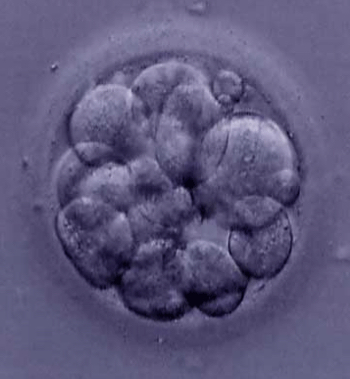
~4 days
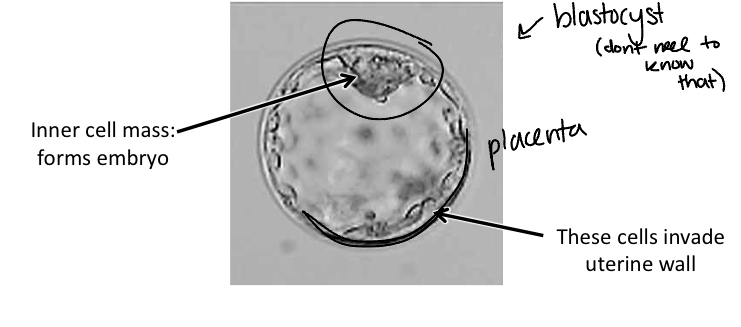
morula fills with fluid which allows it to embed it the uterus and grow
still not adding any matter to it, dividing smaller into itself
gestational age
time after last menstrual period (embryonic age + ~2 weeks)
clinicians typically talk in terms of ______ age
gestational
biologists generally talk in terms of ______ age
embryonic
6-15 days
embryo invades uterus SUPER AGGRESSIVELY
hasn’t gained any mass but mass has been redistributed a little
embryonic age
time after fertilization
embryonic disk
the flattened inner cell mass that arises at the end of the blastocyst stage and from which the embryo begins to differentiate
primitive streak
initially forms via a thickening of cells near the connecting stalk. As cells proliferate and migrate toward the midline of the embryo, the thickening elongates to become linear in shape
ectoderm forms what?
skin and nervous system
mesoderm forms what?
bone, muscle, and some organs
endoderm forms what?
gut, glandular organs, and liver
what are the three primary germ layers called?
ectoderm
mesoderm
endoderm
how does cell migration happen?
ectoderm migrates medially to the primitive streak → comes down through the primitive streak and into the interior space between endoderm and ectoderm → becomes mesoderm
what primary germ layer makes the nervous system?
ectoderm
what primary germ layer induces the beginning of transformation of ectoderm into neural tissue?
mesoderm
days 15-21
underlying mesoderm induces some ectoderm to become neural plate
what exists in the middle of the neural plate?
the neural groove
the neural plate closes up around the neural groove to form what?
the neural tube
what becomes the peripheral system?
the neural crest and neurogenic placodes
neural crest
what forms the CNS?
the neural tube
alar plate
dorsal half of the neural tube
forms sensory neurons
sensory axons go in here
basal plate
ventral half of the neural tube
forms motor axons
motor axons go out of here
spina difida
a neural tube defect
might result in spinal cord failing or being exposed
might result in neural tube not closing entirely
caused by vitamin b7 deficiency
the formation of the nervous system relies on what two processes?
mitosis (cell division)
cell migration
mitosis
allows cell growth and differentiation
cell migration
cells moving to their destinations
what are the four phases of the cell cycle?
G1 or “gap” (pause: factors that initiate or block cell division are expressed)
S (DNA is replicated and synthesized)
G2 (pause: proteins needed for mitosis are expressed)
M (cell divides into two)
what happens when a cell no longer needs to divide?
the cell enters a G0 phase, and mitosis ends
neural crest
formed from the neural tube folding up near the lips of the neural fold
can develop into dorsal root ganglion neurons
can develop into autonomic ganglia
located in the developing spinal column
neurogenic placodes
areas of thickening adjacent to the neural plate
induce the differentiation and creation of neural tissue
located in the developing head
what can develop from the neural crest?
sensory ganglia
autonomic ganglia
schwann cells
enteric nervous system
melanocytes
what can develop from the neurogenic placodes?
sensory ganglia
olfactory epithelium in nose
hair cells of inner ear
anterior pituitary gland
lens of eye
anterior pituitary cells
lens placode
the placode that forms the eye
retina is formed of CNS tissue that grows out into the eye
olfactory placode
the placode that forms the nose and olfactory system
how do we get a brain from a neural tube?
vesicles form where different regions will develop
open spaces in those vesicles become the open spaces in the brain like ventricles
different regions grow to different extents and develop different neurons
how many vesicles form at the end of the 4th week?
three
prosencephalon
mesencephalon
rhombencephalon
which secondary neural vesicles form at 40 days?
telencephalon
diencephalon
metencephalon
myelencephalon
the prosencephalon splits into which secondary vesicles?
telencephalon
diencephalon
the rhombencephalon splits into which secondary vesicles?
metencephalon
myelencephalon
telencephalon becomes what?
cerebral cortex
diencephalon becomes what?
thalamus and hypothalamus and pineal gland
metencephalon becomes what?
pons and cerebellum
mesencephalon becomes what?
midbrain
pontine flexure
allows the fourth ventricle to form
how does the cerebellum form?
starts forming off the rostral end of the pons (rhombic lip) → tissue expands and attaches intimately to the pons
what region enlarges more than any other region?
telencephalon
expands in a C shaped structure
what lobe grows over the insular cortex?
the temporal lobe