EMT Exam Chapters 1-10
 Call Kai
 Learn
Learn Practice Test
 Spaced Repetition
 Match
Match Flashcards
 Knowt Play
1/108

There's no tags or description
Looks like no tags are added yet.
Name | Mastery | Learn | Test | Matching | Spaced | Call with Kai | Chat |
|---|
No analytics yet
Send a link to your students to track their progress
109 Terms
Who develops EMS Standards?
In 1966, the National Highway Safety Act charged the US Department of Transportation (DOT) in developing EMS stardards
Enhanced 911 (E-911)
a system that has the capability to automatically identify a caller's phone # and location, so even if the patient loses consciousness, they will still be able to send emergency personnel to the scene
patient assessment
finding out enough about what is wrong with a patient to be able to provide the appropriate emergency care; always precedes emergency care
transfer of care
Upon arrival at the hospital, the EMT advises hospital personnel of the patient's condition, observations from the scene, treatment rendered, and other pertinent data to assure continuity of care; do not abandon care until process is completed
Why do we document 3 sets of vital signs?
trends in the patient's condition will become apparent only when vital signs are repeated, which is an important step in continuing assessment;
quality improvement
continuous self review with the purpose of identifying aspects of the system that require improvement; ensures that the public receives the highest quality pre-hospital care; may include carefully written documentation, maintaining equipment, getting feedback, and continuing education
Medical Director
A physician who assumes ultimate responsibility for medical direction, the patient-care aspects of the EMS system; oversees training, develops protocols, and is a crucial part of the quality improvement process
standing orders
a policy or protocol that authorizes EMTs and others to perform particular skills in certain situations; aka off-line medical direction; exp. administration of glucose in diabetic emergency
Why do EMTs do injury prevention programs?
by promoting clean drinking water and sewer systems to promoting car seats and helmets, if EMTs promote injury prevention, then we can potentially stop injuries before they occur
Hepatitis B
aka HBV; a deadly disease that causes the inflammation of the liver and can live on surfaces in dried blood for days and killed hundreds of health care workers each year before a vaccine was made avaliable
Tuberculosis
aka TB; infects the lungs, is highly contagious and airborne-->will permeate a room if an infected person is in it
Ryan White CARE Act
The Ryan White Comprehensive AIDS Resource Emergency Act mandates a procedure by which emergency response personnel can seek to find out if they have been exposed to potentially life-threatening diseases while providing patient care
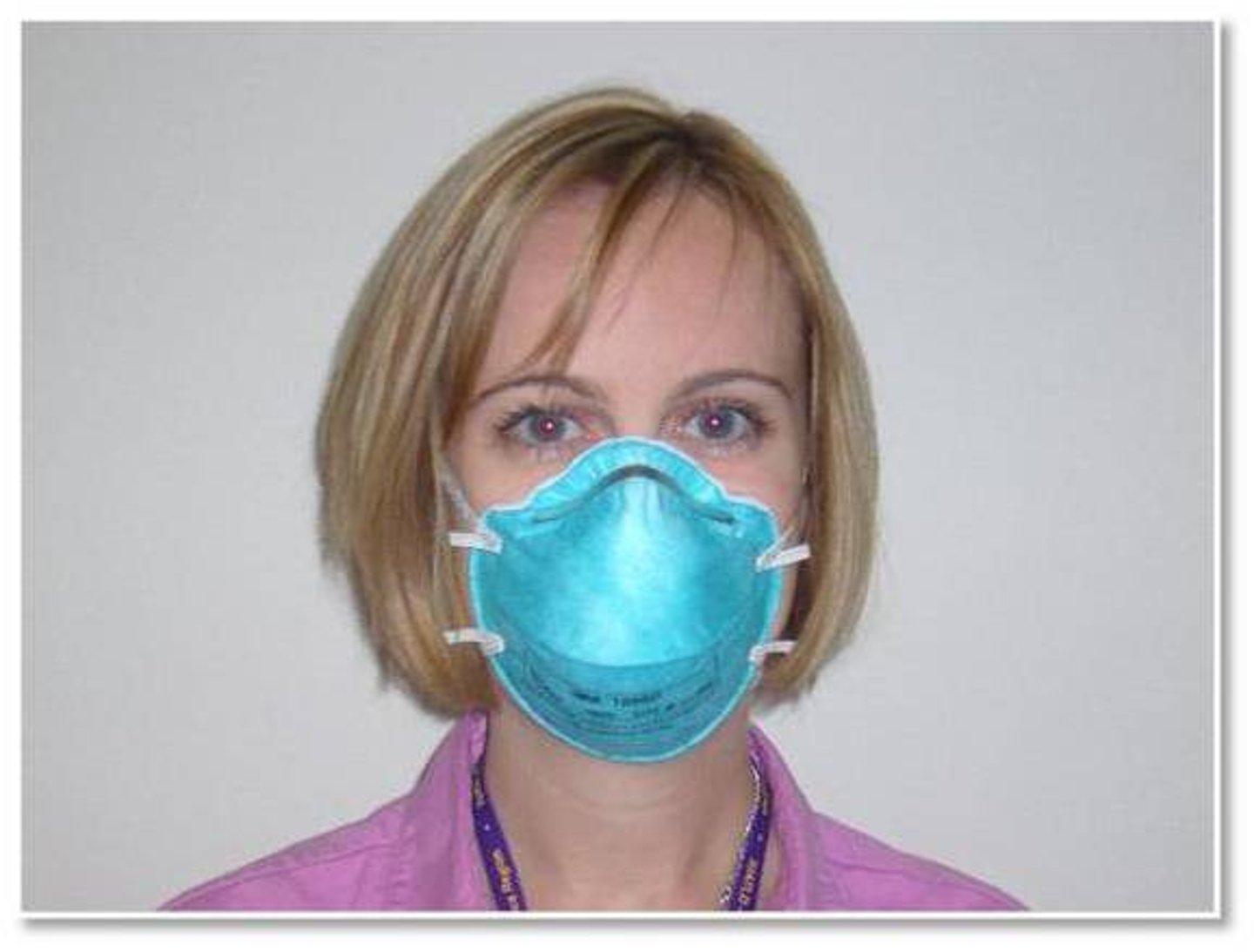
Why do we wear N-95 masks?
OSHA requires that you wear a N-95 mask for caring for patients suspected of having TB , transporting them from an infected environment in a closed vehicle, and performing suction/intubation
When/why do you place a surgical mask on a patient?
when a patient is suspected of having an infection spread by droplets (such as flu or measles), a mask may be placed if the patient is alert and cooperative
What are the signs and symptoms of a delayed stress reaction (PTSD)?
flashbacks, nightmares, feelings of detachment, irritability, sleep difficulties, or problems with concentration or interpersonal relationships; the patient may not understand what is causing the problems
______ safety comes first. If threatened, __________ immediately
OUR, LEAVE
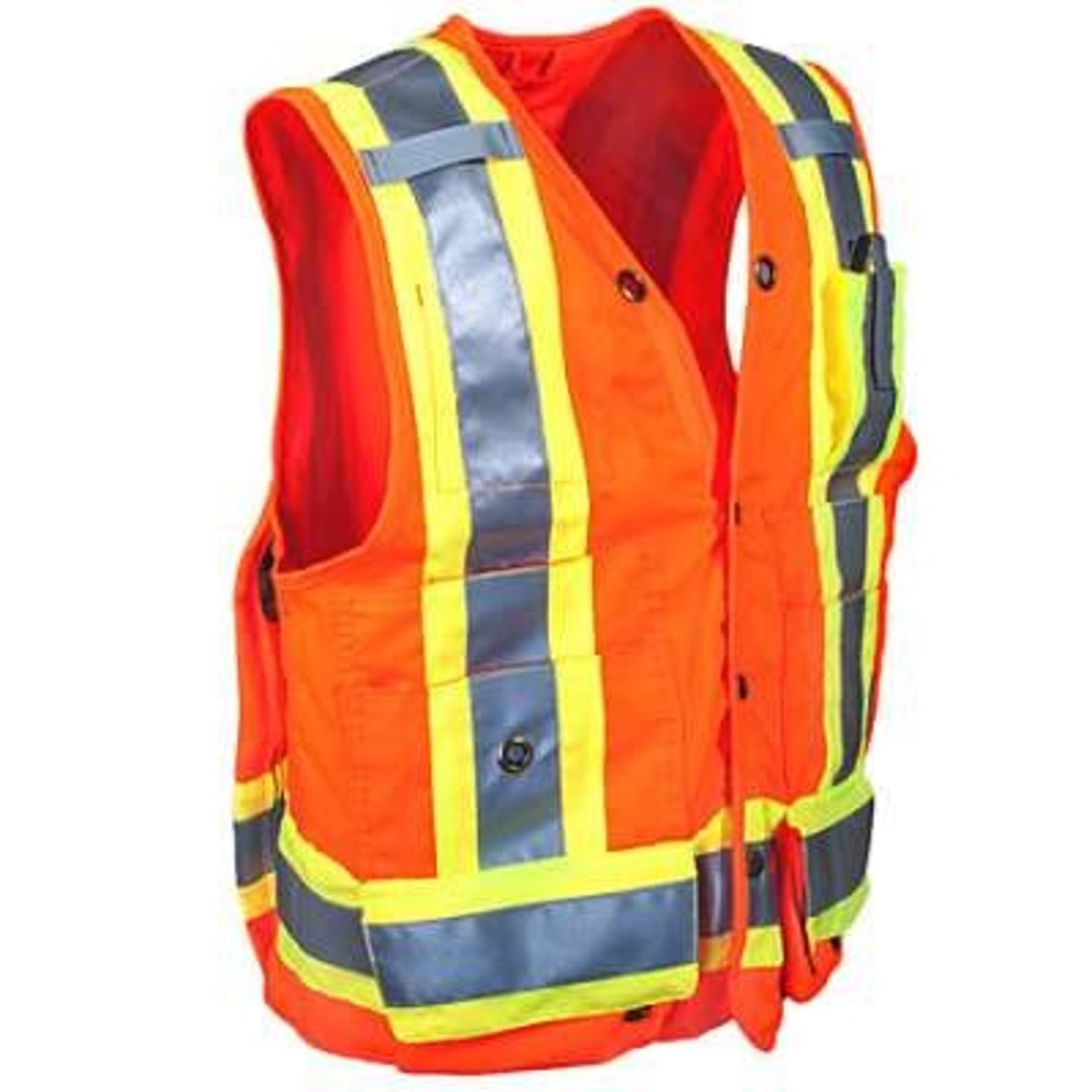
ALWAYS wear a ___________________ on the scene of a motor vehicle collision
reflective vest (or clothing); it provides the best protection for us
What do you do if you are directly exposed to blood/any bodily fluids?
first, wash/flush hands and exposed areas, then report the incident to best protect yourself, then seek medical attention immediately
What should be considered when lifting any patient?
the object (what is the weight? will you need help?), your limitations (what are your physical characteristics?), communication (talk throughout the process to make the move comfortable)
What is the correct positioning/technique to safely lift patients?
positioning your feet properly (shoulder-width apart), using your legs, never turning/twisting, not leaning, keeping back straight, keeping the weight close to your body
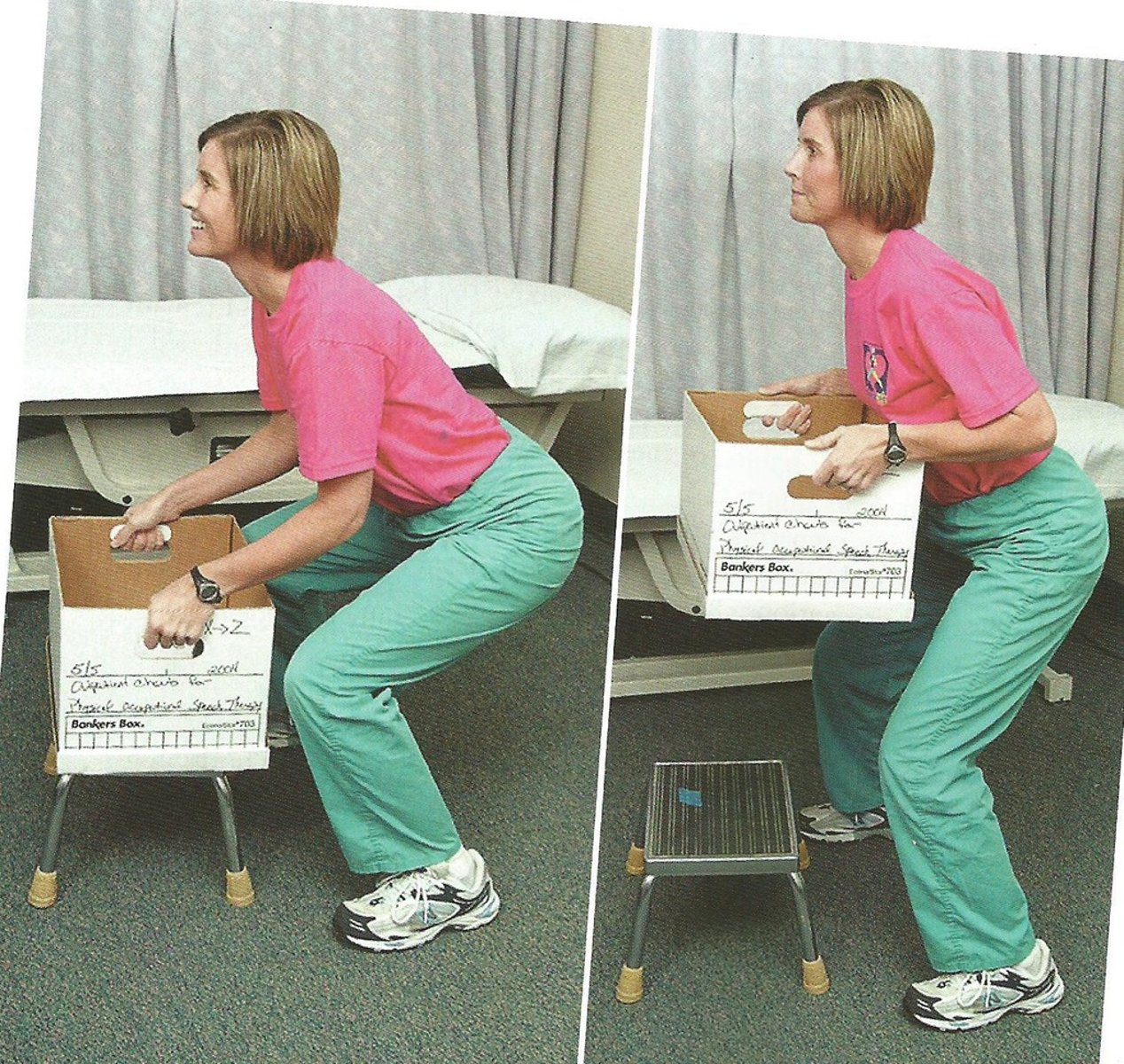
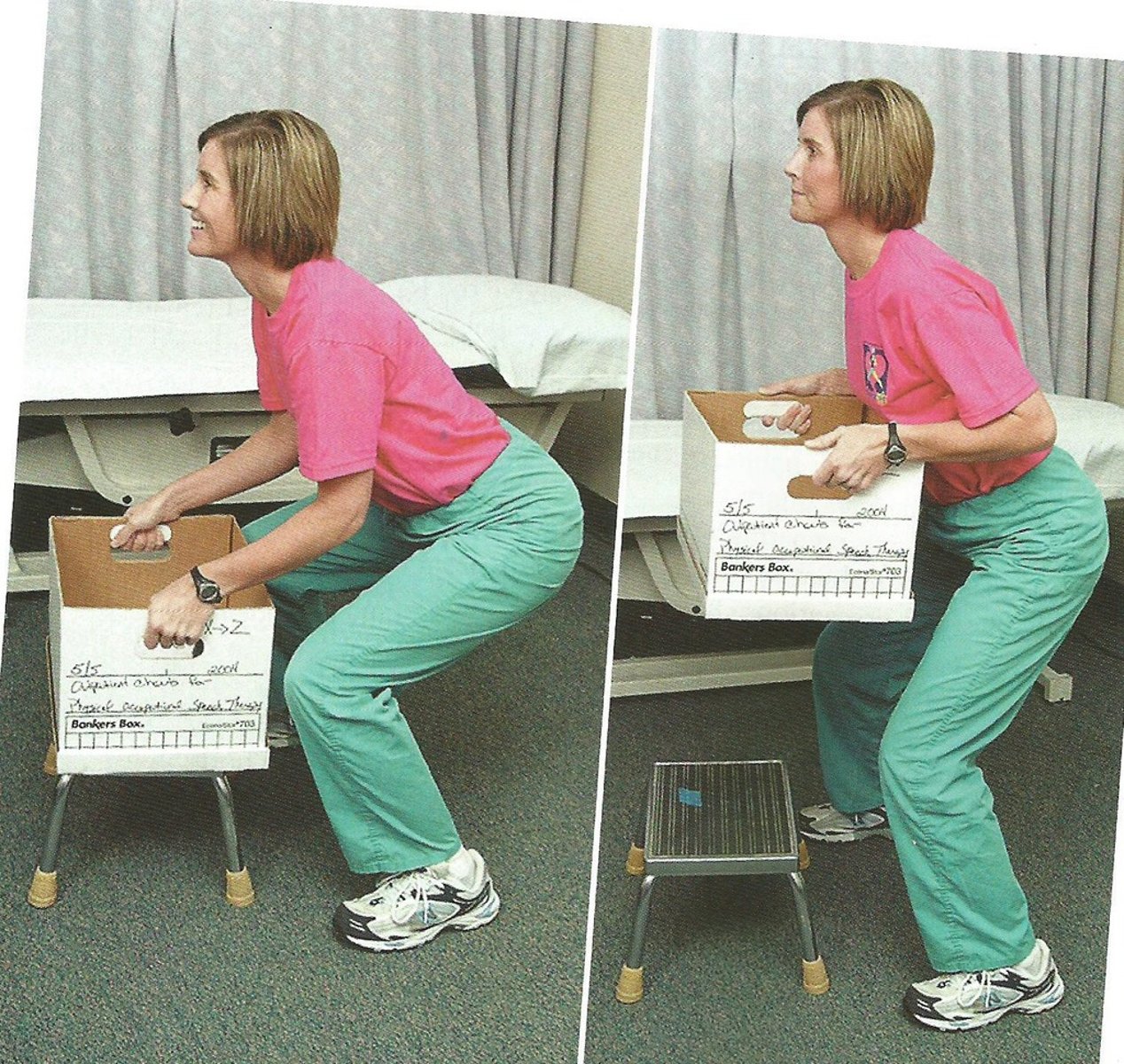
power lift
aka squat-lift position; a lift from a squatting position wit weight to be lifted close to the body, feet apart and flat on the ground body weight on or just behind the balls of the feet, and the back locked in
The higher a stretcher is with a patient with a patient on it, the ___________ the center of gravity is
HIGHER, (safety hazard???)
What is the preferred # of rescuers for using a stair chair?
THREE; two rescuers to use the tracks down stairs as well as a spotter when available
emergency move
when a patient must be moved to a safe place quickly; used if the scene is hazardous, the care of life-threatening conditions requires repositioning, if you must reach other patients
Should you hesitate to ask for additional manpower when it comes to lifting/moving a heavy patient?
NO
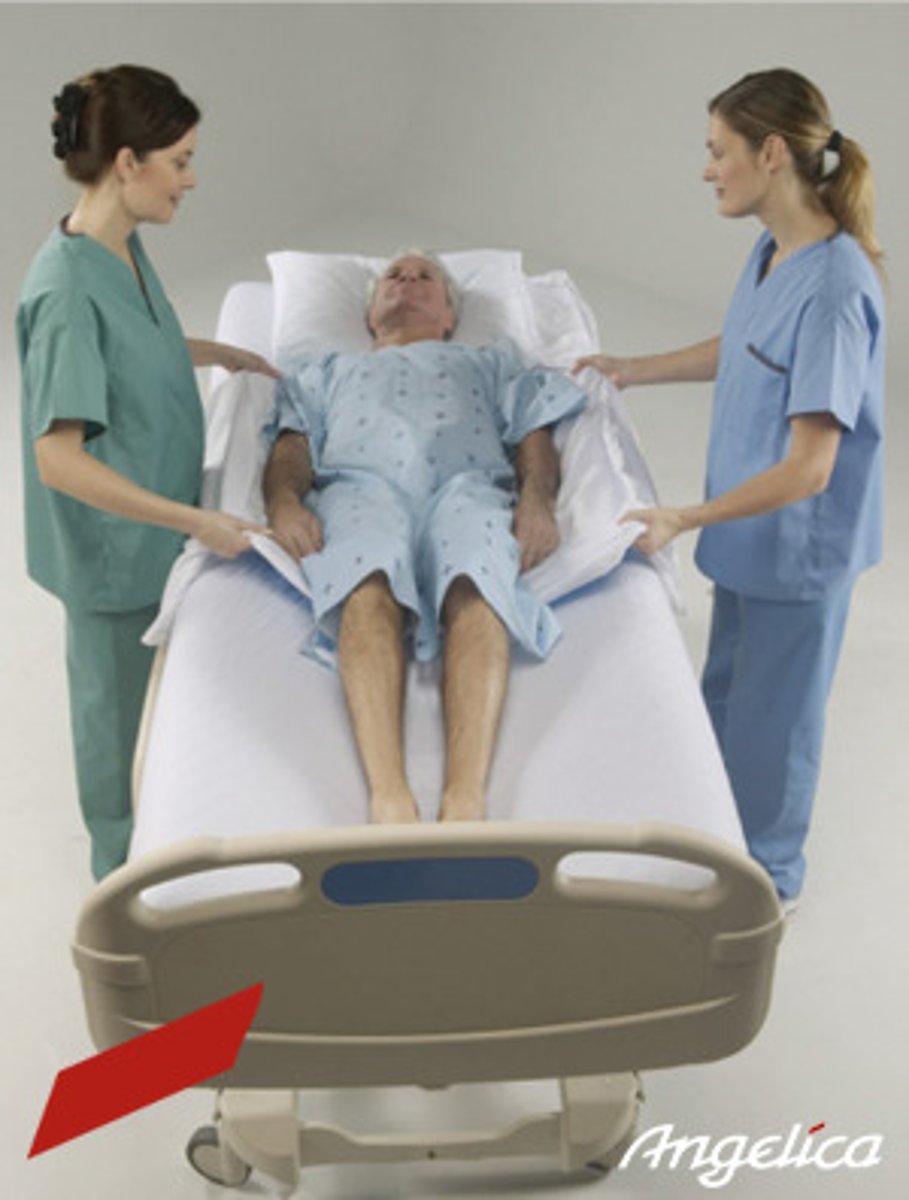
When do we use the draw-sheet method to transfer a patient?
during transfers between hospitals and nursing homes or when a patient must be move from a bed at home to a stretcher; patient has no suspected spine injury
What will a patient most likely do in a stair chair?
any patient may reach out and grab things; use the least restrictive method to prevent this
What is the difference between expressed and implied consent?
-expressed consent is consent given by adults who are of age, mentally competent, and are physically and mentally able to give it
-implied consent is assumed consent in the case of an unconscious patient or a patient not physically/mentally able to give consent but are in need of emergency care
Duty to Act
an obligation to provide emergency care to a patient; EMTs on an ambulance/who are dispatched have a duty to act if there is no threat to safety
HIPAA
The Health Insurance Portability and Accountability Act; a federal law protecting the privacy of patient-specific health care information and providing the patient with control over how this information is used and distributed
scope of practice
a scope of regulations and ethical considerations that define the scope, or the extents and limits, of the EMT's job
standard of practice
the care that would be expected to be provided by an EMT with similar training when caring for a patient in a similar situation
In order for a patient to refuse care or transport, what conditions must be fulfilled?
patient must be alert/oriented, be able to make their own decisions; it is the EMT's duty to inform them of their situation and of the possible implications of refusing care
What do you do if you are in doubt of resuscitating a patient?
Resuscitate!
Good Samaritan Law
a series of laws that are designed to provide limited legal protection for citizens and some health care personnel when they are administering emergency care
What is the difference between anatomy and physiology?
-anatomy is the study of body structure
-physiology is the study of body function
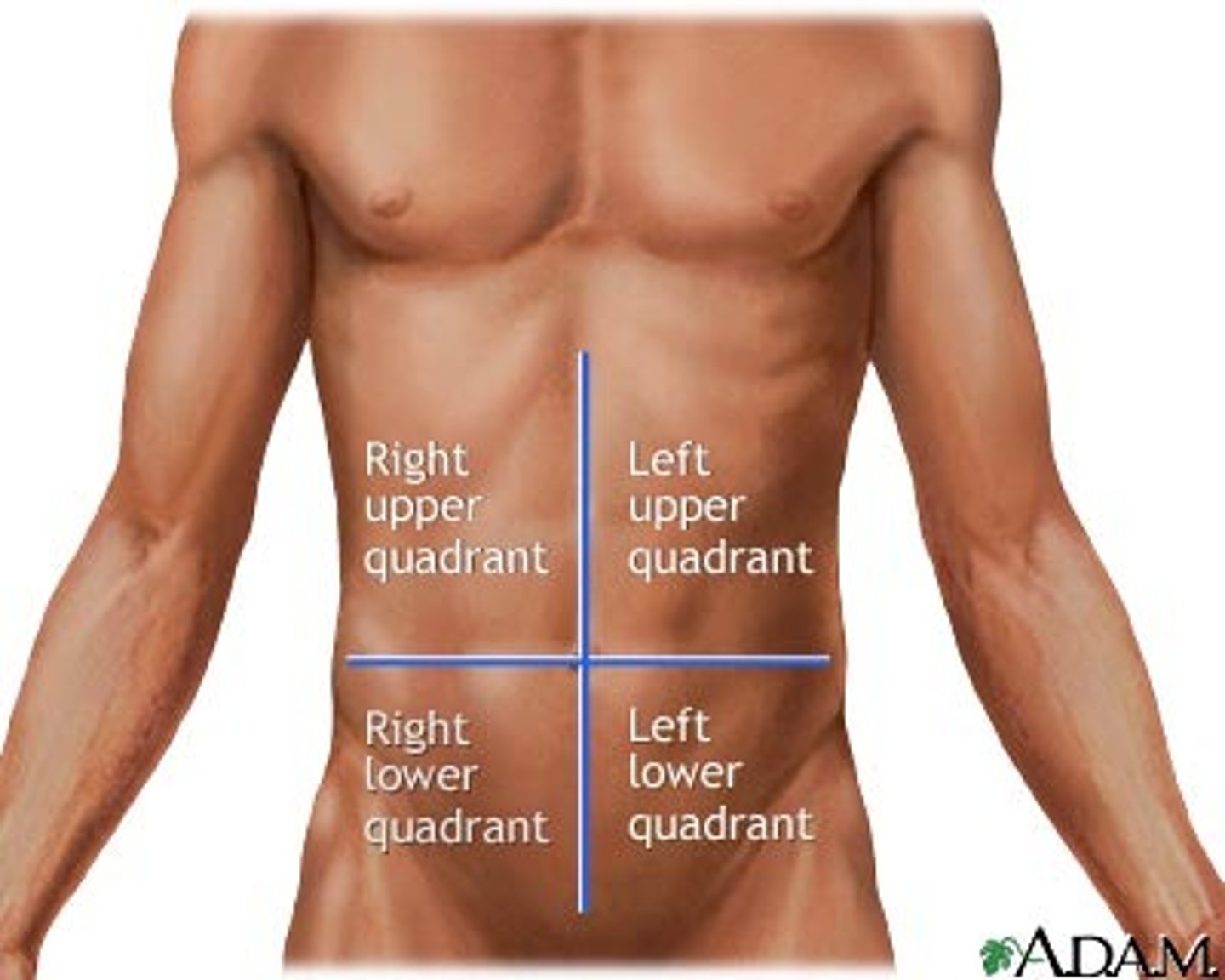
What are the 4 abdominal quadrants?
right upper quadrant (RUQ), left upper quadrant (LUQ), right lower quadrant (RLQ), left lower quadrant (LLQ)
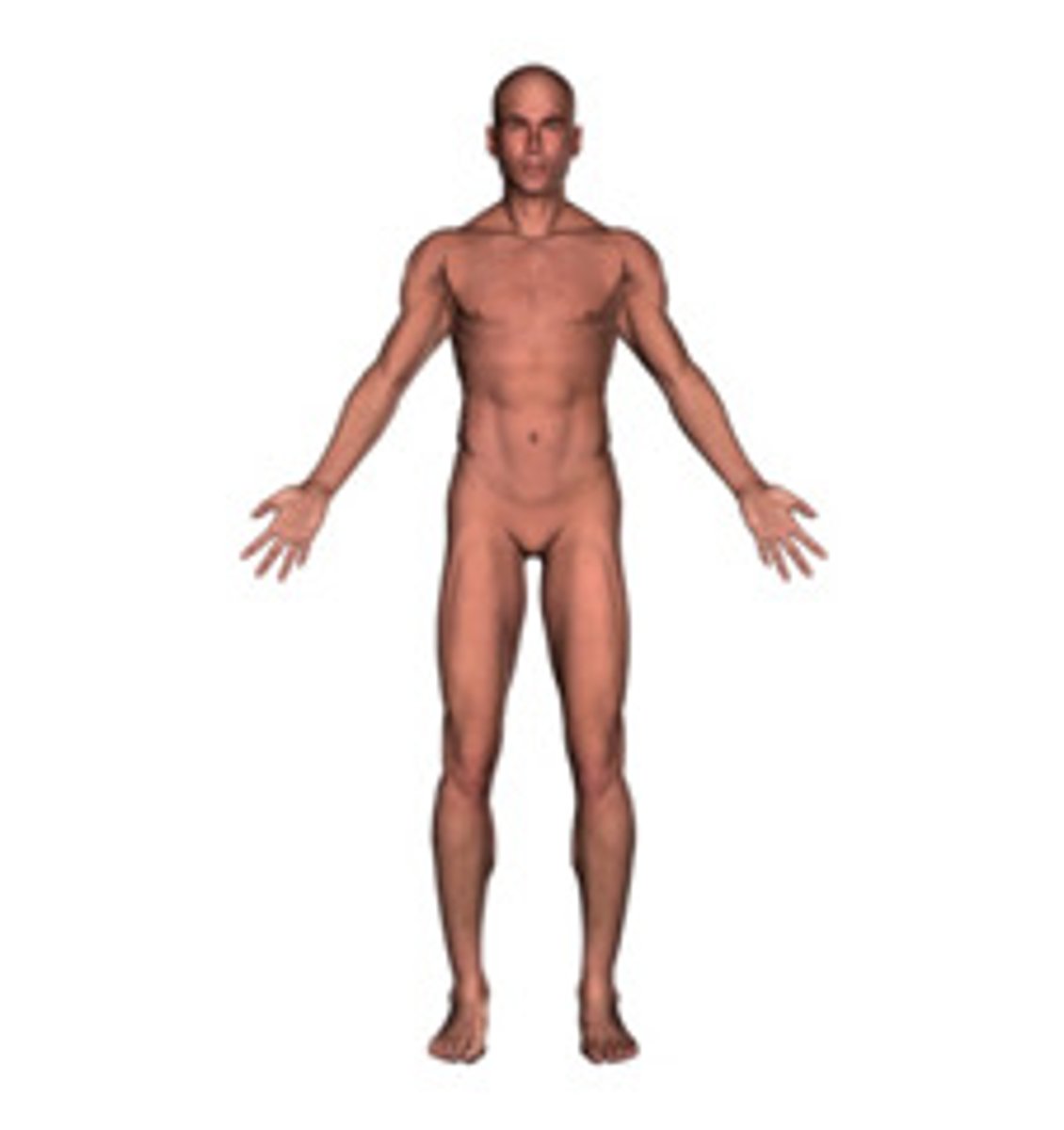
anatomic position
the universal reference when discussing human anatomy; a person standing, facing forward, with palms forward
tachycardia
abnormally rapid heartbeat

bradycardia
abnormally slow heartbeat

tachypnea
rapid breathing
bradypnea
slow breathing
medial
toward the midline of the body
lateral
to the side, away from the midline of the body
anterior
the front of the body/body part

posterior
the back of the body or body part

supine
lying on the back

prone
lying face down

recovery position
lying on the side

bilateral
both sides
distal
farther away from torso

dorsal
referring to the back of the body or the back of the hand/foot

inferior
away from the head (usually compared with another structure closer to the head) exp. lips are _______ to the nose

mid-axillary line
a line drawn vertically from the middle of the armpit to the ankle

mid-clavicular line
the line through the center of each clavicale (picture not correct)

palmar
referring to the palm of the hand

plantar
referring to the sole of the foot
proximal
closer to the torso

superior
towards the head

unilateral
limited to one side
ventral
referring to the front of the body
What is the difference between the Fowler's position and the Semi-Fowler's position?
-Fowler's position is a sitting position
-Semi-Fowler's position is leaning back in a semi-sitting position

shock
aka hypoperfusion; the inability of the body to adequately circulate blood to the body's cells to supply them with oxygen and nutrients; life-threatening
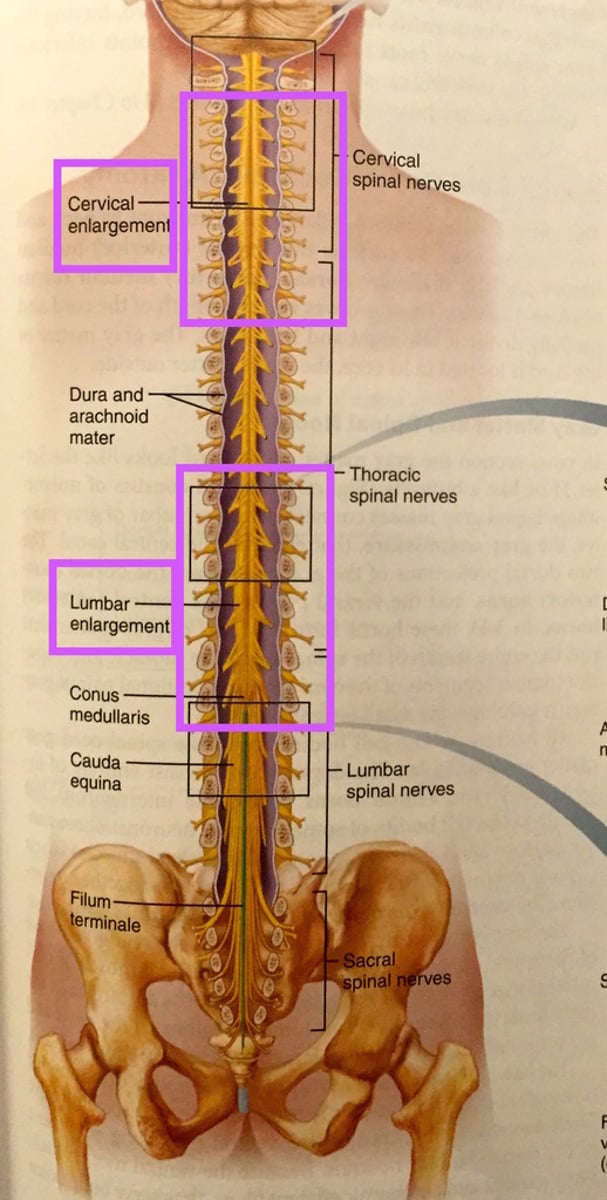
What are the two most easily injured portions of the spine?
-cervical spine can be injured because it carries the head, which is large and heavy (exp. whiplash)
-lumbar region is subject to injury because it is not supported by other parts of the skeleton (thoracic has the ribs, sacrum and coccyx have the pelvis)
inhalation
active process where diaphragm and intercostal muscles contract, the diaphragm moves downward, and ribs move upward and outward
exhalation
passive process where the diaphragm and the intercostal muscles relax, and positive pressure pushes air out of the lungs
What is involved in the respiratory process?
pharanx (oropharynx, nasopharynx), larynx (voice box), epiglottis, cricoid cartilage, trachea (windpipe), lungs, bronchi, aveoli, diaphragm
What are the functions of the skin?
protection, water balance, temperature regulation, excretion (sweat), and shock absorption
nervous system
consists of the brain, spinal cord, and nerve tissue; transmits impulses that govern sensation, movement, and thought; controls the body's voluntary and involuntary activity
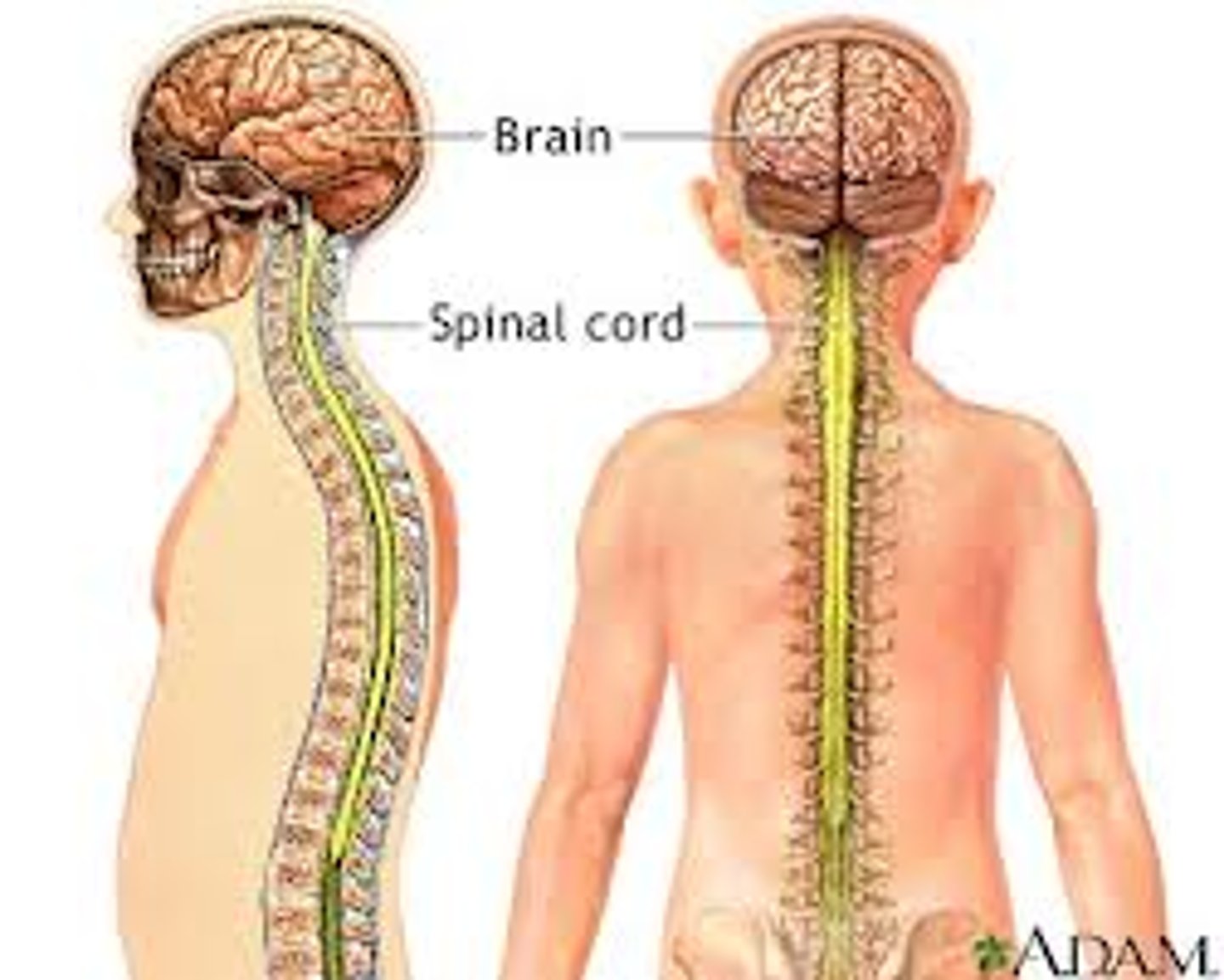
peripheral nervous system (PNS)
consists of sensory nerves (pick up info from the body and transmit it to spinal cord and brain) and motor nerves (carry messages from brain to body)
central nervous system (CNS)
composed of the brain and spinal cord; key function is consciousness
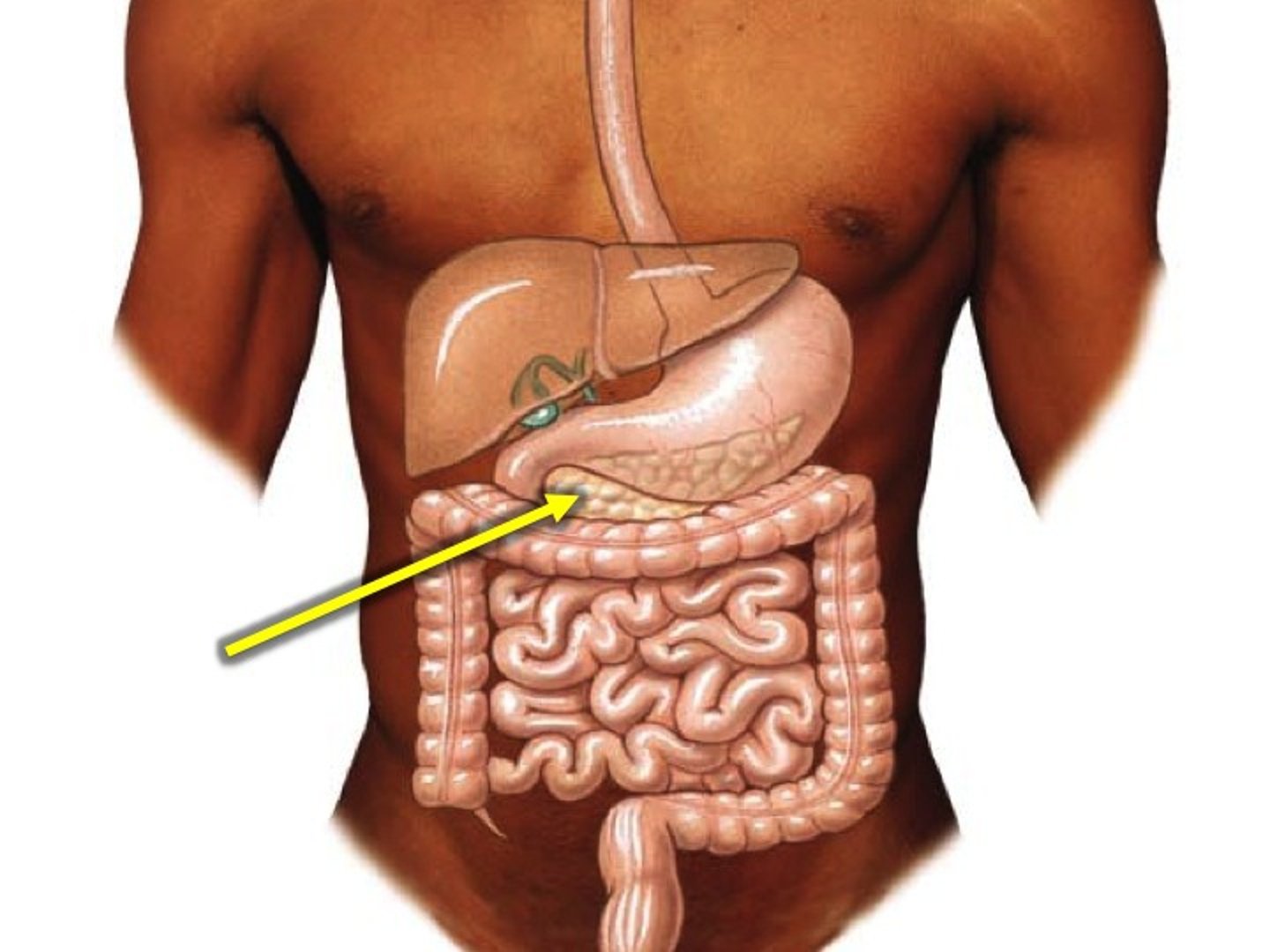
pancreas
secretes juices that assists in breaking down proteins, carbohydrates, and fat (exp. releases insulin for regulating sugar)
renal system
aka the urinary system; helps the body regulate fluid levels, filter chemicals, and adjust body pH; principal organs are the kidneys; includes bladder, ureters, and urethra
What is the difference between an adult and child's airway/breathing anatomy and physiology?
-a child's tongue takes up proportionally more space in the pharynx
-a child's trachea is relatively narrower than in adults and is more easily obstructed
-a child's trachea is also softer and more flexible, so it might become blocked easier by bending
-cricoid cartilage is less developed
-rib cage is not as curved inward at the bottom (makes generating negative pressure needed to breathe more difficult)
tidal volume
amount of air that moves in and out of the lungs during a normal breath
hemoglobin
in red blood cells and carries/binds to oxygen, allowing for oxygenation
What part of the brain is responsible for respiratory control?
the brain stem connects brain to spinal chord and controls breathing and heartbeat (maybe??)
What is the sign that indicates that someone is potentially in shock, regardless of vital signs?
if someone is "cool and clammy"
sympathetic nervous response
the "fight-or-flight" response; engaged when the body is in crisis; causes the heart to beat faster, the lungs to breathe deeper, the blood vessels to constrict, and the pupils to dilate
histamine
chemical stored in mast cells that triggers dilation and increased permeability of capillaries
patent airway
open airway that can move air in and out of the chest
normal range for heart rate
60-100 bpm
normal range for respiratory rate
12-20 breaths per minute
normal range systolic blood pressure
less than 120 mmHg (millimeters of mercury)
normal vital signs for a 26 month old
-heart rate: 80-130 bpm
-respiratory rate: 20-30 per minute
-systolic blood pressure: 70-100 mmHg
normal vital signs for a 4-year old
-heart rate: 80-120 bpm
-respiratory rate: 20-30 per minute
-systolic blood pressure: 80-110 mmHg
normal vital signs for a school aged child
-heart rate: 70-110 bpm
-respiratory rate: 20-30 per minute
-systolic blood pressure: 80-120 mmHg
What are the common psychosocial challenges of late adulthood?
living environment (nursing home), self-worth (benefiting themselves and others), finacial burdens (limited income), death and dying (concern over health condition and mortality)
When can children usually sit upright in a high chair?
6 months
What are the age ranges for a "school age" child?
6-12 years
fontanelles
areas in the skull that are not fused at birth; sunken fontanelles can indicate dehydration and bulging fontanelles can indicate increased pressure in the skull
What are the life-span development characteristics of an adolescent?
the transition from childhood to adulthood; rapid growth spurt, reach reproductive maturity, strives for independence, develops identity, body image is a concern
What are the basic reflexes of an infant?
-moro reflex: throws arms out, spreads her fingers, and grabs with fingers and arms when startled
-palmar reflex: grasps someone's fingers when placed in hand
-rooting reflex: when cheek is touched, turns head to side touched
-sucking reflex: sucks when lips are touched
What do you do if you find an airway obstructed?
clear the airway as soon as you find it to be possibly obstructed
What are the signs/symptoms of an inadequate airway and inadequate breathing?
no signs of breathing, evidence of foreign bodies in airway, patient unable to speak/has trouble speaking, unusually hoarse/raspy voice, uneven/absent/minimal chest movement, abdominal breathing, retractions (pulling of muscles) above clavicle and below the ribs, nasal flaring (especially in infants and children, cyanosis (skin, lips, tongue, ear lobes, nail beds are blue/grey)
When do you use a jaw-thrust maneuver vs. a head-tilt, chin-lift maneuver?
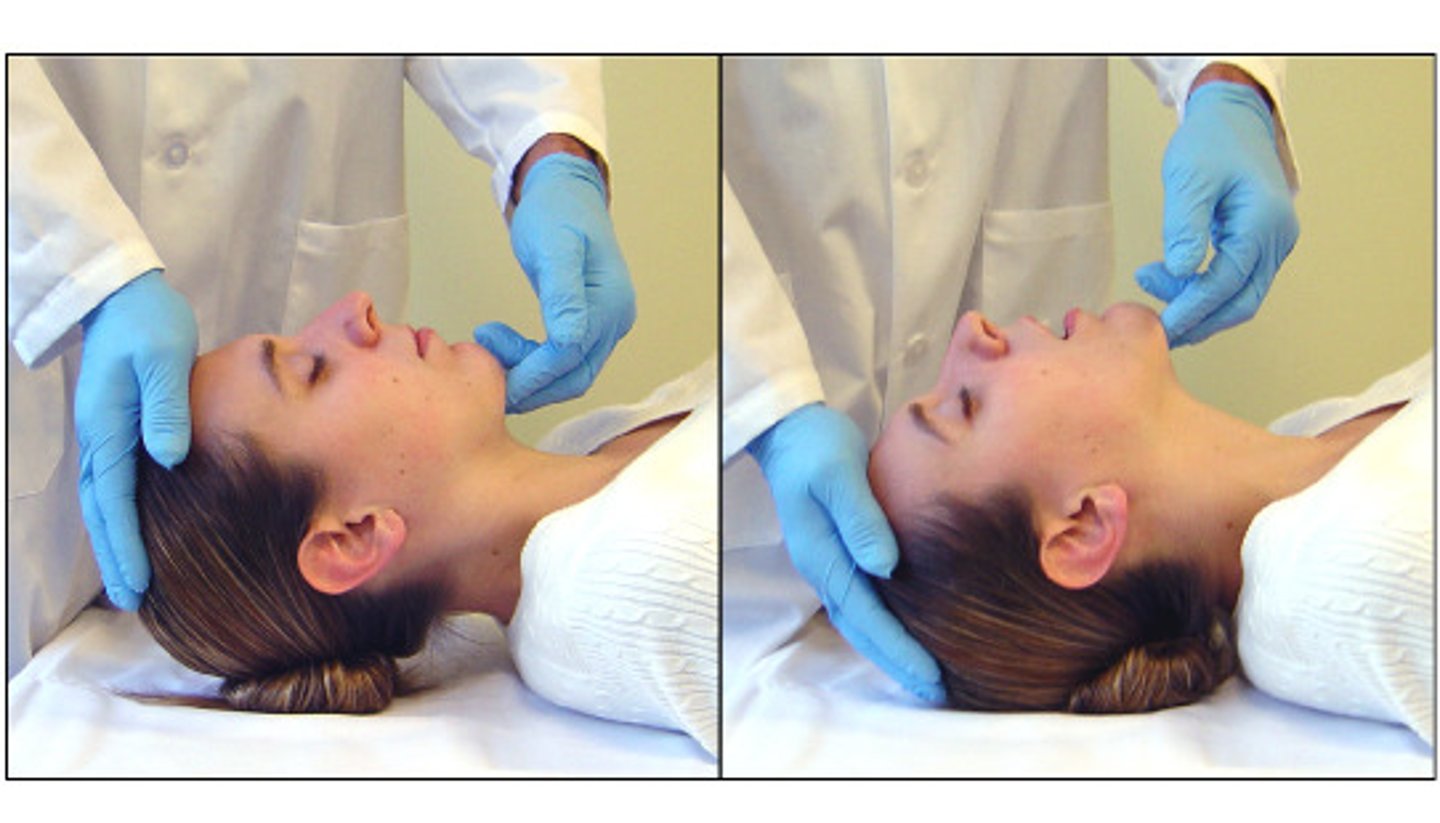
-jaw thrust: to open the airway of an unconscious patient with a suspected head, neck, or spine injury or unknown mechanism of injury
-head-tilt, chin-lift: uses head position to align the structures of the airway; use when head, neck, spine injury not suspected
When do you use a OPA vs. an NPA?
NPA: does not stimulate the gag reflex and can be used when teeth are clenched/when there are oral injuries; do not use on a patient with head injuries
OPA: stimulates the gag reflex, most commonly used on unconscious patients
What is the MOST effective form of suctioning for copious amounts of fluid with large pieces (food or teeth)?
large bore suction without a tip or catheter
What does hyperextending (bending back too far) or hyperflexing (bending too far forward) do to a child's neck when ventilating them with a BVM?
hyperextending or hyperflexing can close off the airway, so sometimes you need to ease the head forward or back a little
What do you do with dental fixtures when caring for a patient?
unless dental fixtures are loose and in the way, leave them in place