S1 - Principles of Positioning
 Call Kai
 Learn
Learn Practice Test
 Spaced Repetition
 Match
Match Flashcards
 Knowt Play
1/50

There's no tags or description
Looks like no tags are added yet.
Name | Mastery | Learn | Test | Matching | Spaced | Call with Kai | Chat |
|---|
No analytics yet
Send a link to your students to track their progress
51 Terms
What are the advantages of correct positioning?
- Helps prevent clinician discomfort and injury
- Permits clear view of tooth being worked on
- Allows easy access to the teeth
- Facilitates efficient treatment of the patient
When in neutral position the back is...
In neutral alignment

When in neutral position the shoulders are...
Relaxed and parallel with the hips and floor.
When in neutral position the hips are...
Slightly higher than the knees.
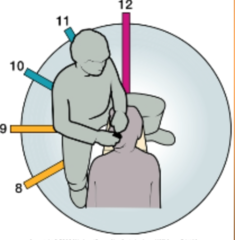
The working position in clock positions for right-handed clinicians is:
8:00 to 12:00
When in neutral position the feet are...
Spread apart so the legs and the chair base form a tripod.
The neck position of the clinician is to tilt __ to __ degrees.
0-20 degrees.
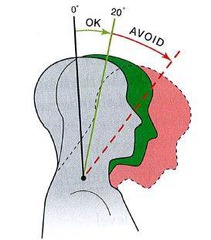
The clinicians line form the eyes to the working ara should be as ___ as possible, with eyes directed ___ to prevent neck and eye strain.
Vertical, downward.

Describe the shoulder position of a clinician.
- Shoulders in a horizontal line
- Relaxed and parallel with hips and floor
- Weight evenly balanced when seated
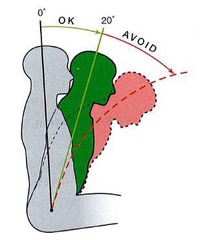
Describe the back position if the clinician.
- Back in neutral alignment with natural spinal curves
- Lean forward slightly from the waist
- Trunk flexion of 0 - 20 degrees
Describe the upper arm position of the clinician.
- Hang in a vertical line parallel to the long axis of the torso.
- Elbows at waist level held slightly away from the body.

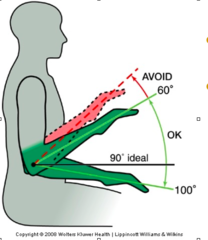
Describe the forearm position of the clinician.
- Forearms held parallel to the floor.
- Raised or lowered, if necessary, by pivoting at the elbow joint.
Describe the hand position of the clinician.
- Little finger side of palm is slightly lower than thumb side of palm
- Wrist aligned with forearm
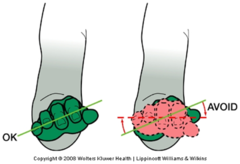
What is the position of the patient during dental treatment?
Supine position
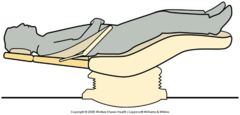
When a patient is in supine position, describe their positioning.
- Patient on back in a horizontal position,
- Tip of the patient's nose is below the clinician's waist.
- Patient's heels slightly higher than their nose to ensure adequate blood flow to head and reduce the possibility of fainting

What is the correct patient position for maxillary areas?
The back of the chair should be parallel to the floor.
What is the correct patient position for mandibular areas?
The chair back should be slightly raised above the parallel position. (15-20 degrees)
Describe the patient's neutral head position.
Patient's head should be even with the upper edge of the headrest.
How is the patient's head adjusted when working on mandibular areas?
Their head should be tilted downward.
How is the patient's head adjusted when working on maxillary areas?
Have patient rest head in neutral position or raise their chin slightly.
The working distance from the operator's eyes to the patient's mouth is __ to __ inches.
15-22 inches
What is the science of adjusting the design of tools, equipment, tasks and environments for safe, comfortable, and effective human use
Ergonomics
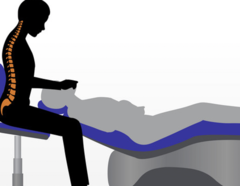
What should the clinician do with the operator stool before working on a patient?
- Adjust to your height and body proportions.
- Adjust the seat back to fit the lumbar region of your back.
Where should your patient's nose be leveled with on your body?
Below waist level.
What can affect ergonomics besides a physical position?
- Room layout: where your equipment is located.
- Room temperature: not too hot or too cold.
- Handpiece selection: weight needs to be evenly distributed.
- Gloves: Wear gloves that fit correctly.
- Instrument selection: consider diameter of handles, texture, weight, etc.
- Visual magnification: lopes, glasses with magnification
Where should the dental light be positioned for mandibular teeth?
- Position chair and then direct the dental light directly above patient's head so that the light beam shines directly down into the patient's mouth.
- Light should be at arm's length (light to be perpendicular to the floor)
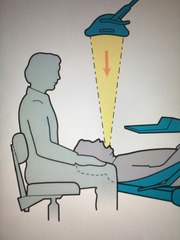
Where should the dental light be positioned for maxillary teeth?
- Position dental chair and direct dental light above the patient's chest area (neck area).
- Tilt dental light up so that it shines into the patient's mouth at an angle (60 - 90 degrees from the floor).
- Light should be at arm's length.

Patients head is at ___ o'clock and thier feet are at __ o'clock.
12:00 and 6:00
Clock position: In front of the patient.
8:00
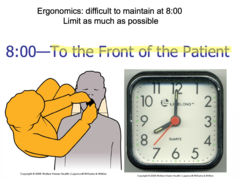
Clock position: Side of the patient's head.
9:00

Clock position: At the back of the patient's head (corner of headrest)
10:00-11:00

Clock position: Directly behind the patient's head.
12:00

Anterior and posterior surfaces toward the clinician and are surfaces ___ to the operator
Closest
Anterior and posterior surfaces away the clinician and are surfaces ___ to the operator
Farthest
Some patients may have conditions that contraindicate supine positioning, requiring the clinician to stand during treatment. These patients may have:
Cardiovascular issue, breathing difficulties, or neck and back probelms.
Maxillary Anterior Facial Surfaces Toward
9:00

Maxillary Anterior Facial Surfaces Away
9:00
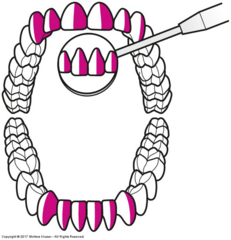
Maxillary Anterior Lingual Surfaces Toward
11:00 to 12:00
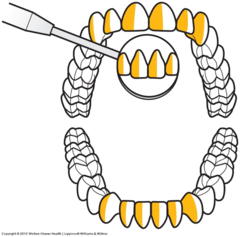
Maxillary Anterior Lingual Surfaces Away
11:00 to 12:00
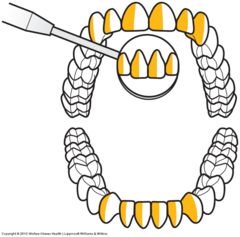
Mandibular Anterior Facial Surfaces Toward
8:00
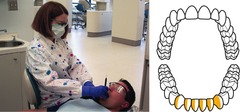
Mandibular Anterior Facial Surfaces Away
11:00 to 12:00
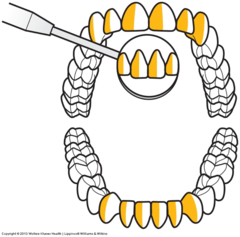
Mandibular Anterior Lingual Surfaces Toward
8:00

Mandibular Anterior Lingual Surfaces Away
11:00 to 12:00
Maxillary Posterior Surfaces Towards: Upper Right Buccal
8:00 or 9:00
Chin up
Head is neutral to slightly away from the clinician.

Maxillary Posterior Surfaces Towards: Upper Left Lingual
8:00 to 9:00
Chin up
Head is neutral to slightly away from the clinician.
Maxillary Posterior Surfaces Away: Upper Left Buccal
10:00 to 11:00
Chin up
Head is toward the clinician.

Maxillary Posterior Surfaces Towards: Upper Right Lingual
10:00 to 11:00
Chin up
Head is toward the clinician.
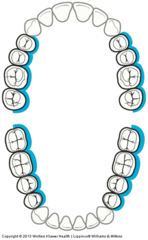
Mandibular Posterior Surfaces Toward: Lower Right Buccal
8:00 to 9:00
Chin down
Head ranges from neutral to slightly away from the clinician

Mandibular Posterior Surfaces Toward: Lower Left Lingual
8:00 to 9:00
Chin down
Head ranges from neutral to slightly away from the clinician

Mandibular Posterior Surfaces Away: Lower Left Buccal
10:00 to 11:00
Chin down
Head is turned toward the clinician.

Mandibular Posterior Surfaces Away: Lower Right Lingual
10:00 to 11:00
Chin down
Head is turned toward the clinician.