foundations exam 1 EVERYTHING
 Call Kai
 Learn
Learn Practice Test
 Spaced Repetition
 Match
Match Flashcards
 Knowt Play
1/435

Earn XP
Description and Tags
the yellow cards are SUPPLEMENTAL AND NOT FROM THE STUDY GUIDE so do not prioritize them. xoxo good luck!
Name | Mastery | Learn | Test | Matching | Spaced | Call with Kai | Chat |
|---|
No analytics yet
Send a link to your students to track their progress
436 Terms
development
the process through which human beings grow and mature from infancy through adulthood (end of the 20s) as the individual progresses from dependency to increasing autonomy
American Indian or Alaska Native
a person having origins in any of the original peoples of North and South America (including Central America), and who maintains tribal affiliation or community attachment
Asian
a person having origins in any of the original peoples of the Far East, Southeast Asia, or the Indian subcontinent including, for example, Cambodia, China, India, Japan, Korea, Malaysia, Pakistan, the Philippine Islands, Thailand, and Vietnam
Black of African American
a person having origins in any of the black racial groups of Africa
Native Hawaiian or other Pacific Islander
a person having origins in any of the original peoples of Hawaii, Guan, Samoa, or other Pacific Islands
white
person having origins in any of the original peoples of Europe, the Middle East, or North Africa
developmental progress
reflects brain growth and differentiation
developmental deficits
reflect differences in brain development or disruption of normal brain processes
biologic brain development
example of transformational change
environmental influences
example of variational change
where they are on the continuum (developmental age)
where they are relative to others of the same age (standard score)
completion of defined tasks
quality of completion
accuracy of the assessment
components of a developmental assessment, generally
mastery
performs without thinking, automatic
instructional
at level where teaching should occur. can do many times but still requires effort
frustrational
seen when the stars align, usually at times of no stress, or great stress
remediation
work directly on the skill ara
compensation
strategies to get around the disability. allows child to progress in other areas of development
sensory modulation
attention regulation
social perception
reciprocal social interaction
communication
emotional cognition and regulation
building narrative to place details in context
theory of mind
problem solving/executive function
motivation
deficits that make learning difficult
focus, selective attention
exploration of objects
cause and effect
tool use
puzzle building, block designs, drawing shapes
visual memory, object permanence, making predictions
the cubes!
components of nonverbal cognitive skills
find hidden object
figure out how to get the object
matching, memory games
category games
picture books
counting, number games, songs
spatial games
encouraging problem solving
intervention for nonverbal skills
60
nonverbal communication is ___ percent of interpersonal communication
50
percent intelligbility for a 2yo
75%
percent intelligbility for a 3yo
almost all
percent intelligbility for a 4yo
notice and comment on what child is looking at or doing
imitate what they are doing, build back and forth, take turns
nursery songs
draw child’s attention by “turning up the volume”
sensory input
pictures and actions to match words to meaning
short utterances
use signs
reading as another language modality
picture books, actions, games, structured tasks, and i spy can all broaden vocab
ways to build receptive communication
fill in the blank
practice same words over and over
picture books
words matched with pictures
“use your words”
ways to build expressive communication
give choices
sign language
talking in pictures
how to augment speech
PECS
picture exchange communication system
AAC devices
augmentative and alternative communication devices
joint attention
child and communication partner focusing on same thing distant to both. eye gaze, pointing, language.
surveillance
longitudinal, continuous process. attends to parents’ developmental concerns via medical and developmental hx, physical exam, and observation
screening
use a standardized developmental instrument and at certain timepoints
all well child visits
when should developmental surveillance be done?
9mo (vision, hearing, gross)
18mo (language, social/communication)
24-30mo (cognitive, speech language)
when should developmental screening be conducted?
18mo, 24-30mo
when should autism screening be conducted?
accurate observers, full extend of delay
developmental surveillance: parents are often ___ but may not recognize ___
peabody picture vocabulary test
measures receptive vocab, 2.5-90+yo. has low response demands - select and point to pictures. gives age-normed standard score
gilliam autism rating scale, social responsiveness scale
asd eval tools: parent questionnaire
autism diagnostic interview-revised
asd eval tools: parent interview
childhood autism rating scale (CARS), autism diagnostic observation schedule (ADOS)
asd eval tools: direct observation
perinatal complications, family hx, growth differences, GI, seizures
asd specific medical eval: history
hyperactivity/ADHD, affective disorders, cognitive, sleep difficulties, aggression/disruptive behavior
asd co-occurring symptoms
beery-buktenica developmental test of visual motor integration (beery VMI)
measures integration of visual perception and motor coordination by copying increasingly complex gemoetric forms. 2+ yo, 10-15 minutes, gives standard score, percentile, and age equivalent
gesell developmental schedules
compares developmental performance with age-based norms. produces a dev age and DQ. interpretation should consider limitations of older normative and psychometric data.
kaufman brief intelligence test
brief measure of verbal and nonverbal cognitive ability. 4+ yo. 20minutes. gives three standard scores - verbal, nonverbal, and IQ composite. some correlation with other standardized IQ testing
single primary anomaly, multiple congenital anomalies
categories of dysmorphia (prenatal onset)
malformation, deformation, disruption, dysplasia
categories of single primary anomalies/isolate anomalies
malformation
bad form. body part in question was neer formed correctly
malformation
most anomalies are ___
deformation
body part formed correctly, but then deformed. usually from something in the intrauterine environment
oligohydramnios, uterine crowding from multiple gestation, poor fetal movement
intrauterine causes of deformationo
oligohydraminos
not enough amniotic fluid in uterus during pregnancy, leading baby to be “squished” and stuck in that position
poor fetal movement
neuromuscular cause. brain formed improperly. cause of deformation.
disruption
something formed correctly and then is completely destroyed
amniotic band, vascular disruption
two types of disruptions
amniotic band
during pregnancy, extra tissue wraps around baby’s [whatever] and cuts off blood supply
![<p>during pregnancy, extra tissue wraps around baby’s [whatever] and cuts off blood supply</p>](https://assets.knowt.com/user-attachments/9eb00248-36d6-4db9-8d05-036348e3dd5e.png)
vascular disruption
not enough blood flow (type of disruption)
disruption
duane’s anomaly is an example of a ___

dysplasia
disorganization at a cellular levelhe
hemangioma
collection of abnormal blood cells. usually self-resolves, but ways to fix.

sequence, syndrome, association
types of multiple congenital anomaliess
sequence
single primary anomaly cleverly disguised as multiple anomalies. one initiating event sets off a cascade with many secondary anomlaies
sequence
pierre robin is an example of ___
posterior displacement of mandible
posterior and upward displacement of tongue
tongue obstructs palate from closure
displaced tongue obstructs upper airway
the pierre robin sequence
association
a bunch of anomalies that tend to go together and we don’t know why. cleverly disguised as a diagnosis
association
VACTERL is an example of ___
vertebral, anal, cardiac, tracheoesophageal fistula, renal, limb
VACTERL
3
for VACTERL, you need at least ___ anomalies to meet criteria for a diagnosis.
syndrome
multiple congenital anomalies with a single underlying cause
chromosome, environmental, single gene
types of syndromes
be systematic
describe what you see
pay attention to things that are rare and that you find striking
pay attention to family and ethnic background
rules of the physical exam
chromosome
22q11.2 deletion is an example of a ___ syndrome

single gene
treecher collins is an example of a ___ syndrome

environmental
fetal alcohol syndrome is an example of a ___ syndrome
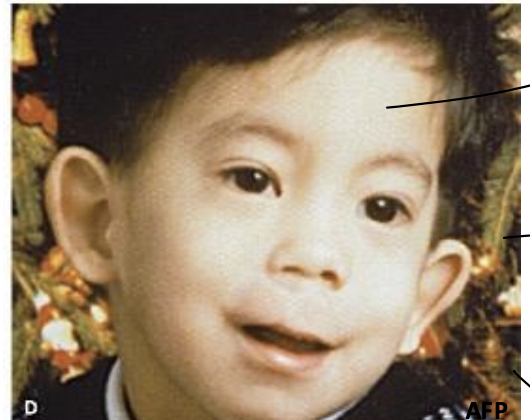
height, weight, head circumference
growth - always assess what three things?
off curve - what is measurement at 50th percentile for?
symmetric vs asymmetric
look for disproportion
things to look out for when assessing growth-
upper/lower segment ratios
trunk vs limbs
limb shortening
considerations when evaluating proportionate/disproportionate short stature rhizo
rhizomelic
shortened upper arms and legs (humerus, femur)
mesomelic
shortened middle - forearms and shin (radius, ulna, tibia, fibula)a
acromelic
shortened hands and feet
micromelic
shortening of an entire limb
rhizomelic
achondroplasia is the most common form of short limb, short stature and is an example of what kind of limb shortening?
frontal bossing - forehead protrudes
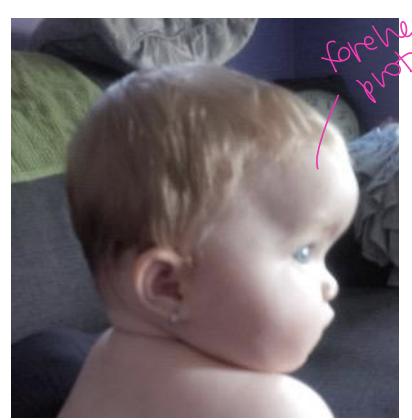
metopic ridge

sloped forehead

brachycephaly - short front-to-back distance
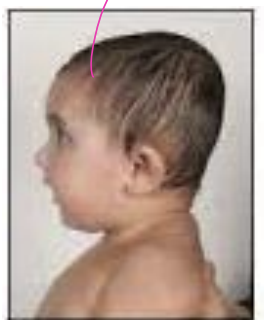
scaphocephaly - long front-to-back distance
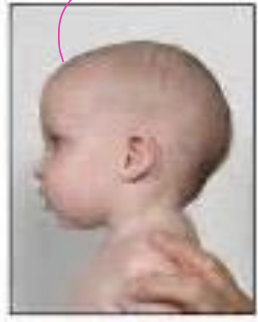
macrocephaly

microcephaly
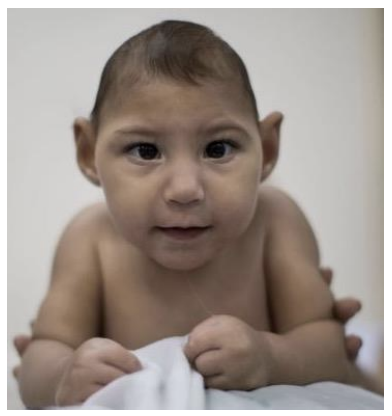
craniosynostosis
premature closing of suture. brain and skull don’t grow, and baby can’t properly exit birth canal
metopic, coronal, saggital, lambdoid

the four different sutures, from top to bottom
fontanelle
soft spot on either side of sutures
plagiocephaly doesn’t require surgery. often from baby lying on one side of their head for a long time.
craniosynostosis is premature closing of a suture, which requires surgery to open back up.
plagiocephaly vs craniosynostosis
sagittal craniosynostosis (top of skull)

unicoronal craniosynostosis (one side)
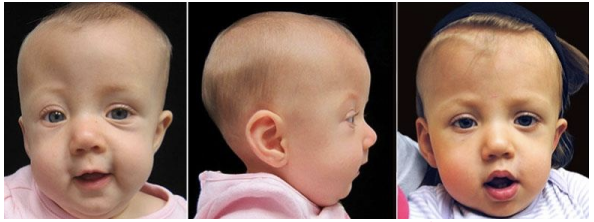
bicoronal craniosynostosis (both sides)
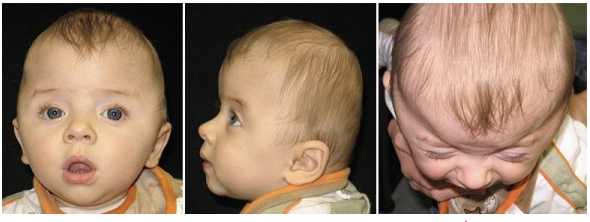
metopic craniosynostosis (front of head)

lamdoid craniosynostosis (back of head)

multisuture craniosynostosis (clover leaf here)

lambdoid
this type of craniosynostosis is often confused with plagiocephaly
facial asymmetry
