Canine & Premolar Anatomy and Access
 Call Kai
 Learn
Learn Practice Test
 Spaced Repetition
 Match
Match Flashcards
 Knowt Play
1/30

There's no tags or description
Looks like no tags are added yet.
Name | Mastery | Learn | Test | Matching | Spaced | Call with Kai | Chat |
|---|
No analytics yet
Send a link to your students to track their progress
31 Terms
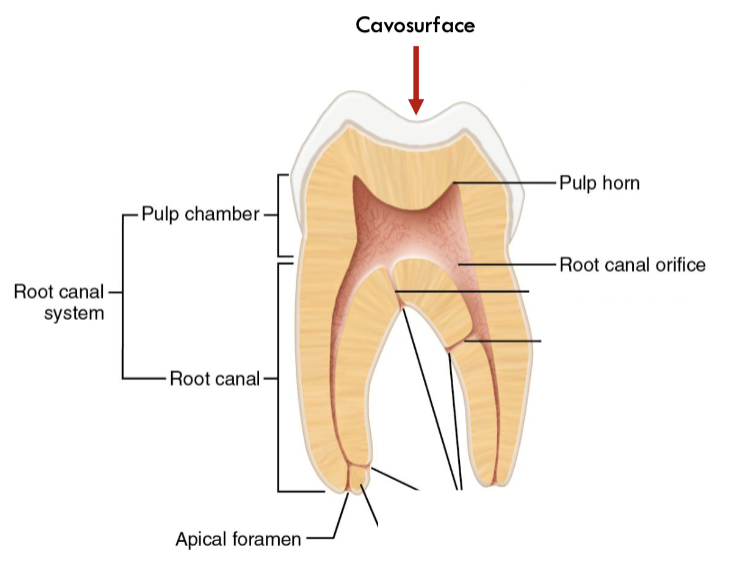
What is cavosurface
Crown surface of tooth
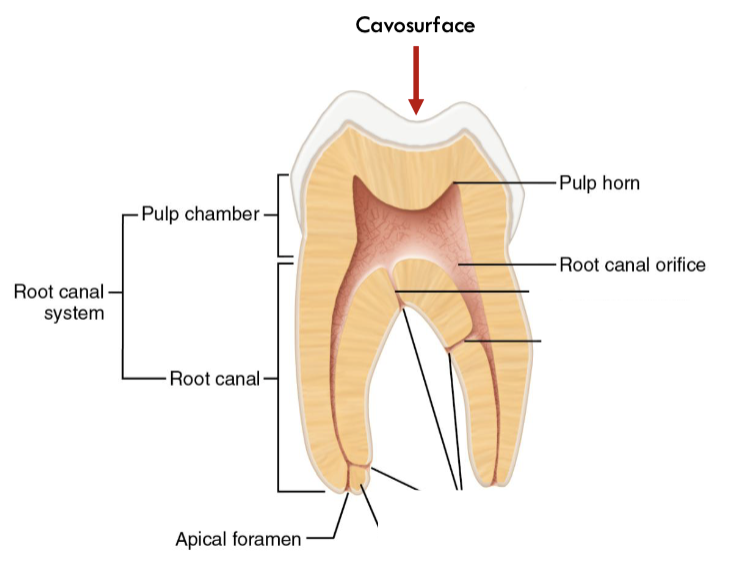
What is pulp chamber
The portion of the pulp space within the anatomic crown of the tooth
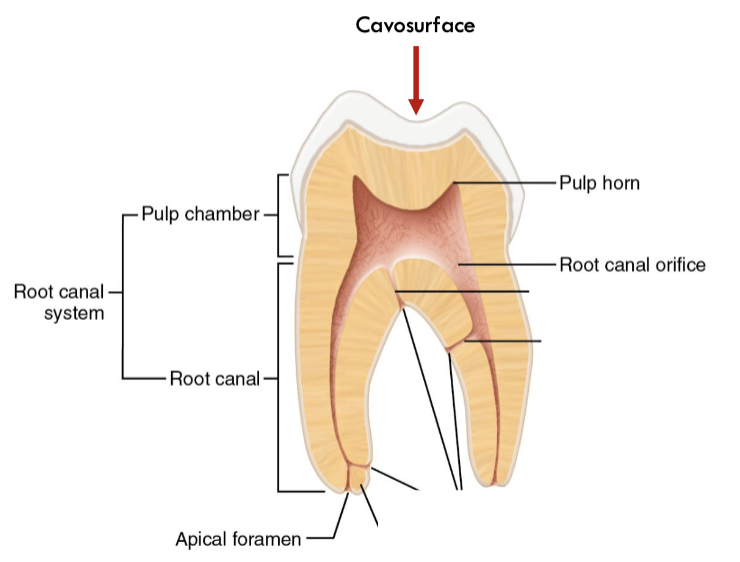
What are pulp horns
The highest extensions of the pulp chamber
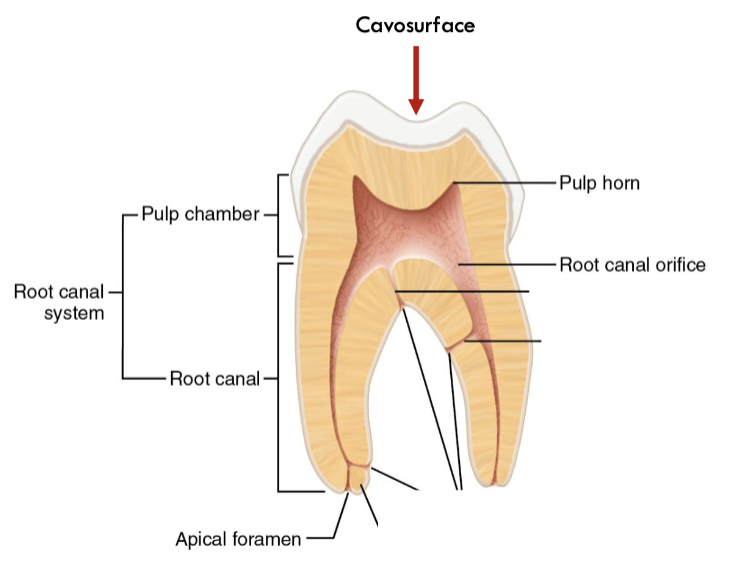
What is the pulpal floor
The base of the pulp chamber in multi-canaled teeth
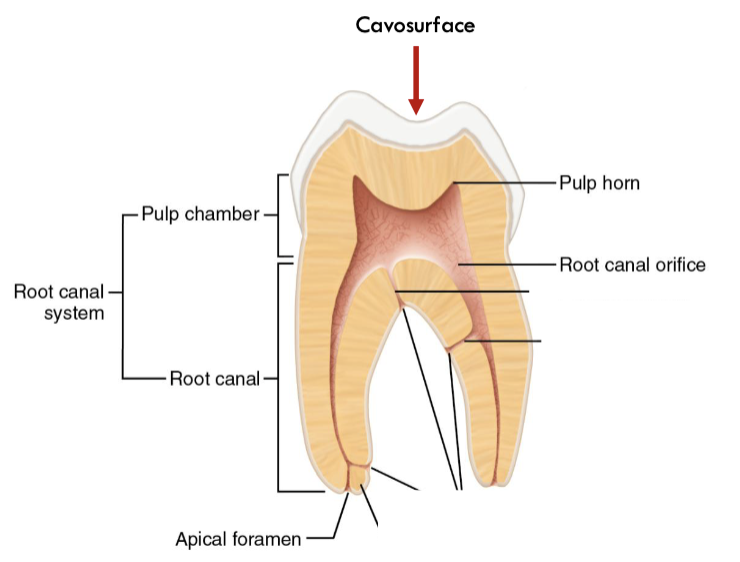
What is oriface?
The opening leading from the pulp chamber into a root canal, especially in a tooth with multiple canals
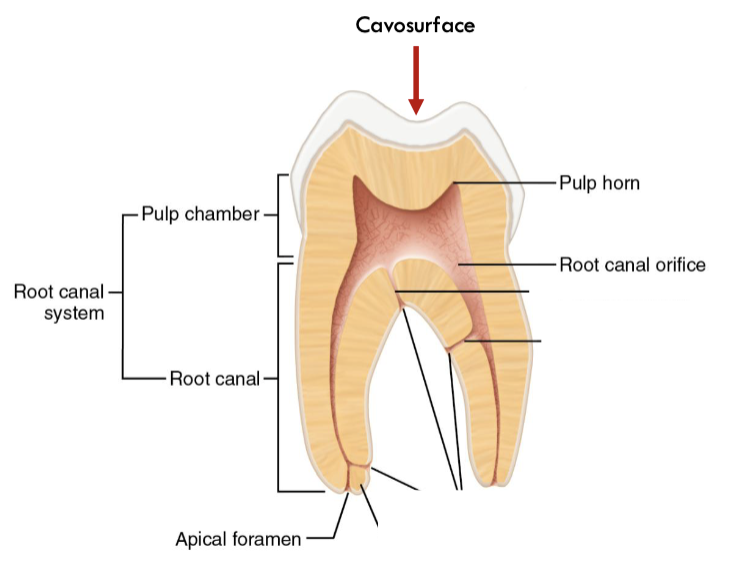
What is a canal
A passage or channel in the root of the tooth extending from the pulp chamber to the apical foramen, may be narrow, have lateral branches and/opr exhibit irregular morphology
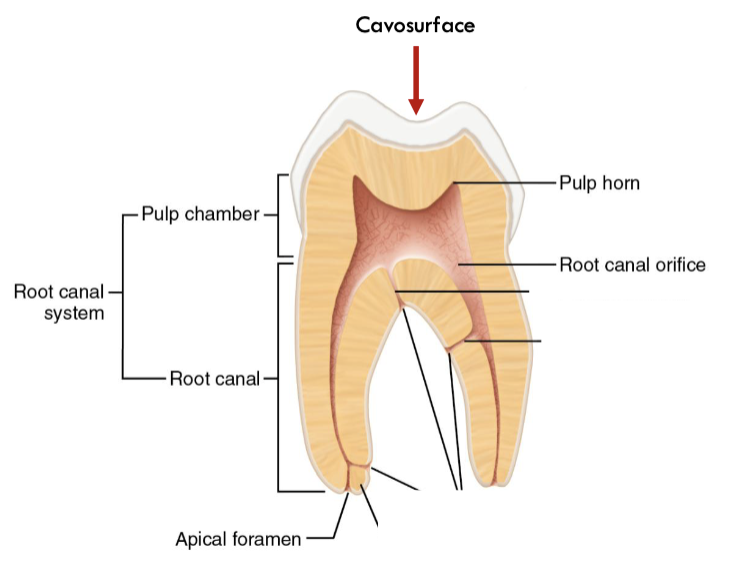
What is foramen?
A natural opening or passage, especially into or through a bond; also describes openings in the root structure that communicate with the dental pulp and generally contain neural, vascular and connective elements
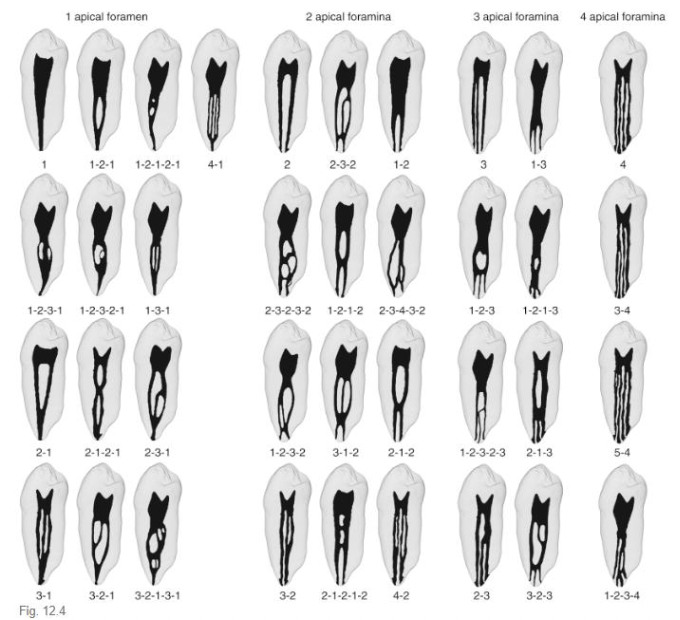
It is possible for canines to have up to how many apical foramina?
4! (There are 37 common canal configurations)
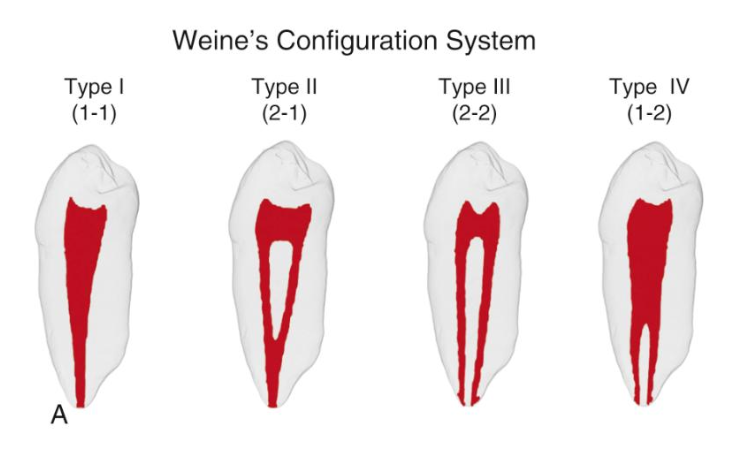
Weine’s classification has how many configurations?
4
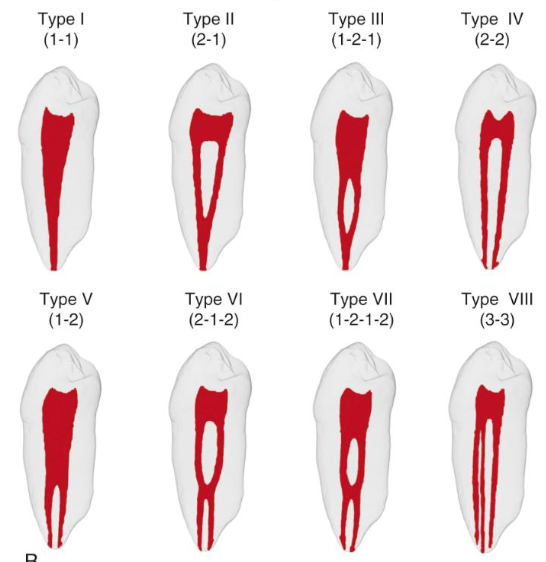
What is the difference between Weine and Vertucci’s classification?
Vertucci is more complex (8 configurations)
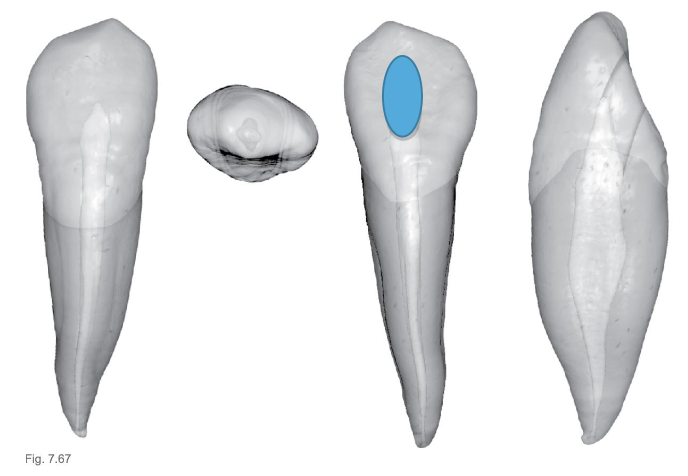
What % of mandibular canines have 1 canal?
78% (Type I)
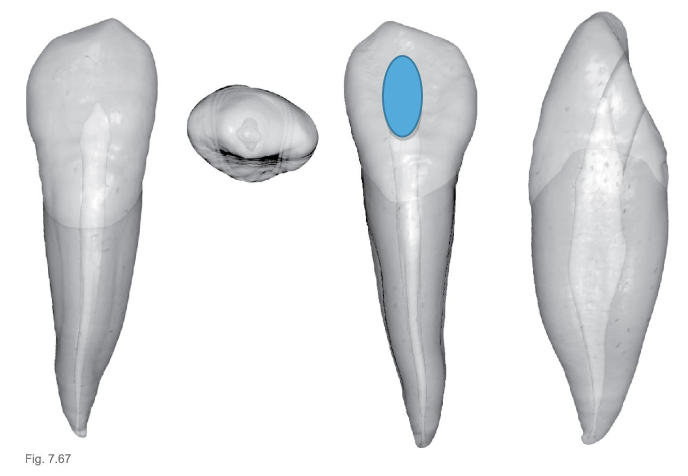
What % of mandibular canines have 2 canals, 1 POE?
16% (includes Vertucci’s Type II & III)
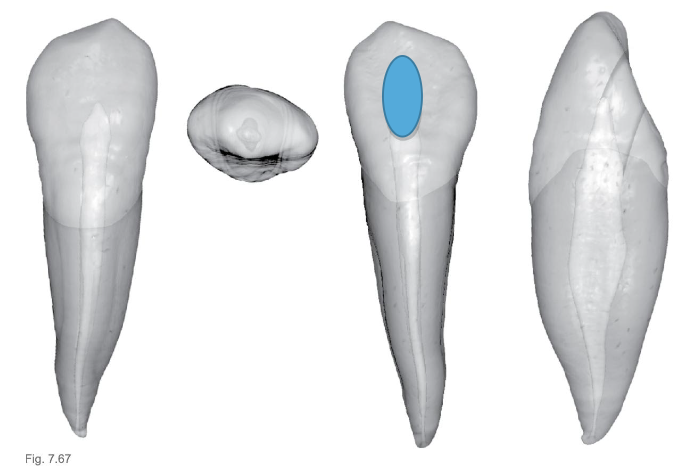
What % of mandibular canines have 2 canals, 2 POE?
6% (Vertucci’s Type IV)
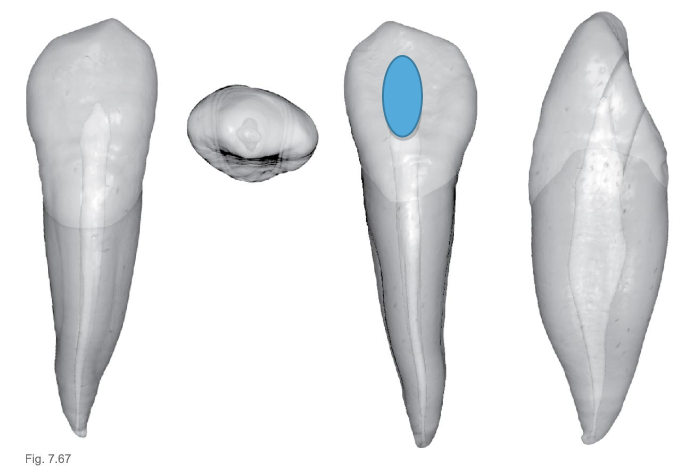
What % of mandibular canines have 2 canals?
22%
In order to get a better access, what are some parameters for opening the canal?
90 degree to the lingual cavosurface with a #2 round or 701
Follow long access of tooth root
Unroof chamber
Smooth lingual shoulder with Gates Glidden #2, #3, #4
What are the dimensions for your access on a mandibular canine?
1.5mm MD x 3-4mm incisiogingivally
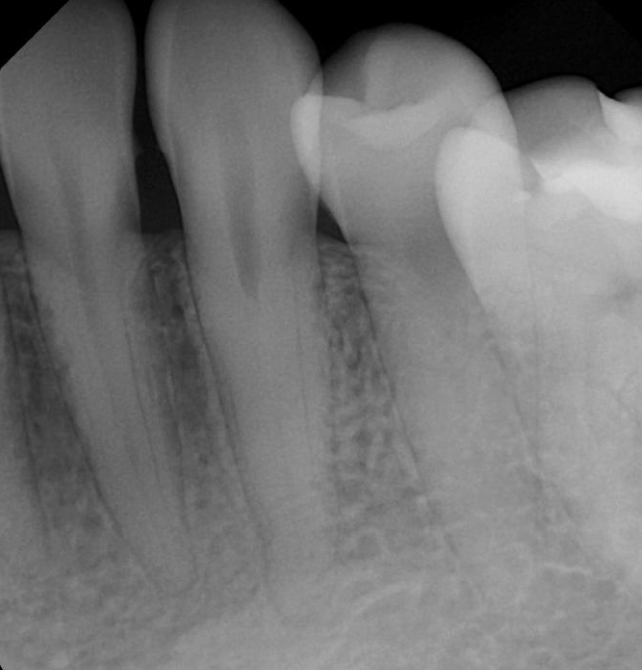
How can you tell if you have a maxillary vs mandibular canine?
You will observe a fast break in mandibular canines (indicating two roots)
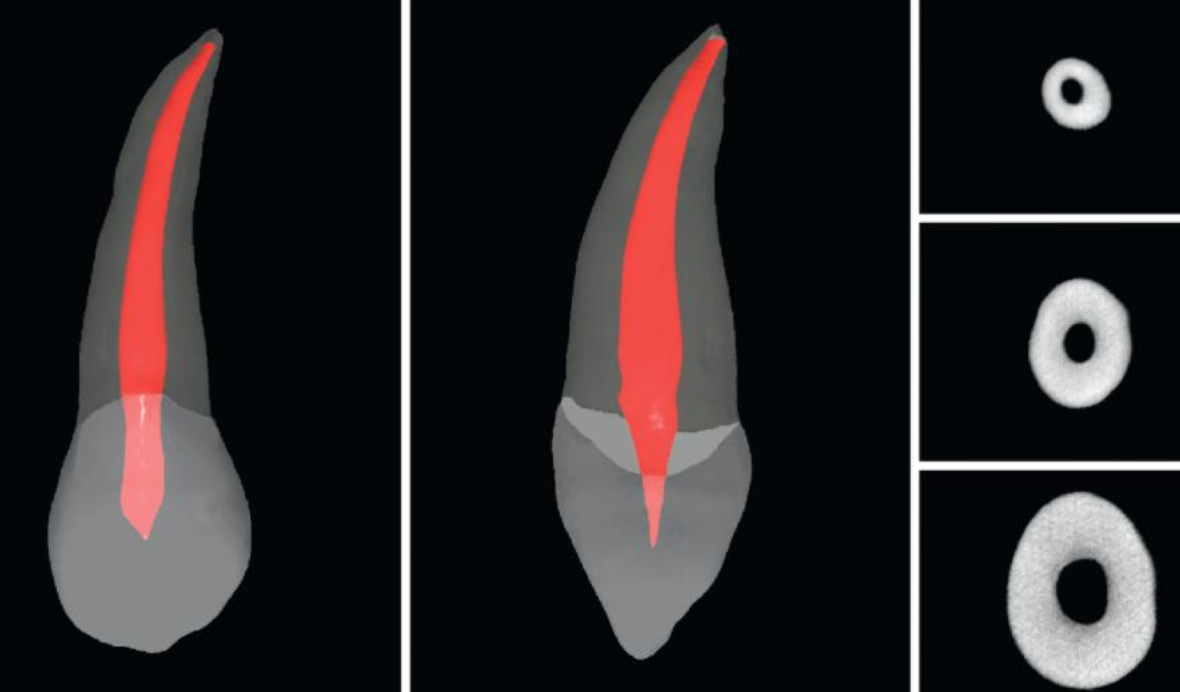
What % of maxillary canines have 1 canal?
100%
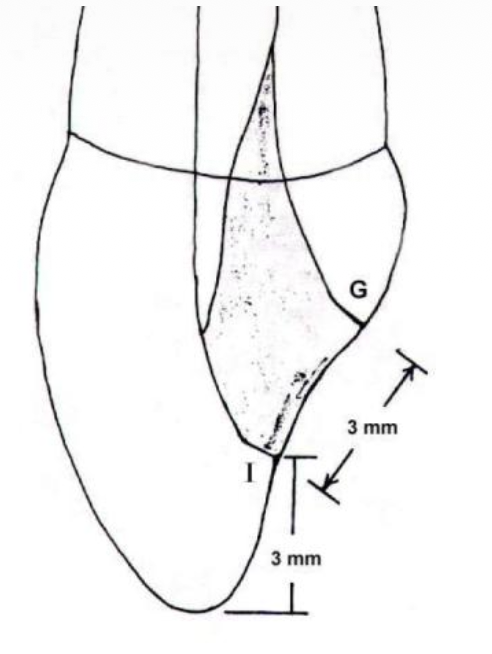
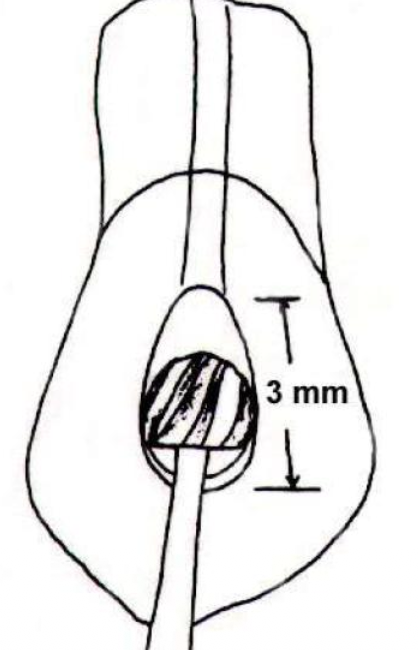
Size of maxillary canine access
1-1/2mm and 2mm at widest point
What can cause an increase in difficulty of treatment?
Long roots
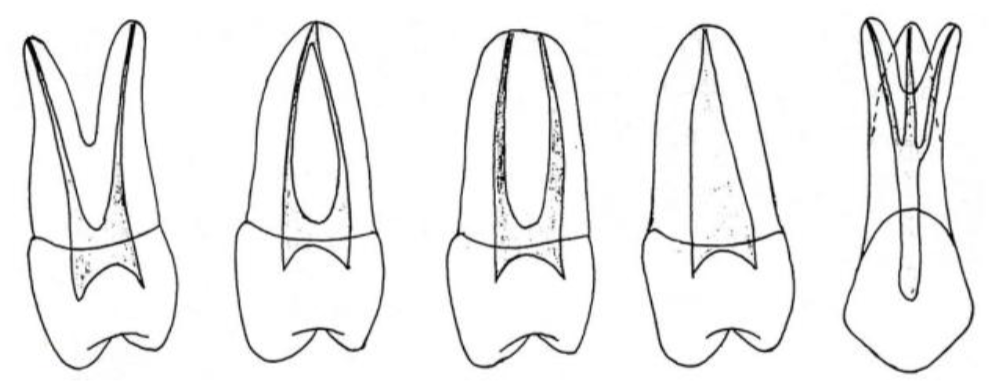
What % of maxillary 1st premolars have 2 roots and 2 canals?
55% and 77%, respectively
What percent of maxillary 1st premolar have 2 canal orifices?
~90%
Of the 90% of maxillary 1st premolar have 2 canal orifices, what % of them stay separate at the apex?
70%
What % of maxillary 2nd premolar have 1 root and 2 canals?
86% and 56%, respectively
Why are maxillary 2nd premolars called a “50-50” tooth?
They have 2 canal orifices 50% of the time in which 25% stay separate at apex and 75% join to 1 portal of exit
What % of mandibular 1st premolar have 1 root and 1 canal?
97% and 71%, respectively
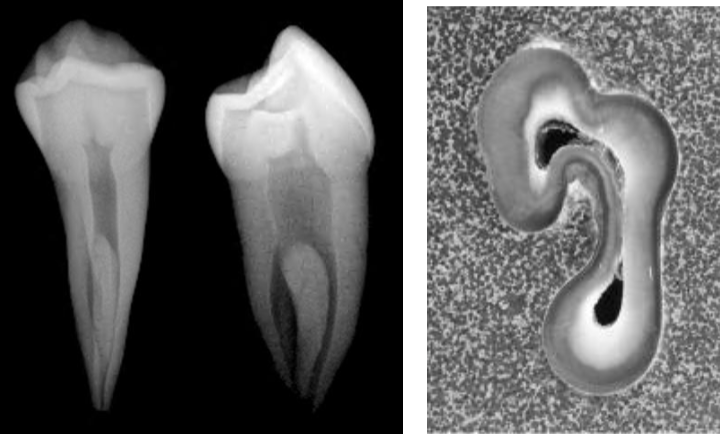
14% of mandibular 1st premolars may exhibit a “C’ shaped anatomy with how many foramen and apices
75% have 1 foramen, 25% have 2 apices
What % of mandibular 2nd premolar have 1 root and 1 canal?
98% and 87%, respectively
Most of the time, how many foramen does a mandibular 2nd premolar have?
just 1 98% of the time
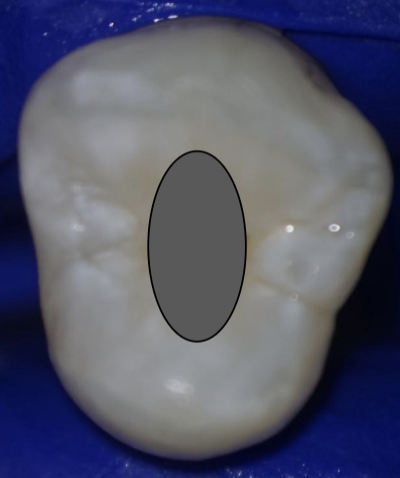
Outline access shape of maxillary 1st premolar
Oval, larger F-L, ½ up the cusp ridge, MD opening ~2mm
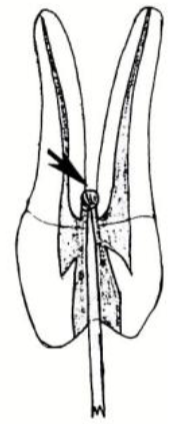
What critical error can occur if your coronal access isn’t big enough and too deep in a maxillary premolar?
Root perforation of the furcation