Carbon Molecules, Water Properties, and Functional Groups
 Call Kai
 Learn
Learn Practice Test
 Spaced Repetition
 Match
Match Flashcards
 Knowt Play
1/25

Earn XP
Description and Tags
Vocabulary practice flashcards covering the pH scale, water properties, atomic carbon structure, isomers, and functional groups.
Name | Mastery | Learn | Test | Matching | Spaced | Call with Kai | Chat |
|---|
No analytics yet
Send a link to your students to track their progress
26 Terms
pH
A measure of hydrogen ion (H+) concentration in a solution, used to infer hydroxide ion (OH−) concentration.

Logarithmic pH Scale
A scale ranging from 0 to 14 where each unit difference represents a 10-fold difference in hydrogen ion concentration.

Hydrogen Bond
An attraction between a hydrogen atom with a partial positive charge and an electronegative atom with a partial negative charge.
Intermolecular Hydrogen Bond
A hydrogen bond occurring between two separate molecules, such as between individual water molecules.
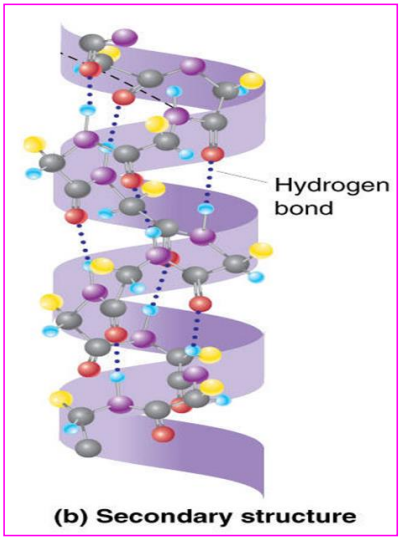
Intramolecular Hydrogen Bond
A hydrogen bond occurring within a single molecule, such as within the secondary structure of a protein.
High Specific Heat
The amount of heat needed to raise or lower 1g of a substance by 1∘C, allowing water to resist temperature changes.
High Heat of Vaporization
The amount of energy required to convert 1g of a substance from a liquid to a gas, during which hydrogen bonds break and heat is removed.

Atomic Number
The total number of protons contained within the nucleus of an atom.
Atomic Mass
The sum of the number of protons and neutrons in an atom's nucleus.
Catenation
The ability of carbon atoms to form covalent bonds with other carbon atoms to build long chains and ring structures.
Isomers
Compounds that share the same chemical formula but have different structural arrangements, resulting in distinct physical and chemical properties.

Structural Isomer
Isomers that have the same chemical formula but differ in the covalent bonding arrangement among their atoms.
Stereoisomer
Isomers with the same chemical formula and atom bonding order, but differing 3D spatial arrangements of their atoms.
Thalidomide
An optical stereoisomer where the (R)-enantiomer is effective against nausea, while the (S)-enantiomer intercalates into DNA and acts as a mutagenic teratogen.

Teratogen
An agent that causes developmental abnormalities or malformations in a fetus (from Greek teratos, meaning monster).

L-Dopa
The biologically active stereoisomer of Dopa that is effective against Parkinson's disease, unlike its inactive counterpart D-Dopa.
Functional Group
A specific group of atoms attached to a carbon skeleton that dictates a molecule's chemical properties, polarity, acidity, solubility, and reactivity.
Hydroxyl Group
A polar functional group consisting of an oxygen atom bonded to a hydrogen atom (-OH), characteristic of alcohols and sugars.
Carbonyl Group
A functional group with a carbon atom double-bonded to an oxygen atom (C=O), found in aldehydes and ketones as metabolic intermediates.
Carboxyl Group
An acidic functional group (-COOH) composed of a carbonyl group and a hydroxyl group attached to the same carbon, found in amino acids and fatty acids.
Amino Group
A basic functional group composed of a nitrogen atom bonded to two hydrogen atoms (-NH2), present in amino acids and proteins.
Zwitterion
An overall neutral internal salt form of an amino acid at physiological pH (7.4) where the amino group is protonated (-NH3+) and the carboxyl group is deprotonated (-COO−).

Sulfhydryl Group
A functional group consisting of sulfur bonded to hydrogen (-SH), found in cysteine that forms disulfide bridges to stabilize tertiary protein structures.

Phosphate Group
A functional group composed of a phosphorus atom bonded to four oxygen atoms (-PO4 or -H2PO4), found in nucleotides (DNA and RNA) and ATP.
Methyl Group
A nonpolar functional group consisting of 1 carbon bonded to 3 hydrogen atoms (-CH3), attached to molecules like DNA to silence gene expression.
DNA Methylation
An epigenetic modification where methyl groups attach to DNA or histone tails, rendering DNA inaccessible and silencing gene expression.
