Alcohol Reactions
 Call Kai
 Learn
Learn Practice Test
 Spaced Repetition
 Match
Match Flashcards
 Knowt Play
1/14

There's no tags or description
Looks like no tags are added yet.
Name | Mastery | Learn | Test | Matching | Spaced | Call with Kai | Chat |
|---|
No analytics yet
Send a link to your students to track their progress
15 Terms
the more substituted an alcohol is, what happens to the solubility
it decreases
primary alcohols are miscible, the more carbons attached then the less will dissolve
which has the highest boiling point: alcohol, aldehyde, ether
alcohol > aldehyde > ether
T or F: tertiary alcohols are the most acidic
false, it is the least acidic
alcohol attached the a methyl is most acidic, then primary, then secondary
if we only want to reduce a ketone, what reagents would we use
NaBH4 or LiAlH4/H3O+
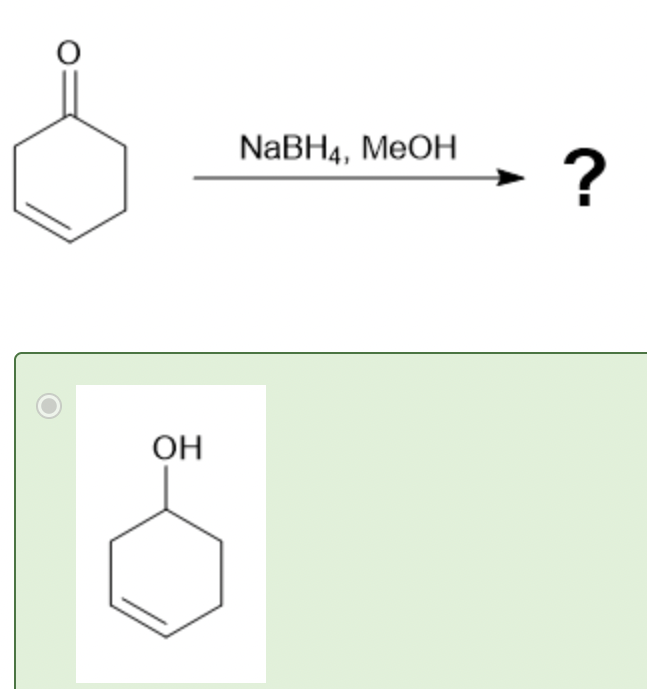
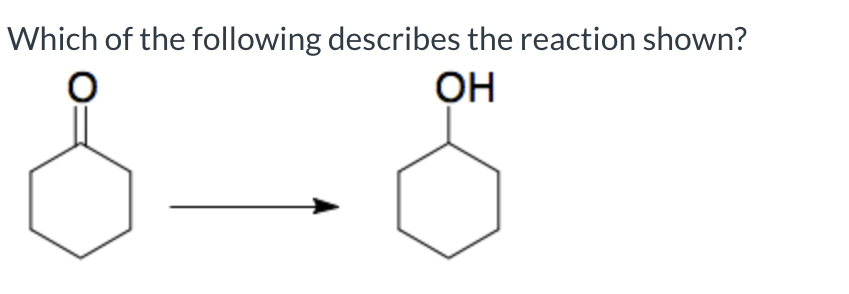
reduction
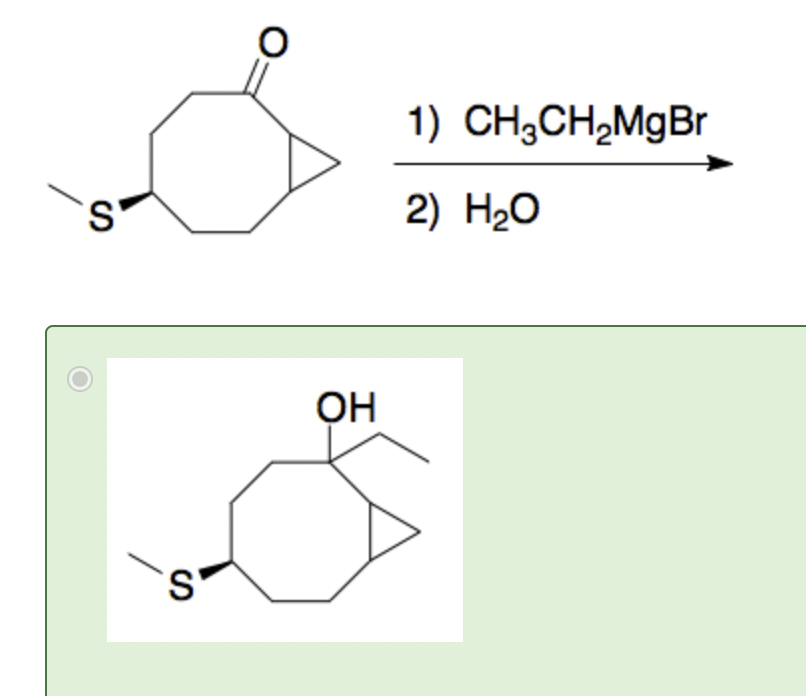
identify the type of reaction occurring
preparation of alcohols via grinard reagent

what reagent would be used to remove the TMS attached
TBAF would be used to remove TMS, which is a protection group
T or F: SN1 conditions cannot be used to convert a primary alkyl halide into an alcohol. SN2 conditions are required for such a transformation.
T
for alcohols, we can do SN2 back side attack on a primary alcohol
if you wanted to replace a primary alcohol with a chlorine in a substitution, we cannot use HCL like we do with HBR. what else do we need
we need ZnCL to be out catalyst so Zn can be a leaving group
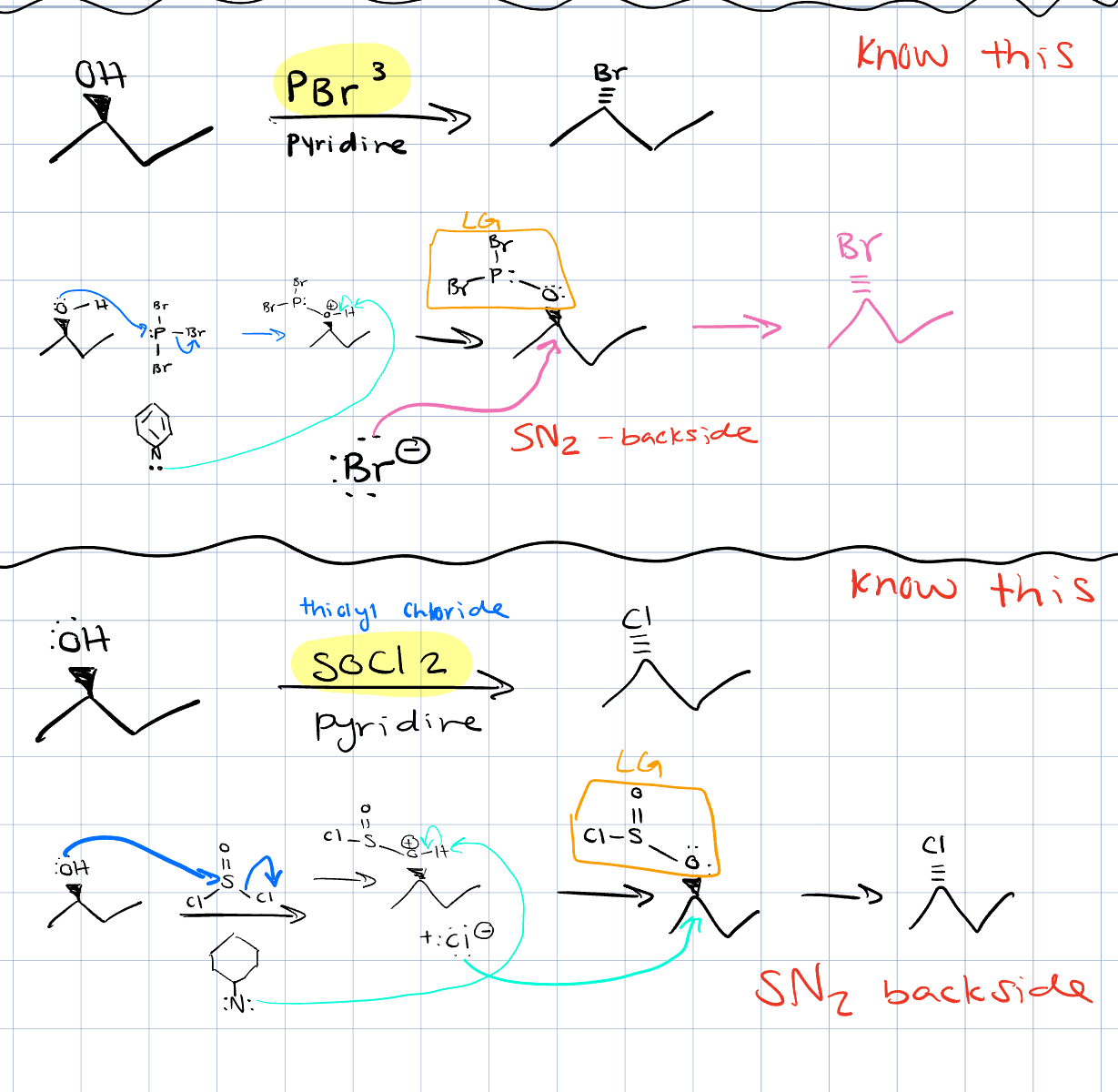
if you see PBR3 and pyridine OR SOCl2 and pyridine with an alcohol, what type of reaction are we doing
SN2
we make a PBr2- / SOCL- to serve as a good leaving group so the bromide ion/chloride ion can do backside attack
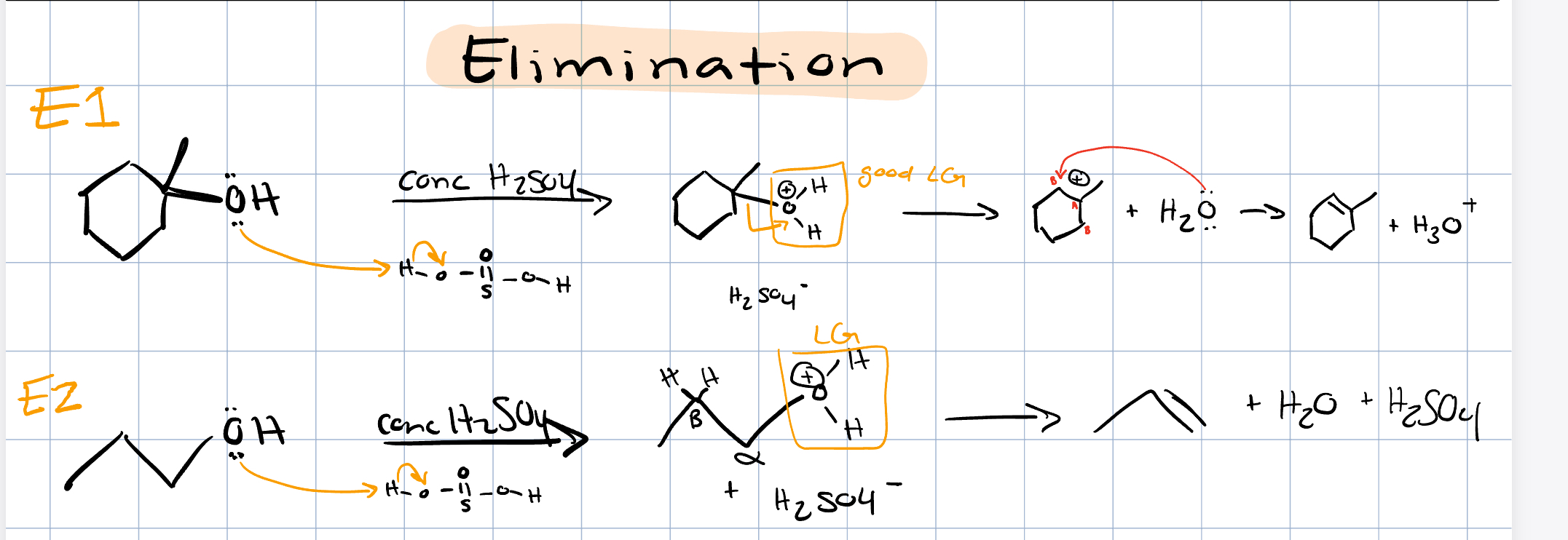
what reagent would give us E1/E2 of an alcohol
concentrated H2SO4
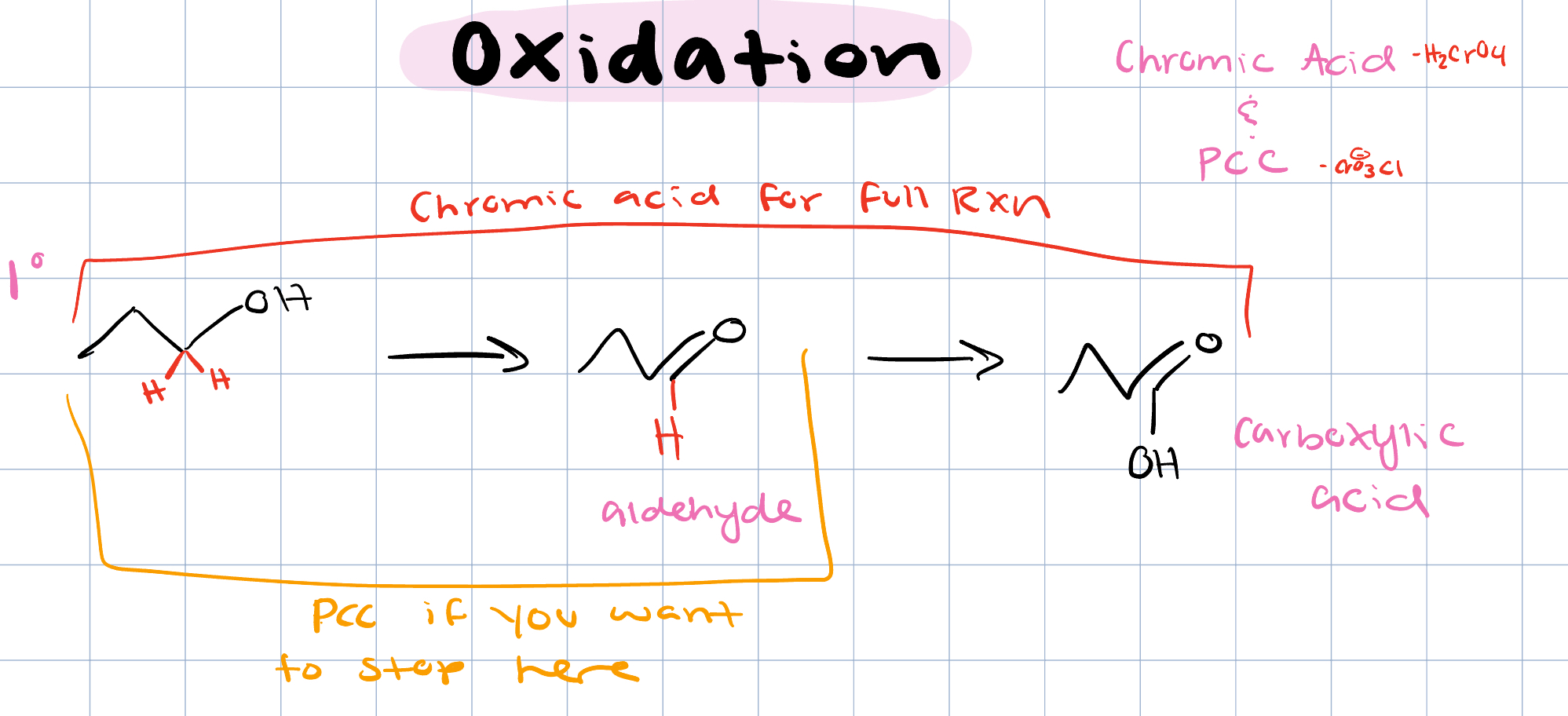
if i have a primary alcohol and i want to form a carboxylic acid via oxidation, what reagent do i use? what if i want to stop at the aldehyde
chromic acid (H2CrO4)
PCC if you want aldehyde
if i have a secondary alcohol and i do an oxidation reaction (chromic acid or PCC it dont matter) what product will i get
ketone
what product will form via oxidation of a tertiary alcohol
nothing - there won’t be a rxn
if a have a secondary alcohol, but need to do an SN2 reaction, what reagent can i use to prep?
TSCl/pyridine because it will add OTs to same side then you can do backside attacl
