Greek Religion Term 2 Week 10: RELIGIOUS CHANGES Atheism and Pluralism
 Call Kai
 Learn
Learn Practice Test
 Spaced Repetition
 Match
Match Flashcards
 Knowt Play
1/80

There's no tags or description
Looks like no tags are added yet.
Name | Mastery | Learn | Test | Matching | Spaced | Call with Kai | Chat |
|---|
No analytics yet
Send a link to your students to track their progress
81 Terms
Identify this
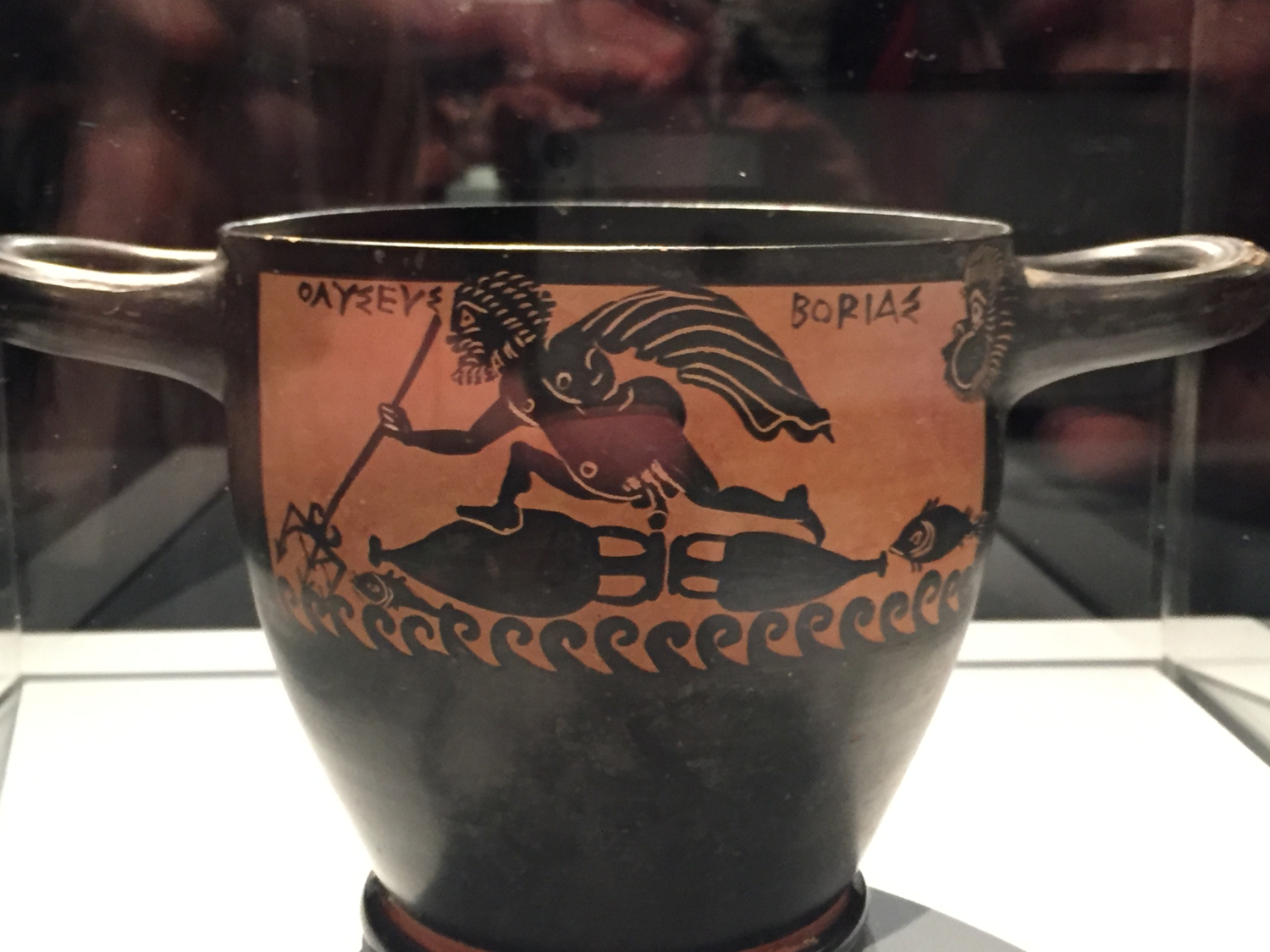
Odysseus and Boreas - Skyphos (deep drinking cup)
425-375BC Sanctuary of the Kabeiroi Boeotia
The Kabeiroi are believed to be a blacksmith guild (possibly), lots of drunken activity
Explain religious diversity in Greece
We have seen how much Greek religion can vary in terms of:
Time – practices never stay the same; plus we see a very general trends towards pluralism, mysteries, individual belief. Healing deities become more important as religion developed.
Location- Greek religion varies in where things are happening (this is evident through Pausanias’ writings)
Divinities worshipped- this varied due to location. Heroes were the most local of the gods
Architectural form and role of the sanctuary (e.g. oracles). Sanctuaries are different based on where they are, the set up will always depend on what role the sanctuary is playing e.g. healing, oracles, etc
Rules and regulations for communicating with the gods, influencing the gods, being affected by pollution
REligion would vary based on your sex/status
What did a lack of orthodoxy and regional lead to?
Lack of orthodoxy and regional differences led to an acceptance of variety and other beliefs, the Greeks were not dogmatic at all.
What elements were included in the charge of impiety against Socrates?
The charge of impiety against Socrates (Plato Apology 26b–c, Euthyphro 3b and Xenophon Mem. I.1.1) contained the following elements:
Not recognising the gods of the Athenian state (nomizein)
Introducing new (i.e., non-traditional) gods (daimonion)
Corrupting the youth
In Euthyphro all charges are nicely linked – corrupts youth by introducing new gods and thus neglecting Athenian gods
The overall charge is impiety – asebeia not atheism.
Atheism was not illegal
What is our difficult with understanding the trial?
Two versions of trials, both incomplete with only the defence and not the prosecution save for what Socrates tells of the indictments. So, we don’t get to see the evidence against him. What we see is incomplete
Why is Plato writing about the trial?
Plato is writing to defend Socrates’ actions, but it is hard to know how close to Socrates’ real defence this is
Why is Xenophon writing about the trial?
Xenophon was not an eyewitness and is only writing to defend Socrates’ arrogance during the trial (which we must therefore assume was a feature of his trial) - using Plato and possibly an account by Hermogenes.
What overall picture do we get of the trial?
So picture we get is biased, contradictory, and incomplete.
What did Xenophanes of Colophon write about the nature of gods?
Xenophanes of Colophon (ca.570-475 BC)
(D14 (B15) Clement of Alexandria, Stromata)
But if oxen, [horses] or lions had hands
Or could draw with their hands and create works like men,
Then horses would draw the shapes of gods like horses, and oxen like oxen,
And they would make the same kinds of bodies
As each one possessed its own bodily frame.
What did Euripides write about Disbelief in Poetry in Greek Tragedy?
Disbelief in Poetry (Greek Tragedy):
Euripides Heracles 1314-21, 1340-6
Theseus: There is no mortal who is untouched by misfortunes, and no god either, if the poets’ tales are not false.
Heracles: Alas this has no bearing on my sufferings. I do not believe that the gods delight in unions which are not right; I have never supposed, nor will I be persuaded, that bonds may tie their hands, nor that one is master over another. For god, if he is truly god, needs nothing: these are wretched tales of poets.
How does Protagoras of Abdera show scepticism in the gods?
Protagoras of Abdera (active c.420 BC):
Scepticism (rather than active disbelief?)
Concerning the gods, I have no way of knowing either that they exist or that they do not exist, or what they are like in form. There are many things that impede that knowledge, both the obscurity of the subject and the brevity of human life. DK 80 B 4
Human centred inquiry?
Of all things the measure is man, of the things that are, that they are, and of things that are not, that they are not. DK 80 B 1
Where does Xenophon show a lax attitude towards to gods
Xenophon Memorabilia 1.4.10:
‘No Socrates’, said Aristodemus, ‘I don’t despise the divine, but I think it is too great to need any attention from me.’
‘Well’, Socrates replied, ‘the greater it is, and still deigns to attend to you, the more honour you should pay it.’
‘You can be sure that if I thought the gods had any concern for humans, I would not neglect them.’
Had people been indicted in the past?
Yes but its not very common, often done when someone had pissed someone else off politically and they were using it as an excuse for a punishment essentially
Give an example of another indictment?
Diopeithes’ Decree
Plutarch Pericles 32.1
About this time also Aspasia was put on trial for impiety, Hermippus the comic poet being her prosecutor, who alleged further against her that she received free-born women into a place of assignation for Pericles. And Diopeithes [a seer] brought in a bill providing for the public impeachment [*eisangelia] of such as did not recognise the gods [τὰ θεῖα μὴ νομίζοντας], or who taught doctrines regarding the heavens, directing suspicion against Pericles by means of Anaxagoras.
Give examples of other prosecutions based around impiety
Alcibiades (friend/pupil of Socrates) was recalled to face charges in 415BC for profaning Mysteries and mutilation of Herms (Thucydides 6.27-29, 61)
Poet Diagoras of Melos was banished for impiety (may have profaned Mysteries) ca.415BC (Diodorus Siculus, 8. 6).
Andocides in 400BC – exiled for profaning mysteries and destroying herms (Plutarch Alcibiades 21.1)
Rightfully or not, each of these was suspected of being part of an anti-democratic aristocratic element
Who were the charged brought by?
Charges brought by individuals (there was no religious ‘thought police’)
What was the issue with all of these people and what was the expected punishment?
Legality of variant beliefs is not really the issue –atheism/odd beliefs were not illegal – but impiety was a much more ambiguous term with social over/undertones
The implication was that these individuals were dangerous to the status quo of the polis and democracy and needed to be safely removed
Exile was expected result (not death)
Underlying political dimension – each of these was linked to aristocracy (seen as anti-democratic)
Is Socrates being accused of atheism?
Socrates says at Apology 18b that he is really being accused by two sets of people, only one of whom is present. He is being accused of an old (and erroneous) charge often aimed at people like him, of having theories of heaven and earth and making the weaker argument the stronger – i.e. being an natural philosopher and a sophist – the implication being one of atheism.
The problem with atheism is not that it is illegal, but it is part of a cluster of associations thought ‘undemocratic’
Where is Socrates shown as an Atheist?
In Aristophanes’ Clouds:
Strepsiades
But come, by the Earth, is not Zeus, the Olympian, a god?
Socrates
What Zeus? Do not trifle. There is no Zeus.
Strepsiades
What do you say? Who rains then? For first of all explain this to me.
Socrates
These to be sure. I will teach you it by powerful evidence. Come, where have you ever seen him raining at any time without Clouds? And yet he ought to rain in fine weather, and these be absent.
What would Socrates have been concerned about?
Is he actually accused of atheism?
It’s not named in the indictment, but Socrates is worried these old ideas about him from the time of Clouds will nevertheless stick and prejudice people against him whatever his defence of individual charges…
Write out the section from Platos Apology where Socrates is discussing the ‘new gods’
Plato Apology
[31c] Perhaps it may seem strange that I go about and interfere in other people's affairs to give this advice in private, but do not venture to come before your assembly and advise the state. But the reason for this, as you have heard me say [31d] at many times and places, is that something divine and spiritual comes to me, the very thing which Meletus ridiculed in his indictment. I have had this from my childhood; it is a sort of voice that comes to me, and when it comes it always holds me back from what I am thinking of doing, but never urges me forward. This it is which opposes my engaging in politics. And I think this opposition is a very good thing; for you may be quite sure, men of Athens, that if I had undertaken to go into politics, I should have been put to death long ago and should have done [31e] no good to you or to myself. And do not be angry with me for speaking the truth; the fact is that no man will save his life who nobly opposes you or any other populace and prevents many unjust and illegal things from happening in the state.
What is the daimon that Socrates is discussing?
The daimonion is a personal divinity not shared with others or publicly sacrificed to – this smacks of aristocracy and of being set apart. In a democracy, being set apart is questionable and potentially dangerous. The charge of new gods therefore has a political dimension…
Were ‘outsiders’ involved in Greek Religion?
‘Others’/outsiders were involved with Greek religious practices and Greek sanctuaries for a long time cf. King Amasis of Egypt giving money for the rebuilding of the temple at Delphi in the 6th century BC
Gifts of people like Croesus and Gyges at Delphi (Herodotus 1.46-51; Pausanias 10.5.13)
Did the Greeks engage with religious practices in remote geographical places?
Equally, Greeks engaged with religious practices in remote geographical places: Athenians consulted the sanctuary of Zeus Ammon in Siwa Oasis in Egypt
And in particular sanctuaries – like the Heraion on Samos, or Hera at Perachora – there is lots of evidence for very foreign dedications/ sacrificial victims (potentially brought by foreigners?)
Did Athens have evidence of ‘other gods’ outside of its central polis deities?
C5BC: Athens supported with public expenditure at least 40 deities whom it referred to as “other gods” (other than its central polis deities Athena Polias, Demeter, Persephone and Kore)
What did Herodotus criticise the Thracians for?
Cf Herodotus 5.7: Thracians are criticized as being politically backwards because they only worship 3 gods….
Who is Bendis?
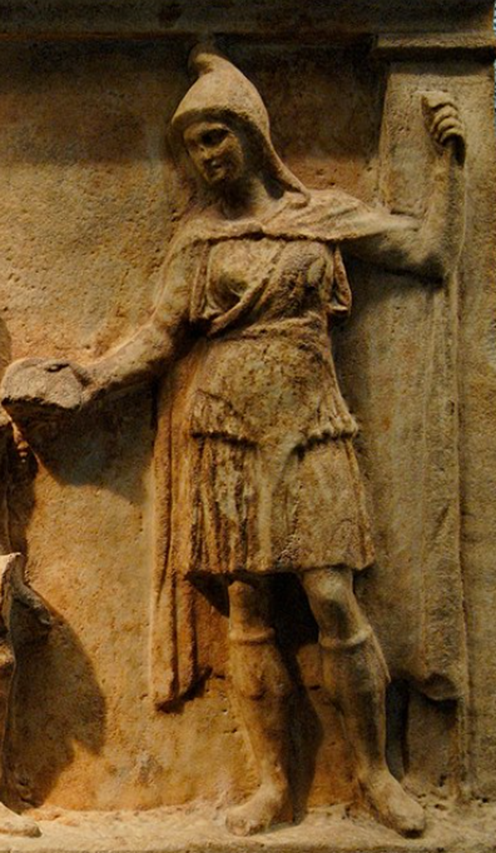
Bendis (Ancient Greek: Βένδις) was a Thracian goddess associated with hunting and the moon
Who worshipped Bendis?
420s Bendis worshipped by Thracians and Athenians (Plat. Rep. 1.327A and 2.354A)
Were the Thracians prevalent in Attica?
Thracians were one of the most numerous foreign populations in Attica Moreover in the 430s Athens was actively engaged in diplomacy with the Thracian kings
How is Bendis relevant in this?
An aspect of these political, social and economic connections with Thrace was the incorporation of the cult of Bendis, a huntress deity with similarities to Artemis, into Athenian religion (see Parker, Athenian Religion, 1996, 170-75).
When was Bendis first accounted for in Attica/Athens?
First attested in the accounts of the treasurers of the Other Gods (i.e. the city’s gods other than Athena) in 429/8 (IG I3 383, ll. 142-43, linked with the Phrygian deity Adrasteia).
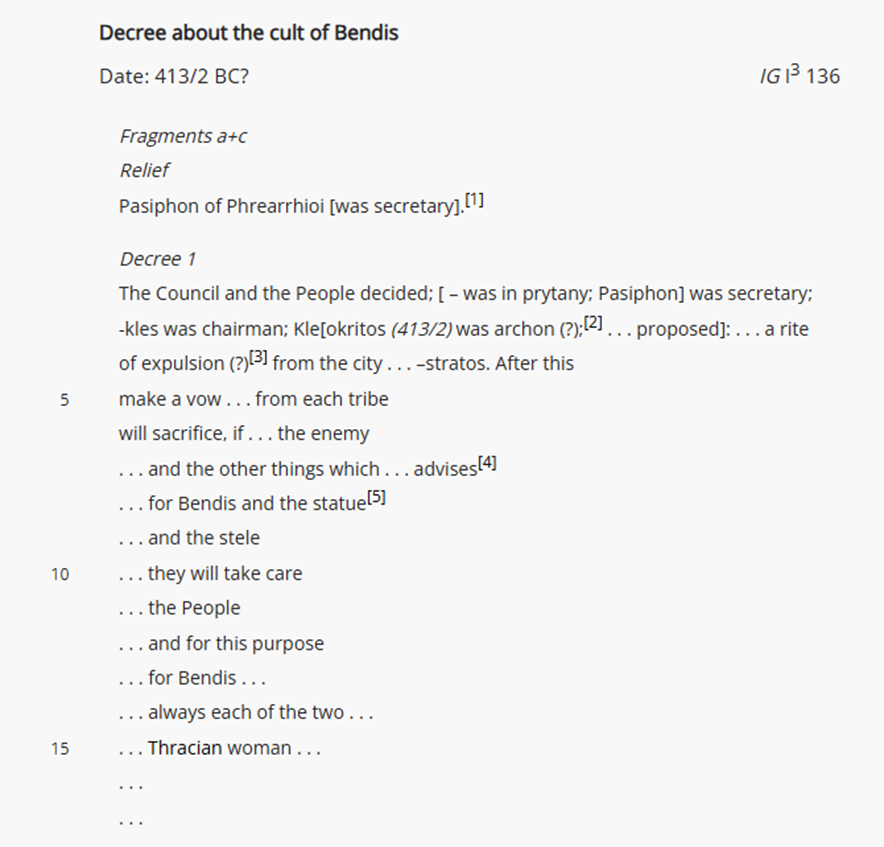
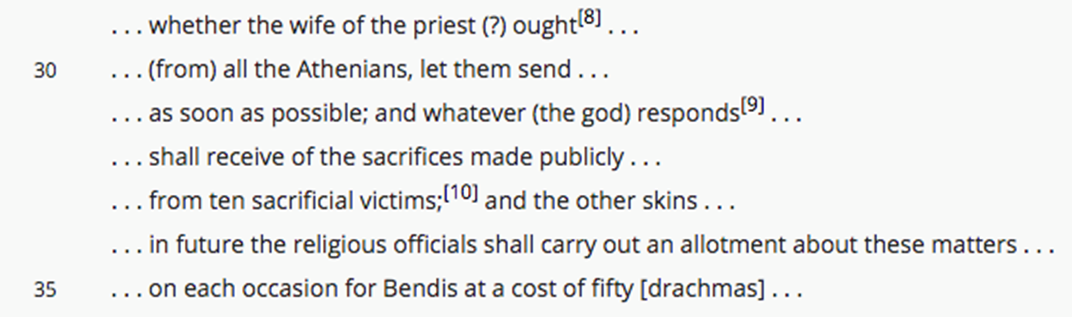
Write out the decree about the cult of Bendis in Athens
What is sadi about Bendis in Platos republic?
The opening scene of Plato’s Republic tells how Socrates with a friend “went down to the Piraeus to pray to the goddess [Bendis] and also wishing to see how they would conduct the festival, this being the first performance. I thought the procession of the locals was fine, but the one conducted by the Thracians seemed to me equally impressive.”
Identify and analyse this relief:
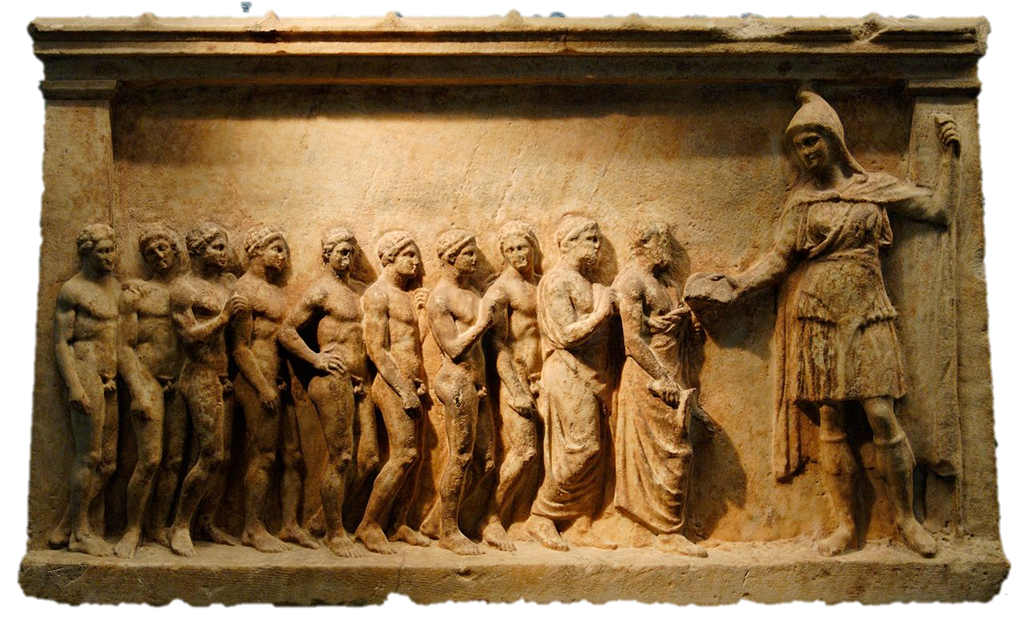
Youths lines up, the goddess seems to be holding a libation bowl of some sort. The fact that there are so many of them indicates that it may be a group dedication
Marble votive relief, made in Athens, ca. 400-375 BC. Said to be from Piraeus, more probably from the area of a sanctuary of Bendis on the Mounichia Hill.
Identify this figure:
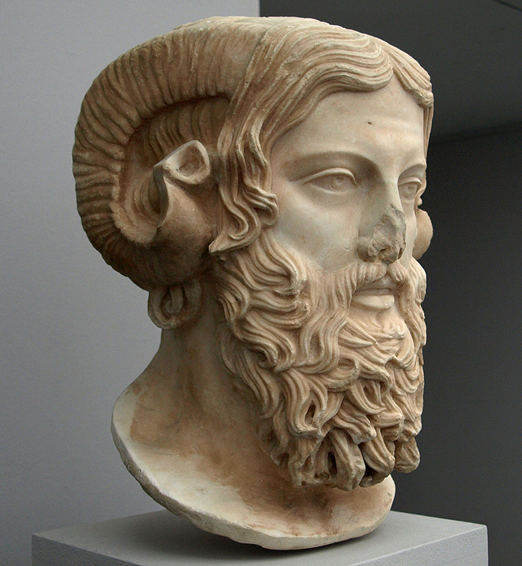
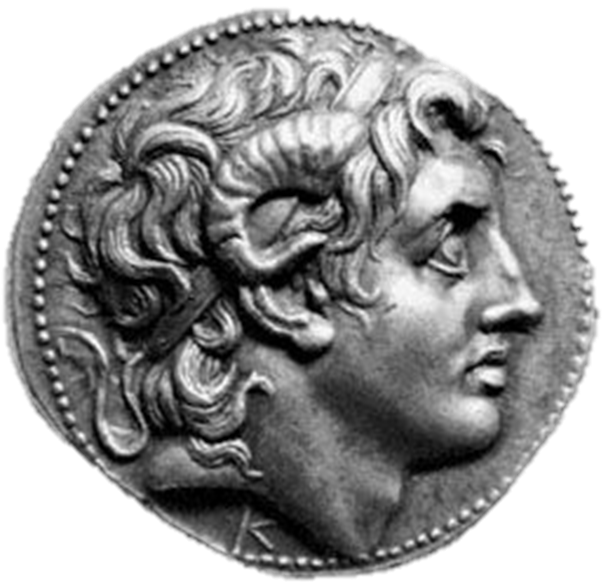
Zeus Ammon
What does Herodotus tell us about the city of Cyrene:
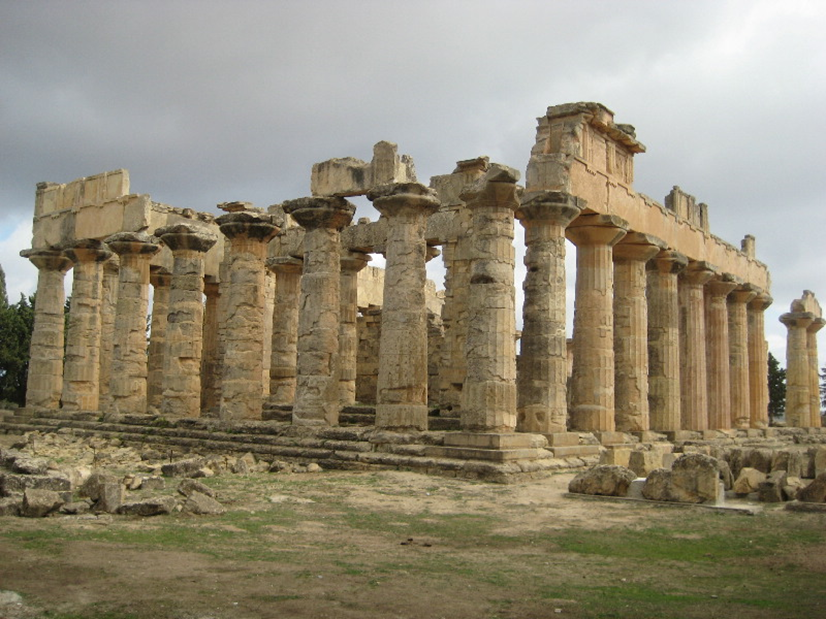
Herodotus tells us the city of Cyrene was founded by colonists from Thera, led by Battus in 630BC after an oracle by Apollo at Delphi – Herodotus 4.150-158
Temple of Zeus style and size
The temple of Zeus was built in the Doric style, with two rows of 17 X 8 Doric columns and was very large, measuring, 70 X 32 meters (larger than the Parthenon in Athens)
What has been found in this temple?
Dedications (such as coins) to Zeus Ammon have been found here.
Who does Pindar provide us with the first clear evidence of?
And Pindar also provides us with the first clear evidence for Ammon in Greek literature, addressing him as Lord of Olympus in a fragment from a lost hymn (fr.36; scholion on Pyth.9.53) and possibly even setting up the Theban sanctuary itself on his return from Cyrene c.461BC.
What does Pausanias write about Pindar and Ammon?
And not much further is the temple of Ammon, and Pindar dedicated a statue there, the work of Kalamis. And Pindar also sent a Hymn to Ammon to the Ammonians in Libya: and this hymn was in my time displayed on a triangular stele beside the altar which Ptolemy son of Lagos set up for Ammon.
Pausanias 9.16.1.
Some debate whether Pindar is talking about Zeus Ammon at Cyrene, or Siwa
How is it shown that Ammon was well known in the Greek world- who consulted him?
Certainly Ammon was well known in the Greek world. Herodotus tells us that Croesus consulted him, and Plutarch mentions Cimon doing the same, while Athens seems to have had a shrine to the god by 332BC (Herodotus 1.46; Plutarch Cimon 18)
Identify this figure:
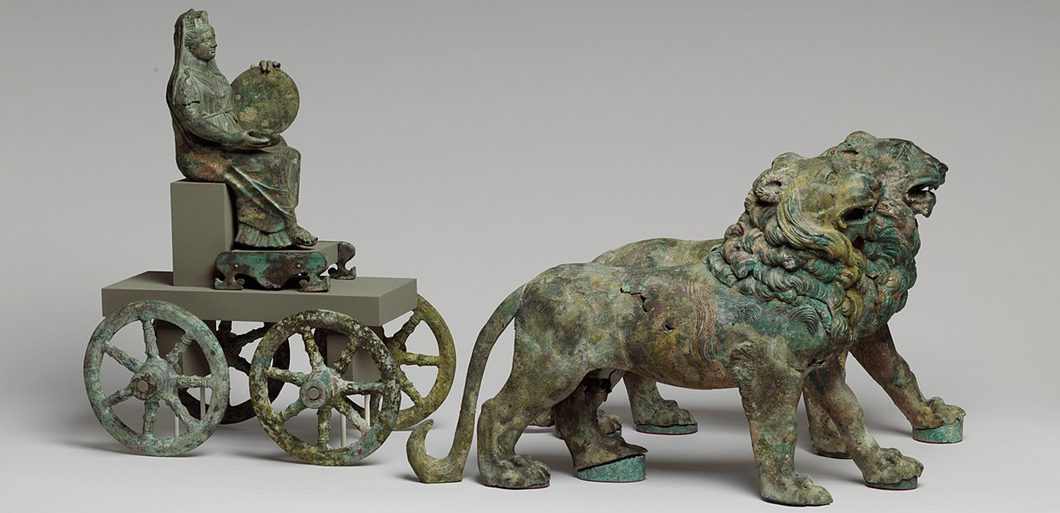
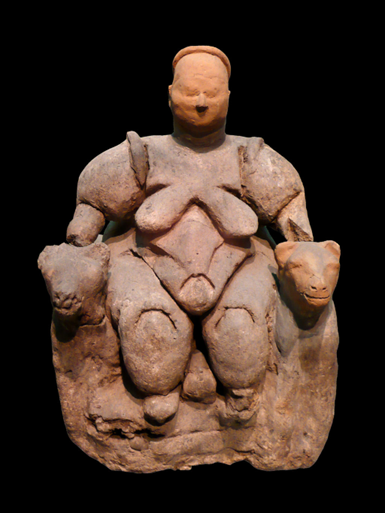
Cybele
Where is Cybele from and who is she often equated with?
Originally from Phrygia, but equated with Mother of the Gods, Great Mother (cf to Gaia?), Rhea, Demeter
When was Cybele introduced in Greece?
First known in Greece after 400 BC (Metroon in Athens, Olympia). Given small temple on SW side of Agora in Athens not long after.
What was Cybele linked to in Greek religion?
Linked elsewhere with mysteries, ecstatic cult, eunuch mendicant priests.
Who is Sabazios?
Sabazios is an ancient horseman and sky-father deity originating from Phrygia and Thrace (modern-day Turkey and Bulgaria). Known as a fertility and vegetation god
When did Sabazios become present in Greece and who is he often equated to?
Also probably present in Piraeus by 4th century: Thraco-Phrygian god Sabazios, and Phrygian Cabeirioi (equated to Dioscuri).
What is this god believed to have done and where is he mentioned?
Horse-riding sky-god of the Thracians and Phrygians. Mentioned in Aristophanes’ Horai, Frogs, Birds, and Lysistrata.
Identify this figure:
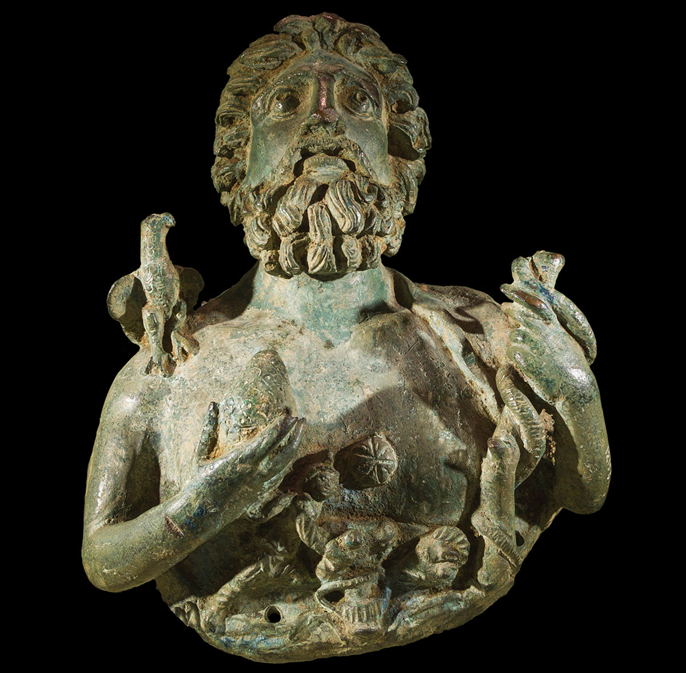
Sabazios
Give an example of when Athenians granted land to foreign deities
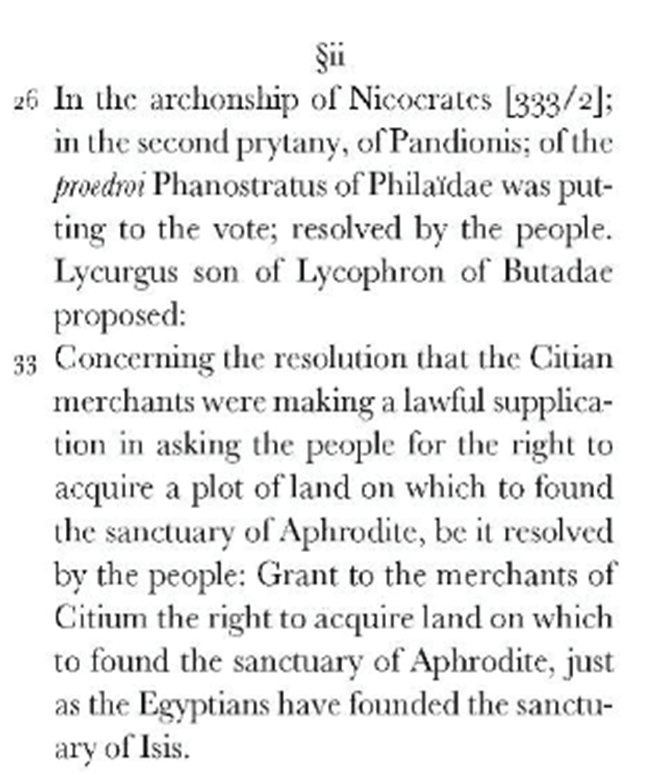
Rhodes and Osborne 91: Athens allows a Citian [in Cyprus] merchant to acquire land (a grant of enktesis) for a sanctuary 333/2 BC – stele found at Piraeus
Identify this figure:
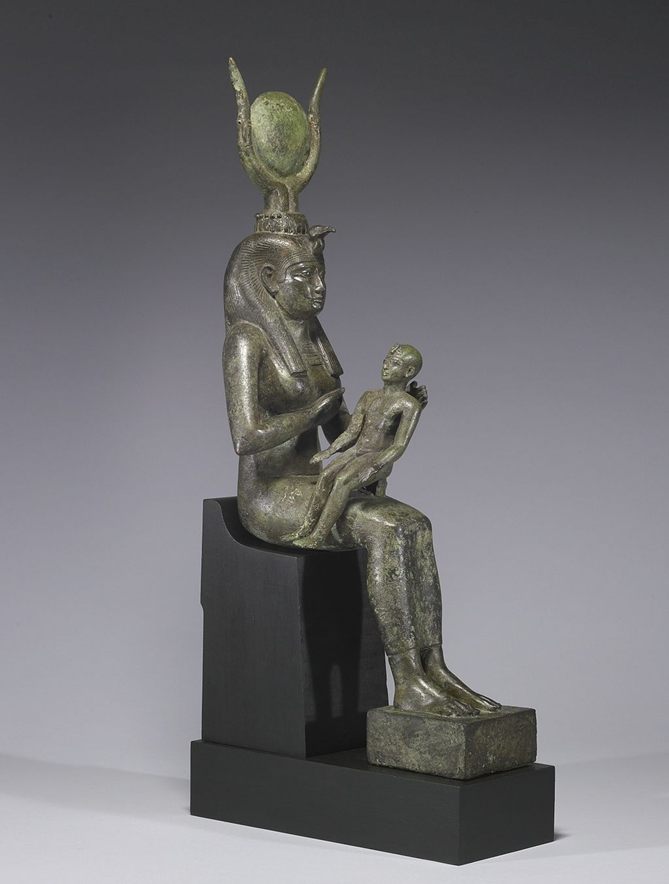
Isis nursing Horus, seventh century BC
Who is Isis?
Sister of Egyptian god Osiris – represented as mourning for his death (cf. similarity to Demeter and Persephone)
What Greek goddess is Isis often equated to?
Known to Herodotus (2.61) – identified with Demeter
Who set up a temple to Isis and when and where?
Ca.331BC Alexander set up temple to Isis in Alexandria (Arrian Anab.3.1.4-5)
Where were the Egyptians worshipping her?
Egyptians worshipping her in Eretria at about the same time IG xii supp. 562 (ca.350-320BC)
When did the Egyptians and Athenians begin to build a relationship?
Egyptians supported by Athenians against Persians during the 4th century, and also an important source of grain (cf. also important trading city of Naucratis from the 6th century BC)
When do we begin to see evidence for Athenians worshipping Isis in Athens?
Only in 133/2 BC that we have evidence for Athenians themselves worshipping Isis in Athens (SEG 24.225).
When does Isis begin to be worshipped in nearly every Greek city?
By end of Hellenistic period, Isis will be worshipped in nearly every Greek city.
Give info on Isis’ cult
Greek-style ‘initiation rites’
Linked to discovery of techniques of civilisation and protection of marriage, social order, individuals in times of danger
By Roman time, Diodorus claims that cult was known throughout the whole inhabited world (1.25)
Plutarch writes On Isis and Osiris as one of his Moralia
Isis’ cult is central to Apuleius’ Golden Ass
What ends after the 4th century?
From end of 4th century, we do not hear about any more grants of enktesis (granting of land to foreign gods) - perhaps a less formal procedure was then used
What sense do we get when it comes to entry of the gods into the greek/Athenian world after the 5th and 4th century?
Sense that while in 5th and 4th century, entry carefully monitored, after this things became more relaxed
Who will Piraeus (a Greek city) eventually become home to?
Eventually Piraeus will be home to Bendis, Citian Aphrodite, Isis, Baal from Phoenicia, Zeus Labraundos from Caria
But elsewhere in the Mediterranean…
But elsewhere in the Mediterranean, Athenians (and other Greeks) engaging with ‘foreign’ cults much earlier: Delos
And of course Boeotia (Pindar and Zeus Ammon – 5th Century BC)
Delos and foreign sanctuaries- question of why?
From end C3BC and beginning C2BC, lots of foreign deities increasingly found places of worship on Delos.
Why? Increasing role as a place of international trade: good harbour, conveniently located mid Aegean.
What is the terrace of foreign gods?
The Terrace of Foreign Gods is an archaeological site on the Greek island of Delos, located on the lower part of Mount Kynthos. Developed between 166 and 88 BCE, this area served as a dedicated space for non-Greek, eastern deities such as Sarapis, Isis, and the Syrian pair Hadad and Atargatis
Where was the terrace located?
The terrace was located on the lower slopes of a hill overlooking the city; in its own area, away from civic centre where Apollo’s temples were located
What did the terrace consist of?
Area consisted of numerous sanctuaries that were established by communities who came from further afield
What is Sarapieion A, B and C?
Sarapieion A, B and C are sanctuaries dedicated to the Egyptian god Sarapis by people from Egypt; Samothrakeion dedicated to the gods of the island of Samothrace
Who was the sanctuary of Atargatis set up to worship?
Sanctuary of Atargatis set up to worship the Syrian Goddess
Where was the chief sanctuary of Atargatis?
Her chief sanctuary was at Hierapolis, modern Manbij, northeast of Aleppo, Syria.
Who worshipped Atargatis in the Roman era?
During the Roman era, eunuch priests worshipped Atargatis. Similar to the priests of Cybele. At the shrine in Hieropolis founded by Semiramis, eunuch priests served the image of a fish-tailed woman.
Identify this figure:
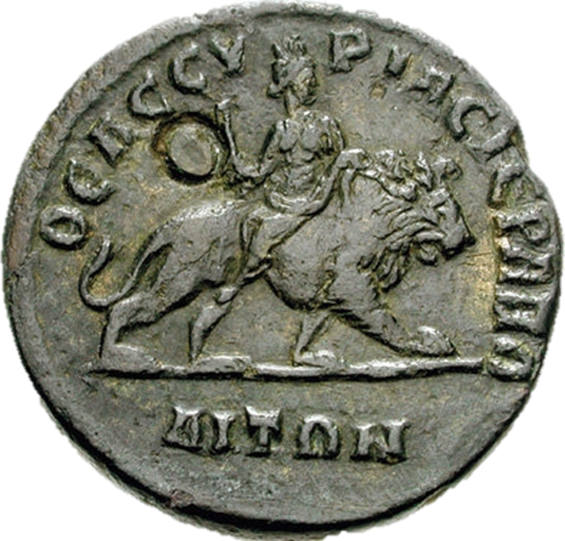
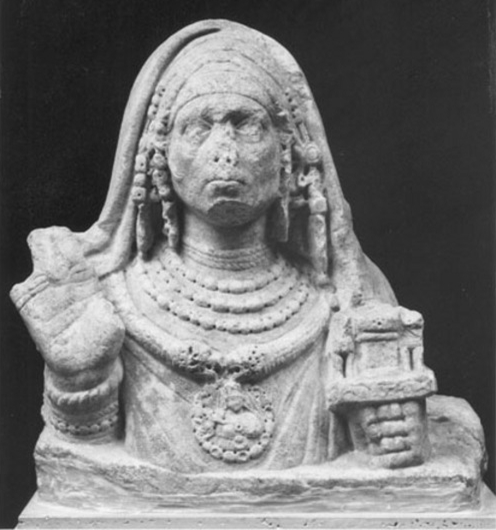
The Syrian goddess Atargatis
How was the worship of Atargatis short lived?
Relatively short-lived sanctuary: flourished and expanded throughout the second century BC when numerous shrines and buildings were constructed, including a theatre; very little remains standing as the sanctuary went into decline in the first century BC; assumed that the temple was destroyed during attacks on the island at this time
Where does a lot of our knowledge about Atargatis come from?
A lot of our knowledge comes from inscriptions, which reveal that the sanctuary was founded and managed by priests from Hierapolis, Atargatis’ main cult centre in Syria
What was her worship at Delos like?
Despite firm connection back to the goddess’ Syrian sanctuary, her worship at Delos seems to have been a little bit different
One Greek inscription reveals that her worshippers had to adhere to a strict set of cultic regulations; i.e. they were not allowed to enter the temple if they arrived in an impure state
List out what extra activities worshippers must do in order to enter the temple if they have been engaged in certain activities
Text dictates what extra activities worshippers must do in order to enter the temple if they have been engaged in certain activities:
Having cleansed oneself one can enter the sanctuary:
After eating fish: on the third day
After eating pork: by having a ritual bath
After intercourse with a woman: on the third day
After giving birth: on the seventh day
After miscarriage: on the fortieth day
After menstruation: on the ninth day
Worshippers had to make a special effort to cleanse themselves after eating fish or pork precisely because those animals had a special association with Atargatis and to enter her sanctuary without making amends for eating them would be a transgressive act
Identify where this text comes from: On his own behalf, Dionysios son of Hermogenes from Alexandria dedicated the statue, the censer, and the rosemary frankincense on the occasion when he gathered together the society-members (thiasitai) of the Pure Goddess.
Greek inscription on a marble statue base from the Sanctuary of Atargatis (IDelos 2225; trans. Harland: 2012):
Identify this:
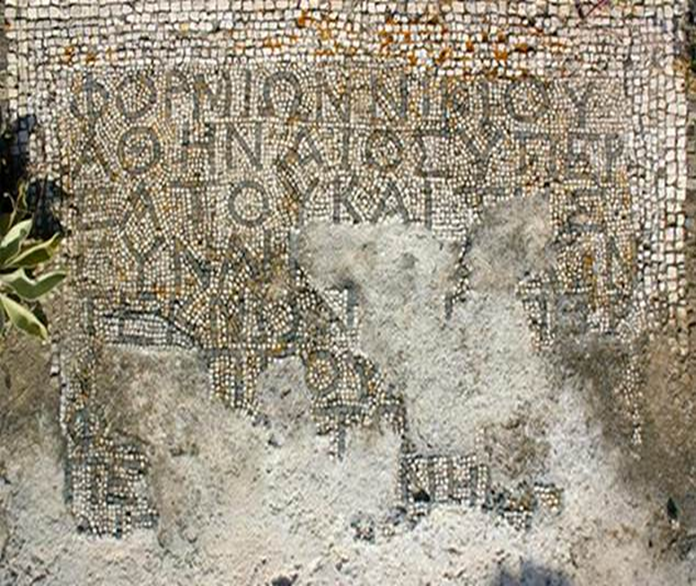
Mosaic dedicated to Pure Aphrodite by an Athenian on behalf of himself, his family and the devotees of the goddess.
(IDelos 2274; Harland 2012)
By 1st century the island of Delos had what other gods?
And by 1st century BC, island of Delos also had:
Mount Cynthia cults: Nabataeans (Zeus Dusares), Arab gods, gods of Ascalon
1st century BC Synagogue
Poseideon worshippers from Beirut
Agora of Italians and cult of Roma
But note, some divinities, like Bendis and Adonis, never worshipped on Delos (although were in Piraeus in Athens)
Would Athenians worship in Sarapis and Syrian sanctuaries?
Also: while Athenians are worshipping happily in both Sarapis and Syrian sanctuaries (which are architecturally next to one another) and an Athenian is priest of Syrian cult (this is insisted upon when sanctuary is set up), there are no cross over dedications by Egyptians and Syrians in each sanctuary.
From one perspective they are inter-changeable, from another not.