Oral Anatomy Ch. 3
 Call Kai
 Learn
Learn Practice Test
 Spaced Repetition
 Match
Match Flashcards
 Knowt Play
1/125

There's no tags or description
Looks like no tags are added yet.
Name | Mastery | Learn | Test | Matching | Spaced | Call with Kai | Chat |
|---|
No analytics yet
Send a link to your students to track their progress
126 Terms
teeth posses certain characteristics of
shape and alignment (their position in the jaw)
proximal contact areas
where the proximal surfaces of teeth touch one another
a proximal contact prevents
food from packing between teeth
a proximal contact protects
the underlying gum tissue
a proximal contact offers
support and anchorage to teeth
two adjacent teeth share
the same interproximal bone
the bone that supports the ______ root portion of the first tooth also supports the ______ root portion of the second tooth
distal, mesial
the proximal contact areas are located on the medial and distal surfaces of each tooth at the
widest portion and the greatest curvature
the distal contact area of one tooth touches the ______________ of the tooth posterior to it
medial contact area
the ____________ is a flattened portion of the tooth where it touches the tooth next to it in the same dental arch
contact area
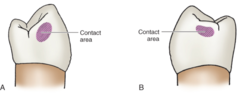
a ____________ is where the occlusal cusp of one tooth touches the occlusal portion of another tooth in the opposing arch
contact point

the proximal contacts do not take up the entire surface, but a considerable portion of the proximal surface does touch the
adjacent tooth

interproximal spaces are
triangular-shaped spaces between the teeth formed by the bone on one side and the proximal surfaces and their contact area on the other side

the contact area of interproximal spaces forms the
apex of the triangle
the proximal surfaces of interproximal spaces forms the
sides
the alveolar bone of interproximal spaces makes up the
base
the interproximal spaces are normally filled with gingival tissue called
papillary gingiva or interdental papilla
interproximal spaces are wider cervically than occlusally to provide
more access for the vascular support to nourish the interdental bone and papillary tissue
when gingival recession occurs between the teeth
the interdental papilla and bone no longer fill the entire interproximal space
avoid that exists cervically to the contact area is known as a
cervical embrasure
the more bone that is missing
the larger the interproximal space
embrasures (spillways)
are the spaces between the teeth that are occlusal to the contact areas

embrasures allow for the passage of _______ around the teeth so that it is not forced into the contact area between the teeth
food
embrasures are named for their location in relation to the contact area
facial (buccal or labial)
lingual
incisal
occlusal
if the interproximal space is not occupied by any gingiva or bone the
gingival embrasures are evident
the gingival embrasure is gingival to the contact area and
not usually present
embrasures allow food
to be moved away from contact areas
embrasures dissipate and reduce
the forces of occlusal trauma
embrasures provide self-cleaning by the action of
the tongue, cheeks, and lips
embrasures protect the gingiva from
undue trauma
contact areas of the anterior teeth are located
closer to the incisal surfaces of the teeth
contact areas of posterior teeth are nearer the
middle third of the teeth
the more posterior the tooth, the more cervical the
location of its contact area
one exception its the distal contact area of the
maxillary canine, its location is in the center of the middle third of the tooth
the more posterior teeth also have wider embrasures than
anterior teeth
the interproximal spaces of posterior teeth become
shorter occlusocervically
the location of the contact areas and embrasures, as seen from the occlusal surface, shows the contact areas of the anterior teeth are located in
the center between the labial and lingual surfaces of the tooth
the posterior teeth have contact areas slightly
buccal to the center of the teeth
buccolingually the lingual embrasures are wider than the
facial embrasures
teeth are narrower on the
lingual side than on the facial side
facial and lingual contours of the teeth
direct food off the teeth
the correct degree of facial or lingual curvature allows for the
proper deflection of food
the contour on the lingual surface allows the tongue to rest against the tooth to promote the
most efficient self-cleaning
the facial height of contour allows for maximum
cleaning of the lips and cheeks
in general the location of the buccal height of contour of anterior and posterior teeth is at the
cervical third of the tooth
the height of contour is the same as the crest of curvature and refers to
the buccal or lingual width of a tooth
the lingual height of contour of anterior teeth is at the
cervical third of the tooth
the lingual crest of curvature of posterior teeth is at or near the the
middle third
the normal amount of curvature found on most facial contours is approximately
0.5mm and is somewhat less lingual on the anterior teeth
the amount of curvature on the lingual side of maxillary posterior teeth averages approximately
0.5mm and on the mandibular posterior teeth, it averages approximately 1mm
the crowns of anterior teeth have a greater curvature of the cervical line, or CEJ, medially and distally than do the
posterior teeth
this curvature affords more anchorage and
bony support
the enamel on anterior teeth does not go as far gingival on the
medial and distal surfaces
due to the enamel not going far gingivally the bone has more cementum to
attach to
the periodontal attachment follows the cervical line and connects the
gingiva and the cementum
the periodontal ligament attaches the cementum to the
bone
the maxillary anterior teeth show the greatest amount of curvature of the
cervical line
the more anterior the tooth the
greater the curvature
the medial curvature of a tooth is greater than the
distal curvature of the same tooth
the mandibular anterior teeth show less curvature than their
maxillary counterparts
the posterior teeth in both arches show little
variation
as a general rule, the curvature of the CEJ is usually about
1mm less on the distal surface of the tooth than on the medial surface
if a maxillary incisor has a 3.5mm medial curvature of the CEJ, the distal curvature may be
2.5mm
to a large extent the teeth are self-cleaning in that the crowns of the teeth are covered by
very smooth enamel
the smoothness of enamel helps food and sticky substances slip off the crown of the tooth and allows the tooth to remain relatively free of
bacteria, thus lessening decay and periodontal disease
the shapes of the teeth reflect their functions and
self-cleaning ability
the canine is a piercing
tool
the premolars are shaped in such a way that food is deflected onto the occlusal surface of the premolar, where
it is ground up by the cusps of the teeth in the opposing arch
when food is introduced into the mouth, it is aided by the tongue and cheek in pushing the previously pulverized food
back onto the surface of the molars
self-cleaning process continues from molar to molar until the food
reaches the back of the mouth and is swallowed
if deep pits and fissures on the occlusal surface of the tooth are evident, some of the food debris
remains after eating
pits and fissures provide a method of dissipating the extreme occlusal forces that result from the
interdigitation of the cusps in the process of grinding up food
pits and fissures act as spillways on the
occlusal surfaces of the teeth
modern dentistry has found ways to reduce the
pits and fissures of teeth
a pit can be polished out, making a tiny unclean able hole into a small, more
cleanable fossa
the process of polishing out a pit is called an
odontectomy or odontoplasty
a pit can be filled in and covered with a
sealant or bonding procedure
the periodontium is the supporting tissue adjacent to the
teeth
periodontium consists of the
free gingiva
attached gingiva
alveolar mucosa and the cementum
periodontal ligament
bone
the tissues of the periodontium are essential for the
support and anchorage of the teeth
the buccal and lingual contours of a tooth are shaped so that food is
deflected off the tooth
the angle at which the food is deflected is
specific
if the curvature is too extreme, the food is deflected in such a way the the gingival tissue is
not cleaned by the frictional action of the food that deflects off of it
when the bacteria cannot be removed from the free gingival collar around the tooth
it could begin to destroy the gingival tissue
the contact areas are equally essential to the health and maintenance of the
periodontal tissue in the interproximal spaces
if open contacts are present the teeth do not touch each other at their contact areas, and food is allowed to pack
between the teeth and remain there
the bacteria captured on and in the gingival crevice could cause a
periodontal breakdown of these tissues
if the contact area is wide open, as in a diastema, food can be forced into the interproximal space but does not
remain because of the extremely large size of the space
if the deflection of the food is at an extreme angle
a recession of the tissues away from the crown of the teeth could result
when gingival tissue recess from the tooth
the root of the tooth becomes exposed
when a tooth is restored by some type of dental material, it is important that the margins of the restorations be
smooth and approximately the normal shape of the tooth as much as possible
if the margins are rough, they will allow bacteria to be retained around the
restoration and thus cause gingival inflammation and decay
if the margin of a restoration extends far beyond the tooth, known as overhanging restoration, it allows the buildup of
plaque, bacteria, and food
canines and posterior teeth have from 1-5
cusps
most cusps are names after the closest tooth surface or
line angle
two triangular ridges may join to form
one transverse (or oblique) ridge
mamelons
form on adult incisors from three labial lobes; usually wear away
perikymata
very small wave-like ripples of enamel on newly erupted adult teeth
buccal cervial ridge
near CEJ mesially
fossae
shallow bowl-like depressions often with grooves or pits