Lecture 13: Canine Myocardial Diseases
 Call Kai
 Learn
Learn Practice Test
 Spaced Repetition
 Match
Match Flashcards
 Knowt Play
1/28

There's no tags or description
Looks like no tags are added yet.
Name | Mastery | Learn | Test | Matching | Spaced | Call with Kai | Chat |
|---|
No analytics yet
Send a link to your students to track their progress
29 Terms
What is the difference between primary and secondary cardiomyopathy?
Primary (intrinsic) cardiomyopathy:
• Myocardial disease primarily affecting heart
• Genetic mutation is frequently cause
• Also includes certain non-genetic or acquired
Secondary (extrinsic) cardiomyopathy:
• Myocardial disease secondary to another identifiable systemic (multiorgan) disease
• Endocrine, amyloid, glycogen, etc
• Ischemic cardiomyopathy
• Doxorubicin cardiomyopathy
• Diet-Associated DCM
What are the clinical manifestations of cardiomyopathy?
• Congestive heart failure: Dyspnea, Exercise intolerance
• Cardiac arrhythmias: Syncope, episodic weakness
• Thromboembolism: Acute lameness, other signs, Dyspnea
• Sudden Death
What is a primary myocardial disease characterized by ventricular dilation and systolic dysfunction (usually most prominent left ventricle)?
DCM
What are the clinical consequences of DCM?
• Heart failure
• Arrhythmias
• Sudden death
Who is predisposed to DCM?
• Large & giant breed middle-age to older dogs - Males over-represented
• Genetic: Doberman & Boxer
• Nutritional: Taurine deficiency, carnitine deficiency & grain-free diets
What is the typical presenting history of DCM?
Variable cough, dyspnea (worse at night), syncope, weakness, collapse, anorexia, exercise intolerance, weight loss
Sometimes misdiagnosed with “bronchitis” in last 3 weeks
What is the typical presenting physical exam of DCM?
• Muffled or soft heart sounds
• Soft systolic murmur (mitral or tricuspid)
• Gallop or irregular rhythm, +/- tachycardia
• Weak pulses, pulse deficits
• Jugular distension, ascites or crackles (CHF)
What pathology is associated with DCM?
• Fibrosis
• Inflammation
• Lipid accumulation
• Myocyte degeneration
• Edema
• Variable by breed and case
What diagnostics are demonstrative of DCM?
ECG:
• A fib, VPCs, ventricular arrhythmias, APCs
• LA &/or LV enlargement patterns
• Conduction disturbances
Thoracic radiographs:
• Cardiomegaly (esp. L side)
• Pulmonary edema (L CHF)
• Pleural effusion or ascites (R CHF)
Biomarkers:
• ↑ NT-proBNP, ↑ cTnI (supportive)
• Genetic testing (Doberman, Boxer, Schnauzers)
What is seen on an echocardiogram of DCM?
• Dilated ventricles, thin walls
• Decreased systolic function
• Reduced ejection fraction (< 45-50%)
• Secondary mitral +/- tricuspid regurgitation
• Left atrial enlargement
What diets are associated with DCM?
• Association between certain diets and DCM
• Diets high in peas, pea fractions, lentils, chickpeas, +/- sweet potatoes, potatoes or other uncommon sources
• Many of these diets advertised as Grain Free diets
What breed are predisposed to taurine deficiencies and therefore predisposed to DCM associated w/ taurine deficiency?
• Golden Retrievers
• Cocker Spaniels
• Newfoundlands
What breed are predisposed to carnitine deficiencies and therefore predisposed to DCM associated w/ carnitine deficiency?
• Boxers
• Cocker Spaniels
• Dobermans
What are the key diagnostics and information of DCM cases?
echocardiogram and ECG
thoracic rads
CBC, chem, UA, NT-proBNP
HW status
blood taurine concentration
blood pressure
cardiac troponin I
diet history
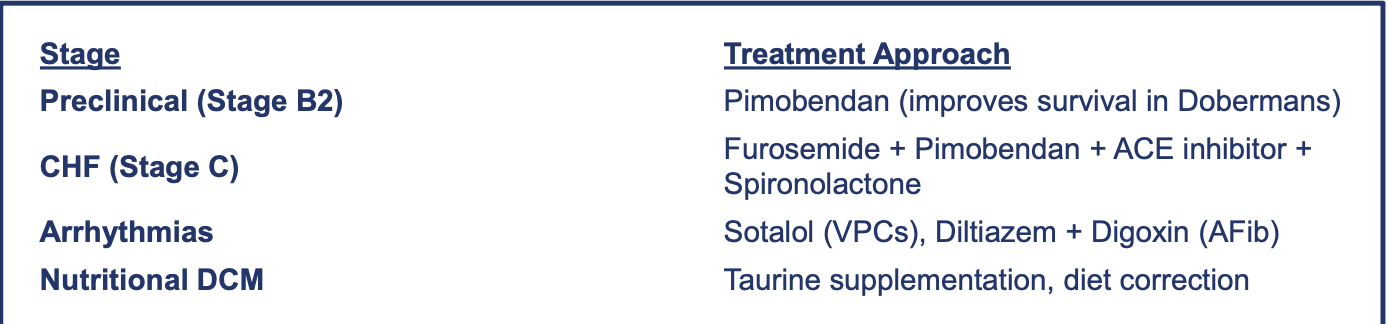
What drugs are used for DCM chronic management?

What is the treatment for DCM?
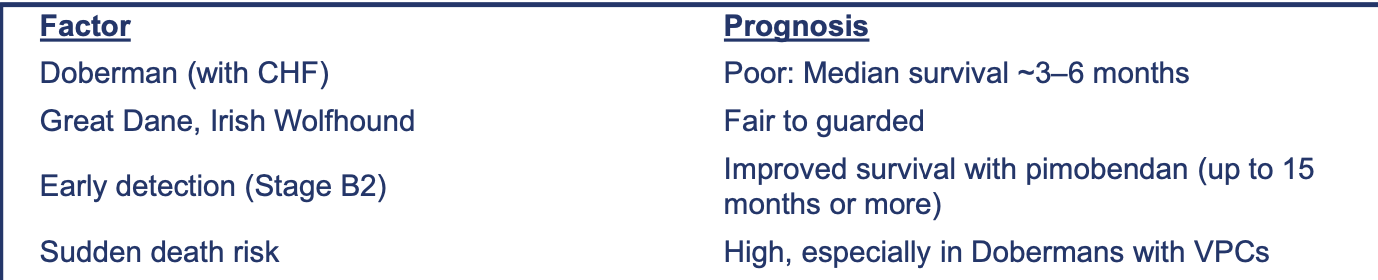
What is the prognosis for DCM?
What is seen in doberman pinscher cardiomyopathy?
• Occult cardiomyopathy
• Ventricular arrhythmias
• Between 45-63% of Dobermans have DCM
• 40 to 50% with DCM may die suddenly
• Ventricular arrhythmias/ventricular fibrillation
• Cardiogenic shock
• Specific genetic tests
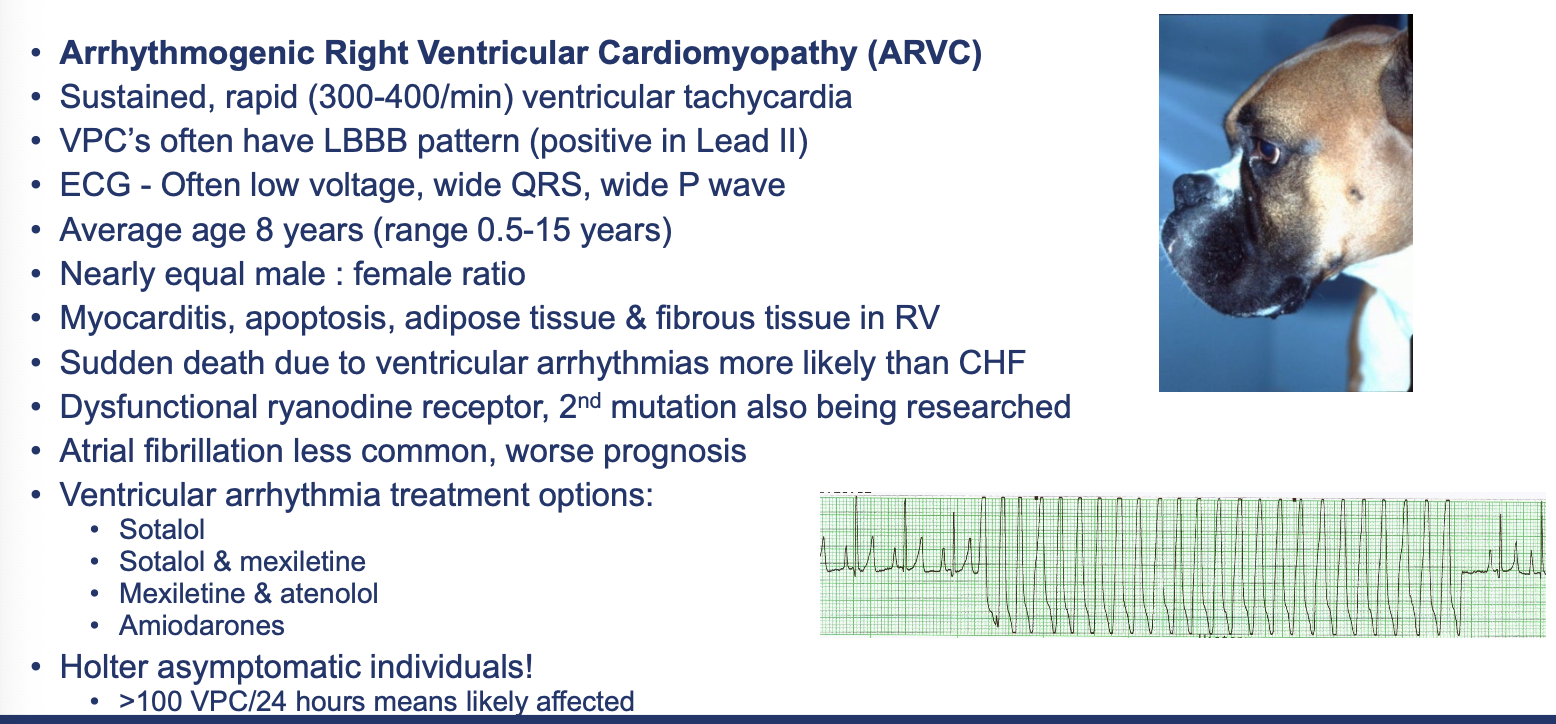
What is seen in boxer cardiomyopathy?
What is seen in DCM of giant breed dogs?
• Left heart failure or biventricular failure
• Atrial fibrillation is common
• Sudden death is possible
• Survival shorter if CHF
• Asymptomatic with arrhythmia alone - often a prolonged survival (Lone atrial fibrillation?)
What is seen in cardiomyopathy of irish wolfhounds?
• Left atrial enlargement & arrhythmias are hallmarks
• Chylous pleural effusion sometimes develops if overt DCM
• Up to 50% of “normal” dogs have a CV abnormality
• Fractional shortening is higher than many dogs with cardiomyopathy
• Atrial fibrillation is common and may be first sign of cardiomyopathy
• Disease can be slowly progressive
• Some dogs with presumed “Lone Atrial fibrillation” progress to DCM
What is seen in english and american cocker spaniel cardiomyopathy?
• Average age 6-10 years (range 10 mo-13 years)
• Nearly equal male : female ratio
• ECG - LVE pattern with tall R wave, APC’s common
• Generalized cardiomegaly with pulmonary edema
• Many have low plasma or whole blood taurine concentrations
• Taurine and carnitine supplementation can result in clinical and echo improvement in some dogs
• Pimobendan may slow progression of disease
What is seen in DCM of newfoundlands?
• Typically, middle age or older
• Some “normal” dogs have fractional shortening between 20-28%
• Atrial fibrillation is common
• Sudden death less common than other breeds?
• Taurine deficiency if eating certain diets (high fiber, lamb and rice, etc)
• Refractory CHF is the most common cause of death/euthanasia
What is seen in juvenile DCM in portuguese water dogs?
• Sudden death and peracute CHF
• 5 weeks to 3-4 months of age
• Necropsy / echo findings = typical DCM
• Conflicting reports about the role of taurine
• Genetic mutation – Chromosome 8
• Arrhythmias infrequent, soft murmur or gallop
• Pulmonary edema, hepatomegaly
• Some with normal echo at 6 weeks of age developed DCM before 6 mo of age
What does doxirubricin (adriamycin) toxicity cause?
• DCM-like syndrome
• Oxidant injury
• Arrhythmias
• Lower dose problematic in dogs predisposed to DCM
• Cats less sensitive
• If cardiomyopathy develops, often poor response to Rx
What effect does canine hypertrophic cardiomyopathy have?
• Very uncommon
• German Shorthaired Pointers +/- German Shepherds, Shi Tzu
• Genetic basis in German Shorthaired Pointer (?)
• Conduction abnormalities, 3rd degree AV block, ventricular arrhythmias
• CHF may develop
• Sudden death first sign in some cases
What are the common possible features of myocarditis?
Common possible features:
• CHF
• Arrhythmias
• Thromboembolic disease
Often the heart is a bystander; other organ systems dominate the clinical picture
What is trypanosomiasis - Chagas disease?
Trypanosoma cruzi from Reduviidae bug – vector (kissing bug) in Texas, Mexico, South and Central America → Severe myocarditis, Right atrium and ventricle may predominate, Left-sided or Right-sided CHF
What is the treatment for Chagas disease?
• Treatment with Ragonil (benznidazole), but this might not improve cardiac outcomes
• Manage cardiac dysfunction and arrhythmias with Rxs