Infant Physical, Motor, and Sensory Development: Key Concepts and Milestones
 Call Kai
 Learn
Learn Practice Test
 Spaced Repetition
 Match
Match Flashcards
 Knowt Play
1/78

There's no tags or description
Looks like no tags are added yet.
Name | Mastery | Learn | Test | Matching | Spaced | Call with Kai | Chat |
|---|
No analytics yet
Send a link to your students to track their progress
79 Terms
What is the cephalocaudal pattern of growth?
Growth that occurs from the top of the body downwards, starting with the head.
What is the proximodistal pattern of growth?
Growth that starts at the center of the body and moves towards the extremities.
What is the average length of a North American newborn?
20 inches.
What is the average weight of a North American newborn?
7½ pounds.
How much weight do infants typically gain in the first month?
5-6 ounces each week.
What is the average weight of a 2-year-old?
26-32 pounds.
What percentage of brain weight does an infant's brain reach by the second birthday?
75% of its adult weight.
What is shaken baby syndrome?
A condition caused by shaking an infant, leading to brain swelling and hemorrhaging.
What is lateralization in the brain?
The specialization of function in one hemisphere of the cerebral cortex.
What are the four lobes of the brain?
Frontal, occipital, temporal, and parietal lobes.
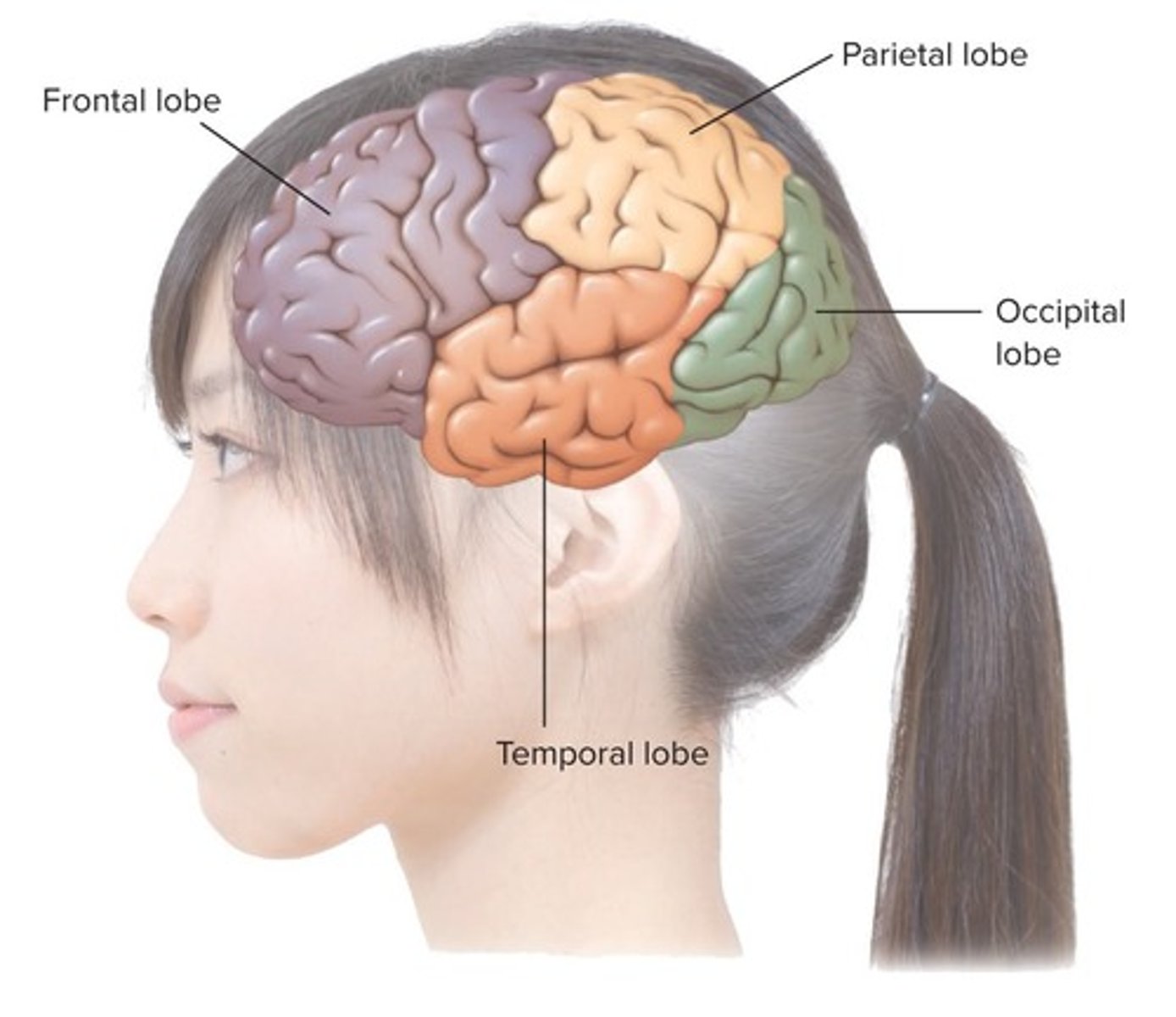
What is the function of the frontal lobes?
Involved in voluntary movement, thinking, personality, emotion, memory, and intentionality.
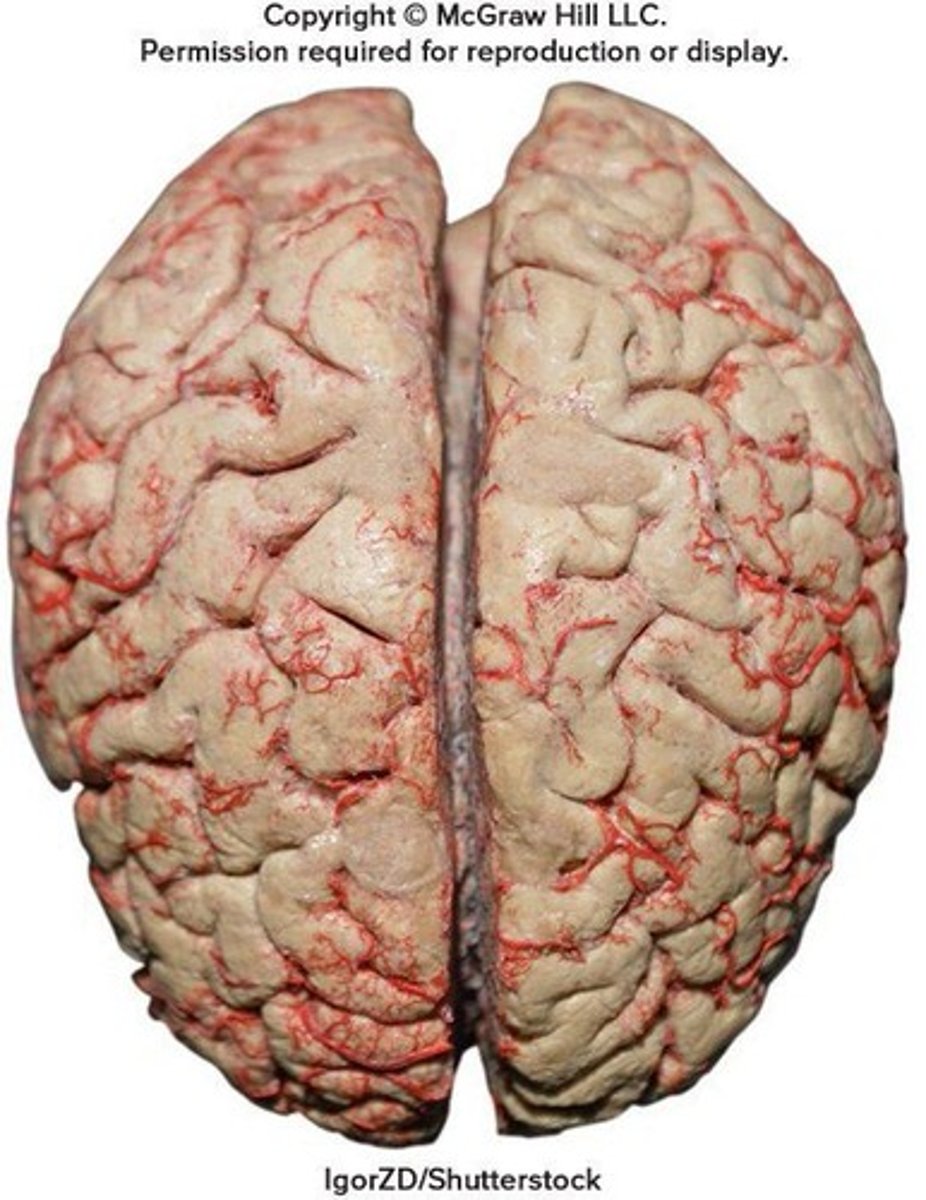
What role do temporal lobes play?
Active in hearing, language processing, and memory.
What is myelination?
The process of encasing axons with fat cells to help signals travel faster.
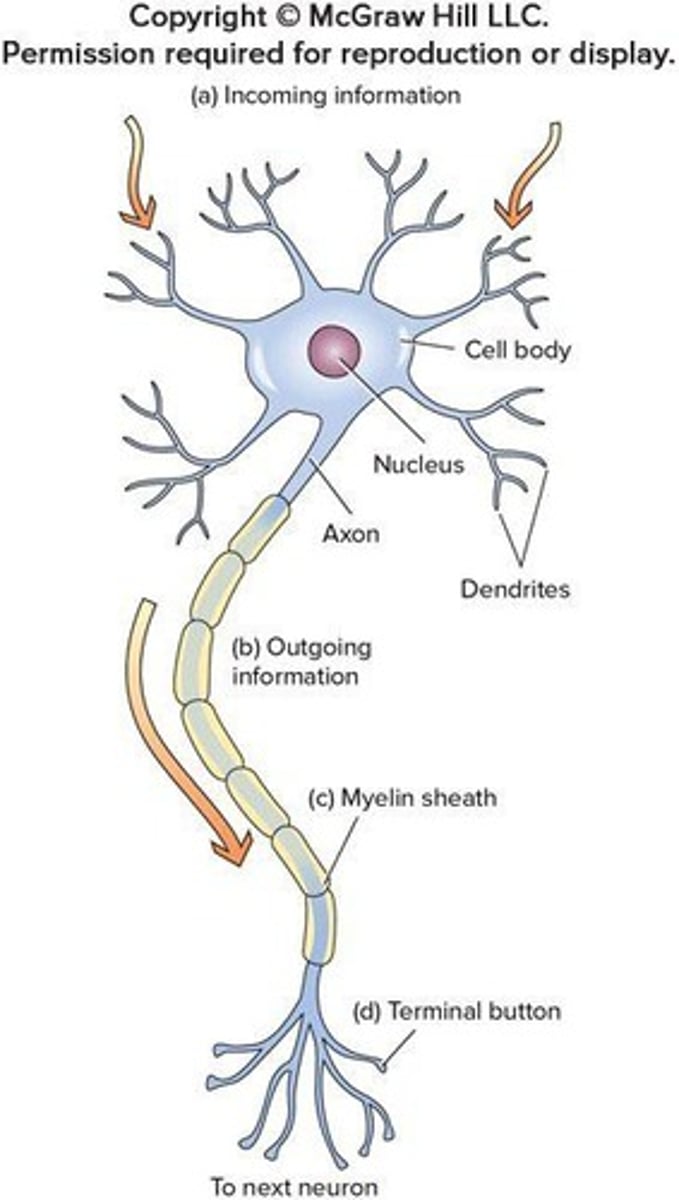
What happens to unused neural connections during development?
They are pruned away.
What is the neuroconstructivist view of brain development?
It posits that biological processes and environmental conditions influence brain development.
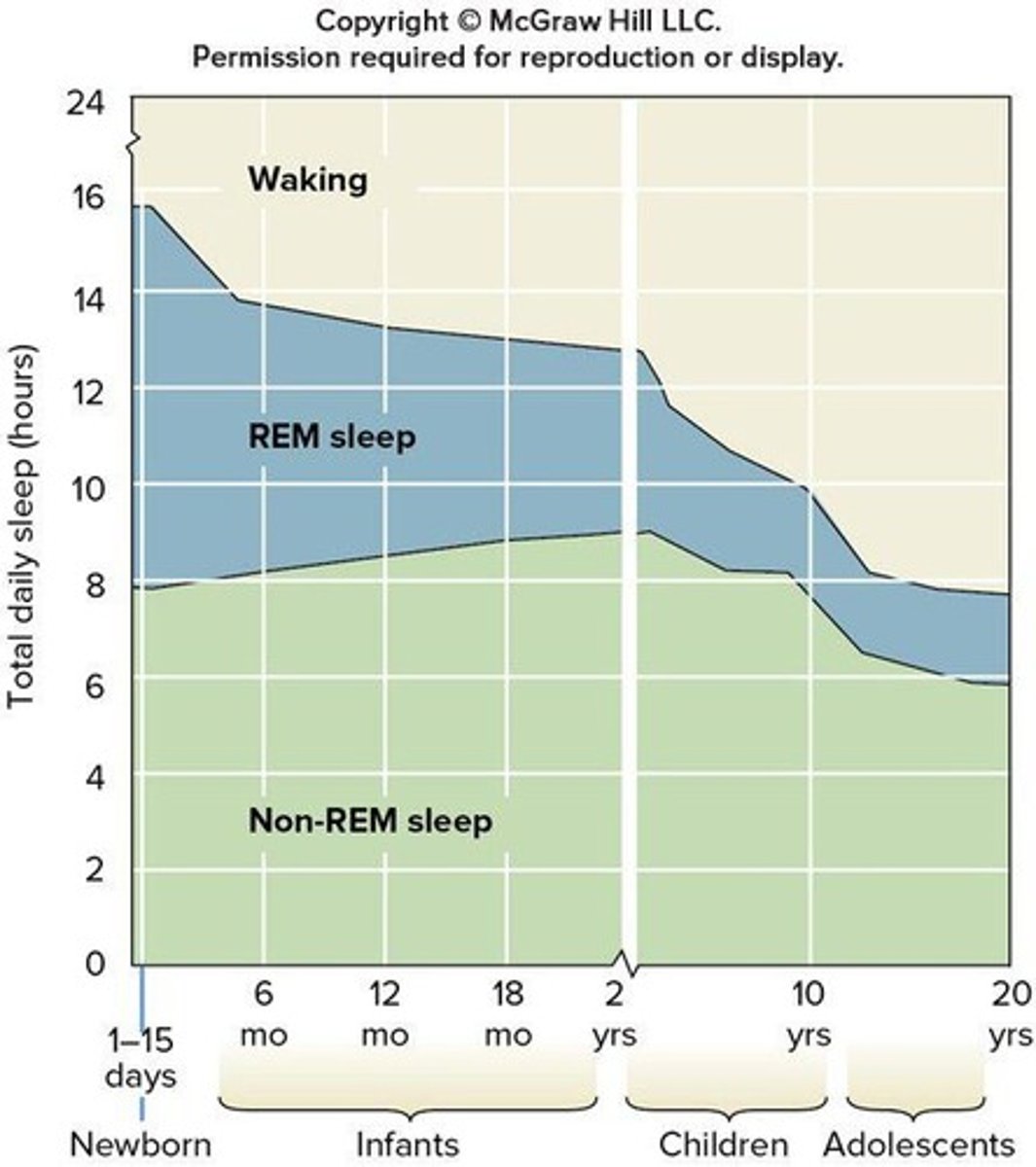
How many hours do newborns typically sleep each day?
16-17 hours.
What percentage of infants experience sleep difficulties?
20%-30%.
What is REM sleep?
A sleep stage where the eyes flutter beneath closed lids, associated with increased brain activity.
How does the amount of REM sleep change from infancy to adulthood?
Infants spend about half their sleep in REM, which decreases to about one-fifth by adulthood.
What is the American Academy of Pediatrics' stance on shared sleeping?
They discourage it due to the risk of Sudden Infant Death Syndrome (SIDS).
What is the significance of breastfeeding in relation to brain development?
It may promote improved myelination compared to formula feeding.
What is the role of early experiences in brain development?
Repeated experiences wire the brain, and deprived environments can lead to depressed brain activity.
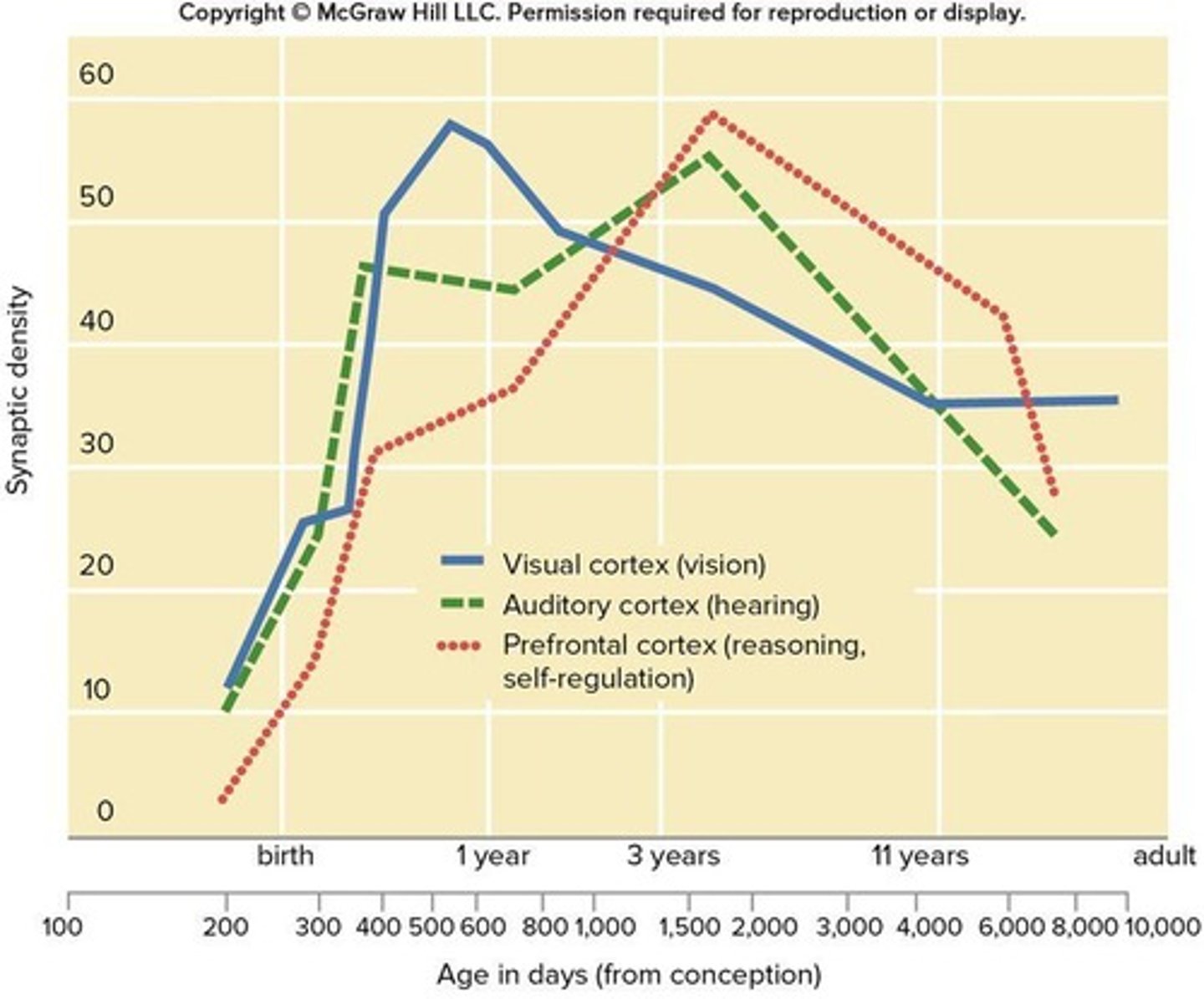
What is the growth pattern of the prefrontal cortex?
Overproduction peaks at about 3 years of age, with adult density achieved in adolescence.
What is the average sleep duration for infants aged 0-2 years?
12.8 hours a day, ranging from 9.7 to 15.9 hours.
What is the importance of protecting an infant's head?
To prevent injuries such as those caused by shaken baby syndrome.
What is the relationship between sleep and family difficulties in infants?
Sleep difficulties can be related to family issues, including maternal depression.
What are axons and dendrites?
Axons carry signals away from the cell body, while dendrites carry signals toward the cell body.
What is SIDS?
Sudden Infant Death Syndrome, a condition where infants stop breathing during the night and die suddenly without an apparent cause.
What age group has the highest risk for SIDS?
Infants aged 2-4 months.
What sleeping position is recommended to reduce the risk of SIDS?
Infants should sleep on their backs.
What are some risk factors for SIDS?
Abnormal brain stem functioning, heart arrhythmia, being Black American or Inuit, low birth weight, lower socioeconomic status, and exposure to cigarette smoke.
How does infant sleep quality affect cognitive development?
Poor quality of sleep is linked to lower attention regulation and more behavior problems at ages 3-4.
What is the caloric requirement for healthy infants?
Infants need 50 calories per day per pound of weight.
What are the benefits of breastfeeding for infants?
Fewer infections, lower risk of obesity and diabetes, reduced risk of SIDS, and lower likelihood of hospitalization.
What are the maternal benefits of breastfeeding?
Lower incidence of breast cancer, reduced risk of ovarian cancer, and a small reduction in type 2 diabetes.
What is marasmus?
A wasting away of body tissues in the infant's first year caused by severe protein-calorie deficiency.
What is kwashiorkor?
A condition caused by severe protein deficiency, leading to swelling of the abdomen and feet.
What is dynamic systems theory in motor development?
A perspective that explains how motor skills are assembled for perceiving and acting, emphasizing active exploration.
What are reflexes in newborns?
Built-in reactions to stimuli that govern movements, such as rooting and sucking.
What are gross motor skills?
Motor skills that involve large-muscle activities, such as sitting, pulling up, and walking.
What are fine motor skills?
Motor skills that involve finely tuned movements, such as reaching and grasping.
What is the ecological view of sensory and perceptual development?
The view that perception helps organisms interact with their environment and adapt.
What is the significance of affordances in perception?
Affordances are opportunities for interaction offered by objects that fit within our capabilities.
What visual acuity do infants have at birth?
Visual acuity varies from 20/240 to 20/640.
What do infants prefer to look at shortly after birth?
Infants show a preference for human faces over other objects.
What is the role of caregivers in infant eating behavior?
Caregivers influence the development of eating patterns, which can affect dietary habits.
What are common accidents that pose risks to infants?
Aspiration of foreign objects, suffocation, falls, poisoning, burns, and motor vehicle accidents.
What is the recommended immunization schedule for infants?
A schedule that outlines vaccinations to prevent infectious diseases in infants and children.
How does motor development progress in the second year of life?
Infants become more skilled and mobile, pulling toys and climbing stairs.
What is perceptual-motor coupling?
The coordination of perceptual and motor skills necessary for tasks like grasping.
What are the two types of grasps in fine motor skills?
Palmar grasp and pincer grasp.
What is the impact of early weaning on infants?
Early weaning can lead to nutritional deficiencies.
What is the relationship between sleep and brain maturation?
Sleep plays a role in brain maturation and memory consolidation, affecting cognitive functioning.
What do infants show an interest in soon after birth?
Human faces
What is the visual preference method?
A method used to determine whether infants can distinguish one stimulus from another by measuring the length of time they attend to different stimuli.
What is habituation in the context of infant perception?
Decreased responsiveness to a stimulus after repeated presentations of the stimulus.
What is dishabituation?
Recovery of a habituated response after a change in stimulation.
What is perceptual narrowing?
Infants are more likely to pay attention to known faces and prefer patterned displays over nonpatterned displays.
Define perceptual constancy.
Sensory stimulation is changing but perception of the physical world remains constant.
What is size constancy?
An object remains the same even though the retinal image of the object changes as you move toward or away from it.
What is shape constancy?
An object's shape remains the same even though its orientation to us changes.
What does the 'visual cliff' study test?
Depth perception and visual expectations in infants.
At what age do infants begin to use binocular cues for depth perception?
By ages 3-4 months.
When does hearing begin in infants?
In the womb.
At what gestational age can fetuses experience pain?
20-22 weeks.
What taste preference develops in infants over the first several months?
Preference for salty tastes.
What is intermodal perception?
The ability to relate and integrate information from two or more sensory modalities, such as vision and hearing.
What do nativists believe regarding perceptual development?
They emphasize the role of nature in perceptual development.
What do empiricists believe regarding perceptual development?
They emphasize the role of nurture in perceptual development.
What is the dynamic systems approach in perceptual-motor coupling?
It suggests that infants learn new perceptual-motor couplings by assembling skills for perceiving and acting.
What does the ecological approach emphasize in perceptual development?
The interaction between perception and action.
What is the role of early experience in sensory development?
It is crucial for shaping sensory preferences and capabilities.
What is the significance of the changes in proportions of the human body during growth?
It illustrates how the ratio of head size to body size changes from infancy to adulthood.
What is the function of the myelin sheath in neurons?
It insulates the axon and speeds up information transmission.
What does synaptic density refer to?
The number of synapses in the brain at different ages.
How does total daily sleep change from newborns to adolescents?
Total daily sleep hours decrease from newborns through adolescents.
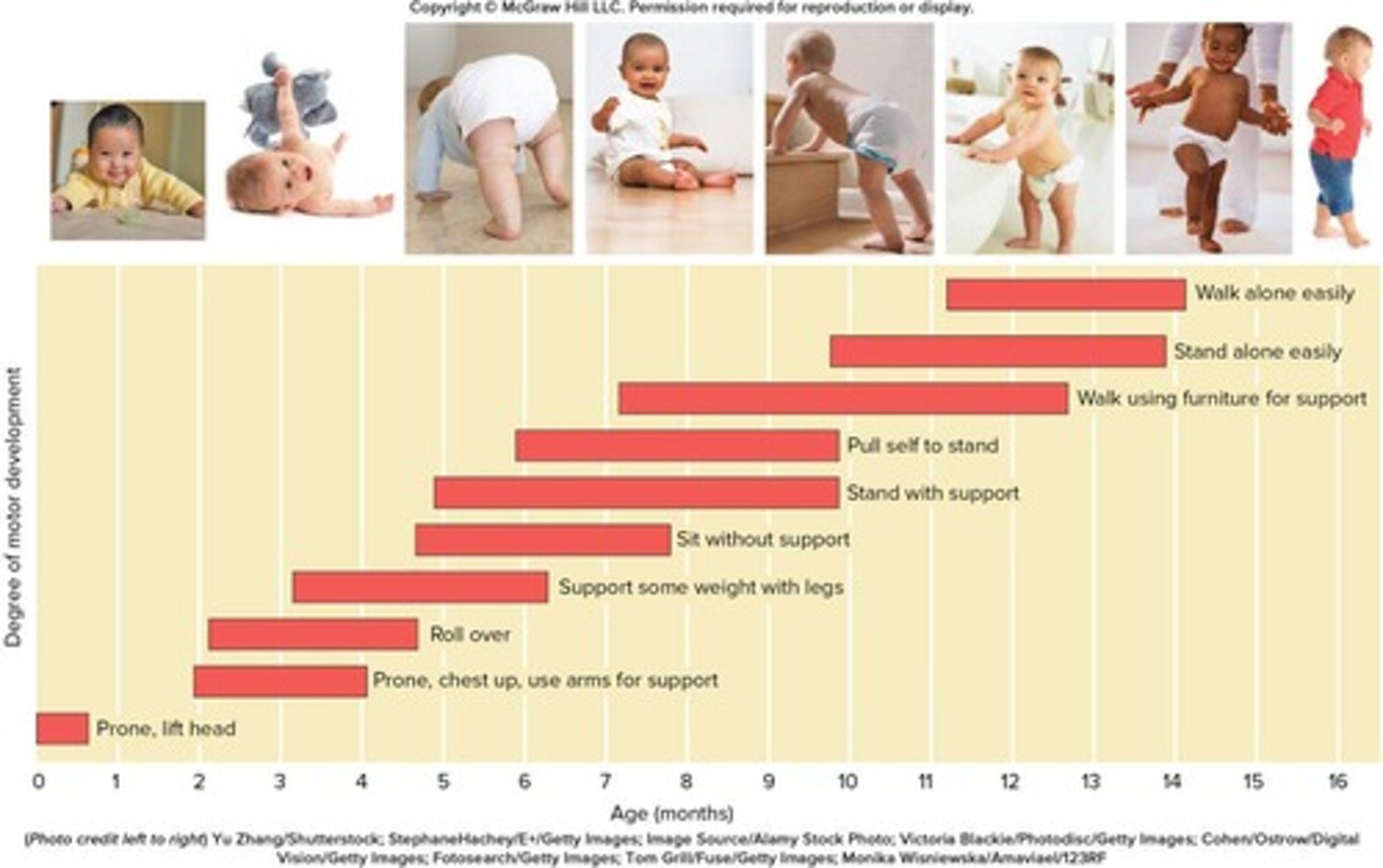
What are the milestones in gross motor development for infants?
Includes lifting head, rolling over, sitting without support, standing with support, and walking alone.
What is the significance of the 'visual cliff' in infant studies?
It assesses infants' depth perception and their understanding of affordances.
How does sensory perception develop in infants?
It evolves through interactions with the environment and is influenced by both biological and experiential factors.