Intro to rad tech exam 2
 Call Kai
 Learn
Learn Practice Test
 Spaced Repetition
 Match
Match Flashcards
 Knowt Play
1/109

There's no tags or description
Looks like no tags are added yet.
Name | Mastery | Learn | Test | Matching | Spaced | Call with Kai |
|---|
No analytics yet
Send a link to your students to track their progress
110 Terms
Define radiograph...
an image of a patients anatomic parts using x-ray
Define radiography...
the process and procedures of producing a radiograph
What is the difference between a radiographer and a radiologist?
The radiographer is the imaging technologist who produces the images to obtain pertinent pt information.
The Radiologist is who specializes in interpreting the images taken by the radiographer
Define anatomic position
Body is standing erect, face and toes pointing forward, arms at the side with the palms facing forward
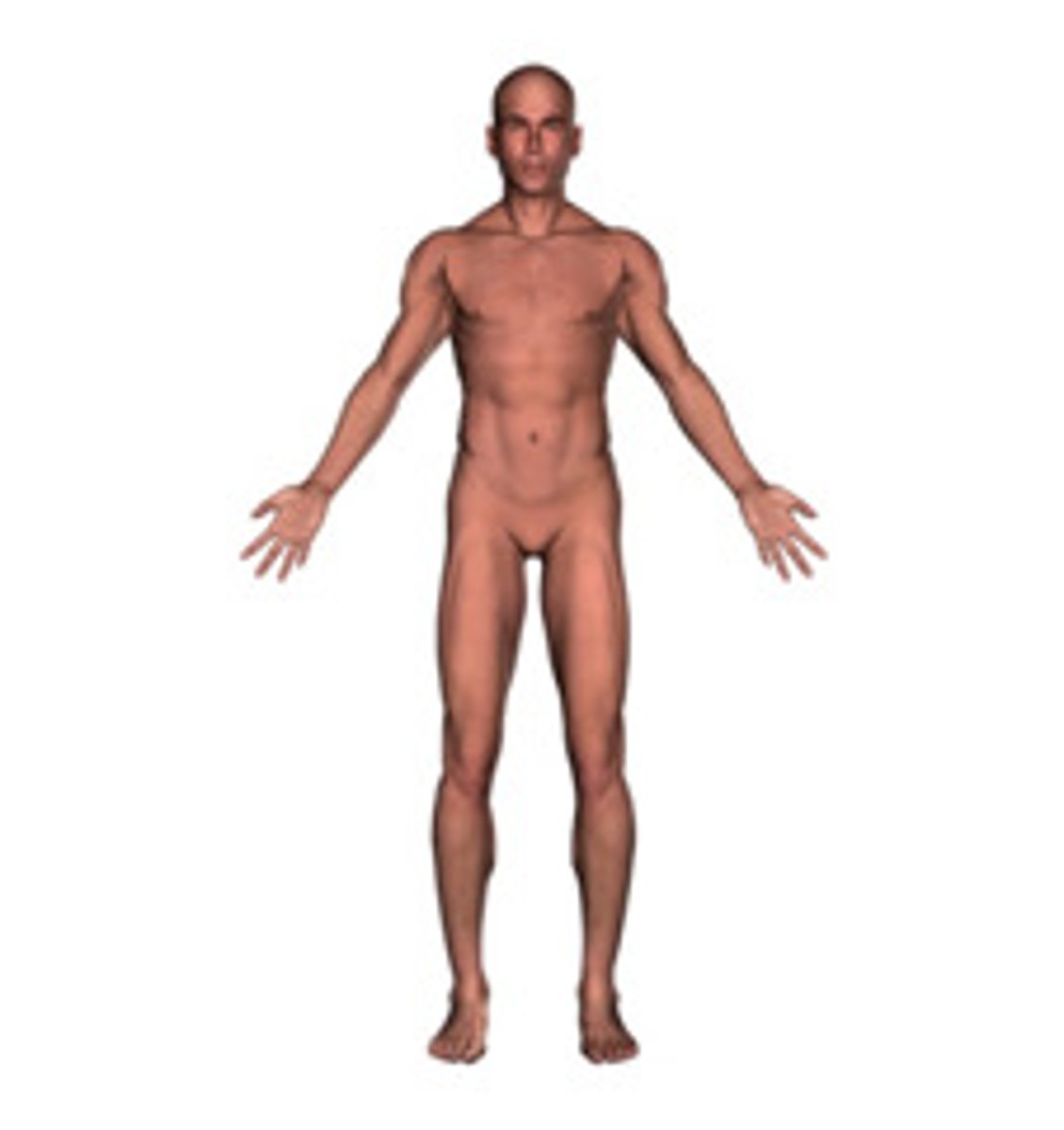
Any longitudinal plane that divides the body into right and left halves is called a ___________________ plane.
Sagittal Plane
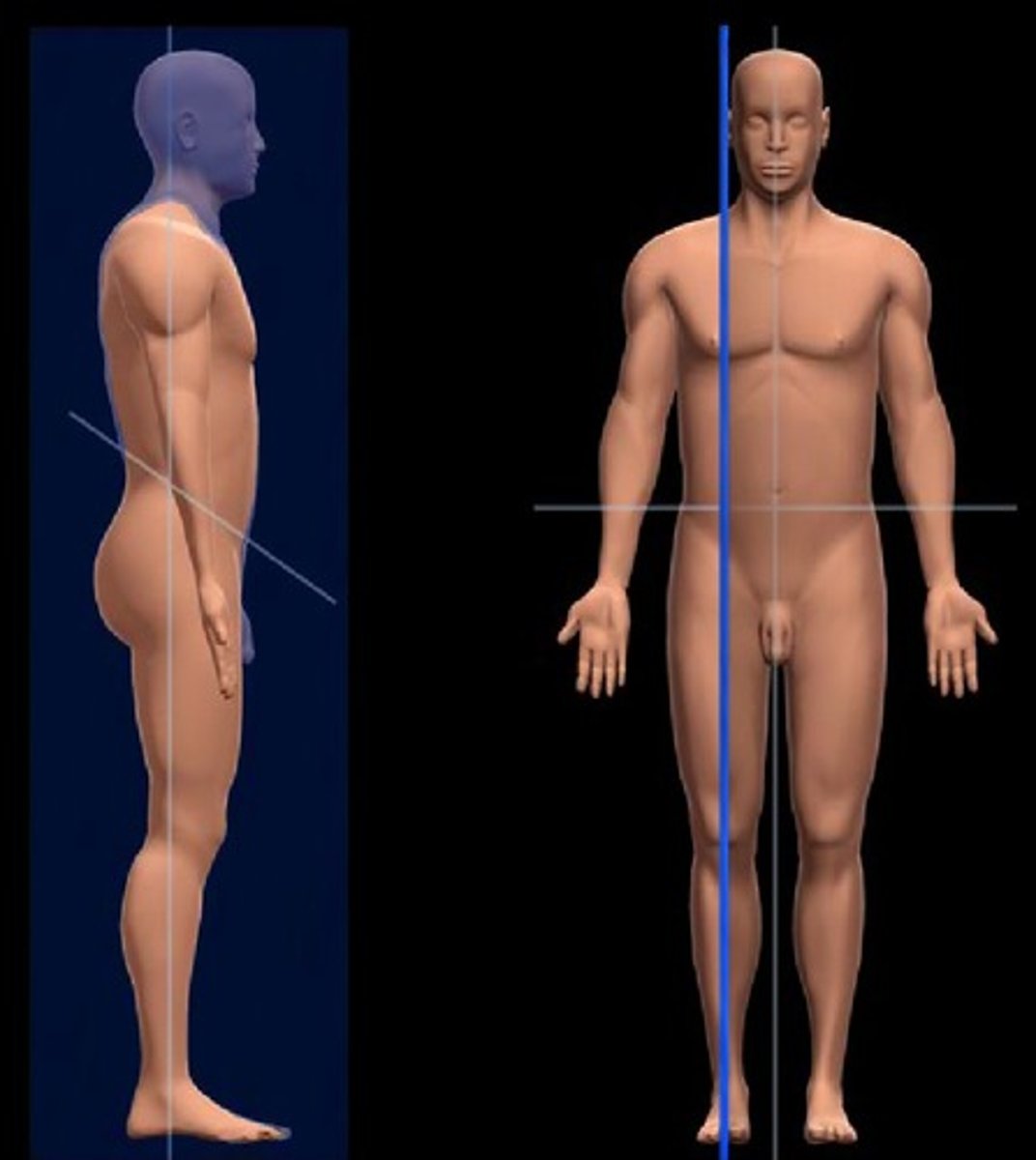
A plane that divides the body into EQUAL left and right halves by passing through the midline is called the__________________ plane
Midsagittal plane
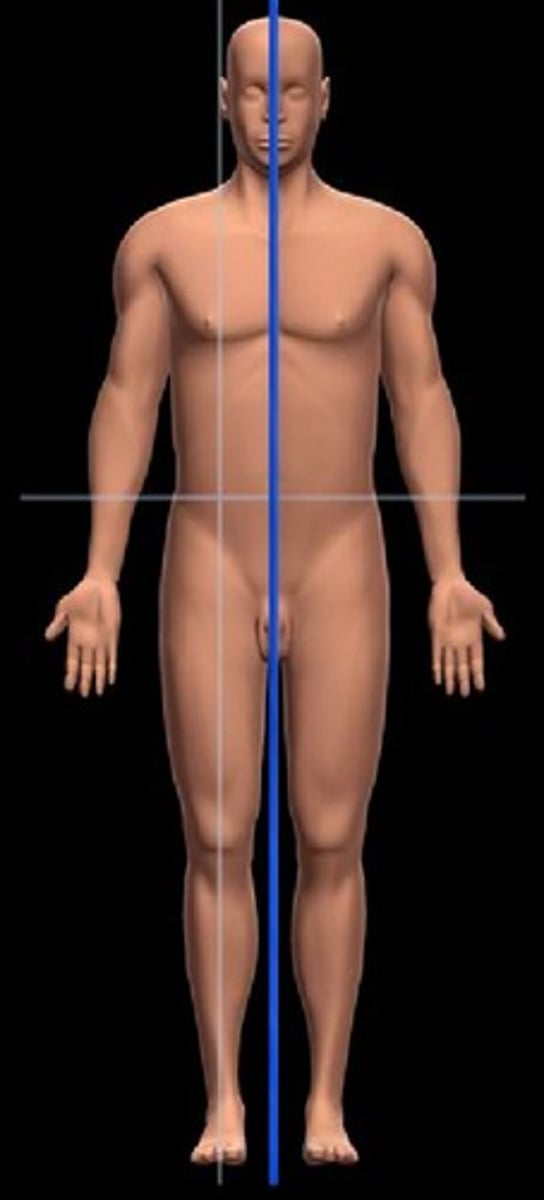
A ________________ plane is any plane that divides the body into anterior and posterior parts
Coronal
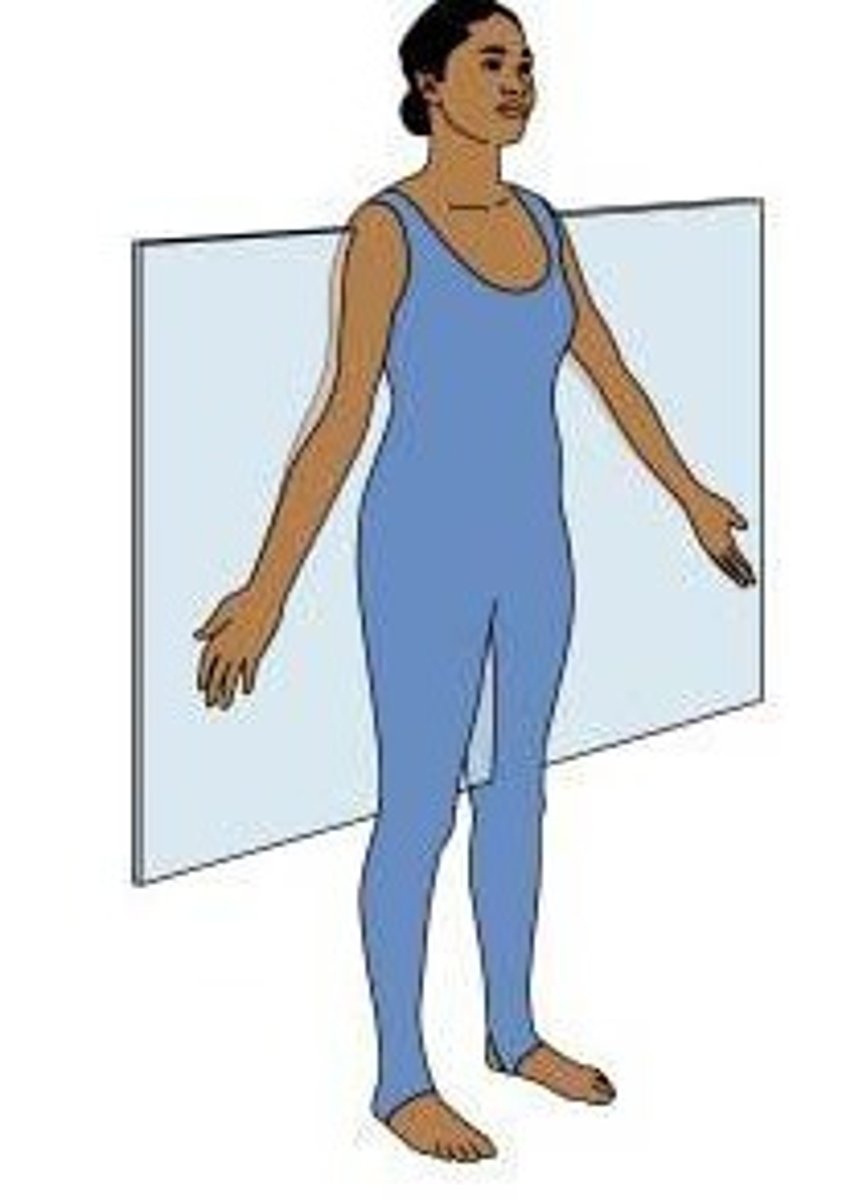
The mid coronal plane divides the body into...
Equal anterior and posterior parts
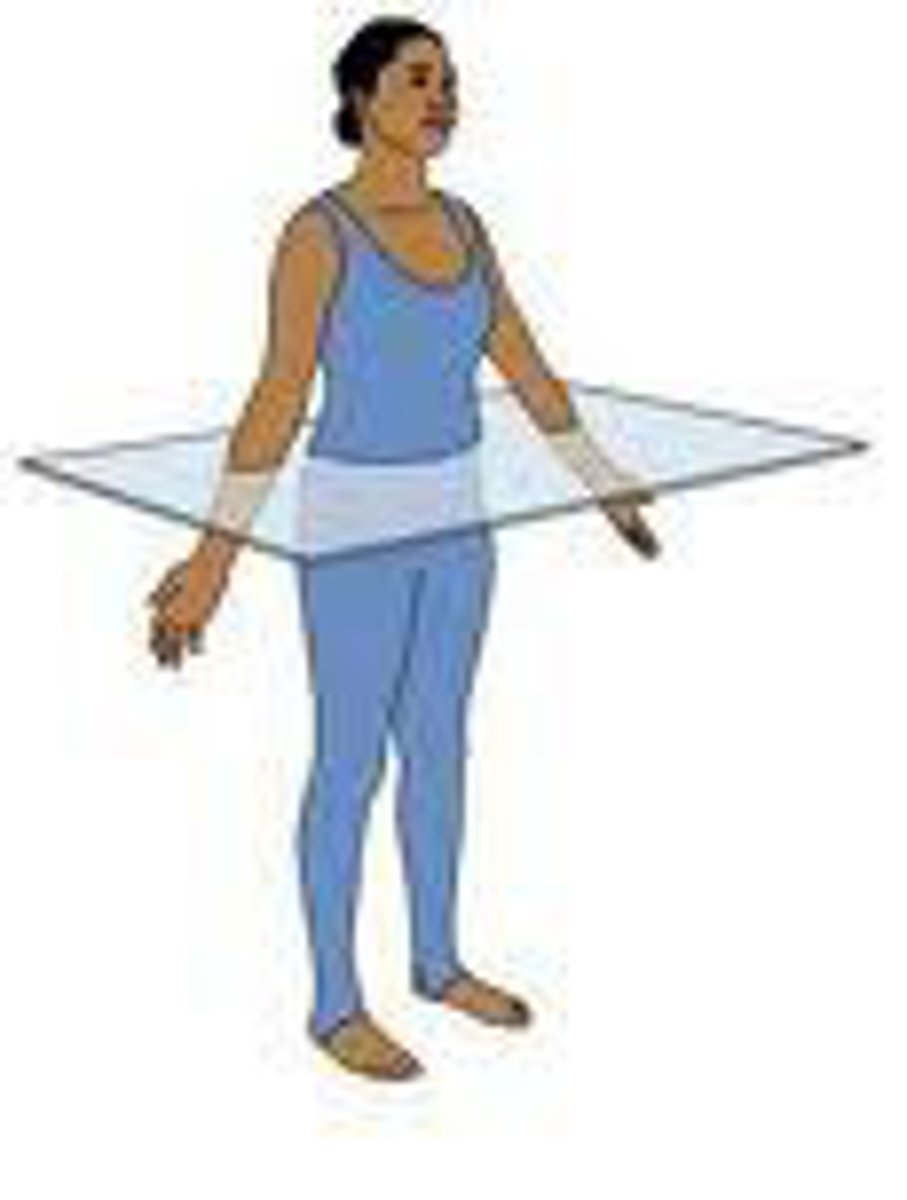
A horizontal (AKA:________ or _________) plane passes through the body at _______ angles to the sagittal or coronal planes, dividing the body into _____________ and _______________ portions
transverse/axial; right angles; superior/inferior
An oblique plane that is at an ___________ or ______________ to the sagittal, coronal, or horizontal plane
angle/slant
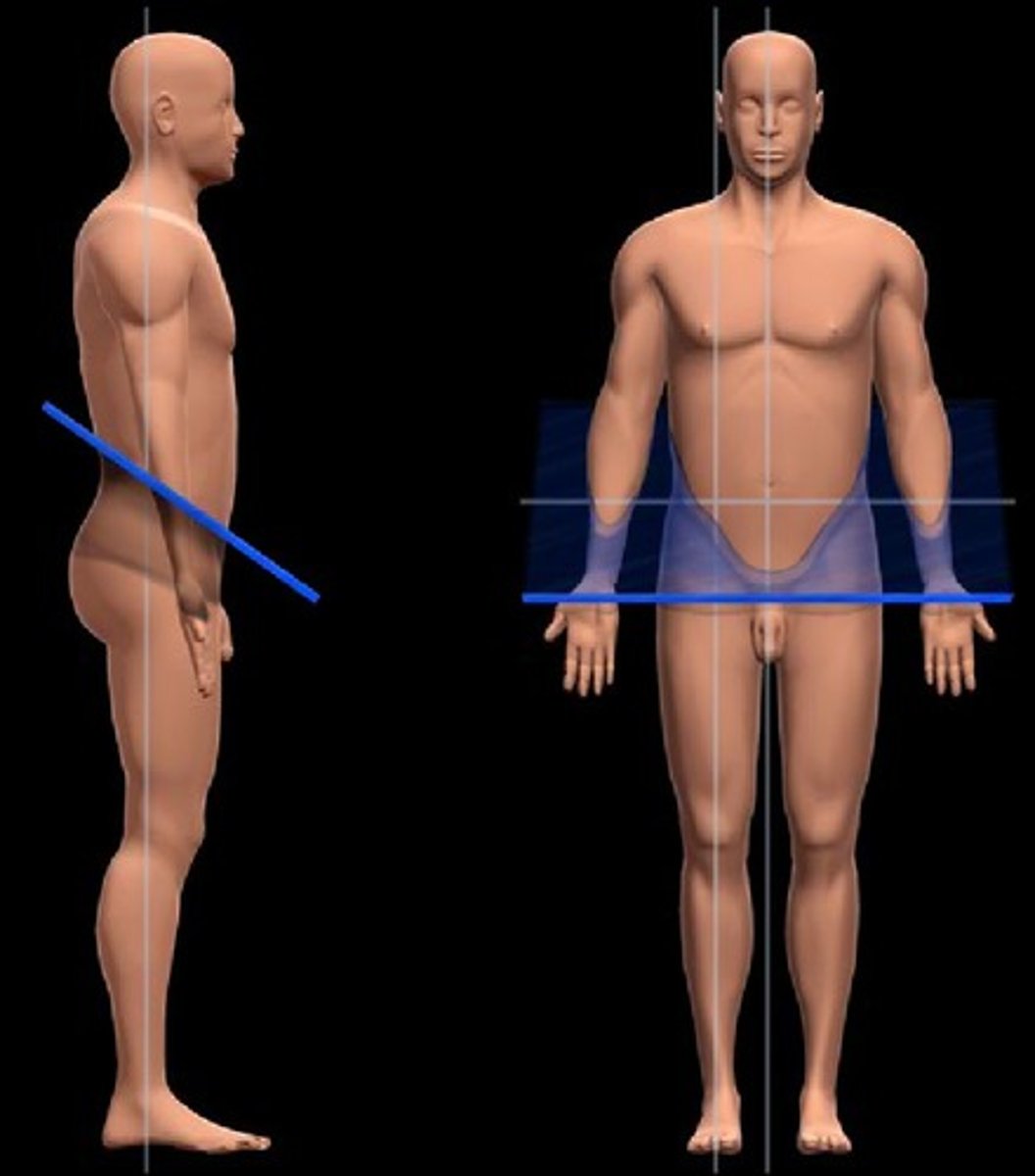
Three longitudinal sections are:
Sagittal, Coronal, Oblique
These sections run _______________________ in the direction of the long axis of the body. While the transverse and axial run at __________ angles along any point of the longitudinal axis
lengthwise; right angles
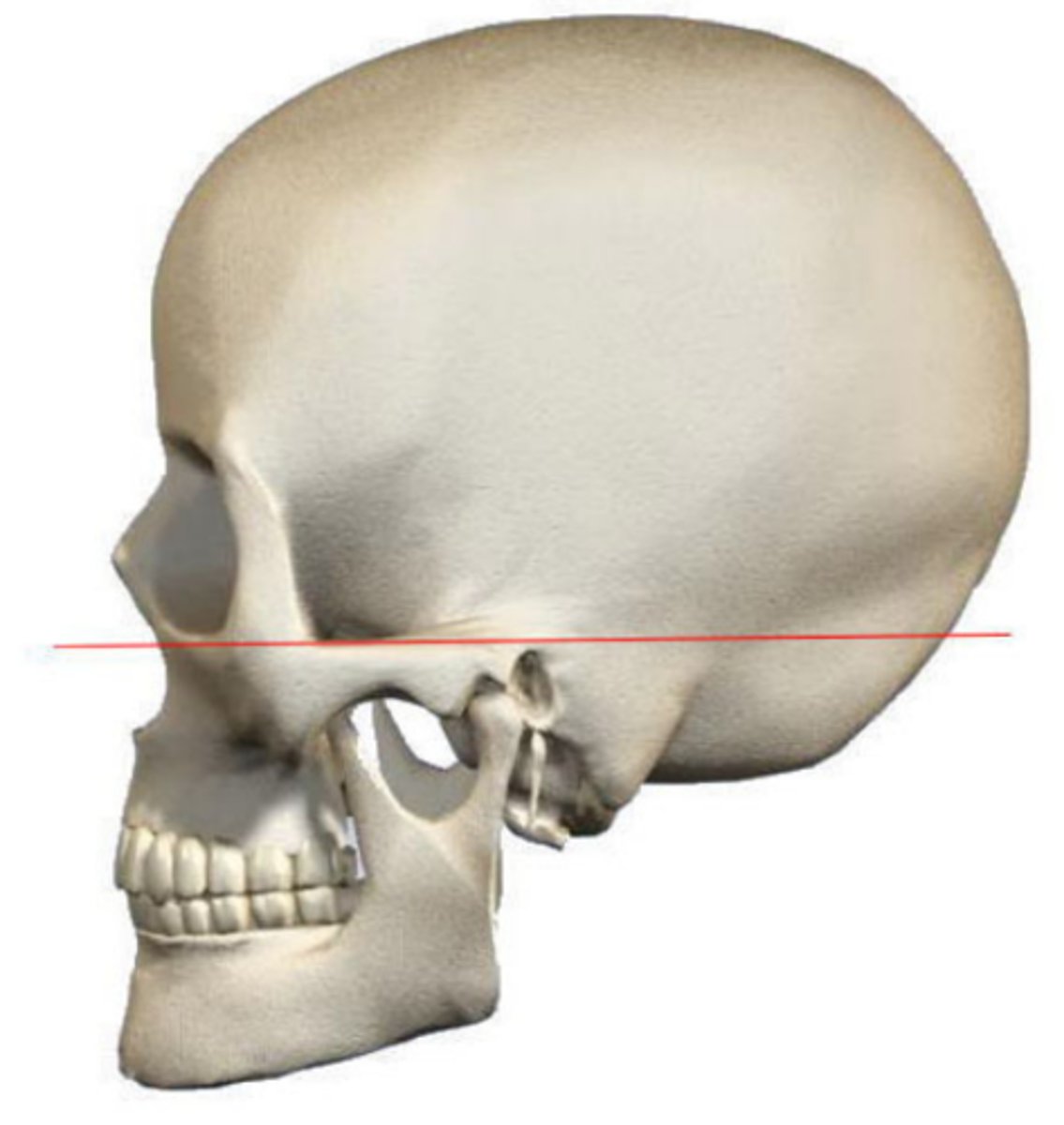
Define baseline of the skull?
precise transverse plane is formed by connecting the lines from the infraorbital margins to the superior margin of the external auditory meatus
The baseline of the skull can also be referred to as?
Frankfort plane or IOML
What is the difference between superior and inferior?
higher towards the head; lower towards the feet
The ribs are (Circle one: CENTRAL or PERIPHERAL) to the lungs
Peripheral
The back half of the patient, or the part of the body seen when the person is viewed from the back is referred to as the ___________________ or ___________________ surface.
Posterior/Dorsal
______________ or ______________ surface refers to the front half of the patient or the part viewed from the front.
Anterior/Ventral
List two body parts that you would find on the ventral surface of the body
Chest
Abdomen
Dorsal refers to the _____ of the hand
back
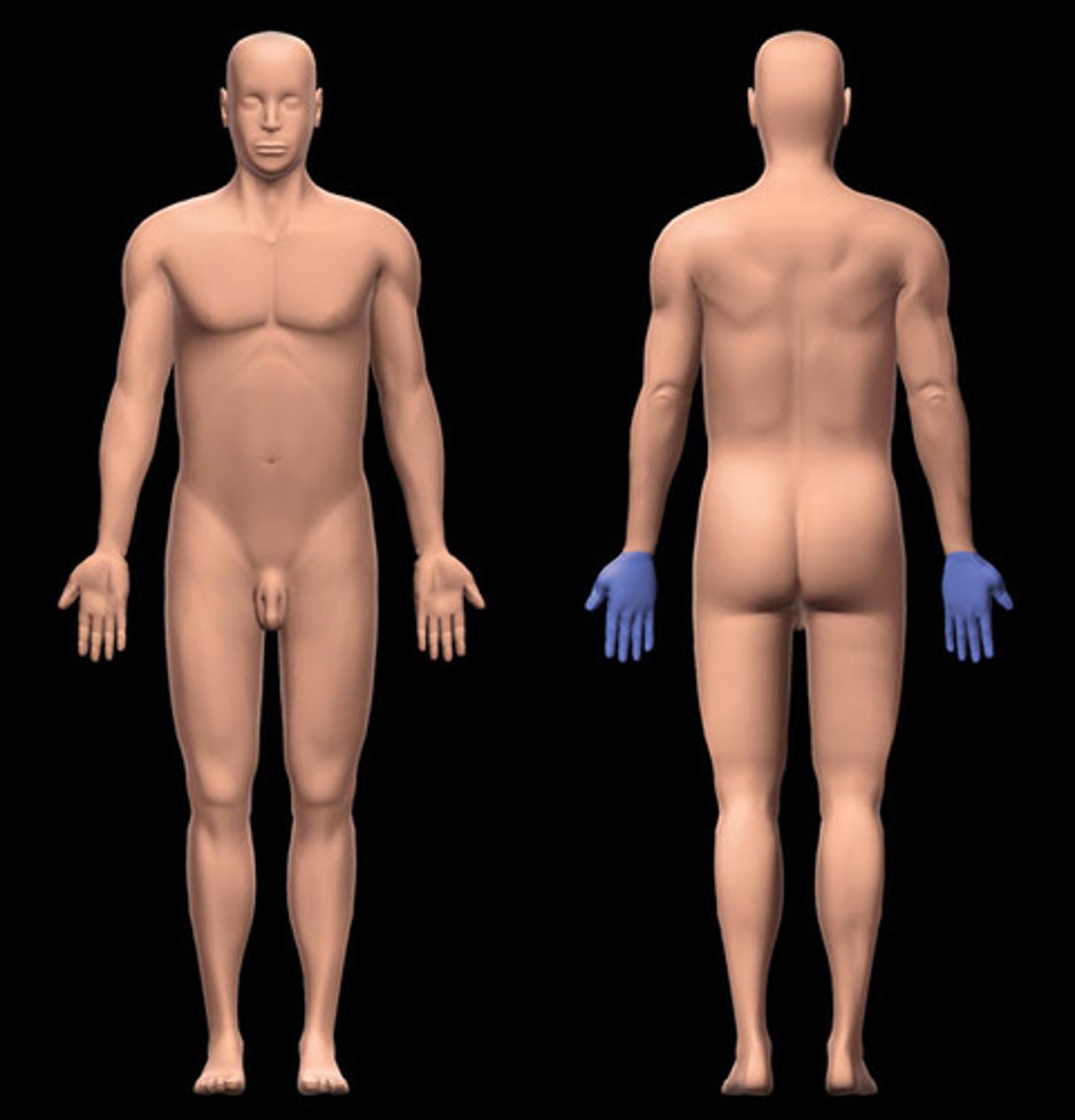
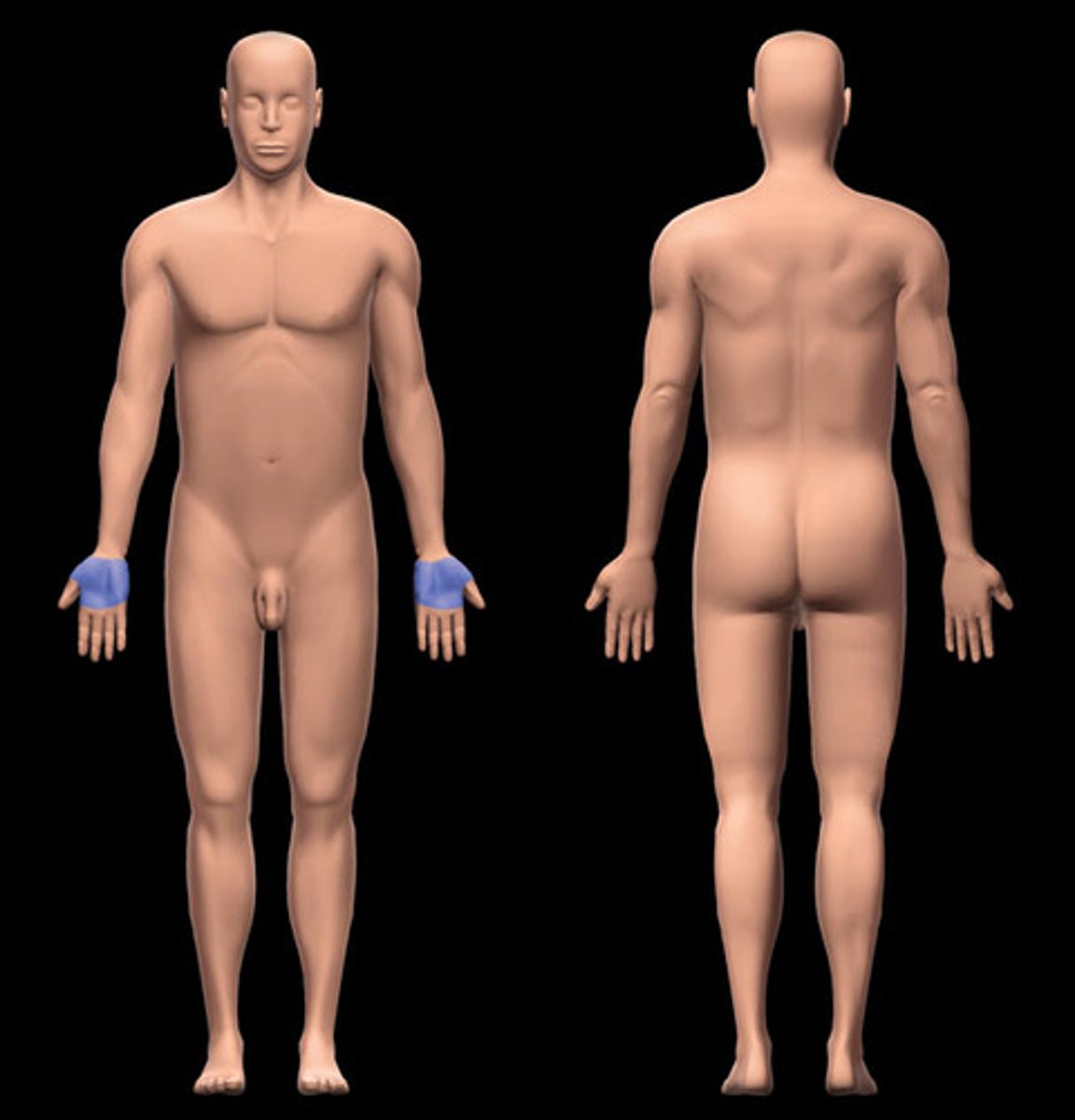
In the anatomic position, you see the front or ____________ surface of the hand
palmar
You walk on the ________________ surface or ____________ of your foot.
Plantar/sole
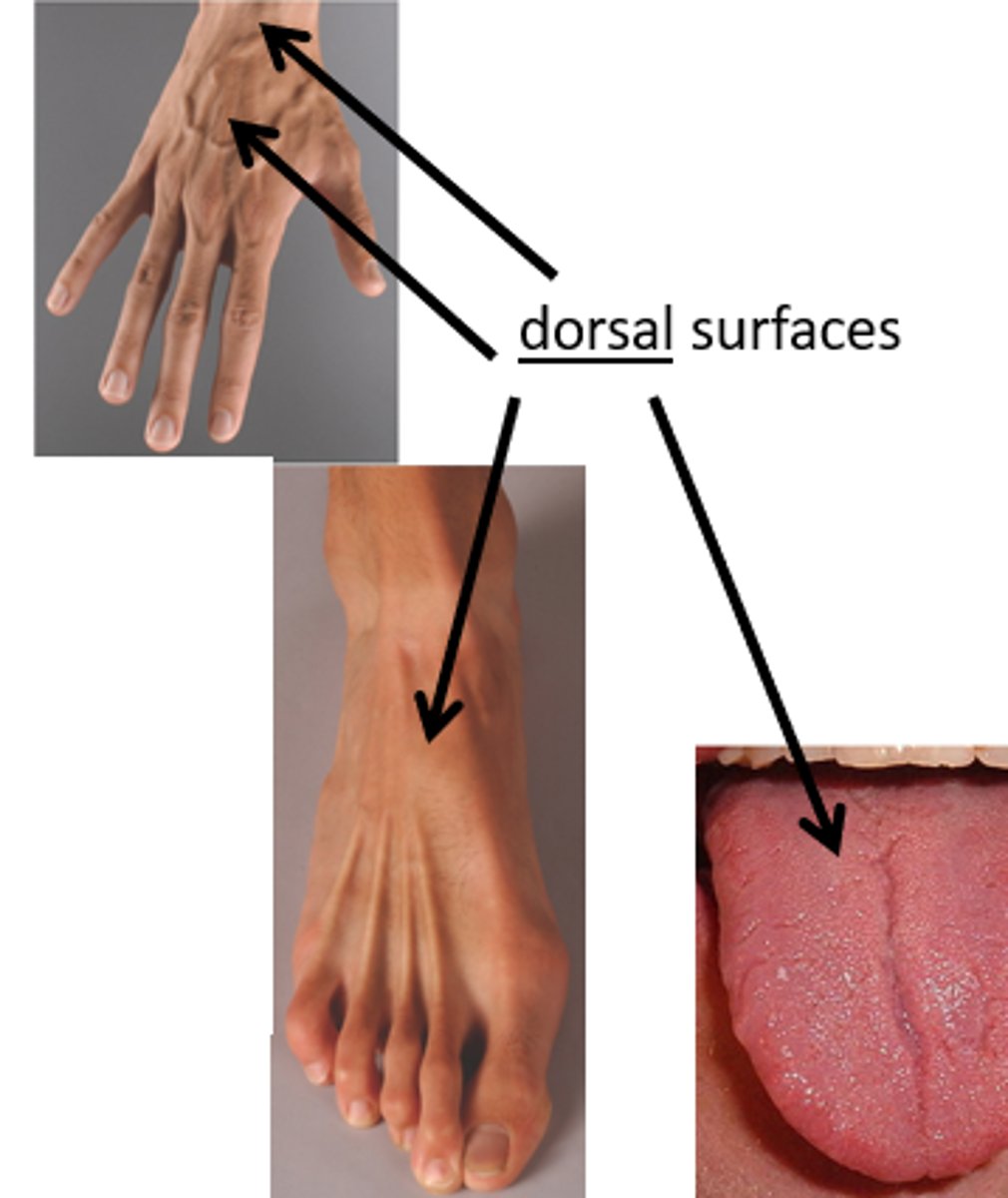
Dorsum refers to the _____________ surface or (Circle one: TOP or BOTTOM) of the foot.
Top
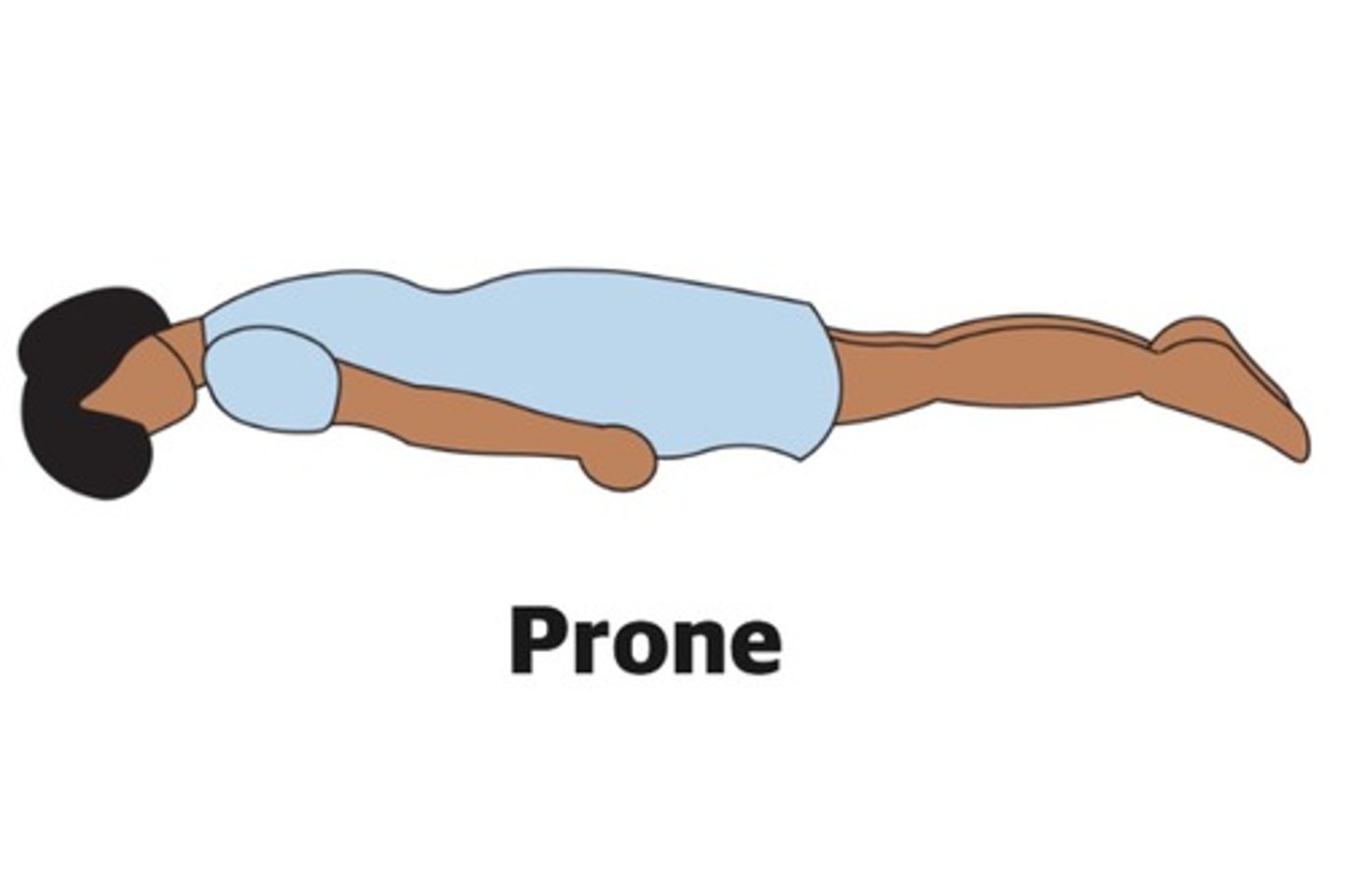
Prone
Lying face down
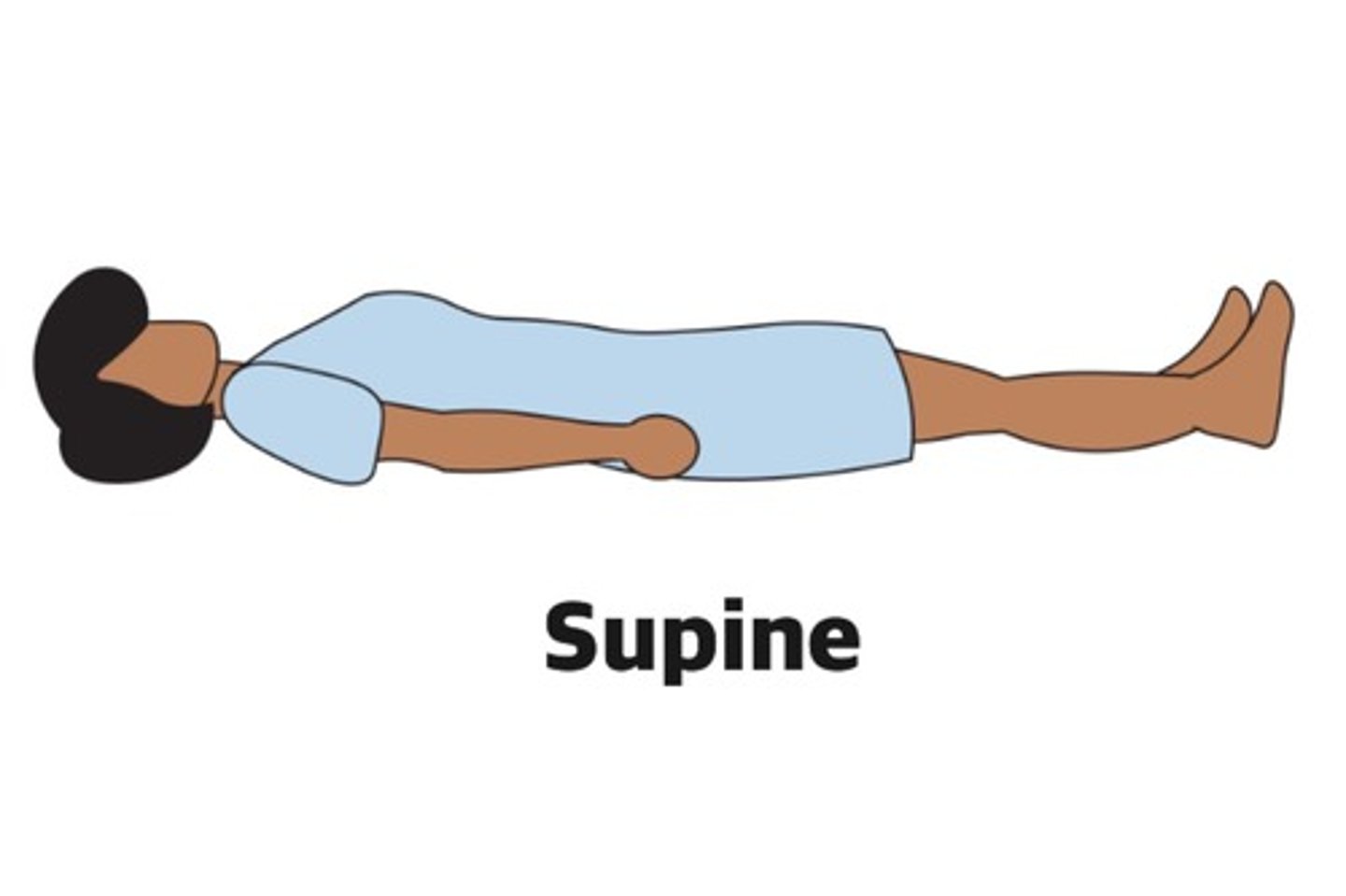
Supine
lying on back
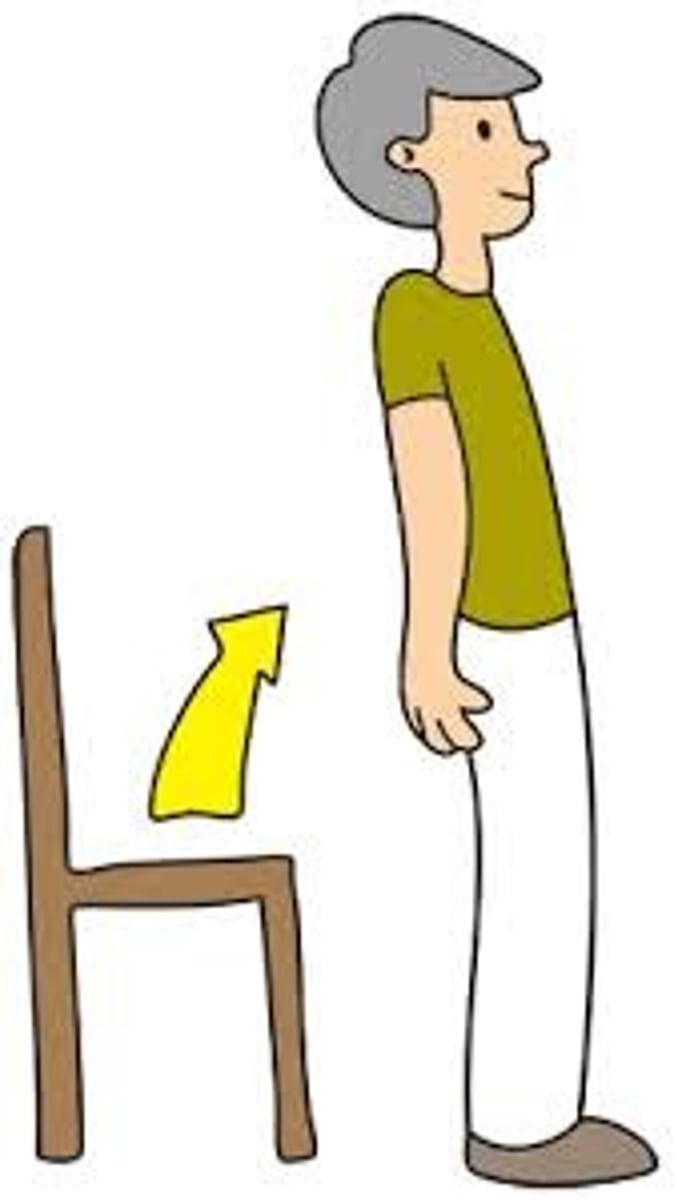
Erect
standing vertical
Seated
upright, sitting on a stool
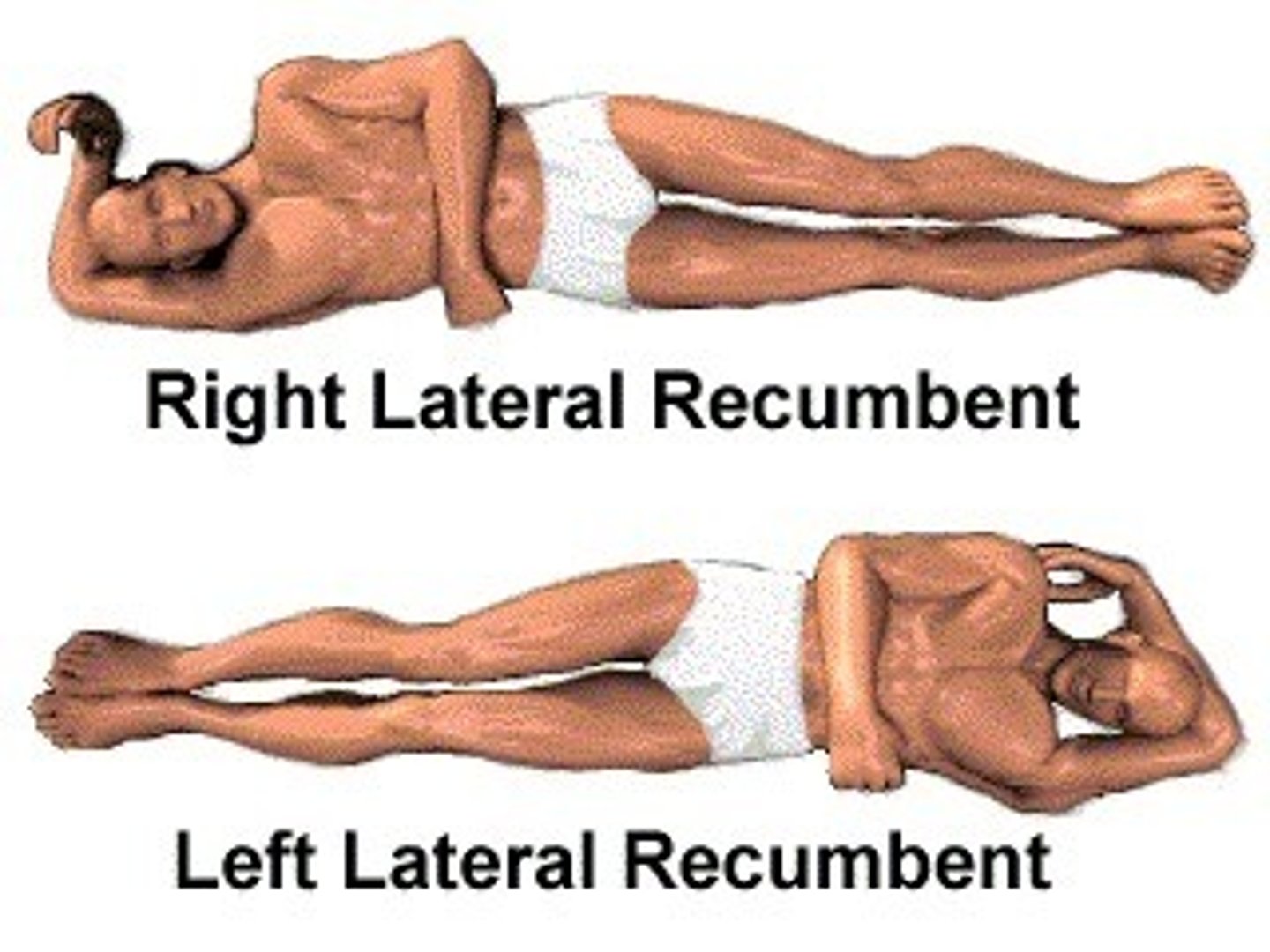
Recumbent
lying down in any position
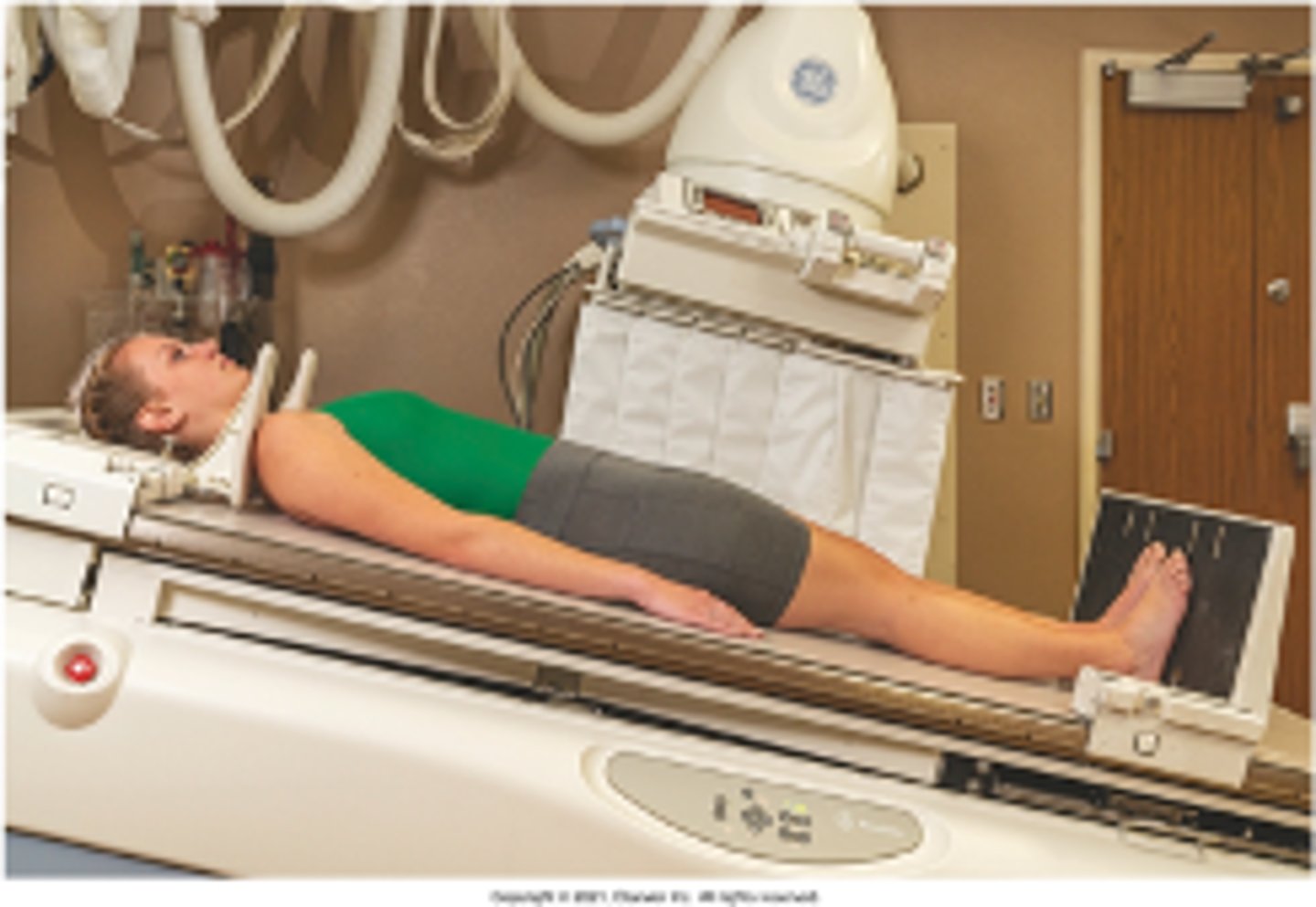
What is the following image?
Reverse Trendelenburg Fowler (Head above toes)
What is the following image?
Trendelenburg (toes above head)
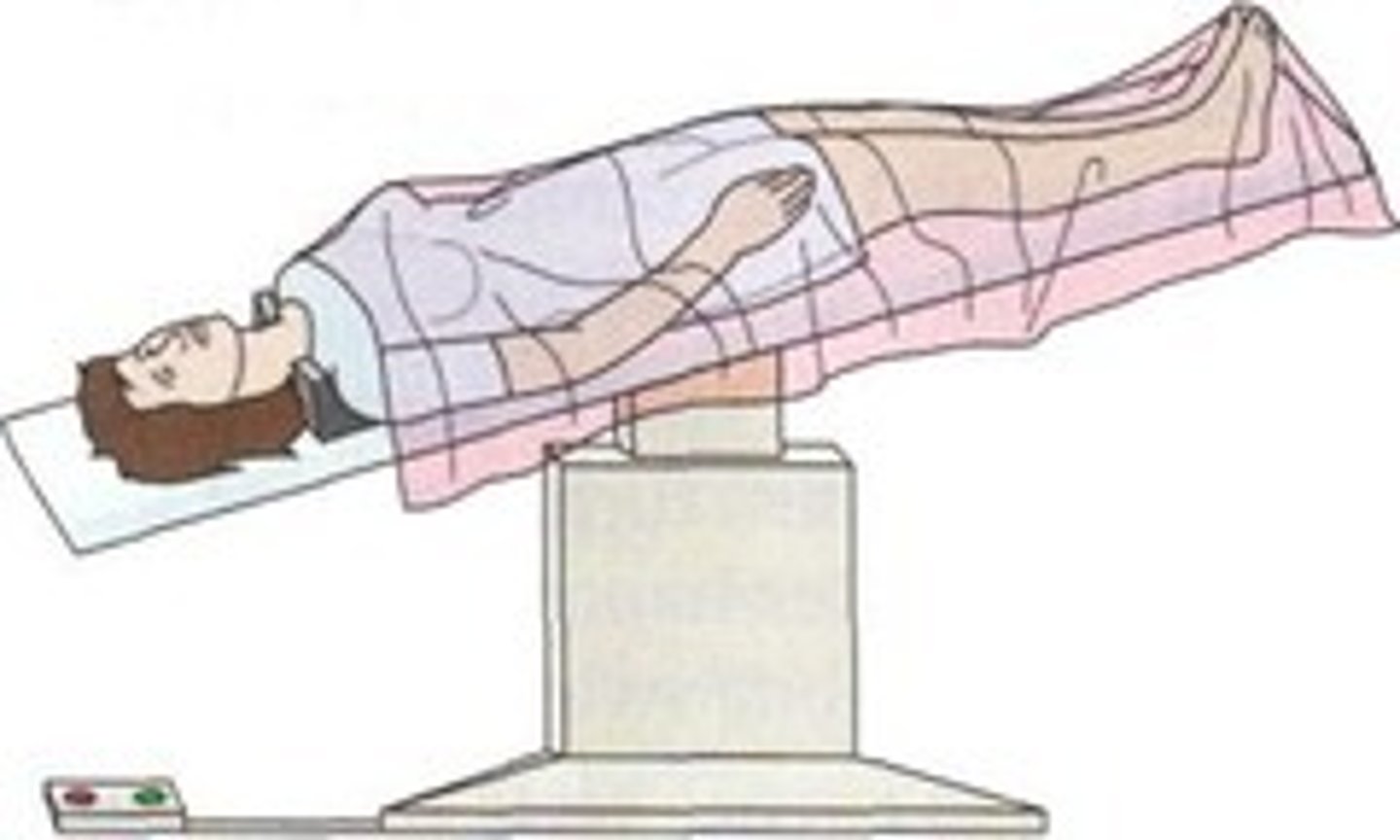
What is the following image?
Lithotomy position
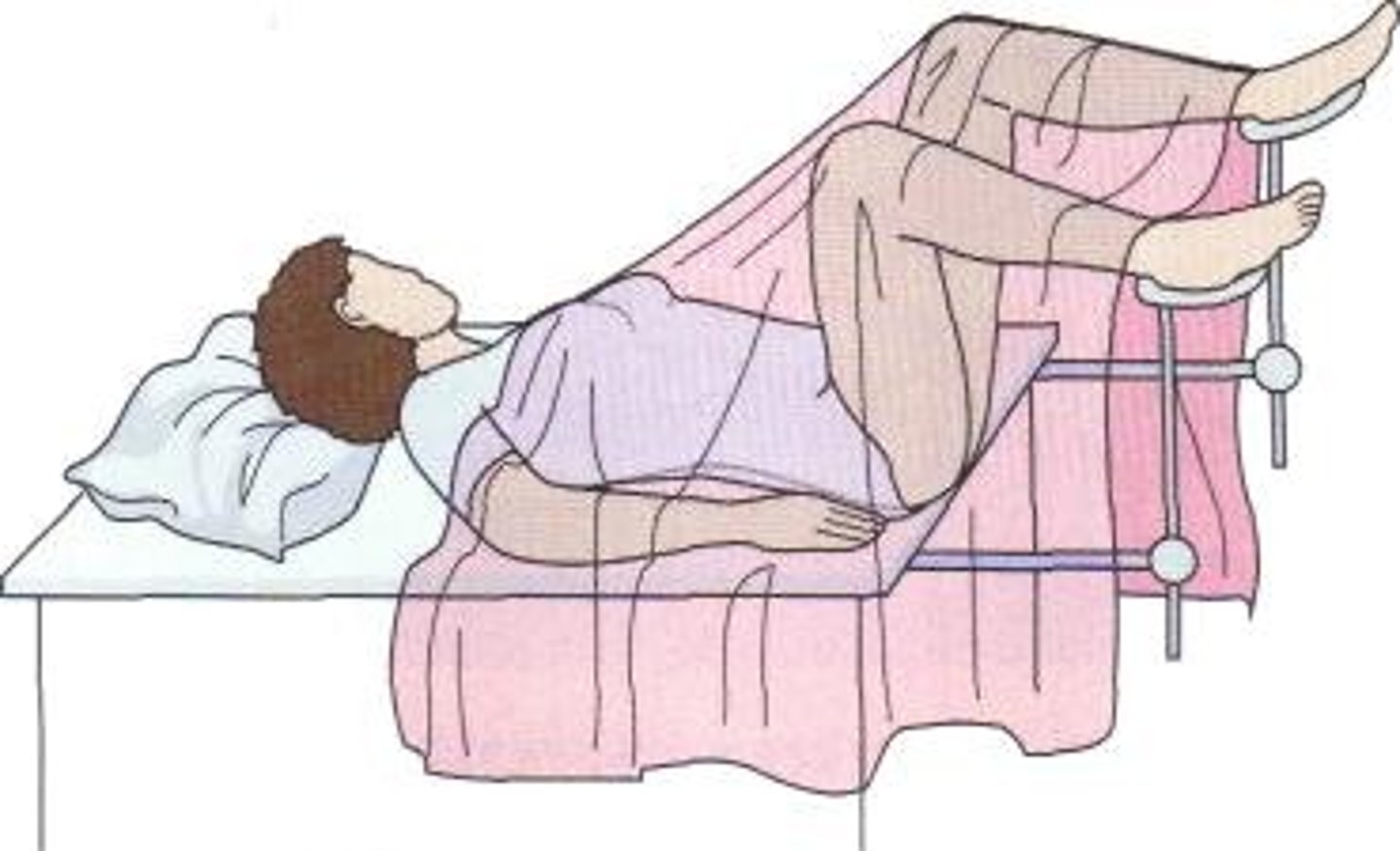
What is the following image?
Modified Sim's Position
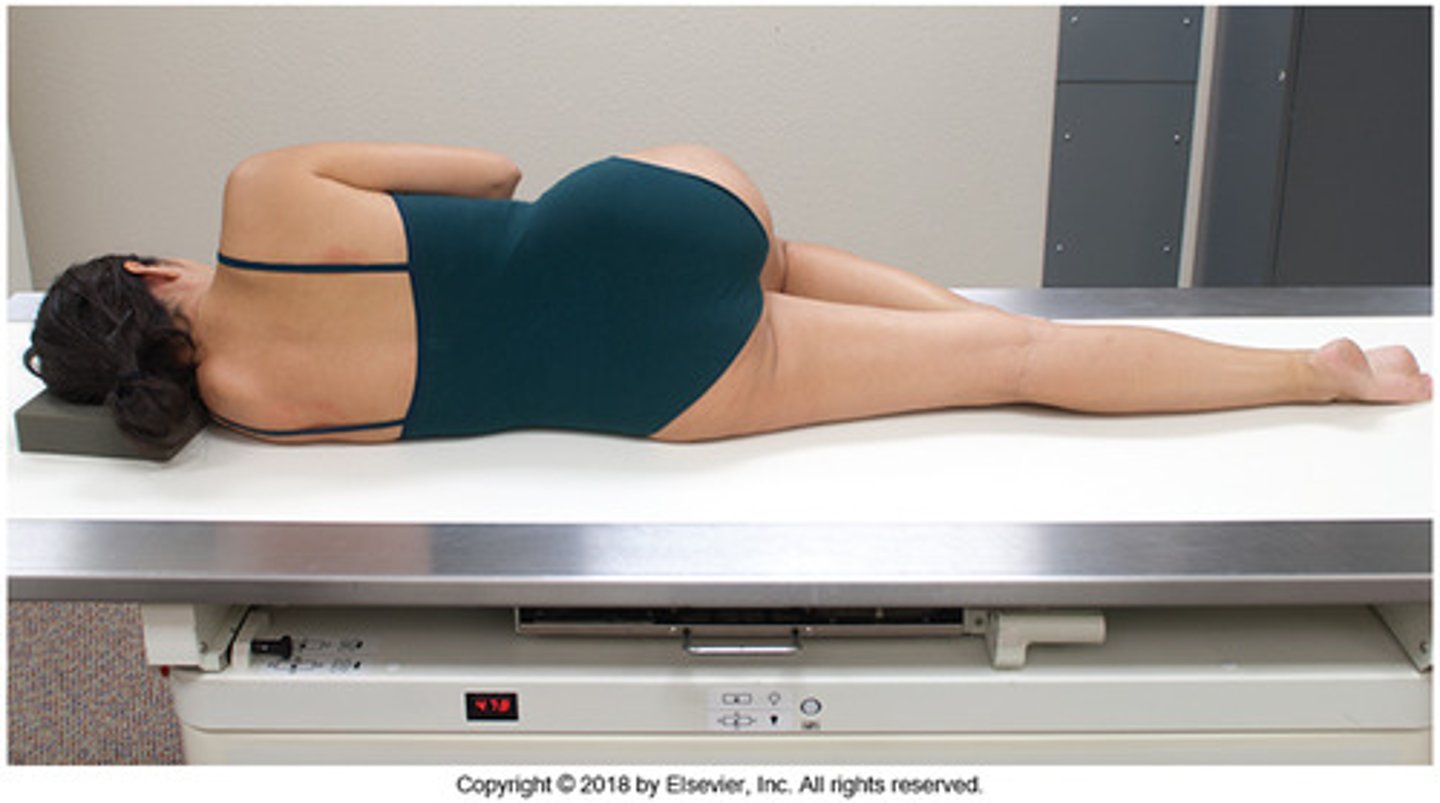
When the patient is rotated with the coronal plane not parallel with the table or IR (Image Receptor) the patient is in an ________________ position
oblique position
What does LPO stand for?
Left Posterior Oblique
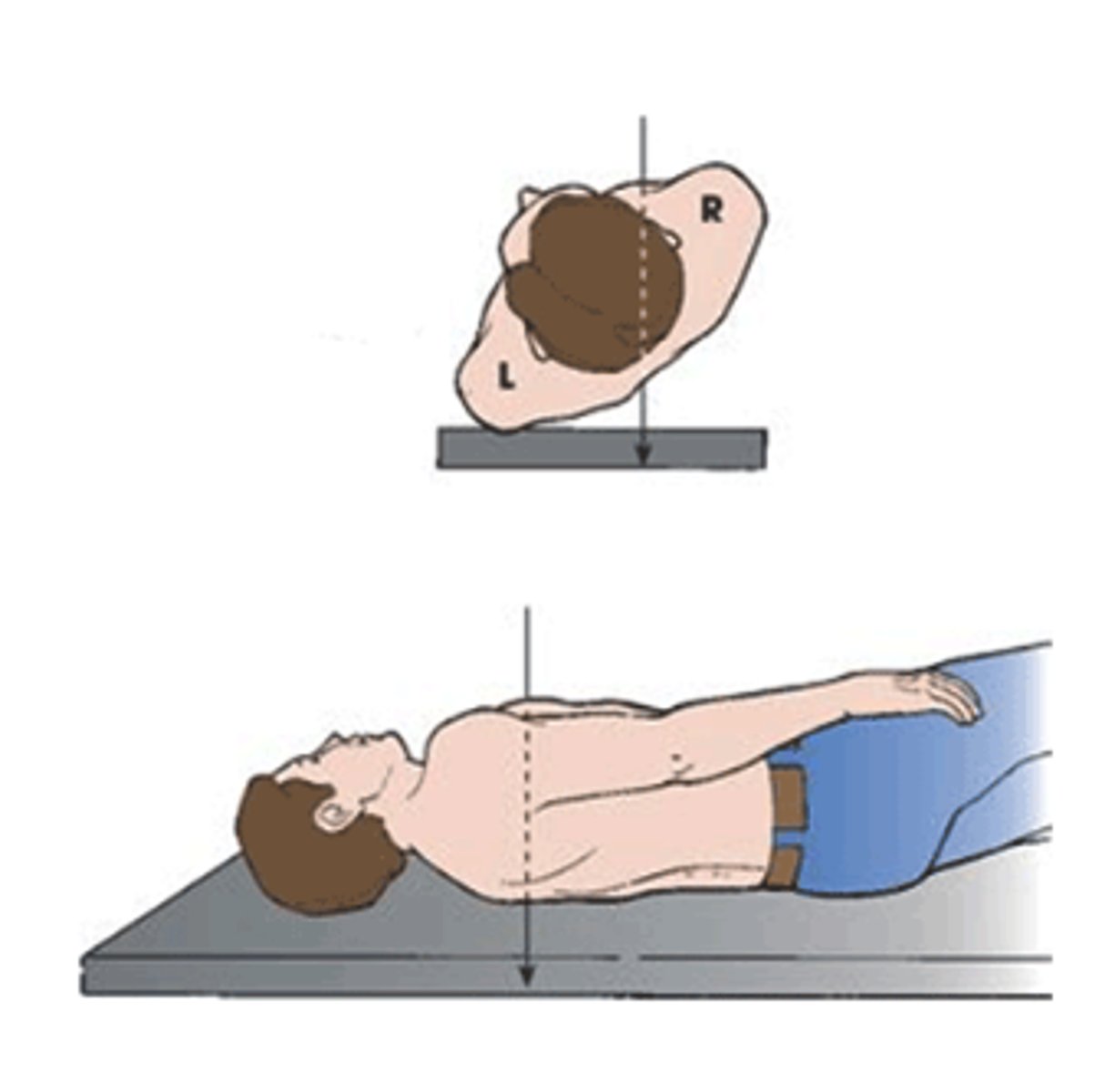
What does RPO stand for?
Right Posterior Oblique
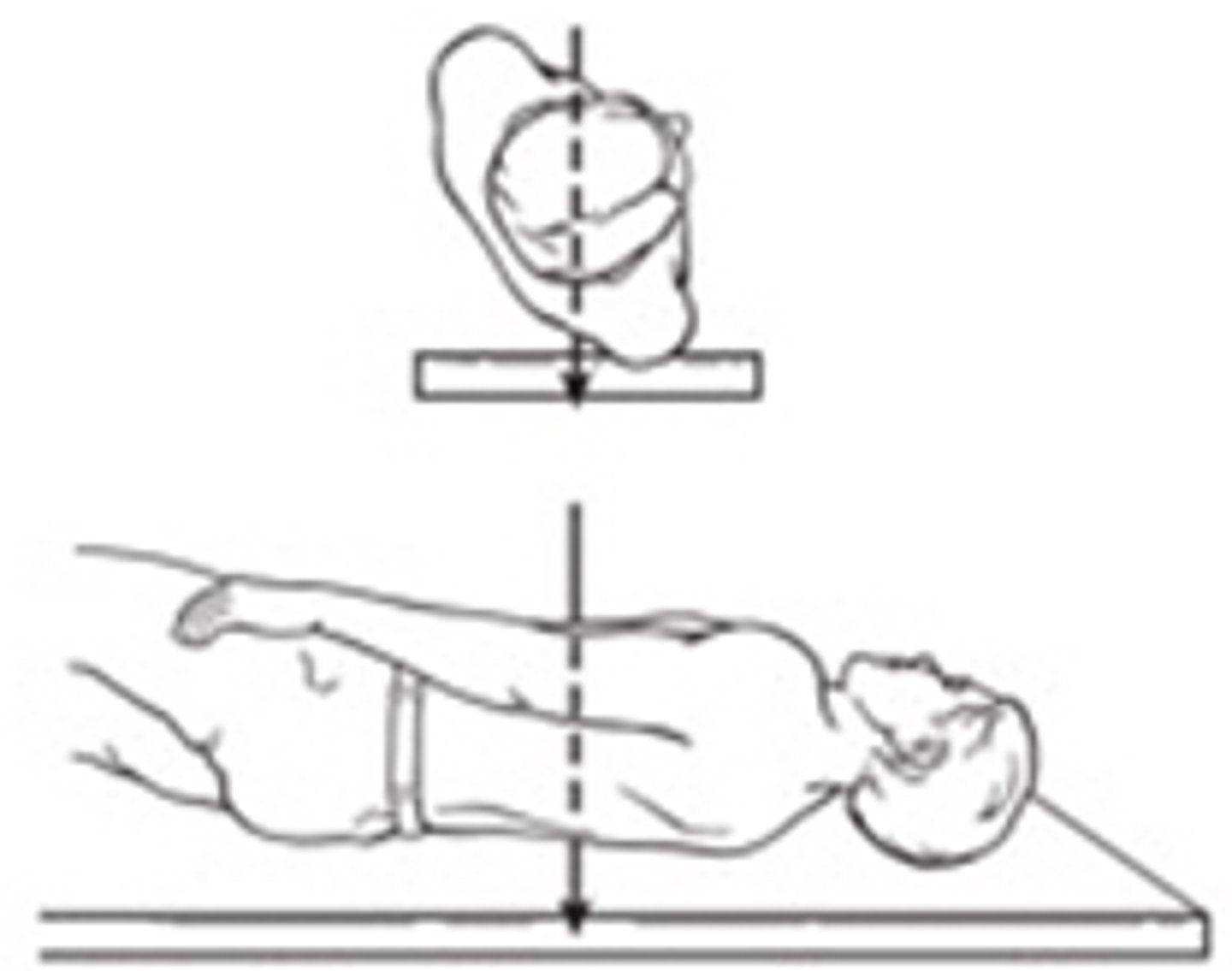
What does LAO stand for?
Left Anterior Oblique
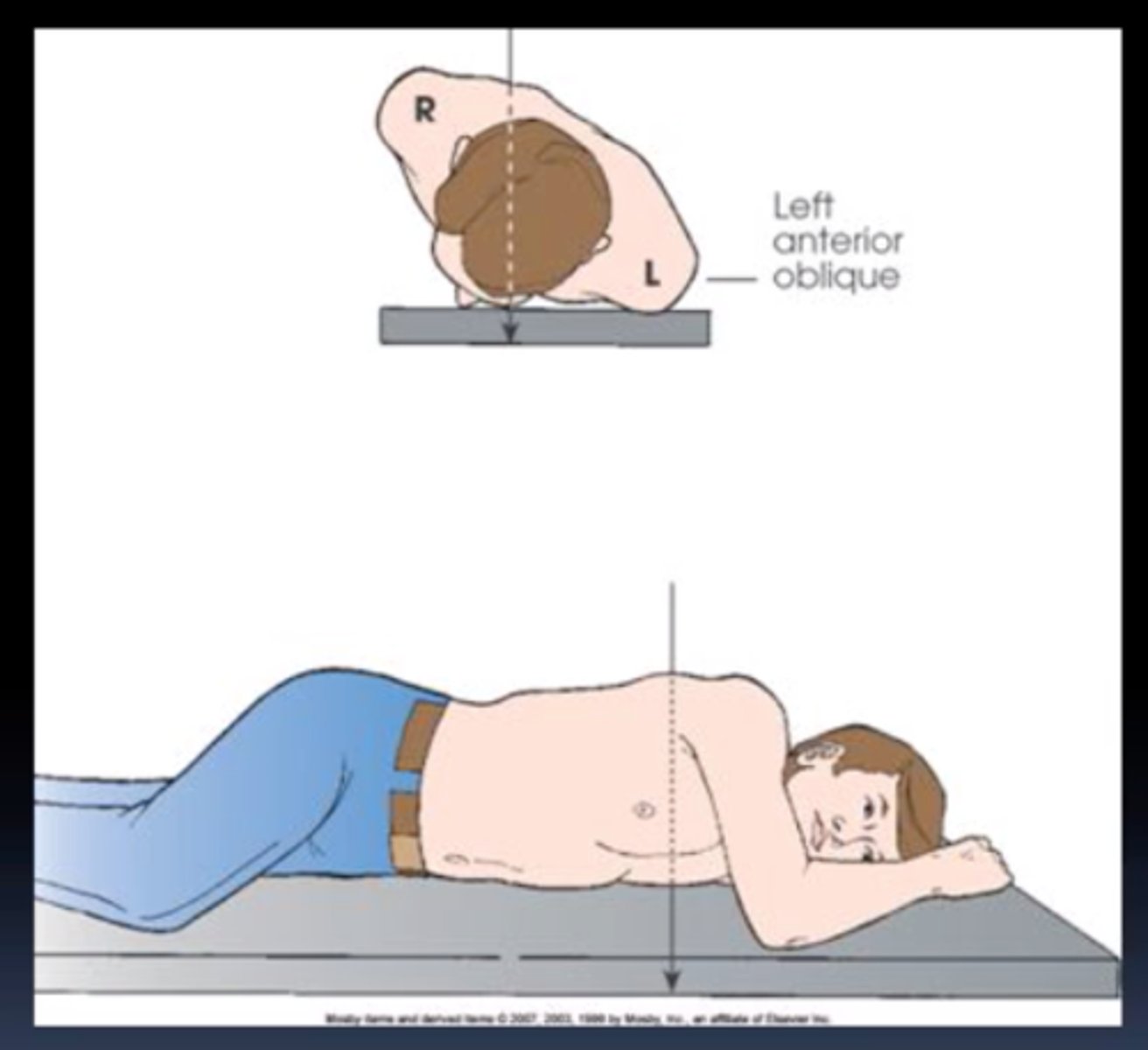
What does RAO stand for?
Right Anterior Oblique
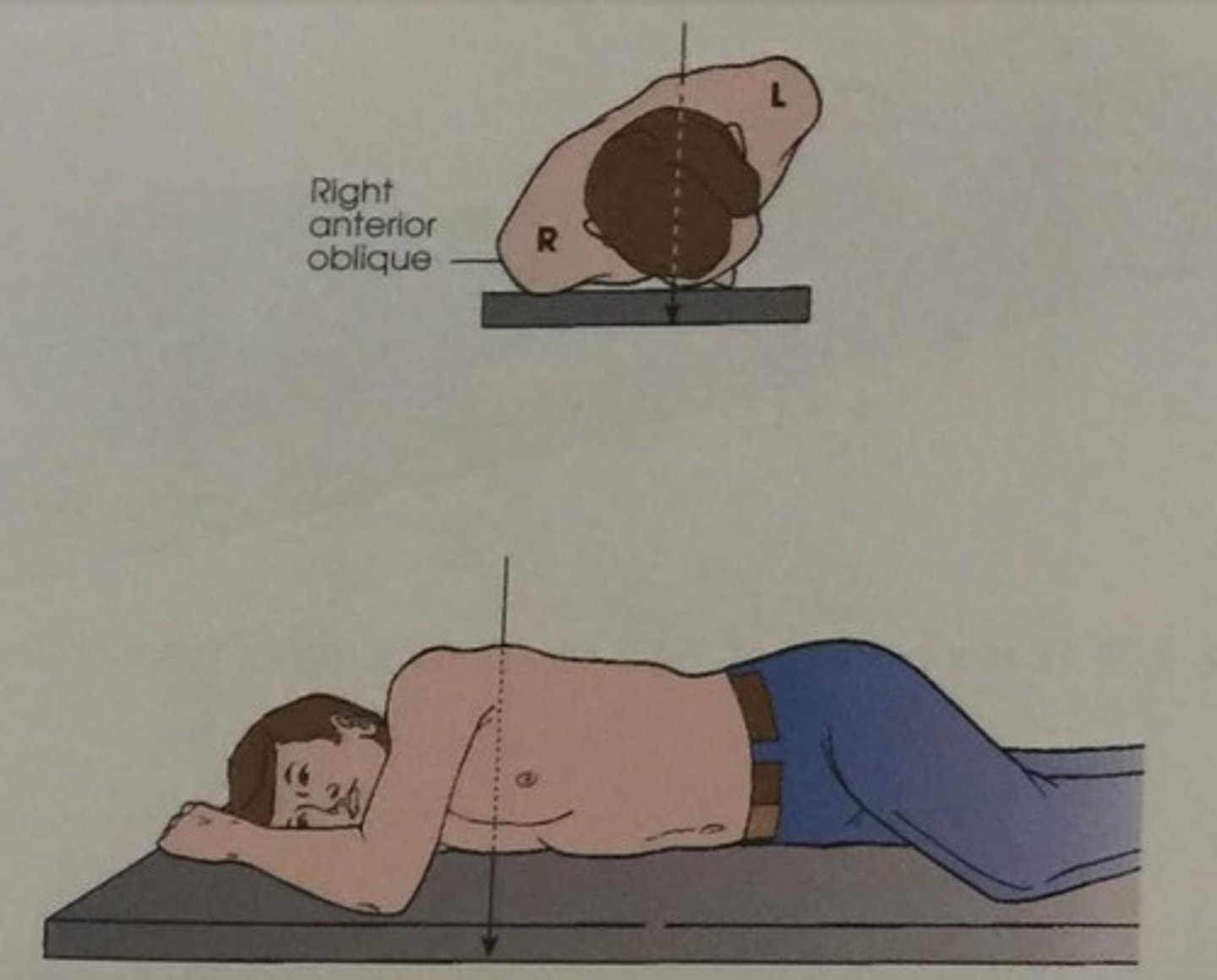
If a patient is lying supine on the table rotated with the right posterior shoulder closest to the table, this patient is in a
RPO (right posterior oblique)
For an exam to be considered decubitus, what two things must occur?
Patient must be recumbent and the CR is horizontal
How are decubitus exams named? ________________________ Give and describe an example:
Dorsal or Ventral Decubitus- laying on dorsal or ventral surface (named for whatever surface of the body they are lying on)
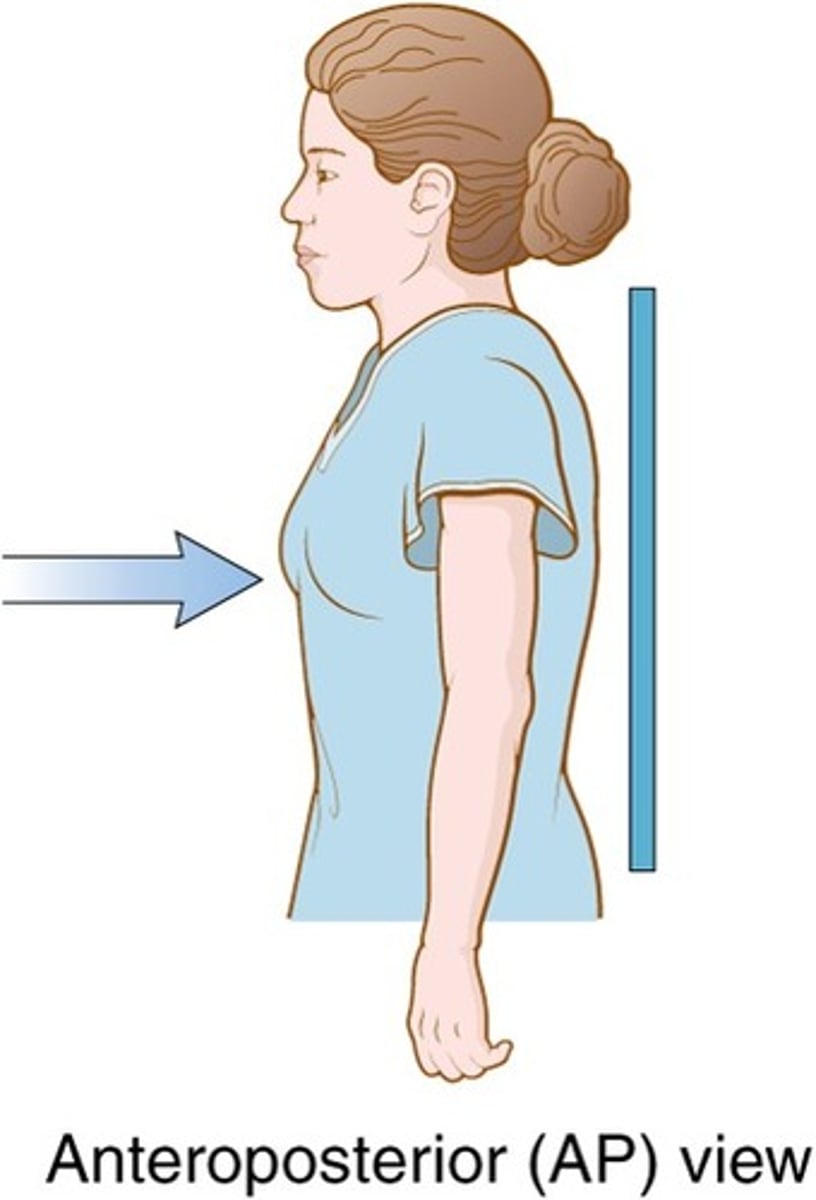
Define Projection:
describes the direction of the CR of the x-ray beam as it passes through the pt
PA stands for ____________________________. It describes that the CR is entering the ____________surface of the body and exiting the ______________ surface of the body
Posteroanterior; entering posterior, exiting anterior
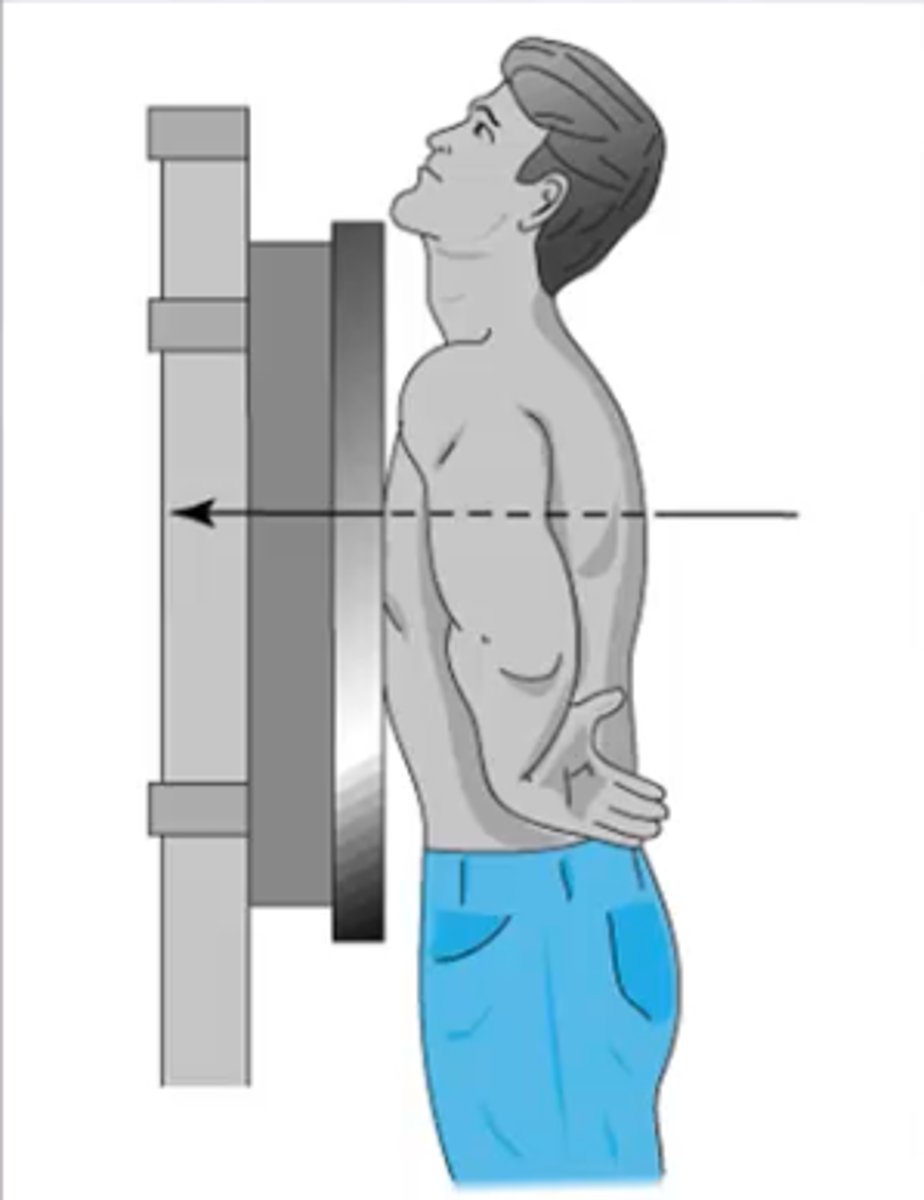
AP stands for ________________________. It describes that the CR is entering the ______________surface of the body and exiting the _______________ surface of the body.
Anteroposterior; entering anteriorly, exiting posterior
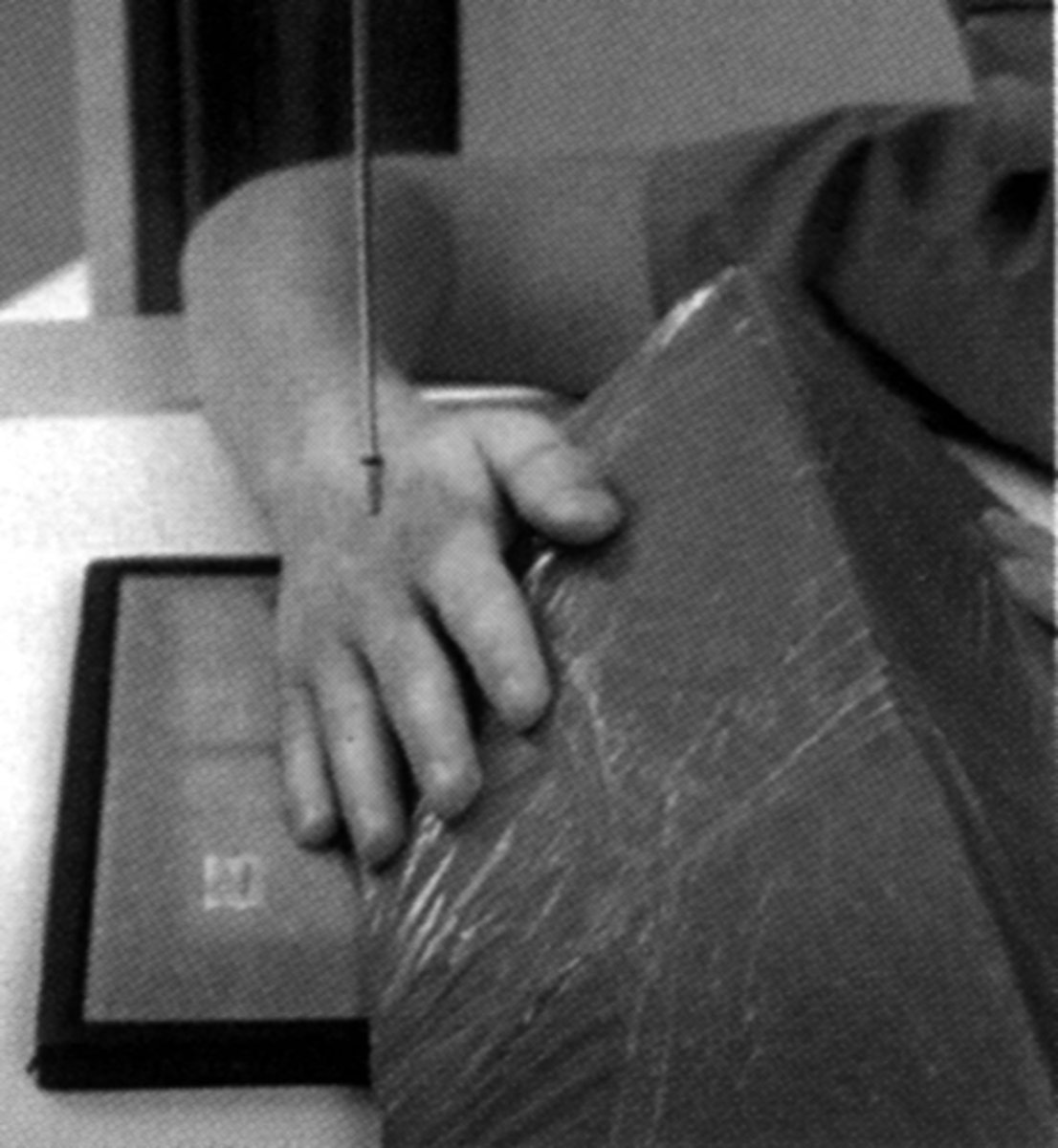
if a hand is placed palm down at a 45-degree angle on a sponge the patient is in an oblique position with a (Circle one: PA or AP) projection
PA projection
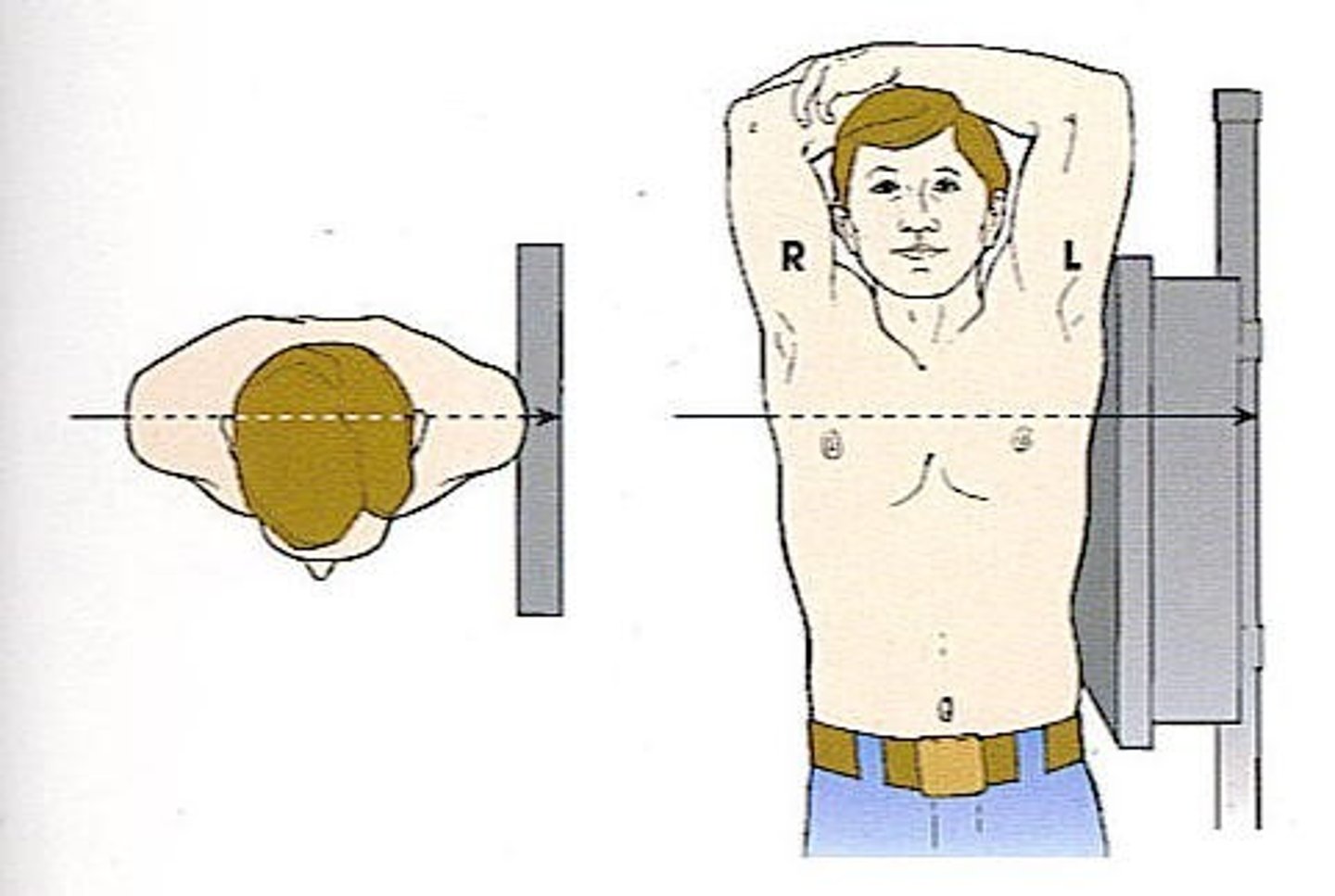
A lateral projection is a _____________ view of a part
side
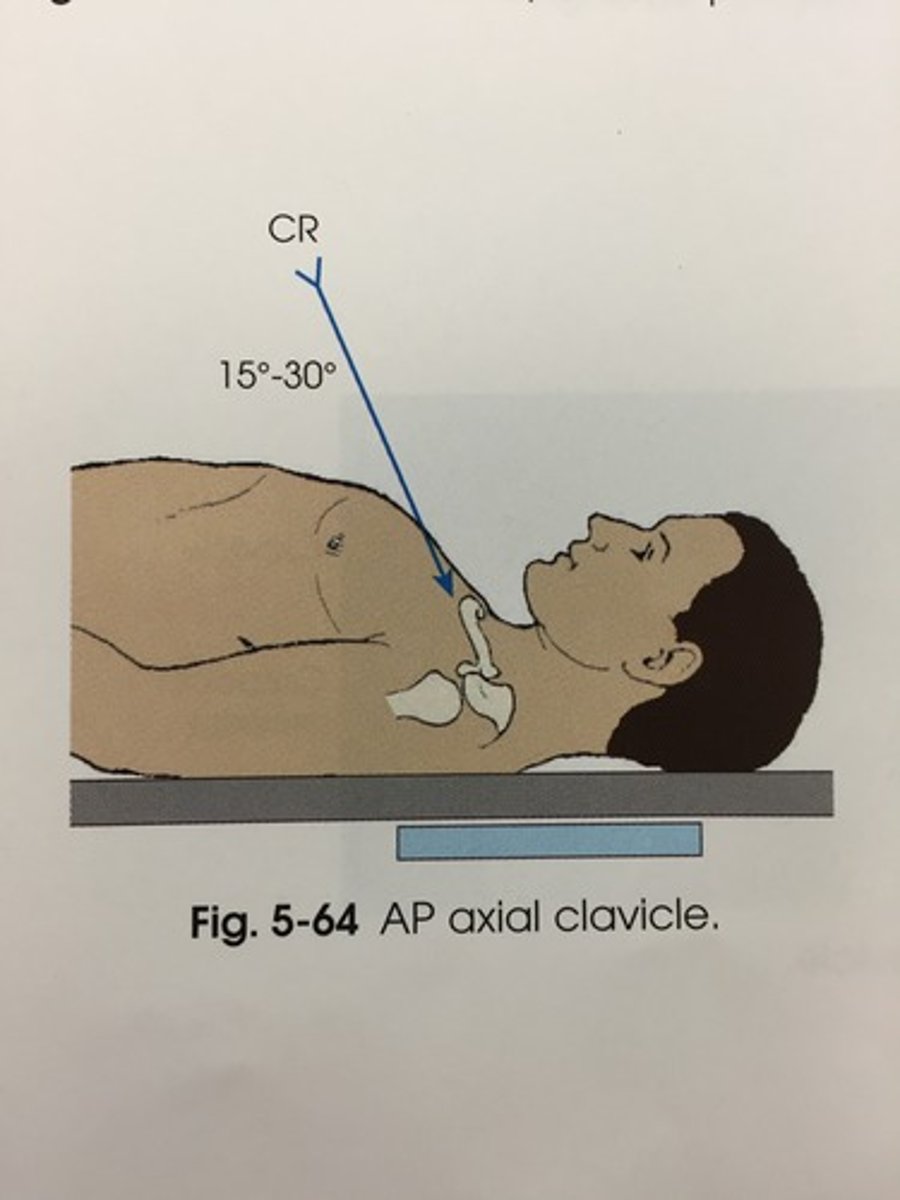
Axial projection refers to any angle of the CR of ___________ degrees or more along the long axis of the body or body part.
10 degrees or more
Define an inferosuperior projection:
The CR enters the body inferiorly and exits the body superiorly

Define tangential projection:
The CR skims the body part that is being xrayed
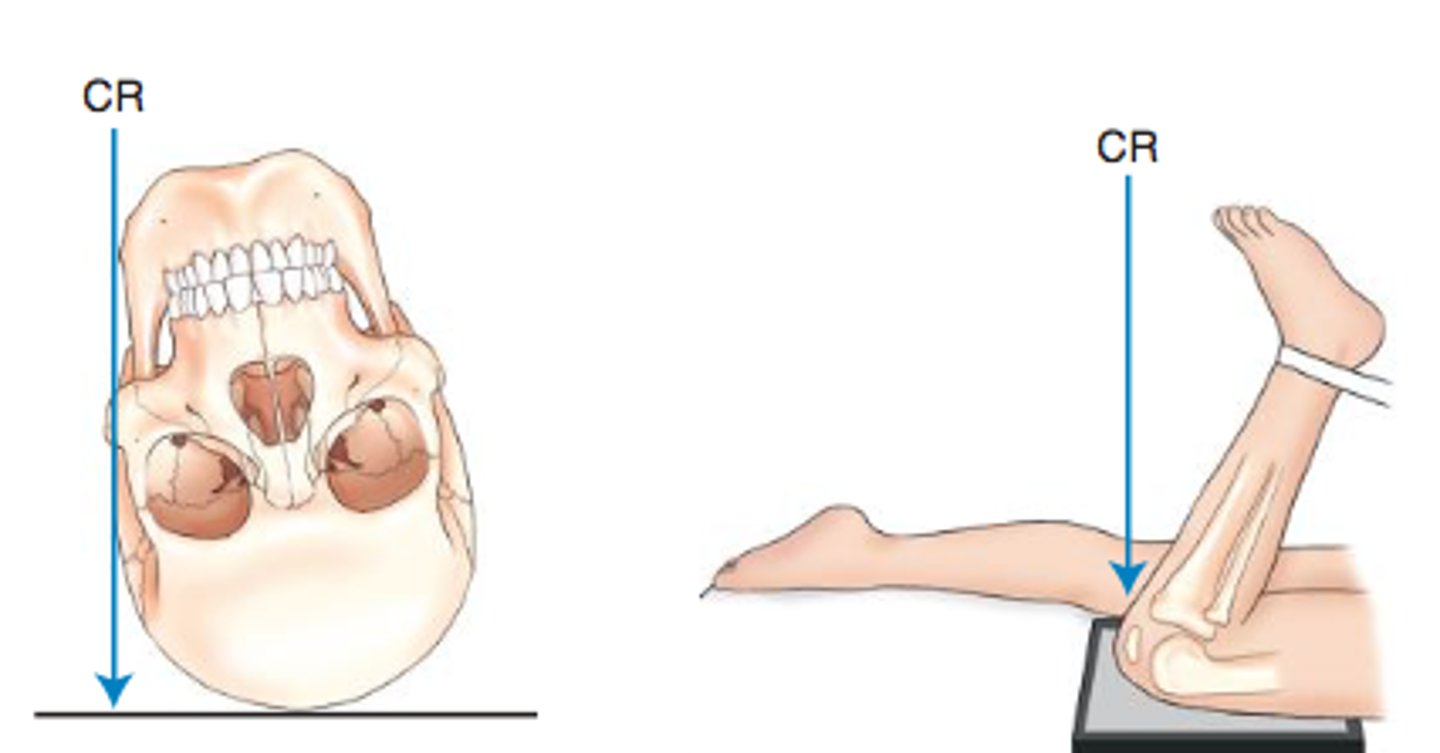
An example of the AP axial projection is the _________________________ position, which is a specific AP chest projection
AP lordotic position
What means through the thorax
Transthoracic
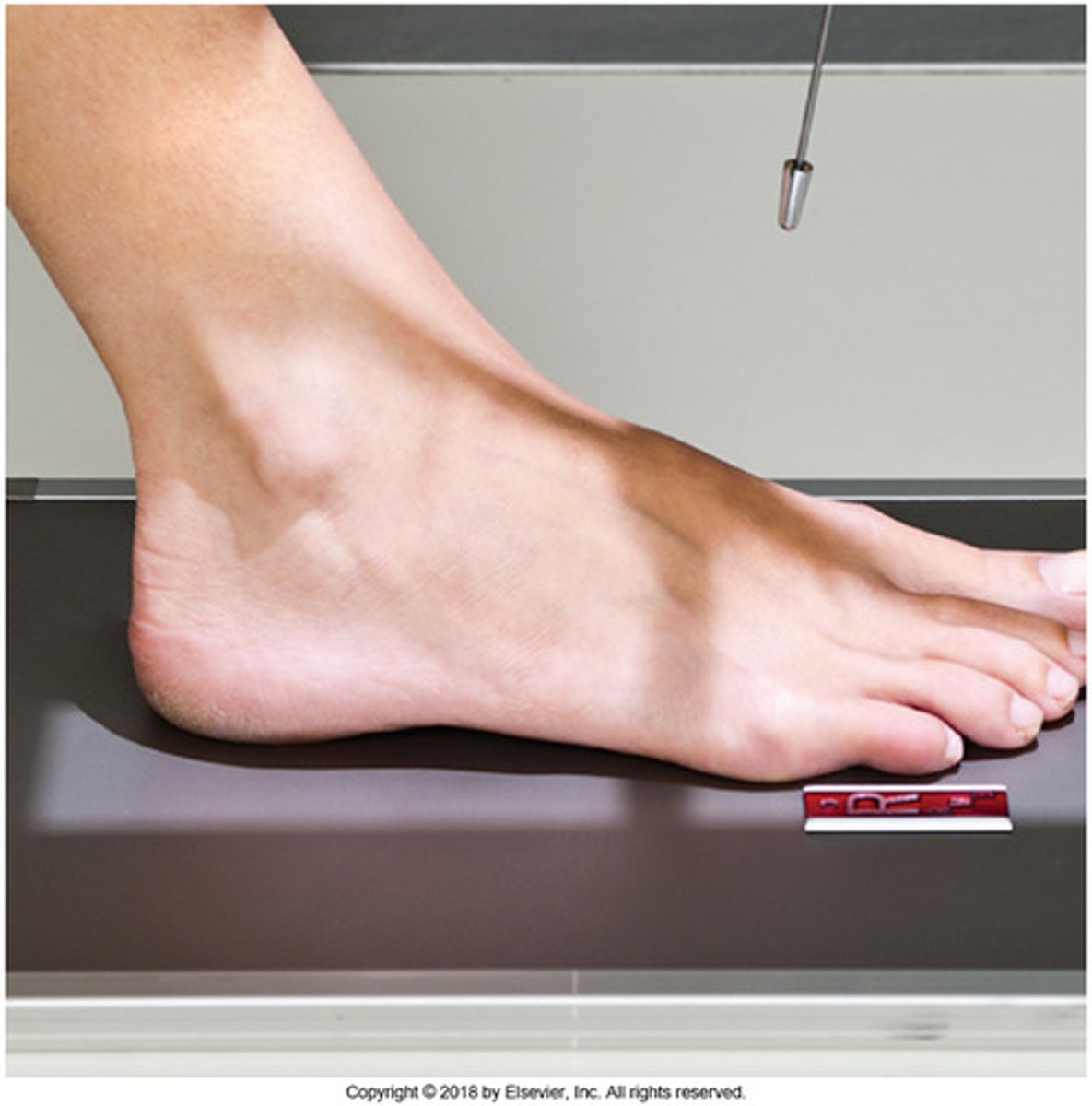
When the central ray enters the top of the foot and exits the bottom of the foot (Dorsoplantar) it is considered a (Circle one: PA or AP) projection.
PA projection (i think its AP)
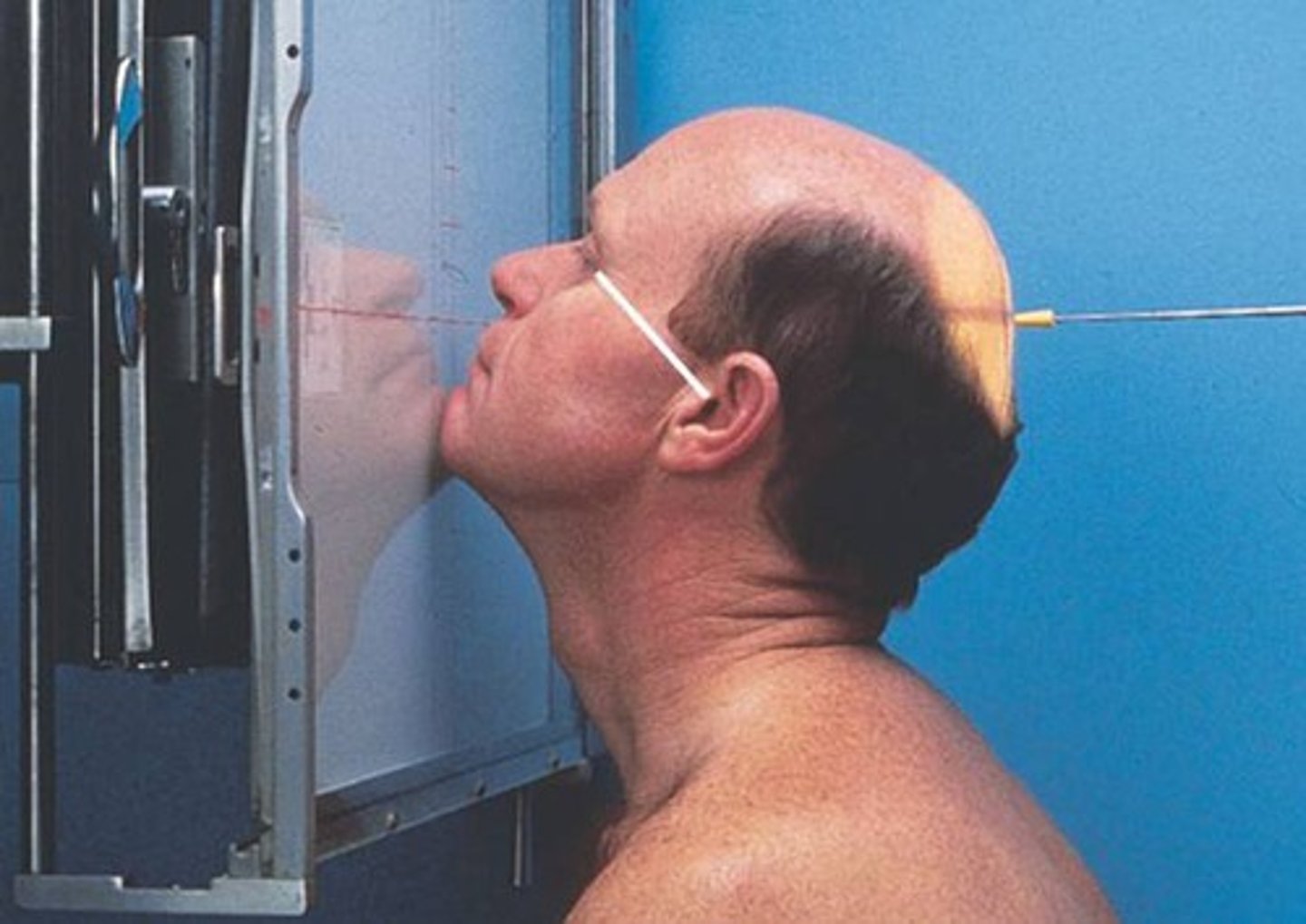
Where does the central ray enter and exit for a parietoacanthial projection?
Enters at the parietal (back top of the skull)
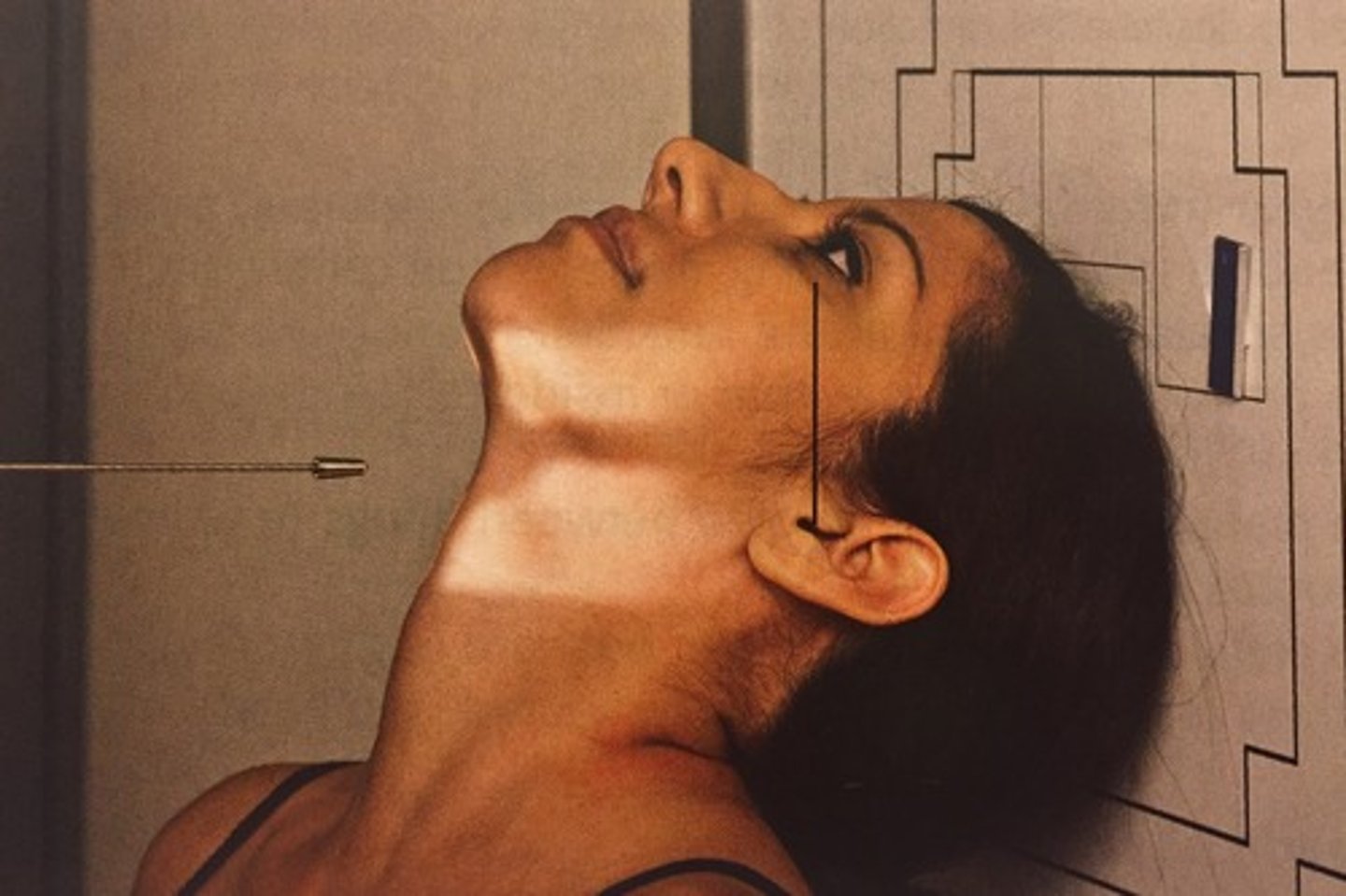
Where does the central ray enter and exit for a submentovertex (SMV) projection?
Enters below the mandible and exits at the vertex of the skull
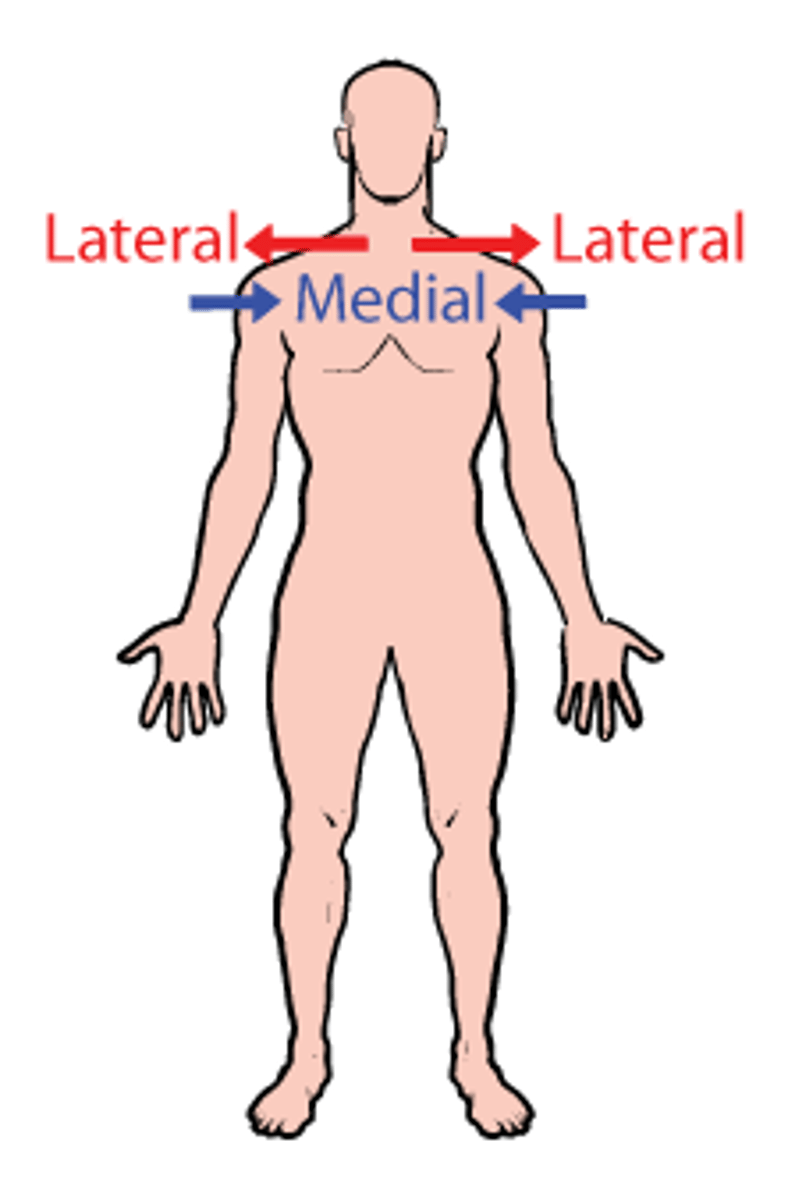
Medial vs. Lateral
toward midline vs away from midline
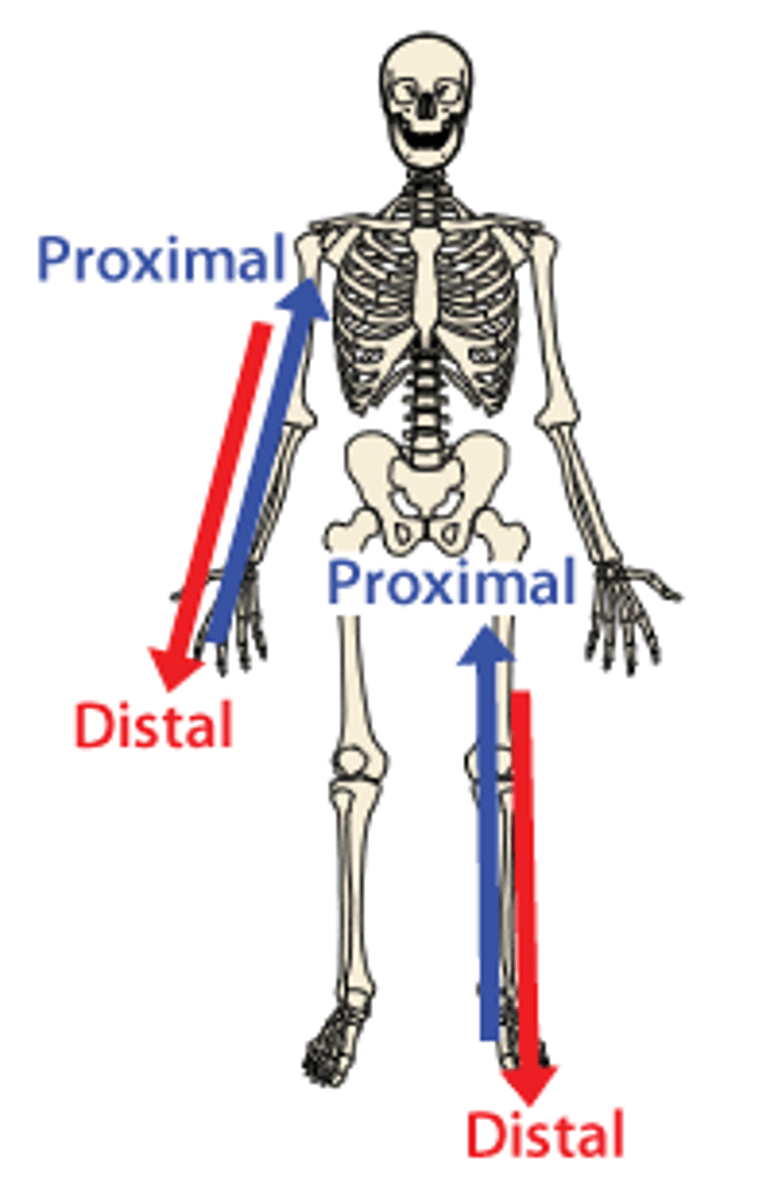
Proximal vs. Distal
toward or nearest the trunk of the body or nearest the point of origin on one of its parts; away from or farthest from the trunk or the point of origin of a body part
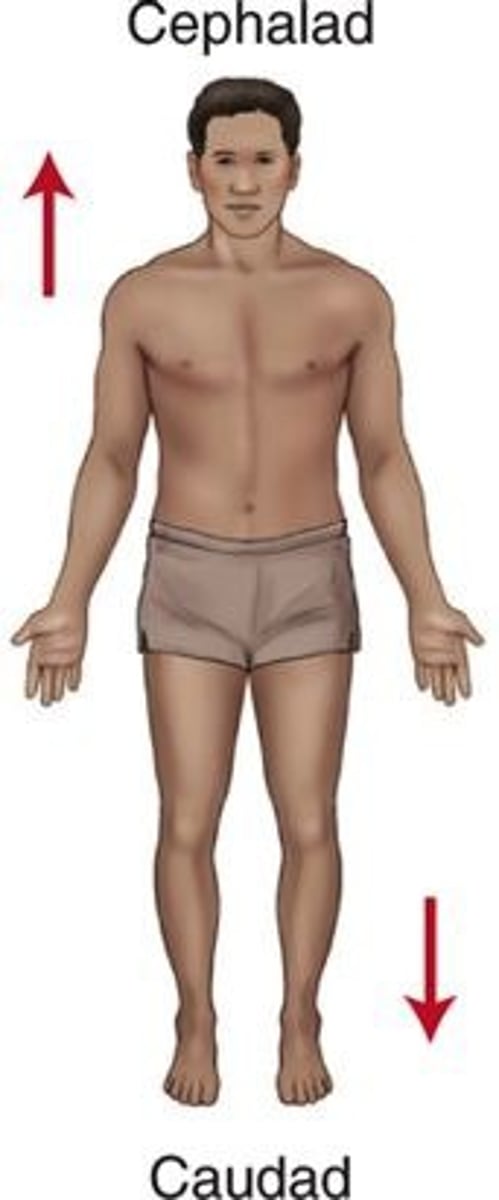
Cephalad vs. Caudad
toward the head vs. toward the tail
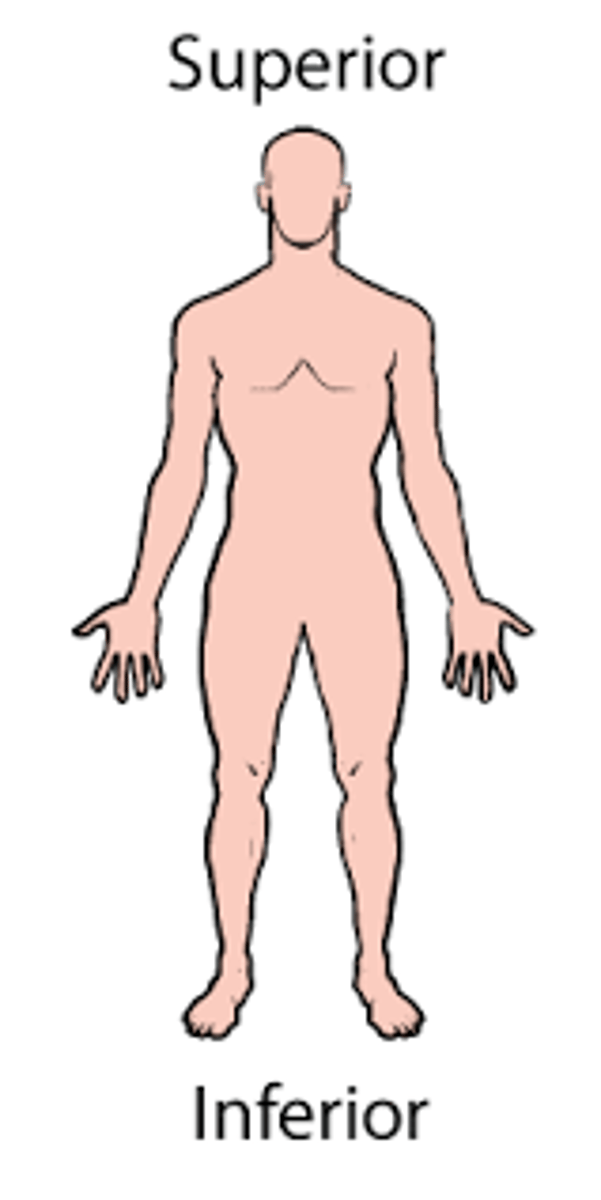
inferior vs superior
below vs above
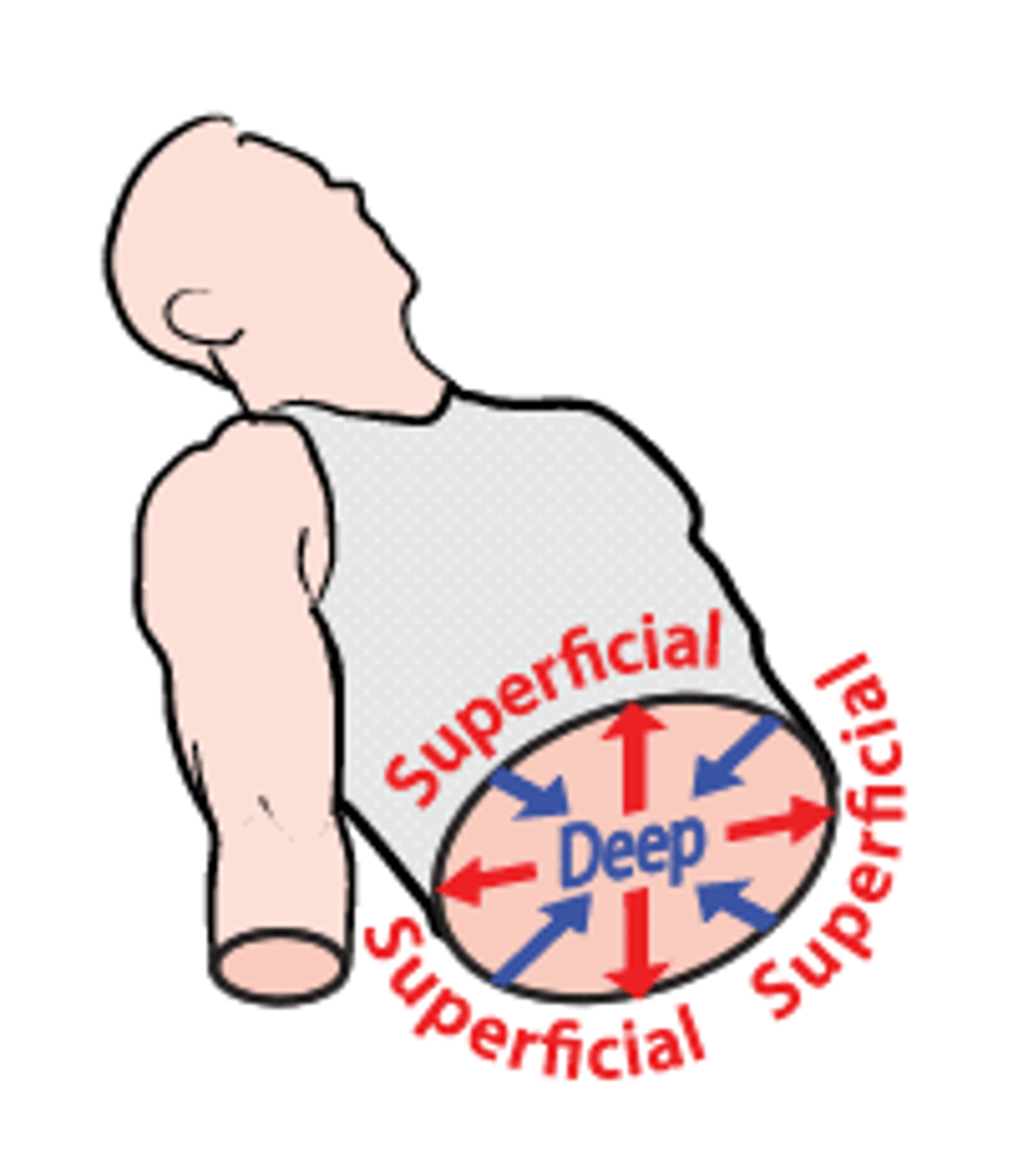
Superficial vs. Deep
nearer the surface; farther away from the body surface
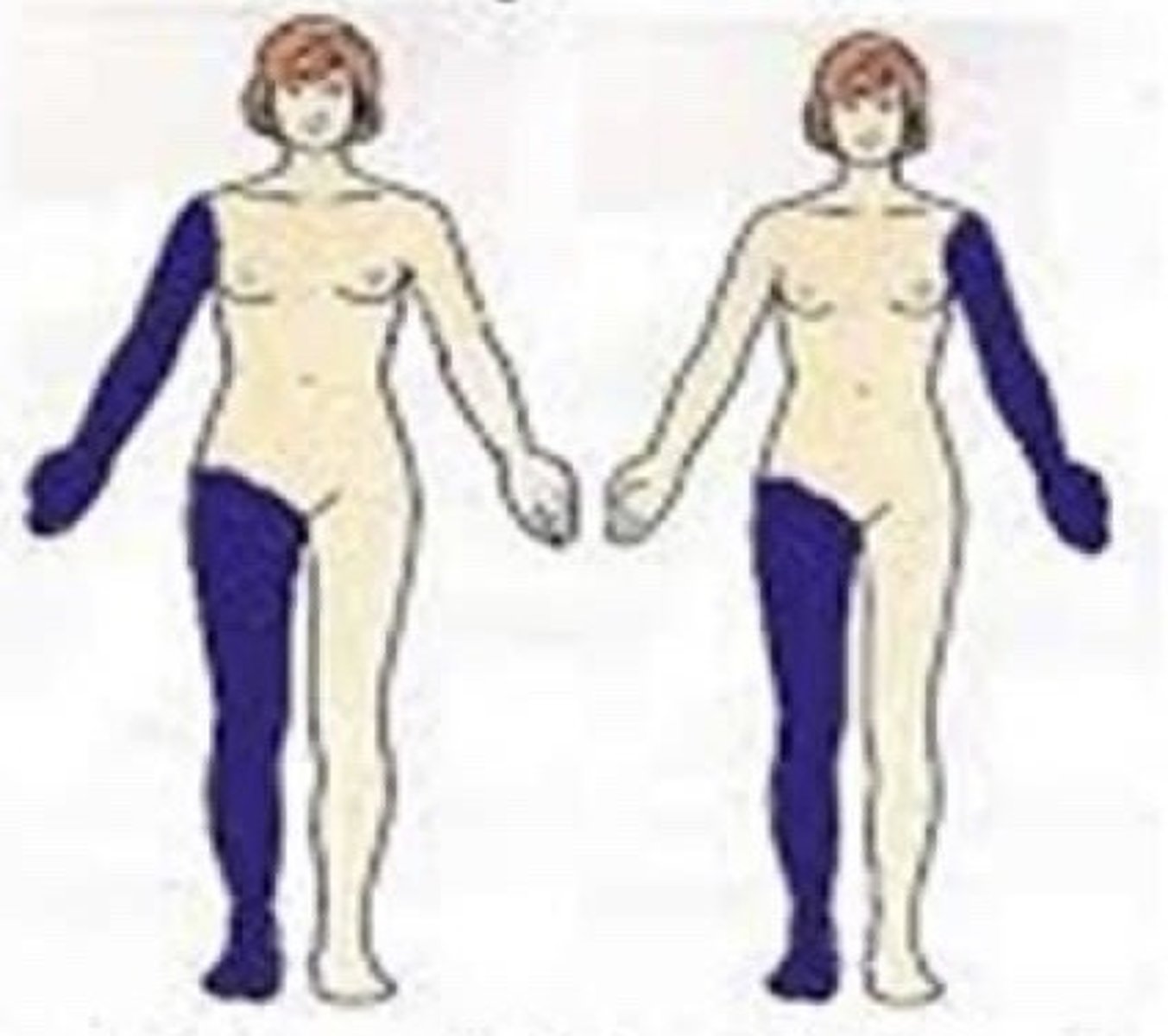
Ipsilateral vs. Contralateral
same side vs opposite side
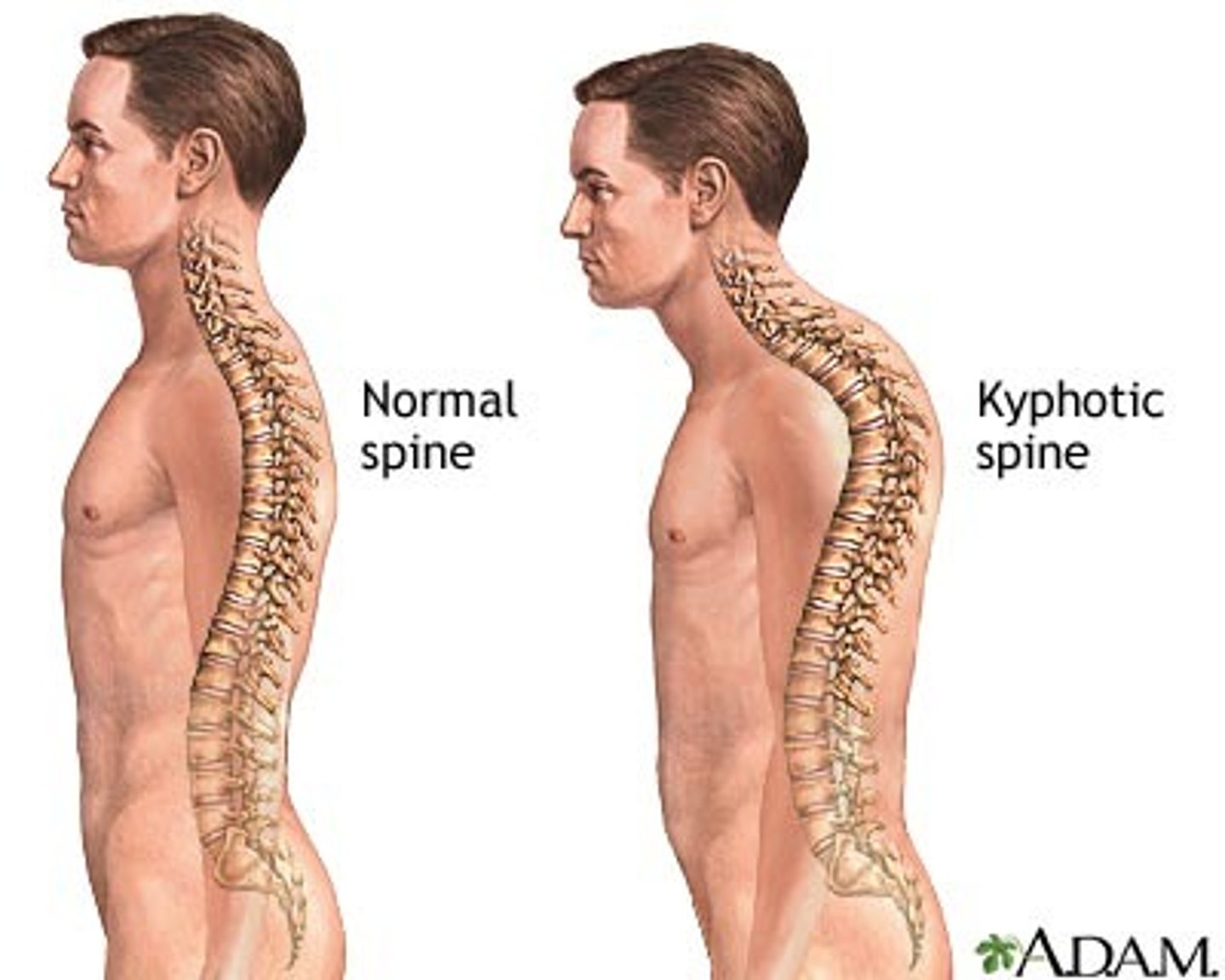
What type of spine curvature is also known as "humpback" and what part of the spine does it normally affect?
Kyphosis; Thoracic spine
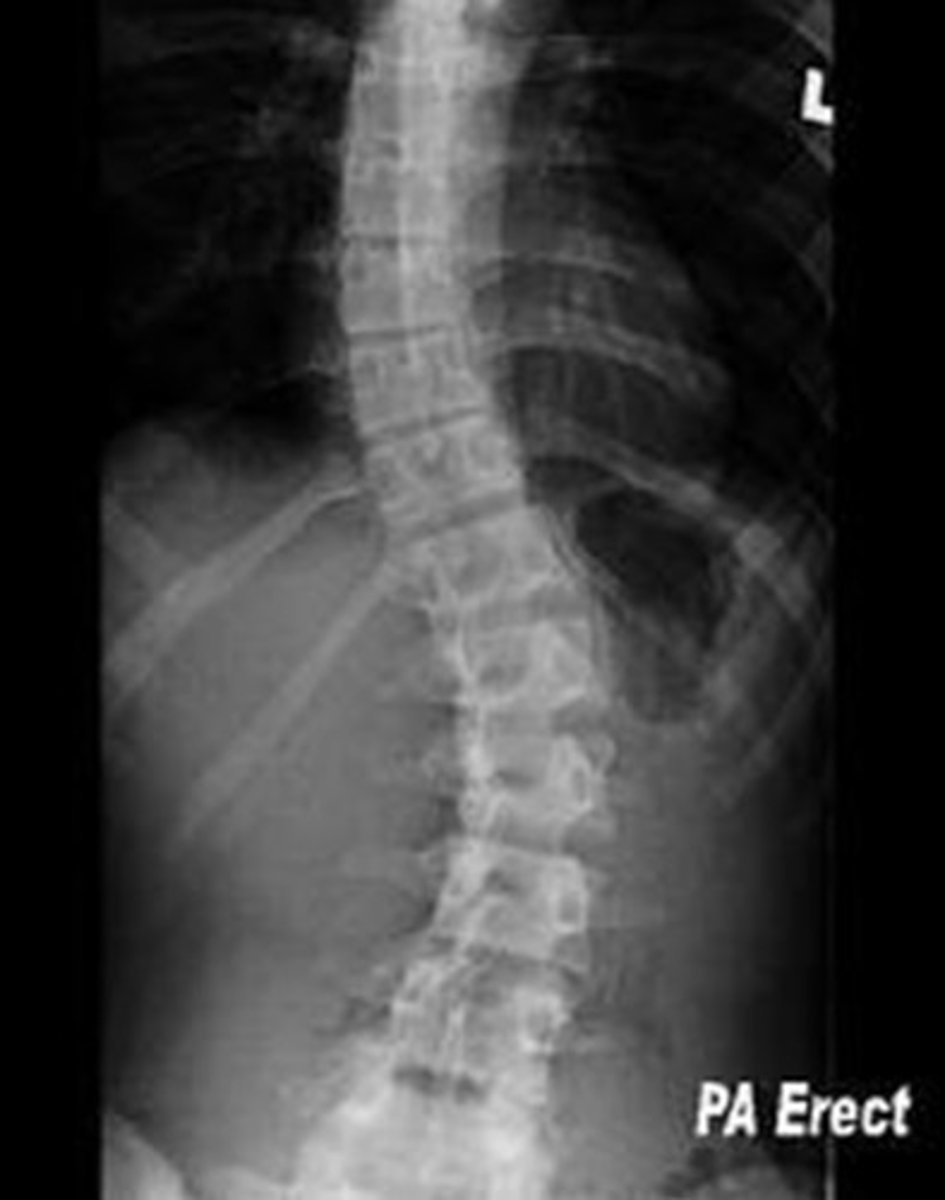
What type of spinal curvature is considered an abnormal lateral curvature?
Scoliosis
Describe the difference between flexion and extension:
decreases the angle between two body parts; increases the angle between two body parts
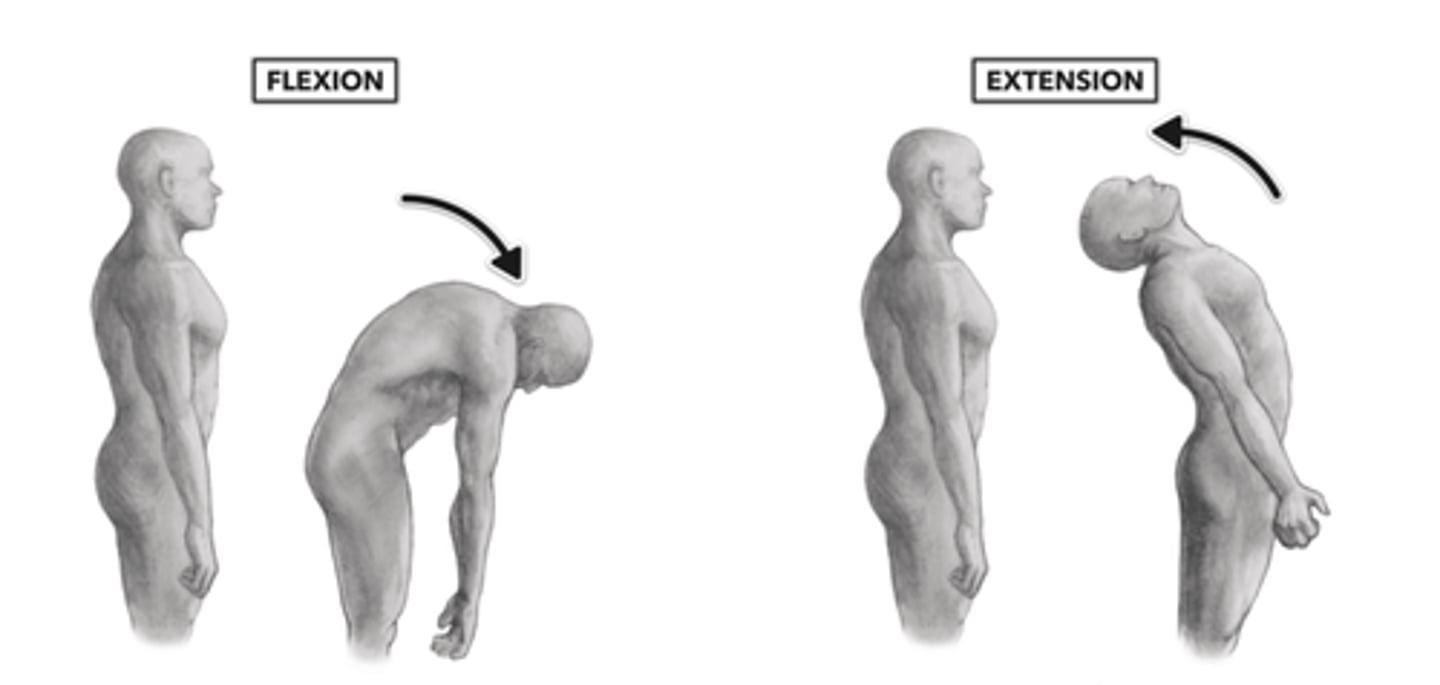
Extending the joint beyond the straight or neutral position is called:
Hyperextension
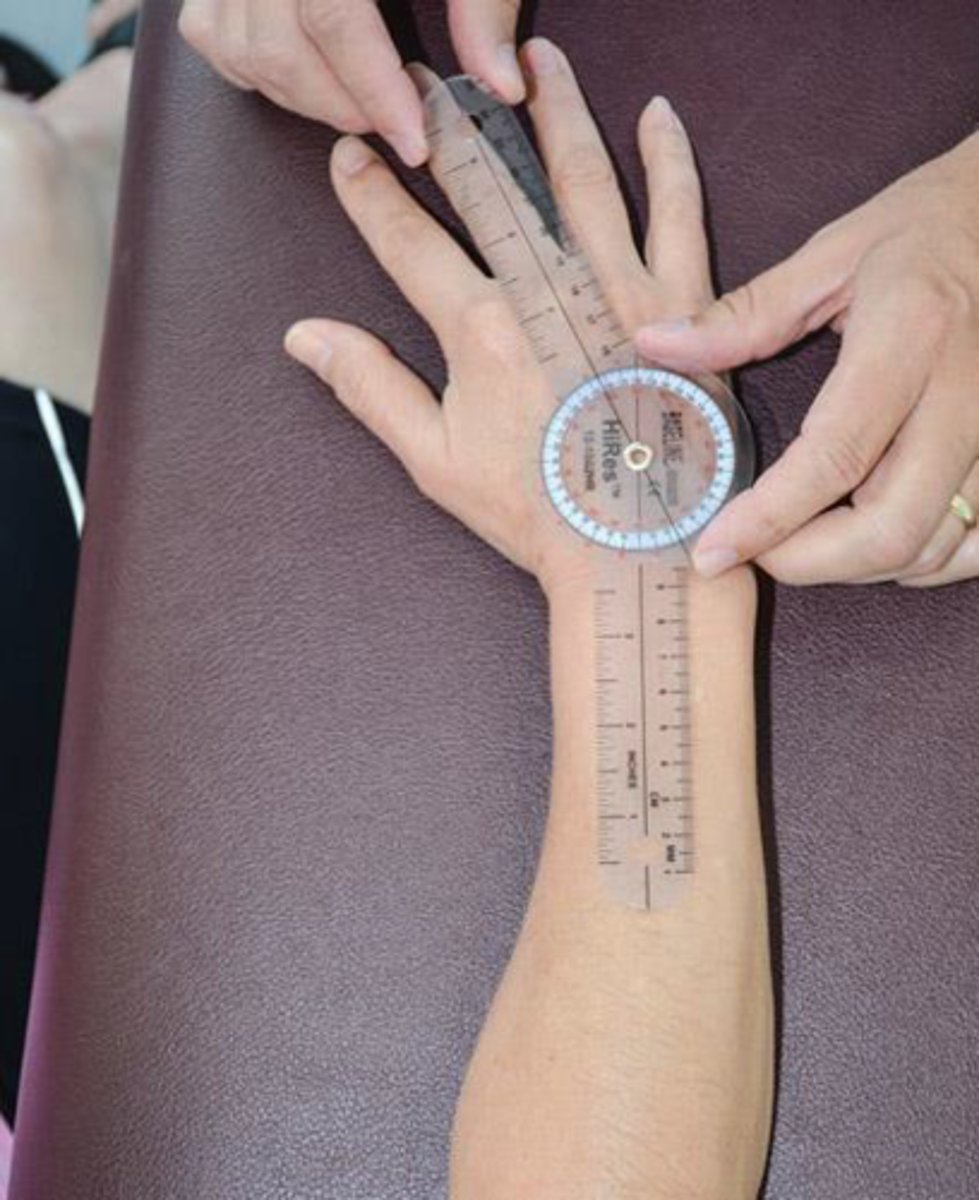
Label the picture according to the action occurring
radial deviation
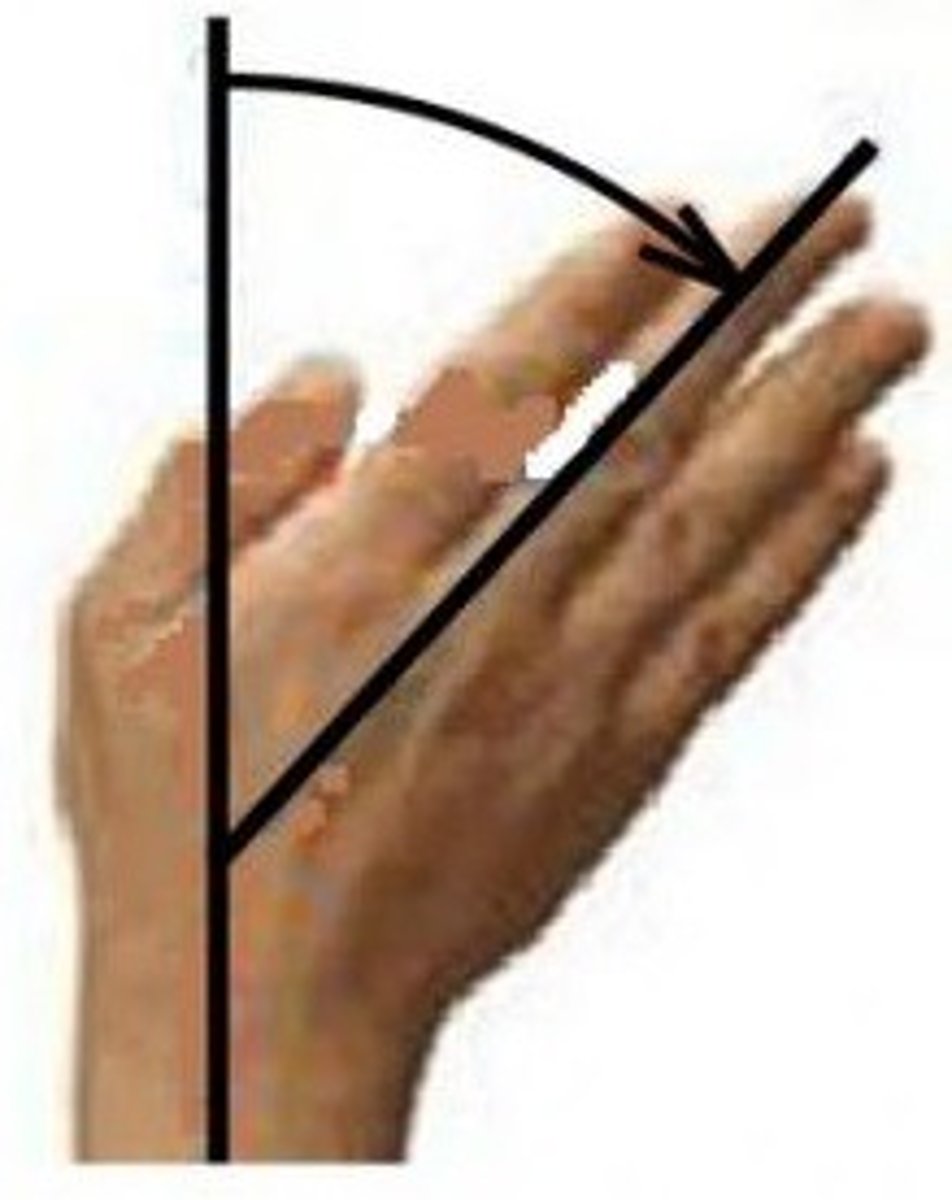
Label the picture according to the action occurring
ulnar deviation
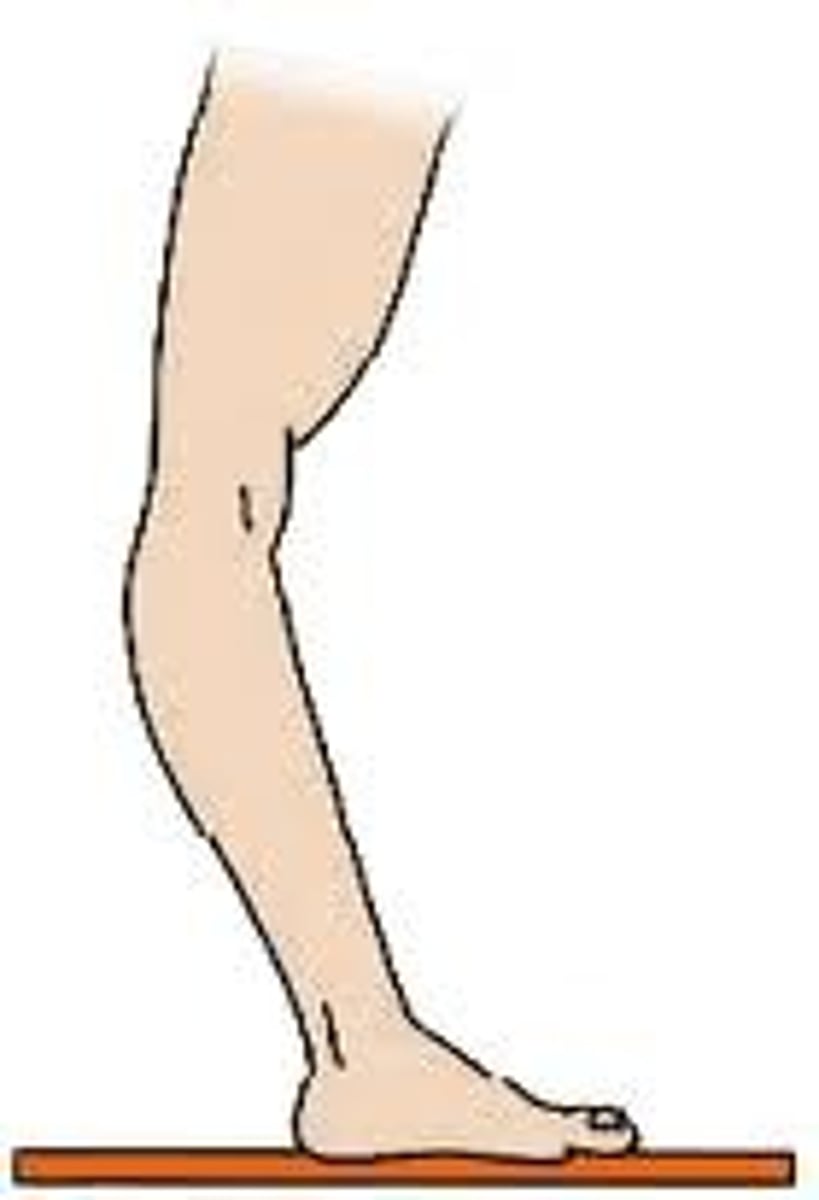
Pointing ones toes downward is _____ flexion and pointing the toes back toward the head is _______ flexion
plantar; dorsi
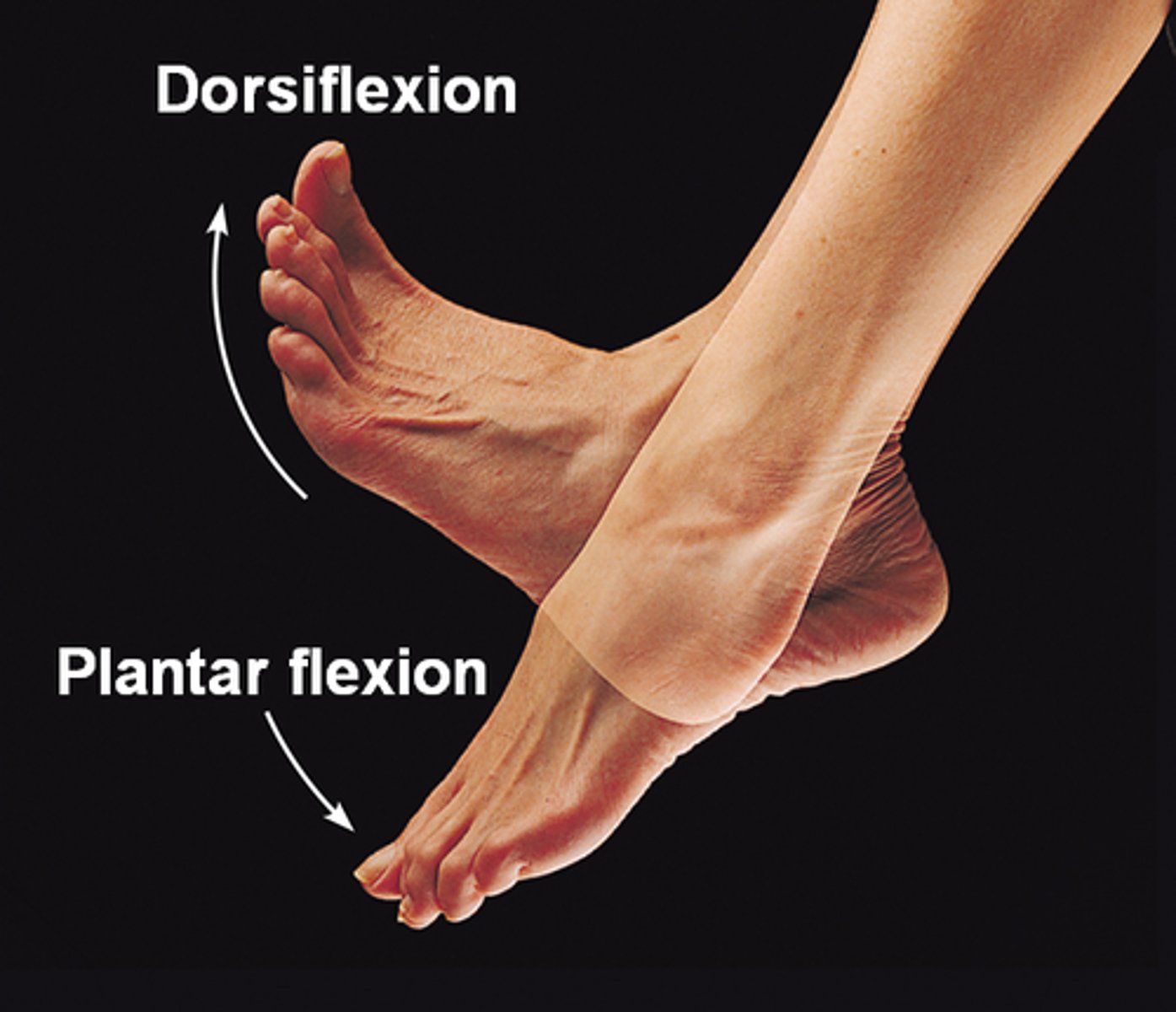
is an outward stress movement of the foot at the ankle joint:
Eversion
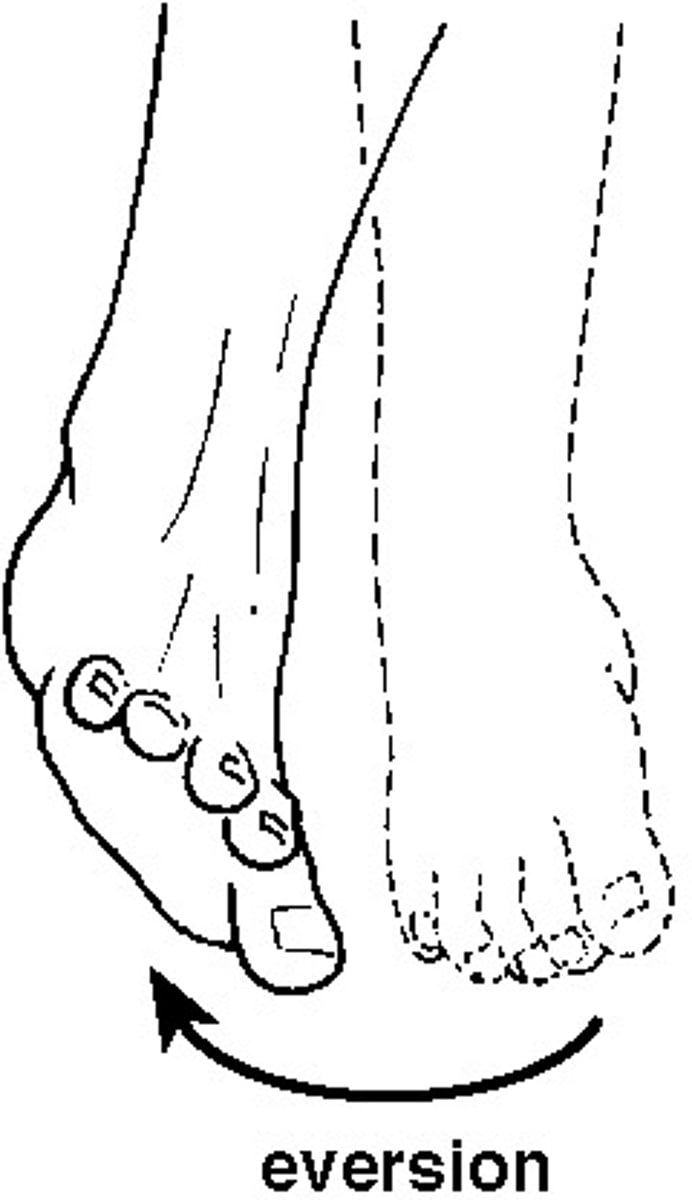
Inversion is also known as:
supination of the foot
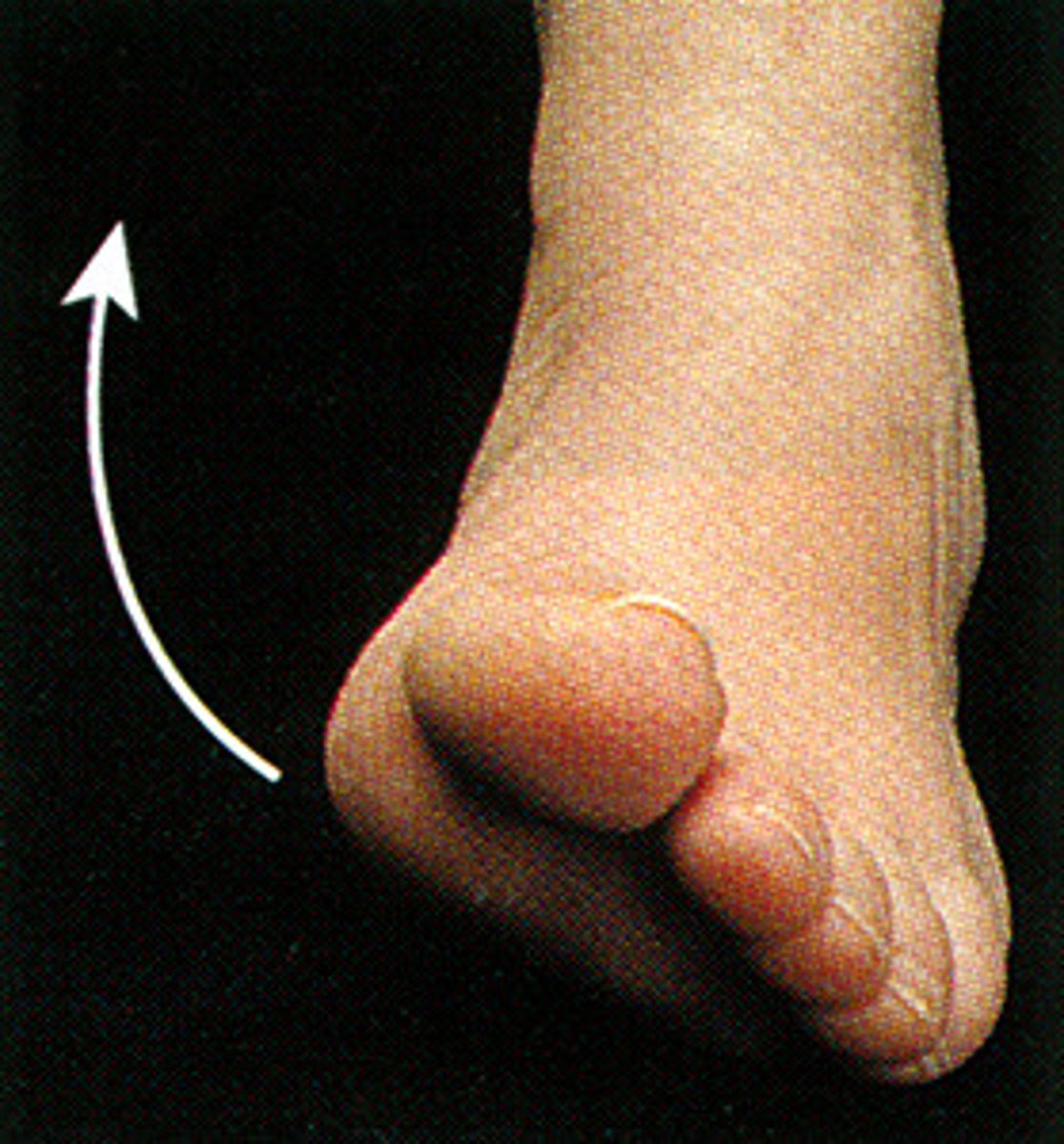
A rotation or turning of a body part with the movement of the anterior aspect of the part toward the inside is:
medial rotation (internal rotation)
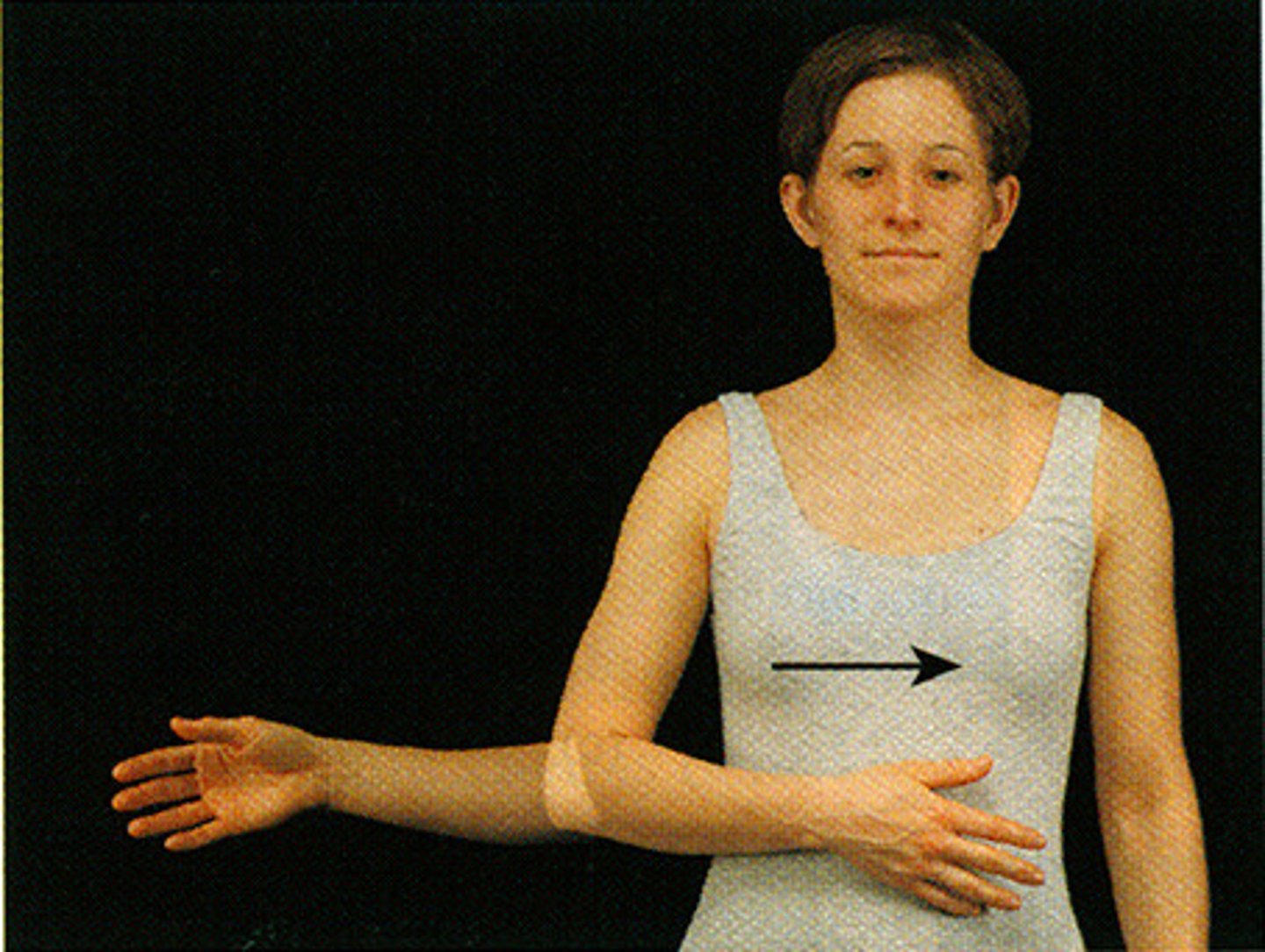
Lateral rotation is the rotation of an anterior body part _____________ from the median plane
away
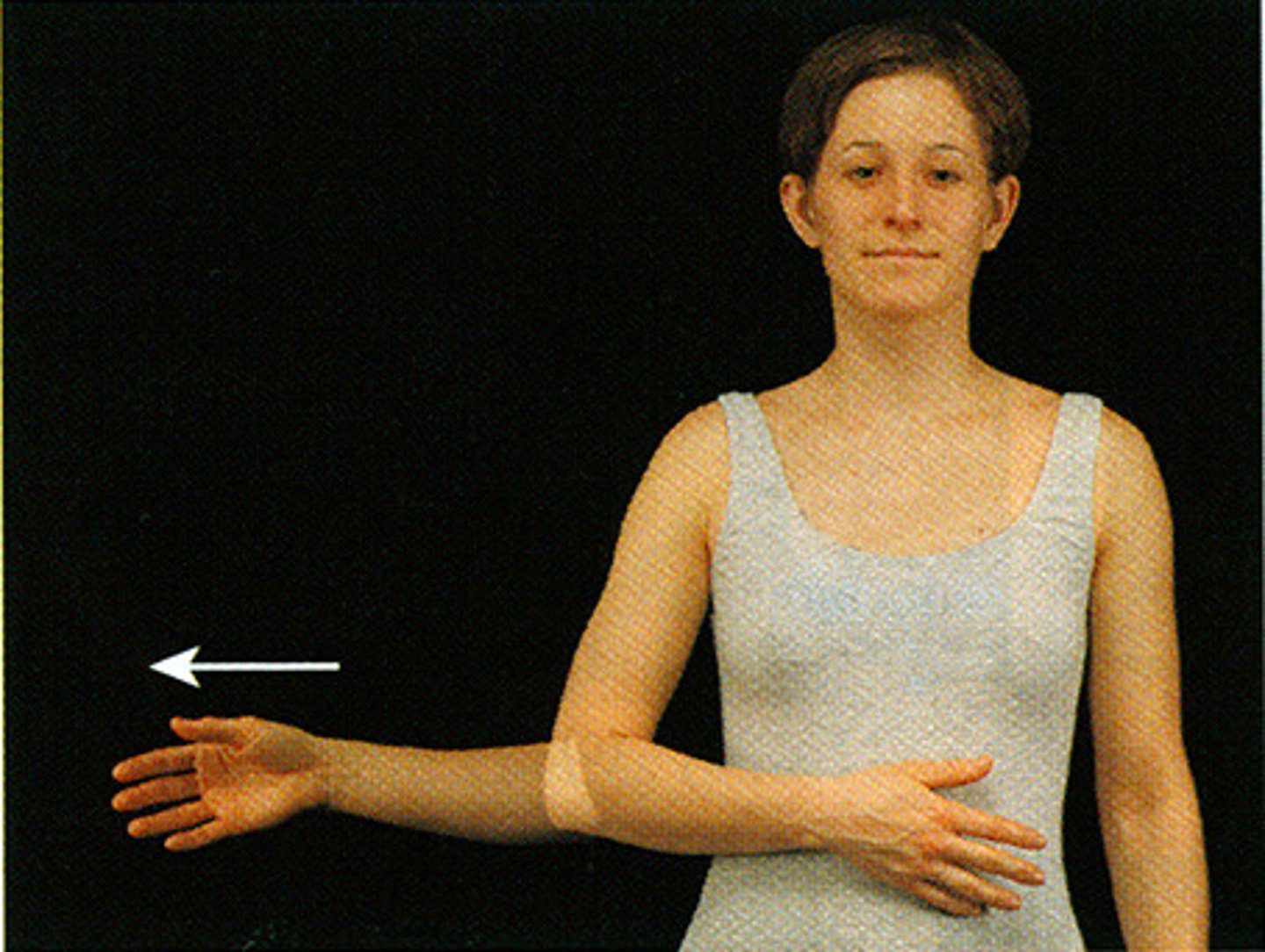
The lateral movement of the leg or arm away from the body is _
Abduction
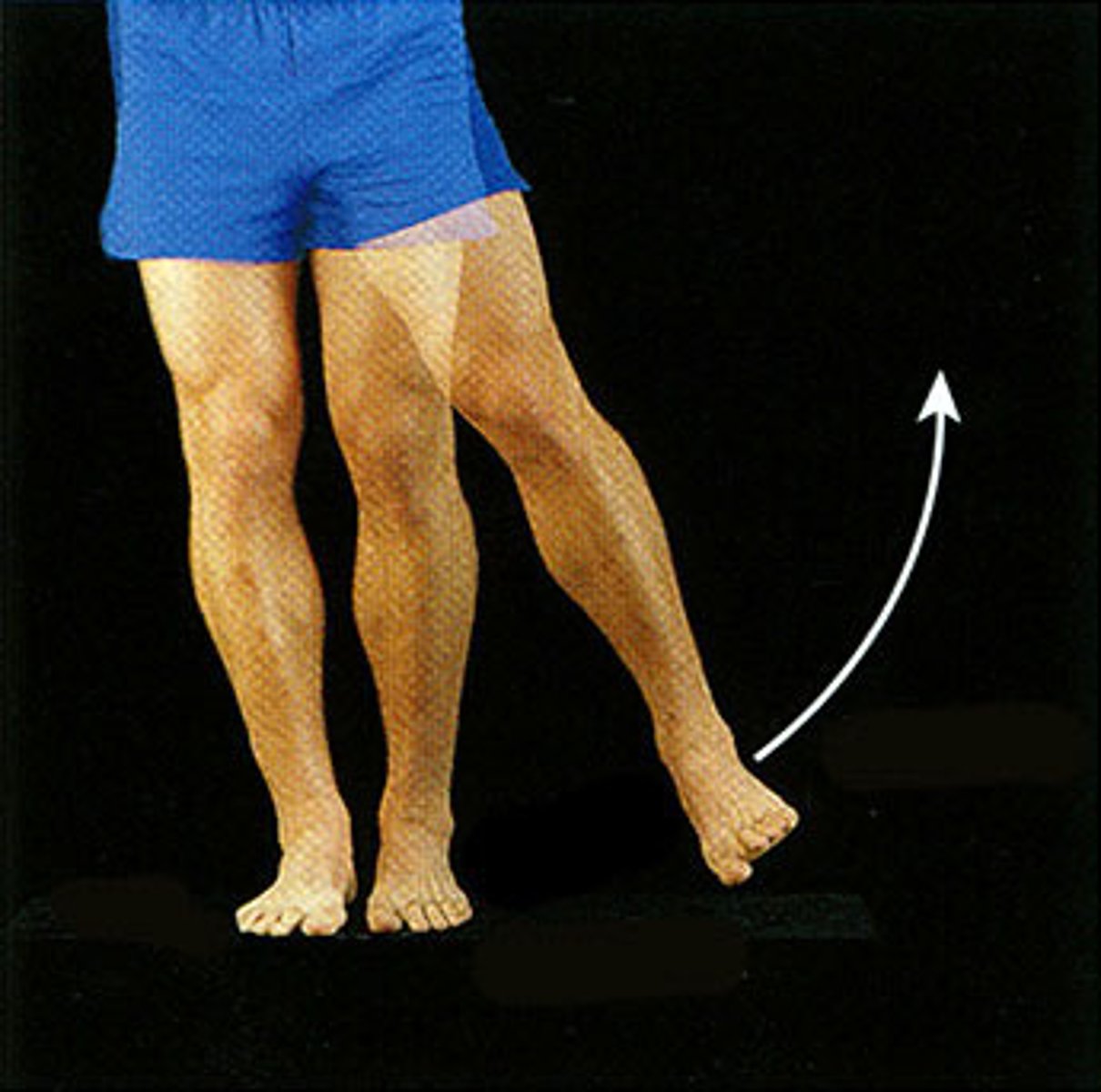
Define adduction:
movement toward the midline
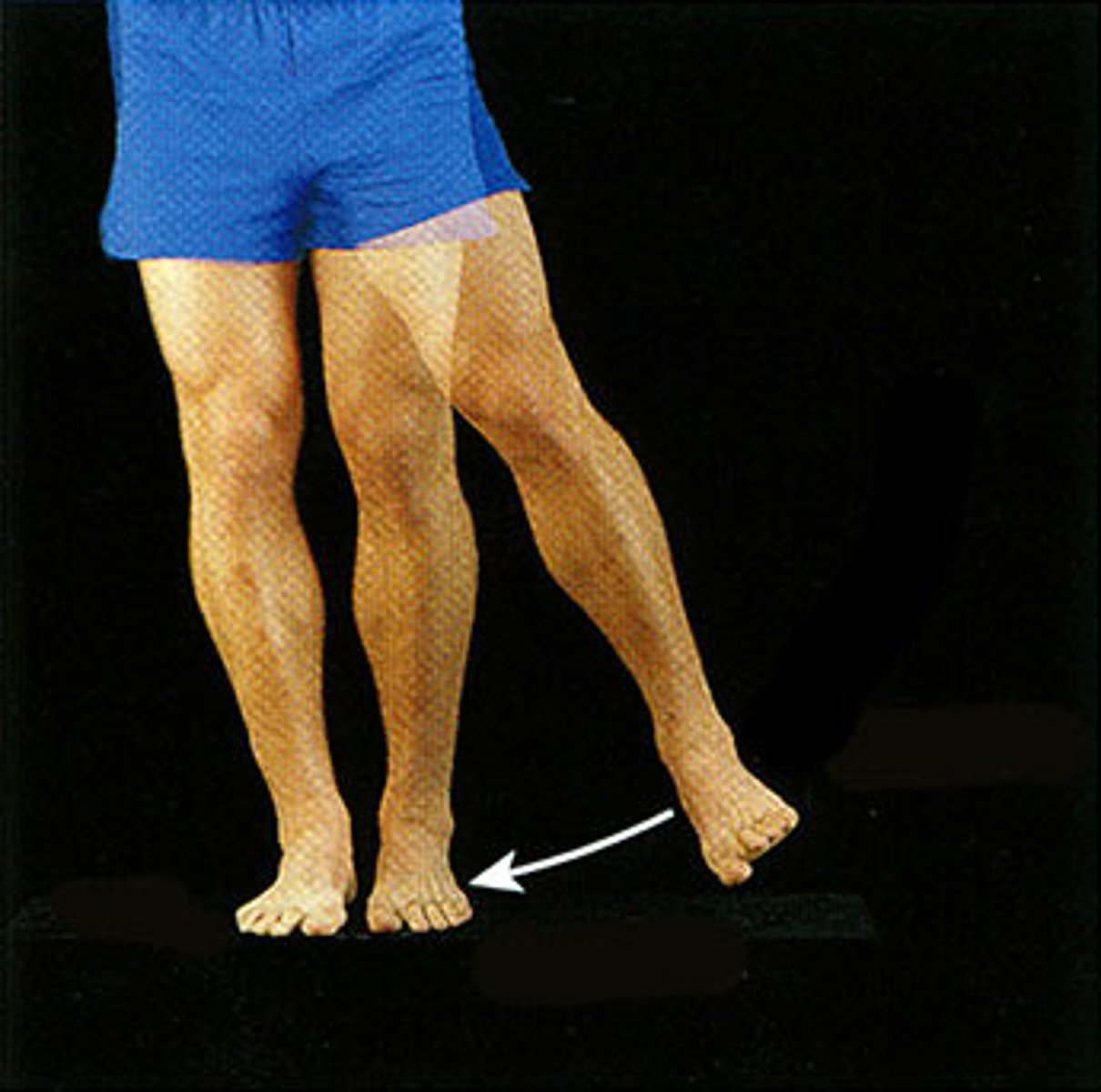
rotational movement of the hand into the anatomic position is called _
Supination (holding soup)
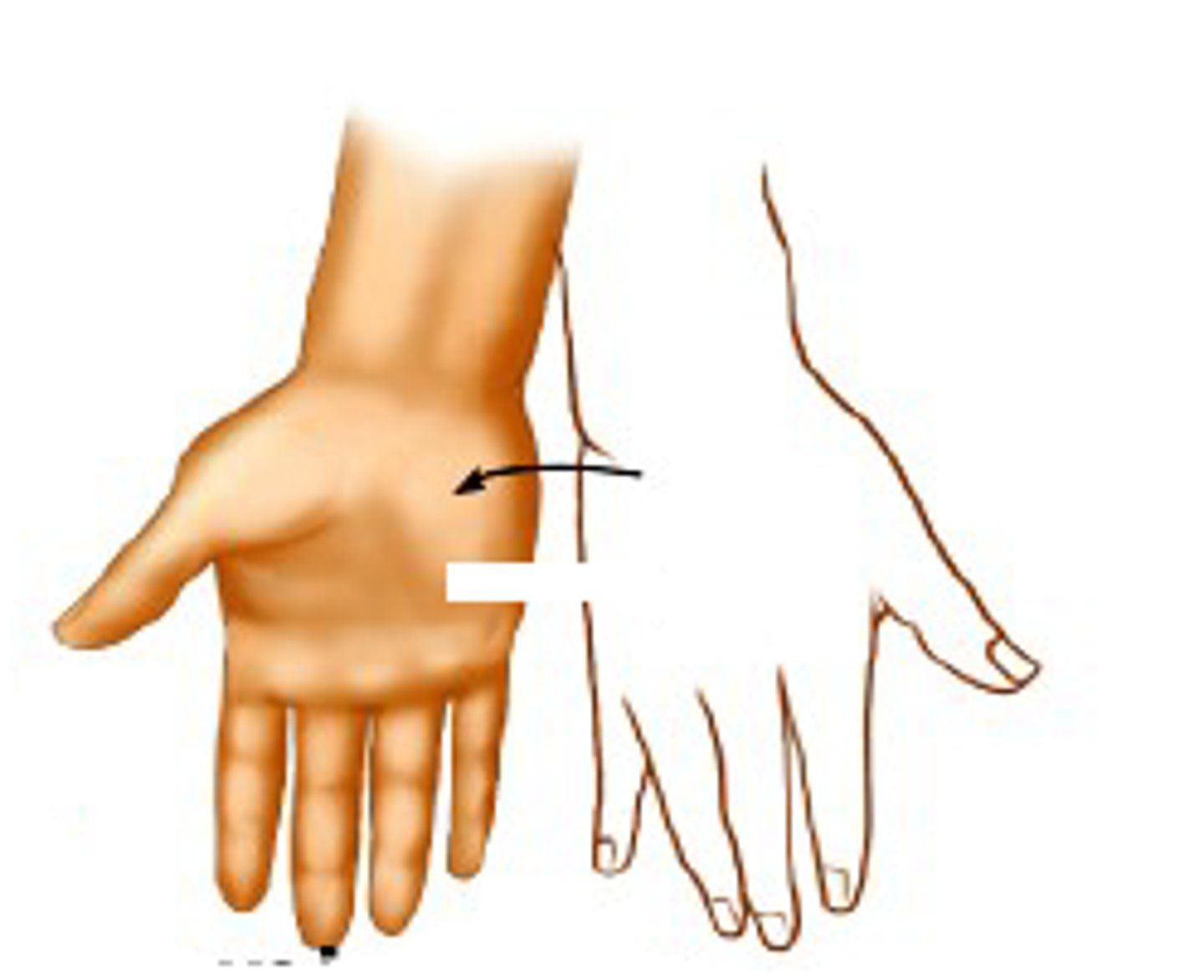
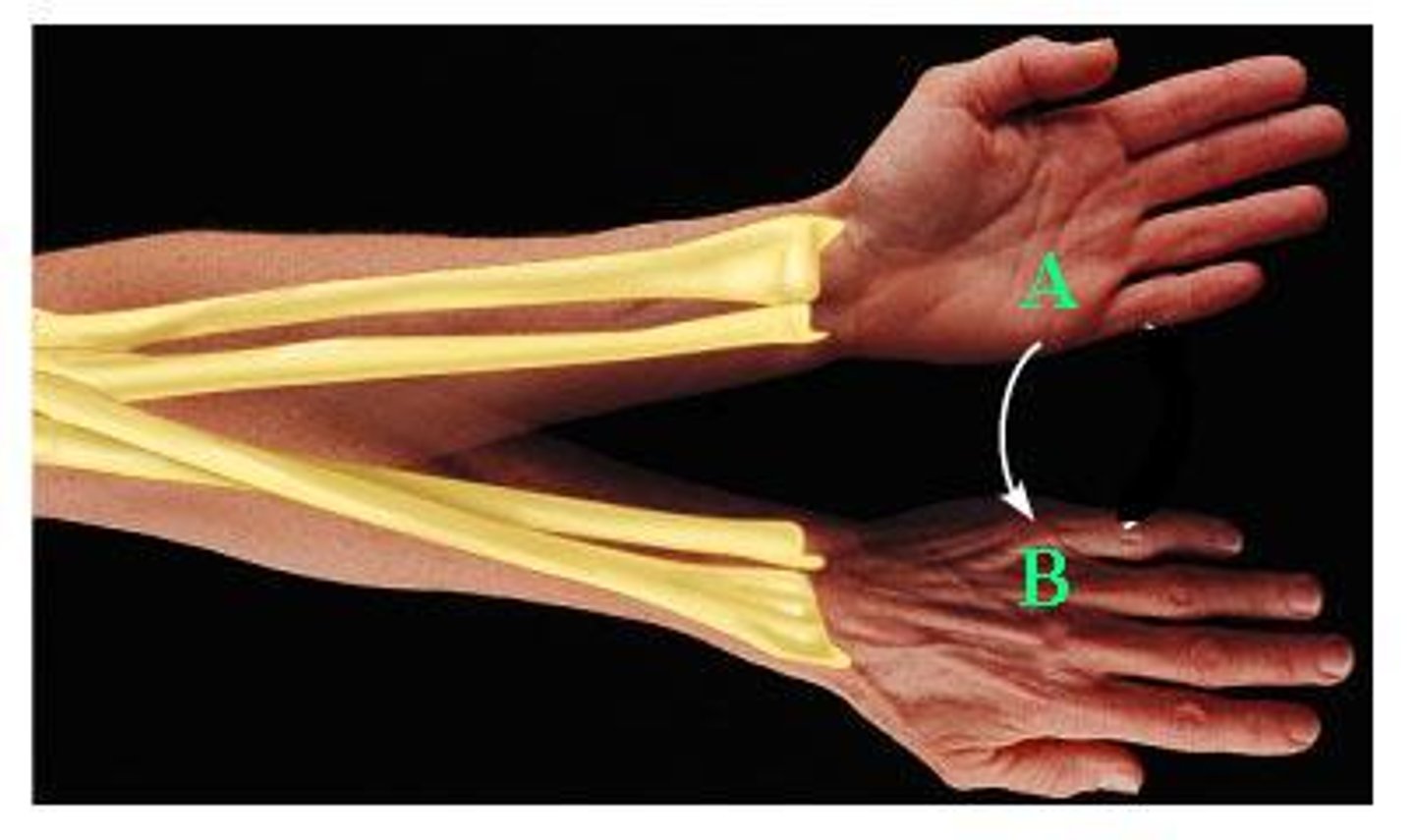
Describe pronation:
Rotation of the forearm that turns the palm posteriorly/inferiorly
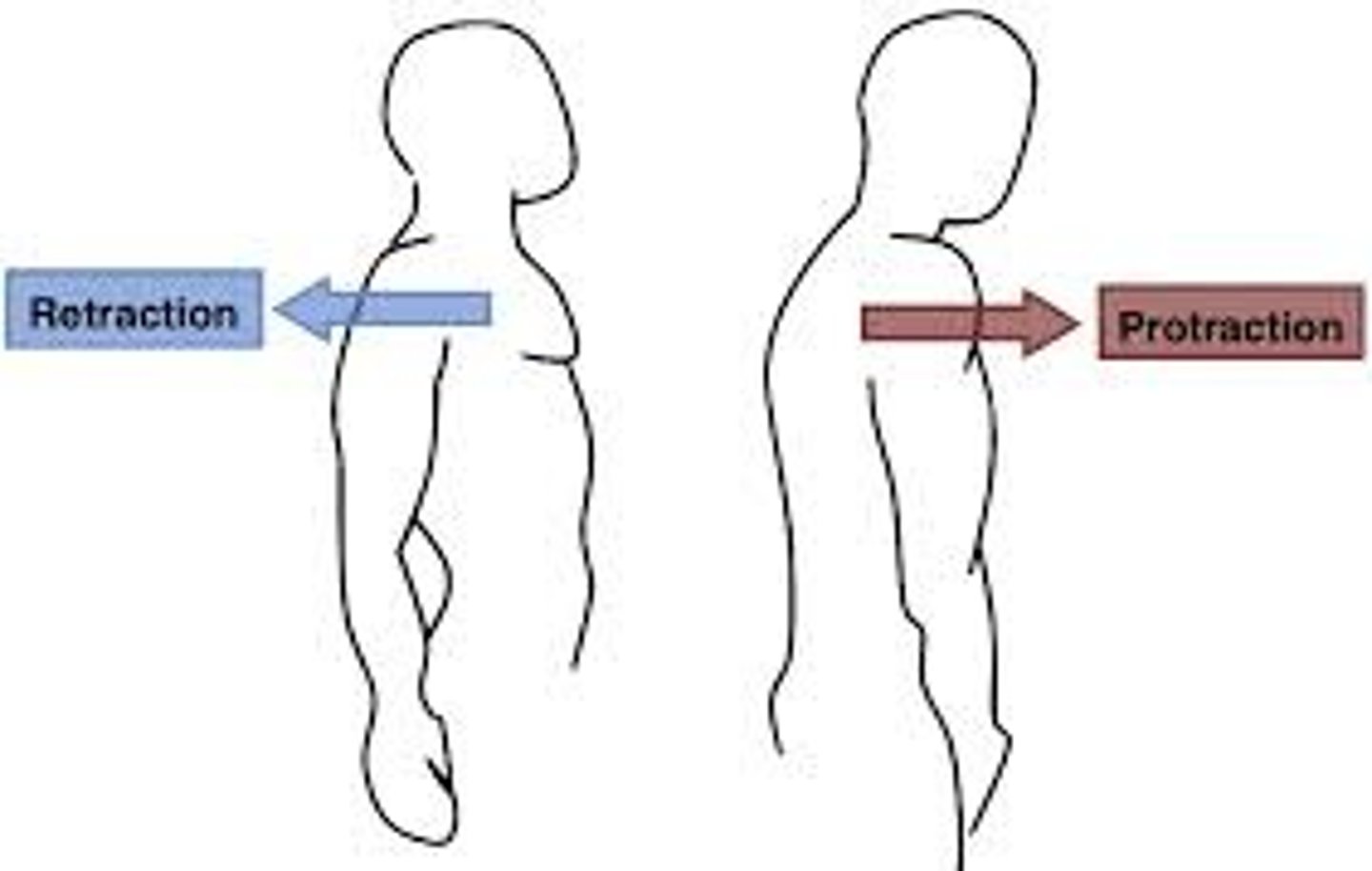
What is the difference between protraction and retraction:
moving forward; moving backward
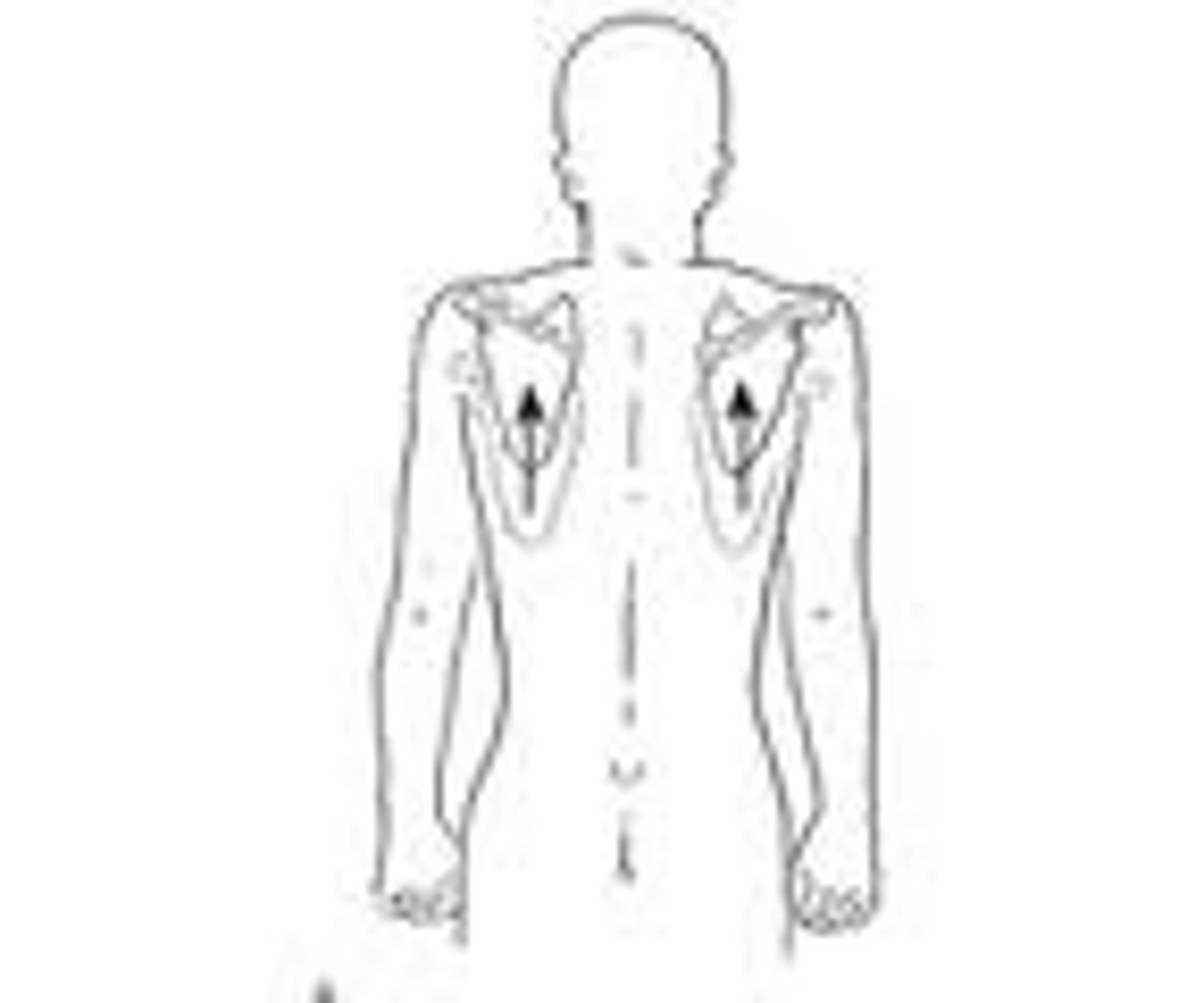
lifting, raising, or moving of a part superiorly is called
Elevation
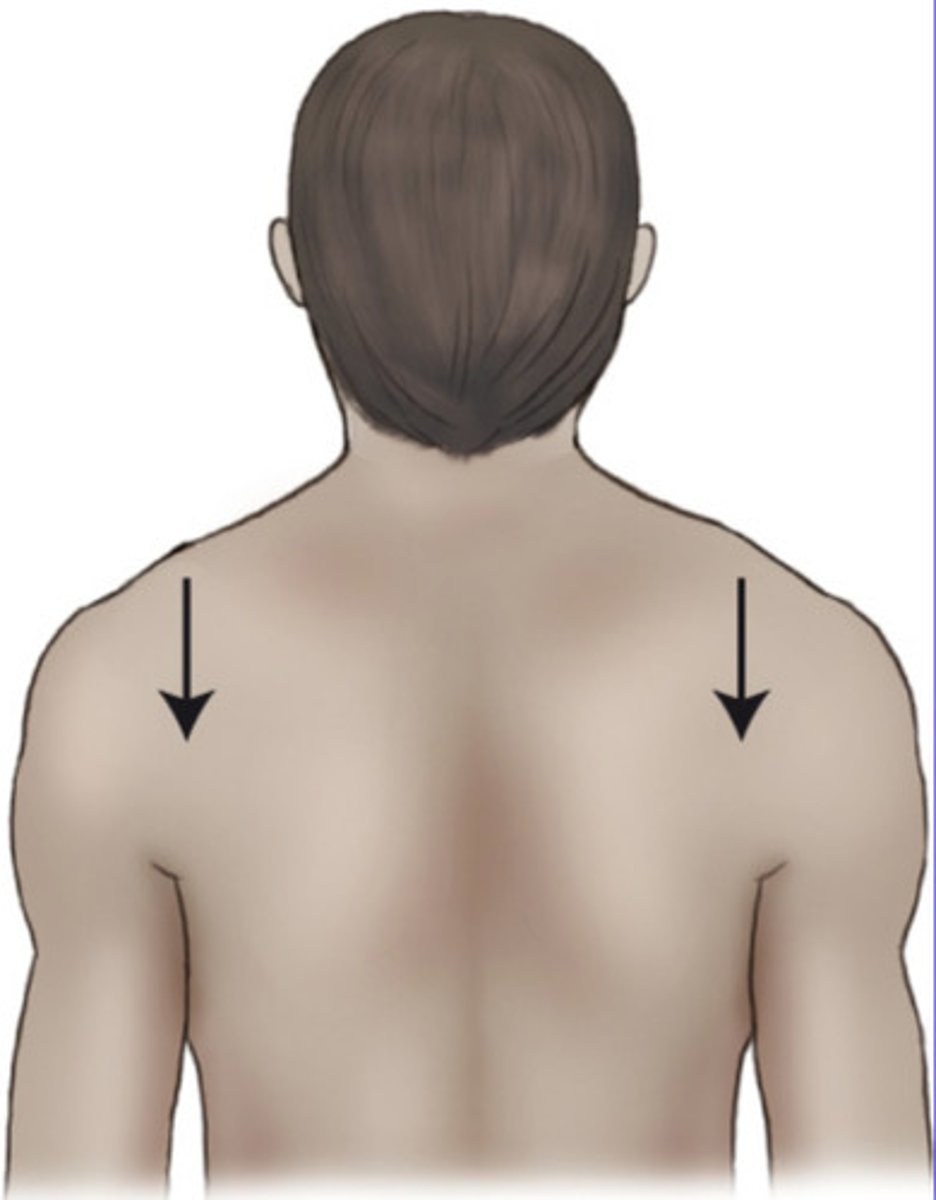
is a letting down, lowering, or moving of a part inferiorly
Depression
To move around in the form of a circle is called
Circumduction
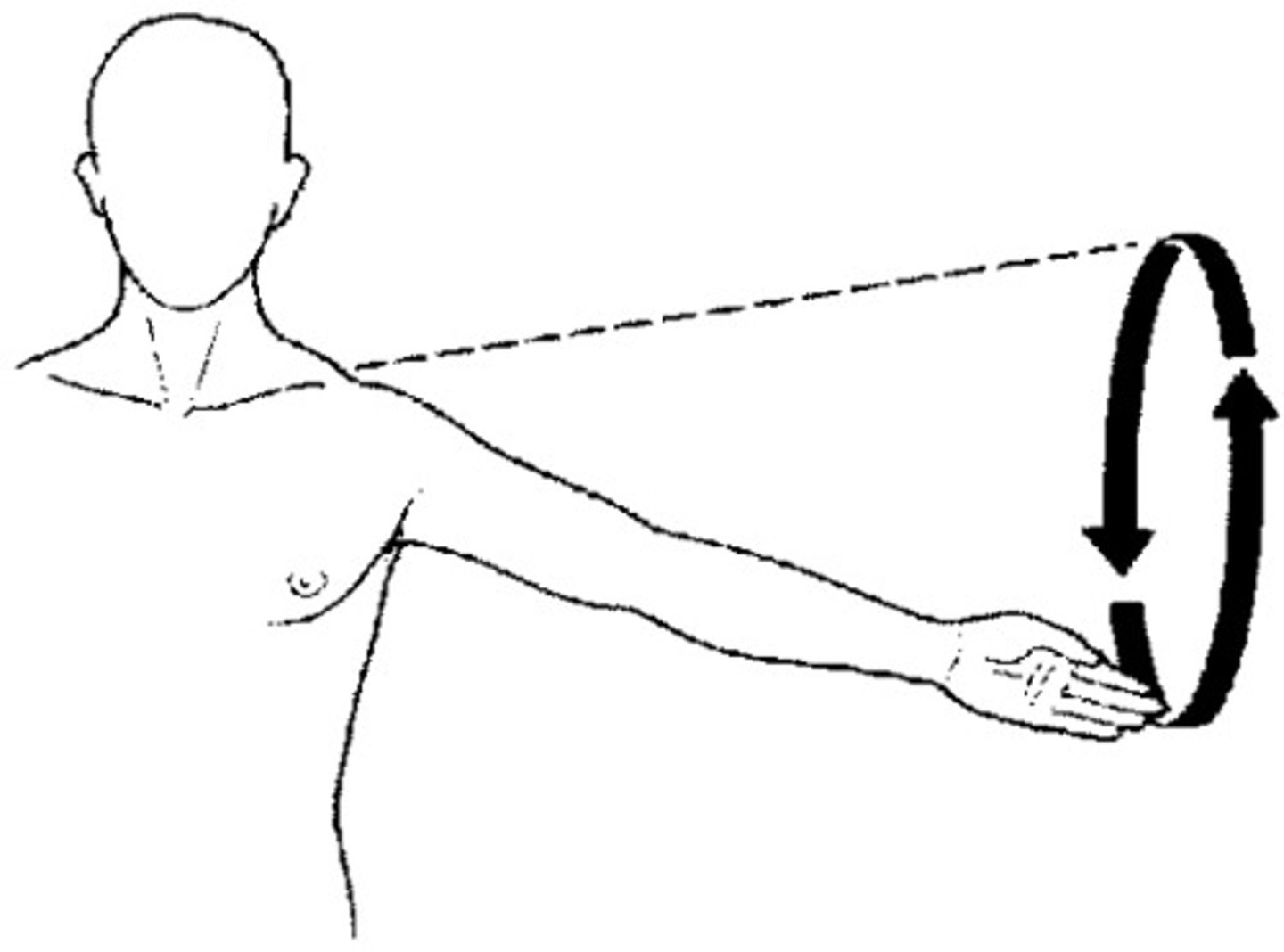
Define rotation:
Movement around a limb's long axis (screwdriver action)
Define tilt:
tipping or slanting a body part slightly
A three-part radiographic image evaluation consists of:
Anatomy demonstrated (what parts need to be seen), Position (placement, position, centering, and collimation), and Exposure (kVp, mA, and time)
A minimum of two types of markers should be imprinted on every radiographic image. These are:
Patient Information/Date and Anatomic side markers
It is critical for an RT to obtain a full ___________________________________ to verify the correct the procedure was ordered and observe conditions and abnormalities to relay to the radiologist.
Patient Assessment and Clinical History
What are the two types of radiographic tabletop types:
Fixed (nonmoving); Floating (moveable)
Who invented the moving grid?
Dr. Hollis Potter in 1920
The collimator is an example of a?
beam restricting device
The initials "PBL" collimator refers to _____________________________________ and it___________________ collimates the x-ray beam to the size of the IR
positive beam limiting; automatically
List the five steps for a routine procedure:
1. introduce yourself
2. patient identification by 2 means: name and DOB
3. verify procedure(s) ordered
4. acquire clinical history
5. pregnancy status: age range determined by facility
6. explain procedure
7. provide opportunity for the patient to ask questions
The first general rule in diagnostic radiology suggests that a minimum of _________ projections taken as near as 90° from each other as possible. The three reasons for this rule are:
2 projections;
1. superimpositions of anatomic structures
2. localization of lesions or foreign bodies
3. determination of alignment of fractures
All radiographic procedures of the skeletal system involving joints require a minimum of:
minimum of 3
Examples of exams generally requiring three (3) projections are: (8)
AP, Lateral, and Oblique
Fingers, toes, hand, wrist, elbow, ankle, foot, and knee
Examples of exams generally requiring two (2) projections are: (6)
AP and Lateral
Forearm, Humerus, Femur, Hips, Tibia-Fibula, and chest
Define palpation:
the process of applying pressure with the fingertips directly on the patient to locate positioning landmarks
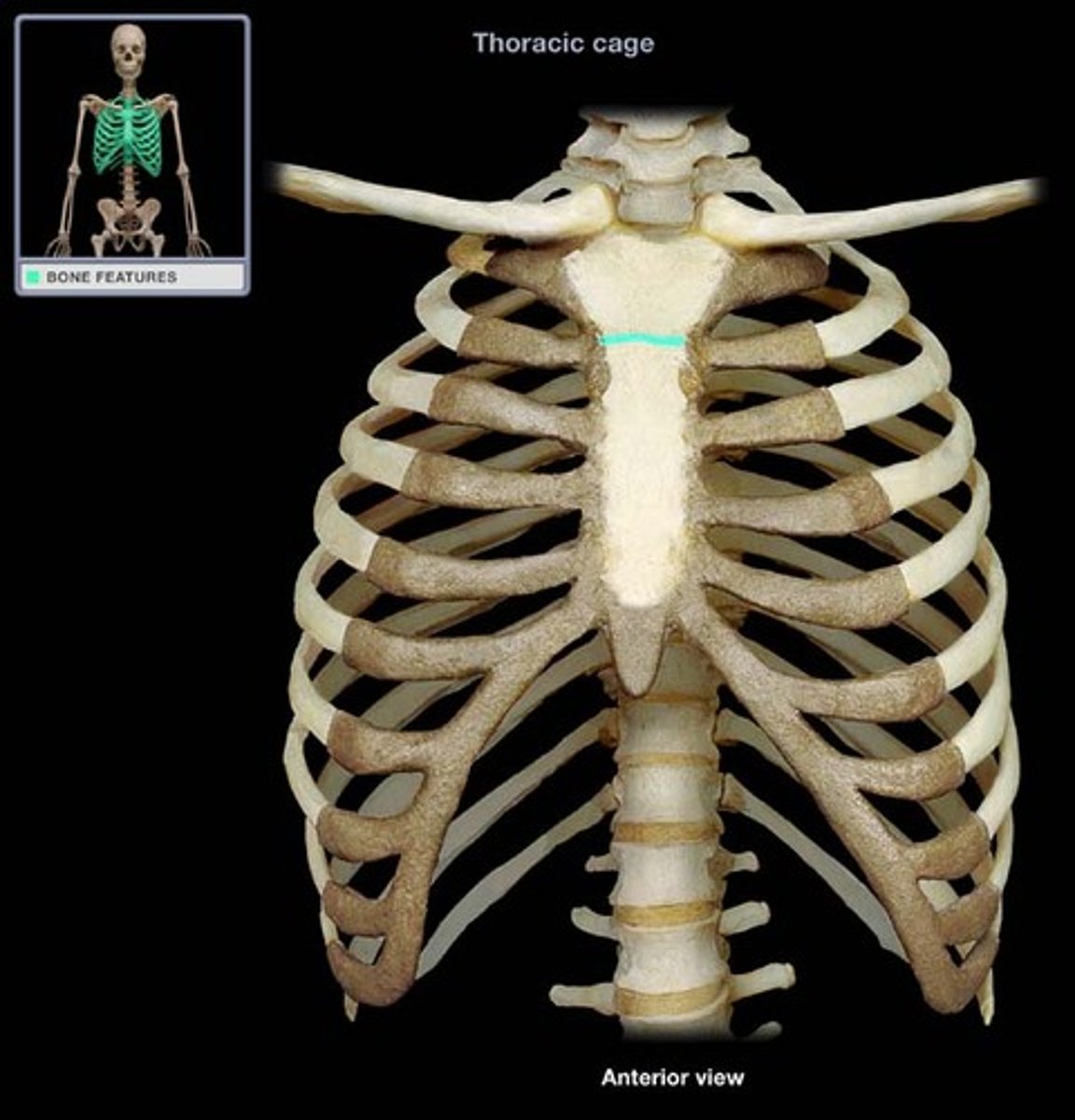
Sternal angle vertebral landmark
T4-T5
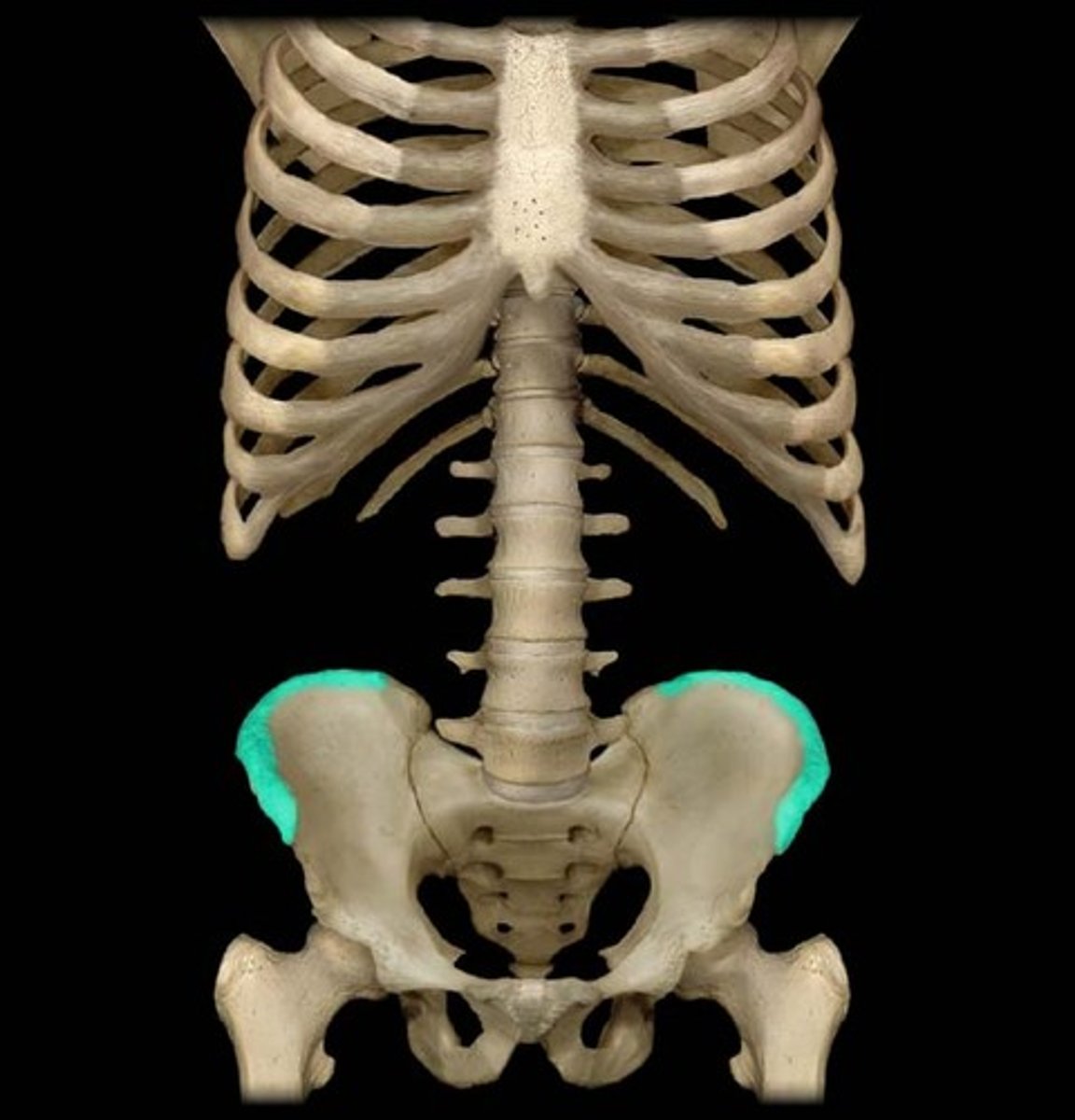
Iliac crest vertebral landmark
L4-L5
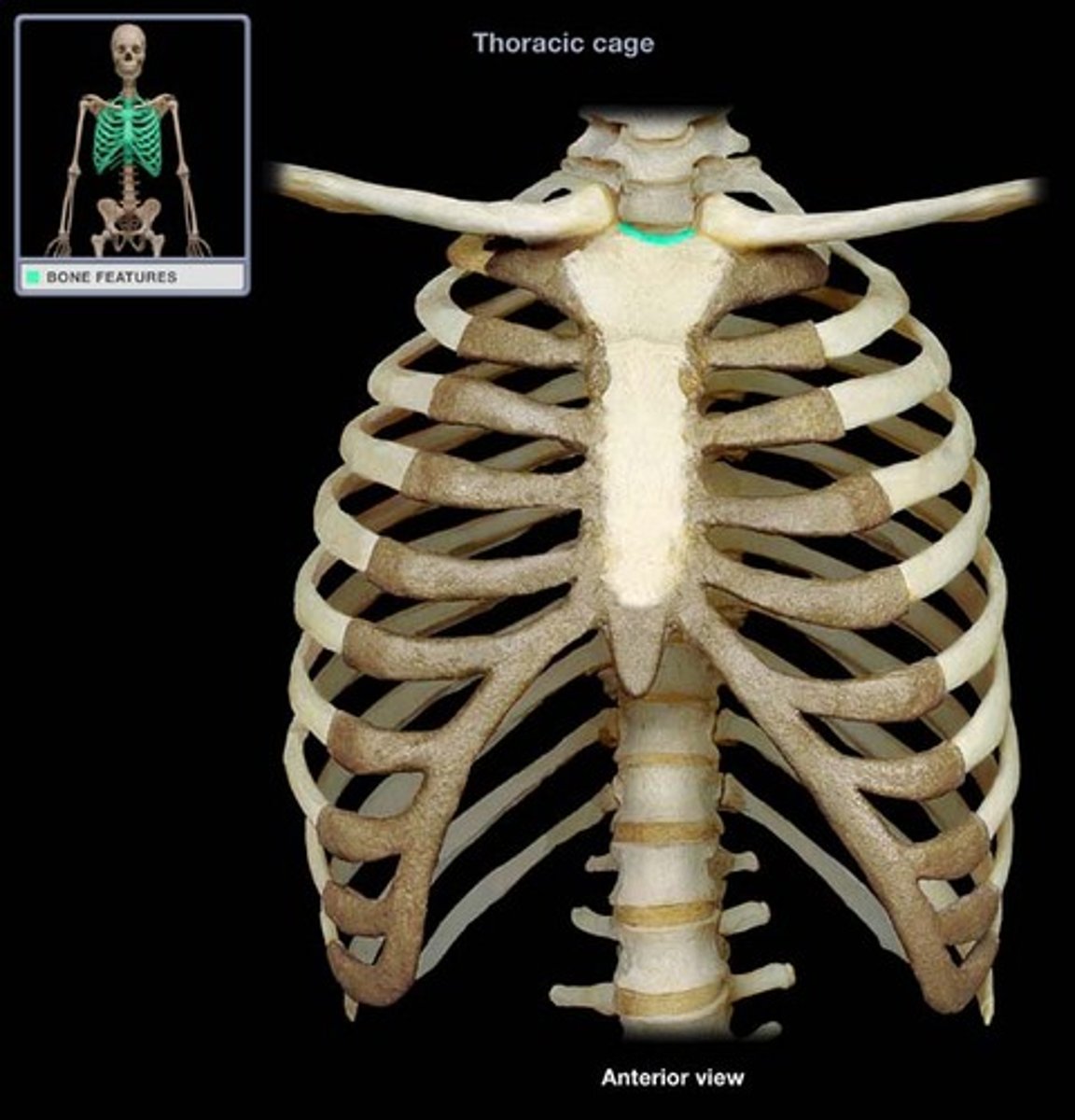
Jugular notch vertebral landmark
T2-T3
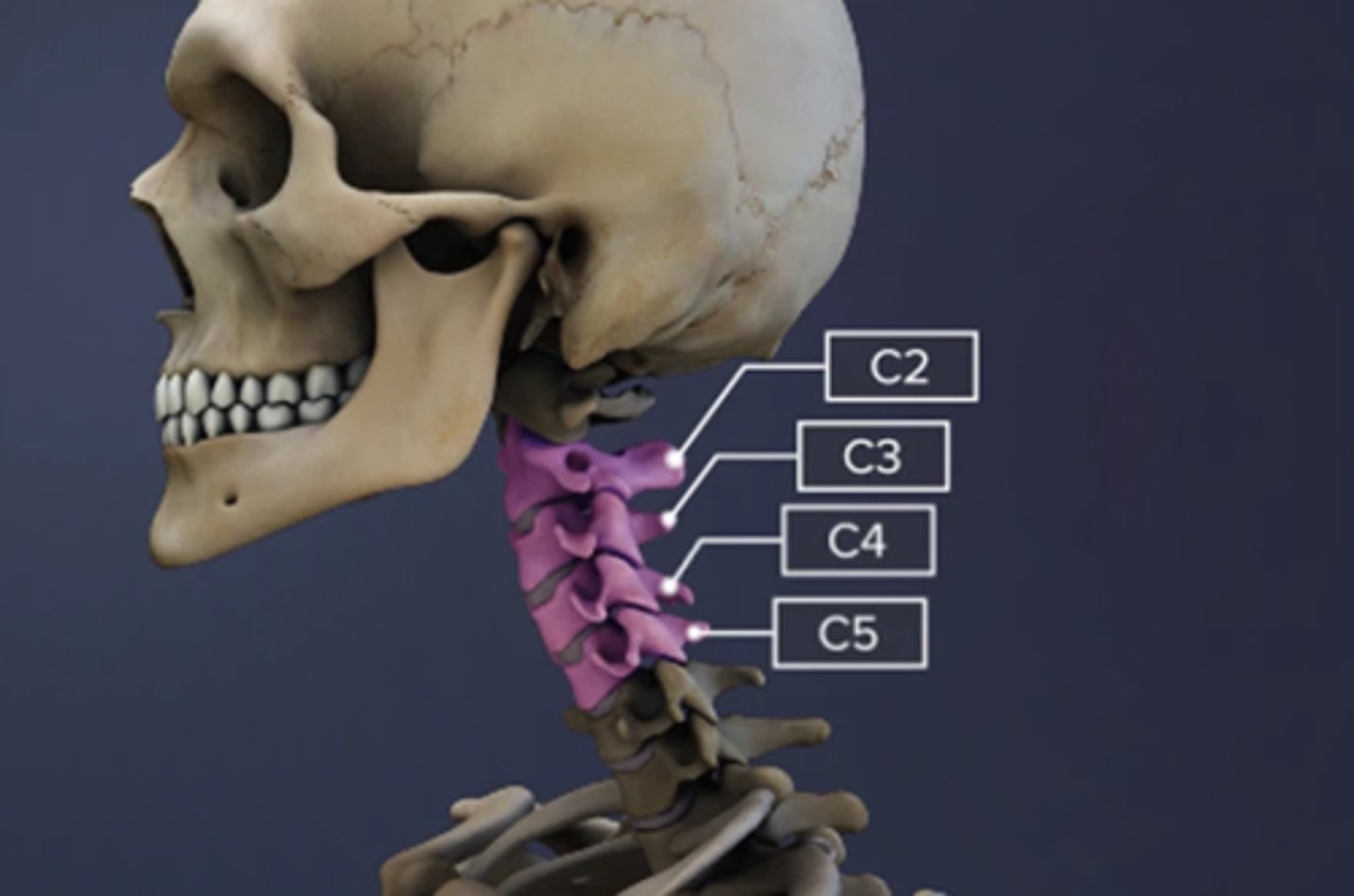
Thyroid cartilage vertebral landmark
C5
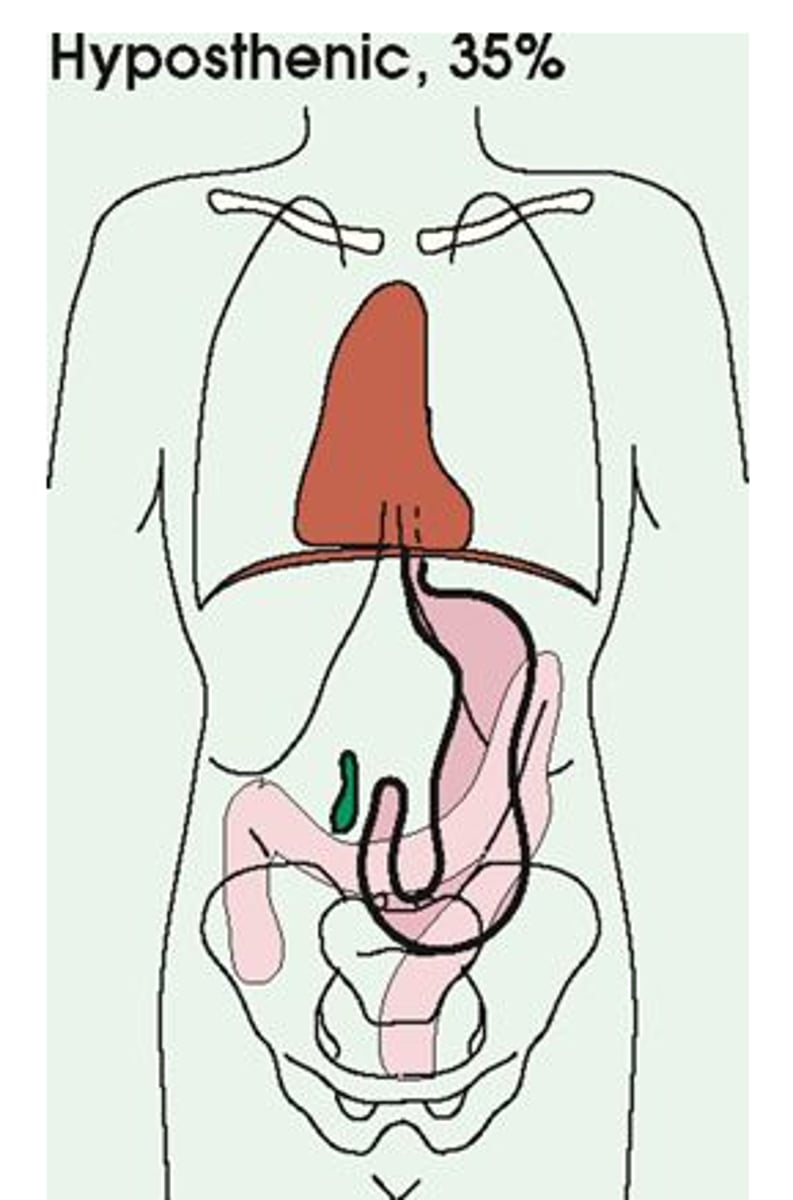
Type of Body Habitus
Hyposthenic
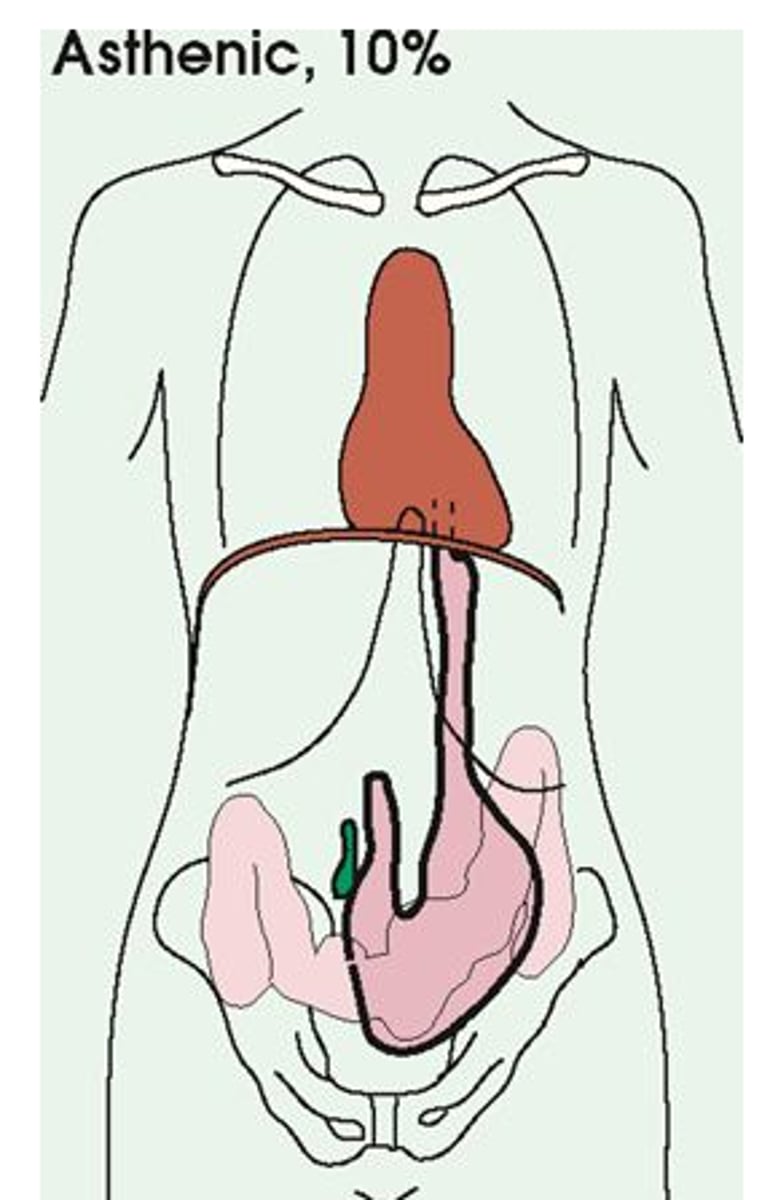
Type of Body Habitus
Asthenic
Type of Body Habitus
Hypersthenic