ATI TEAS 7 BIOLOGY
 Call Kai
 Learn
Learn Practice Test
 Spaced Repetition
 Match
Match Flashcards
 Knowt Play
1/24

There's no tags or description
Looks like no tags are added yet.
Name | Mastery | Learn | Test | Matching | Spaced | Call with Kai | Chat |
|---|
No analytics yet
Send a link to your students to track their progress
25 Terms
Cells and their organelles
Plasma membrane- Phospholipid bilayer embedded with proteins
Cytoplasm- Semifluid substance present inside the membrane, has organelles
Nucleus- Most prominent organelle. Spherical, protected by double membrane, contains genetic information in the form of nucleic acid DN
-DNA encodes for all necessary proteins of the cell, in turn the organism can carry out its life functions
Organelles- Carry out the cells metabolic life functions
Ribosomes
Site of protein synthesis
endoplasmic reticulum
Smooth- No ribosomes, Lipid production and storage
Rough- Makes proteins in ribosomes
Golgi aparatus
Proteins sent in vesicles go here
Then fuse with golgi to be transported where the proteins are needed
Also does this with digestive enzymes
Mitochondria
Organelle that changes food energy into useable cellular energy via cellular respiration
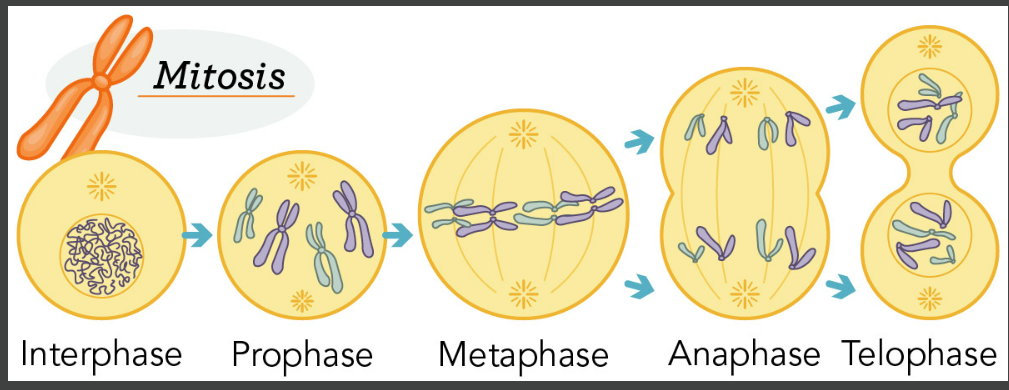
Mitosis
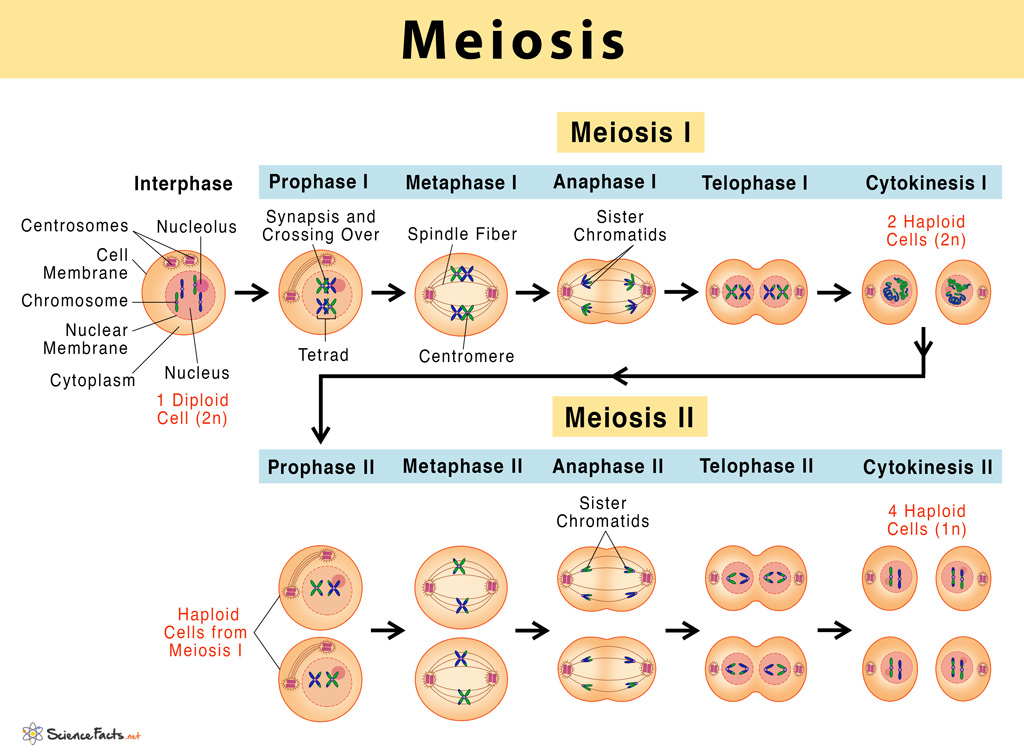
Meiosis
Tissue
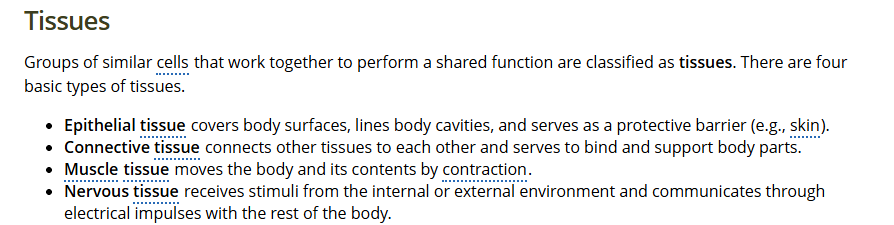
Biological organization
Cells » Tissues » Organs »Organ Systems »Organism
Macromolecules
Polymers built by linking monomers (small subunits)
3 classes made of specific monomers
Covalent bond by removing ATP
Dehydration reaction
Polysaccharides- Monosaccarides (sugars in the form of carbohydrates)
Proteins- (Amino acids)
Nucleic acids- (Nucleotides)
Macromolecule functions
Dependent on shape
Polysaccharides
Crabohydrates
Major food group, gives energy
Glycogen into glucose used by cells to make ATP. Hydrolysis reaction (opposite of dehydation reaction)
Chitin and cellulose provide skeleton support
Proteins
All composed of 20 amino acids
Polypeptide that folds into a 3 dimensional shape
Process^ driven by hundreds of noncovalent (hydrogen) & covalent (sulfur-sulfur) bonds
* Hemoglobin is made of 4 separate polypeptide chains that each fold up spontaneously
Creates chemical reactions through enzymes
Nucleic acids
DNA & RNA
DNA- 2 nucleic acid polymers to make double helix
-Stores geentic info in cells
RNA- Type of nucleotide (ribonucleotide) made up of a ribose sugar linked on one side of a trio of phosphates & on the other side to a nitrogenous base
-Converts information stored in DNA to proteins
Lipids
Insoluable in water- Cholesterol, steroids, fats, fatty acids, & phospholipids
Diverse set of molecules that group together bc of how they interact in water
Hydrophobic, don’t disssolve in water, bc that are mostlu carbon-carbon or carbon-hydrogen bonds
Phospholipids form cell membrane
Tryglycerides concentrated energy storage for the body
Steroids include cholesterol & hormones: testosterone and estrogen
Phospholipids & triglycerides made of fatty acids (hydrocarbon chains with a carboxylic acid on one end) & glycerol (type of sugar)
Atom
Basic unit of matter
Undergo chemical reactions by gaining or losing electrons
Atoms property can be inferred by its postion on the periodic table
Position is based on valence electrons in its outermost shell
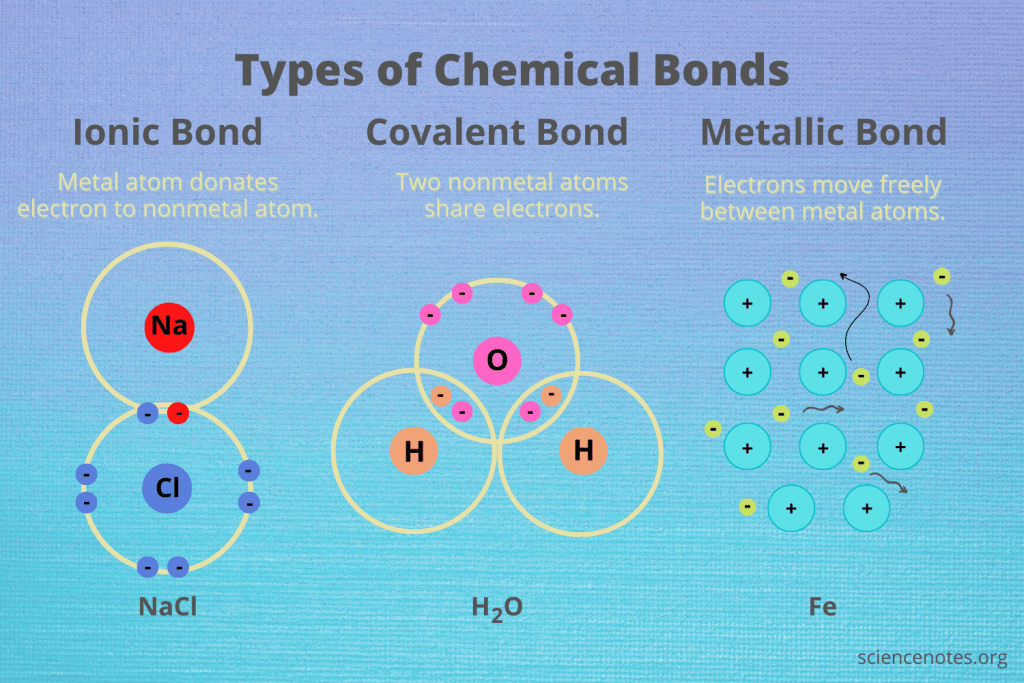
Can gain, lose, or share electrons to make diff. chemical bonds
Elements
Indicated on periodic table by its number of protons, valence shell configuratuon, and chemical/physical properties
Elements that make up majority of living organisms
Carbon
Hydrogen
Oxygen
Nitrogen
Fundamental particles
Protons- +
Neutron- no charge
Electron- -
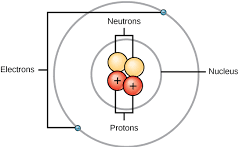
Atomic structure
Protons and neutrons make up nucleus
Electrons on shell
Atomic mass
Protons + neutrons
Atomic number
Protons in an element
protons = neutrons
Isotopes
Versions of the same elements with diff numbers of neutrons are isotopes of each other
EX.
Carbon-12: 6 protons & 6 neutrons
Carbon-14: 6 protons & 8 neutrons
Chemical bonds
States of matter
Liquid- No definite shape, definite volume
Solid- Definite shape and volume
Gas- No definite shape or volume
Plasma- No definite shape or volume, conducts electricity
Found in lightning, stars, neon
Density
ratio of mass to volume
Density = Mass/Volume
Heat and temperature
Have absolute zero
0 kelvin = -273 deg celcius
Molecules are constantly moving
Temperature
Measures the average energy & motion of molecules
Measured in kelvin. fehrenheit, celcius
Describs how hot or cold a substance is
Heat
Measured in calories or joules
Form of energy added to or produced by a substance or system
Phase change
Adding heat does not always increase temperature
Phase change: added heat may be used to change the state of matter instead
Specific heat capacity
Amount of energy needed to raise the temperature of 1 gram of substance by 1 degree celcius
Diff substances require diff amounts of energy to change temperature
Phase changes
Melting- Solid to liquid
Freezing- Liquid to solid
Vaporization/evaporation- Liquid to gas
Condensation- Gas to liquid
Sublimation- Solid to gas
Deposition- Gas to solid