DAT ORGO - Alkenes and Alkynes
 Call Kai
 Learn
Learn Practice Test
 Spaced Repetition
 Match
Match Flashcards
 Knowt Play
1/54

There's no tags or description
Looks like no tags are added yet.
Name | Mastery | Learn | Test | Matching | Spaced | Call with Kai | Chat |
|---|
No analytics yet
Send a link to your students to track their progress
55 Terms
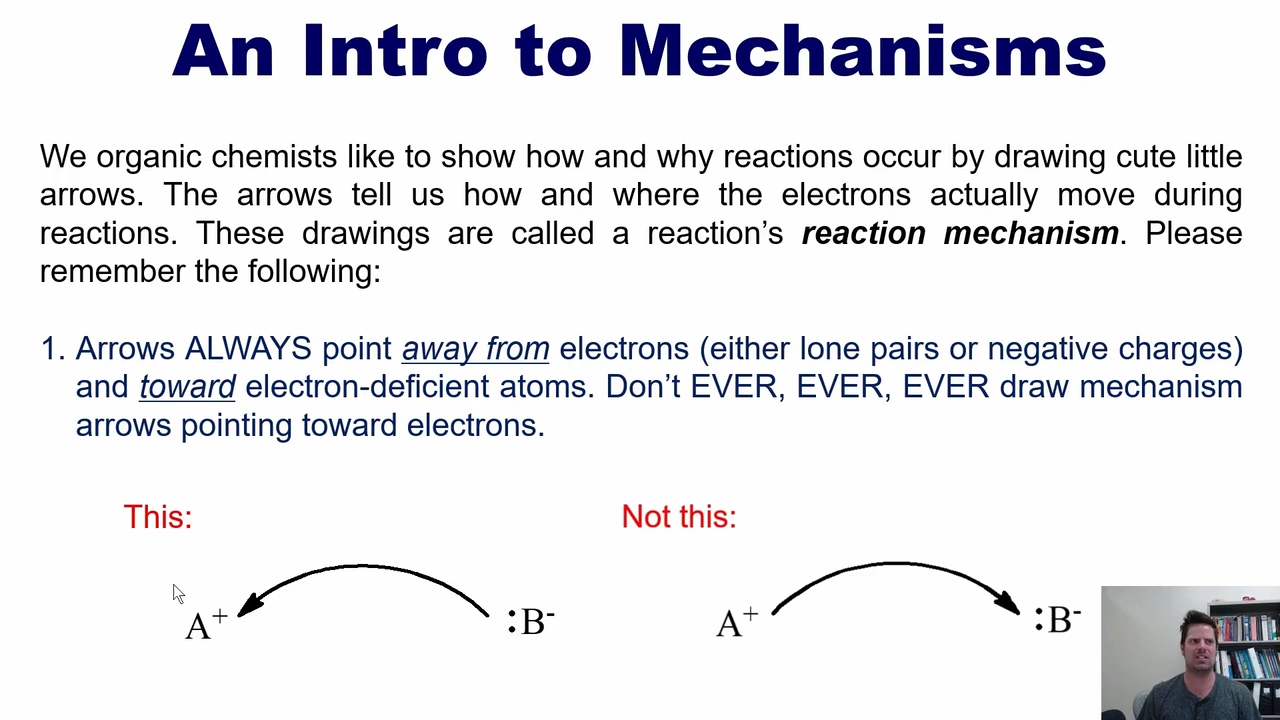
What directions should arrows point
away from electrons
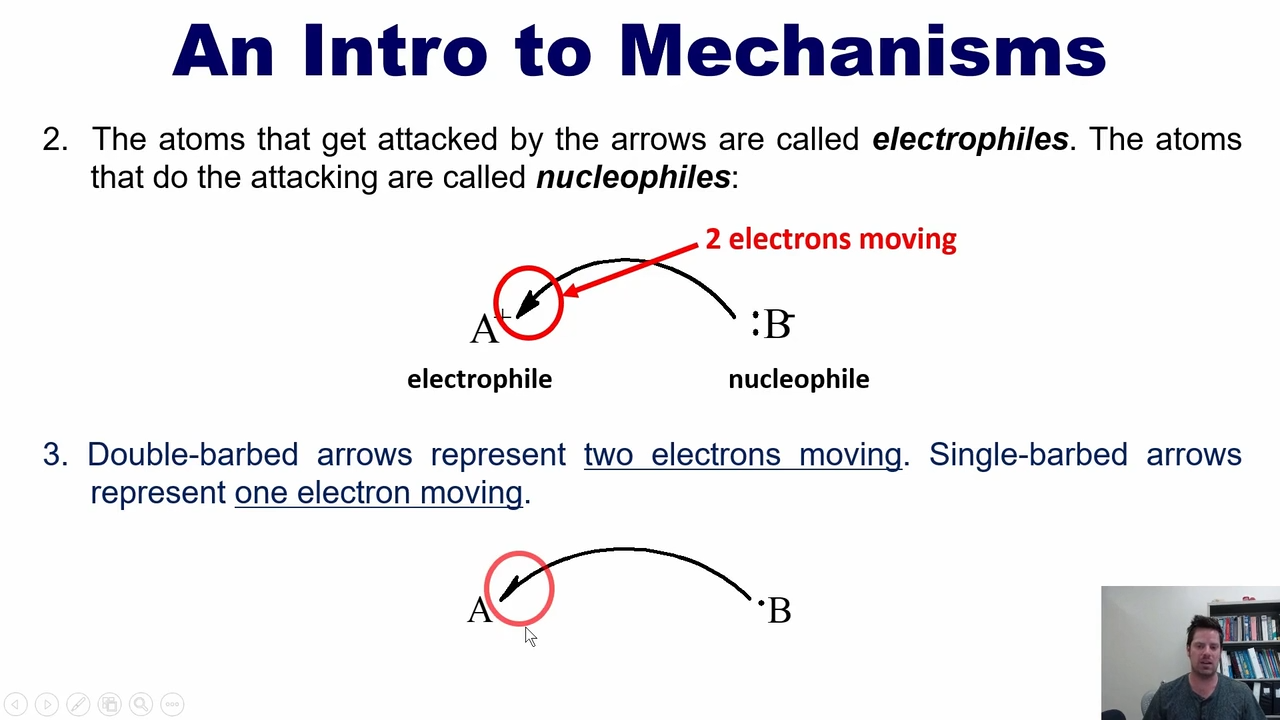
Electrophiles
the ones getting attacked
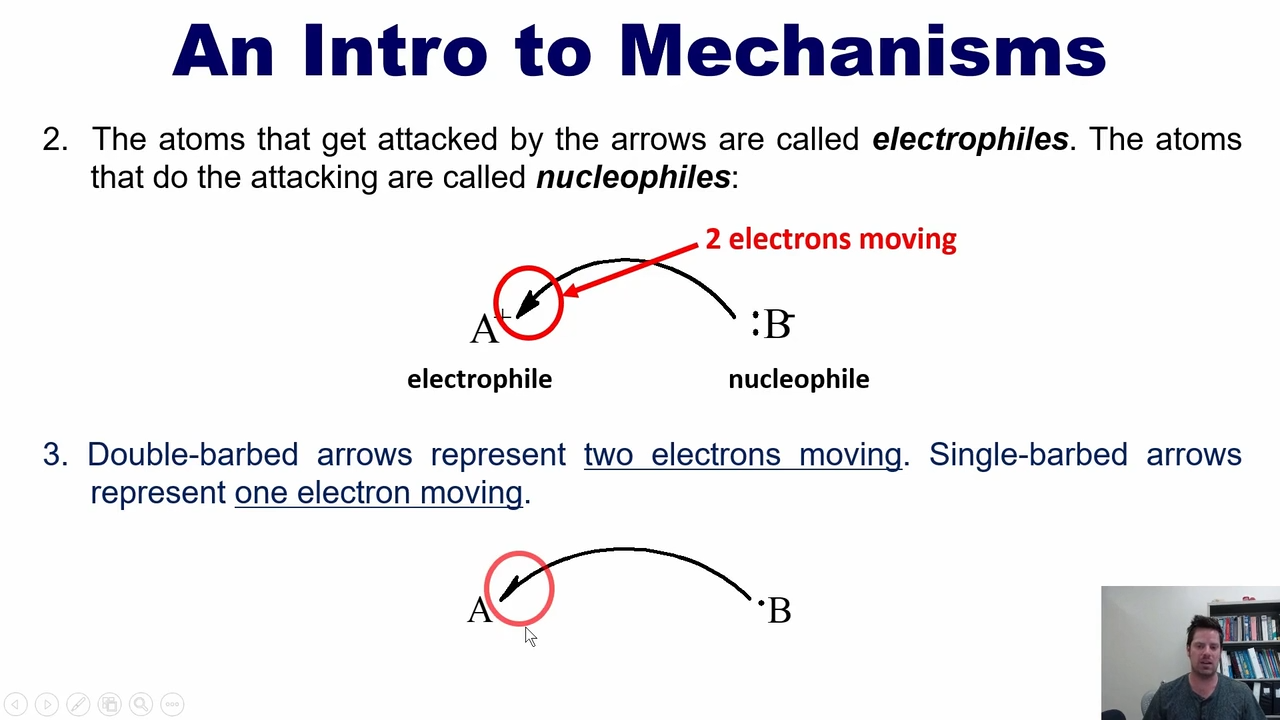
Nucleophiles
the ones that do the attacking
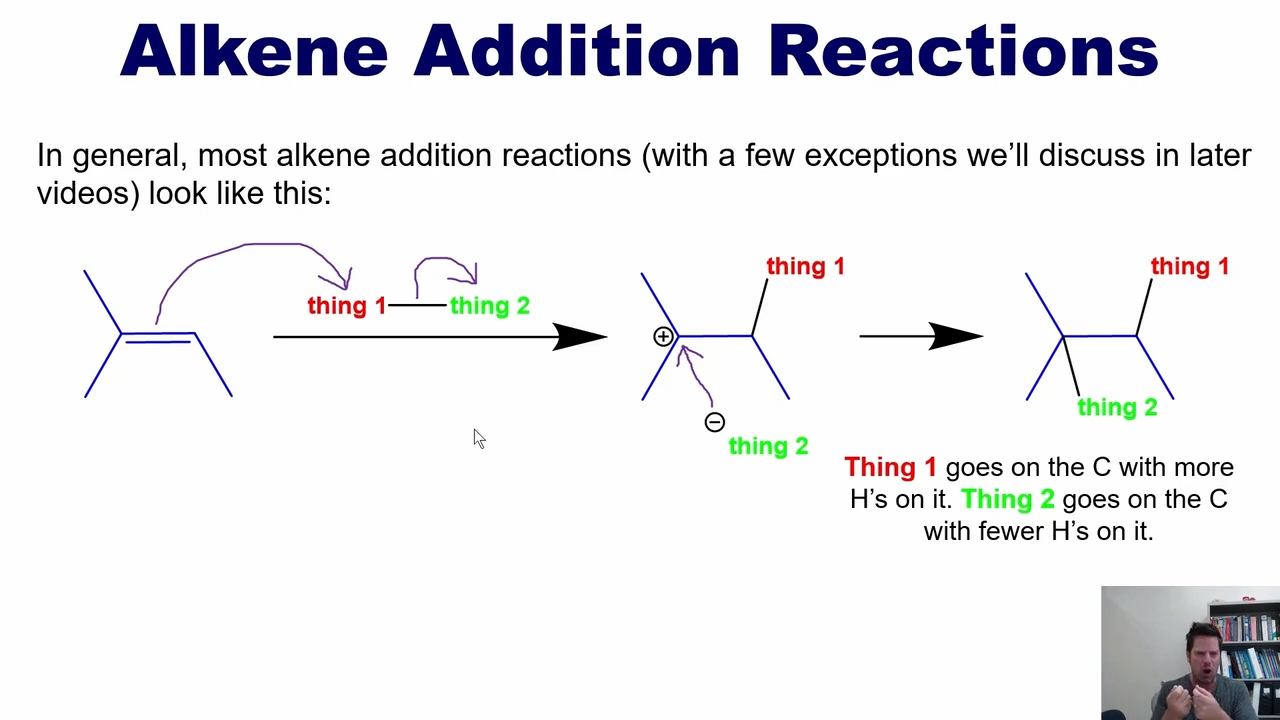
Alkene addition reactions
Thing 2 goes on the carbon with less H+
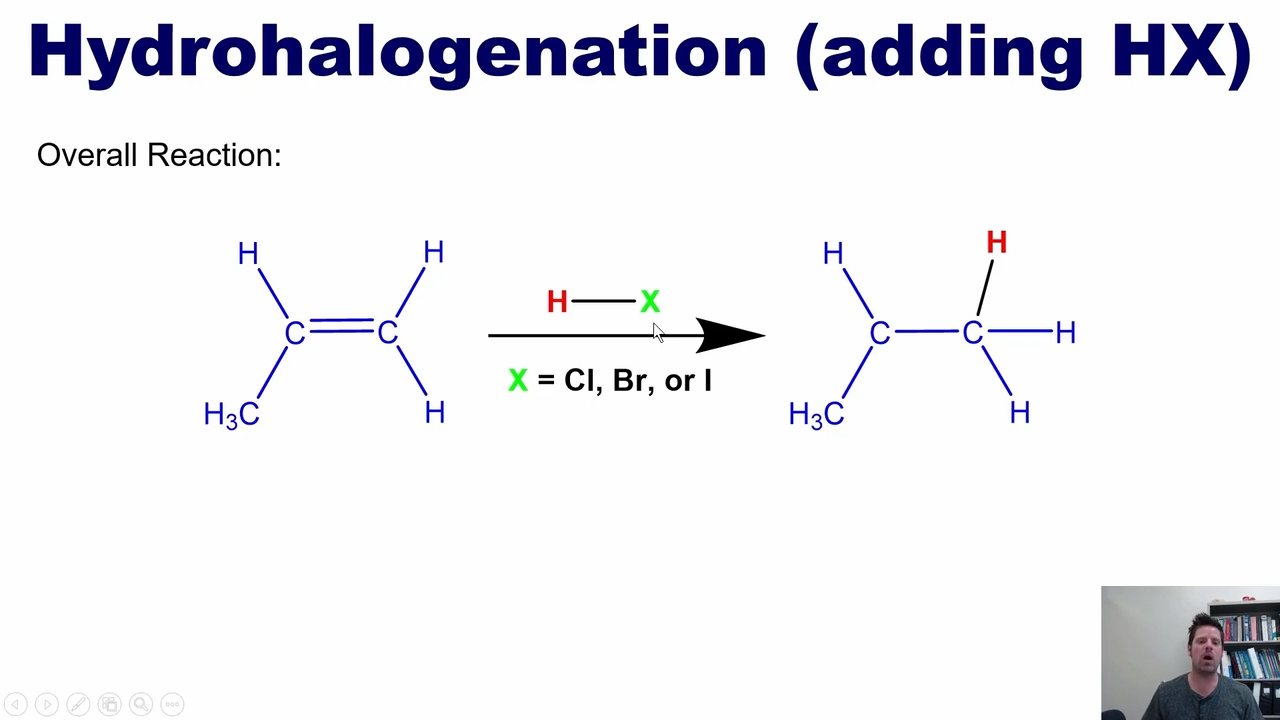
Hyddrohalogenation
Where X is Cl, Br, or I
NO F
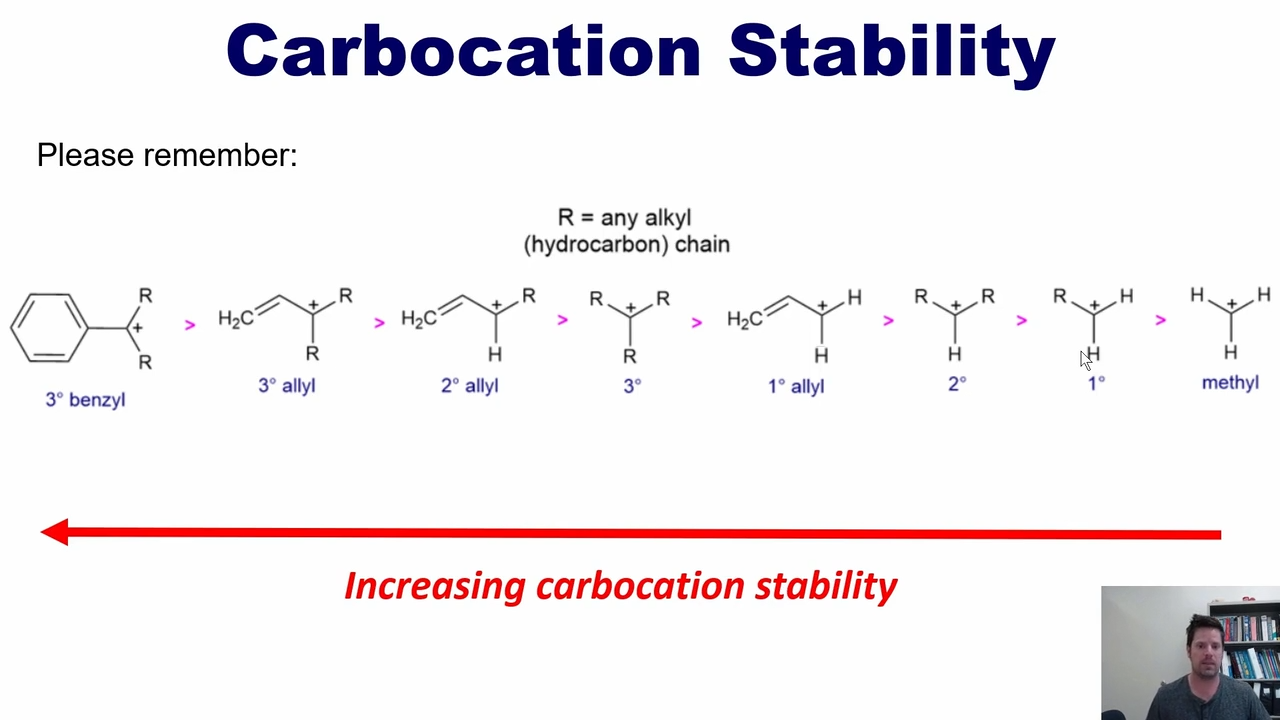
What does carbocation stability go by
If they are primary or secondary, and then resonance
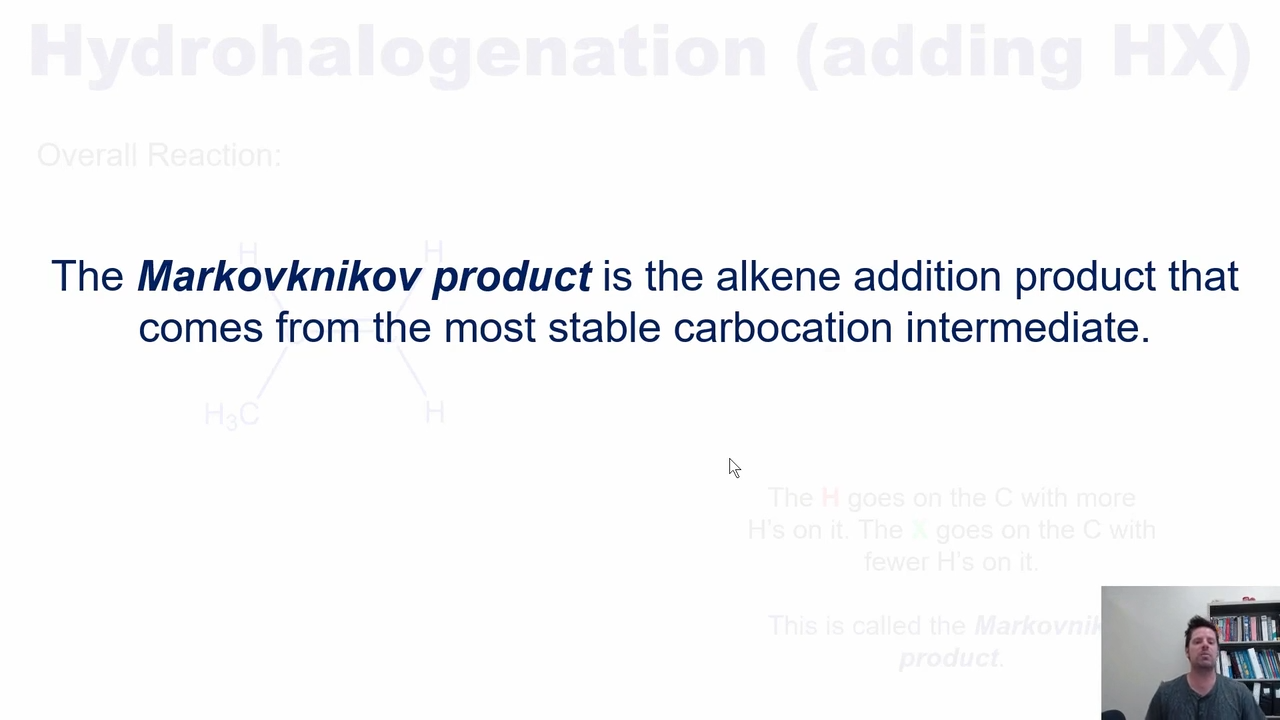
Markovnikov products
Alkene addition product that comes from the most stable carbocation intermediate
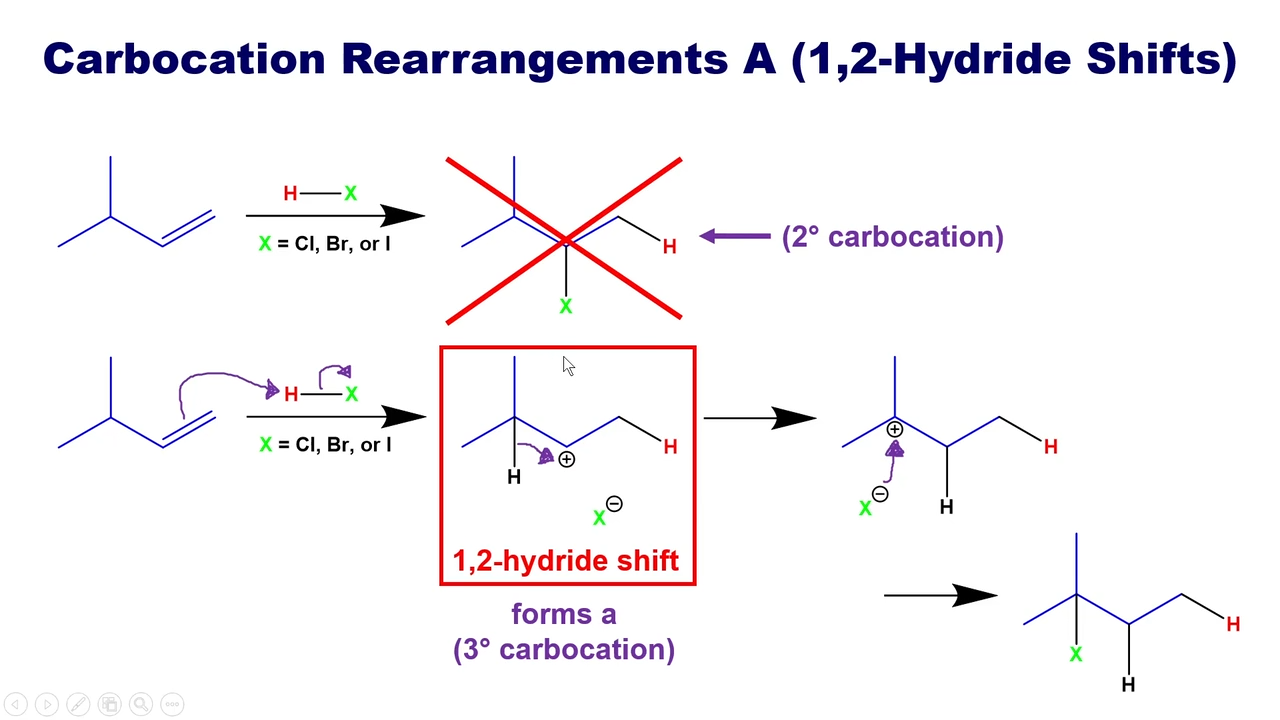
1,2 hydride shifts
Hydrogen moves to carbocation next to it so that the product is attached to a more stable carbocation
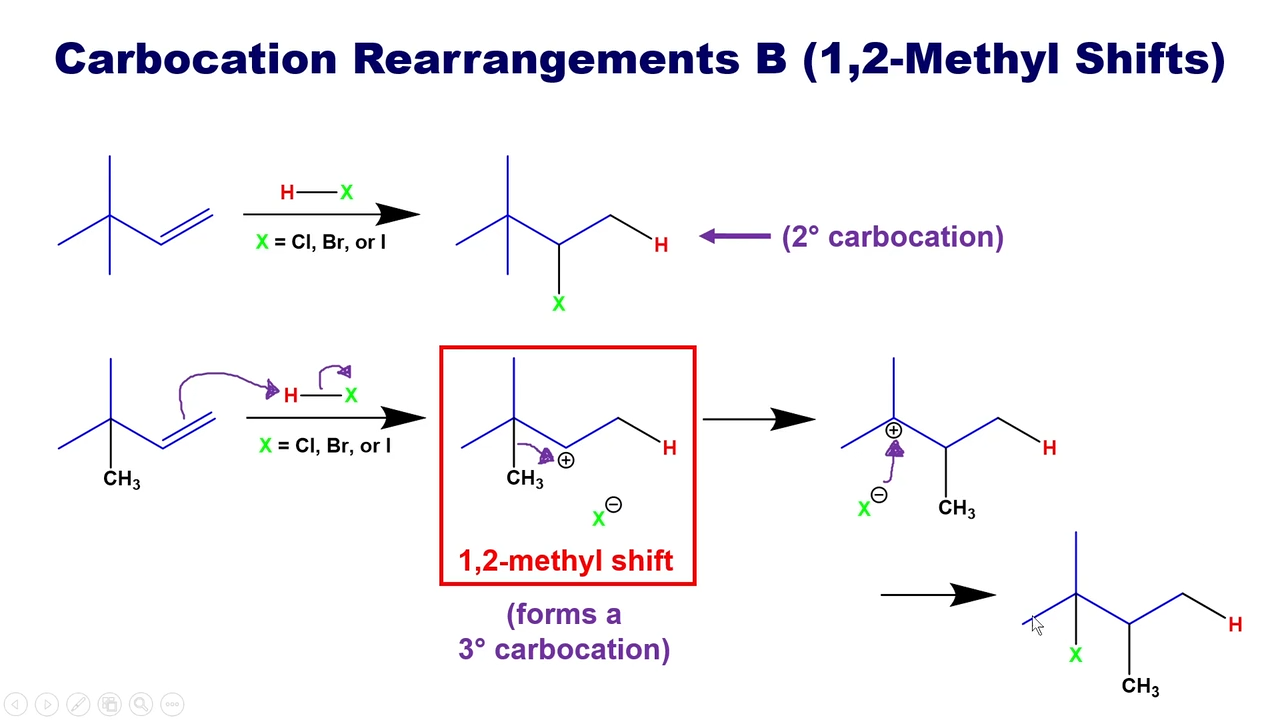
1,2 methyl shifts
Methyl moves to carbocation next to it so that the product is attached to a more stable carbocation
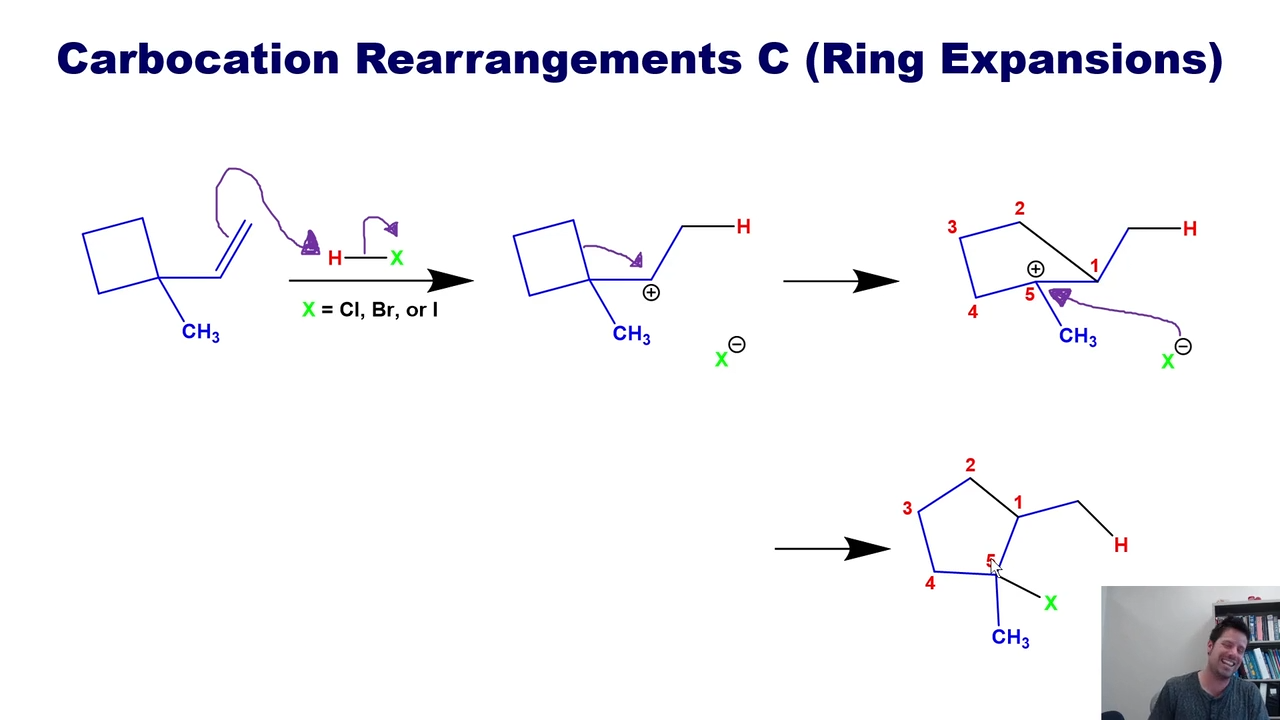
Ring expansions
Like1,2 methyl reactions, but done to reduce ring strain
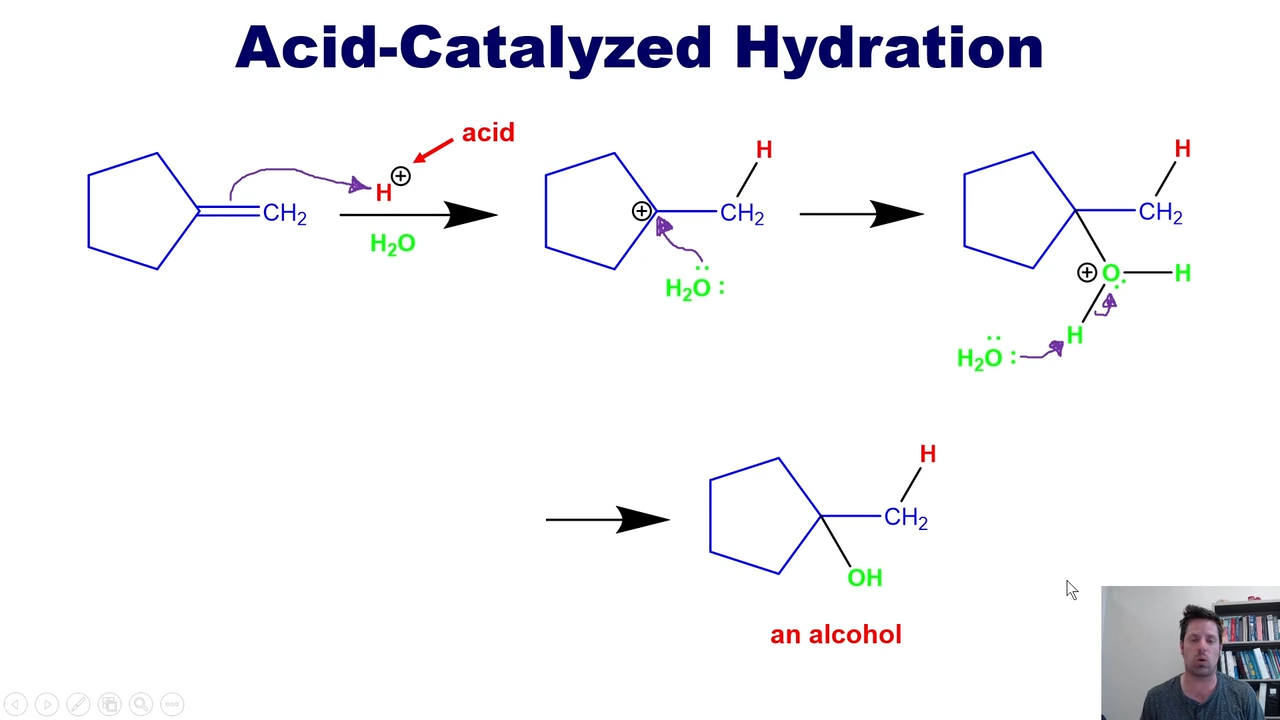
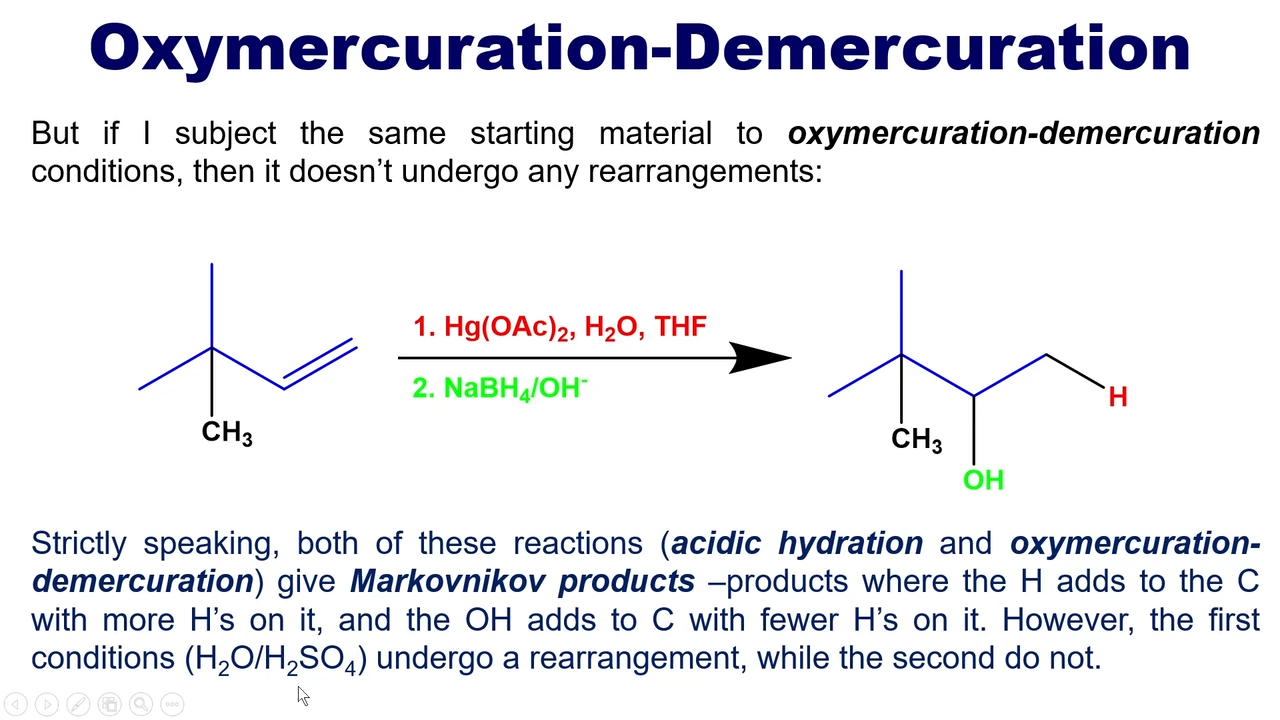
Acid catalyzed hydration
oxymercuration-demercuration reaction
acid cataylzed hydration, but it prevents rearangements
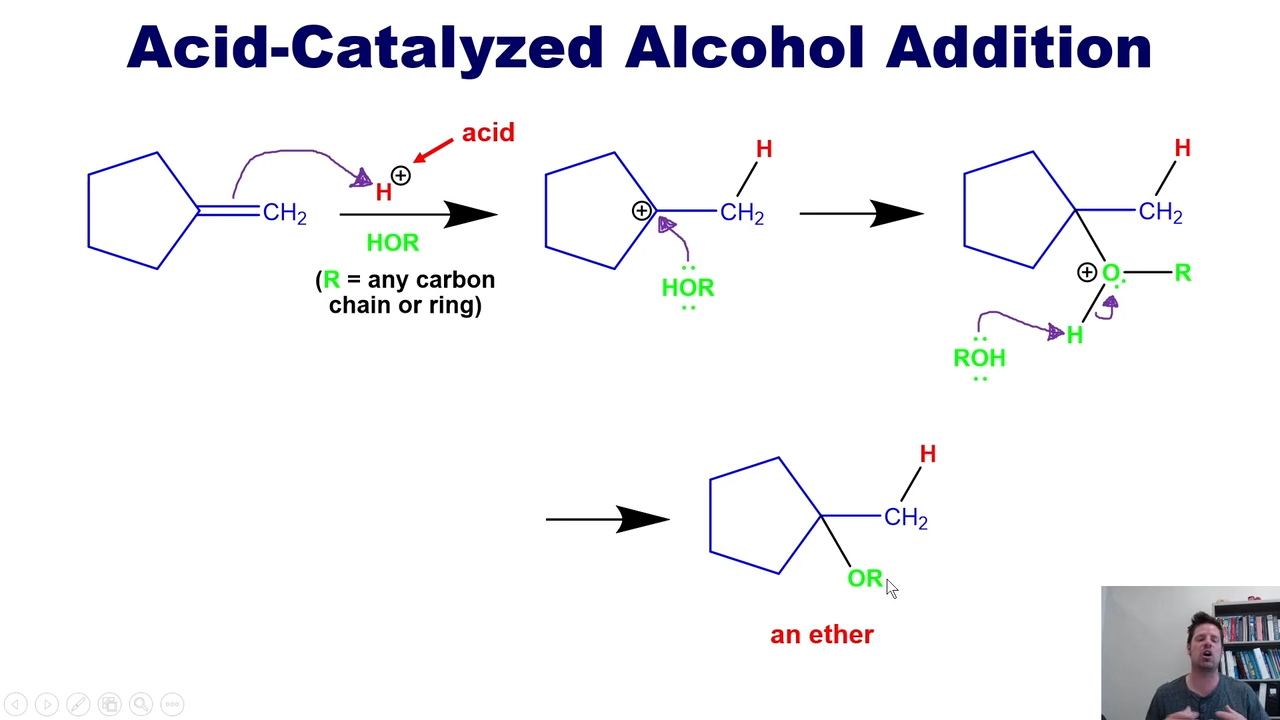
acid catalyzed alcohol reactions
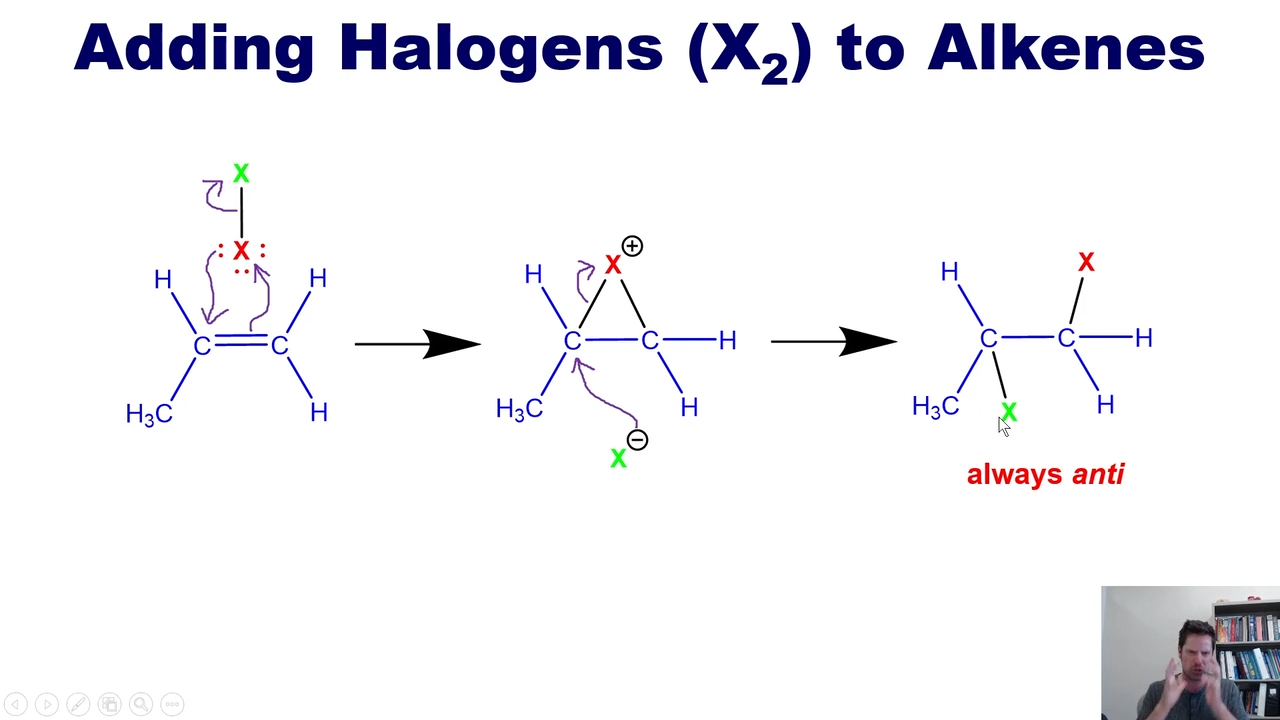
Adding Halogens (X2)
CL and Br ONLY
ALWAYS ANTI
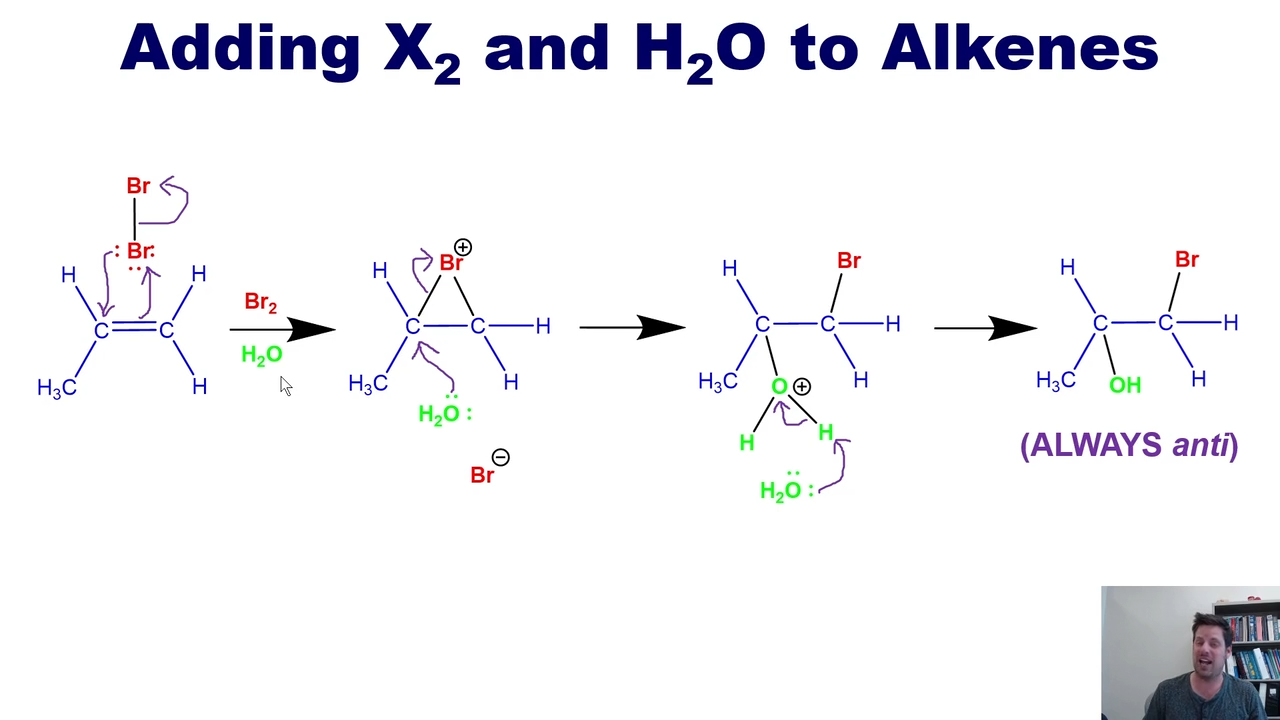
Adding Halogens (X2) and Water
H2O is signficantly more, so halogen anion cannot come through to the anti side
Adding Halogens (X2) and ROH
ROH is signficantly more, so halogen anion cannot come through to the anti side
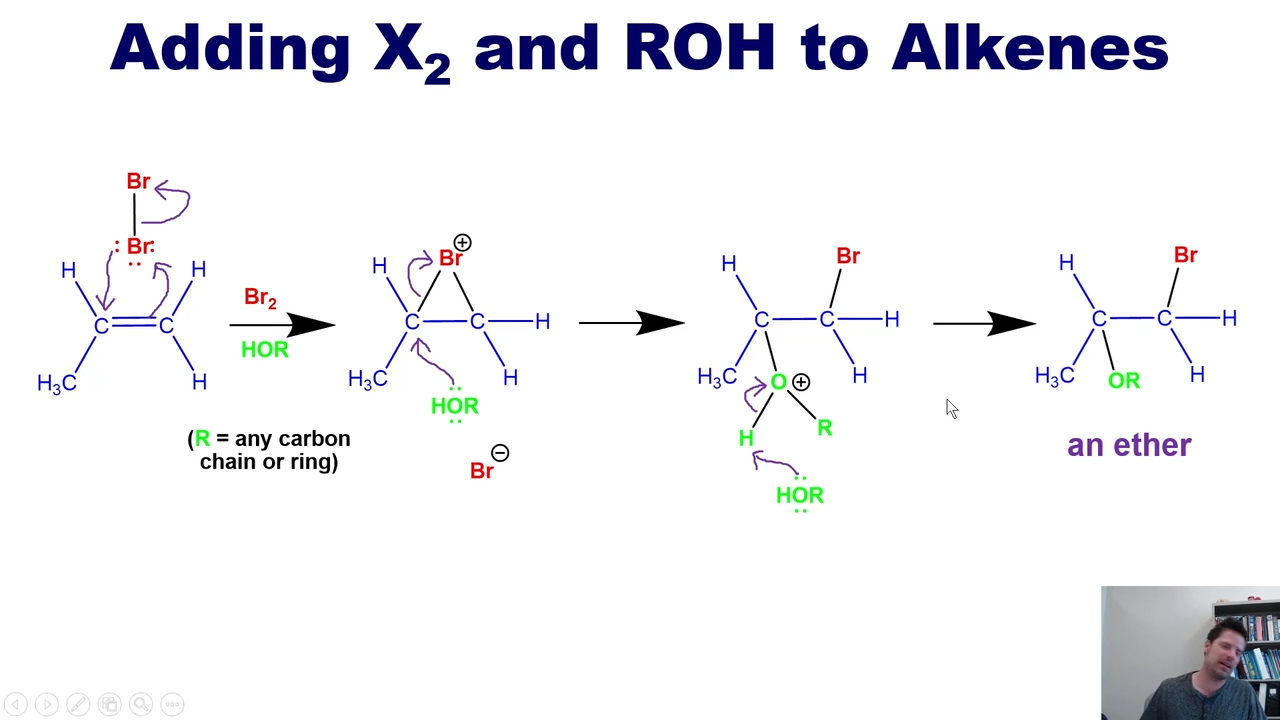
Is rearangement possible when adding halogens?
No, The halogen forms a ring
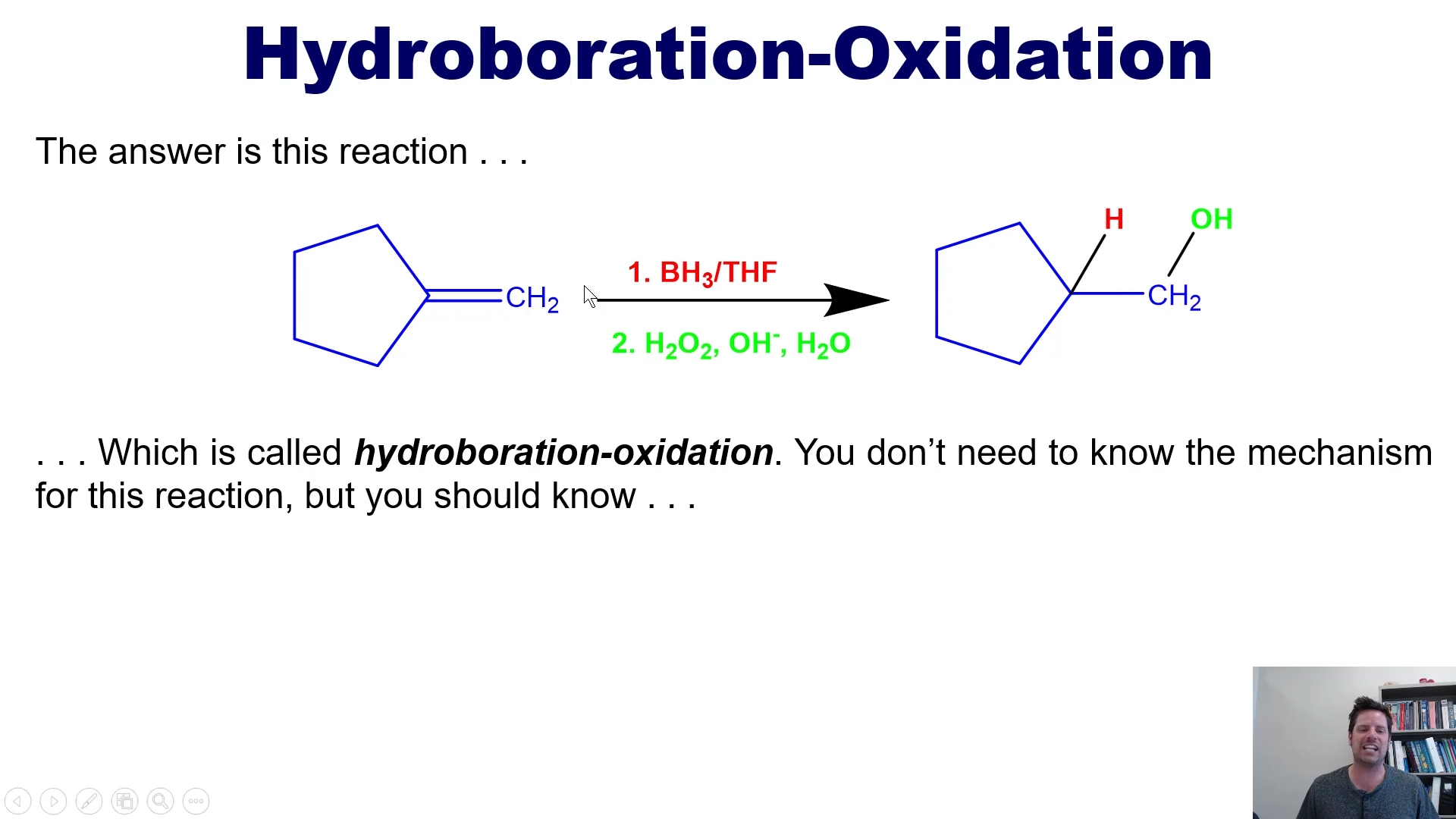
Hydroboration oxidation reaction
adds an OH to the anti-markovnikov carbon
always SYN BH3
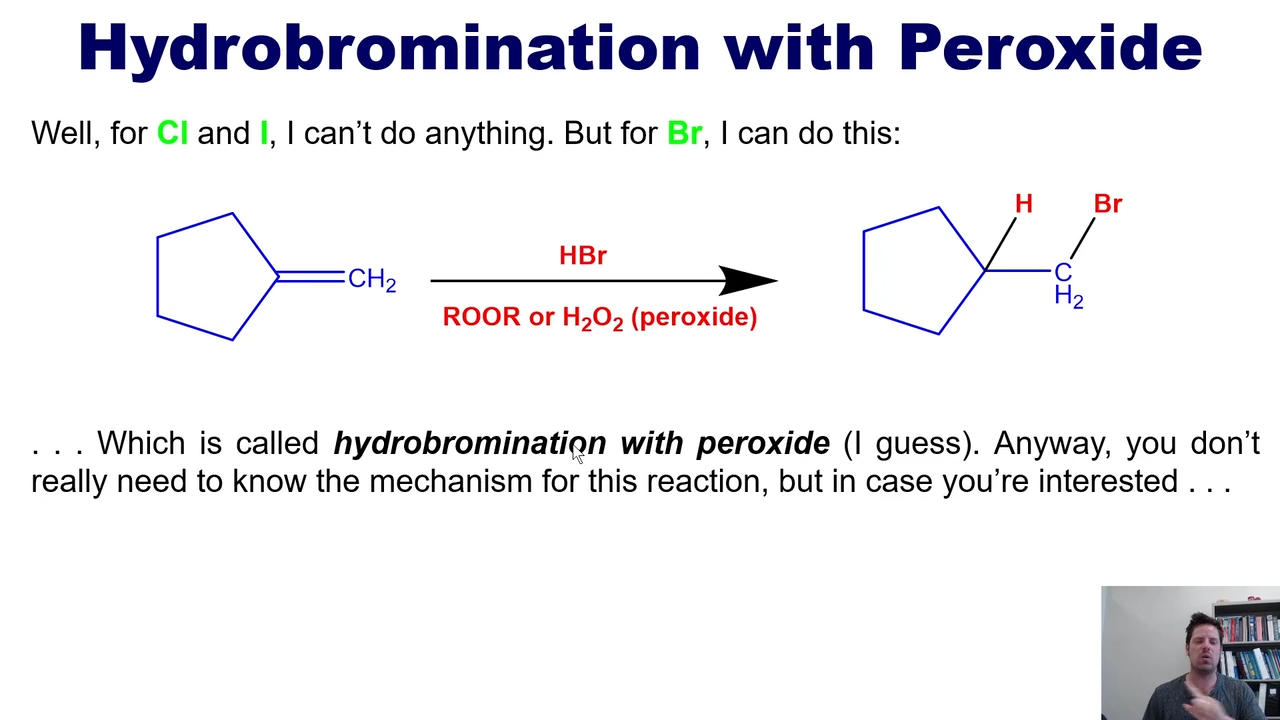
Hydrobromination with peroxide
Adds a bromine to the antimarkovnikov carbon,
as long as HBr is added alonside a peroxide H2O2 or ROOR
Do radicals rearange like carbocations
no
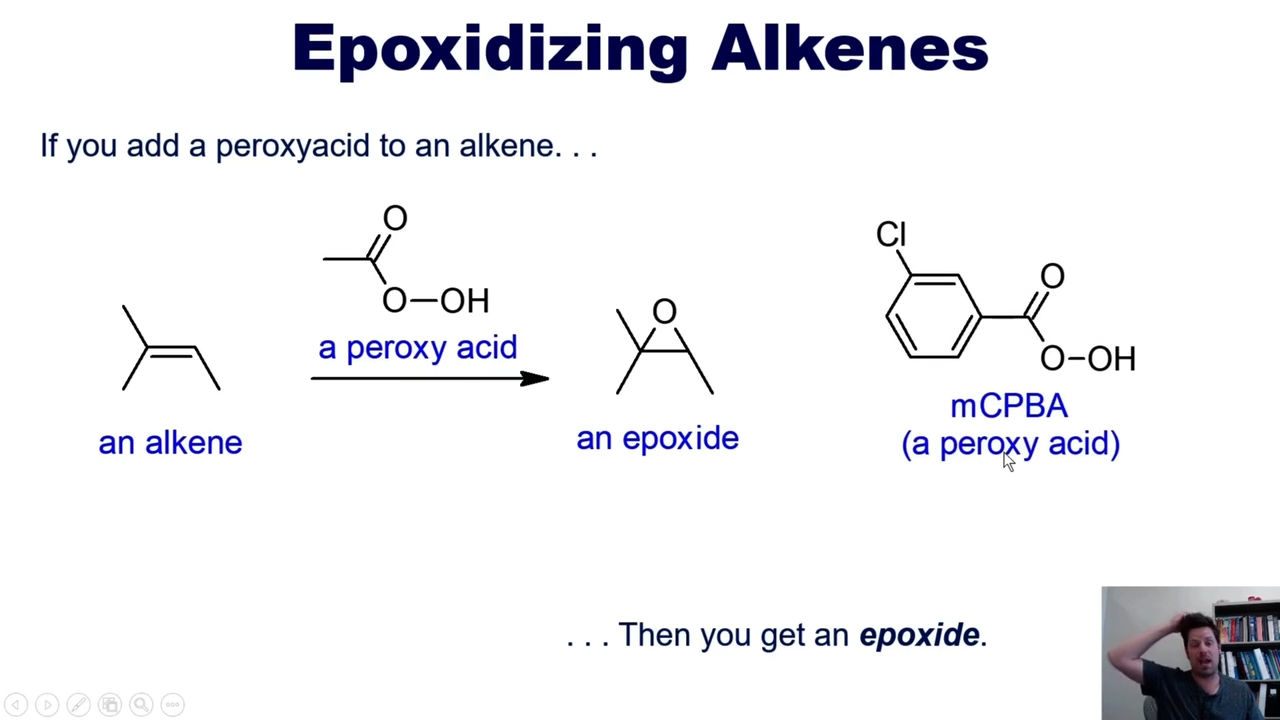
Epoxidizing alkenes
adding a peroxy acid to an alkene leades to an epoxide
(MCPBA)
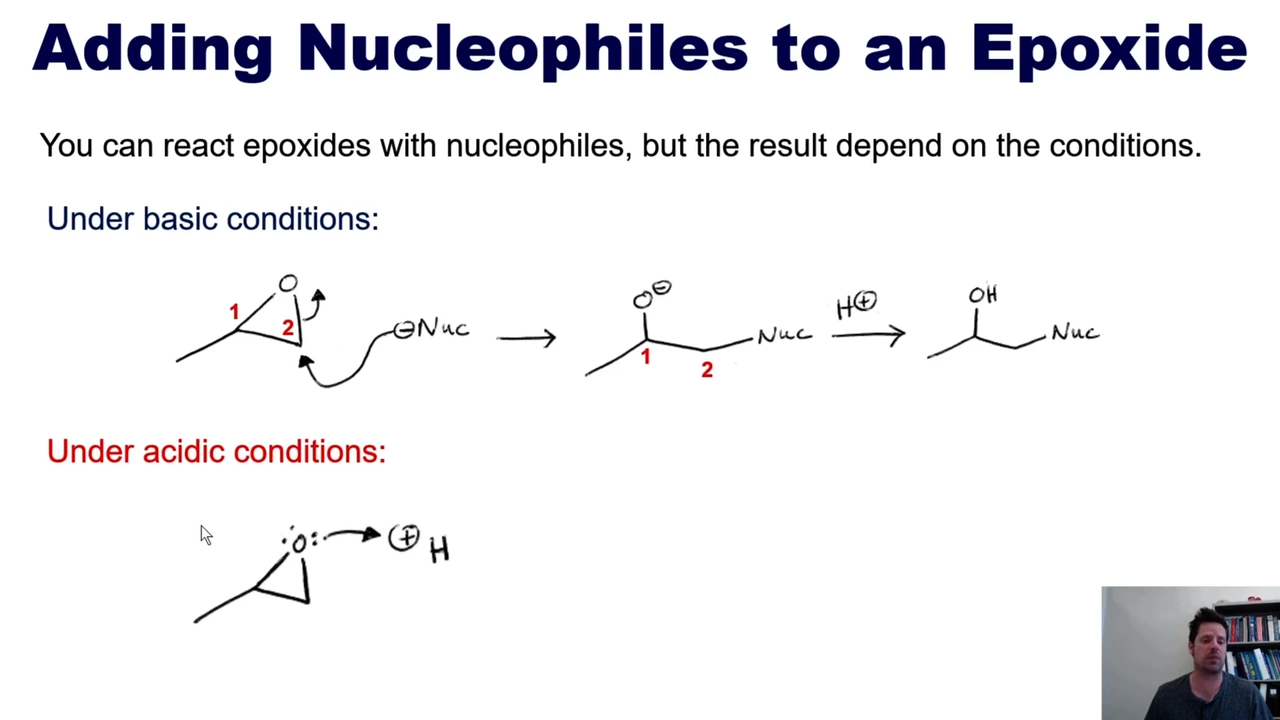
Adding nucleophiles to epoxides under basic conditions
The exception here is that the nucleophile comes in towards the least substituted part and the oxygen anion takes up an H+ from the environment THIS IS ANTI
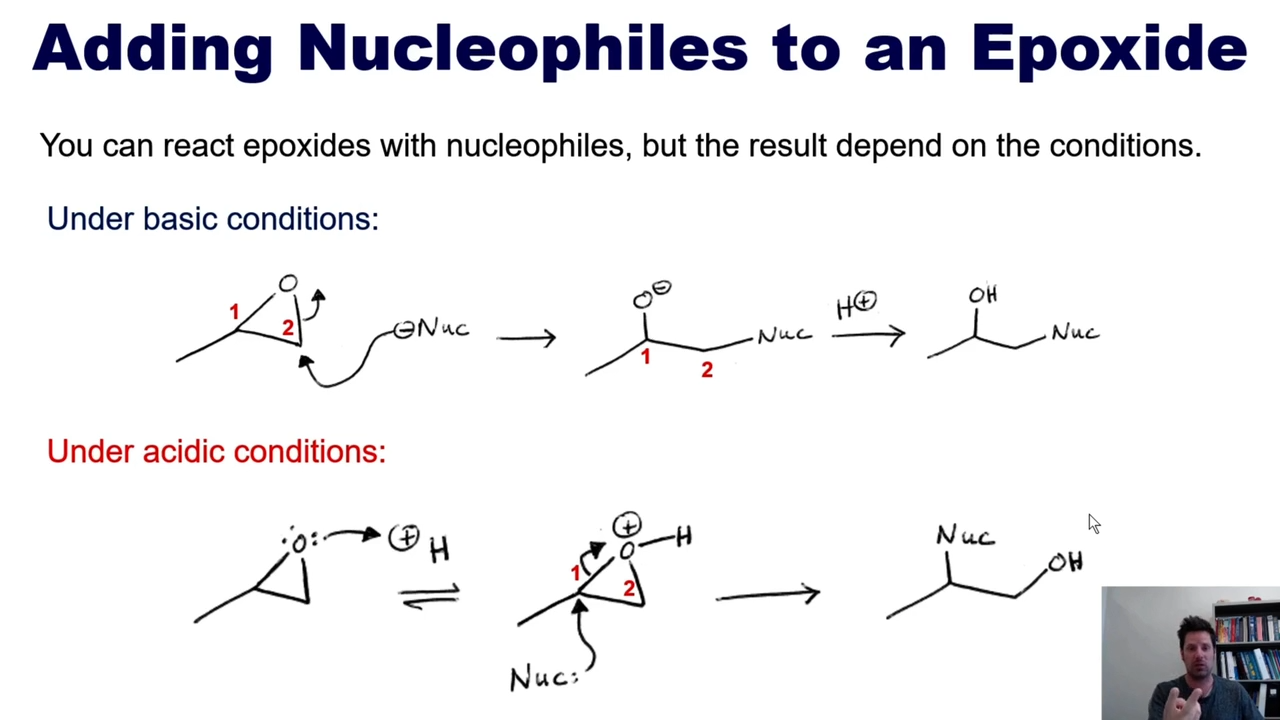
Adding nucleophiles to epoxides under acidic conditions
The exception here is that the electrophile (the epoxide) grabs a H+, becoming positive. The nucleophile then comes in at the most substituted carbon.THIS IS ANTI
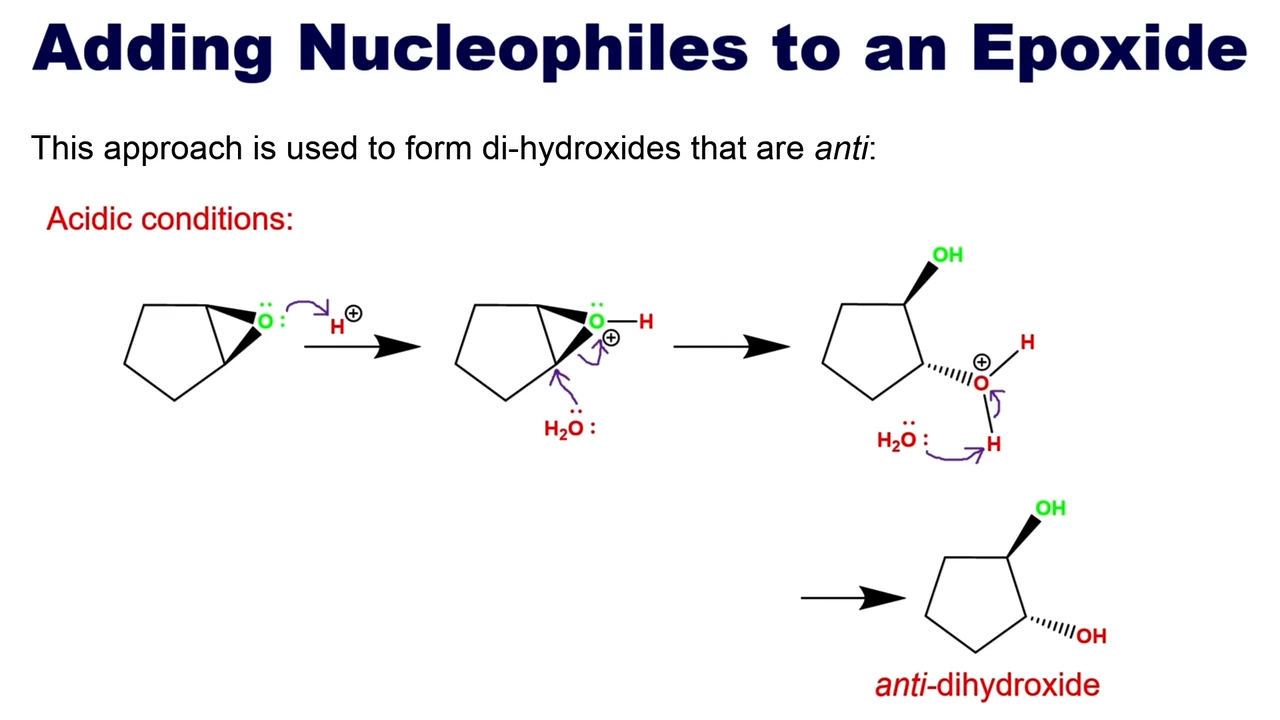
Anti-Dihydroxylation under acidic conditions
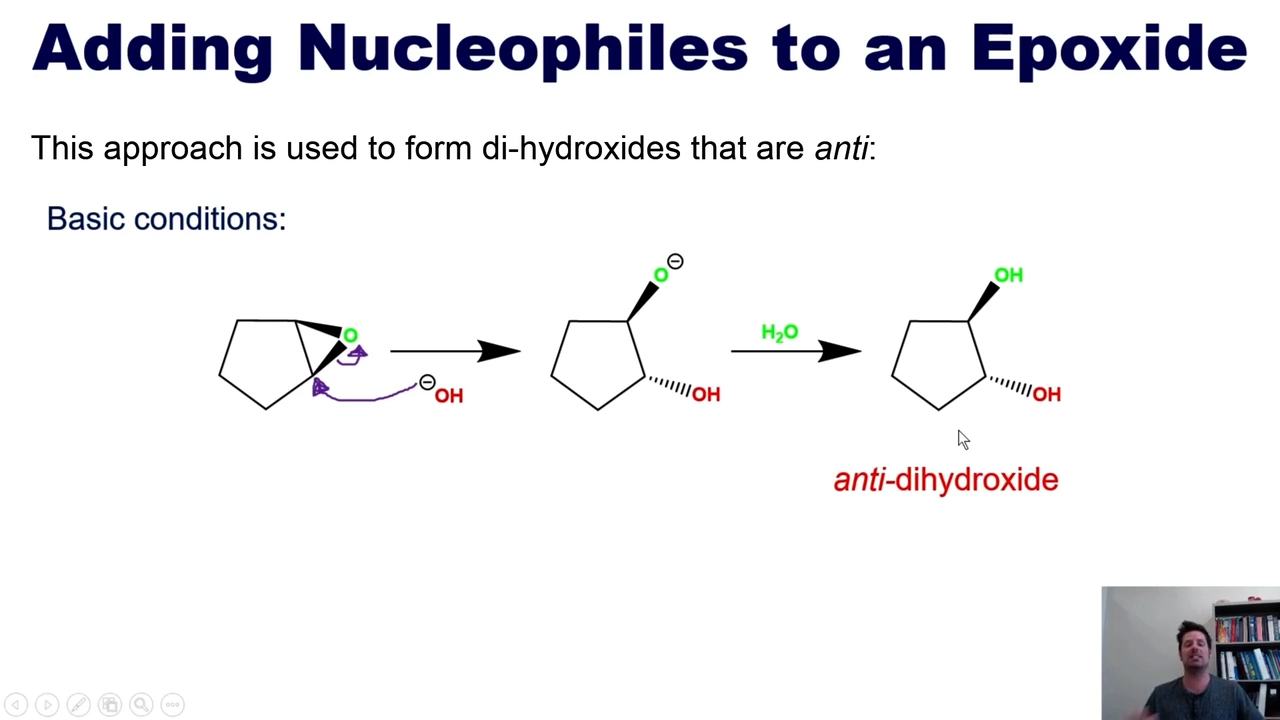
Anti-Dihydroxylation under basic conditions
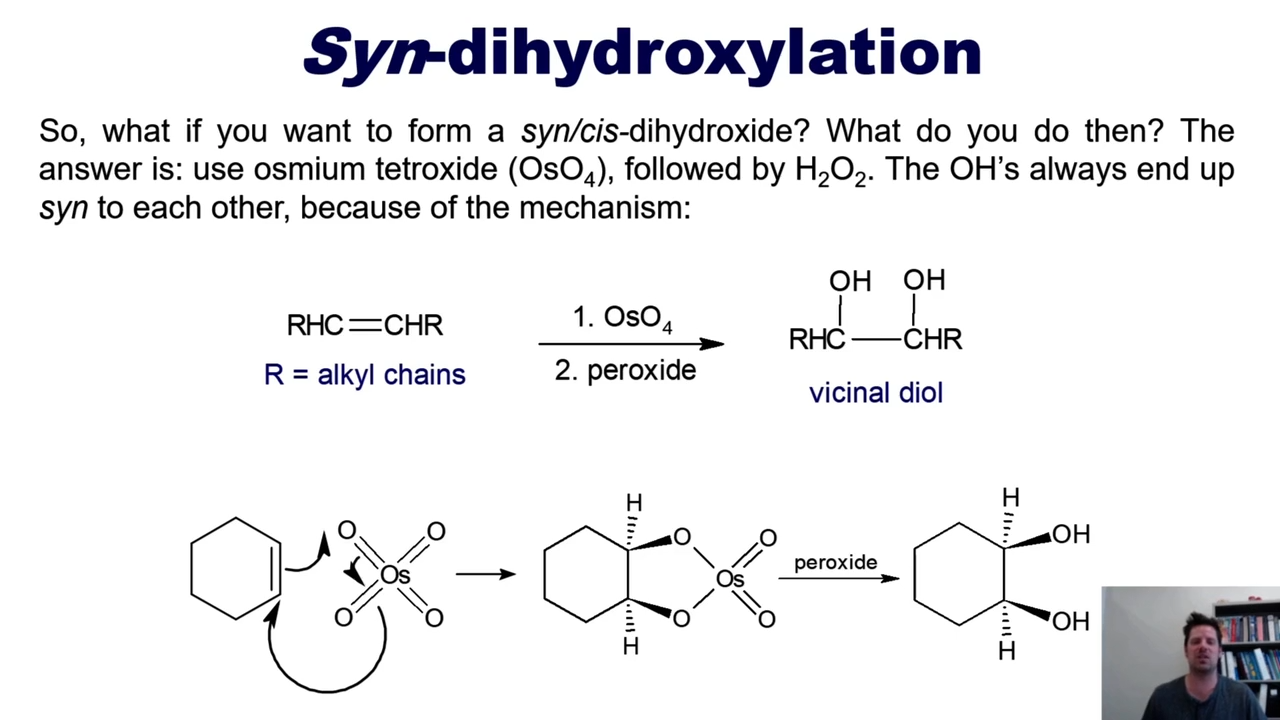
Syn-dihydroxylation
OSO4 and peroxide
Ozonolysis of alkenes

Onzonolysis of alkenes - with peroxide
same thing as ozonolysis, but one of the hydrogens of the ch attached to the carbon turn into OHs

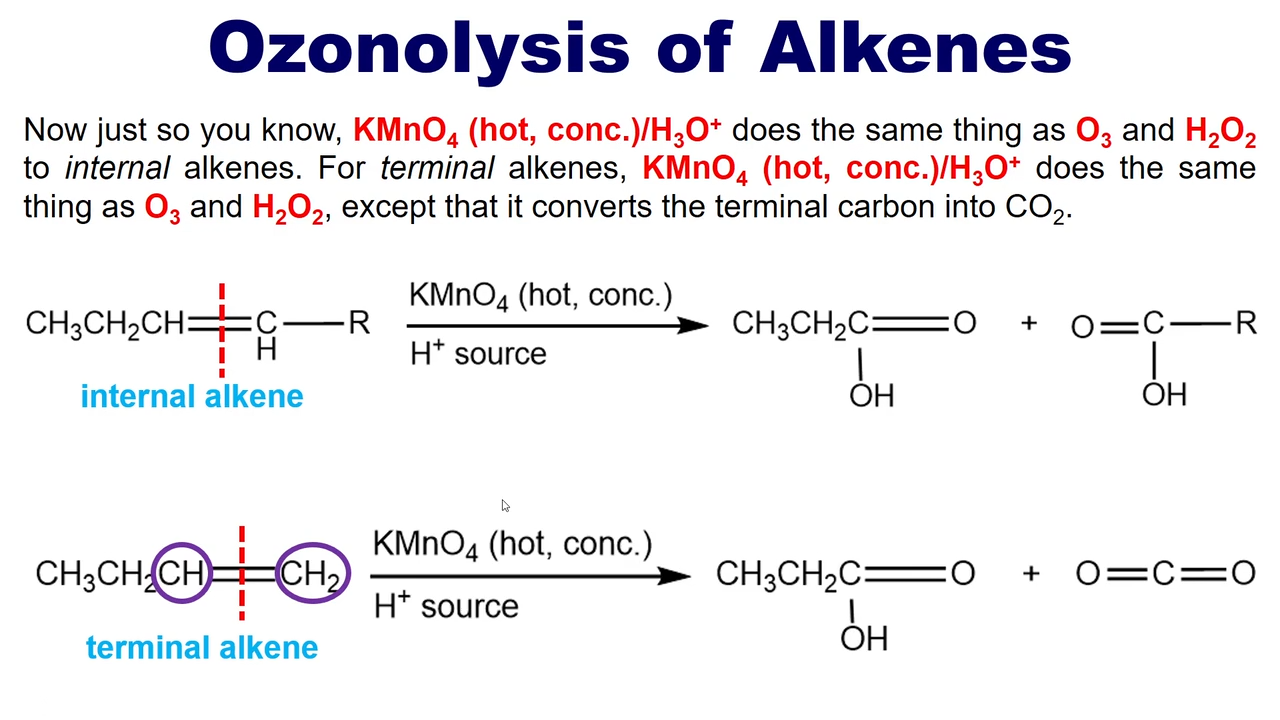
ozonolysis with KMnO4 - internal alkenes
when hot and concentrated, does the same as O3 and H2O2
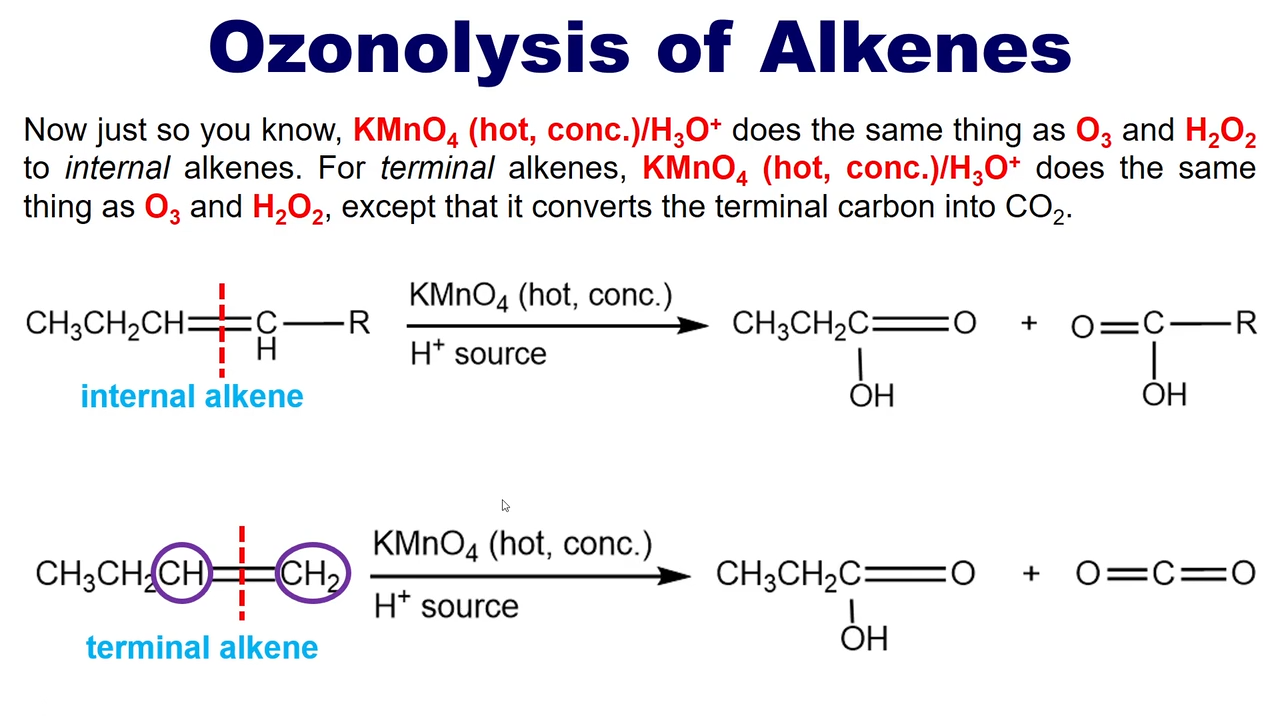
ozonolysis with KMnO4 - external alkenes
Does the same thing as O3 and H2O2, cut turns the terminal carbon into CO2
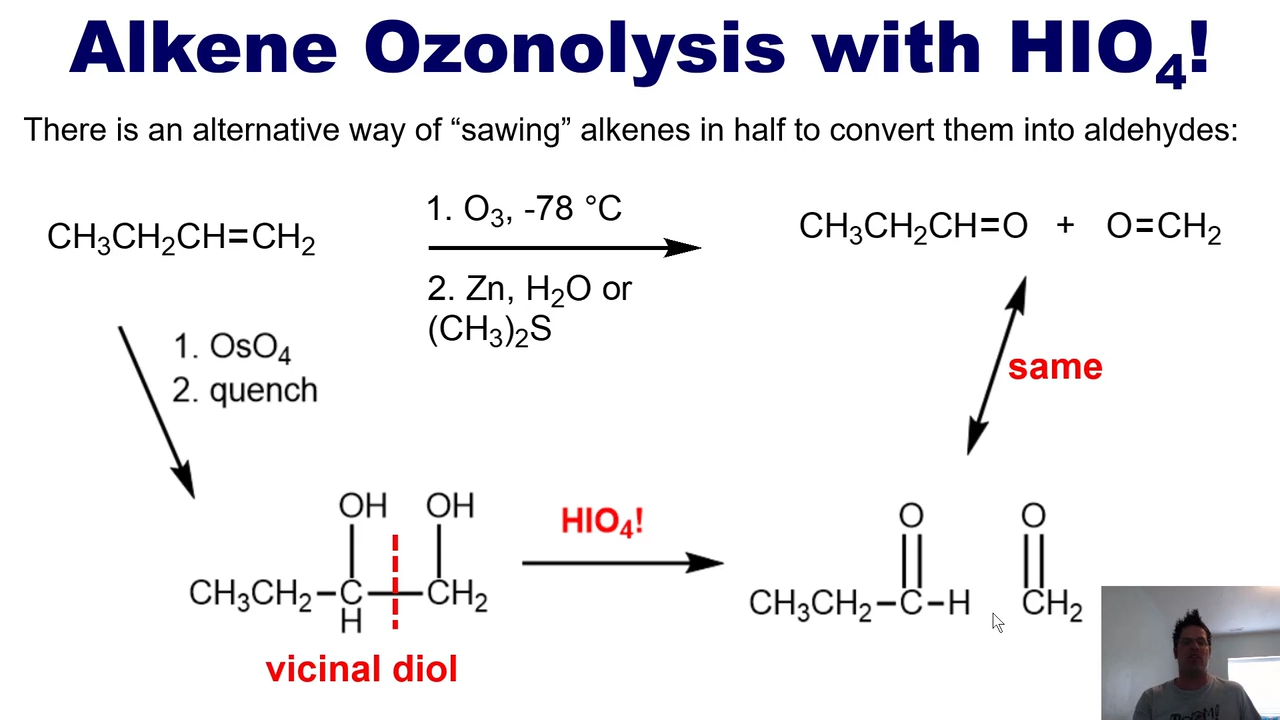
Ozonolysis using HIO4!
First undegoes a Syn-dihydroxylation with OSO4
HIO4! then cuts it in half, much like O3
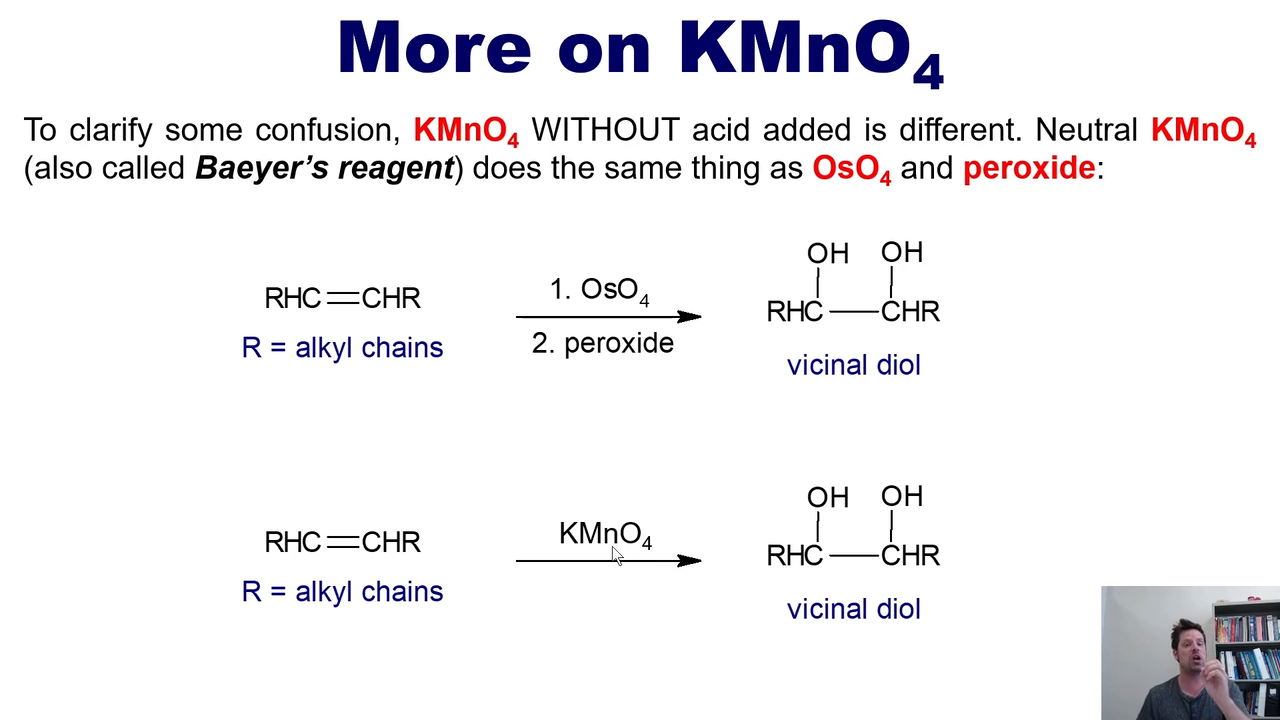
Kmno4 under non acidic, not hot conditions
acts the same as OSO4 and peroxide
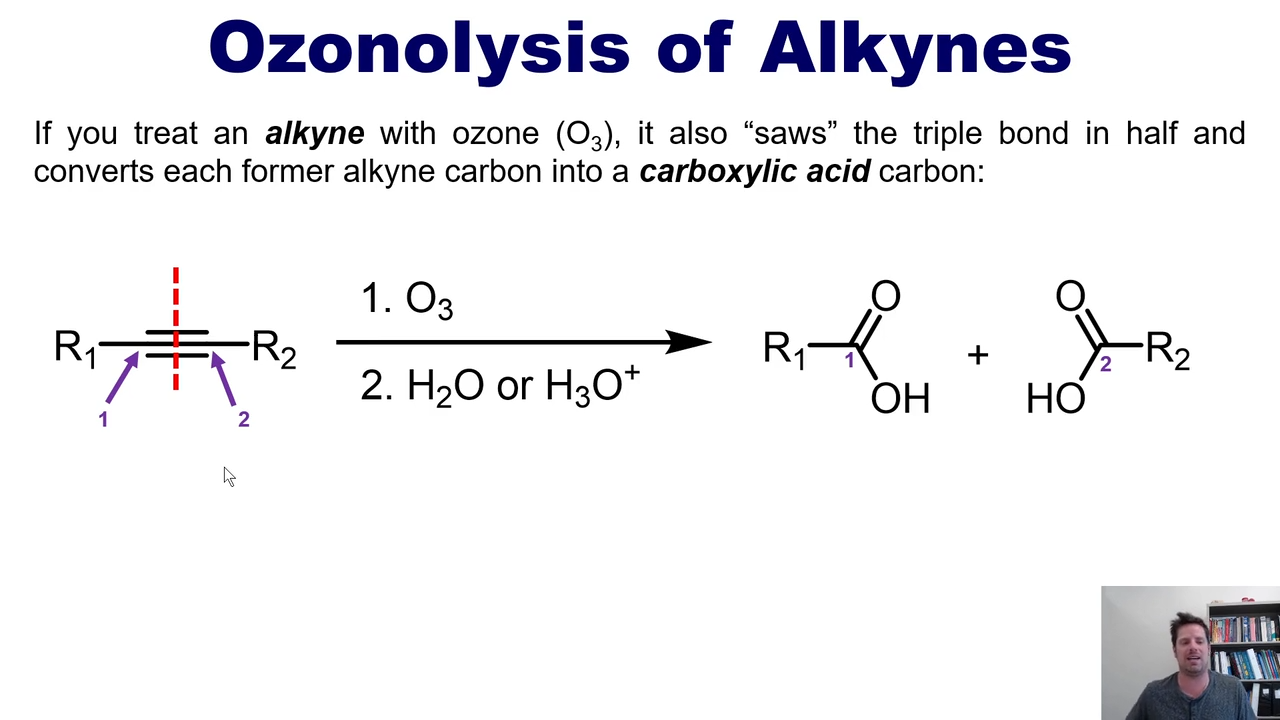
Alkyne ozonolysis
two alkyne carbons turn into carboxylic acids
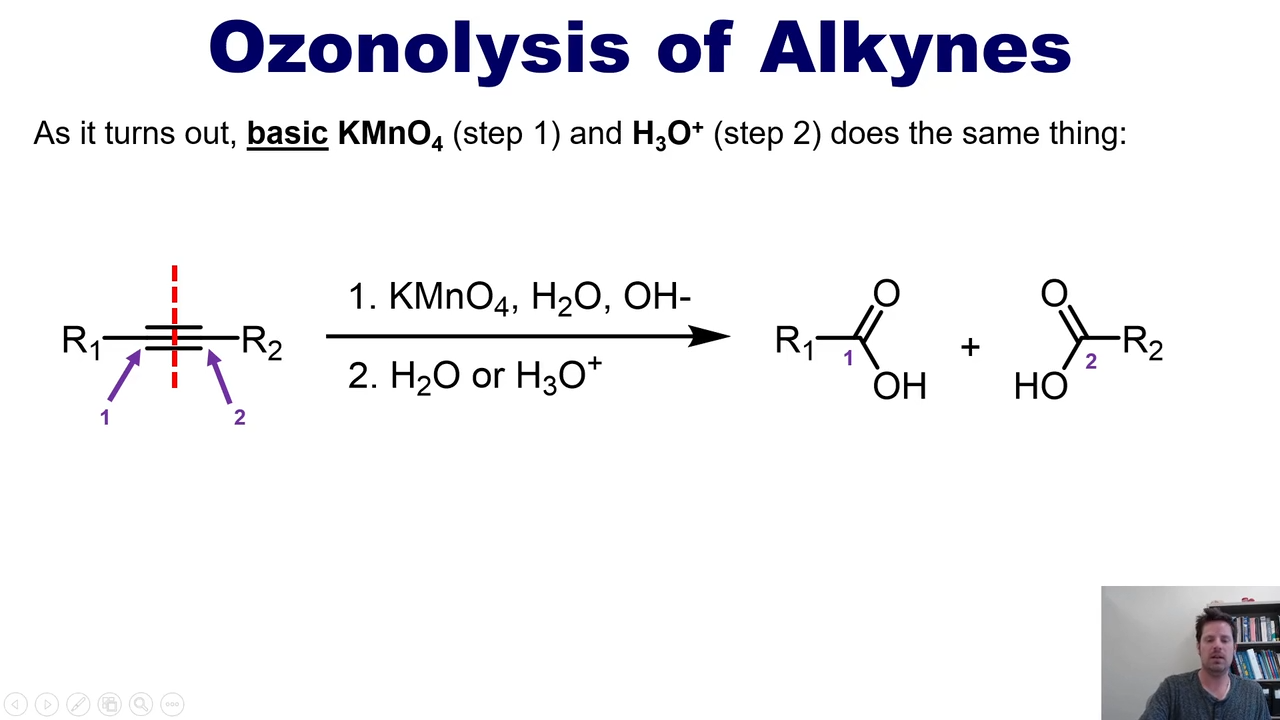
Alkyne ozonolysis With KMnO4
Does the same thing as O3, but NEEDS TO BE BASIC AND H3O AFTER
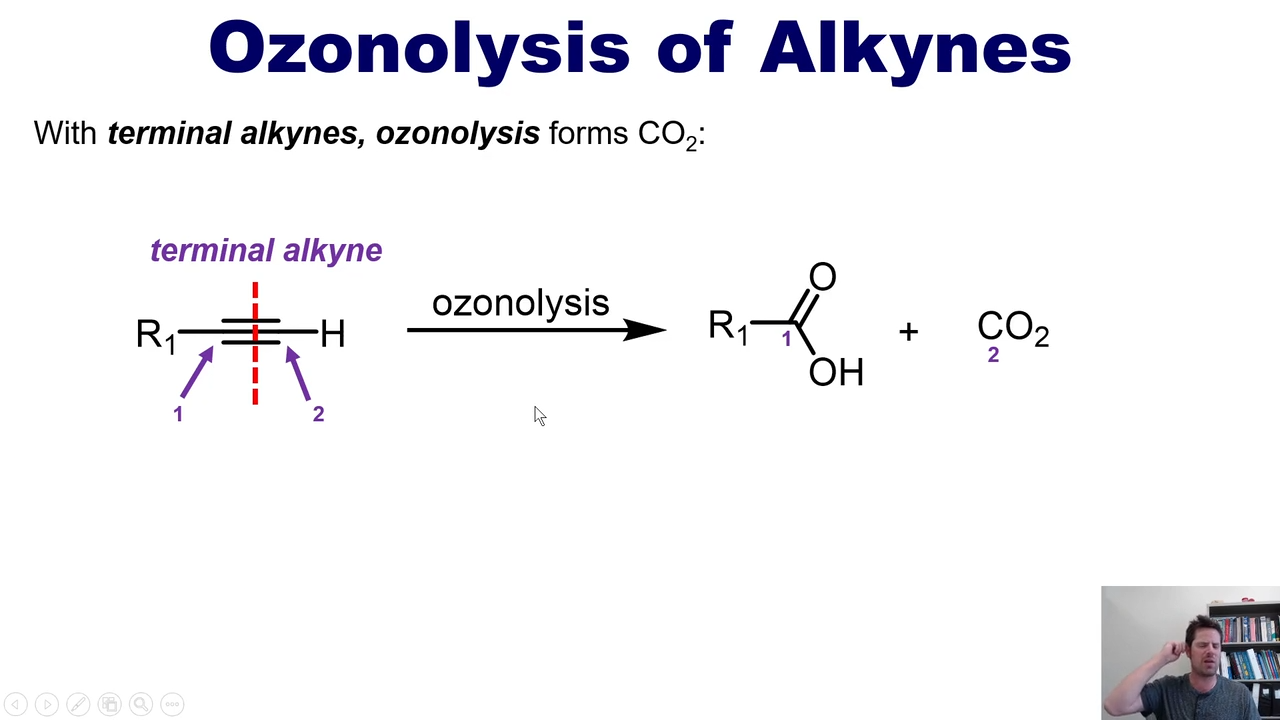
Terminal Alkyne ozonolysis
It will turn The non-terminal alkyne into carboxylic acid, and the terminal one into CO2,
much like KMnO4 under acidic conditions and terminal alkenes
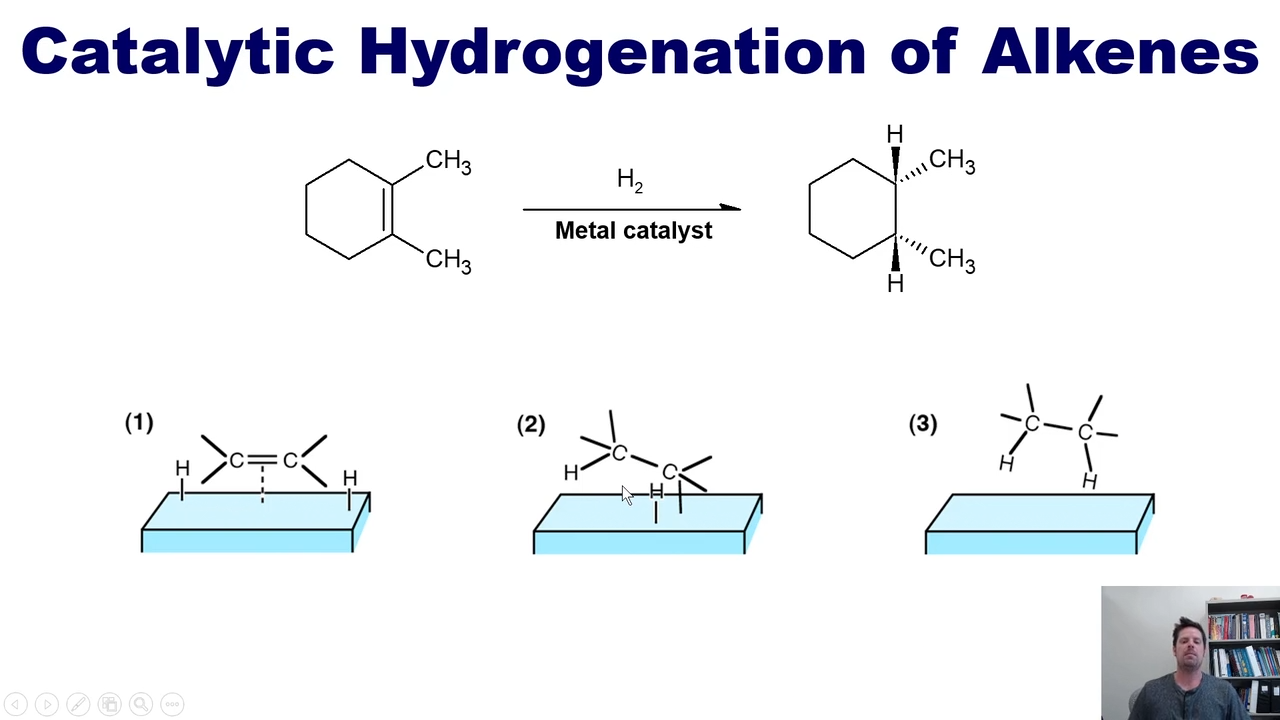
Catalytic hydrogenation of alkenes
Hs end up on the same side
H2 and Pd, Pt, Rh, or Ni
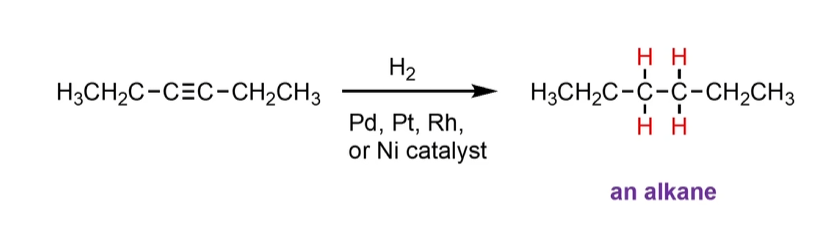
Catalytic hydrogenation of alkynes - with intent to get an alkane
H2 and Pd, Pt Rh or Ni
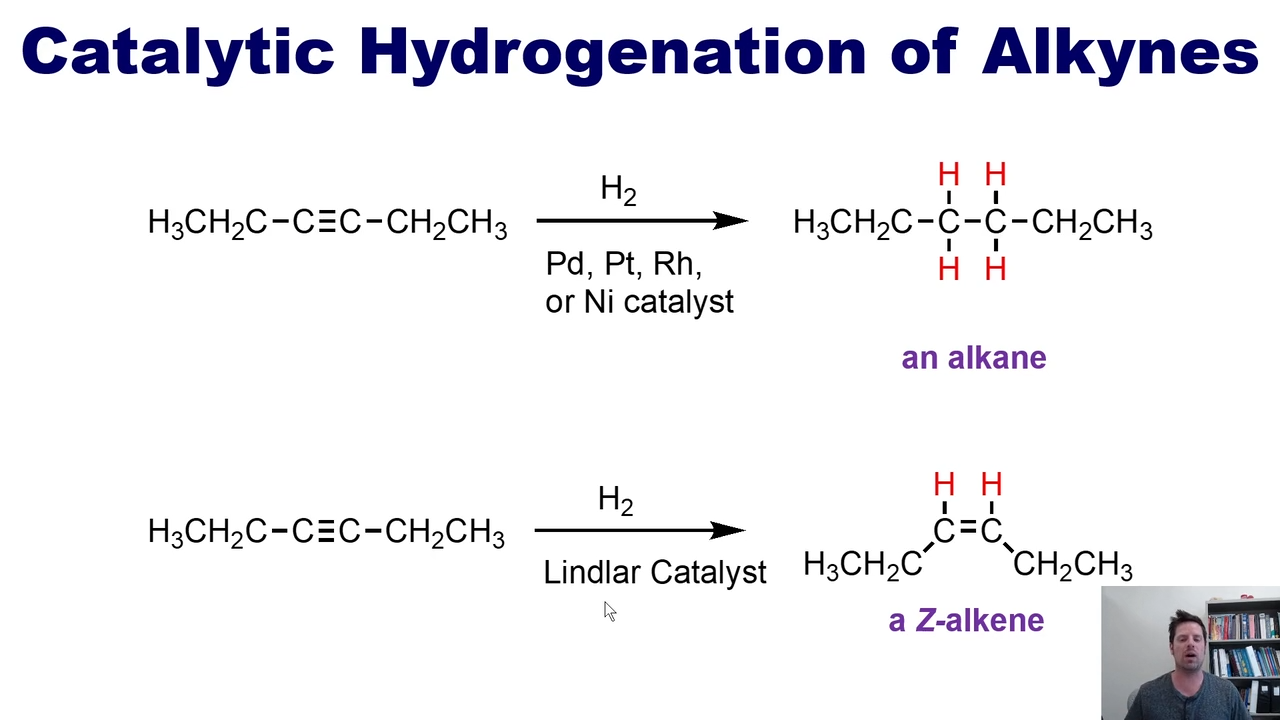
Catalytic hydrogenation of alkynes - with intent to get an Z alkene
H2 and lindlar’s catalyst
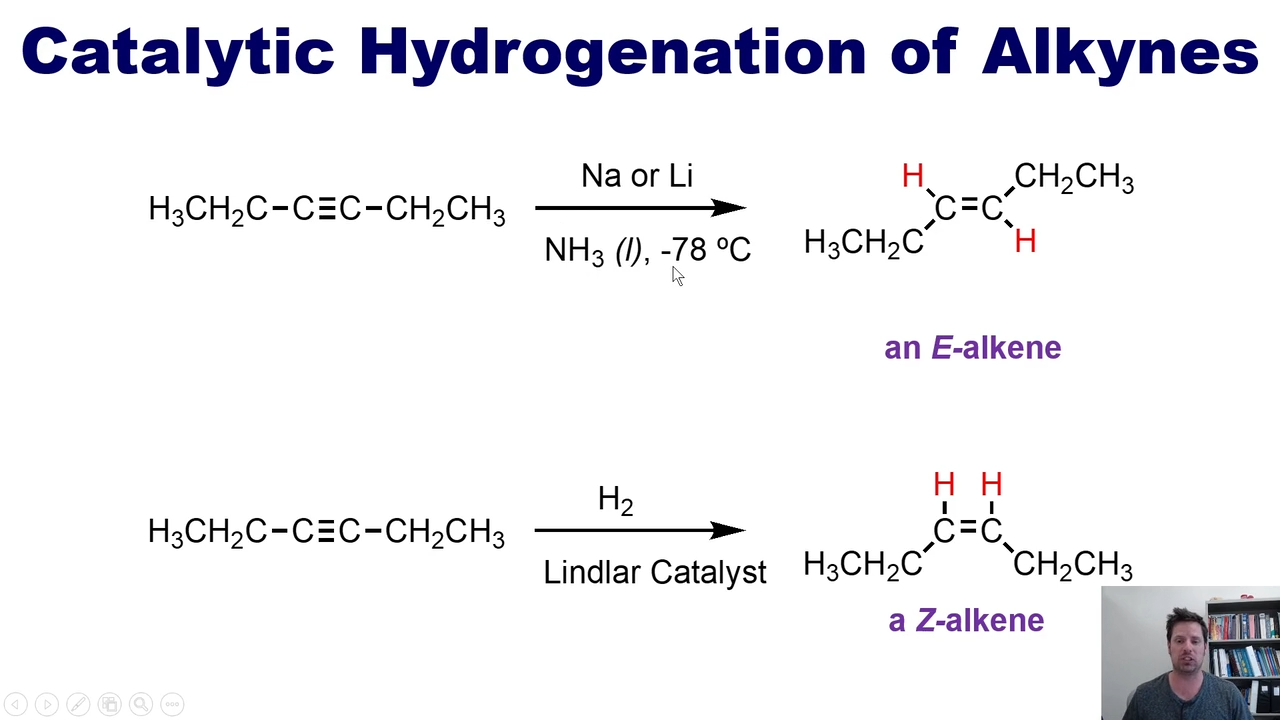
Catalytic hydrogenation of alkynes - with intent to get an E alkene
Na or LI
with NH3 at low temps
alkene general reaction
can be turned into an alkane in excess, TYPICALLY ANTI
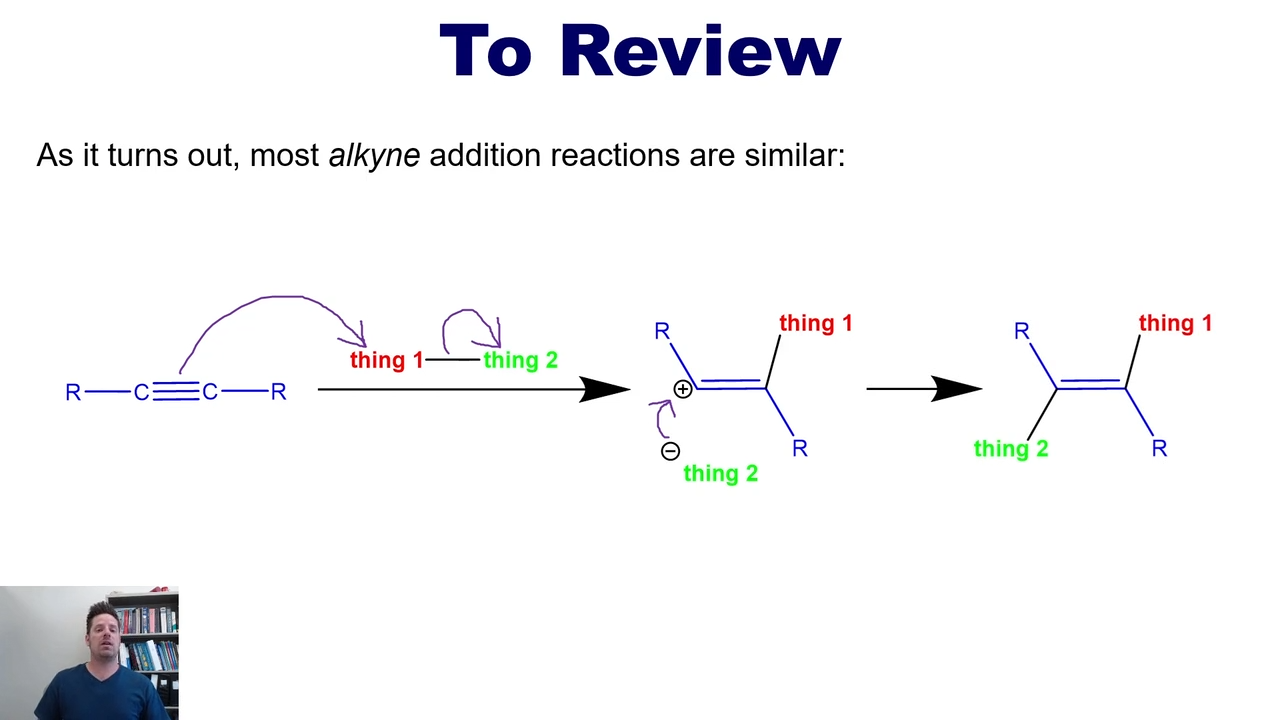
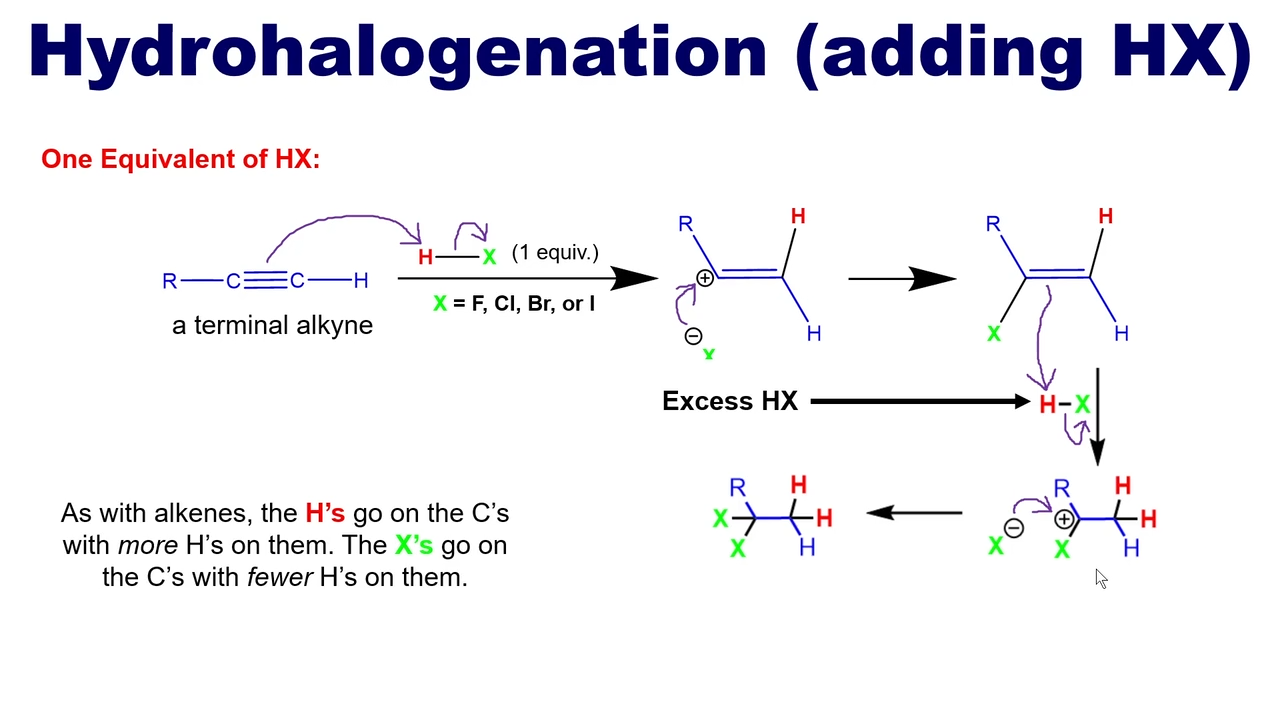
Hydrohalogenation on terminal alkynes
as with alkanes, the H’s go on the C’s with more H’s and the X’s go on the C’s with fewer H’s on them
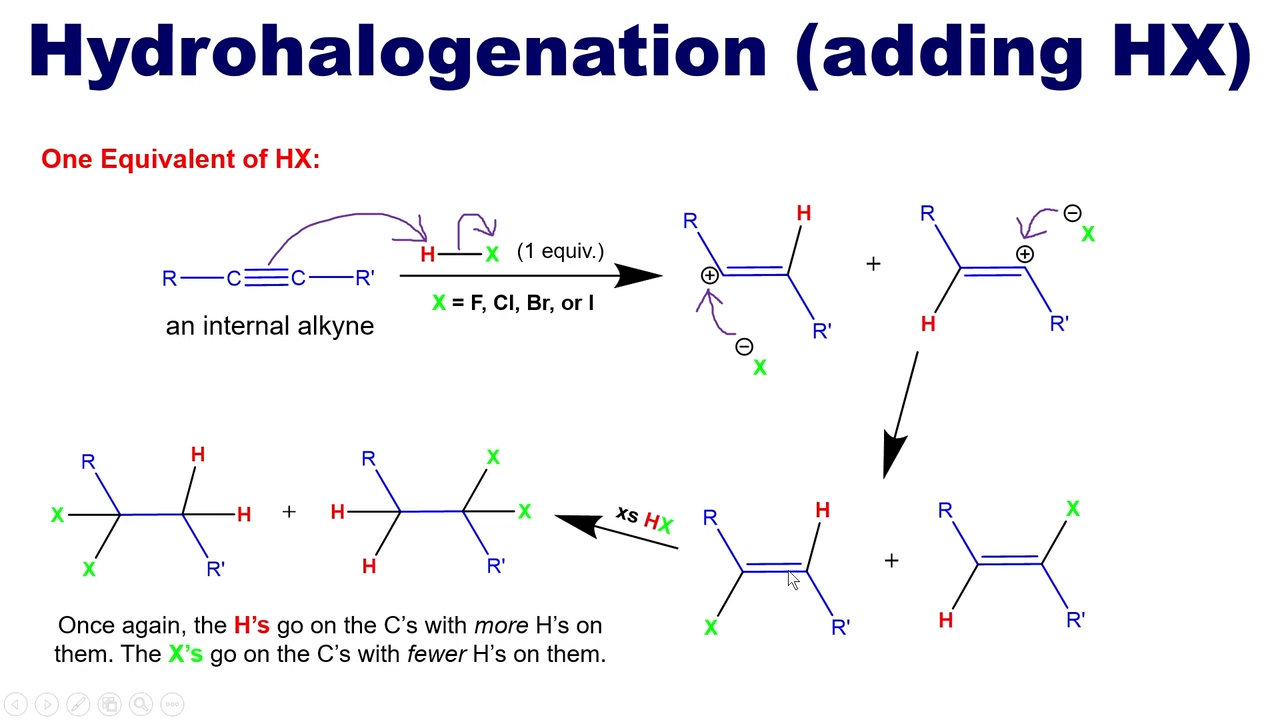
Hydrohalogenation on Internal alkynes
unlike with alkanes, the H’s cannot go on the C’s with more H’s and the X’s cannot go on the C’s with fewer H’s on them. This leads to a forming of two different products
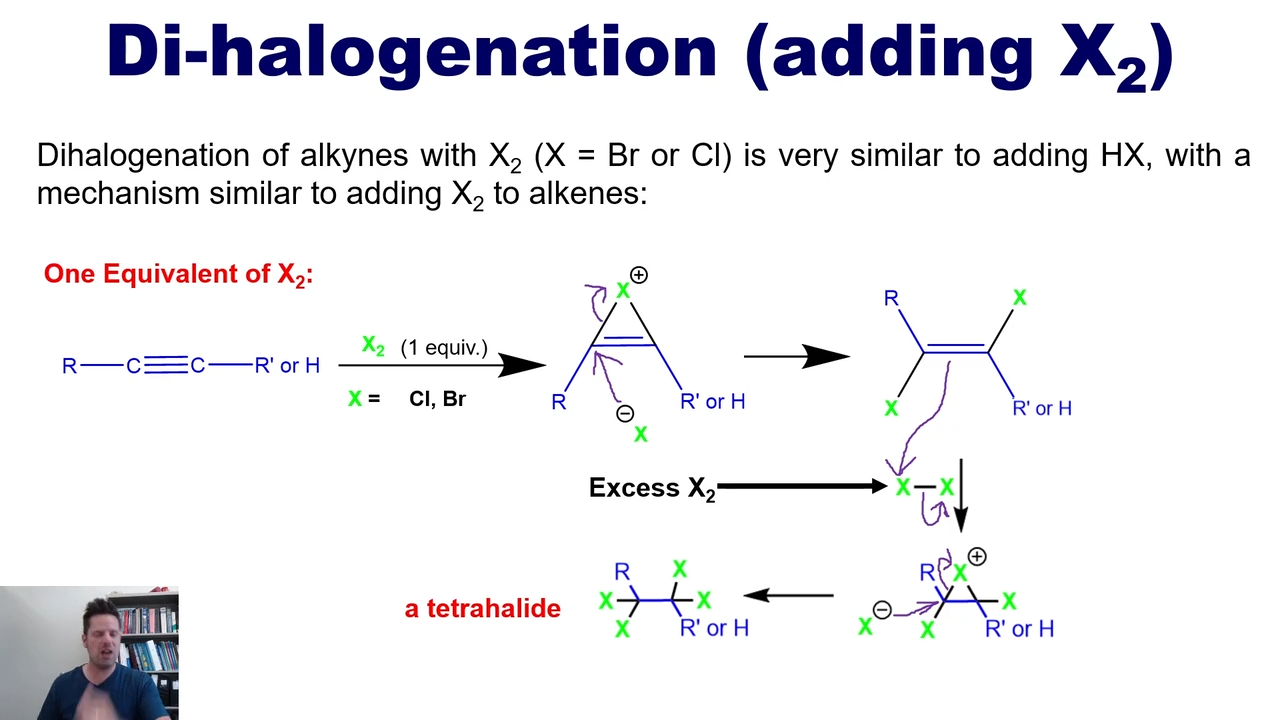
Alkyne Di-halogenation
CAN ONLY BE CL OR BR
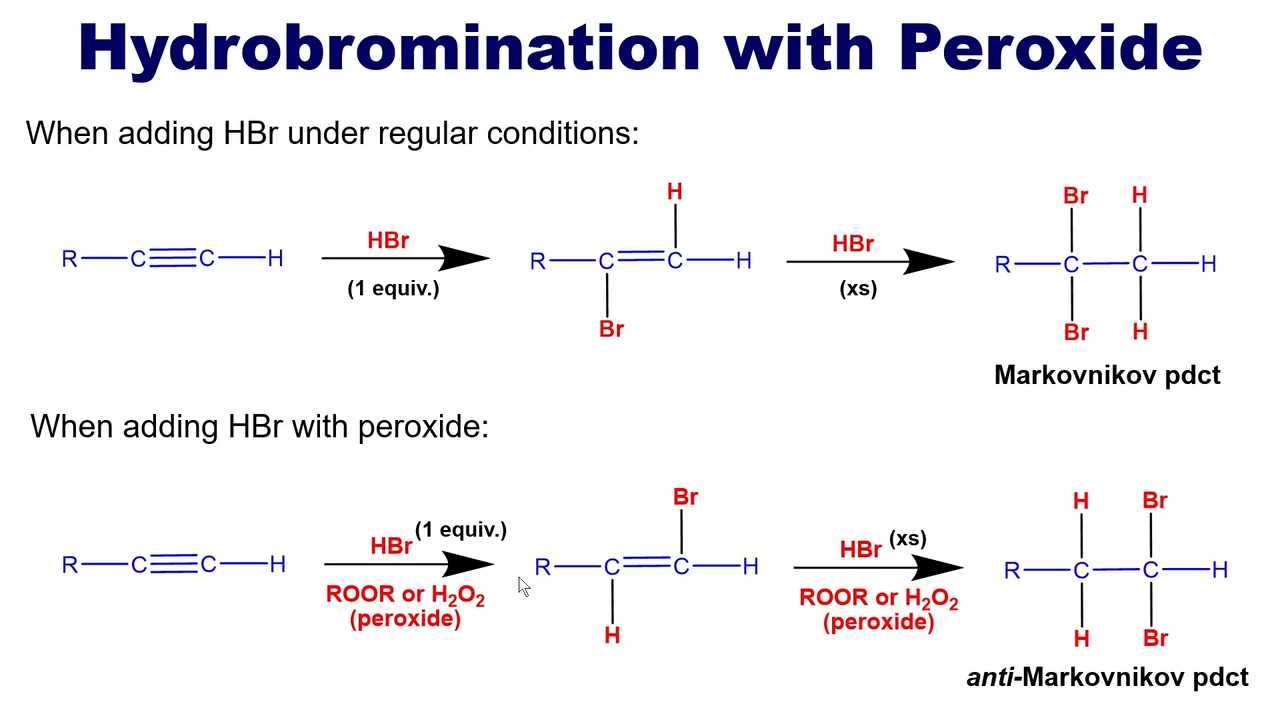
Hydrobromination with peroxide with alkynes
Leads to the antimarkovinikov product
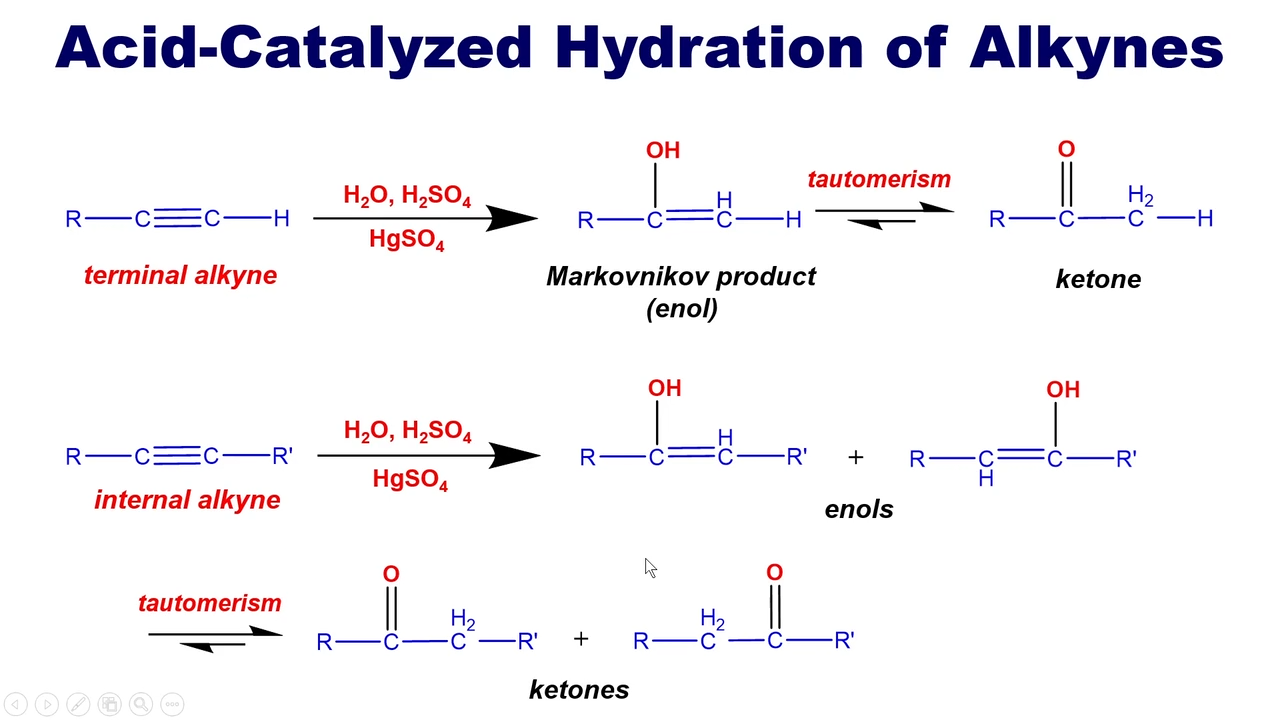
acid catalyzed hydration of alkynes
H2O, H2SO4, and HgSO4
Produce markovnikov product in terminal alkynes
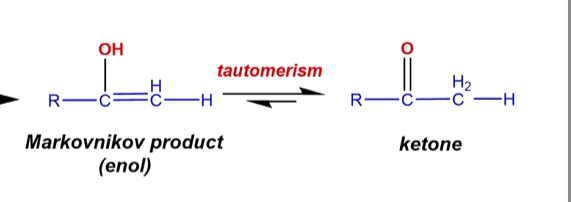
Tautomerization
C=O OHs regularly turn into ketones
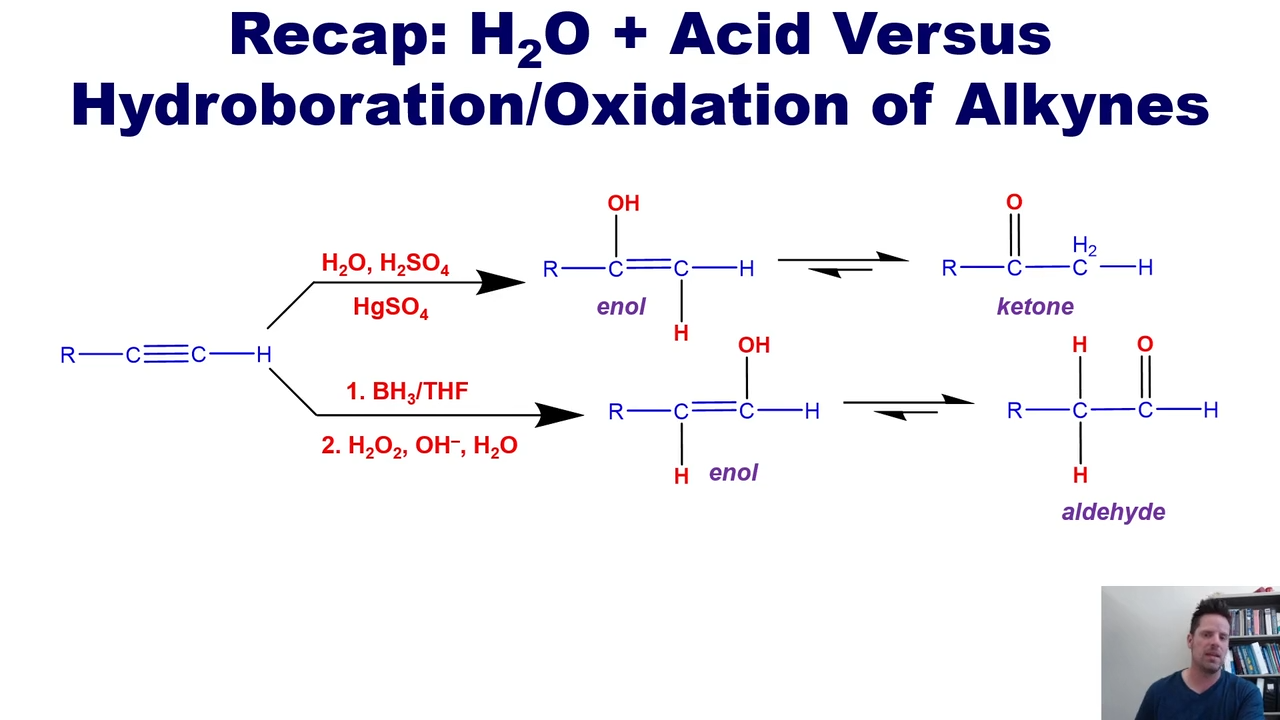
Antimarkovinikov oxidation/hydroboration of alkynes
BH3/THF,
H2O2, OH, H2O
Turns into aldehyde
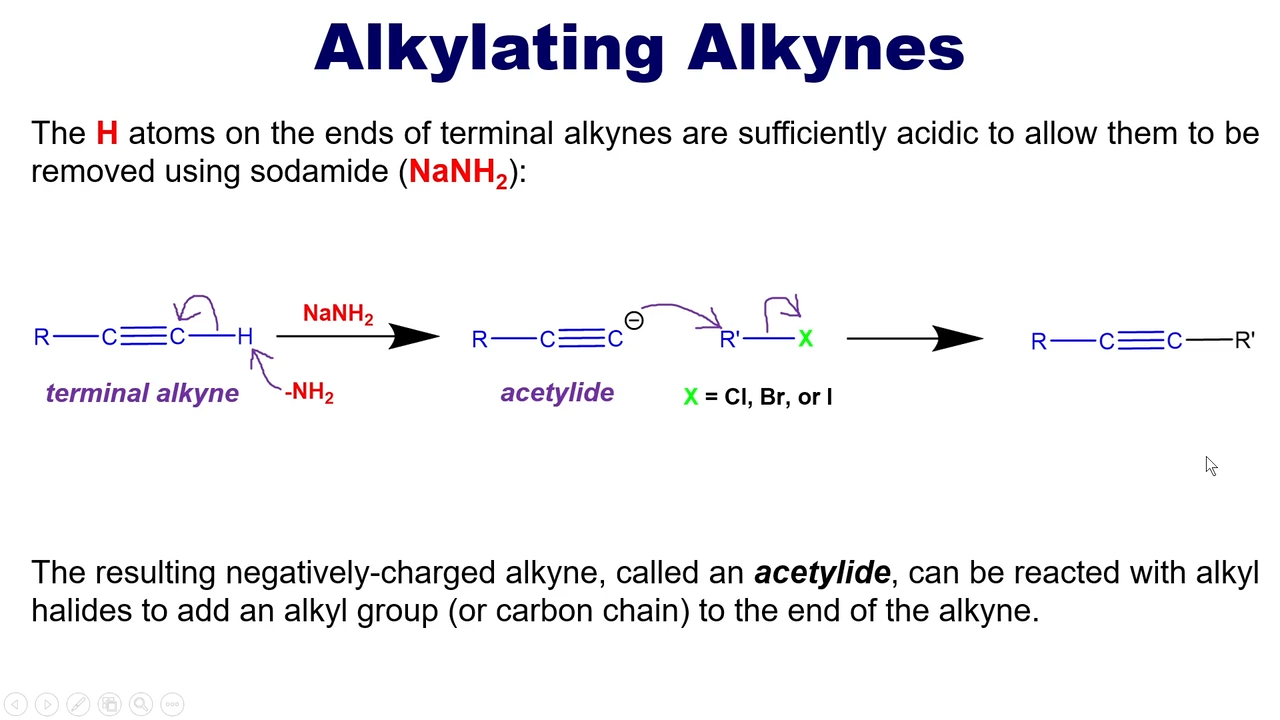
Alkylating alkynes
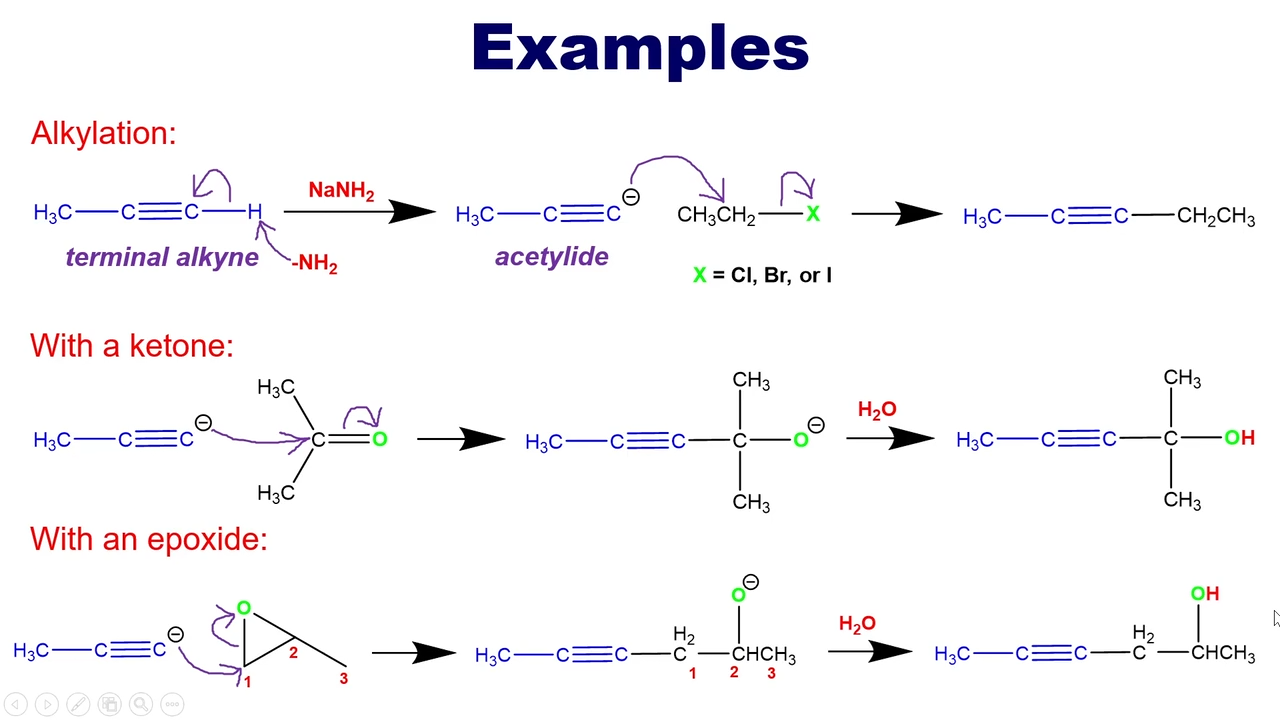
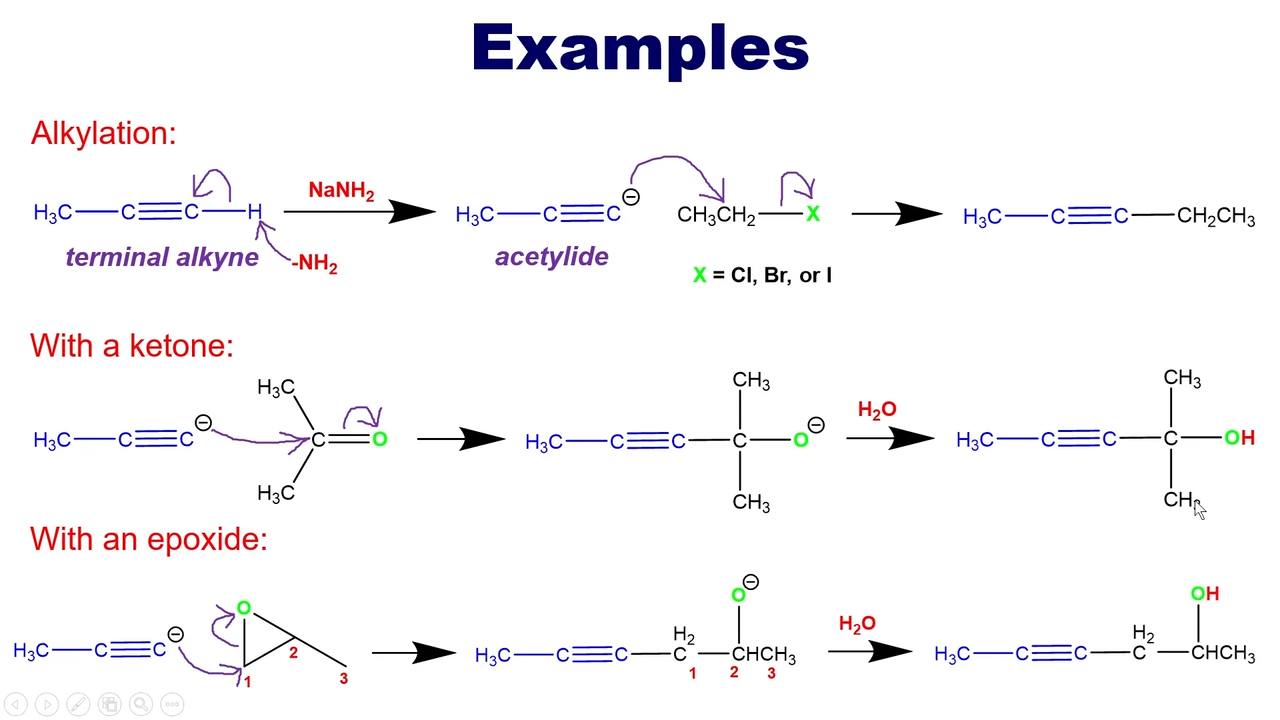
H atoms on the ends of terminal alkynes are sufficeintly acidic to be protenated by sodamide, this allows for reaction with a alkyl group (A BASE)
Alkylating alkynes with a ketone
Alkylating alkynes with an epoxide
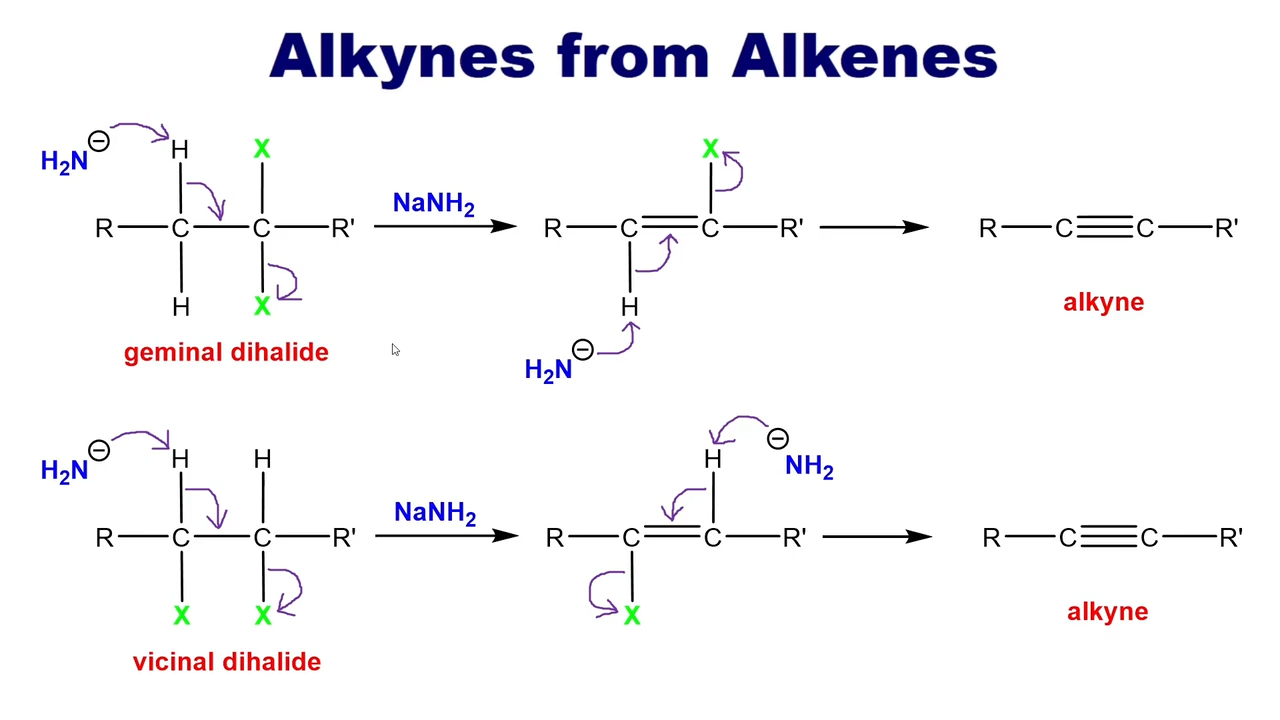
The formation of alkynes from alkenes
First, a dihalogenation is needed, to form a dihalide along with sodamide (same reactant used for alkylations)
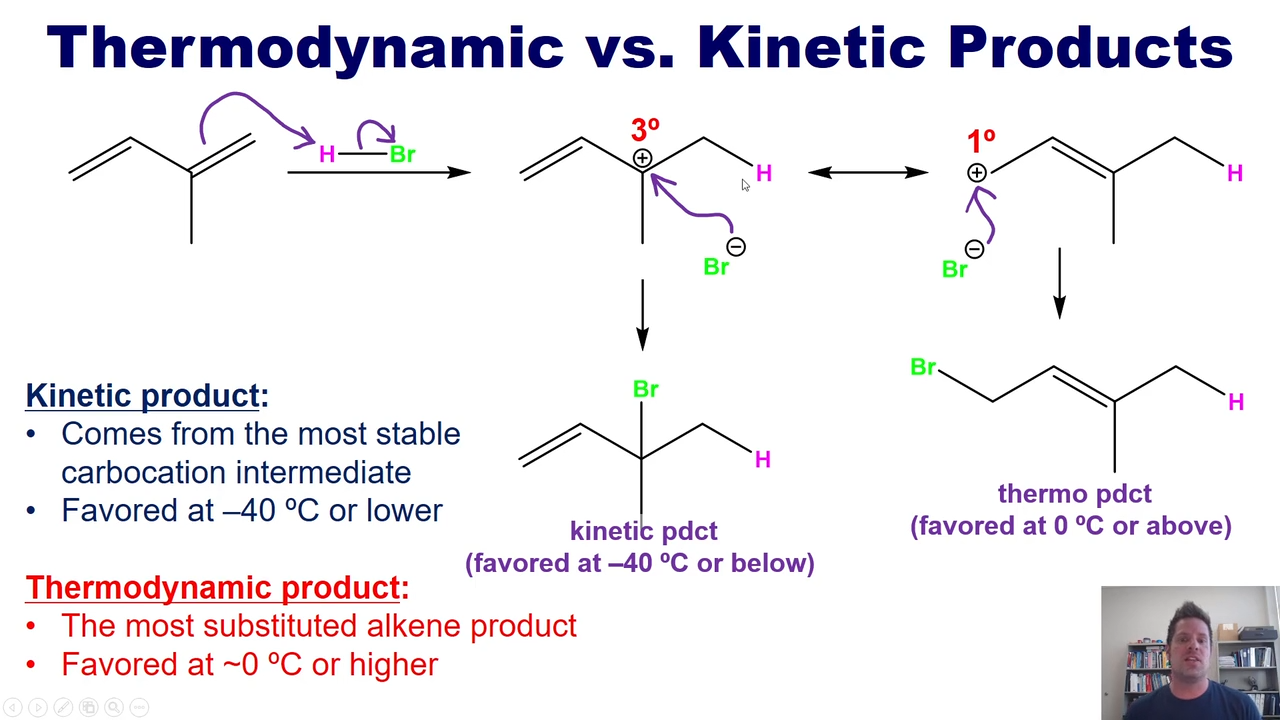
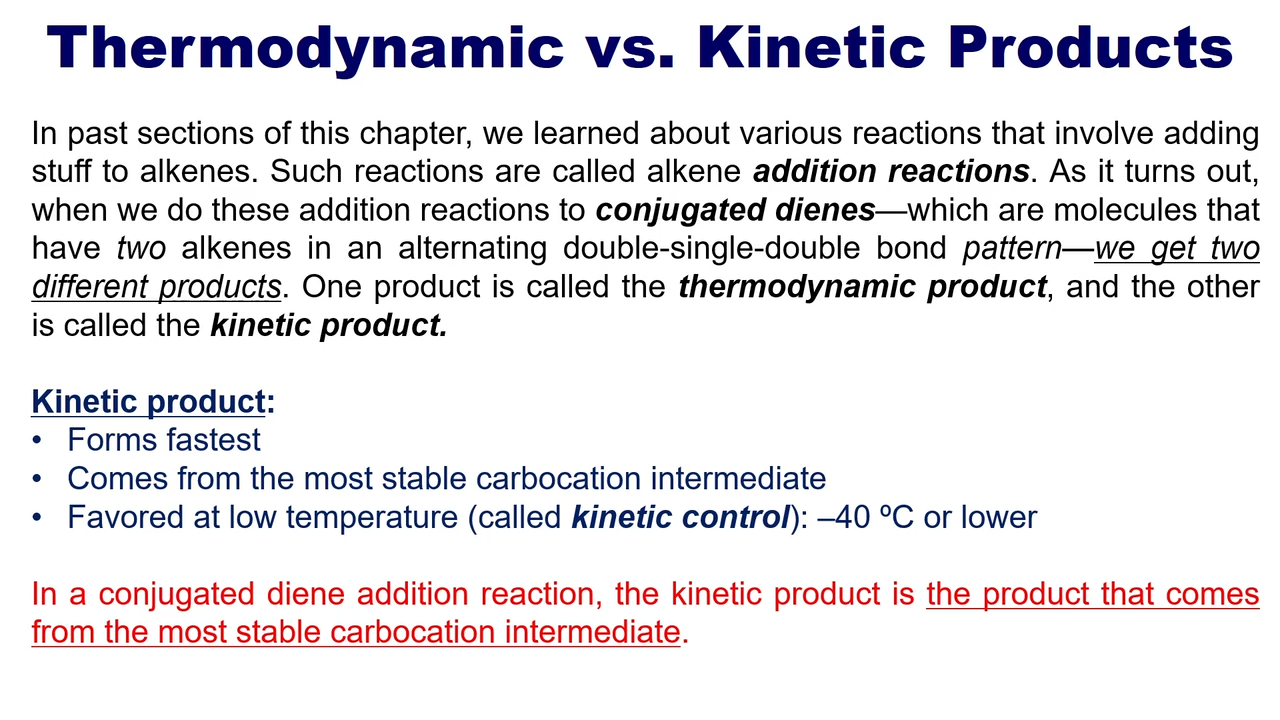
Kinetic product
product that forms the most stable carbocation intermediate
occur at -40 degrees celcius or lower
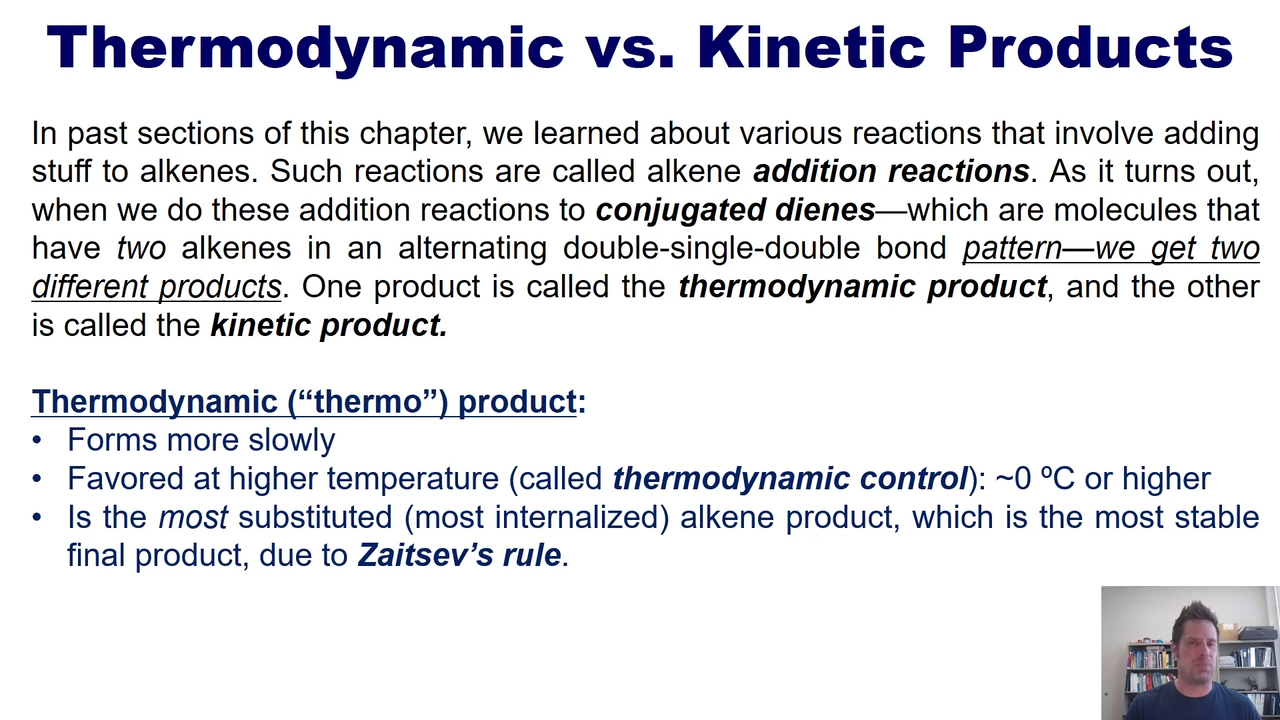
Thermodynamic product
more slow, moresubstituted alkene product
occur at 0 degrees celcius or higher
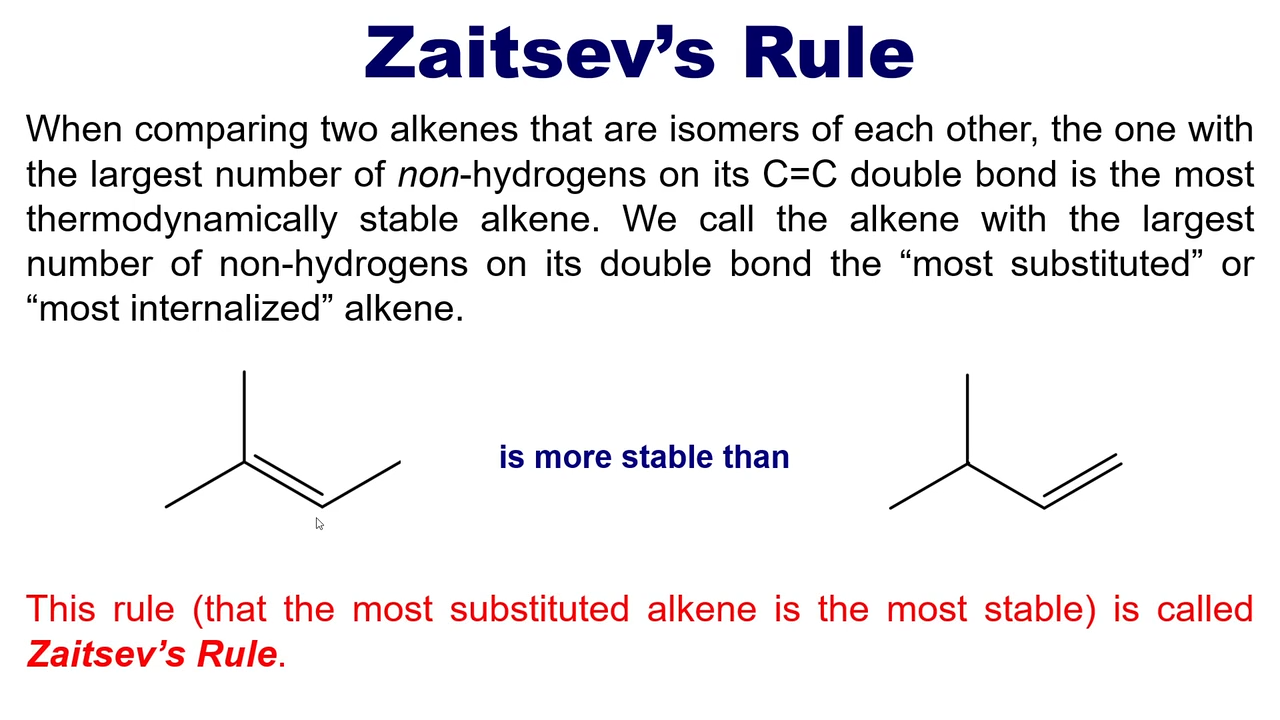
zatsiev rule
The alkane with the largest amounts of non hydrogens on its C=C double bond is the most thermodynamically stable alkene
Why do kinetic products form at low temperature
due to the fact that the stable carbocation intermediate is favored at lower tempeartures