CHAPTER 3: Homeostasis
 Call Kai
 Learn
Learn Practice Test
 Spaced Repetition
 Match
Match Flashcards
 Knowt Play
1/18

There's no tags or description
Looks like no tags are added yet.
Name | Mastery | Learn | Test | Matching | Spaced | Call with Kai | Chat |
|---|
No analytics yet
Send a link to your students to track their progress
19 Terms
homeostasis definition
maintenance of stable, balanced internal environment in response to changes in both the interna and external environments
achieved through range of mechanisms inc:
structural - physical features assist in tolerating changes
physiological - internal processes detect and respond to changes
behavioral - behaviors or actions helping organisms survive environment
variable factors must be kept at optimum levels, changes in environment cause variables to become electaed or lowered - homeostasis maintains optimum
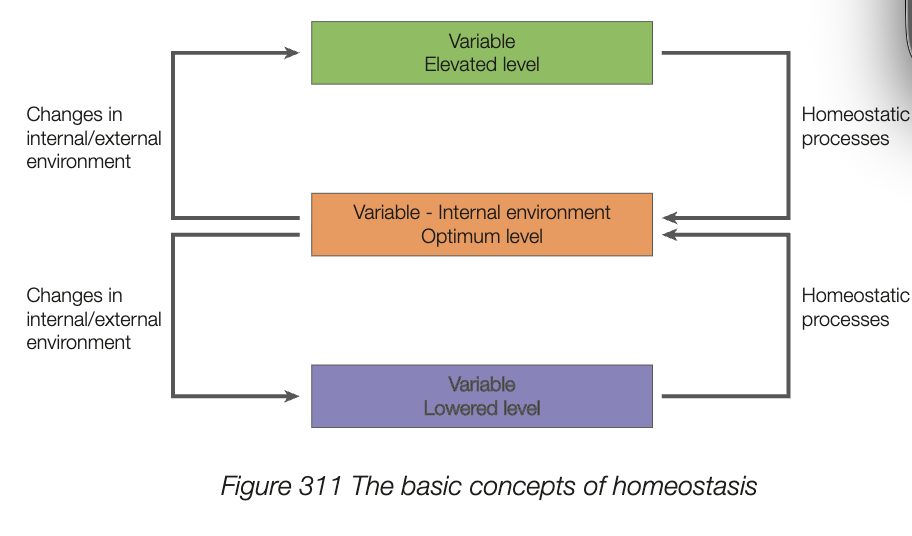
tolerance limits general
max and min range of factors individuals can tolerate before life processes cant be maintained - limit is different depedning on organism and environment
Liebig’s Law of the Minimum - if variables are outside of tolerance levels, poor functioning of organism will result, irrespective of other variables
tolerance limits - body temperature
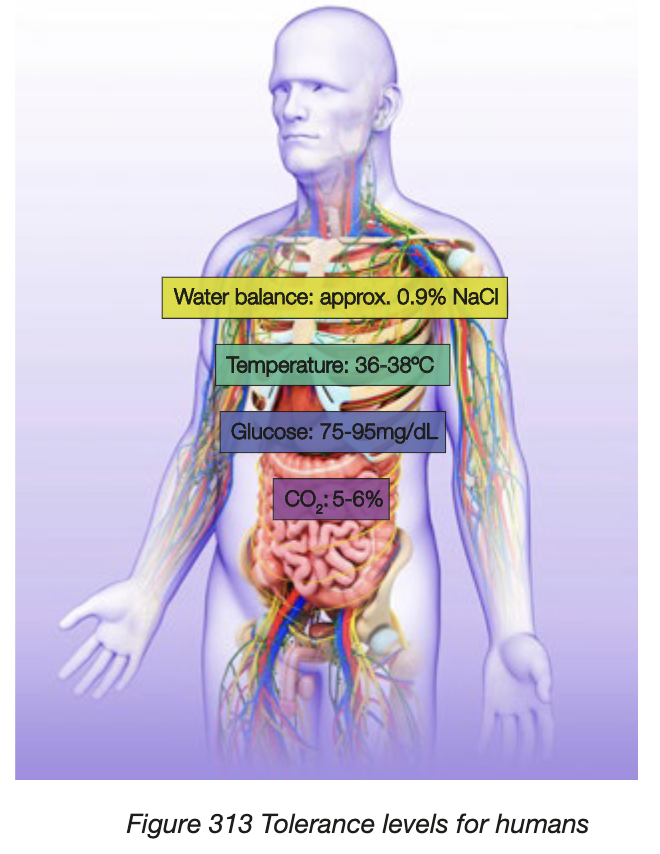
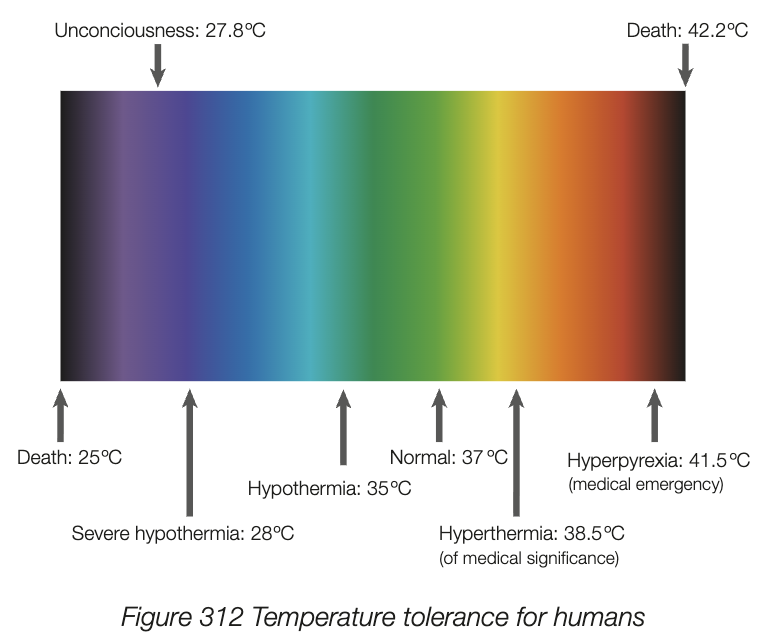
mammals body temp is 36-38C
enzymes work best around 37C and are responsible for all cell’s metabolic activity
internal temp rises much above 40C → hyperthermia
internal temp drops few degrees below 37C → hypothermia
tolerance limits - water
water/solute concentration balance in extra- and/or intracellular environment
shift from normal level leads to swelling or shrivelling of cells due to osmosis
solute concentration of 0.9% NaCL is isotonic with blood plasma
tolerance limits - blood carbon dioxide concentration
normally between 5-6% in humans
non-toxic gas at normal levels, needed to stimulate and control rate and depth of breathing
high levels of CO2 dissolving in blood cause ph to lower (acidosis)
levels greater than 10% cause highly toxic levels - lead to unconciousness and death
tolerance limits - blood glucose levels
normally around 75-95mg/dL - sustained deviations cause serious health issues
hyperglycaemia (too high blood glucose) and hypoglycaemia (too low blood glucose - if untreated both lead to symptoms inc. loss of consciousness
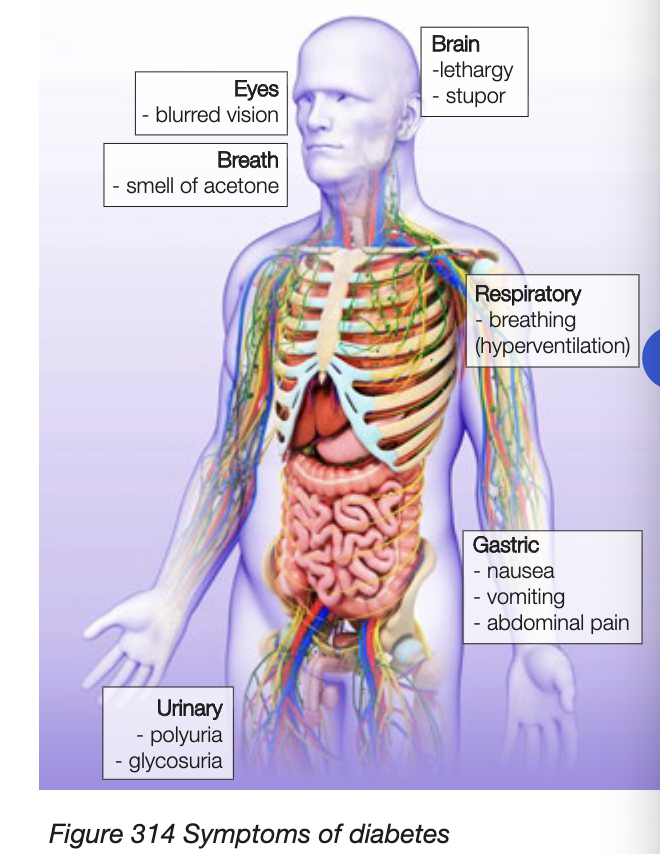
diabetes - high level of blood glucose - lack of insulin hormone or tissue responses to insulin
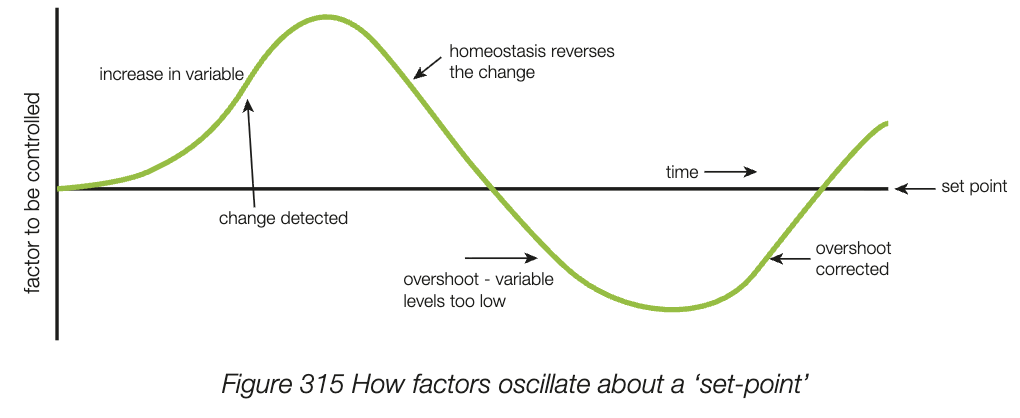
how variables in internal environment work in practice and how responses control them
variable in internal environment oscillates around set-point in practice
factors in environment cause inc or dec in variables and homeostatic responses work in the opposite way to reverse changes
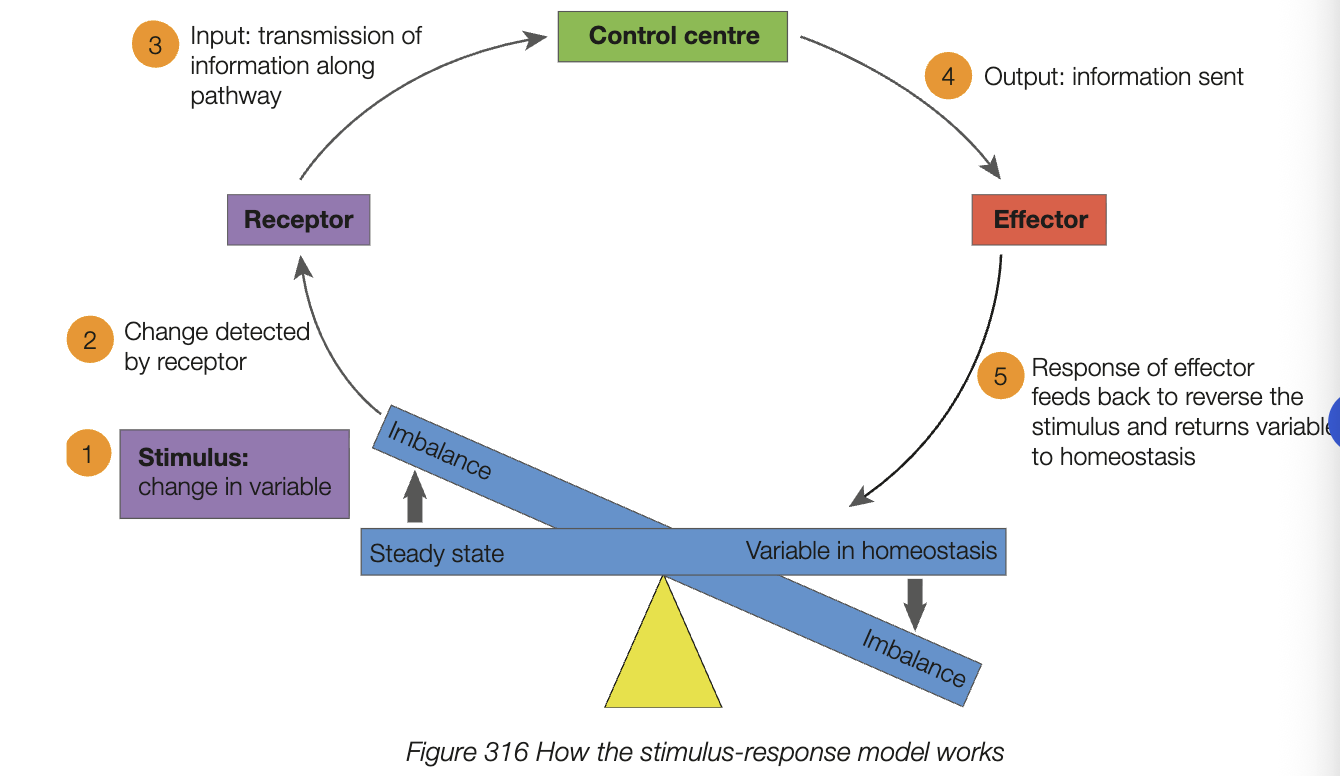
stimulus response model elements
stimulus - variable factor in internal or external environment can be detected by organism
receptor - cells of tissues detecting stimulus and send messages along nerve cells
transmission - relay of information via nerves and/or hormones to an effector
effector - usually a gland or muscle bringing about response after receiving information
response - action occuring due to initial stimulus
feedback - impact of response on initial stimulus (positive or negative)
negative feedback
response diminishes or reverses original stimulus
Homeostasis is characterised by it as it returns the original variable factor that was changed back to steady state
e.g. inc. in exercise raises metabolic activity, inc blood temp. blood temp inc detected by receptors in tissues - homeostatic responses by effectors reverse the original stimulus and lower the temperature
positive feedback (e.g. babty)
response reinforces or brings about an increase in the initial stimulus
less common
e.g. newborn baby suckles on mother - causes release of hormone in mother, stimulating further release of milk (initial response).
releases oxytocin in mothers brain - promotes affection and bonding between the two
oxytocin passes through breast milk to baby and promotes bond
more breastfeeding → more oxytocin released → stronger bond between baby and mum
nervous system
involved when more rapid and direct communications are required
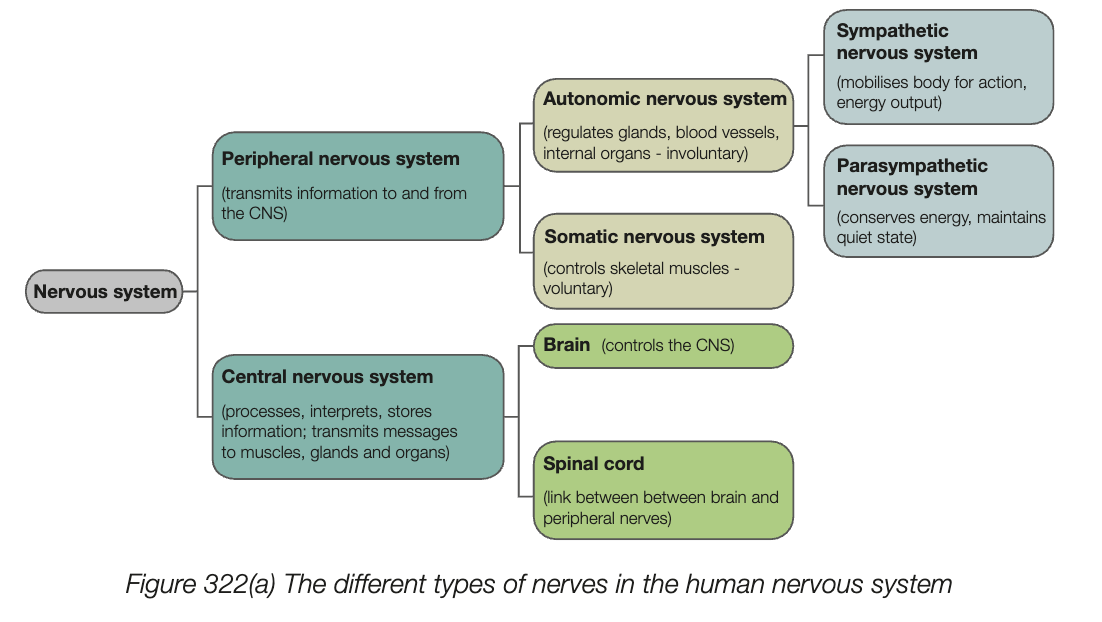
made up of the central nervous system (CNS) and the peripheral nervous system (PNS)
nerves in PNS relay information from the sensory receptors to CNS and from the CNS to the effectors
central nervous system (CNS)
consists of brain and spinal cord
primary role - storing, arranging, managing information
peripheral nervous system (PNS)
mainly involved in transmission of information to and from CNS - nerves in PNS relay information from the sensory receptors to the CNS and from the CNS to the effectors
subdivided into somatic (voluntary) and autonomic (involuntary) types
Voluntary nerves are under conscious control (e.g. influencing skeletal muscles)
autonomic system consists of nerves involved in range of unconcious responses (e.g. changes in heart rate, activity of body systems, gland activity)
further divided into sympathetic and parasympathetic systems
neuron and how they transmit messages
receptors detect stimuli and send messages along nerve cells (neurons) to CNS, muscles, and glands to bring about a response
3 types of neurons: sensory, interneuron (relay), motor
transmit messages through electrochemical ipulses
involves changing conc grandients of sodium and potassium ions - requires movement across cell membranes through facilitated diffusion and active transport
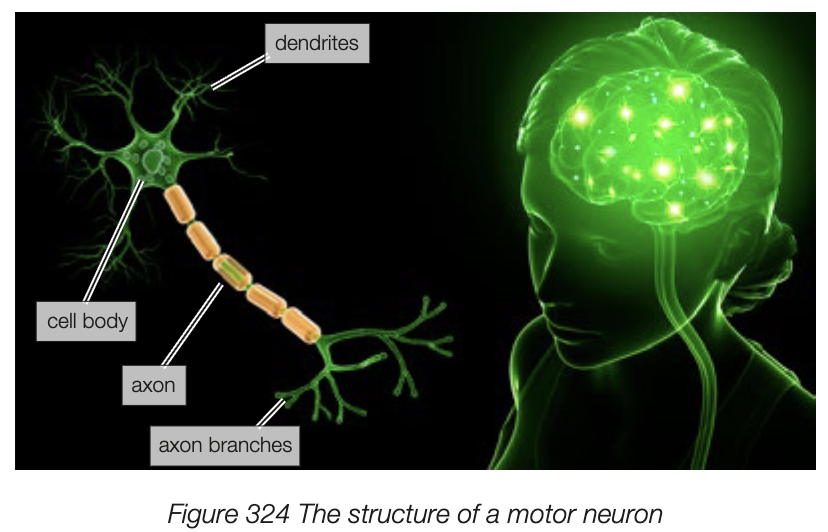
parts of neuron
dendrite - receives impulses from sensory receptors or other neurons and transmits info towards the cell body
cell body - contains many cell organelles, ER, mitochondria
axons - long extensions of a nerve cell, necessary to transmit info to another cell or effector. Microscopic but very long
end of axon has axon branches - have tiny swellings at ends, release neurotransmitter chemicals which transmit info between neurons or between neuron and effector
some have fatty covering called myelin sheath - formed by Schwann cells, wrap around axons. nerve impulses travel faster along neurons with sheaths as impulses jump from node to node
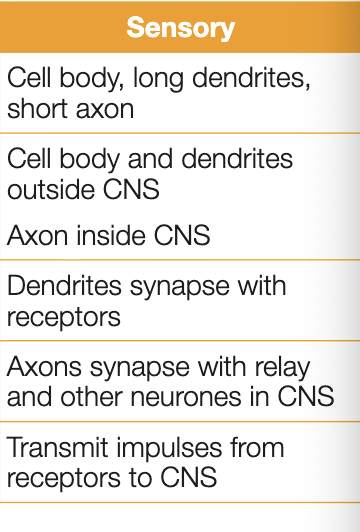
sensory neuron (inc structure, location of cell body)
transmit information from receptors (e.g. cells detecting sound, light, temperature) to the CNS
has cell body joined togehter by 2 long processes - dendron and axon
extensions of dendrons (called dendrites) act as receptors - transmit info towards cell body
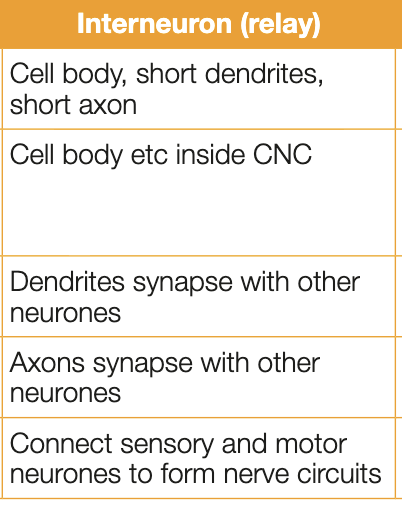
interneuron (relay) (inc structure, location of cell body)
located in the CNS, transmits information from sensory. neurons to motor neurons
have short axons as they enable connections between sensory and motor neuron
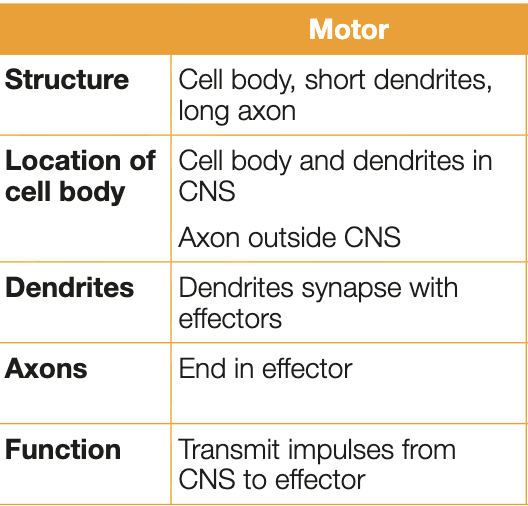
motor neuron (inc structure, location of cell body)
transmit messages from CNS to effectors (typically muscles or glands)
usually have short dendrites and one long axon
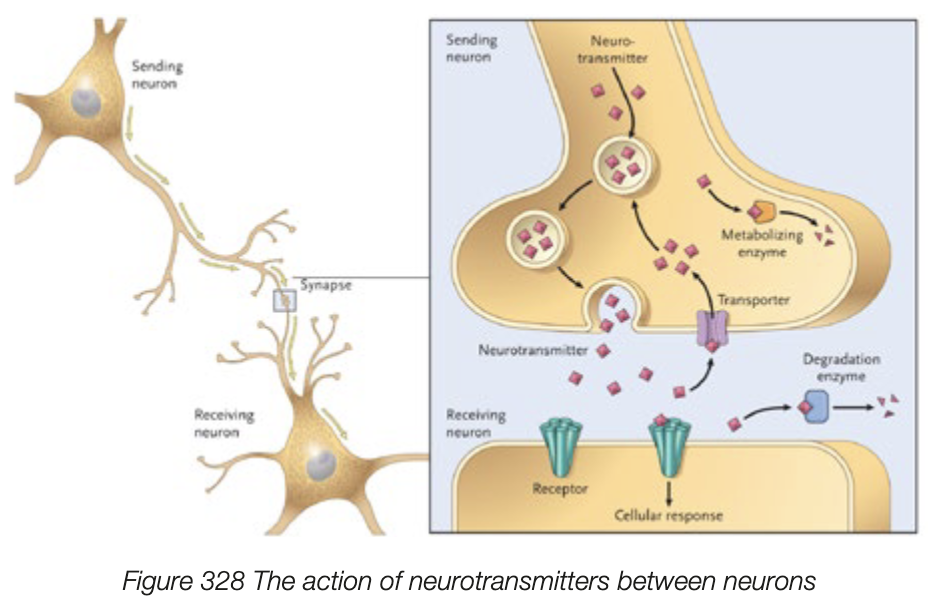
synapses and neurotramsitters
synapse - junction between neurons or between neuron and receptor/effector
The end of the axon is found close to the membrane of dendrite or the cell body of the next neuron
An electrical message cant cross the synaptic cleft (gap between neurons)
nerve impulse causes release of chemical transmitter substance into synaptic cleft called neurotransmitter - diffuses across space, binds to receptors on receiving membrane
activates ion channels in the membrane, leading to nervous impulses being transmitted further
neurotransmitter can be broken down and deactivated by enzymes