Physics Mechanics & Materials Vocabulary
 Call Kai
 Learn
Learn Practice Test
 Spaced Repetition
 Match
Match Flashcards
 Knowt Play
1/59

Earn XP
Description and Tags
Name | Mastery | Learn | Test | Matching | Spaced | Call with Kai | Chat |
|---|
No analytics yet
Send a link to your students to track their progress
60 Terms
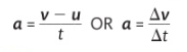
acceleration
the vector defined as the rate of change of velocity
Archimedes’ Principle
The upthrust on an object is equal to the weight of fluid displaced
Average Speed
Speed for a whole journey, calculated by dividing the total distance for a journey by the total time for the journey

Centre Of Gravity
The point through which the weight of an object appears to act
compression
a force acting within a material in a direction that would squash the material. Also, decrease in size of a material sample under a compressive force
Conservation of Energy
The rule that requires that energy can never be created or destroyed
Conservation of linear momentum
The vector sum of the momenta of all objects in a system is the same before and after any collision between objects
Deformation
The process of alteration of form or shape
Density
A measure of the mass per unit volume of a substance
Displacement
The vector measurement of distance in a certain direction
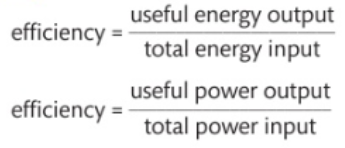
Effciency
The ability of a machine to transfer energy usefully
Elastic limit
The maximum extension or compression that a material can undergo and still return to its original dimensions when the force is removed
Equilibrium
The situation for a body where there is zero resultant force and zero resultant moment. It will have zero acceleration
Explosion
A situation in which a stationary object separates into component parts, which move off at different velocities. Momentum must be conserved in explosions
Extension
An increase in size of a material sample caused by a tension force
Fluid
Any substance that can flow (liquid & Gases)
Gradient
The slope of a line or surface
GPE
The energy of an object stores by its virtue of its position in a gravitational field

Hysteresis
Where the extension under a certain load will be different depending on its history of past loads and extentions
Instantaneous Speed
The speed at any particular instant in time on a journey
Kinematics
The study of the description of the motion of objects
Kinetic Energy
KE=1/2mv²

Laminar Flow/Streamline Flow
A fluid moves with uniform lines in which the velocity is constant over tie
Limit of Proportionality
The maximum extension (or strain) that an object (or sample) can have, which is still proportional to the load (or stress) applied
Resultant force
The total force acting on a body
Scalar
A quantity that has magnitude only
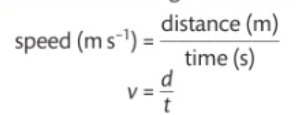
Speed
The rate of change of distance
Spring Constant
The Hooke’s law constant of proportionality, k, for a spring under tension
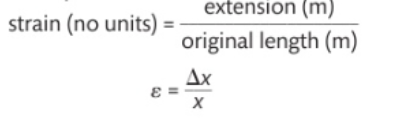
strain
A proportionate measure of the extension(or compression) of a sample
Momentum
p=mv
Newton’s First Law of Motion
An object will remain at rest, or in a state of uniform motion until acted upon by resultant force
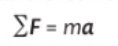
Newton’s Second Law of Motion
If an object’s mas is constant, the resultant force needed to cause an acceleration
Newton’s Third Law of Motion
For every actions. there is an equal and opposite reaction
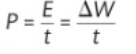
Power
The rate of energy transfer
Principle of moments
A body will be in equilibrium if the sum of clockwise moments acting on it is equal to the sum of the anticlockwise moments
Projectile
A moving object on which the only force of significance action is gravity. The trajectory
Streamlines
Lines of laminar flow in hich the velocity is constant over time
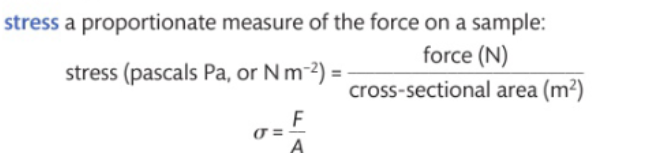
Stress
A proportionate measure of the force on a sample
Tension
A force action within a material in a direction that would extend the material
Terminal Velocity
The velocity of a falling object when its weight is balanced b the sum of the drag and upthrust acting on it
Turbulent force
Fluid velocity in a particular place changes over time, often in an unpredictable manner
Upthrust
An upwards force on an object caused by the object displacing fluid
Vector
A quantity that must have both magnitude and direction
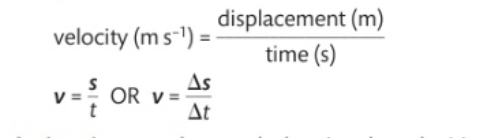
Velcoity
The rate of change of displacement
Viscosity
How resistant a fluid is to flowing
Work Done
This the product of a force and the distance moved in the direction of the force

Young Modulus
The stiffness constant for a material, equal to the stress divided by its corresponding strain
Hydrometer
An instrument used to determine the density of a fluid