Nucleic Acids
 Call Kai
 Learn
Learn Practice Test
 Spaced Repetition
 Match
Match Flashcards
 Knowt Play
1/3

Earn XP
Description and Tags
Name | Mastery | Learn | Test | Matching | Spaced | Call with Kai | Chat |
|---|
No analytics yet
Send a link to your students to track their progress
4 Terms
Major functions
Transit inherited information (i.e., genes) from generation to generation.
Determine what proteins a cell makes (instruction on how to assemble proteins).
Allow energy to flow in cells (ATP).
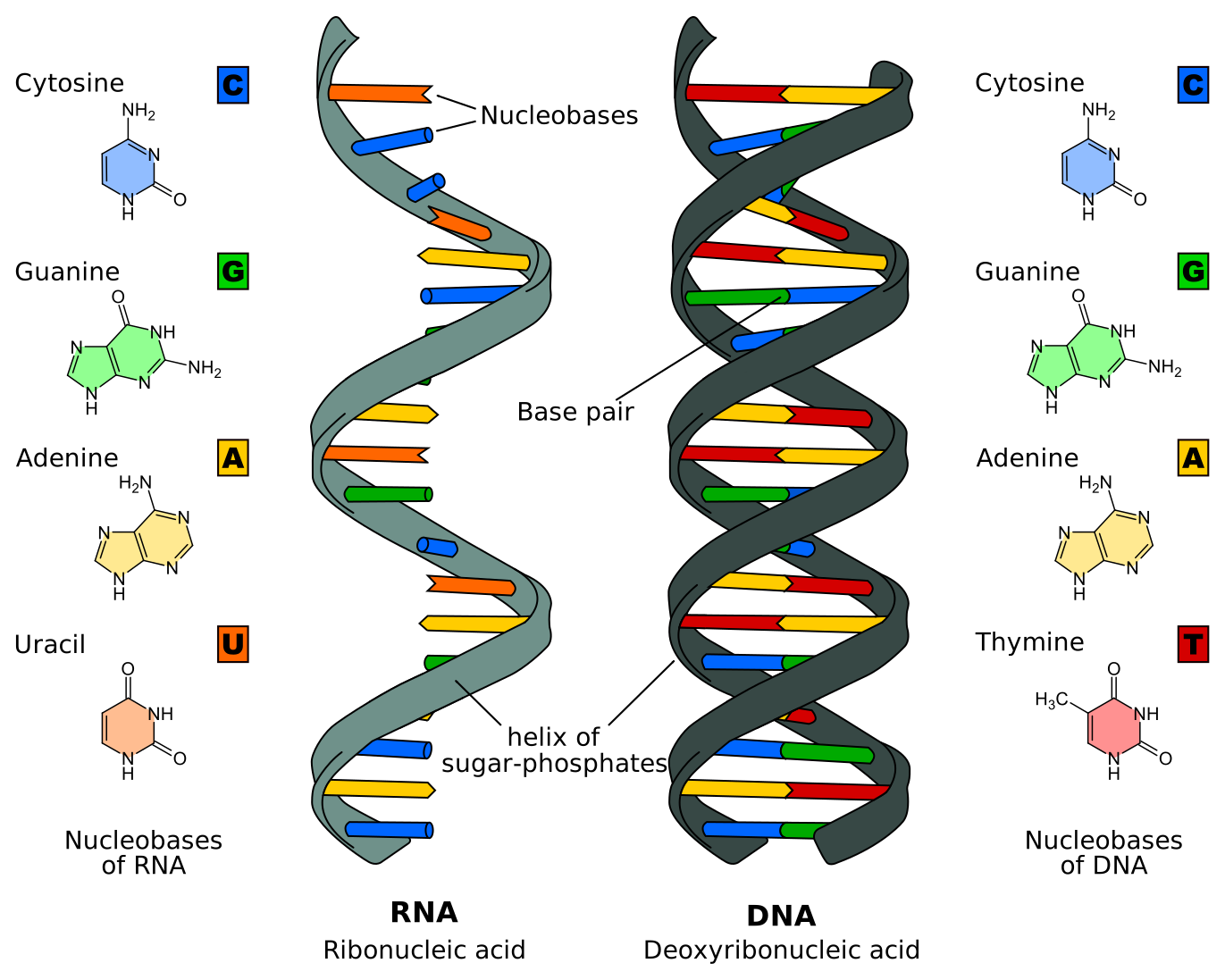
Structure of Nucleic Acids
2 classes of polymers:
Ribonucleic acids (RNA): needed for protein synthesis.
Deoxyribonucleic acid (DNA): transmission of genetic information to the next generation.
Polymers are formed from monomers called nucleotides.
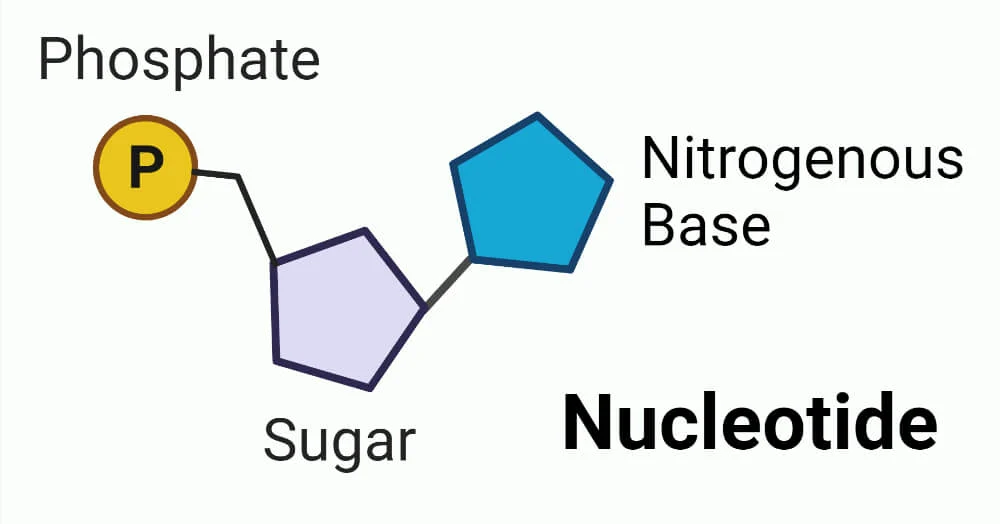
Structure of Nucleotide
3 parts to a nucleotide:
A 5-carbon ribose sugar
Phosphate group (PO4)
A nitrogenous base (4 types: cytosine, thymine, adenine, guanine)
Some bases have 2 rings: purines - adenine and guanine.
Some bases have 1 ring: pyrimidines - cytosine and thymine.
Nucleotides link into very long polymers through dehydration synthesis.
ATP
A very special nucleotide.
ATP is the “energy currency” of the cell.
These phosphate bonds require a lot of energy to make.
When they are broken, they release energy, which is used by the body’s chemical reactions. In other words, ATP molecules release energy, which is then used to drive your metabolic reactions.
These bonds are “recharged” when the body digests sugar.
1 glucose (C6H12O6) has enough energy to “recharge” 38 ATP molecules.
ATP <-