ATI TEAS Chemistry Bonds
 Call Kai
 Learn
Learn Practice Test
 Spaced Repetition
 Match
Match Flashcards
 Knowt Play
1/51

There's no tags or description
Looks like no tags are added yet.
Name | Mastery | Learn | Test | Matching | Spaced | Call with Kai | Chat |
|---|
No analytics yet
Send a link to your students to track their progress
52 Terms
Name the three types of particles that atoms are made of
protons - neutrons - electrons
What is in the center of an atom?
nucleus
What does the nucleus contains?
protons and neutrons
Protons have a _____________ charge
positive
Neutrons have a ____________ charge
neutral - meaning they have no charge
Where are electrons located?
Electrons move around the nucleus in different energy levels called electron shells.
Electons have a ____________ charge
negative
What is the basis for chemical reactions?
Atoms can gain, lose or share electrons with other atoms.
Chemical reaction
the making and breaking of chemical bonds
How are chemical bonds formed?
When outer electrons are attracted, shared, or moved from one atom to another in order to fill the outer electron shell.
Ionic bond
the result of two atoms that gain or lose electrons
When an atom loses an electon it has a ___________charge
positive
When an atom gains an electron it has a ___________ charge
negative
How do ionic bonds form?
When one element that wants one or more electrons to fill its outer electron shells is strong enough to take one or more electrons from another element.
When an atom gains or loses an electron it becomes an _____________
an ion
What type of charge does an ion have?
either positive or negative
In covalent bonds the electrons are ____________ between two atoms.
shared - which results in the outer shells of the two atoms overlapping
How do covalent bonds form?
When two or more elements want to fill their outer electron shell, but none of the elements are strong enough to "take" an electron from any of the other elements.
Atoms that combine with one or more covalent bonds forms a _______________
a molecule
Water is a covalent bond between
two hydrogen atoms and one oxygen atom
Living tissues or organic compounds are formed with ____________
covalent bonds
Ionic bonds
form ions, gain or lose outer shell electrons, fill outer electron shell
Covalent bonds
form molecules, share outer shell electrons, fill outer electron shell
What type of bond is formed when atoms share electrons?
covalent
What type of particle is found in shells that surround an atoms's nucleus?
electron
When positively and negatively charged ions attract each other, what type of bond is formed?
ionic
Ionic and covalent bonds are alike in that they....
fill outer electrons shells
What is a common compound formed by an ionic bond?
NaCl - table salt
Room temperature state of ionic bonds
Brittle solid
Room temperature state of covalent bonds
Any - solid, liquid or gas
Do ionic bonds conduct electricity?
Yes, if they are in a liquid.
Do covalent bonds conduct electricity?
Usually not.
What happens to valence electrons in ionic bonds?
They are transferred (gained/lost).
What happens to valence electrons in covalent bonds?
They are shared.
How do you name ionic compounds?
NO PREFIXES!
How do you name covalent compounds?
Use prefixes!
What is the structure of elements in ionic bonding?
2 elements have the same structure
What is the structure of elements in covalent bonding?
2 elements can bond in several ways
How do ionic compounds form?
Nonmetals take away electrons from metals.
How do covalent compounds form?
Neither atom has enough attraction to take away electrons from the other, so electrons are shared.
How strong are ionic bonds?
Very strong!
How strong are covalent bonds?
Weak.
Is Na2O ionic or covalent?
Ionic. Na is a metal.
Is Iron (III) Oxide ionic or covalent?
Ionic. Iron is a metal.
Is H2O ionic or covalent?
Covalent. 2 nonmetals.
Is Carbon monoxide ionic or covalent?
Covalent. 2 nonmetals. Also, any compound named with prefixes will be covalent. :)
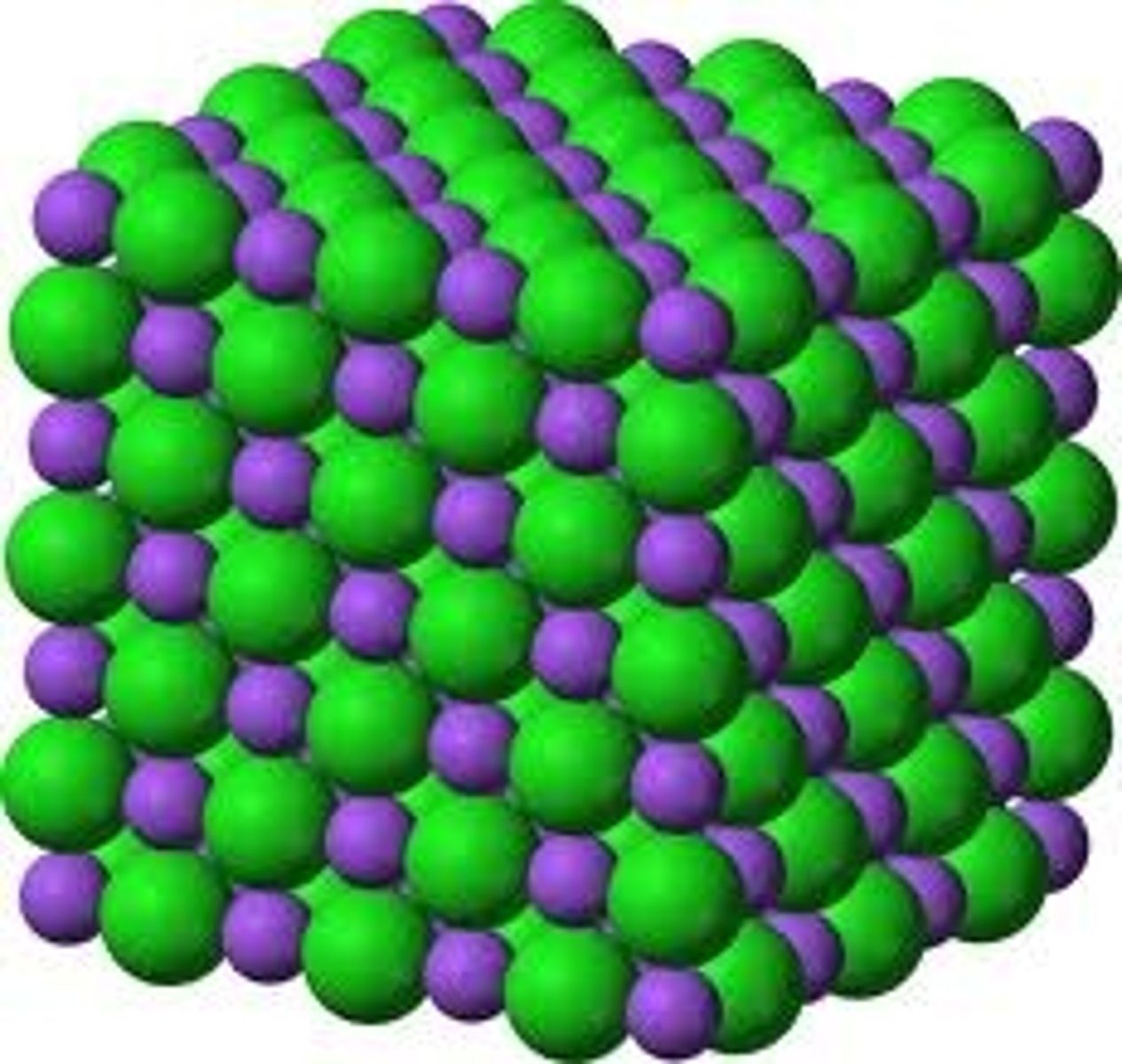
What is the shape of ionic bonds?
Crystal lattice
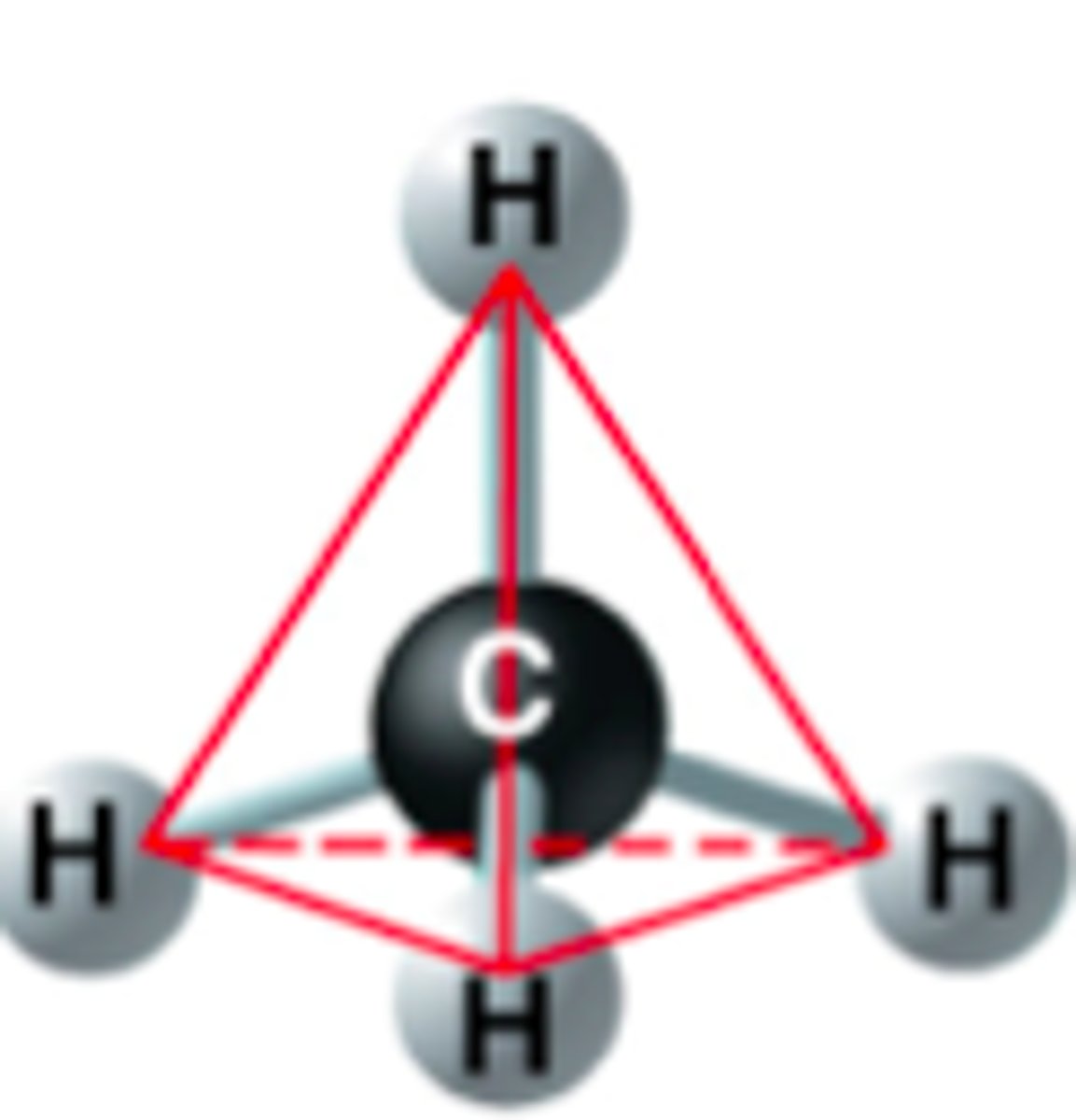
What is the shape of covalent bonds?
Highly ordered arrangements. This picture is one example.
single replacement
A+BC → AC+B
double replacement
AB+CD → AD+CB
synthesis reaction
A+B → AB
decomposition reaction
AB→ A+B