CHAPTER 5: COGNITIVE DEVELOPMENT DURING THE FIRST THREE YEARS

0.0(0)
Studied by 0 people
call kaiCall Kai
Locked
learnLearn
examPractice Test
spaced repetitionSpaced Repetition
heart puzzleMatch
flashcardsFlashcards
GameKnowt Play
Card Sorting

1/40

encourage image

There's no tags or description

Looks like no tags are added yet.

Last updated 5:57 AM on 8/31/26
Name
Mastery
Learn
Test
Matching
Spaced
Call with Kai
Chat

No analytics yet

Send a link to your students to track their progress

41 Terms

1
New cards

sensiromotor stage

- The first of Piaget's four stages of cognitive development.

- Much of this early cognitive growth comes about through circular reactions, in which an infant learns to reproduce events originally discovered by chance.
<p>- The <strong>first</strong> of Piaget's four stages of cognitive development.</p><p>- Much of this early cognitive growth comes about through <strong>circular reactions</strong>, in which an infant learns to <u><mark data-color="purple" style="background-color: purple; color: inherit;">reproduce events originally discovered by chance</mark></u>.</p>
2
New cards

SUBSTAGE 1: USE OF REFLEXES

- (birth to about 1 month)

- Infants understand the world through innate reflexes such as sucking, grasping, and looking.

- Babies use natural reflexes.

eg. newborns suck reflexively when their lips are touched. But they soon learn to find the nipple even when they are not touched, Sucking a bottle or grasping a finger.

<p>- (birth to about 1 month)</p><p>- Infants understand the world through innate reflexes such as <strong>sucking, grasping, and looking</strong>.</p><p>- Babies use <strong>natural reflexes</strong>.</p><p><strong>eg. </strong>newborns suck reflexively when their lips are touched. But they soon learn to find the nipple even when they are not touched, Sucking a bottle or grasping a finger.</p>
3
New cards

SUBSTAGE 2:Primary Circular Reactions

1-4 months

- Babies repeat actions involving their own bodies.

E.g. Sucking their thumb repeatedly.
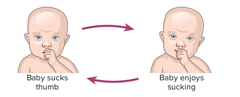
<p>1-4 months</p><p>- Babies<strong> repeat actions</strong> involving their own bodies.</p><p><strong>E.g.</strong> Sucking their thumb repeatedly.</p>
4
New cards

SUBSTAGE 3: SECONDARY CIRCULAR REACTIONS

- About 4-8 months

- Infants repeat actions that produce interesting effects on objects or the environment.

- Babies repeat actions involving objects.

e.g. a baby this age might repeatedly shake a rattle to hear the noise or coo when a friendly face appears so that it stays longer. Their actions are intentional but not goal-directed.
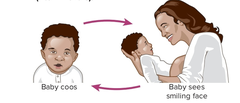
<p>- About 4-8 months</p><p>- Infants <u><mark data-color="green" style="background-color: green; color: inherit;">repeat actions that produce interesting effects on objects</mark></u> or the environment.</p><p>- Babies repeat actions involving objects.</p><p><strong>e.g.</strong> a baby this age might repeatedly shake a rattle to hear the noise or coo when a friendly face appears so that it stays longer. Their actions are intentional but not goal-directed.</p>
5
New cards

SUBSTAGE 4: COORDINATION OF SECONDARY SCHEMES

- 8 - 12 months

-Infants begin goal-directed behavior, combining actions intentionally to achieve a goal. Object permanence begins to develop.

- Babies act with a goal in mind.

- They will crawl to get something they want, grab it, or push away a barrier to it. They try out, modify, and coordinate previous schemes to find one that works.

E.g. Moving a pillow to get a toy.
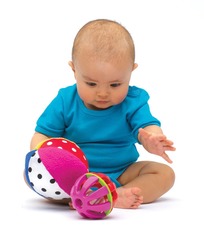
<p>- 8 - 12 months</p><p>-Infants<strong> begin goal-directed behavior,</strong> combining actions intentionally to achieve a goal. Object permanence begins to develop.</p><p>- Babies<u><mark data-color="green" style="background-color: green; color: inherit;"> act with a goal in mind.</mark></u></p><p>- They will crawl to get something they want, grab it, or push away a barrier to it. They try out, modify, and coordinate previous schemes to find one that works.</p><p>E.g. Moving a pillow to get a toy.</p>
6
New cards

SUBSTAGE 5: TERTIARY CIRCULAR REACTIONS

- about 12 - 18 months

- babies begin to experiment to see what will happen.

- By trial and error, toddlers try behaviors until they find the best Way to attain a goal.

- Toddlers experiment with different actions.

eg. a toddler may squeeze a rubber duck, then step on it, then throw it in order to see if all three actions result in squeaks, or drop a spoon to see what happens.
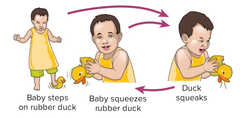
<p>- about 12 - 18 months</p><p>- babies <u><mark data-color="yellow" style="background-color: yellow; color: inherit;">begin to experiment to see what will happen</mark></u>.</p><p>- By<strong> trial and error</strong>, toddlers try behaviors until they find the best Way to attain a goal.</p><p>- Toddlers experiment with different actions.</p><p>eg. a toddler may squeeze a rubber duck, then step on it, then throw it in order to see if all three actions result in squeaks, or drop a spoon to see what happens.</p>
7
New cards

SUBSTAGE 6: MENTAL COMBINATIONS

- about 18 months to 2 years

- a transition to the preoperational stage of early childhood.

- Children develop mental representations, symbolic thought, deferred imitation, and can solve simple problems mentally before acting.

- Toddlers can think before acting and use symbols

E.g., pretending a banana is a phone.
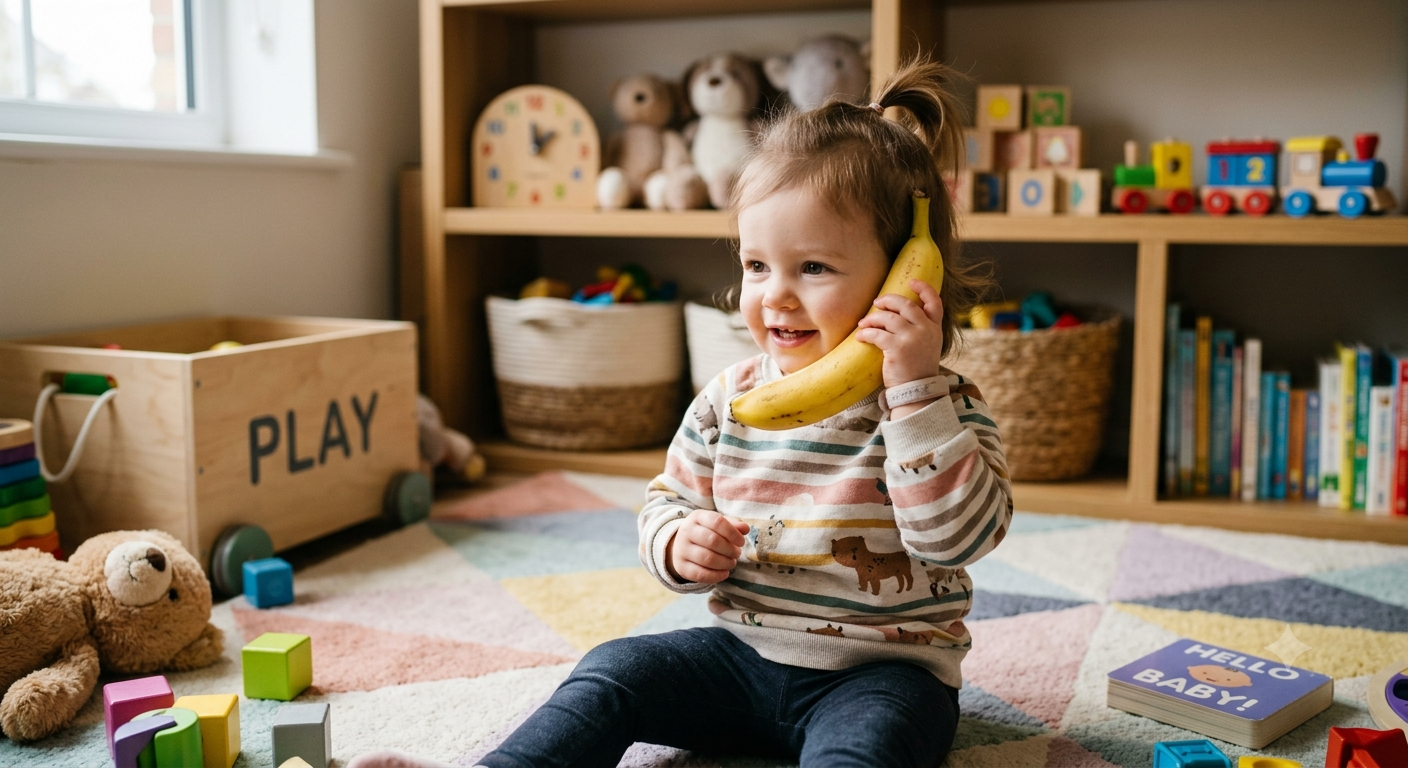
<p>- about 18 months to 2 years</p><p>- a <u><mark data-color="green" style="background-color: green; color: inherit;">transition to the preoperational stage</mark></u> of early childhood.</p><p>- Children develop <strong>mental representations, symbolic thought, deferred imitation</strong>, and can solve simple problems mentally before acting.</p><p>- Toddlers can think before acting and use symbols</p><p><strong>E.g., pretending</strong> a banana is a phone.</p>
8
New cards

Representational ability

- the ability to mentally represent objects and actions in memory, largely through symbols such as words, numbers, and mental pictures

An example of this is a baby playing with a toy smartphone.

<p>- the <u><mark data-color="#e9f6de" style="background-color: rgb(233, 246, 222); color: inherit;">ability to mentally represent objects and actions in memory</mark></u>, largely through symbols such as words, numbers, and mental pictures</p><p>An <strong>example </strong>of this is a baby playing with a <strong>toy smartphone</strong>.</p>
9
New cards

Imitation

- 9-24 months

- Babies copy what they see.

- they can copy actions after some time has passed (deferred Imitation)
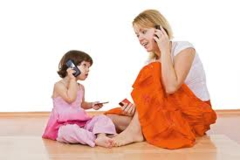
<p>- 9-24 months</p><p>- Babies <strong>copy </strong>what they see. </p><p>- they can <u><mark data-color="#dff5f7" style="background-color: rgb(223, 245, 247); color: inherit;">copy actions after some time has passed</mark></u><strong> (deferred Imitation)</strong></p>
10
New cards

Object Permanence

- 4-24 months (develops gradually)

- Bables learn that objects still exist even when they cannot see them.
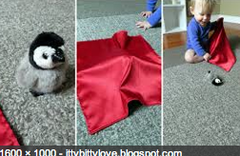
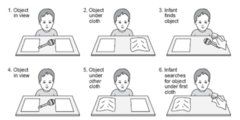
<p>- 4-24 months (develops gradually)</p><p>- Bables learn that <u><mark data-color="red" style="background-color: red; color: inherit;">objects still exist even when they cannot see them.</mark></u></p>
11
New cards

Symbolic Development

- 18-24 months

- Children use one object to represent another.

<p>- 18-24 months</p><p>- Children<u><mark data-color="blue" style="background-color: blue; color: inherit;"> use one object to represent another.</mark></u></p>
12
New cards

Categorization

- 18-24 months

- Children begin grouping objects by similarities (e.g., animals, toys, foods).

<p>- 18-24 months</p><p>- Children begin <span style="color: rgb(0, 0, 0);"><u><mark data-color="#faf2da" style="background-color: rgb(250, 242, 218); color: inherit;">grouping objects by similarities </mark></u></span><strong>(e.g., animals, toys, foods).</strong></p>
13
New cards

Causality

- 4-12 months

- Babies learn that their actions can make things happen (cause and effect).
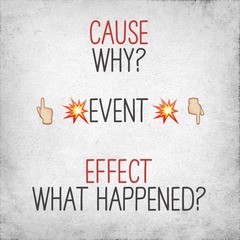
<p>- 4-12 months</p><p>- Babies <u><mark data-color="blue" style="background-color: blue; color: inherit;">learn that their actions can make things happen</mark></u> <strong>(cause and effect)</strong>.</p>
14
New cards

Number

- 18-24 months

- Children begin to understand simple ideas about quantity (e.g., one vs. many).

<p>- 18-24 months</p><p>- Children begin to <u><mark data-color="#edebfb" style="background-color: rgb(237, 235, 251); color: inherit;">understand simple ideas about quantity</mark></u> <strong>(e.g., one vs. many).</strong></p>
15
New cards

HABITUATION

- a type of learning in which repeated or continuous exposure to a stimulus reduces attention to that stimulus.

- in newborns, repeatedly presenting a stimulus such as sound or visual pattern and then monitoring responses.

example: if you show a new toy to a 4-month-old baby, they will stare at it for a long time. If you keep showing the exact same toy many times, the baby will look at it for a shorter time and then look away. They are now habituated to the toy.
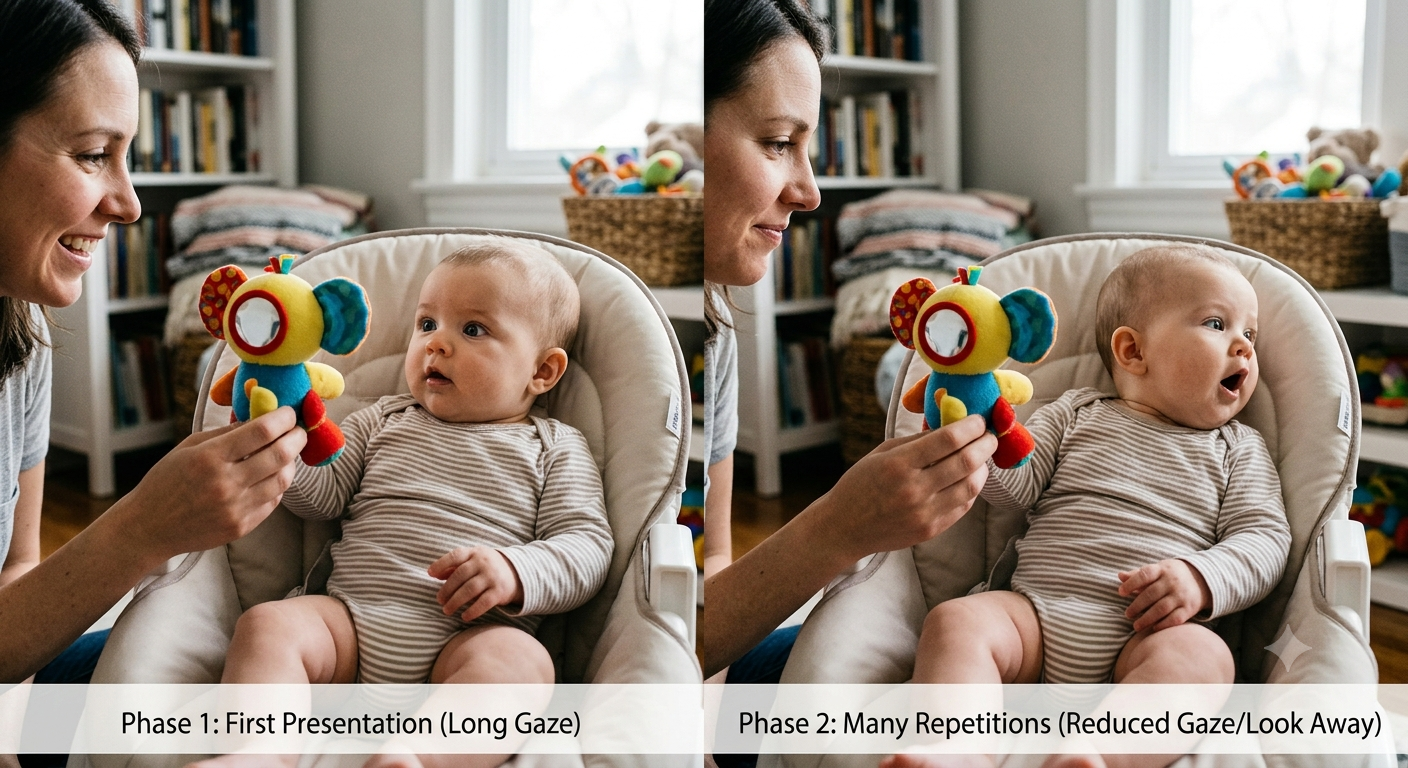
<p>- a type of learning in which <u><mark data-color="#edf9e5" style="background-color: rgb(237, 249, 229); color: inherit;">repeated or continuous exposure to a stimulus reduces attention</mark></u> to that stimulus.</p><p>- in newborns, repeatedly presenting a stimulus such as sound or visual pattern and then monitoring responses.</p><p><strong>example:</strong> if you show a new toy to a 4-month-old baby, they will stare at it for a long time. If you keep showing the exact same toy many times, the baby will look at it for a shorter time and then look away. They are now habituated to the toy.</p>
16
New cards

DISHABITUATION

- If a new sight or sound is presented, the baby's attention is generally captured once again, and the baby will reorient toward the interesting stimulus

e.g. A baby looks at the same teddy bear for several minutes and eventually loses interest. Then, someone shows the baby a bright red ball. The baby immediately looks at the new toy.

- Babies become Interested again when they see a new stimulus after getting used to a familiar one.

- Measures the baby's ability to detect change.

- Uses one familiar stimulus, then introduces a new stimulus.

Purpose: Tests whether babies can recognize something new.
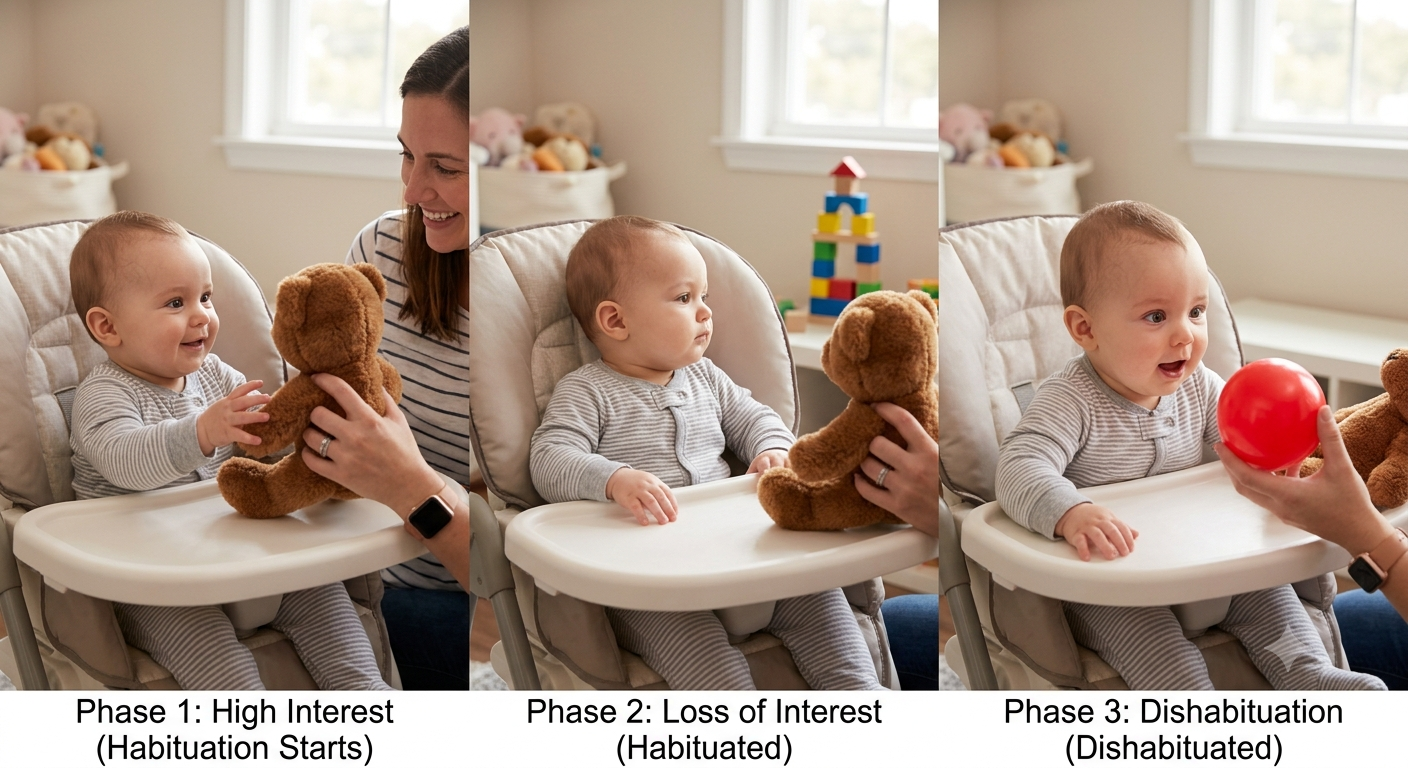
<p>- If a <u><mark data-color="#eceaf9" style="background-color: rgb(236, 234, 249); color: inherit;">new sight or sound is presented, the baby's attention is generally captured once again</mark></u>, and the baby will reorient toward the interesting stimulus</p><p><strong>e.g.</strong> A baby looks at the same teddy bear for several minutes and eventually loses interest. Then, someone shows the baby a bright red ball. The baby immediately looks at the new toy.</p><p>- Babies become Interested again when they see a new stimulus after getting used to a familiar one.</p><p>- Measures the baby's ability to detect change.</p><p>- Uses one familiar stimulus, then introduces a new stimulus.</p><p><strong>Purpose:</strong> Tests whether babies can recognize something new.</p>
17
New cards

VISUAL PREFERENCE

- The tendency to spend more time looking at one sight rather than another

e.g. If babies given a choice between looking at a curved or straight line spend more time focused on the curved line, the implication is that babies like curved lines more than straight lines.

- Babies naturally look longer at stimulus because they find it mean interesting or attractive.

- Measures what babies prefer to look at.

- Presents two stimuli at the same time and observes which one the baby looks at longer.

Purpose: Identifies what babies can distinguish or what they find more interesting.

<p>- The tendency to<u><mark data-color="#e9ffee" style="background-color: rgb(233, 255, 238); color: inherit;"> spend more time looking at one sight rather than another</mark></u></p><p><strong>e.g.</strong> If babies given a choice between looking at a curved or straight line spend more time focused on the curved line, the implication is that babies like curved lines more than straight lines.</p><p>- Babies naturally look longer at stimulus because they find it mean interesting or attractive.</p><p>- Measures what babies prefer to look at.</p><p>- Presents two stimuli at the same time and observes which one the baby looks at longer.</p><p><strong>Purpose: </strong>Identifies what babies can distinguish or what they find more interesting.</p>
18
New cards

VISUAL RECOGNITION MEMORY

- Ability to distinguish a familiar visual stimulus from an unfamiliar one when shown both at the same time.

e.g. A baby sees their mother leave the room. When the mother returns, the baby smiles immediately because they recognize her face.

<p>- Ability to <u><mark data-color="#f2ebf7" style="background-color: rgb(242, 235, 247); color: inherit;">distinguish a familiar visual stimulus from an unfamiliar one </mark></u>when shown both at the same time.</p><p><strong>e.g.</strong> A baby sees their mother leave the room. When the mother returns, the baby smiles immediately because they recognize her face.</p>
19
New cards

Lev Vygotsky

- Language develops through social interaction

- Children learn best through interacting with other people, such as parents, teachers, siblings, and peers. - He believed that culture also shapes how children think, solve problems, and learn.

- Children develop cognitive skills when they receive guidance from a More Knowledgeable Other (MKO) through social interaction, especially within the Zone of Proximal Development (ZPD) using scaffolding.

<p>- Language develops through <strong>social interaction</strong></p><p>- <u><mark data-color="red" style="background-color: red; color: inherit;">Children learn best through interacting with other people</mark></u>, such as parents, teachers, siblings, and peers. - He believed that culture also shapes how children think, solve problems, and learn.</p><p>- Children develop cognitive skills when they receive guidance from a <strong>More Knowledgeable Other (MKO) </strong>through social interaction, especially within the <strong>Zone of Proximal Development (ZPD) </strong>using <strong>scaffolding.</strong></p>
20
New cards

Zone of Proximal Development (ZPD)

- includes tasks that are just beyond the child's current ability but can be accomplished with guidance or support (scaffolding).

<p>- <u><mark data-color="#e3f7e9" style="background-color: rgb(227, 247, 233); color: inherit;">includes tasks that are just beyond the child's current ability</mark></u> but can be accomplished with guidance or support <strong>(scaffolding)</strong>.</p>
21
New cards

Recognition

- is the ability to identify something that has been seen before, such as a familiar face, object, or picture.

- Infants develop recognition memory before recall memory, which is why they can recognize their parents' faces long before they can remember information without seeing it.

<p>- is the <u><mark data-color="#e6f5f5" style="background-color: rgb(230, 245, 245); color: inherit;">ability to identify something that has been seen before</mark></u>, such as a familiar face, object, or picture.</p><p>- Infants develop recognition memory before recall memory, which is why they can recognize their parents' faces long before they can remember information without seeing it.</p>
22
New cards

Recall

means remembering information without seeing it first.
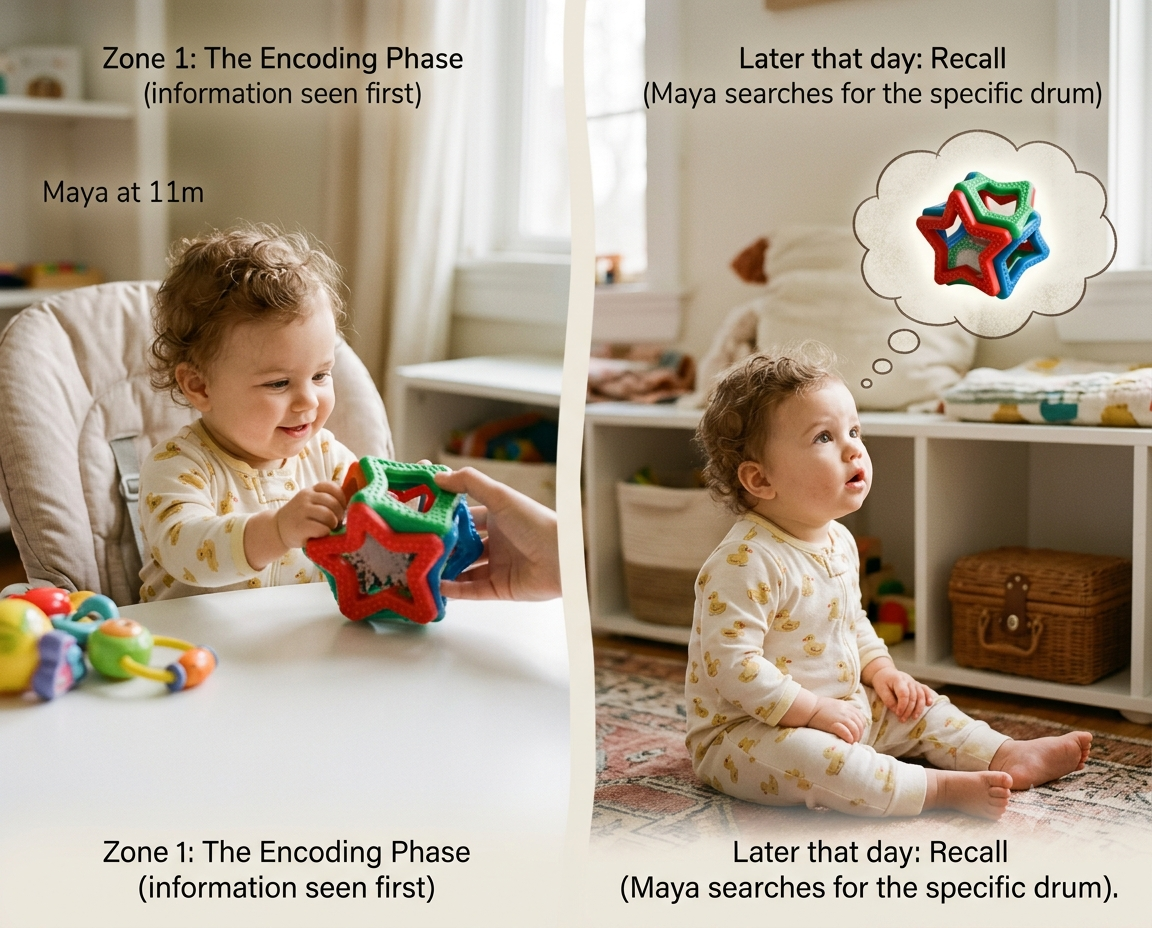
<p>means <u><mark data-color="#e6f5fa" style="background-color: rgb(230, 245, 250); color: inherit;">remembering information without seeing it first.</mark></u></p>
23
New cards

Assimilation

- "This new thing fits what I already know."

<p>- "This new thing fits what I already know."</p>
24
New cards

Fast-mapping strategy

- Learns a new word quickly

EX: Learns "elephant" after hearing it once

<p>- Learns a new word <strong>quickly</strong></p><p><strong>EX:</strong> Learns "elephant" after hearing it once</p>
25
New cards

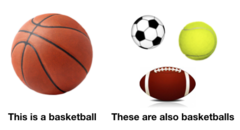
Overextension

- Uses a word too narrowly

- "Use one word for too many things"

- Occurs when a child uses one word to refer to too many things because they share similar characteristics.

EX: Calls only their own cup "cup"
<p>- Uses a word<strong> too narrowly</strong></p><p>- "Use one word for <u><mark data-color="#f6ebd7" style="background-color: rgb(246, 235, 215); color: inherit;">too many things</mark></u>"</p><p>- Occurs when a<u><mark data-color="#f1f6c7" style="background-color: rgb(241, 246, 199); color: inherit;"> child uses one word to refer to too many things</mark></u> because they share similar characteristics.</p><p><strong>EX:</strong> Calls only their own cup "cup"</p>
26
New cards

Telegraphic speech

- Uses short, simple phrases

EX: "Daddy go work."

<p>- Uses short, simple phrases</p><p><strong>EX: </strong>"Daddy go work."</p>
27
New cards

Noam Chomsky

Language is innate (LAD)

<p>Language is innate (LAD)</p>
28
New cards

Jean Piaget

Language develops with cognitive development

<p>Language develops with <strong>cognitive development</strong></p>
29
New cards

Albert Bandura

Language is learned through observation and imitation

<p>Language is learned through <strong>observation and imitation</strong></p>
30
New cards

Prelinguistic Speech

- utterance of sounds that are not words.

- This includes crying, cooing, babbling, and accidental and deliberate imitation of sounds without understanding their meaning.

<p>- <strong>utterance </strong>of sounds that are <strong>not words</strong>.</p><p>- This includes crying, cooing, babbling, and accidental and deliberate <u><mark data-color="#f8f2e2" style="background-color: rgb(248, 242, 226); color: inherit;">imitation of sounds without understanding their meaning.</mark></u></p>
31
New cards

Code Switching

- Changing from one language to another.

- Often depends on the situation or the person being spoken to.

Example: Speaking English to a teacher, then switching to Filipino when talking to a friend.

<p>- <strong>Changing </strong>from <strong>one language to another</strong>.</p><p>- Often depends on the situation or the person being spoken to.</p><p><strong>Example: </strong>Speaking English to a teacher, then switching to Filipino when talking to a friend.</p>
32
New cards

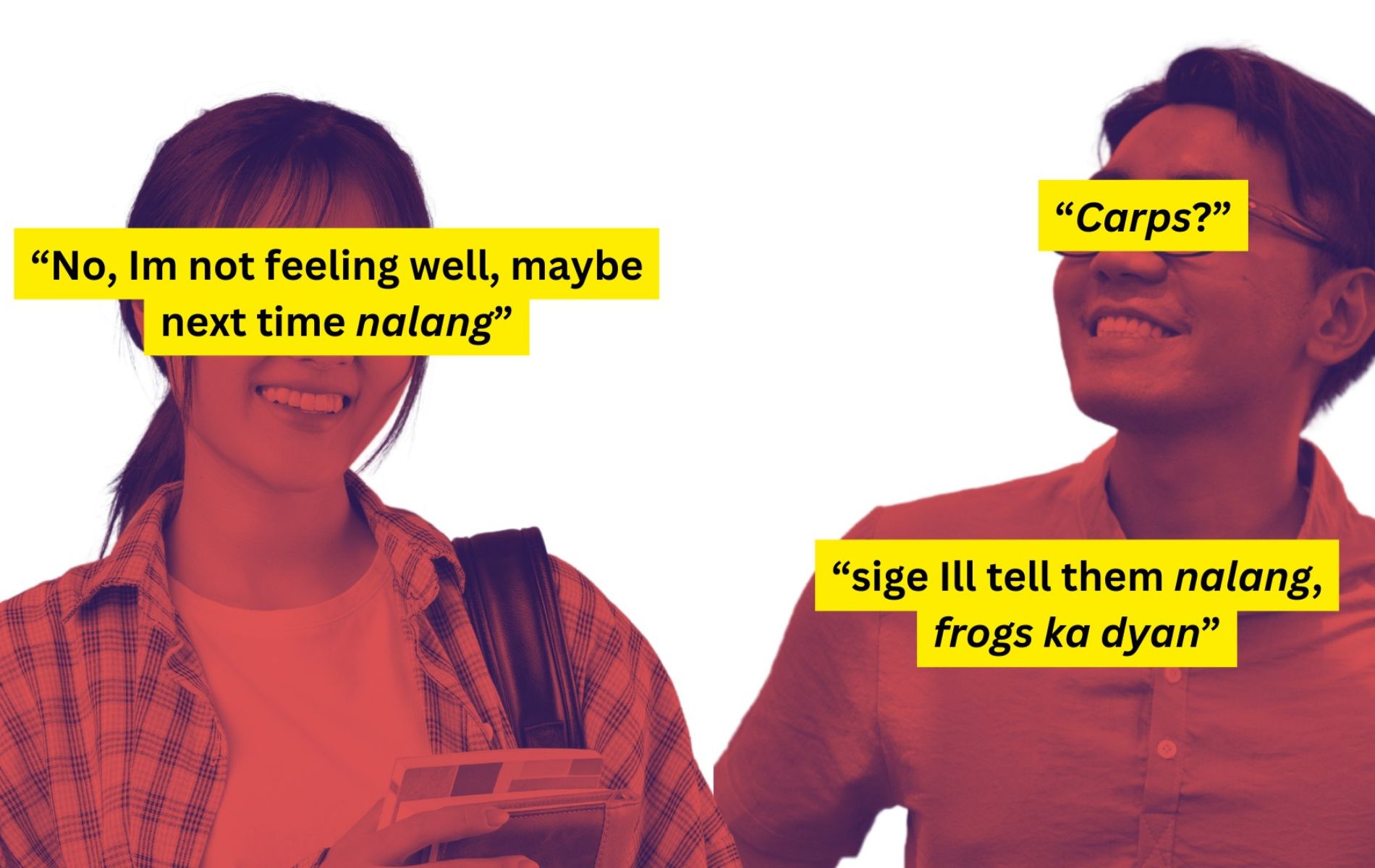
Code Mixing

- Mixing words or phrases from two languages in one sentence.

- Happens naturally because the speaker is comfortable using both languages.

Example: "Let's kain first before we study."
<p>- <strong>Mixing </strong>words or phrases from two languages in one sentence.</p><p>- Happens naturally because the speaker is comfortable using <strong>both languages</strong>.</p><p><strong>Example:</strong> "Let's kain first before we study."</p>
33
New cards

Rovee-Collier's study

- as young as 3 months, a child can remember specific objects within 10 minutes.

<p>- as <strong>young as 3 months</strong>, a <u><mark data-color="#f7e3d4" style="background-color: rgb(247, 227, 212); color: inherit;">child can remember specific objects within 10 minutes.</mark></u></p>
34
New cards

Infantile Amnesia

as the child grows, if there are things they cannot remember due to not matured hippocampus yet, this is called as?

<p>as the child grows, if there are things they <u><mark data-color="#f1edff" style="background-color: rgb(241, 237, 255); color: inherit;">cannot remember due to not matured hippocampus yet,</mark></u> this is called as?</p>
35
New cards

behaviorist approach

- studies the basic mechanics of learning.

- are concerned with how behavior changes in response to experience.

<p>- <strong>studies </strong>the <u><mark data-color="#fdf0ff" style="background-color: rgb(253, 240, 255); color: inherit;">basic mechanics of learning</mark></u>.</p><p>- are concerned with how <u><mark data-color="purple" style="background-color: purple; color: inherit;">behavior changes in response to experience.</mark></u></p>
36
New cards

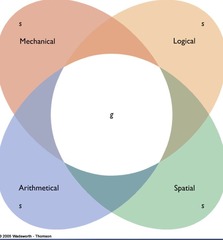
psychometric approach

Measures quantitative differences in abilities that make up intelligence by using tests that indicate or predict these abilities!
<p><u><mark data-color="red" style="background-color: red; color: inherit;">Measures quantitative differences in abilities</mark></u> that make up intelligence by using <strong>tests </strong>that indicate or predict these abilities!</p>
37
New cards

Piagetian approach

- looks at changes, or stages, in the quality of cognitive functioning.

- It is concerned with how the mind structures its activities and adapts to the environment.

<p>- looks at <u><mark data-color="#e8e7fb" style="background-color: rgb(232, 231, 251); color: inherit;">changes, or stages, in the quality of cognitive functioning.</mark></u></p><p>- It is concerned with how the mind structures its activities and adapts to the environment.</p>
38
New cards

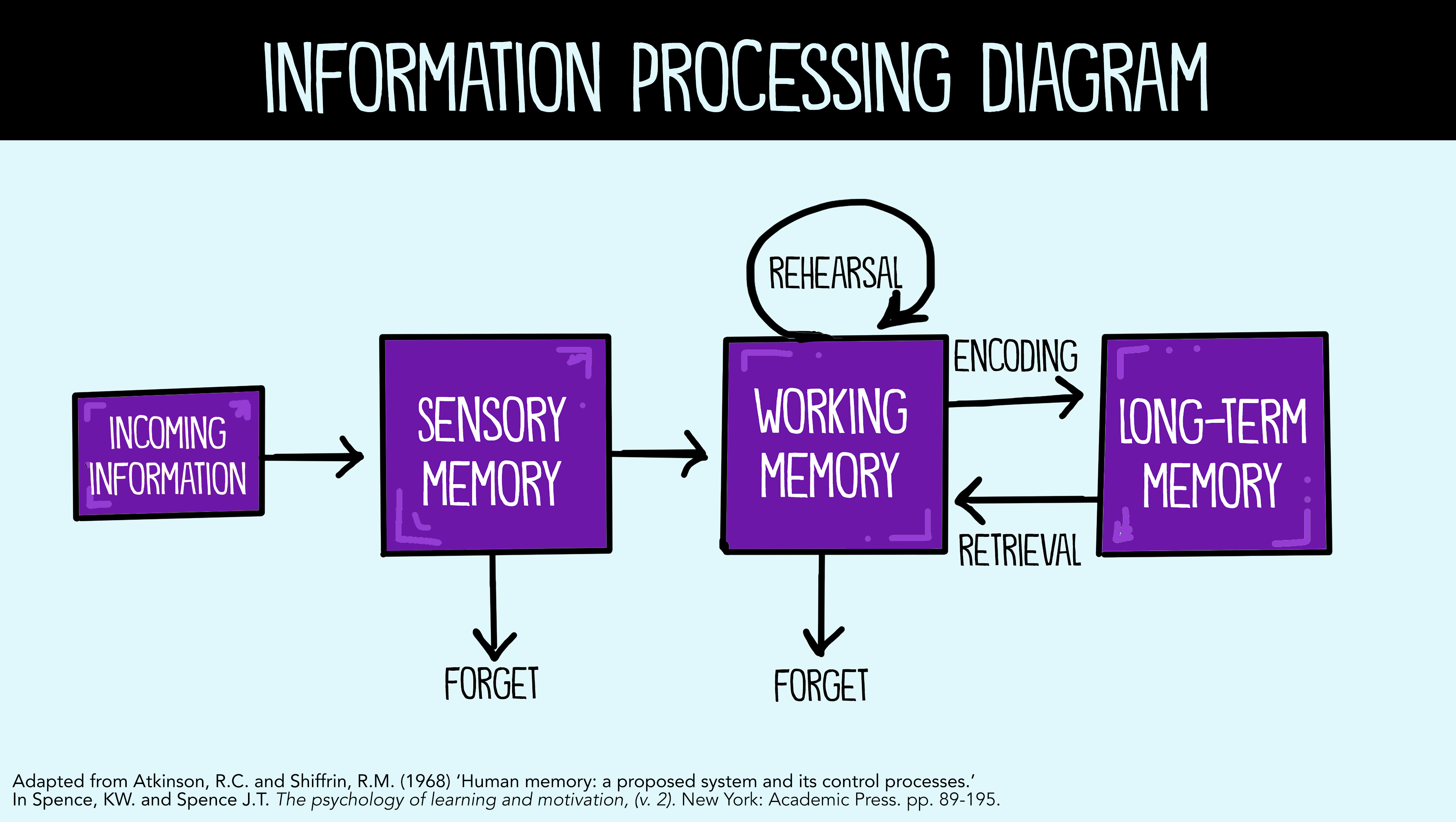
information-processing approach

- focuses on perception, learning, memory, and problem solving.

- It aims to discover how children process information from the time they encounter it until they use it.
<p>- focuses on <strong>perception, learning, memory, and problem solving.</strong></p><p>- It aims to discover how children<u><mark data-color="#fae4f0" style="background-color: rgb(250, 228, 240); color: inherit;"> process information from the time they encounter it until they use it.</mark></u></p>
39
New cards

cognitive neuroscience

approach seeks to identify what brain structures are involved in specific aspects of cognition.
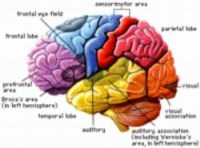
<p>approach seeks to identify what <u><mark data-color="#f6f2de" style="background-color: rgb(246, 242, 222); color: inherit;">brain structures are involved in specific aspects of cognition.</mark></u></p>
40
New cards

social-contextual approach

examines the effects of environmental aspects of the learning process, particularly the role of parents and other caregivers.
<p>examines the <span style="color: rgb(0, 0, 0);"><u><mark data-color="#eff6d9" style="background-color: rgb(239, 246, 217); color: inherit;">effects of environmental aspects of the learning process</mark></u></span>, particularly the role of parents and other caregivers.</p>
41
New cards

classical conditioning

Learning based on associating a stimulus that does not ordinarily elicit a response with another stimulus that does elicit the response.
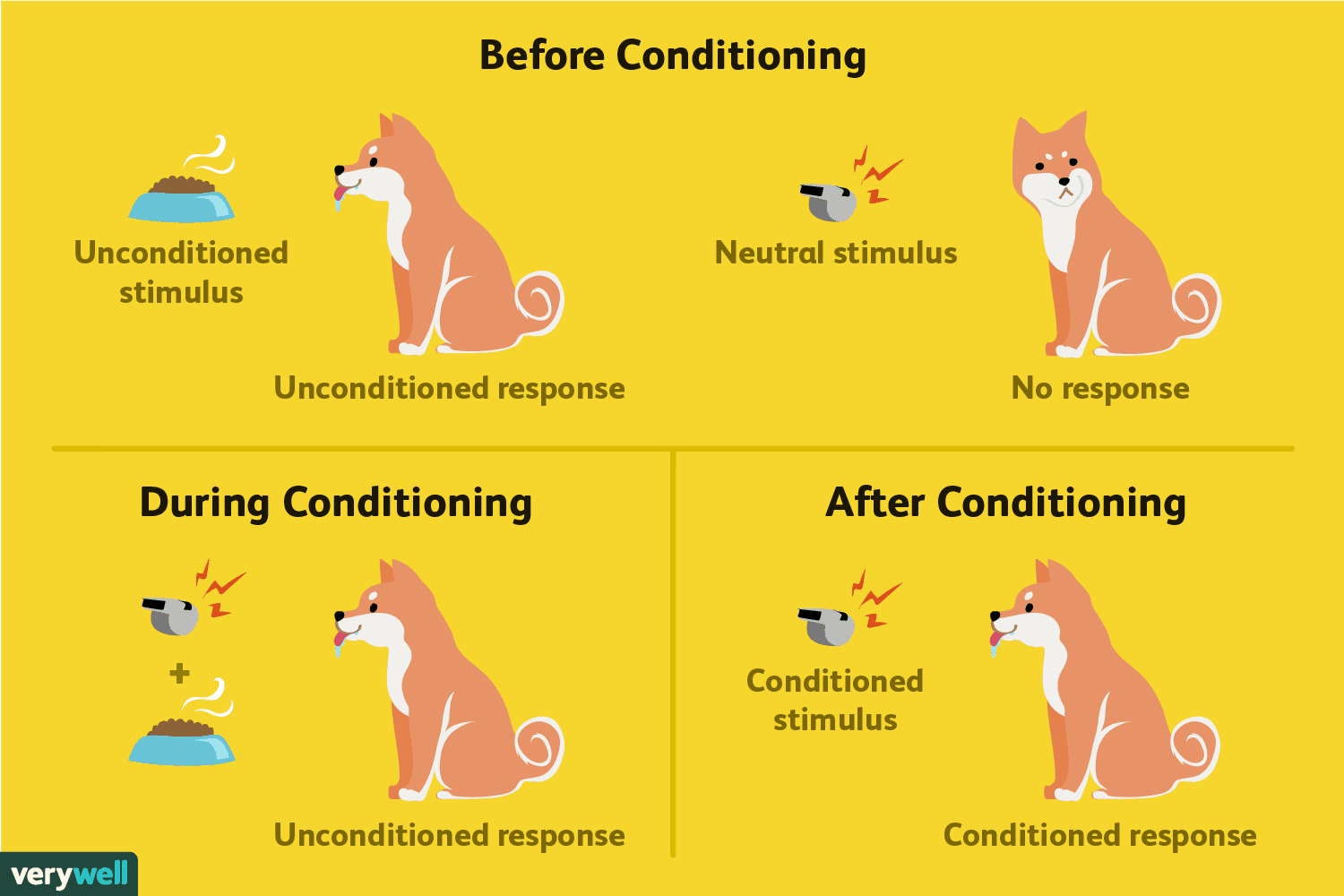
<p>Learning based on associating a stimulus that does not ordinarily elicit a response with another stimulus that does elicit the response.</p>



