Shipping and Logistics Glossary
 Call Kai
 Learn
Learn Practice Test
 Spaced Repetition
 Match
Match Flashcards
 Knowt Play
1/64

Earn XP
Description and Tags
Comprehensive vocabulary flashcards covering terms, pricing structures, legal amendments, and technical measures used in the shipping and logistics industry.
Name | Mastery | Learn | Test | Matching | Spaced | Call with Kai | Chat |
|---|
No analytics yet
Send a link to your students to track their progress
65 Terms
Abatement
A discount allowed for damage or overcharge in bill payment.
Absorption
A transportation provider assumes the charges of another without any increase in charges to the shipper.
Accessorial Service
A service offered in addition to goods transport, such as stopping in transit to complete loading or to partially unload or store.
Ad Valorem
Imposed at a rate percent of value.
Advanced Shipment Notice (ASN)
A list of items shipped transmitted to a customer or consignor; may include expected time of arrival.
Air Waybill
A BOL for domestic and international flights transporting goods to a specified destination; a non-negotiable instrument serving as a shipper's receipt.
Any-Quantity Rate
A rate applicable to an article in any quantity.
Audit of Freight Bills
The process of verifying the correctness of the transportation charges shown on the transportation provider's freight bill.
Back Haul
Traffic moving in the direction of light flow when a transportation provider's traffic on a route is heavier in one direction than the other.
Basing-Point Pricing
A pricing system that includes transportation cost from a particular city even though the shipment does not originate at the basing point.
Belly Lift
Amount of capacity in the belly of a passenger aircraft that is limited by the need to accommodate passenger baggage and mail.
Bill of Lading (BOL)
A written contract between shipper and transportation provider that identifies the goods, recipient, delivery place, and terms of the agreement.
Bonded Warehouse
A warehouse approved by the U.S. Treasury Department, used for storing goods until duties are paid or goods are otherwise properly released.
Breakbulk
A large service center that separates composite loads into individual shipments and routes them to different destinations; also called a hub or distribution center.
Compound Average Growth Rate (CAGR)
The average percentage growth rate per year over a multi-year period, with each year's absolute growth factored into the next year.
Carmack Amendment
An amendment to the Interstate Commerce Act that specifies carrier legal liability in connection with a BOL.
Carnet
A customs document allowing special categories of goods to cross international borders duty-free.
Carrier's Lien
Transportation provider's claim on property it has transported as security for charges.
Cost, Insurance and Freight (CIF)
A term of sale where the seller is responsible for costs incurred in transporting goods to the destination port and for marine insurance.
Class Rate
A transportation charge set for a group of products; unless an article is given a special rate, it is grouped into a class.
Containerization
Shipping system based on large shipment-carrying containers that can be interchanged between trucks, trains, and ships without re-handling contents.
Cube Out
To use the cubic capacity of a trailer or truck without necessarily using the full-weight capacity.
Cubic Capacity
The volumetric carrying capacity measured in cubic feet, where one cubic foot equals approximately 0.028m3.
Demurrage
Detention of a shipping vehicle or container beyond a stipulated time; the payment made for such delay.
Density
The weight of an article in kilograms per cubic meter or pounds per cubic foot; the ratio of mass to bulk or volume.
Drayage
The charge made for hauling goods on carts, drays, or trucks; often performed at show sites.
Dunnage
Material used to protect or support goods in trucks, shown separately on the BOL.
Embargo
To prohibit shipment acceptance and handling; a formal notice that certain goods will not be accepted.
Ex Works
A term of sale where a seller is responsible for having goods available only at its premises.
Forty-foot Equivalent Unit (FEU)
A unit of measure for capacity; in weight terms, one FEU is typically equivalent to 1.4 TEUs.
Force Majeure
Exemption clause for non-fulfillment of contract terms because of acts of God.
Freight-Astray
A shipment miscarried or unloaded at the wrong service center, then forwarded to the correct center without charges.
Hazardous Material (HM)
A substance determined by the DOT to be capable of posing an unreasonable risk to health, safety, and property when transported in commerce.
In-Bond
Shipments moving under U.S. Customs bond until import duties or other charges are paid.
Intermodal
Goods movement between motor, air, sea, and rail transportation; equipment compatible with multiple systems; also called multimodal.
Joint Rate
A rate for moving a single shipment over two or more independent transportation lines traveling on one BOL.
Knocked Down
An article taken apart or folded so as to reduce its normal cubage by one-third when compared to being set up or assembled.
LASH Vessel
A ship measuring at least 820feet long with a deck crane able to load and unload barges through a stern section.
Less-than-Truckload (LTL)
A quantity of goods weighing less than 20,000pounds or occupying less than the full visible capacity of a trailer.
Linehaul
Goods movement between cities, excluding pickup and delivery service.
National Motor Freight Classification (NMFC)
A publication for motor carriers containing rules, descriptions, and ratings on all goods moving in commerce.
Over, Short and Damaged (OS&D)
A shipment that has been damaged or lost in transit or arrives with a different container count than originally shipped.
Per-Diem
A charge based on a fixed daily rate.
Piggyback
Transportation of a highway trailer on a railroad flat car.
PRO number
A 10-digit number assigned to each shipment for unique identification; acronym for 'Progressively Rotating Order'.
Reefer
A refrigerated container.
Released Value
Value of goods the shipper sets in consideration of the rate to be charged, limiting the provider's liability.
Roll-On-Roll-Off (RO-RO)
A type of ship designed to permit cargo to be driven on at origin and off at destination; used for automobiles.
Standard Carrier Abbreviation Code (SCAC)
Three-letter identifier for a transportation provider; also known as an owner code.
Stowed Density
The density of a loaded airplane calculated as net payload divided by cubic capacity.
Twenty-foot Equivalent Unit (TEU)
A unit of measure for container, trailer, or service center capacity.
Third-Party Logistics (3PL)
A firm that supplies logistics services to other companies.
Ton (Metric)
Equivalent to 1,000kilograms or approximately 2,205pounds; a Boeing 747 freighter typically carries around 100 metric tons.
Ullage
The space in a drum or tank not filled with liquid.
Weight Out
To use the weight capacity of a trailer or truck without necessarily using the full cubic capacity.
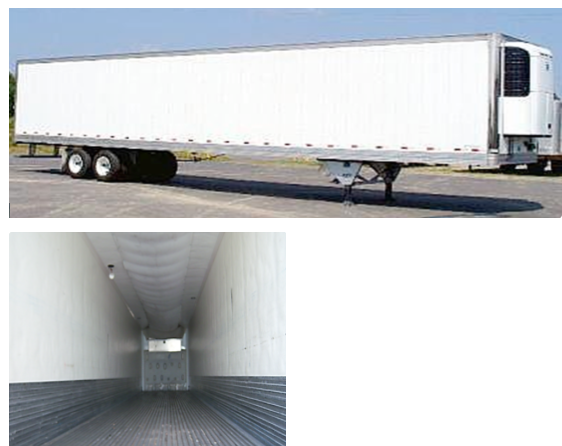
Reefer
-Metal floors
-Maintain and control temp of a load
-Used year round (not just in summer)

Flatbed Trailers
-Multiple types
-Driver work and accessories are required to secure loads
-Flatbed max weight: 48,000 lbs
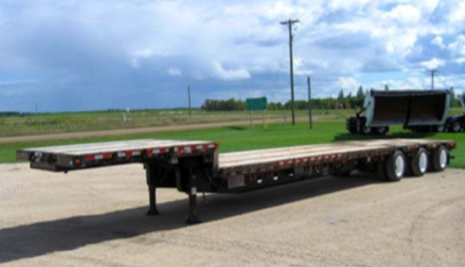
Stepdeck flatbed
Most commonly used, typically 53’ long
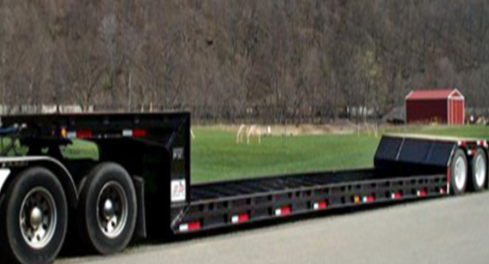
Double Drop (lowboy) Flatbed
Used generally for taller freight, should be 12’ to meet the legal height requirement
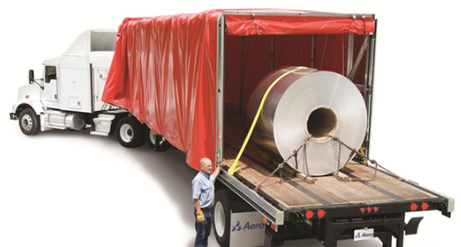
Conestoga Flatbed
A built in tarp is available and allows for loading and unloading of freight from the sides or the top. The tarp protects the freight from the elements
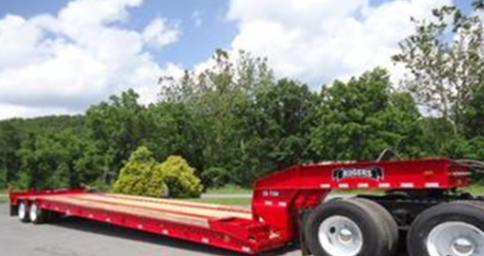
Removable Goosehead Flatbed
Used to transport machinery. The trailer allows the machinery to be driven onto it and then gets hooked on the tractor.
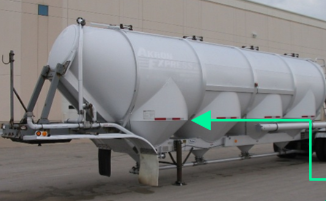
Dry Bulk Tankers
Vacuum sealed and used to transport dry powders or granules
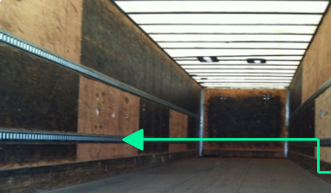
E Tracks
Allow straps to be attached to the walls of the trailer to hold cargo in place during transport
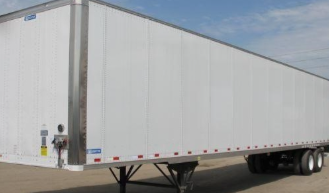
Plate Trailers
Have sidewalls made of two or more rectangular plates
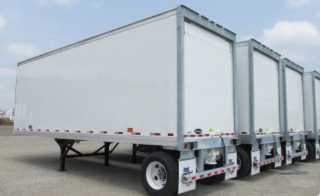
Pup Trailers
Between 26-29 feet in length and can be pulled in tandem with another trailer