Chem Test 1
 Call Kai
 Learn
Learn Practice Test
 Spaced Repetition
 Match
Match Flashcards
 Knowt Play
1/53

There's no tags or description
Looks like no tags are added yet.
Name | Mastery | Learn | Test | Matching | Spaced | Call with Kai | Chat |
|---|
No analytics yet
Send a link to your students to track their progress
54 Terms
tera
T (10^12)
giga
G (10^9)
mega
M (10^6)
kilo
k (10^3)
hecta
h (10²)
deca
da (10^1)
deci
d (10^-1)
centi
c (10^-2)
milli
m (10^-3)
micro
(10^-6)
nano
n (10^-9)
pico
p (10^-12)
cation
positively charged ions formed from losing electrons
anion
negatively charged ions formed from gaining electrons
emission vs absorbtion
absorption: atom or molecule taking in a photon of light to move from a lower energy level to a higher one
emission: atom or molecule releases a photon to move from a higher electron level to a lower one
electromagnetic mnemonic
Raging Martians Invaded Venus Using X-ray Guns
ionazation energy
how much energy required to remove an electron (higher as you move up and right on the periodic table)
electron affinity
how much an atom wants to gain an electron (increases going up and right on the periodic table)
electronegativity
the ability of an atom to hold electrons tightly (higher as you move up and right on the periodic table)
which are smaller, cations are anions and why?
cations because adding an electron makes an element bigger
isotopes
atoms of an element with the same amount of protons but different amount of neutrons

ammonium

nitrate

sulfite

nitrite

sulfate

hydroxide

cyanide

phosphate
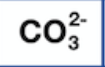
carbonate

hypochlorite

chlorite

chlorate

perchlorate

acetate
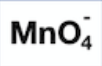
permanganate
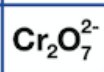
dichromate

chromate
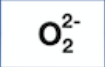
peroxide
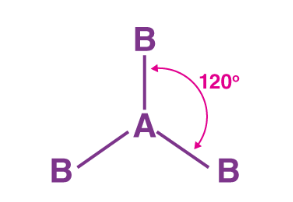
trigonal planar
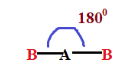
linear

tetrahedral
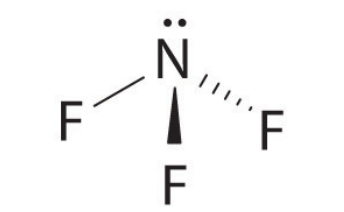
trigonal pyramidal
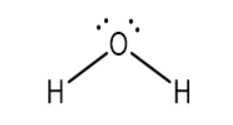
bent
ionization energy
the energy required to remove an electron from an atom
how to determine the order of energy levels (1s, 2s, ..)
(n+l)
isoelectronic
atoms, ions, or molecules with the same total amount of electrons