Equine unit2 exam
 View linked note
 Call Kai
 Learn
Learn Practice Test
 Spaced Repetition
 Match
Match Flashcards
 Knowt Play
1/31

There's no tags or description
Looks like no tags are added yet.
Name | Mastery | Learn | Test | Matching | Spaced | Call with Kai | Chat |
|---|
No analytics yet
Send a link to your students to track their progress
32 Terms
e.g long bones
Limbs
short bones e.g
knee and hock bones
flat bones e.g
scapula, skull, ribs
irregular bones e.g
vertebrae
joints
are where two bones meet (Joints bear weight and determine movement)
1/3 Synovial joint - freely moveable joint
hip or fetlock
•Ligaments attach the two bones together.
The joint is enclosed by a capsule.
•The joint surface is covered with smooth articular cartilage.
•The joint contains a small amount of lubricating fluid, called synovial fluid.
•This fluid is produced by the synovial membrane lining the joint.
2/3 Cartilaginous - Partially moveable joints
spinal column
They are cartilaginous joints - bones held by cartilage, with no joint cavity
•The articulating bones are held together tightly, allowing little movement.
3/3 Fibrous joints - immovable
skull
immovable joints have no movement at all.
•bones held by fibrous connective tissue, with no joint cavity (e.g. the skull).
•Only the adult horses have immovable joints. The joints are not fused in foals to allow for their birth and growing.
•These joints are in the pelvis and the skull.
movement
Bones and joints allow the body to move
•Ligaments hold the joints together
•while muscles and tendons move the body
•The skeleton provides attachment point for the soft tissue
tendons + 2 types
muscle to bone, allow movement.
FLEXOR - back side of leg and allow forward movement.
EXTENSOR - front surface and allow leg to extend forward.
>main one is the common digital extensor tendon and runs the entire length of leg and attaches into the coffin bone.
Ligaments
Strong bands of fibrous tissue that connects bone to bone •Most important - Suspensory Ligament
- supports the fetlock joint
- prevents it from dropping too far when the leg is bearing weight.
•Damaged ligaments are difficult to heal due to poor blood supply.
•Ligaments ensure the bones stay together and aligned during movement
•Support and stabilise the joints
5 types of ligaments
Nuchal Ligament
•Attaches top of skull to withers
Annular ligaments
•Bands around the fetlock to keep flexor tendons stable
Check Ligament
•Attaches the deep flexor tendon to the cannon bone
•The only ligament that attaches tendons to bone
Plantar Ligament
•Connects cannon and splint bone to hock bones
Suspensory Ligaments
•Supports the fetlock joint
tendons
attach muscle to bone
They consist of a sheet, cord or band of strong white fibrous tissue with poor blood supply.
•Bowed tendons are inflammation of the superficial tendons. This causes lameness and the tendons are sensitive and painful.
muscles + filaments
work by contracting and relaxing
•Actin (thin)
•Myosin (thick)
central nervous system
lies within protective bones – the brain inside the skull, spinal cord inside the vertebrae.
peripheral system
Peripheral System comprises the nerves that carry the signals to and from the brain
3 layers of skin
•Epidermis (outermost)
•Dermis (middle)
•Hypodermis (bottom)
normal respiration rate
8-14 breaths per min
respiratory system order
nostrils, nasal passages, pharynx, larynx, trachea, bronchioles, alveoli
arteries
carry blood from heart, carry oxygenated blood,
capillaries
allow transfer of nutrients in and waste out, exhanges’s of oxygen for co2.
veins
carry blood to the heart, carries deoxygenated blood to the heart.
functions of lymphatic system
Recycle tissue fluids
•Defends the body against disease
•Transports fats
What's in the lymphatic system?
•Lymph nodes - involved in fighting disease
•Lymph vessels – collect fluid
•Spleen – filter blood and store of red blood cells
•Thymus – produced lymphocyte T cells
•Lymph - clear fluid carrying water, nutrients, white blood cells and waste material between the body tissues and the bloodstream
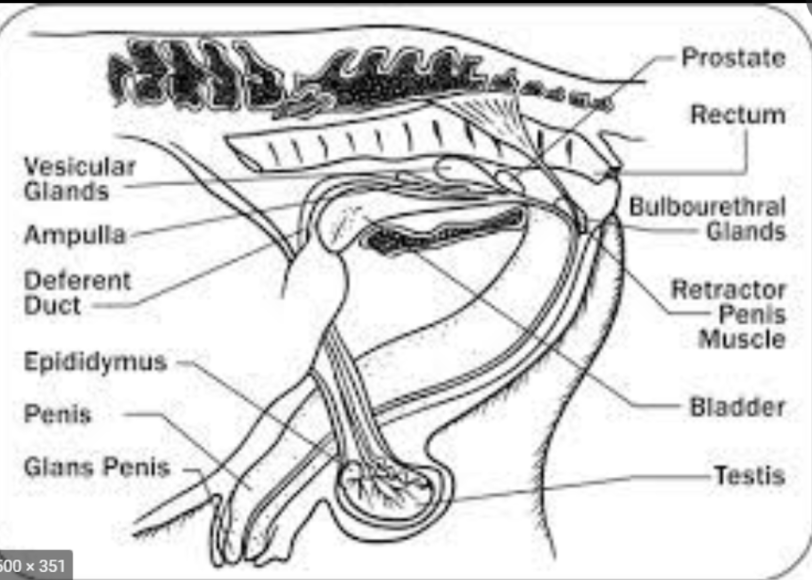
male reproductive system
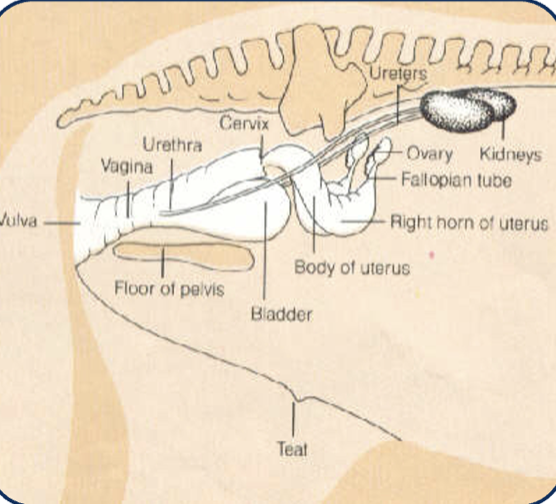
female reproductive system
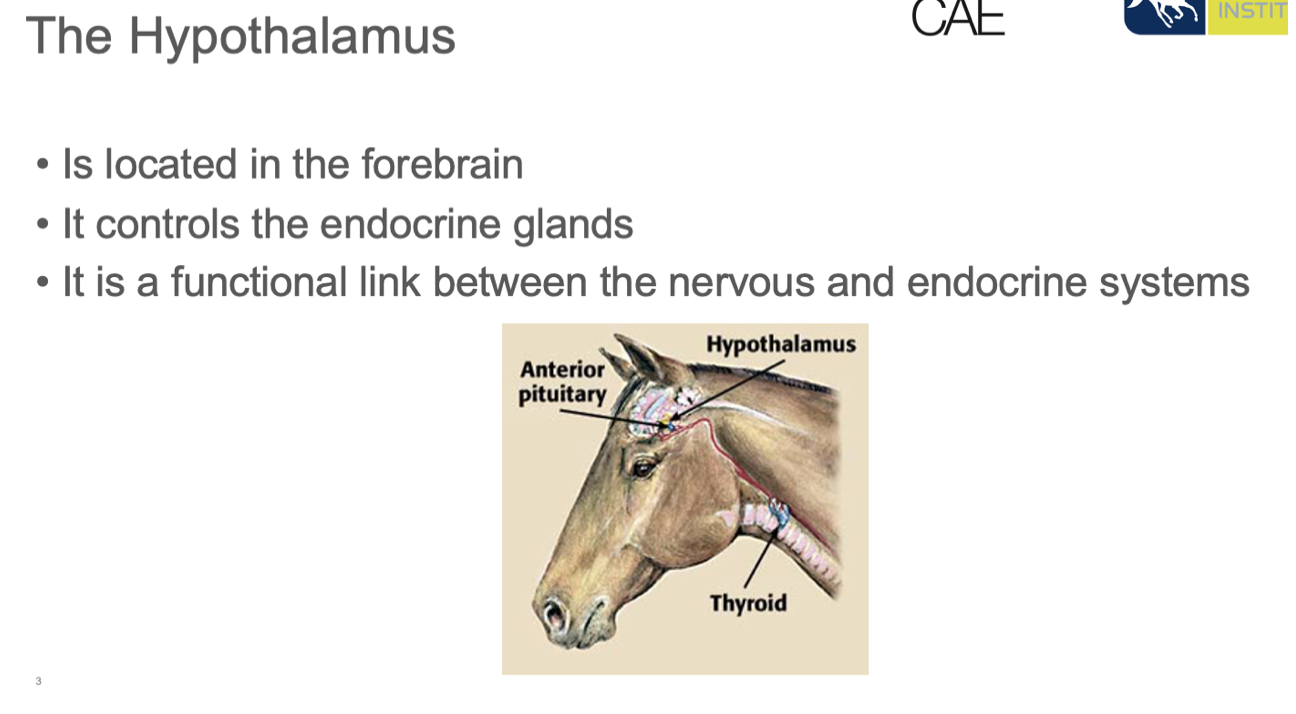
hypothalamus
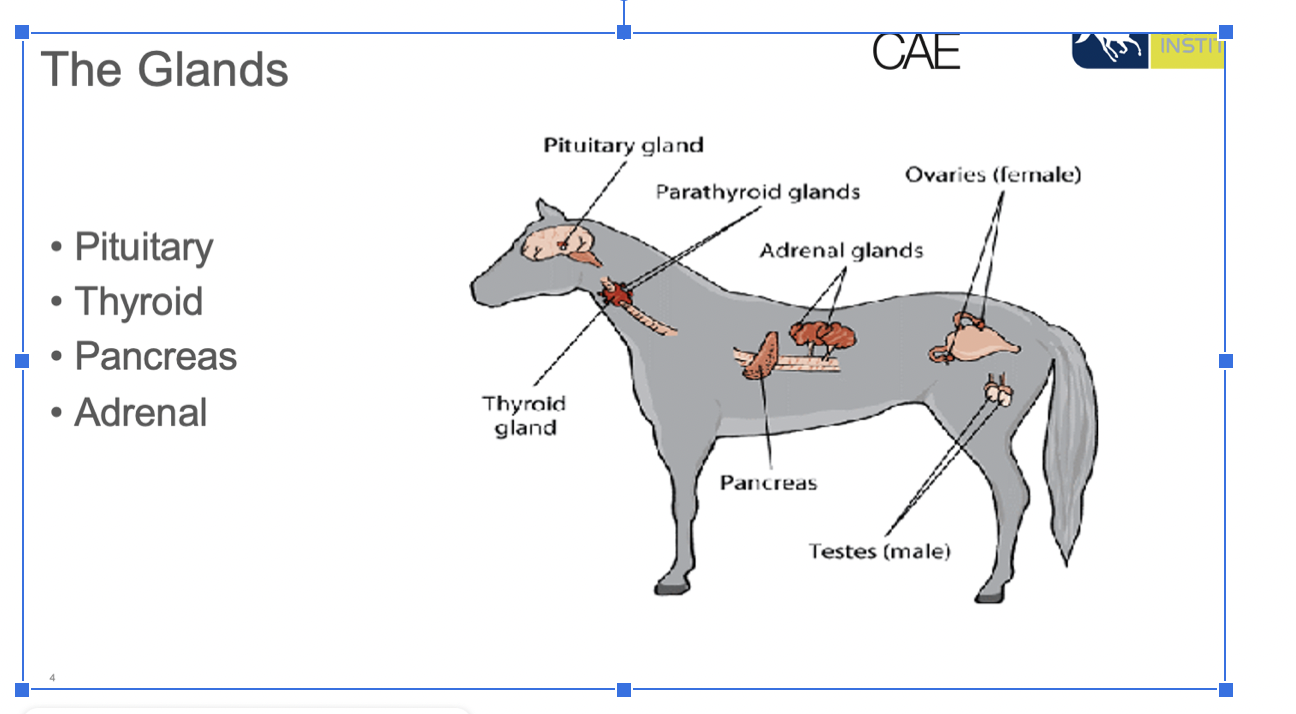
glands
body temp
37-38deg
heart rate
28-48 bpm
respiration rate
8-15 bpm
capillary refil
1-2 secs