1. Language and Literacy (A. Emergent Literacy: Foundational Skills)
 Call Kai
 Learn
Learn Practice Test
 Spaced Repetition
 Match
Match Flashcards
 Knowt Play
1/50

There's no tags or description
Looks like no tags are added yet.
Name | Mastery | Learn | Test | Matching | Spaced | Call with Kai |
|---|
No analytics yet
Send a link to your students to track their progress
51 Terms
(grapheme type)
Single letters
(definition)
A single consonant letter can be represented by a phoneme.
(example)
b, d, f, g, h, j, k, l, m, n, p, r, s, t, v, w, y, z
(stages of word recognition)
Consolidated-Alphabetic Phase
Students consolidate their knowledge of grapheme-phoneme blends into larger units that recur in different words.
Spelling conventions
Spelling conventions are the rules that English words follow. Common spelling conventions are found in the following two tables.
(grapheme type)
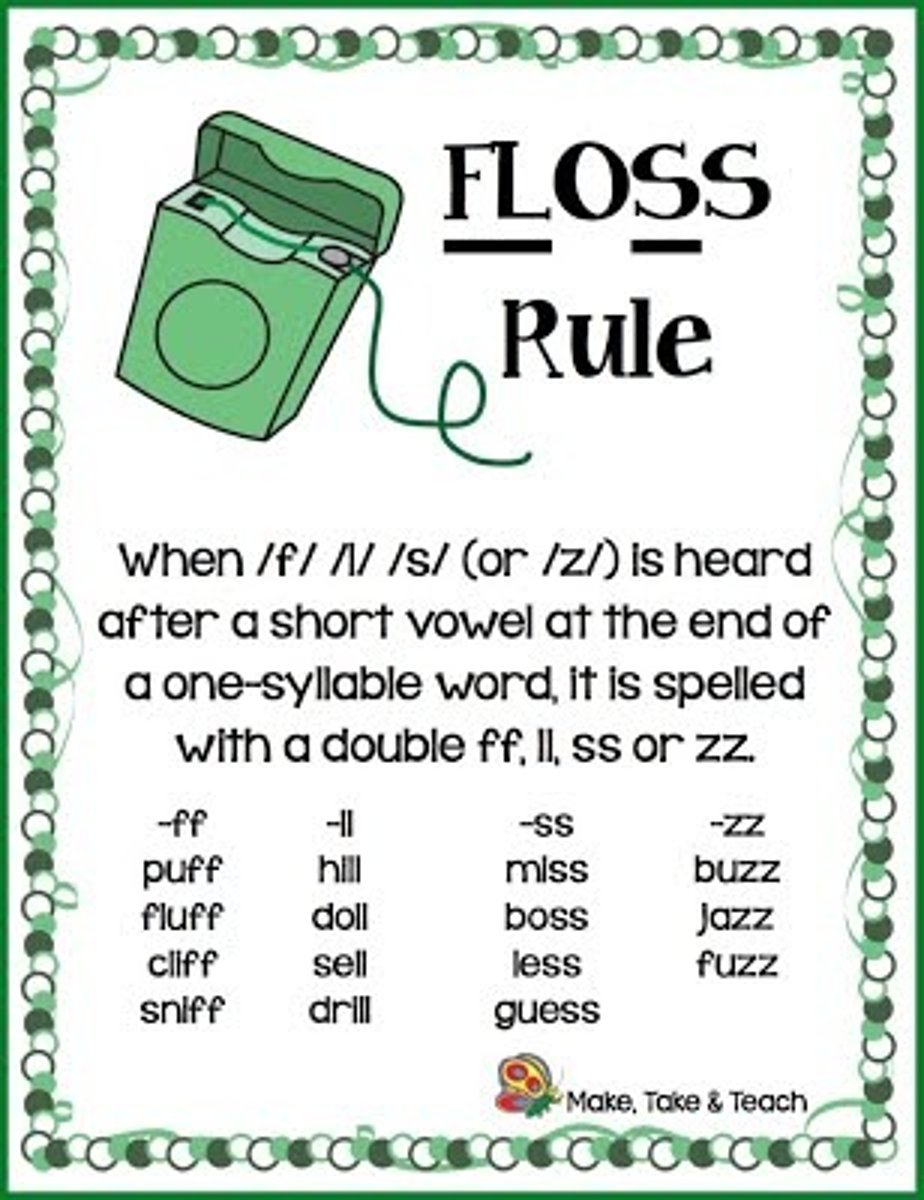
Doublets
(definition)
A doublet uses two of the same letter to spell a consonant phoneme.
(example)
ff, ll, ss, zz
(grapheme type)
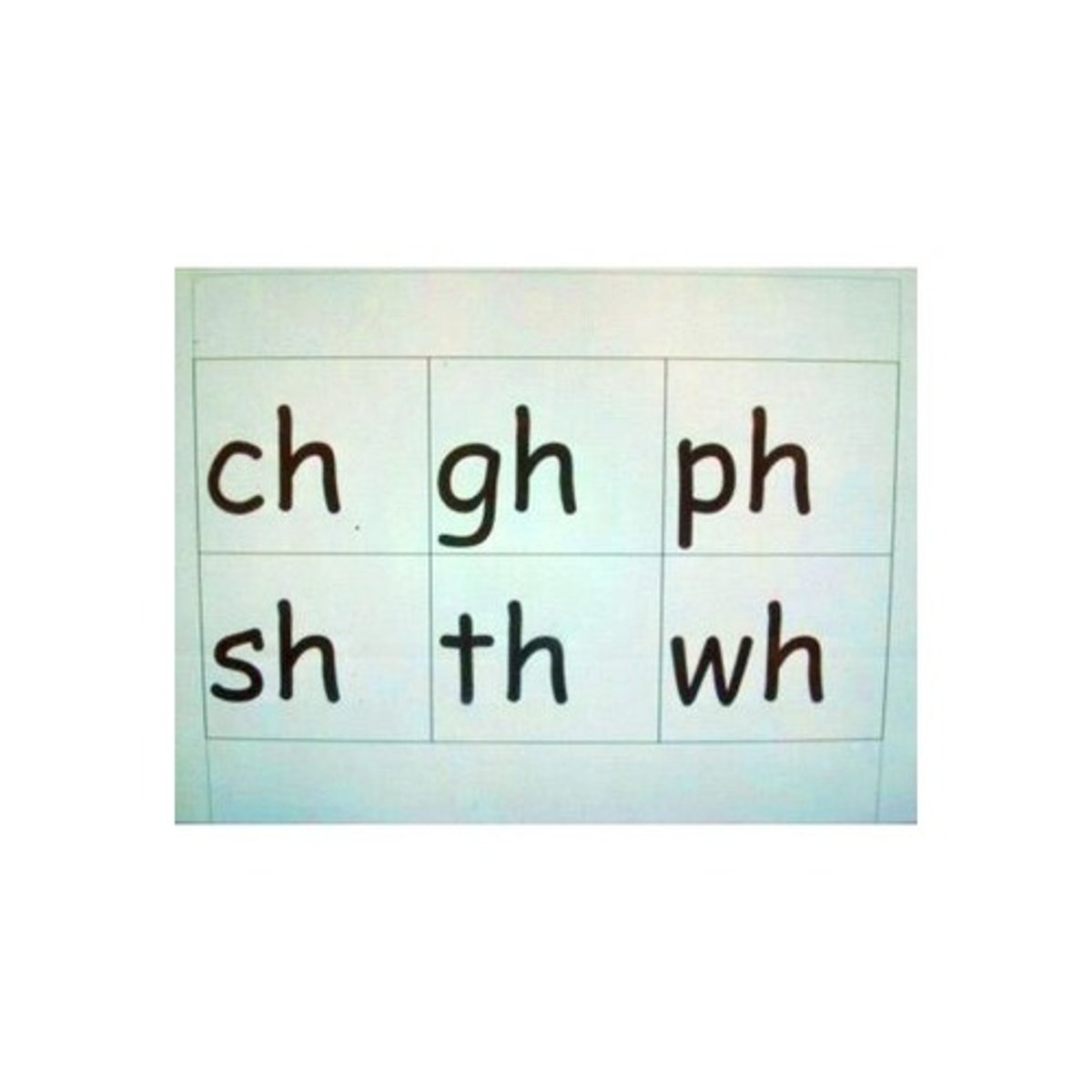
Digraphs
(definition)
Digraphs are a two-letter (di-) combinations that create one phoneme.
(example)
th, sh, ch, wh, ph, ng (sing) gh (cough) ck
(grapheme type)
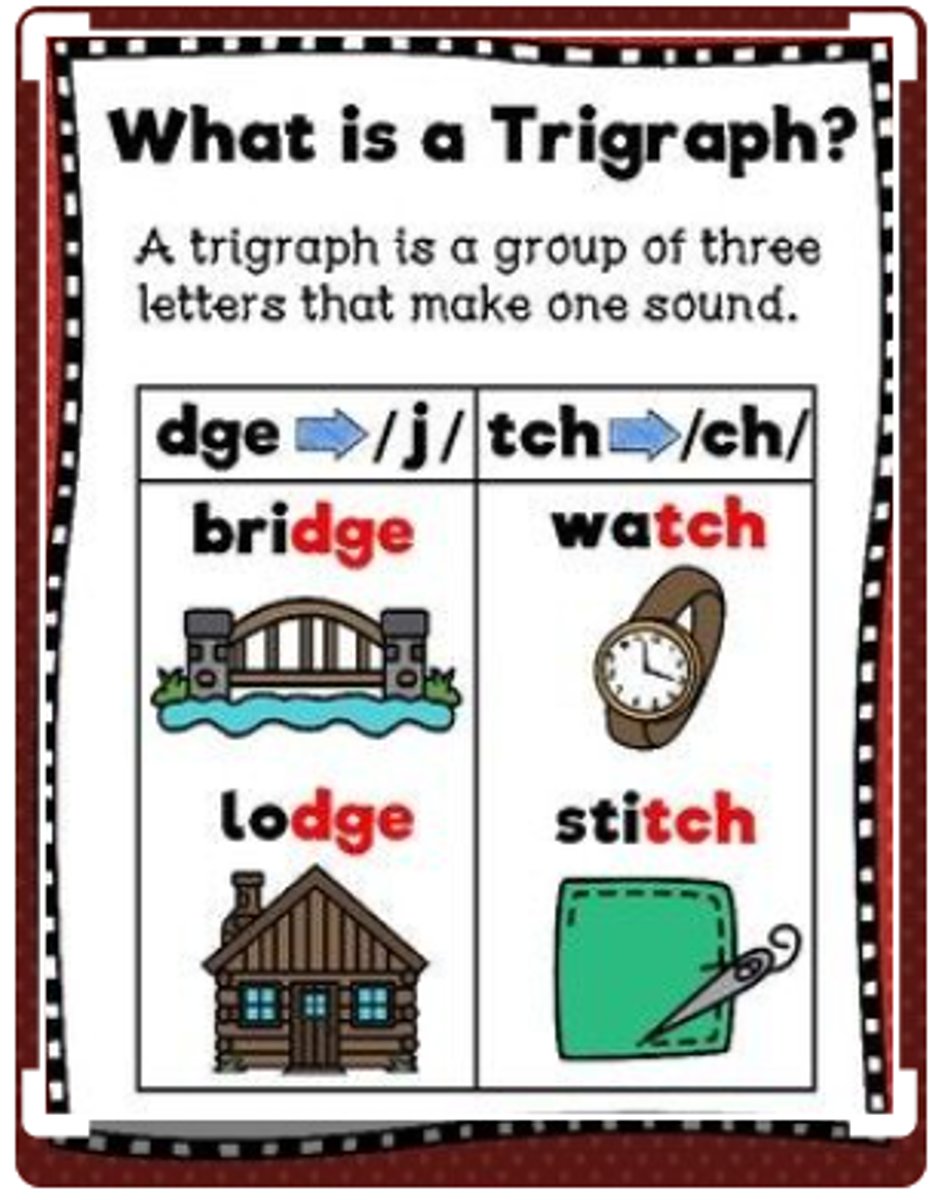
Trigraphs
(definition)
Trigraphs are three-letter (tri-) combinations that create one phoneme.
(example)
-tch -dge
(grapheme type)
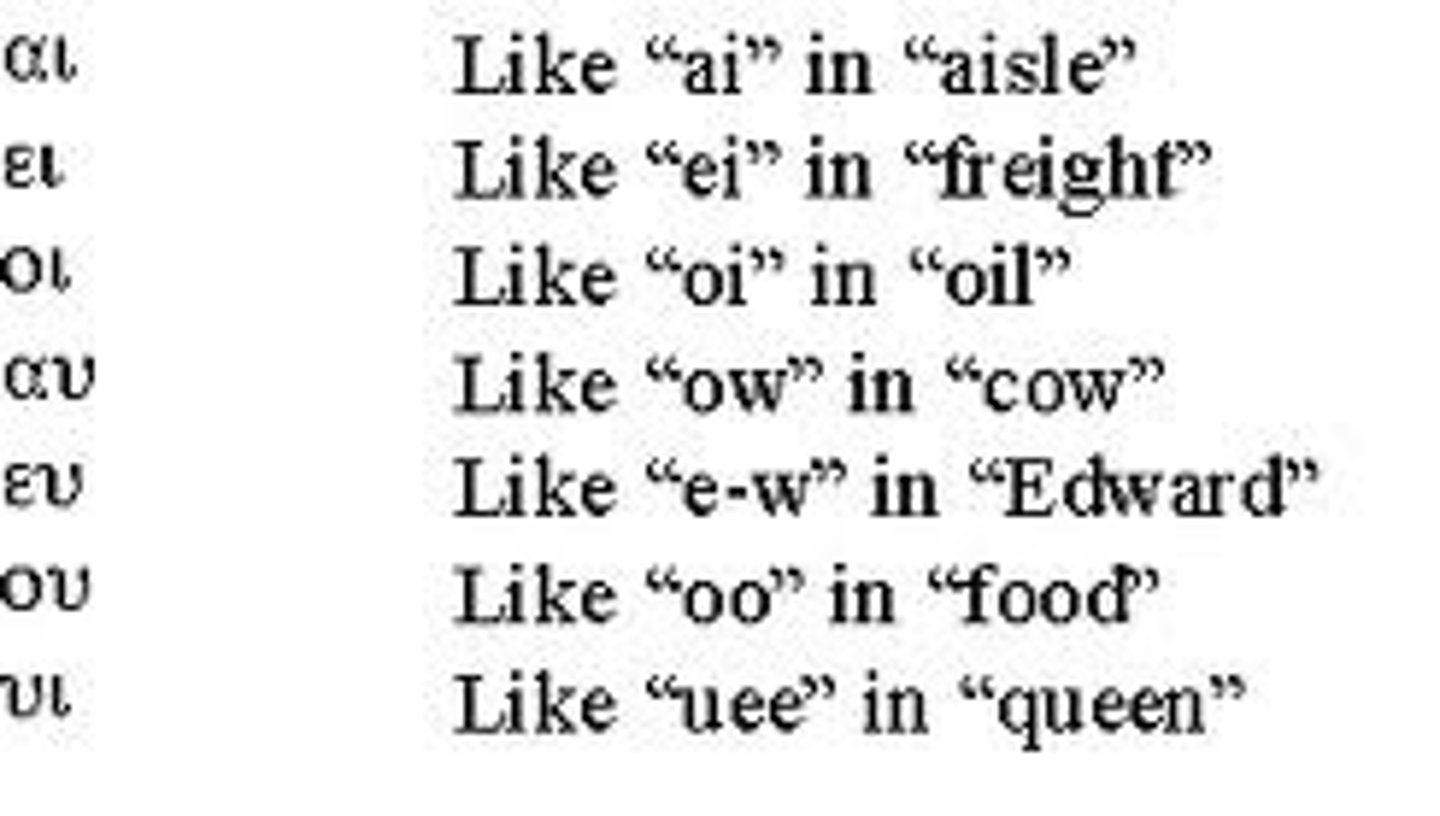
Diphthong
(definition)
Diphthongs are sounds formed by the combination of two vowels in a single syllable, in which the sound begins as one vowel and moves toward another. They can appear in the initial, middle or final position in a word.
(example)
aisle coin loud
(grapheme type)
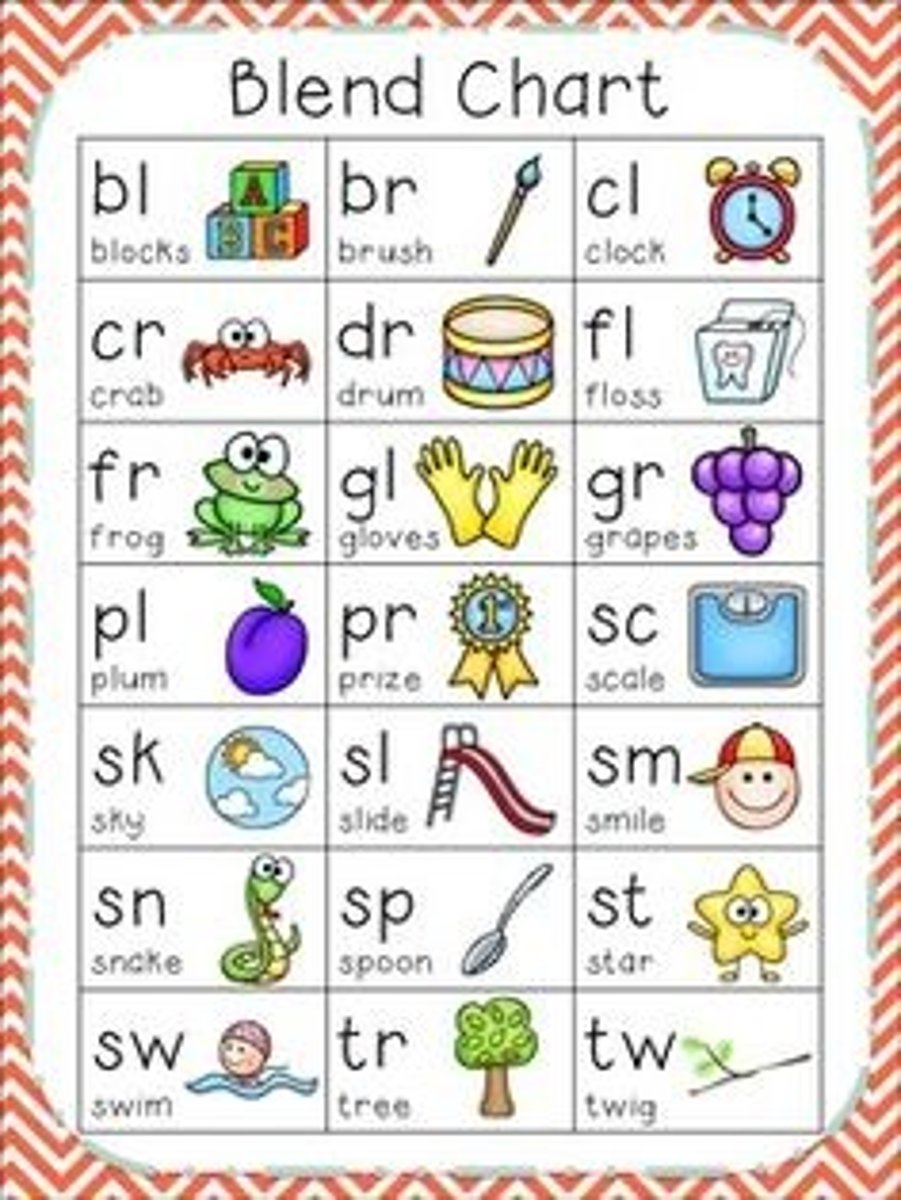
Consonant blends
(definition)
Consonant blends include two or three graphemes, and the consonant sounds are separate and identifiable.
(examples)
s-c-r (scrape) c-l (clean) l-k (milk)
(oral language development)
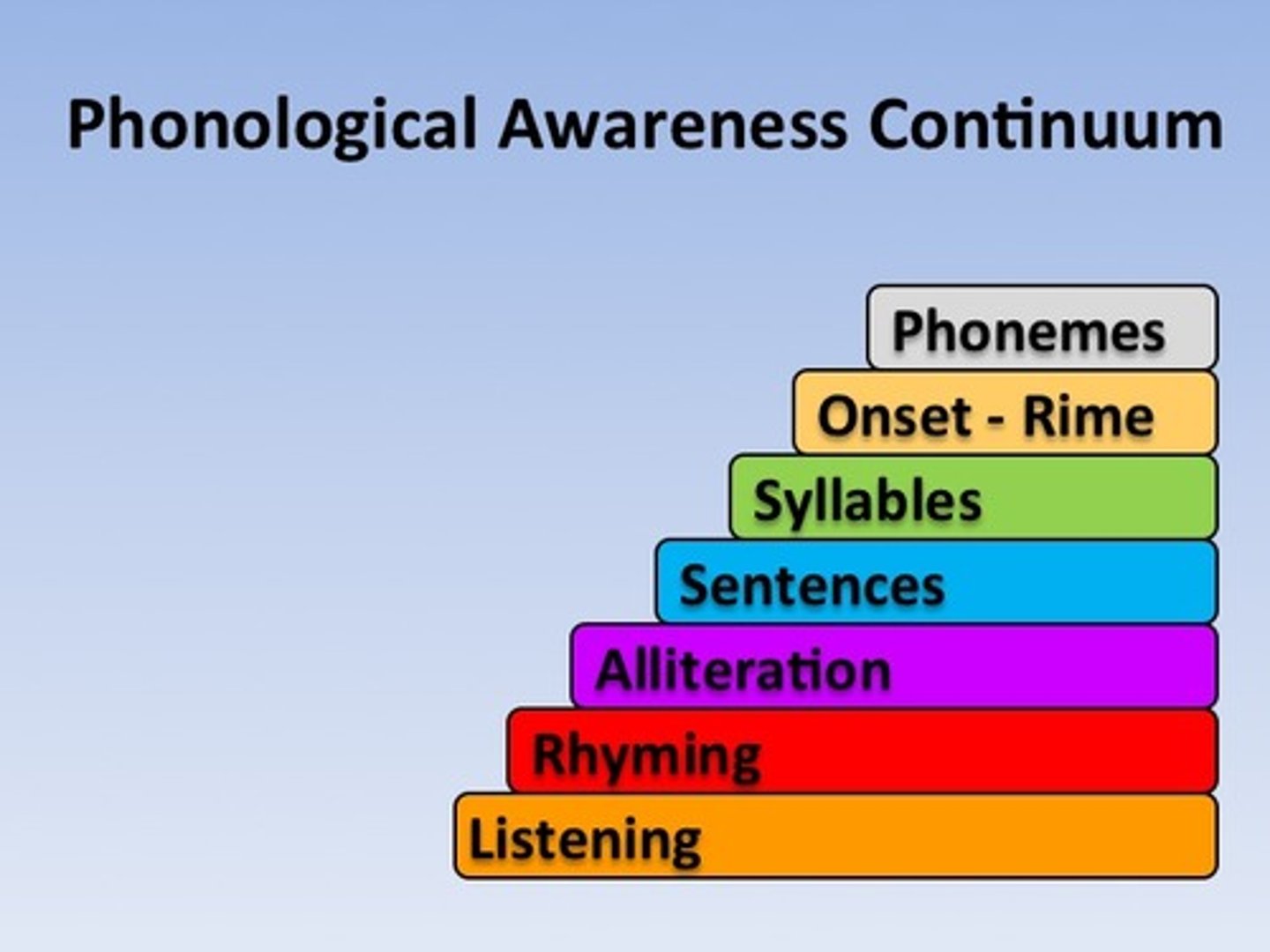
Phonology
encompasses the organization of sounds in language
(oral language development)
Vocabulary
(semantics) encompasses both expressive (speaking) and receptive (listening) vocabulary.

(oral language development)
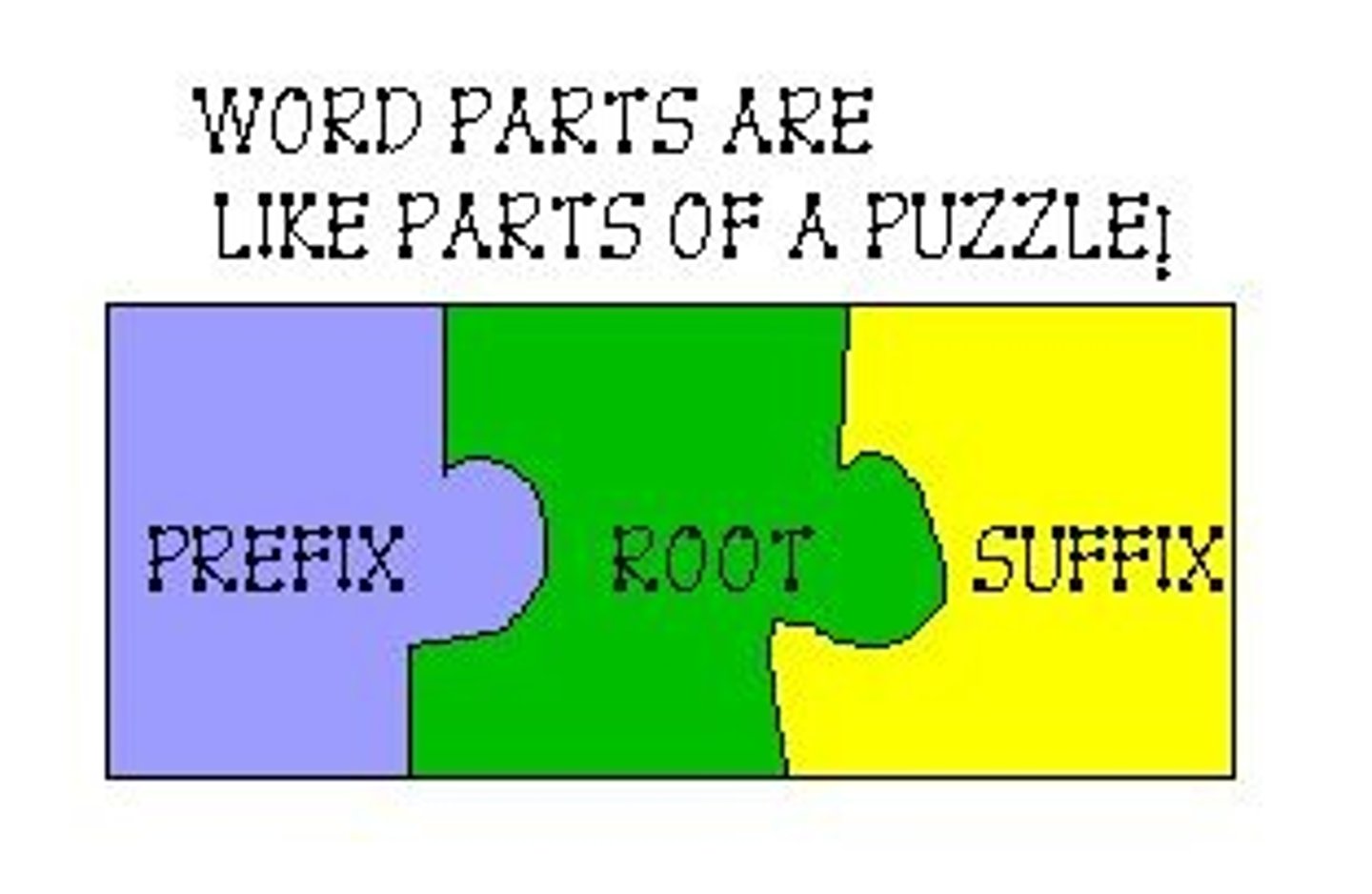
Morphology
is the study of word structure. Morphemes are the smallest units of meaning words. For example, students use prefixes, suffixes and roots to derive meaning. In the word unbelievable, there are three morphemes: un (not), believe, and able.
(oral language development)
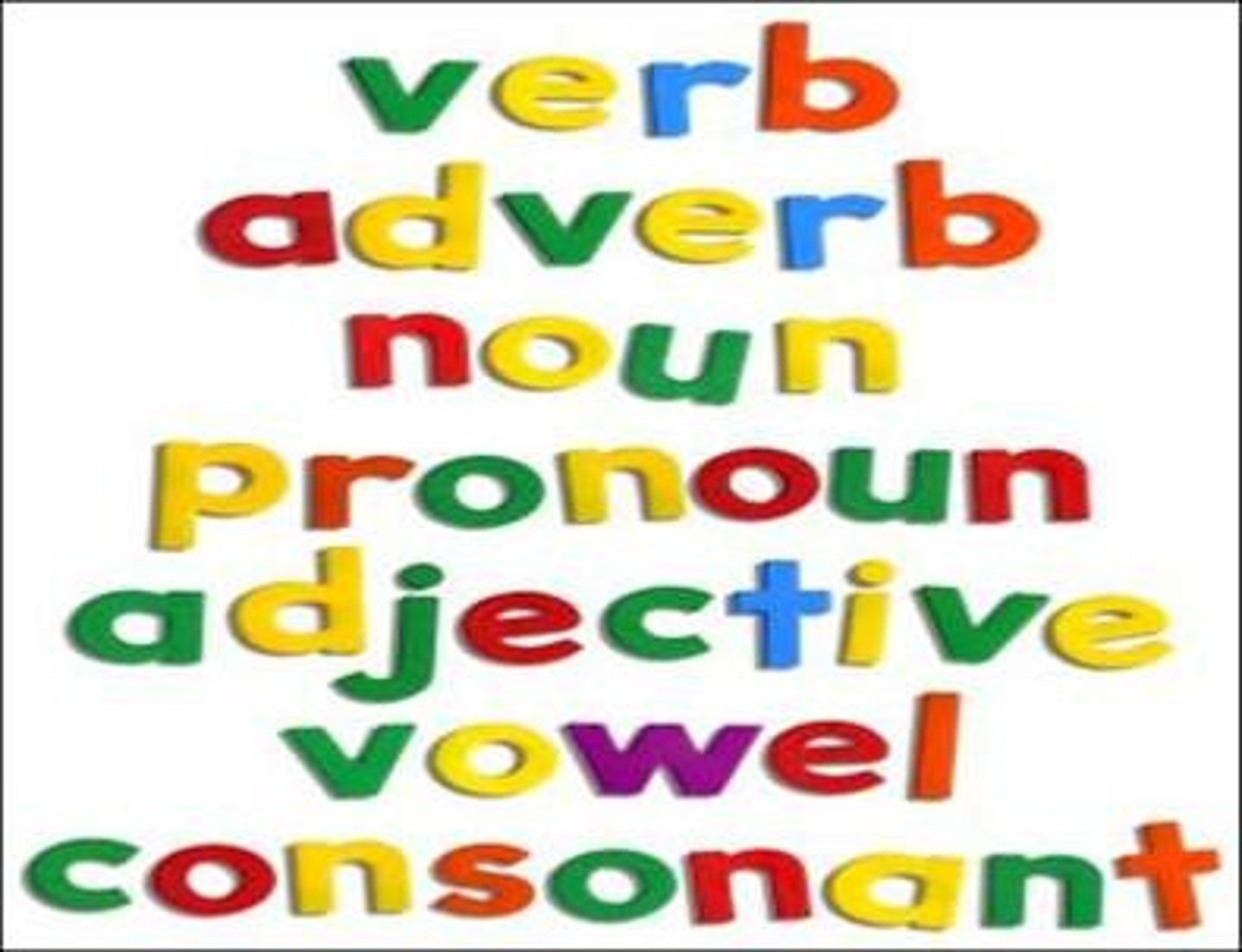
Grammar
(syntax) is the structure of language and words.
(oral language development)
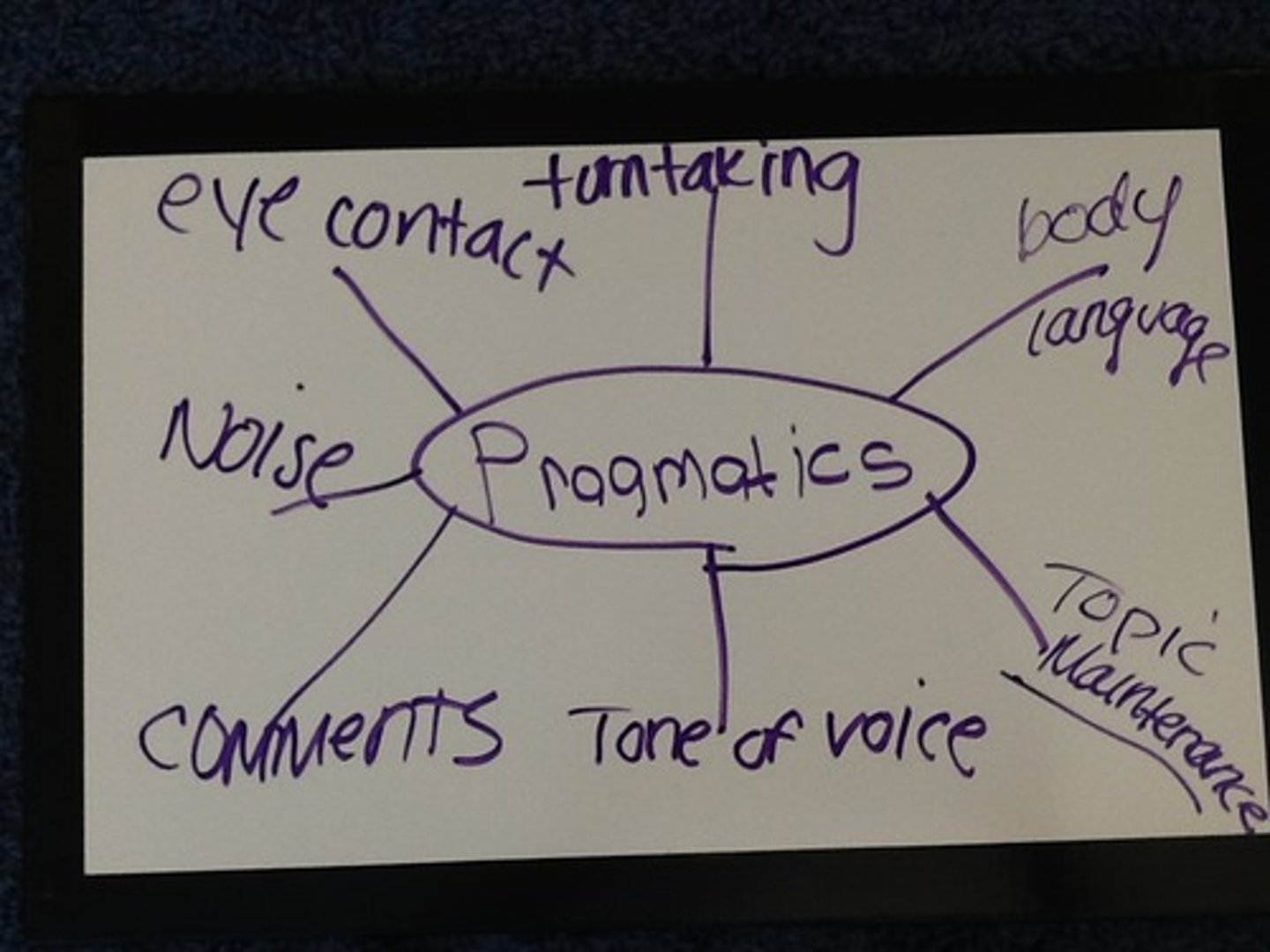
Pragmatics
focuses on the social cues or norms in language. This is often referred to as situations in language.
(oral language development)
Discourse
focuses on speaking and listening skills in language.

(stages of word recognition)
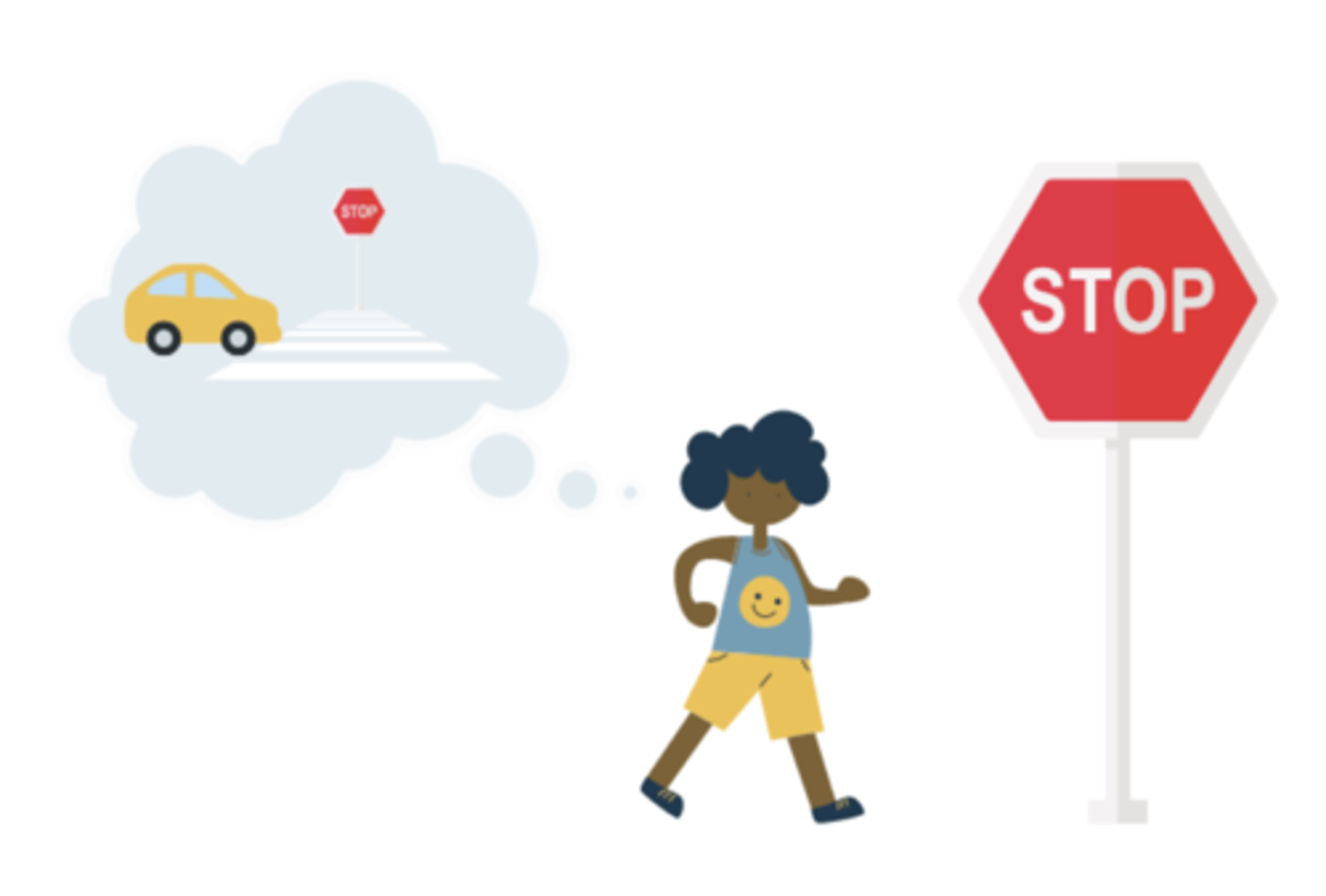
Pre-Alphabetic Phase
Students read words by memorizing visual features or guessing words from context.
(stages of word recognition)
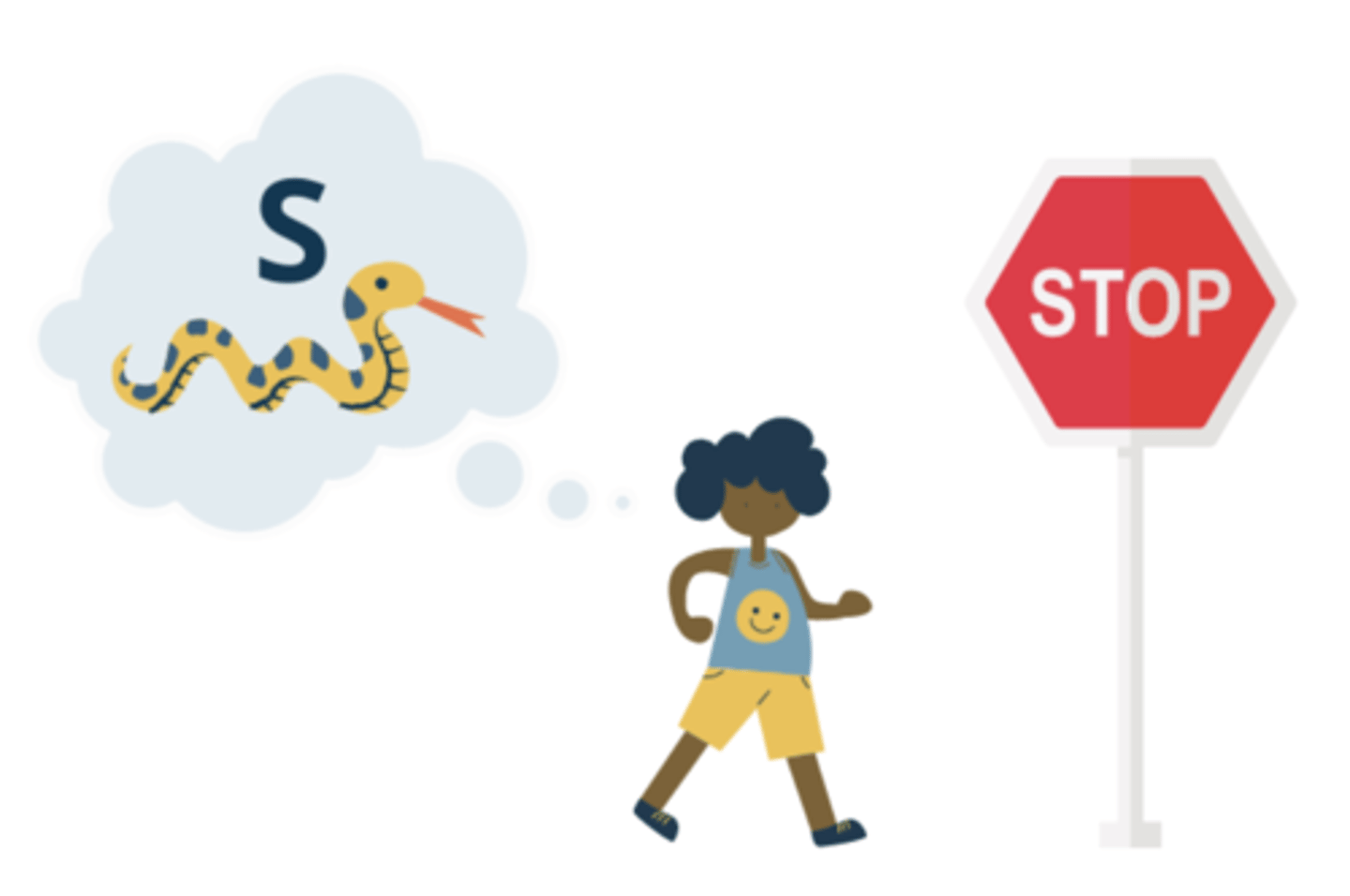
Partial-Alphabetic Phase
Students recognize some letters and can use them to remember words by sight.
(stages of word recognition)
Full-Alphabetic Phase
Readers possess extensive working knowledge of the graphophonemic system, and they can use this knowledge to analyze fully the connections between graphemes and phonemes in words. They can decode unfamiliar words and store fully analyzed sight words in memory.
(grapheme type)
Silent letter combinations
(definition)
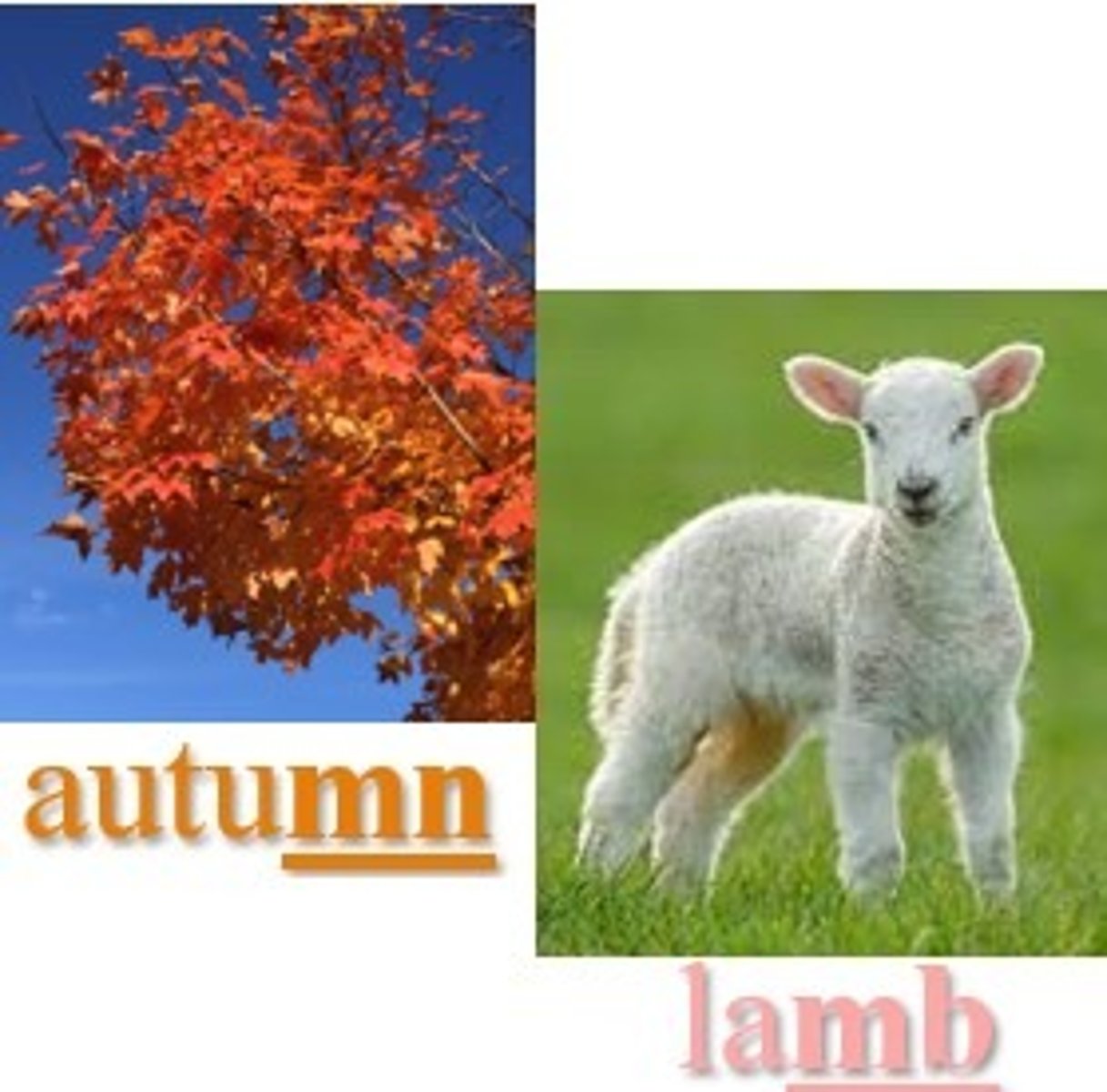
Silent letter combinations use two letters: one represents the phoneme and the other is silent.
(example)
kn (knock) wr (wrestle) gn (gnarl)
(grapheme type)
Combination qu
(definition)
These two letters always go together and make a /kw/ sound.
(example)
quickly
(grapheme type)
Single letters
(definition)
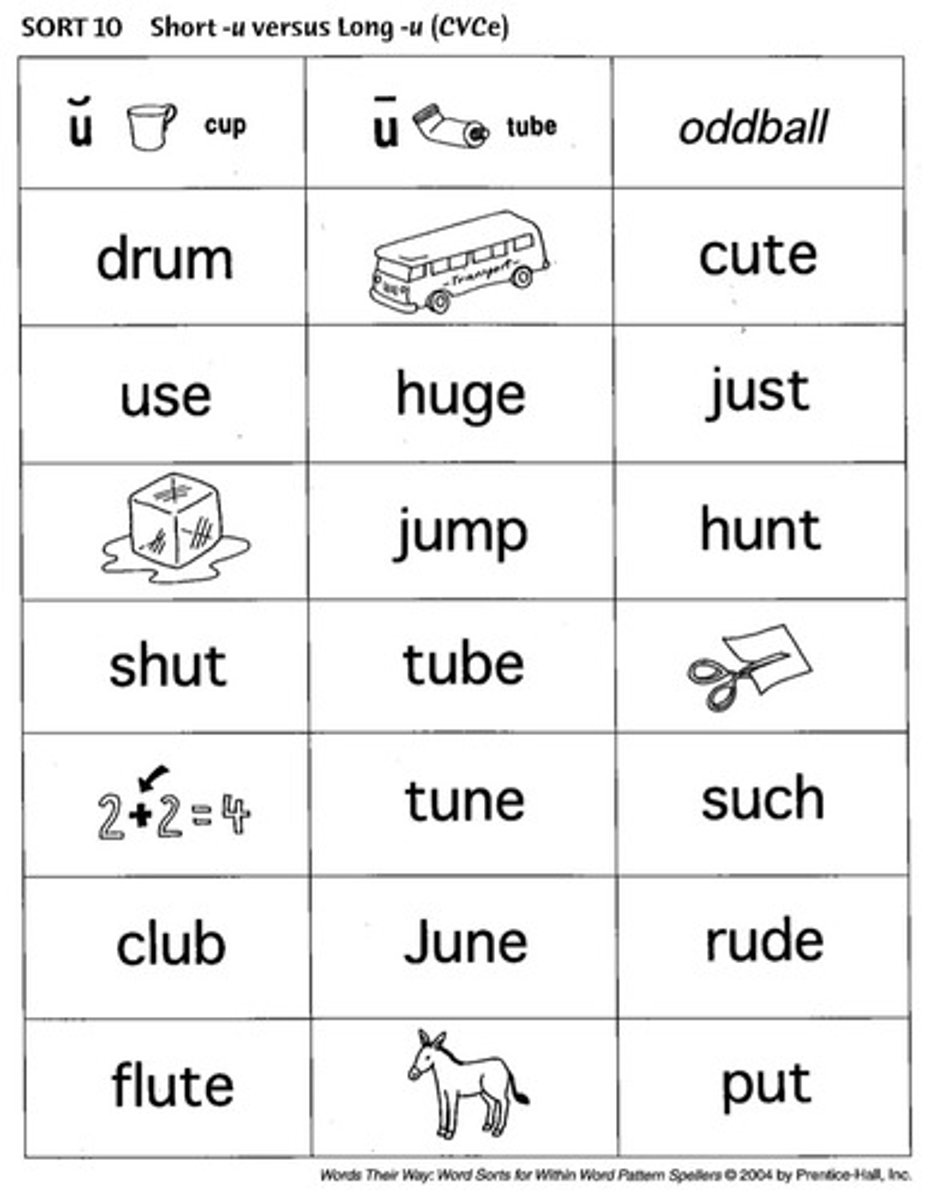
A single vowel letter that stands for a vowel sound.
(example)
(short vowels) cat, hit, gem, pot, sub (long vowels) me, no, mute
(grapheme type)
Vowel teams
(definition)
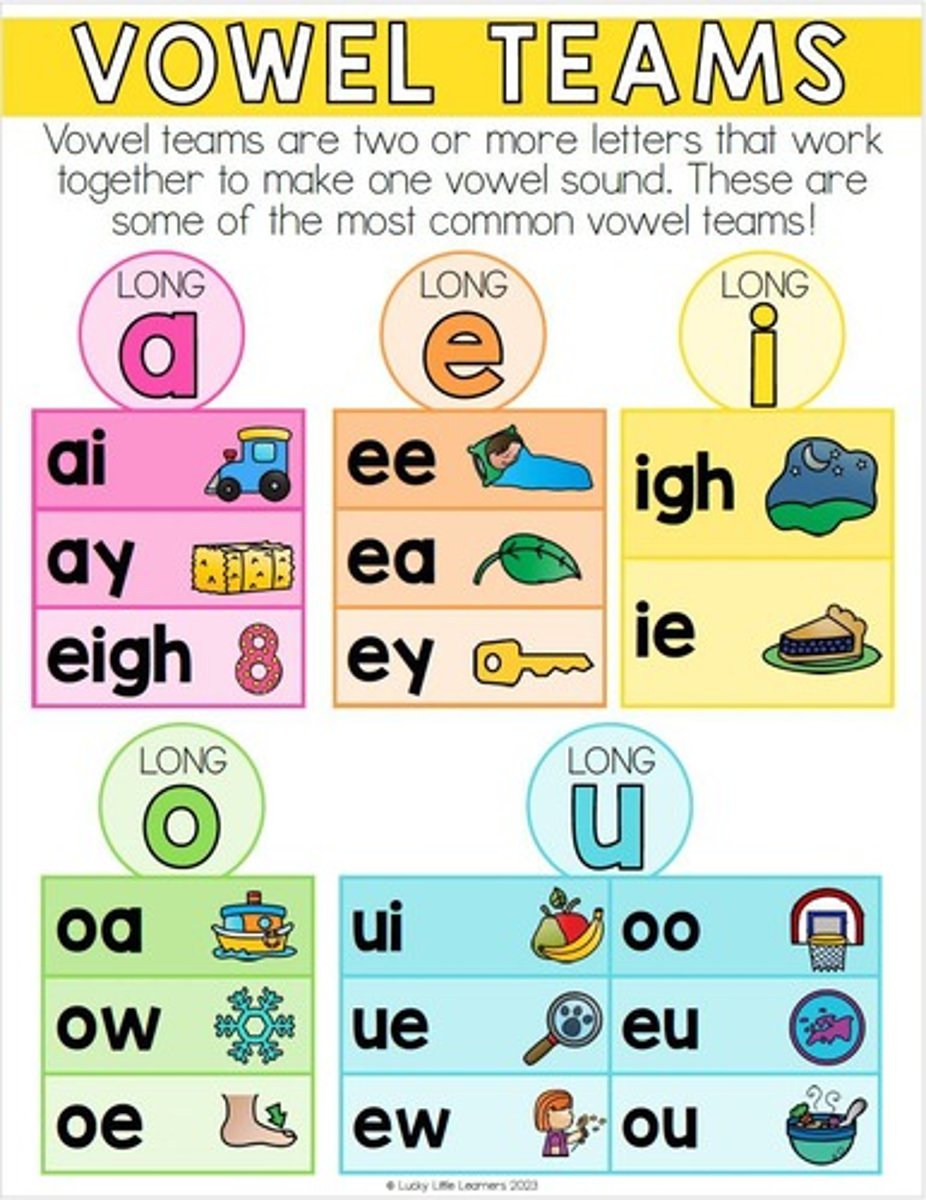
Vowel teams are combinations of two, three, or four letters that stand for a vowel sound.
(example)
(short vowels) head, hook (long vowels) boat, rain, weigh (diphthongs) soil, bout
L1
first language
L2
second language
ELLs
English language learners
(second language acquisition stages)
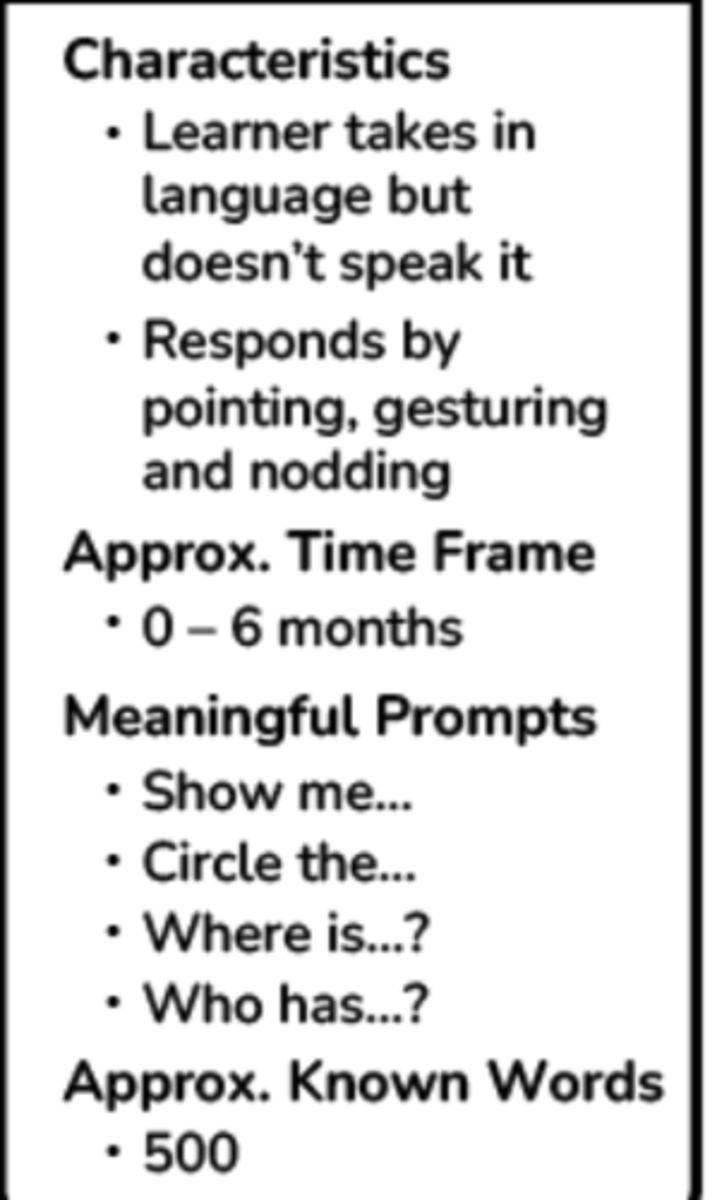
Stage 1: Pre-Production
This is commonly known as the silent period. At this stage, students are listening and deciphering vocabulary. Students may have receptive vocabulary (listening), but they are not speaking yet. In this stage, students benefit from repetition when trying to understand new words and phrases.
(second language acquisition stages)
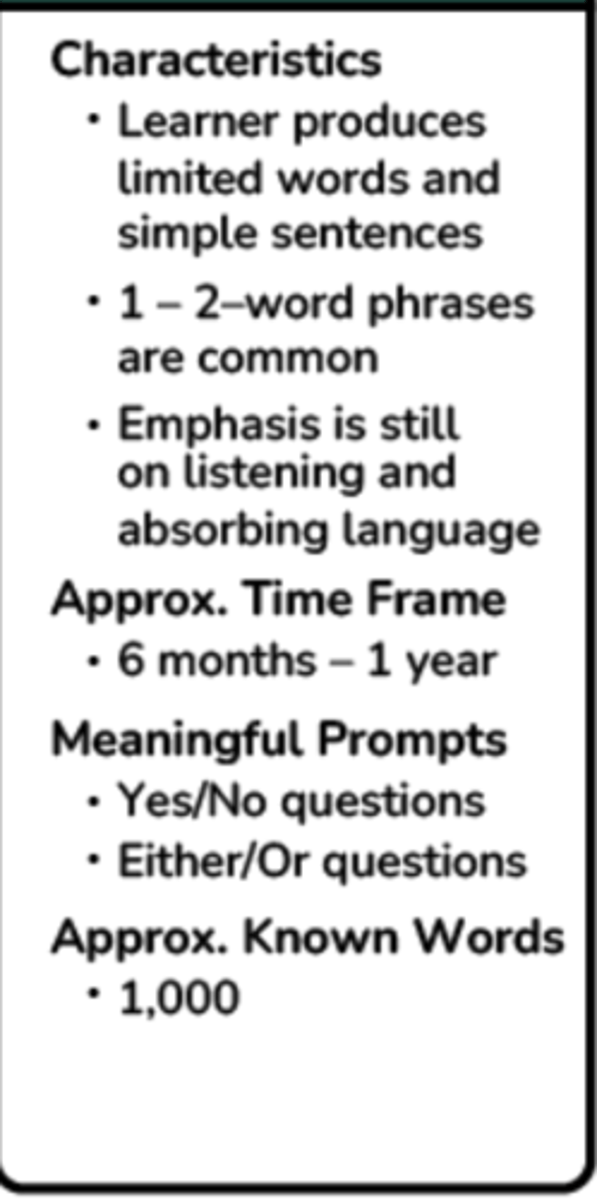
Stage 2: Early Production
This stage can last up to six months. Students at this stage understand about 1000 words in the new language. Students begin to form short phrases that may be grammatically incorrect. Students at this stage will use pictures to represent ideas in the new language.
(second language acquisition stages)
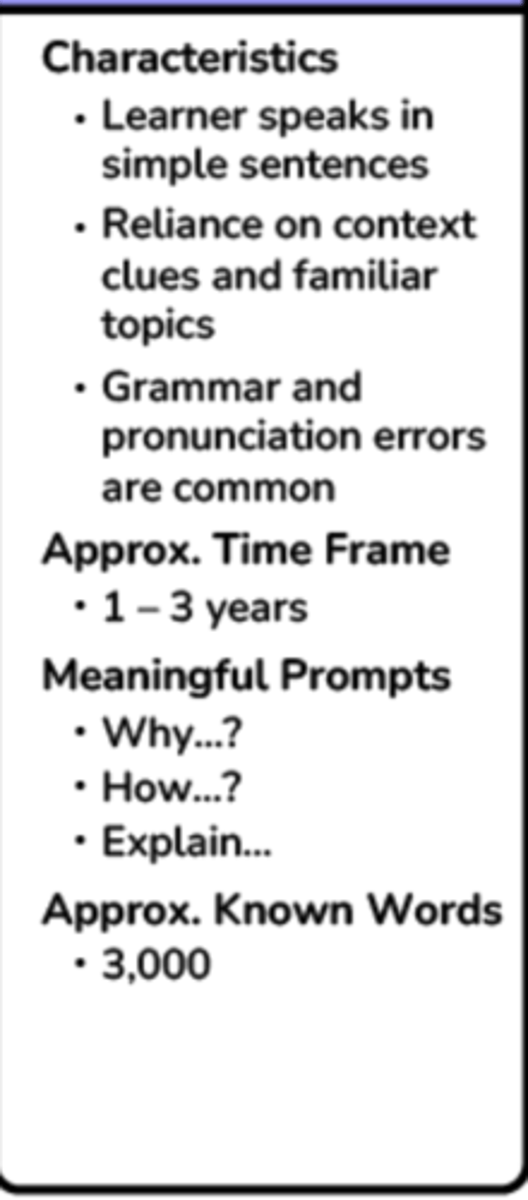
Stage 3: Speech Emergence
At this stage, students will start to communicate with simple phrases and sentences. Students understand up to 3000 words during this stage. Students also begin to develop comprehension in the new language (L2).
(second language acquisition stages)
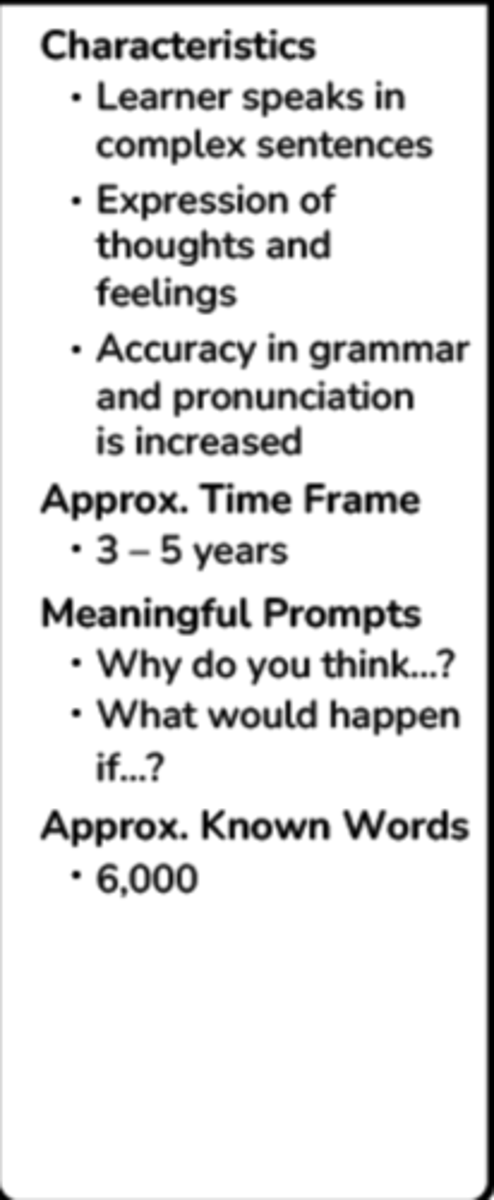
Stage 4: Intermediate Fluency
During this stage, students have a robust vocabulary in the second language—6000 or more words. Students begin to communicate effectively in their writing and speech.
(second language acquisition stages)
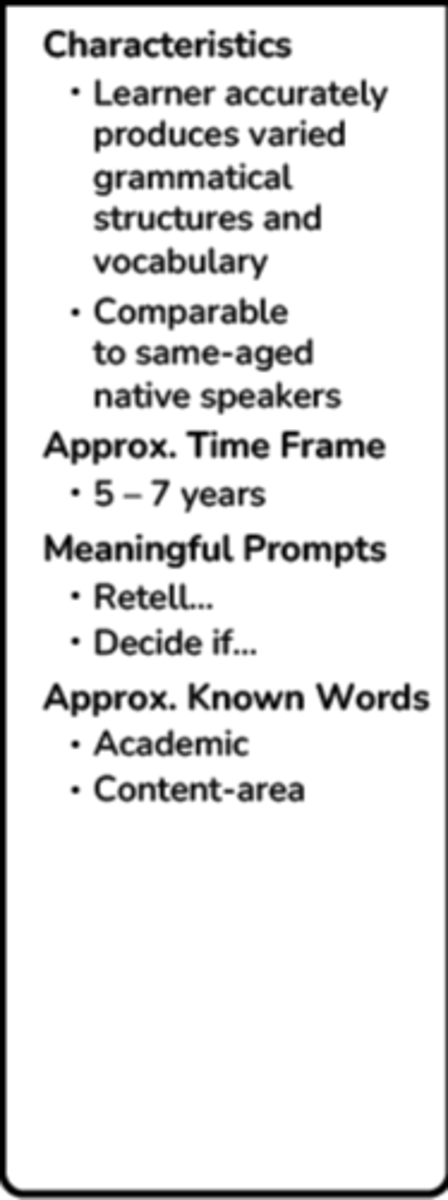
Stage 5: Advanced Fluency
At this stage, students are proficient and have comprehension and critical thinking in the second language. It can take 4-10 years for students to achieve academic proficiency in a second language.
World-class Instructional Design and Assessment (WIDA)
WIDA is an organization that supports multilingual students and creates standards and assessments to help with the instruction of ELLs. WIDA supports students, families, educators, and administrators with research-based tools and resources.
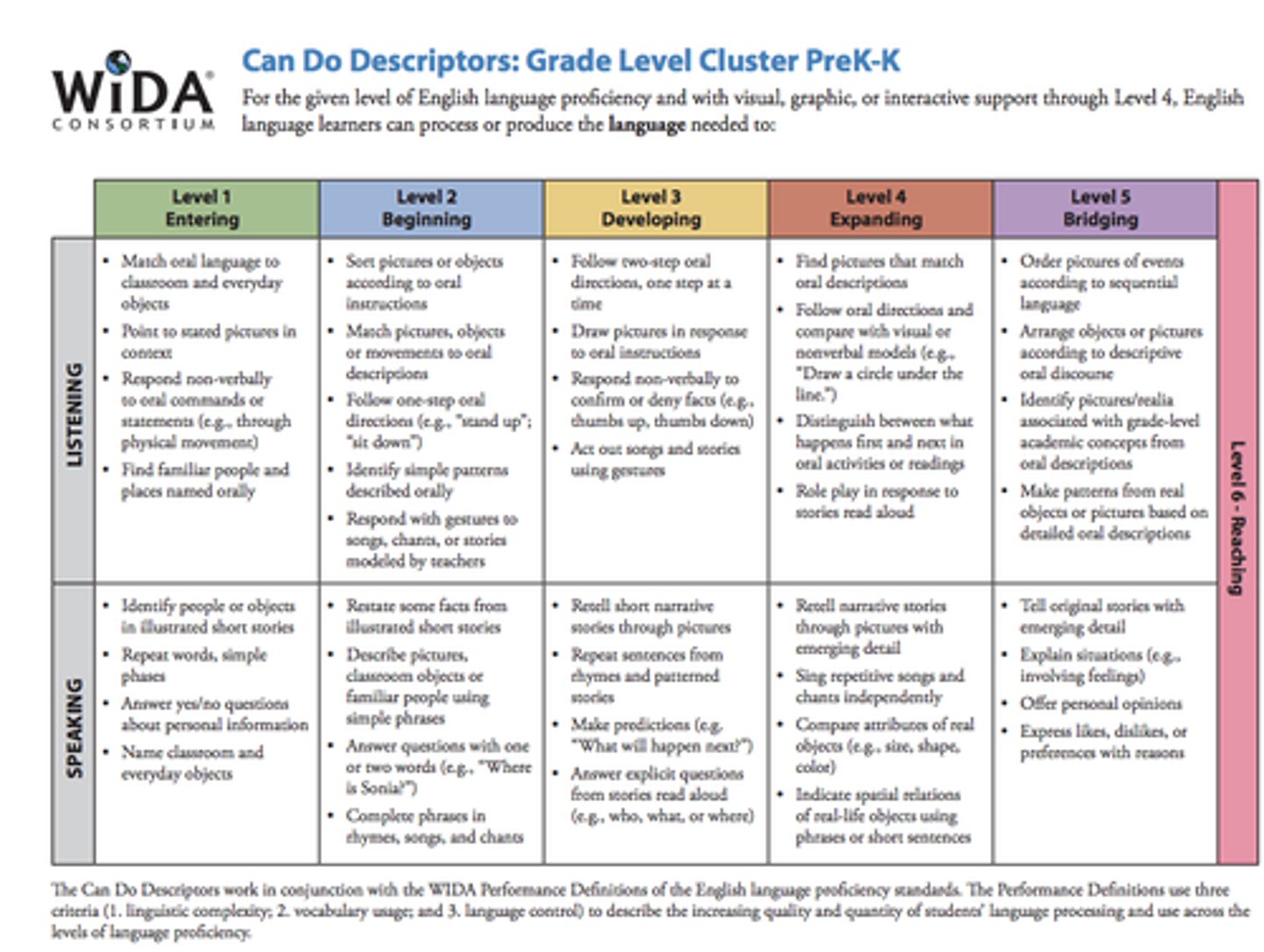
The WIDA framework
The WIDA framework includes five components that are interactive and interdependent. These components exemplify the WIDA vision for academic language development.
1. Guiding Principles of Language Development
2. Developmentally Appropriate Academic Language in Sociocultural Contexts
3. Performance Definitions
4. Can Do descriptors
5. Standards Matrices
Students with special needs and gifted and talented students
In all literacy instruction, it is important for teachers to accommodate students to meet the needs of every learner. Teachers do this by differentiation and modification. For students with special needs, perhaps accommodations are needed like extra time, or larger print, depending on the disability. For students who are gifted and talented, differentiation may mean a more complex piece of text, or a way for the students to extend the learning. Either way, the teacher must accommodate students through differentiation and meeting the specific needs of every student.
Print Awareness
Print awareness refers to a child's understanding of the nature and uses of print. Children develop print awareness when they can recognize words as distinct elements of oral and written communication. Both skills are acquired in the child's natural environment.
Environmental print
Environmental print is the print of everyday life. It is the name given to the print that appears on signs, labels, and logos. Street signs, candy wrappers, labels on peanut butter and cereal boxes are other examples of environmental print.
Print concepts
Print concepts involve understanding the difference between letters, words, punctuation and directionality. Print concepts foster reading comprehension and vocabulary growth.
Print concepts include:
• Directionality - reading from left to right and top to bottom
• Layout - front and back of books
• Differentiation - words vs pictures and letters vs words
Phonological awareness
Phonological awareness is an overarching skill that includes identifying and manipulating units of oral language, including parts of words, syllables, onsets, and rimes.
Children who have phonological awareness are able to:
• Identify and make oral rhymes,
• Clap out the number of syllables in a word,
• Recognize words with the same initial sounds as in monkey and mother,
• Recognize the sound of spoken language,
• Blend sounds together (bl, tr, sk)
• Divide and manipulate words.
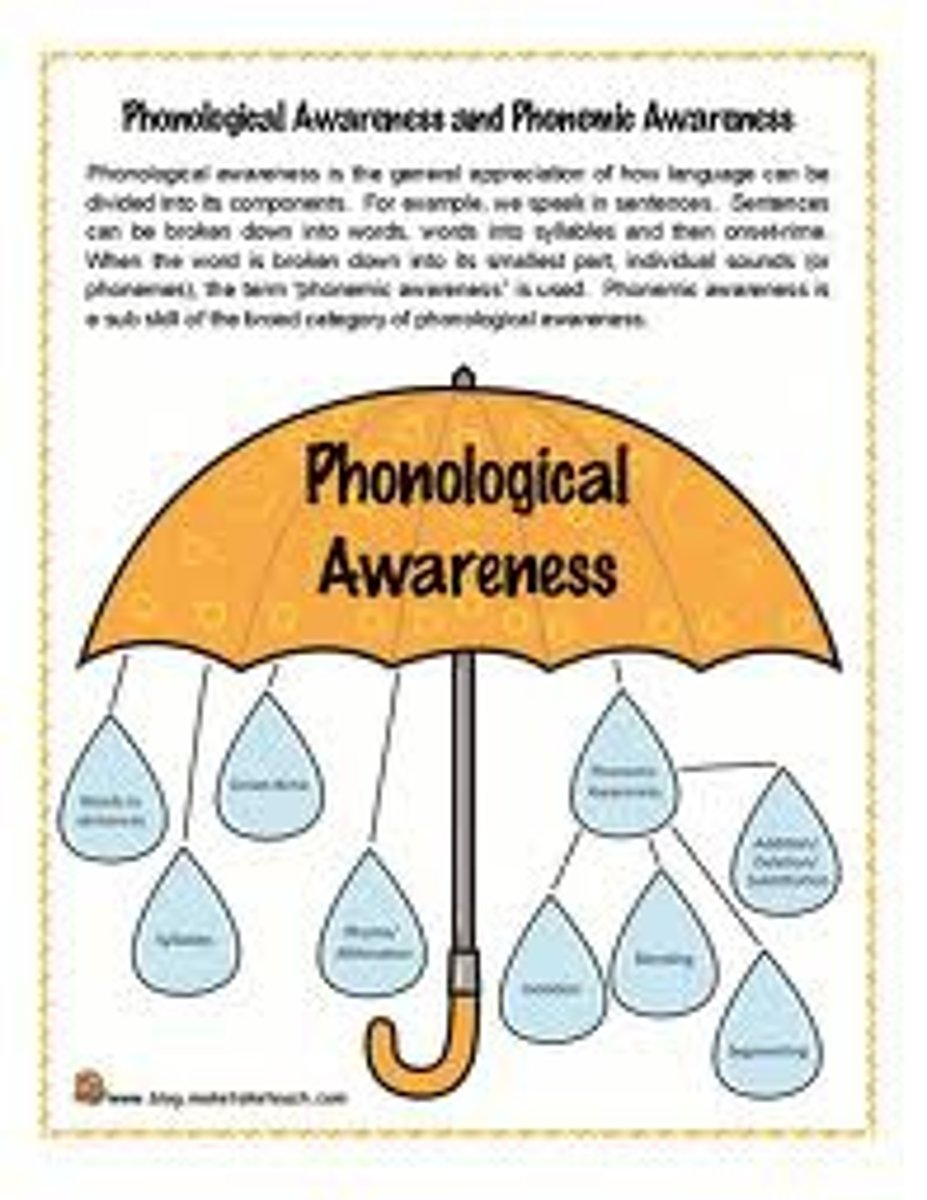
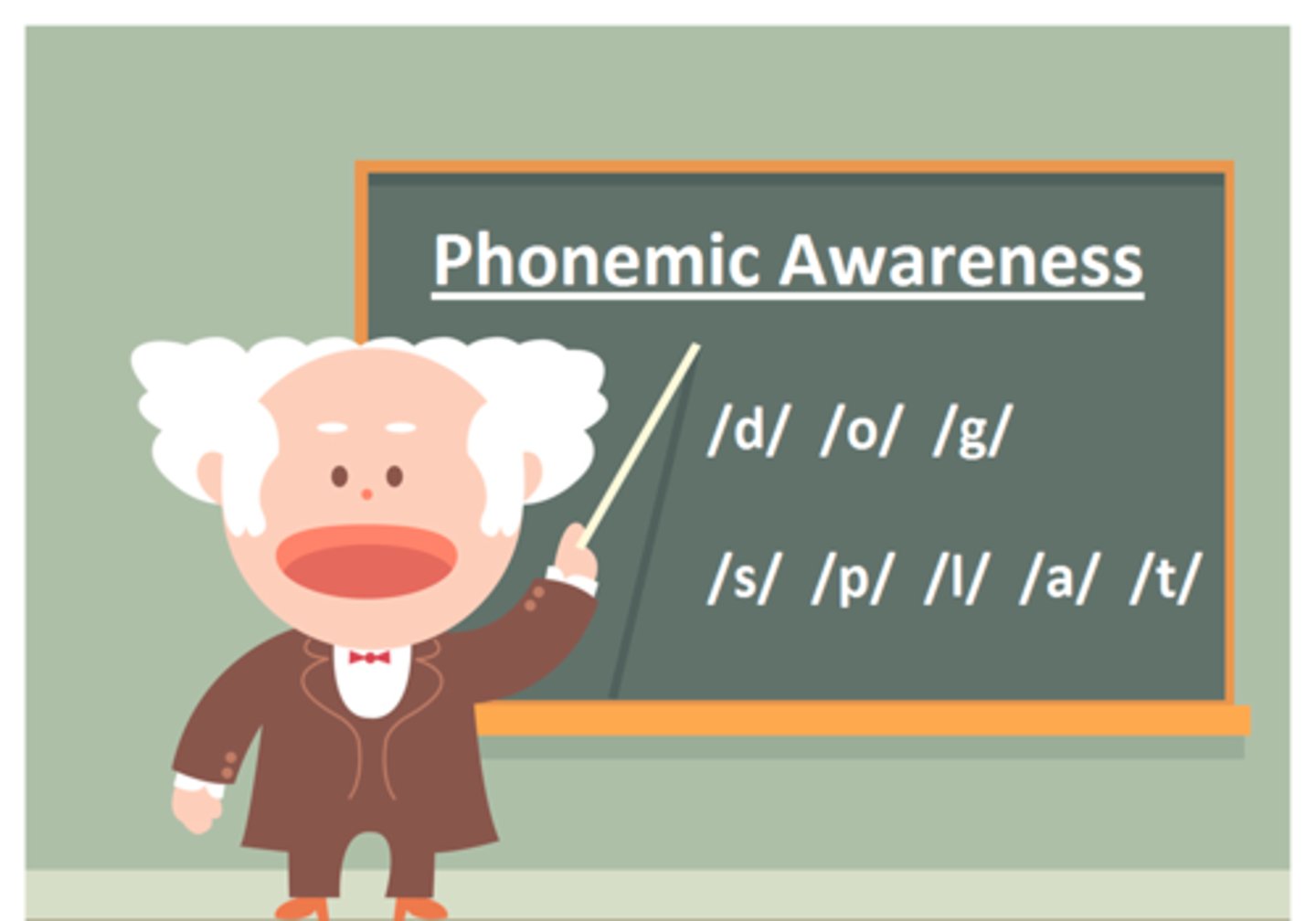
Phonemic awareness
Phonemic awareness is understanding the individual sounds (or phonemes) in words.
For example, students who have phonemic awareness can separate the sounds in the word cat into three distinct phonemes: /k/, /æ/, and /t/.
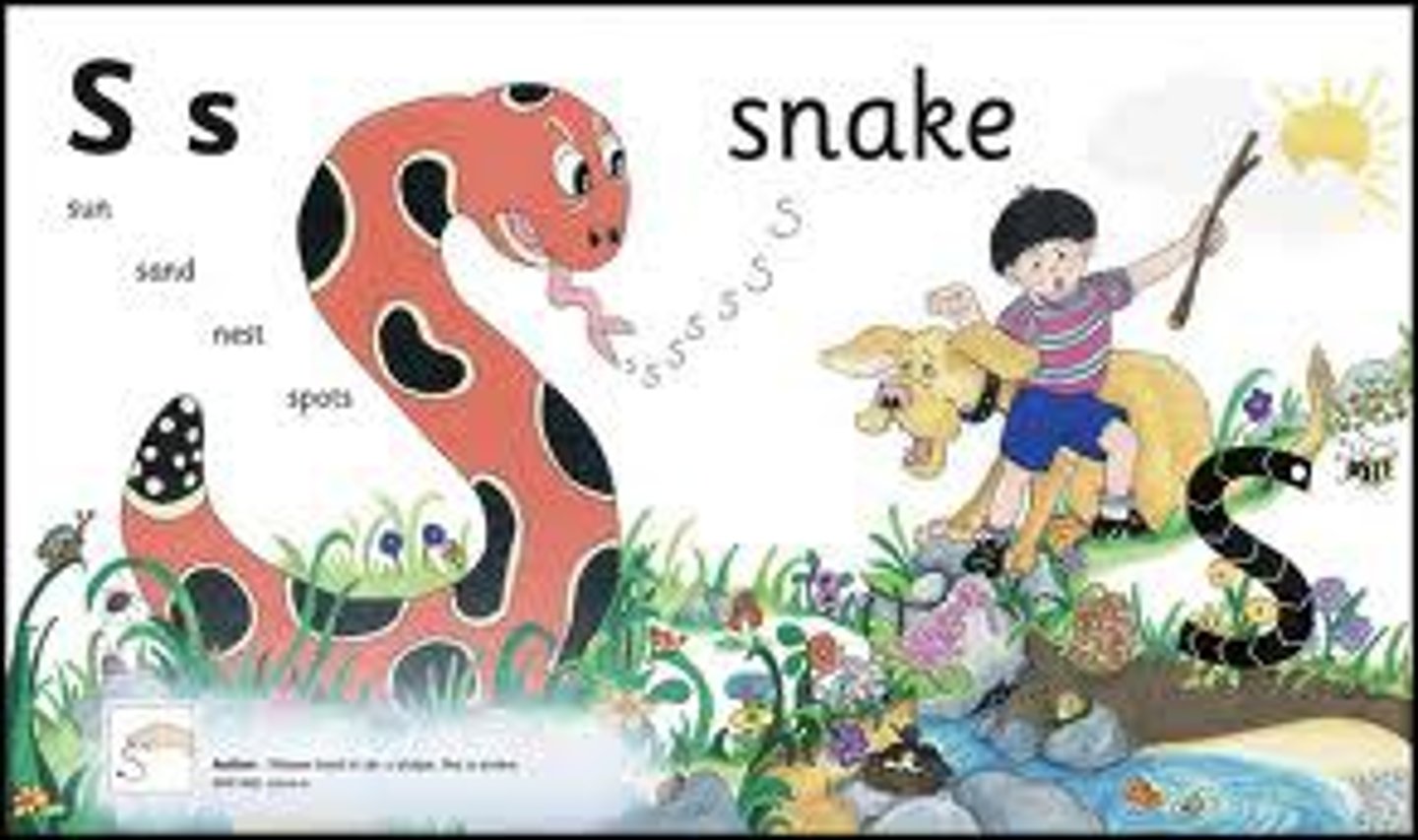
Phonics
Phonics is understanding the relationship between sounds and spelling patterns (graphemes) representing those sounds.
For example, when a student sees a c followed by an e, i, or y, the student knows the c makes an /s/ sound, as in the words cycle, circle, and receive. The student associated the letters with the appropriate sound.
Phonemic awareness vs Phonics
Phonemic awareness
- focus on phonemes/sounds only
- spoken language
- mostly auditory
- manipulating sounds in words
Phonics
- focus on graphemes/letters and their corresponding sounds
- written language/print
- both visual and auditory
- reading and writing letters according to sounds, spelling, patterns, and phonological structure
(phonemic awareness activities)
Rhyming
Matching sounds in words, usually the endings
(phonemic awareness activities)
Segmentation
Breaking a word apart by phonemes—/b/a/t/
(phonemic awareness activities)
Isolation
When students isolate a single sound in the word. For example, if the teacher says, "say only the first sound in bat." The students reply with /b/.
(phonemic awareness activities)
Deletion
When students take words apart, remove one sound, and pronounce the word without the removed sound (Caldwell, Jennings, & Lerner, 2014).
For example, using the word mice, a teacher may ask students to delete the initial /m/ sound, resulting in the word ice. This skill is usually practiced orally.
(phonemic awareness activities)
Substitution
When students replace one sound with another in a word. For example, substitute the first sound in the word cat with an /s/ sound. Students say sat.
(phonemic awareness activities)
Blending
The ability to string together the sounds that each letter stands for in a word.
For example, when students hear the word black, they blend the /bl/, the /a/ sound, and the ending /k/ sound. Sometimes blending exercises focus just on the consonant blend, like the /br/ sound in the word brick.
Students can break words down to even smaller pieces by focusing on letter-sound relationships.
Words can be broken down by:
• inflected forms (-s, -es, -ed, -ing, -ly)
• contractions
• possessives
• compound words
• syllables
• base words
• root words
• prefixes
• suffixes beginning consonants
• end consonants
• medial consonants
• consonant blends (bl, gr, sp)
• consonant digraphs (sh, th, ch)
• short vowels
• long vowels
• vowel pairs (oo, ew, oi, oy)
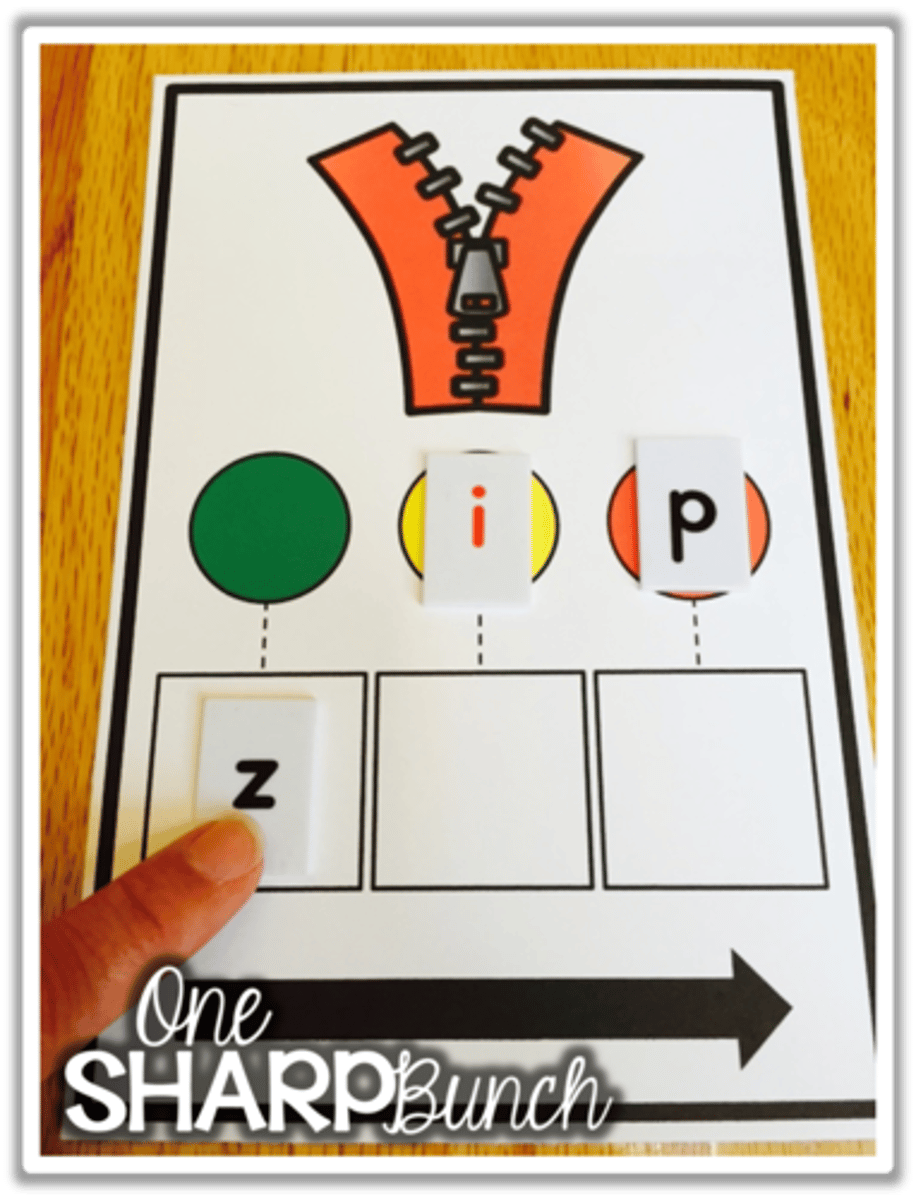
Blending
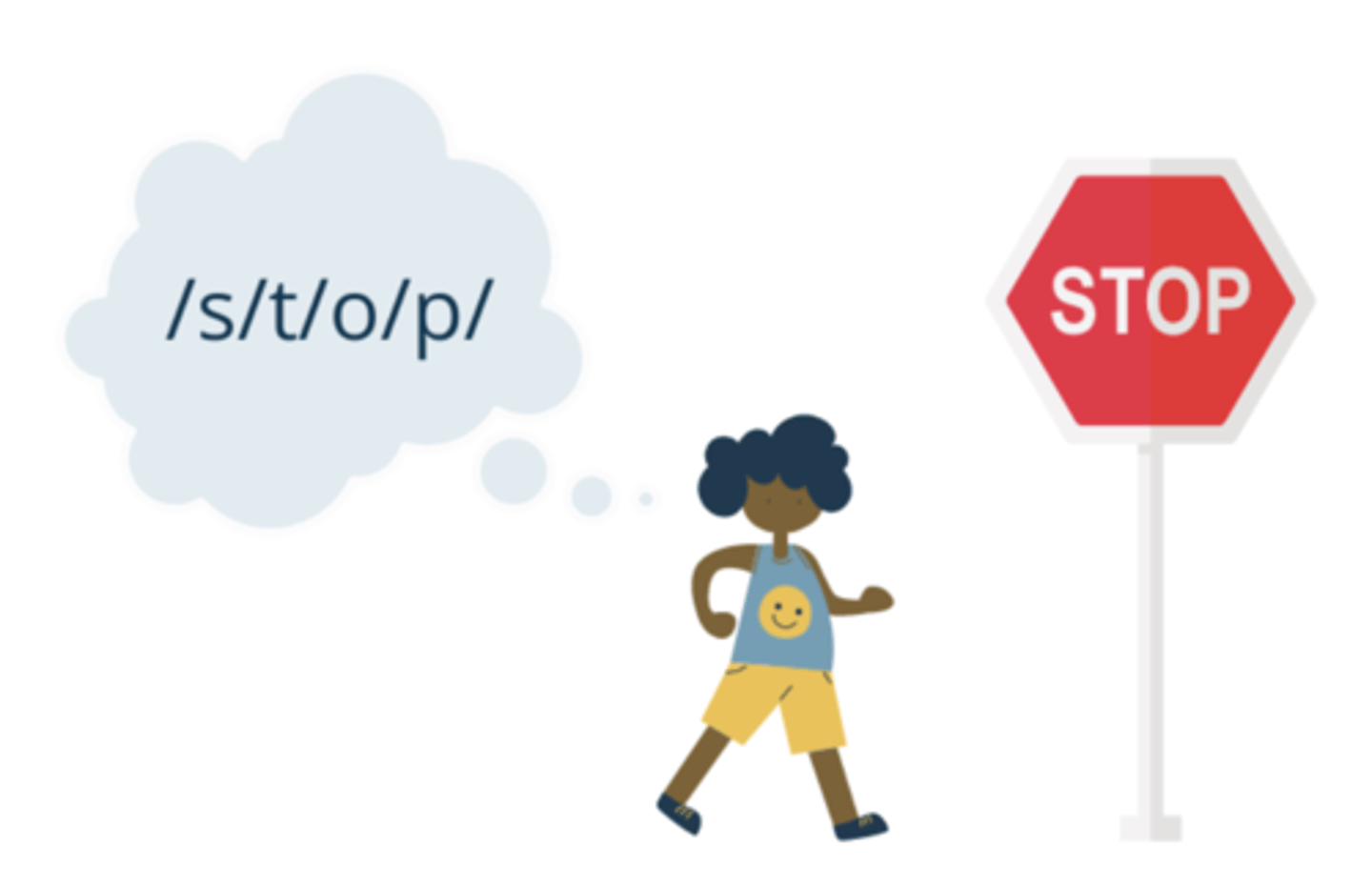
Blending is an important skill beginners use to mimic the process readers go through to sound out a word as in /p/-/a/- /t/ /pat/.
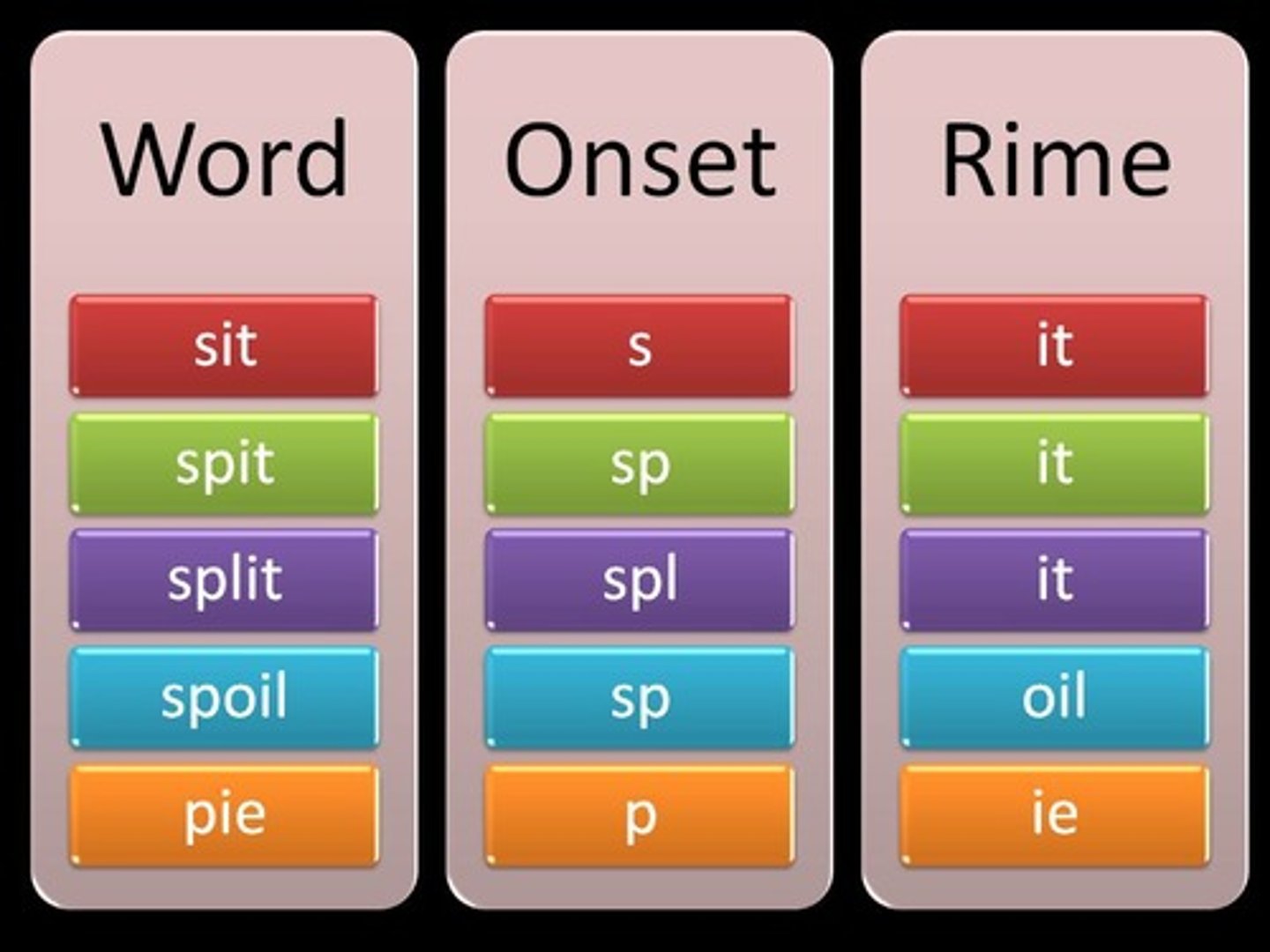
Onsets
Beginning consonant and consonant cluster before a rime.
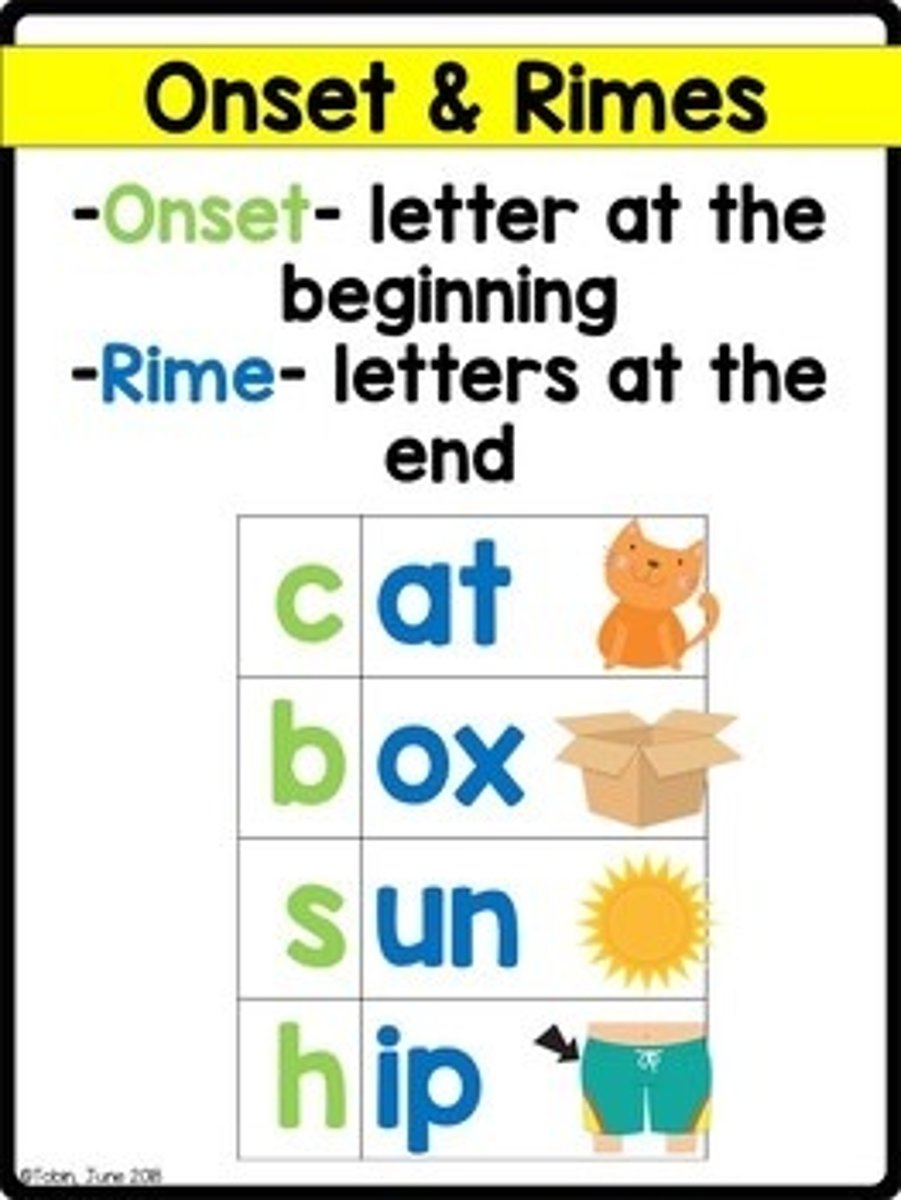
Rimes
Vowel and consonants that follow the onset.
Some common rimes are:
-ack,
-an,
-aw,
-ick,
-ing,
-op,
-unk,
-ain,
-ank,
-ay,
-ide,
-ink,
-or,
-ock,
-ight,
-ame,
-eat,
-ine.
Chunking
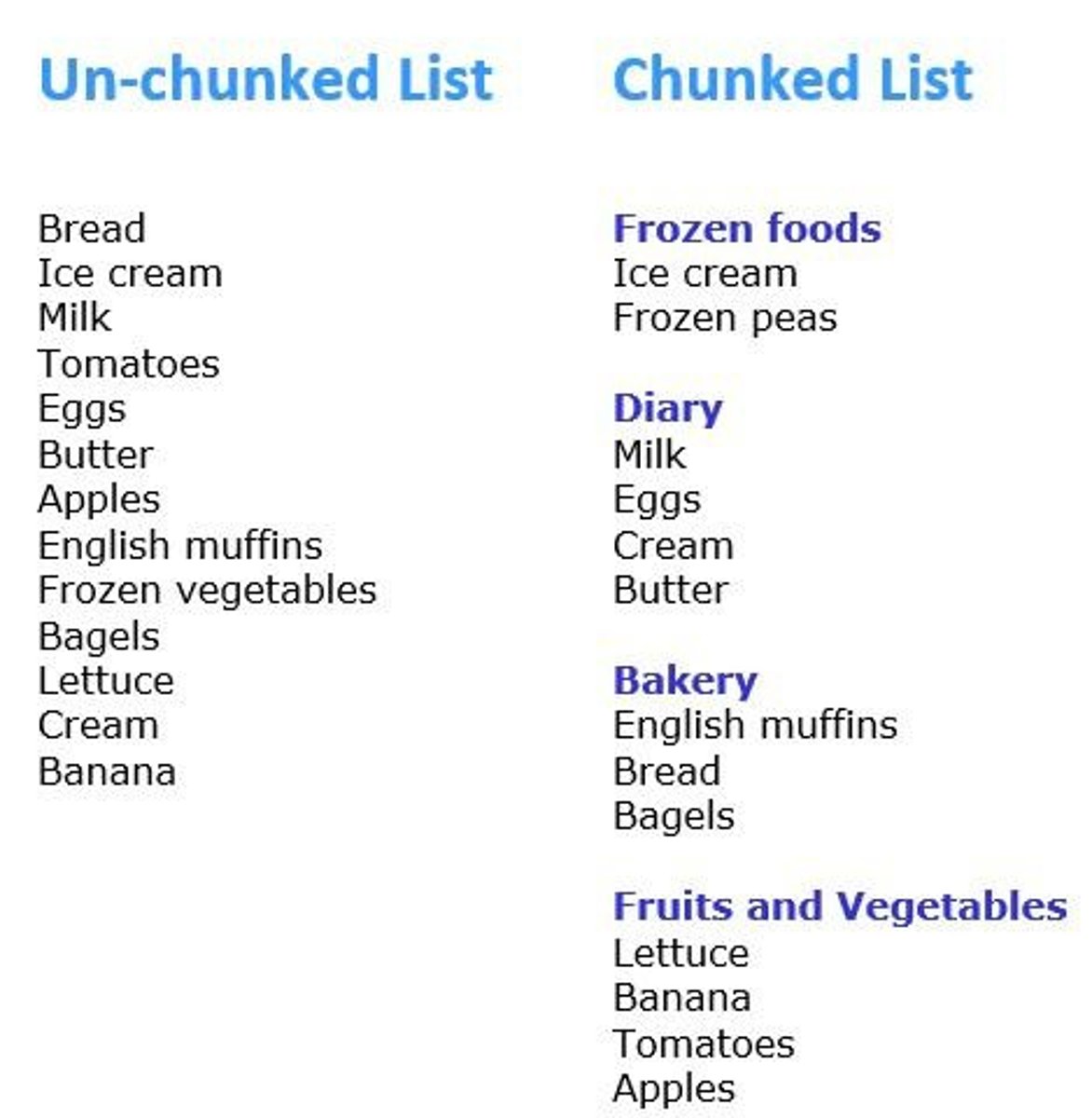
Chunking is a reading activity that involves breaking down a difficult text into manageable pieces. For example, students can read each sentence of a lengthy paragraph. The teacher can break up the paragraph into its individual sentences and have students focus on one sentence at a time.
Still learning (8)
You've started learning these terms. Keep it up!