BIO 319L Prac. 1
 Call Kai
 Learn
Learn Practice Test
 Spaced Repetition
 Match
Match Flashcards
 Knowt Play
1/62

Earn XP
Description and Tags
eku
Name | Mastery | Learn | Test | Matching | Spaced | Call with Kai | Chat |
|---|
No analytics yet
Send a link to your students to track their progress
63 Terms
Phylum Amoebozoa
Amoeba, Arcella, Difflugia
Nutrition= Heterotrophic
Locomotion= Pseudopodia
Phylum Euglenozoa
Euglena, Trypanosoma
Nutrition= A/H
Locomotion= Flagella
Phylum Plantae
Volvox
Nutrition= Autotrophic
Locomotion= Flagella
Phylum Dinoflagellata
Ceratium
Nutrition= Autotrophic
Locomotion= flagella
Phylum Apicomplexa
Plasmodium
Nutrition= Heterotrophic
NO locomotion
Parasitic
Phylum Ciliophora
Paramecium, Stentor, Vorticella
Nutrition= Heterotrophic
Locomotion= Cilia
Amoeba
(Phylum Amoebozoa)

Arcella
(Phylum Amoebozoa)

Difflugia
(Phylum Amoebozoa)

Euglena
(Phylum Euglenozoa)
Autotrophic

Trypanasoma
(Phylum Euglenozoa)
Heterotrophic
Causes sleeping sickness(all parasitic)

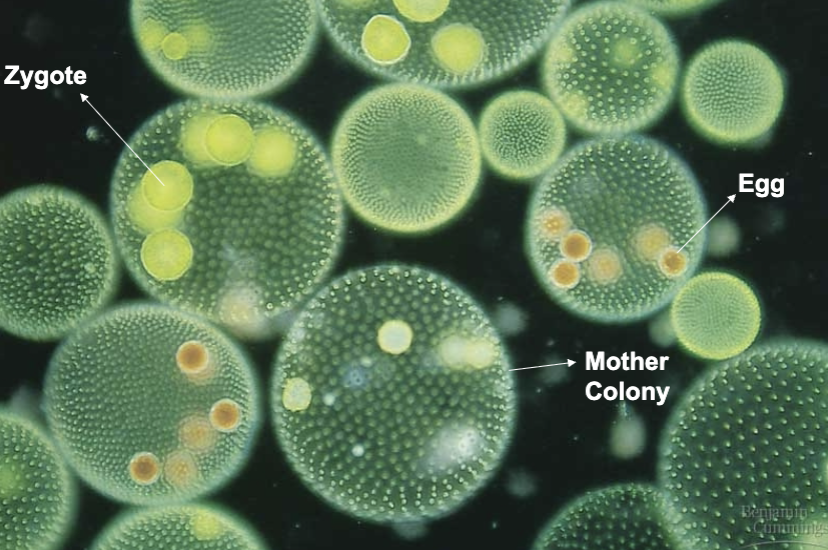
Volvox
(Phylum Plantae)
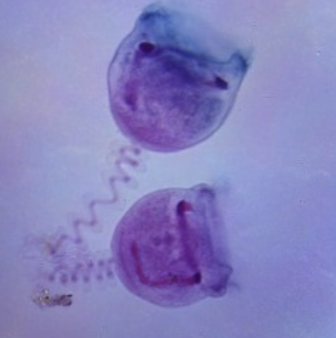
Ceratium
(Phylum Dinoflagellata)
(coral/marine&freshwater species)

Plasmodium
(Phylum Apicomplexa)
Causes Malaria

Paramecium
(Phylum Ciliophora)

Vorticella
(Phylum Ciliophora)
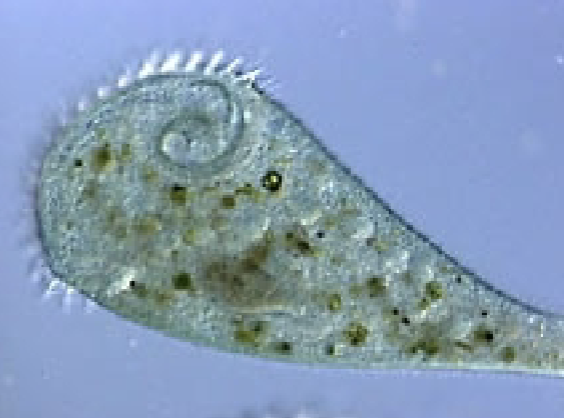
Stentor
(Phylum Ciliophora)
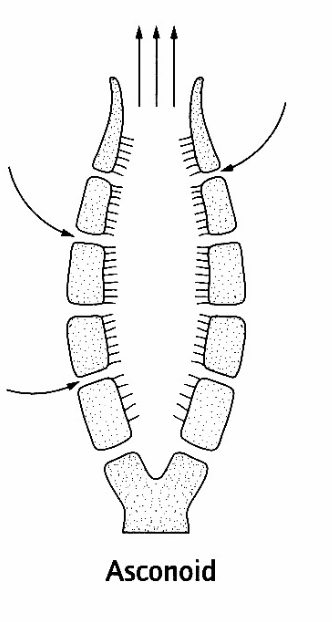
Asonoid
The simplest type of water circulation system that’s found in small, tube-shaped sponges.
Water moves in a single, direct path through the sponge structure.
Syconoid
Moderate complex water-circulation and filtration network found in sponges.

Leuconoid
The most complex type of water-circulating and filtering system found in sponges.


Class Calcarea
Canal Sys=Asconoid, Synconoid, Leuconoid
Skeletal Material= Spicules of Calcium Carbonate
(Leucosolenia)
Leucosolenia
Class Calcarea

Class Hexactinellida
Canal Sys= Synconoid, Leuconoid
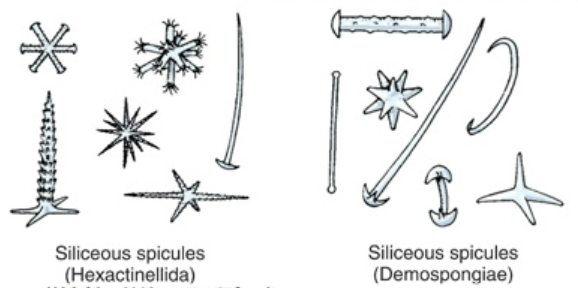
Skeletal Material= Silica Spicules
Euplectella
Euplectella
Class Hexactinellida

Class Demospongiae
Canal Sys= Leuconoid
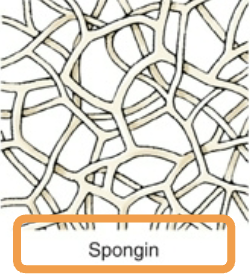
Skeletal Material= Silica Spicules, Spongin fibers, or Combination
Spongia (commercial bath sponge)
Cliona (boring sponge
Spongin
Spicules
Class Hydrozoa
Hyrda, Obelia, Physalia
-Solitary + Colonial
-Asexual Polyps + Sexual Medusae
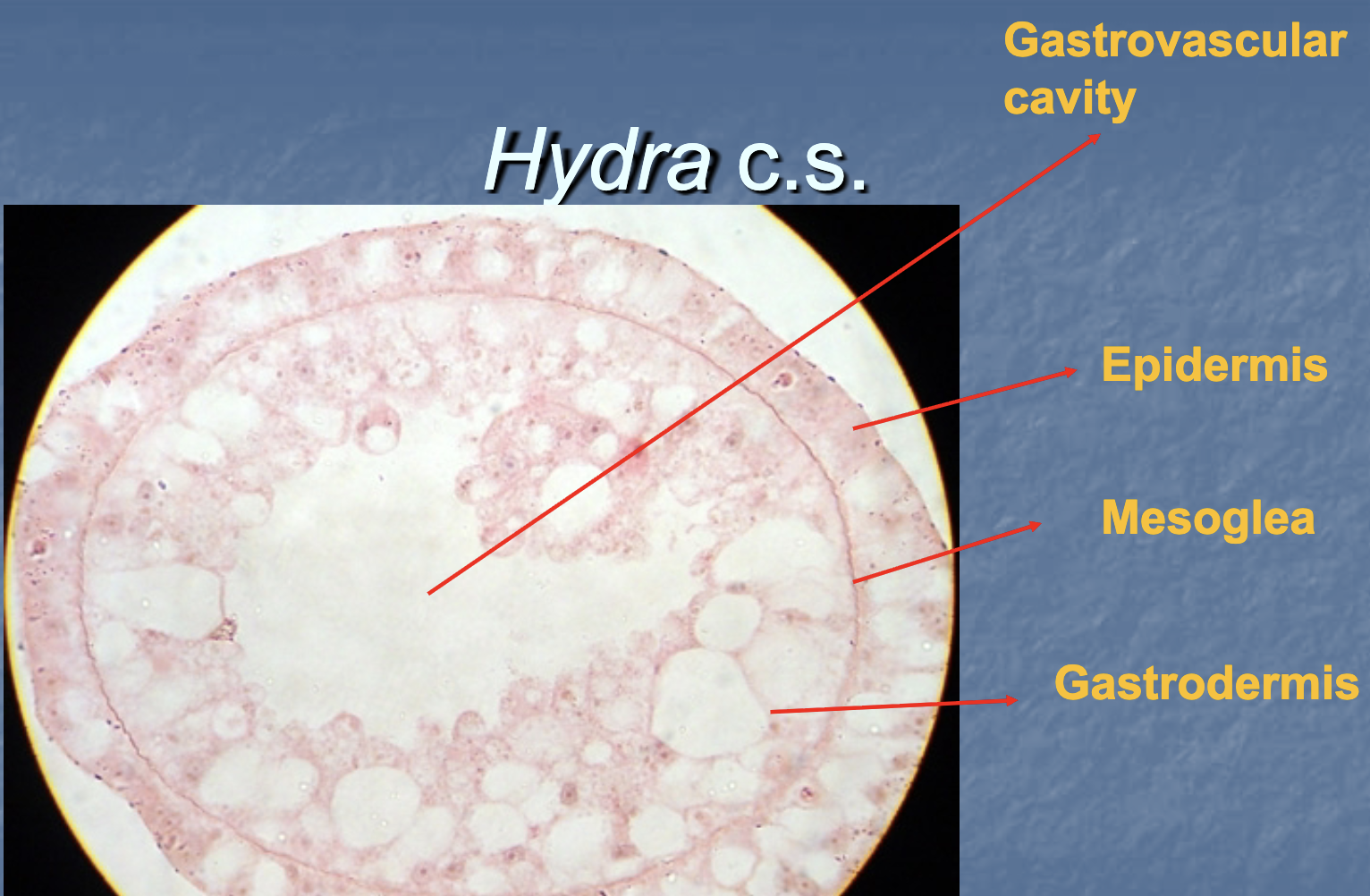
(Also can feature Hydra with bud)

Class Scyphozoa
(The true jelly fishes)
Aurelia
-Medusea
-Polyp stage reduced/absent
Class Scyphozoa Life Cycle

Aurelia - Planula larva
Class Scyphozoa

Aurelia - Scyphistoma
Class Scyphozoa

Aurelia - Strobila
Class Scyphozoa

Aurelia- Ephyra
Class Scyphozoa

Class Anthozoa
2 subclasses: Subclass Hexacorallia + Subclass Octocorallia
-Only Polyp
-Solitary or Colonial
Subclass Hexacorallia
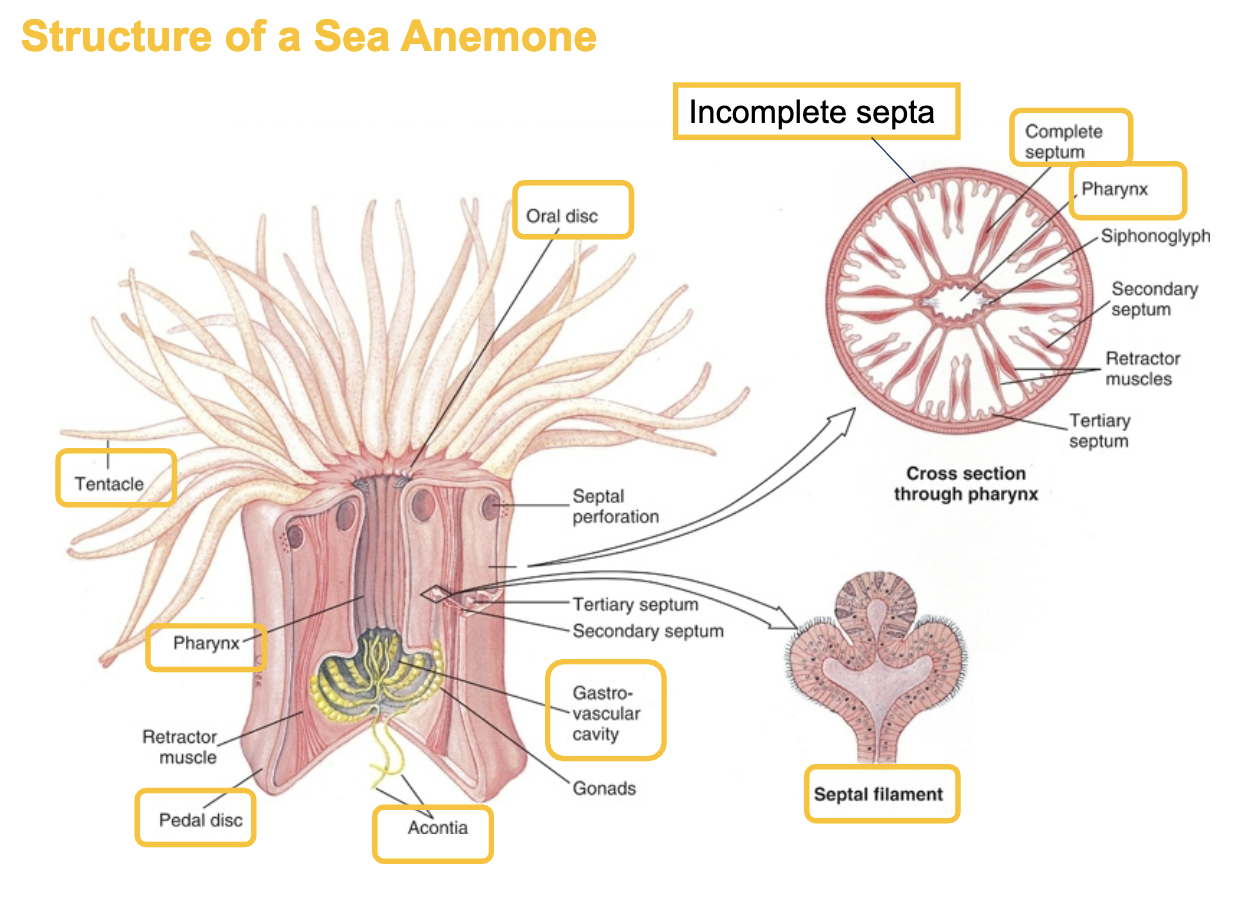
Sea Anemones + Hard Corals
Hexamerous Symmetry
Structure of Sea Anemones
Subclass Hexacorallia
Subclass Octocorallia
Soft Corals
Octomerous Symmetry
-almost all colonial
Phylum Platyhelminthes
C. Turbellaria, C. Trematoda, C. Cestoda
Parasitic
Digestive Sys.= Incomplete
Nervous Sys.= Ladder-like
Excretory Sys.= Protonephridia
Lacking= Respiratory Sys., Skeletal Sys., Circulatory Sys.
Reproduction= Most Monecious(M+F), Some Asexual
Class Turbellaria
Freeliving Flatworms and Planaria
Ventral Mouth (under the head)
Digestive Sys. Incomplete
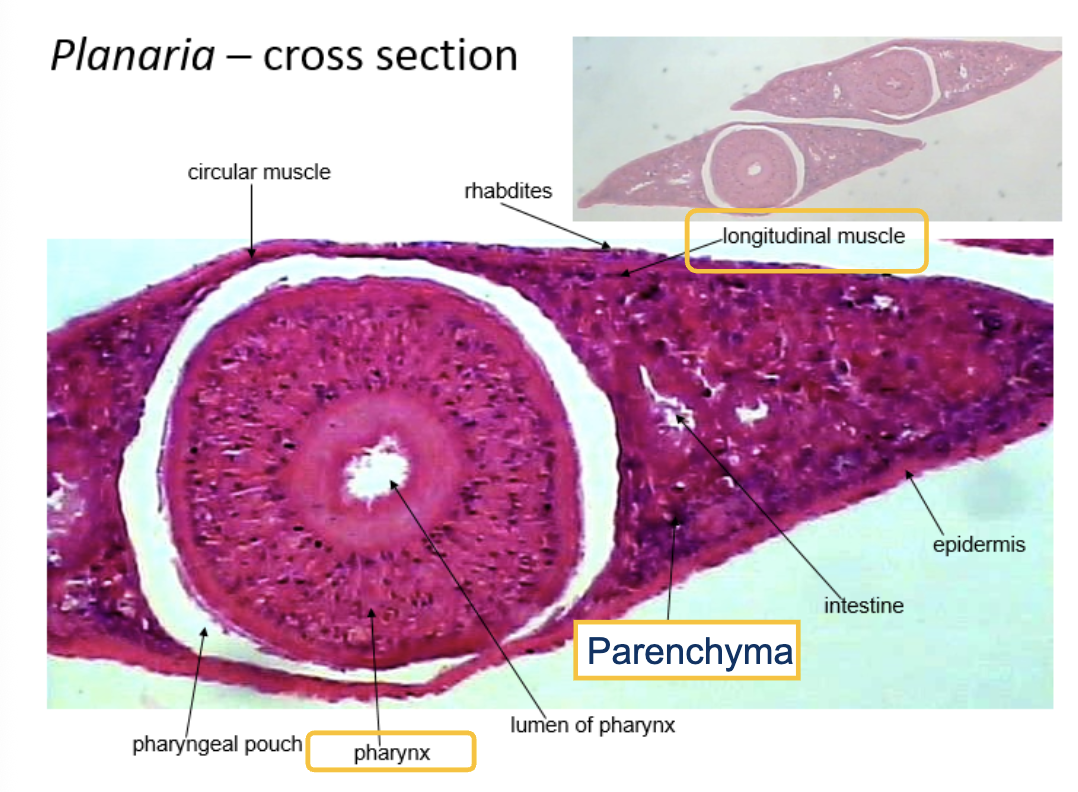
Planaria Flatworm
C. Turbellaria

Cross Section of Planaria
Acoelomate
Class Trematoda
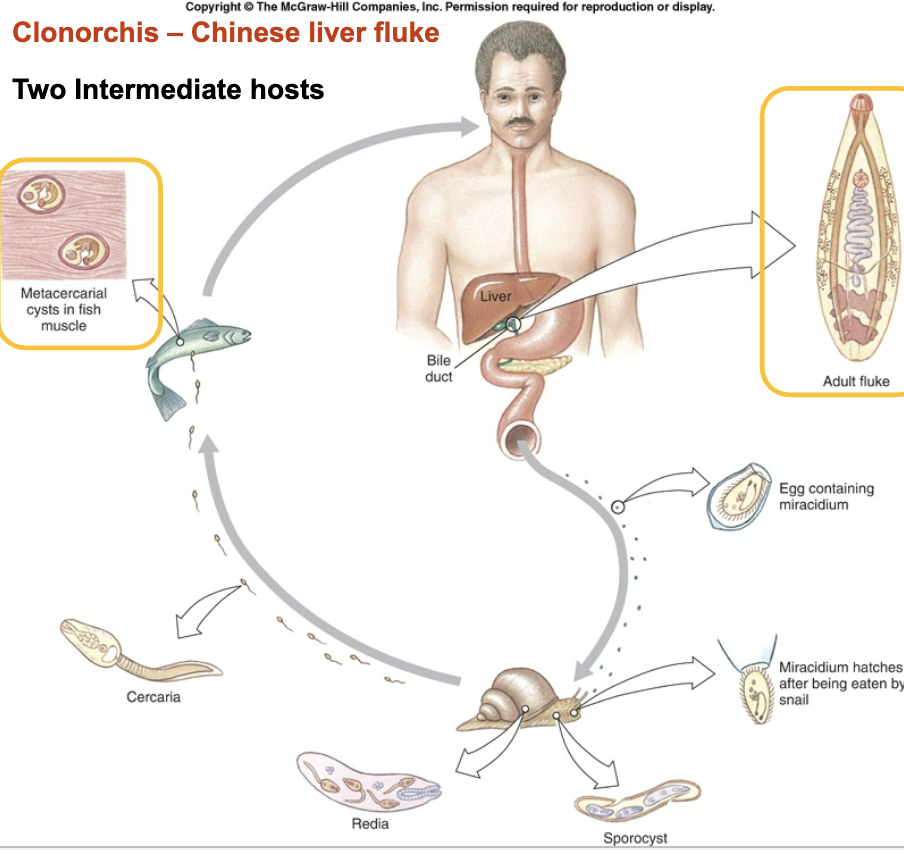
The Flukes, Clonorchis
Endoparasites (live in host)
Ventral sucker used for attachment
Clonorchis
C. Trematida

Chinese Liver Fluke
Clonorchis
C. Trematoda
Class Cestoda
Taenia (The Tapeworms)
Endoparasites
Body: Scolex and Proglottids
No Digestive Sys.

Scolex
C. Cestoda
Taenia
Known as the ‘head’
Structures used for attachment: hooks, suckers, rostellum

Proglottids
C. Cestoda
Taenia
Known as the ‘body’
Process of Strobilization=Strobila (Oldest to Newest)
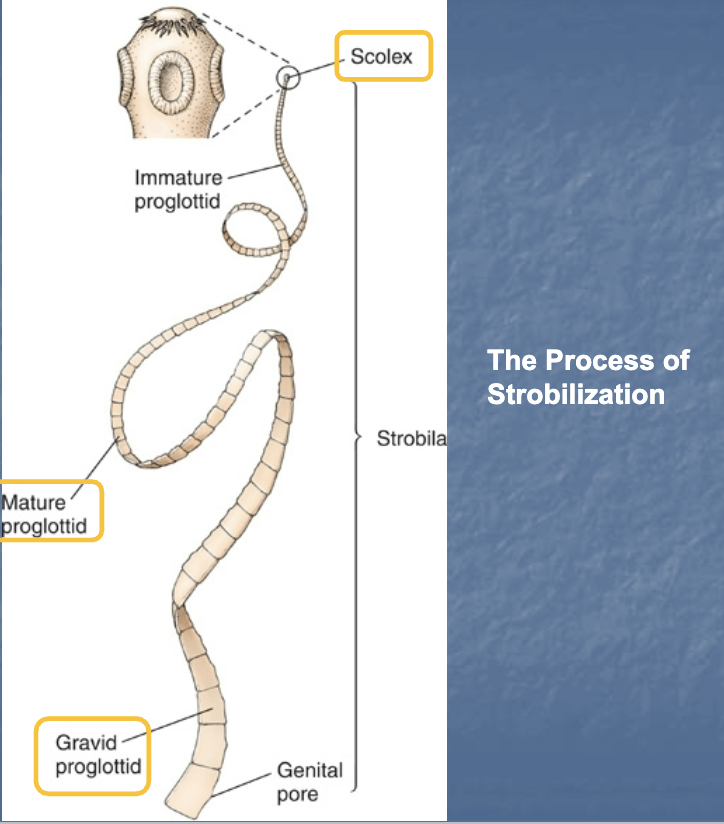
Mature Proglottid
C. Cestoda
Taenia
Newer segments that push the older ones further down the chain.

Gravid Proglottid
C. Cestoda
Taenia
Older segments at the far end, filled with fertilized eggs
Breaks off and passes through the host’s waste

Phylum Annelida
C. Polychaeta, C. Oligochaeta, C. Hirudinea
Found in Freshwater, Marine, Terrestrial habitats
Body: Vermiform, Bilaterally Symmetrical, Segmented
Triploblastic w/ Coelom (fluid)
Complete Digestive Sys.
Circulatory Sys. Closed
C. Polychaeta
Fanworms, Clam Worms
Mostly marine/free living
Parapodia- hair like bristles
Nereis
Phylum Annelida
C. Polychaeta
(Clam Worm)

Parapodia
Phylum Annelda
C. Polychaeta
Parapodia used for swimming/crawling
Setae used for defense/traction

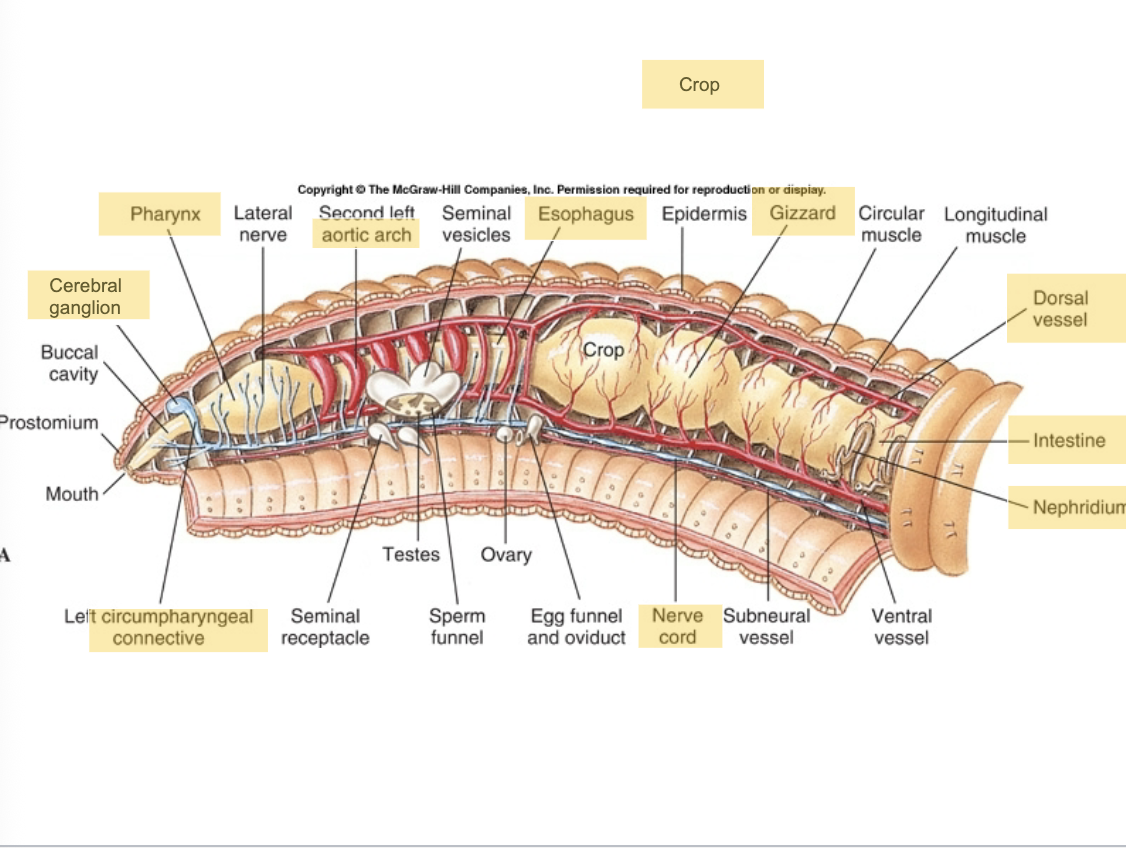
Class Oligochaeta
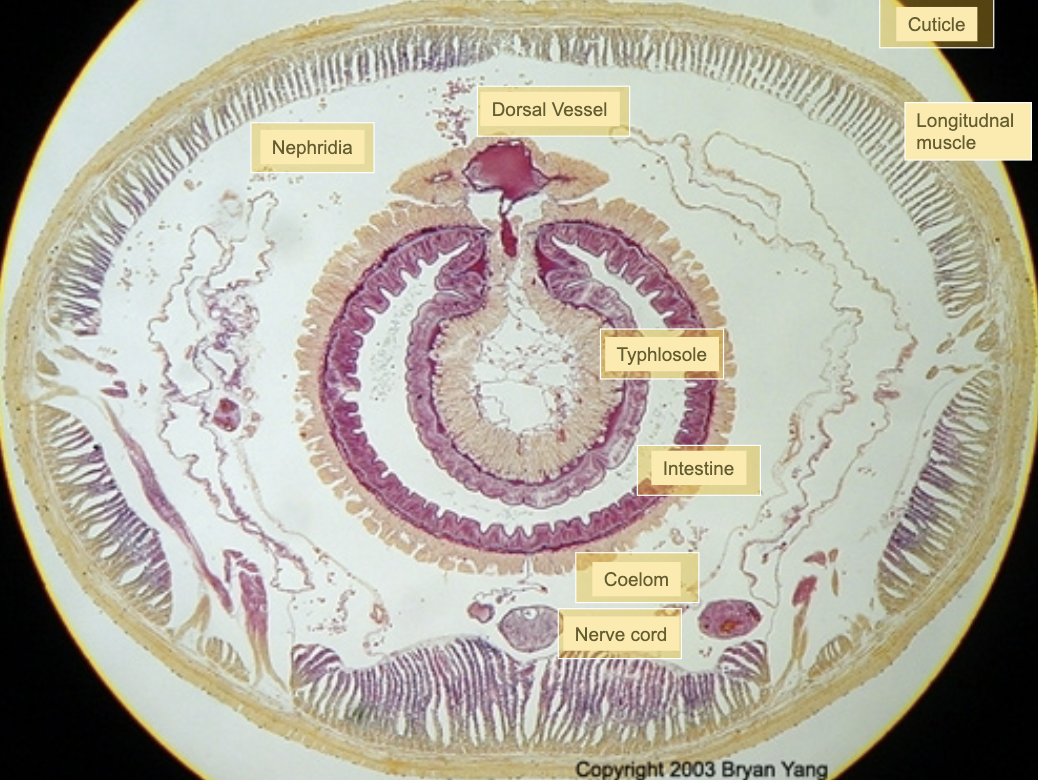
Earthworms + Freshwater Worms
Few have setae
No parapodia
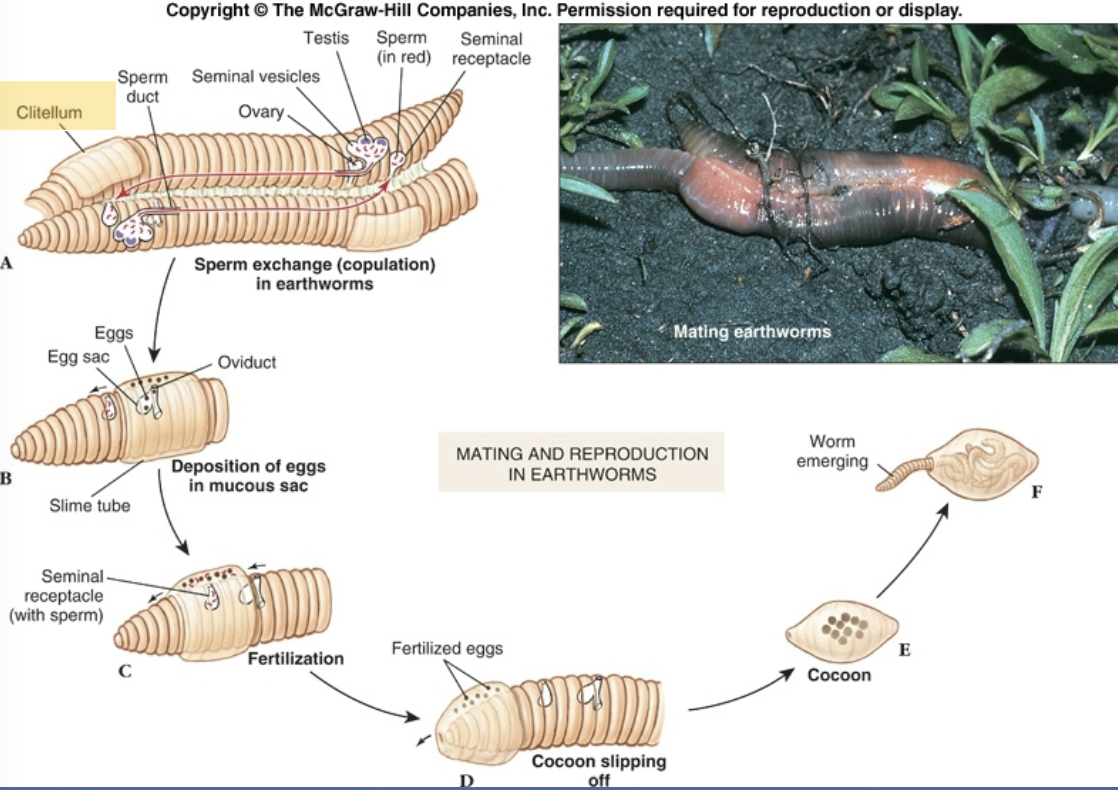
Clitellum is present (the band shows it at reproductive maturity)
Hermaphrodites (M+F) but cannot self-fertilize
Earthworm
C. Oligochaeta
Phylum Annelida
Earthworm Reproduction/Mating
C. Oligochaeta
Phylum Annelida
Class Hirudinea
Leeches
Ectoparasites (feed on outside of host)
Dorso-ventrally flattened with fixed # of body segments (34)
No Setae, No Parapodia
Clitellum(band) present only during reproduction
2 suckers= Anterior (front)/ Posterior (Back)
Leeches
C. Hirudinea
Phylum Annelida
