ACSM Pre-Participation Screening
 Call Kai
 Learn
Learn Practice Test
 Spaced Repetition
 Match
Match Flashcards
 Knowt Play
1/24

There's no tags or description
Looks like no tags are added yet.
Name | Mastery | Learn | Test | Matching | Spaced | Call with Kai | Chat |
|---|
No analytics yet
Send a link to your students to track their progress
25 Terms
Cardiovascular disease positive risk factors
age
family history
cigarette smoking
physical inactivity
bmi/waist circumference
blood pressure
lipids
blood glucose
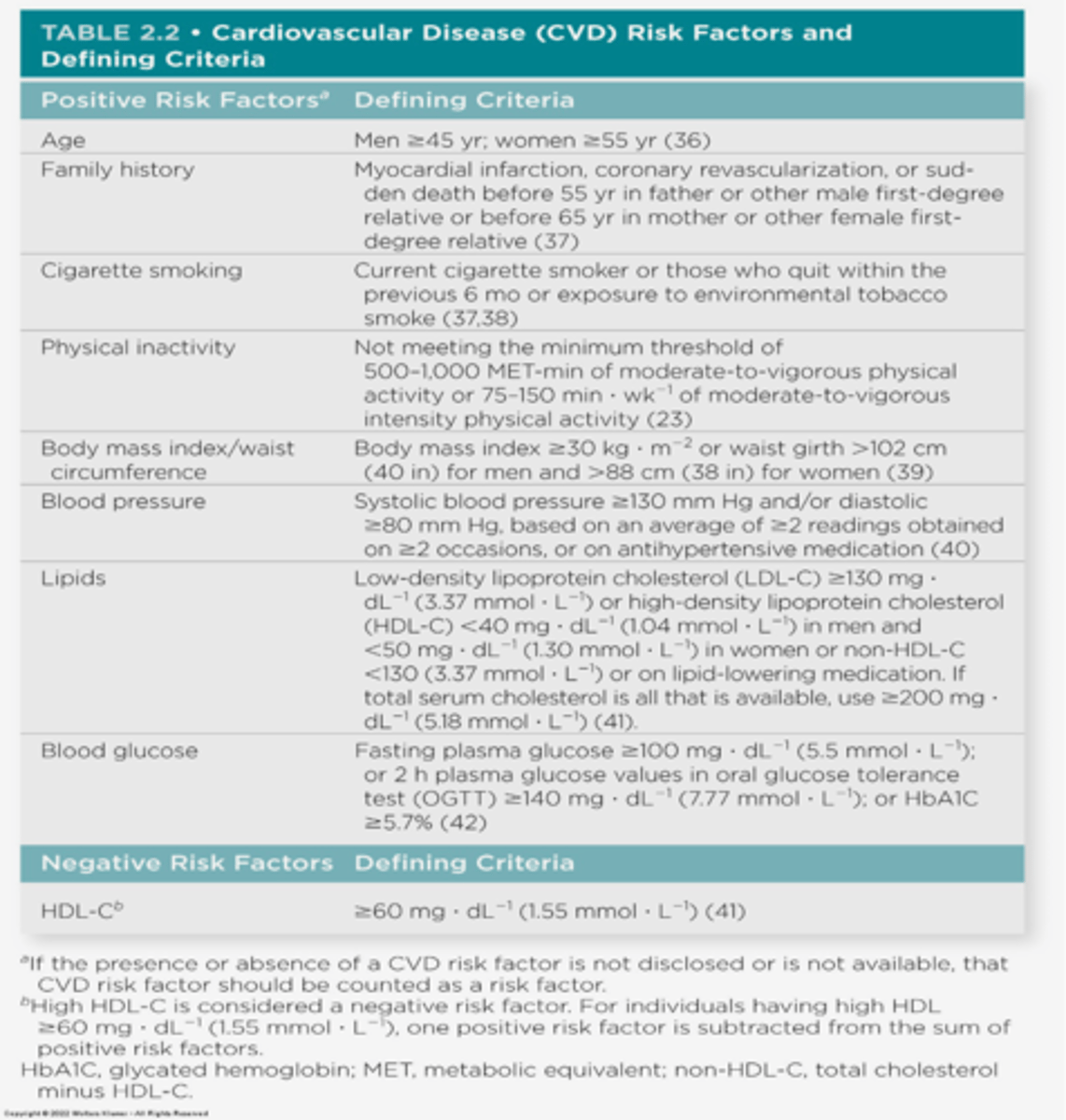
cardiovascular disease negative risk factors
HDL
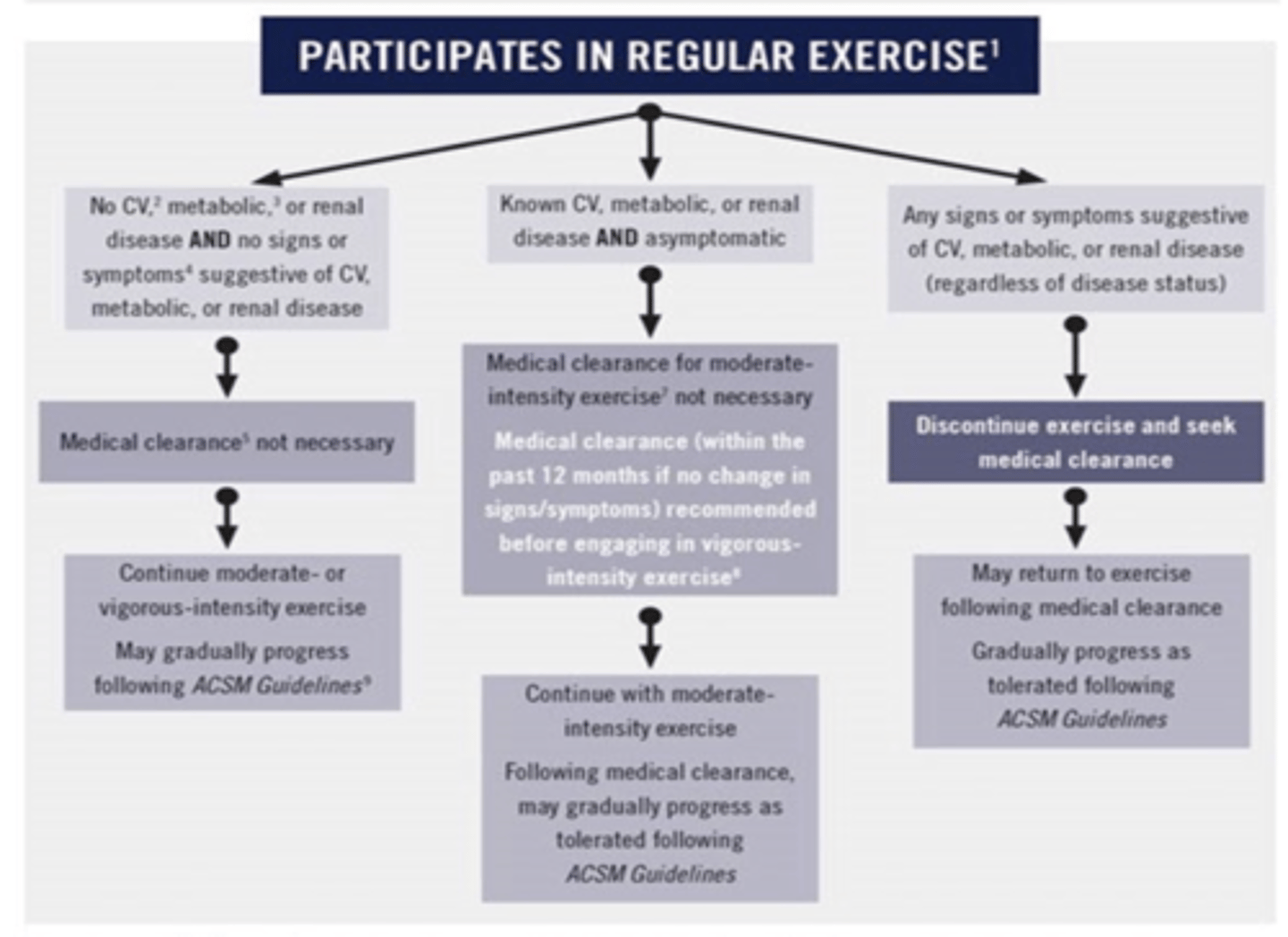
What is the new ACSM Algorithm based on?
-Current level of PA
-Presence of sign/symptoms or known CV, metabolic or renal disease
-Desired exercise intensity
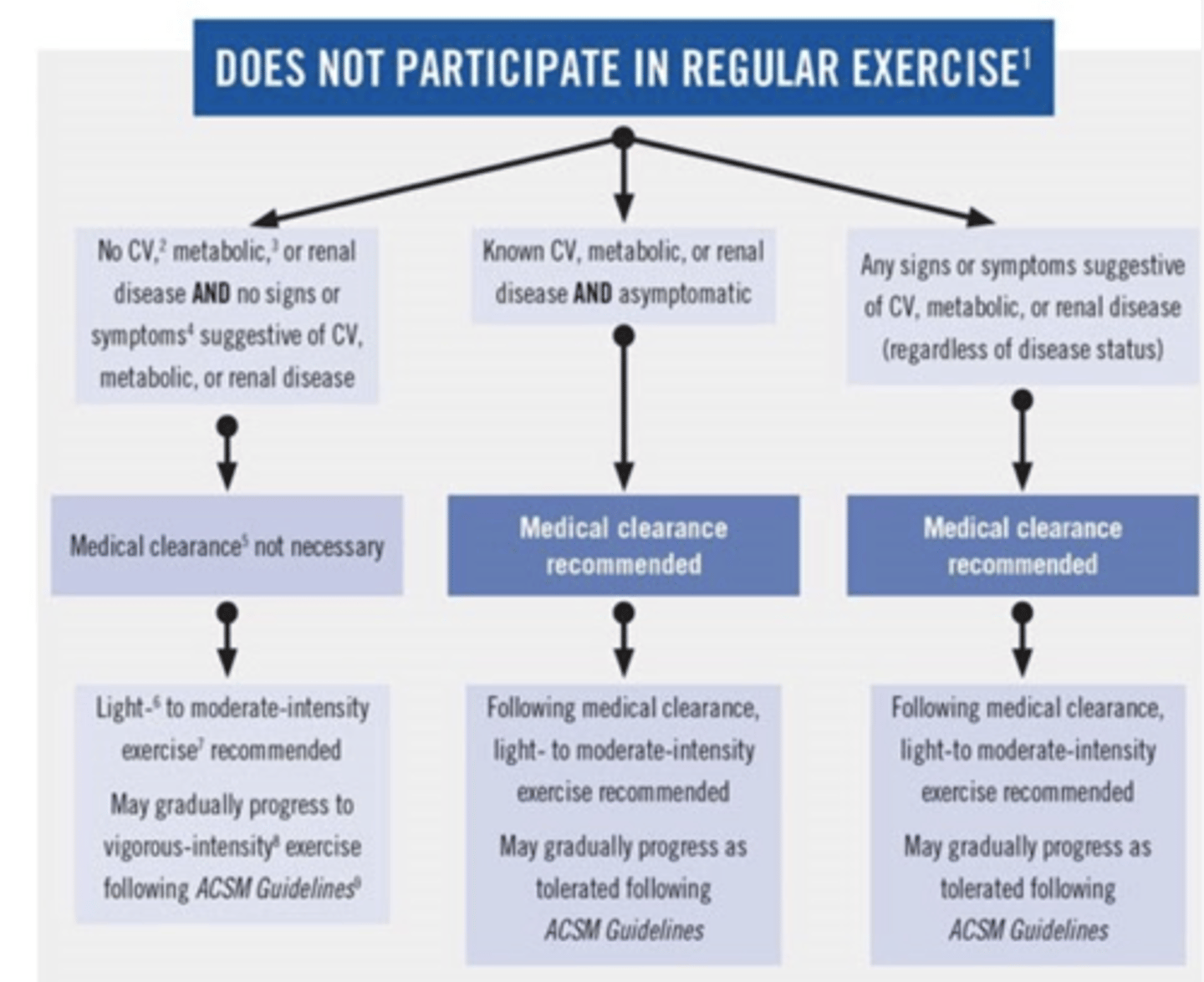
ACSM Algorithm participates in exercise
minimum exercise levels to be considered active
Exercise participation, performing planned, structured physical activity at least 30 min at moderate intensity on at least 3 d/wk for at least the last 3 months
how long have you performed exercise to be considered active?
3 months
how many days per week must you be active to be considered physically active
3 day per week
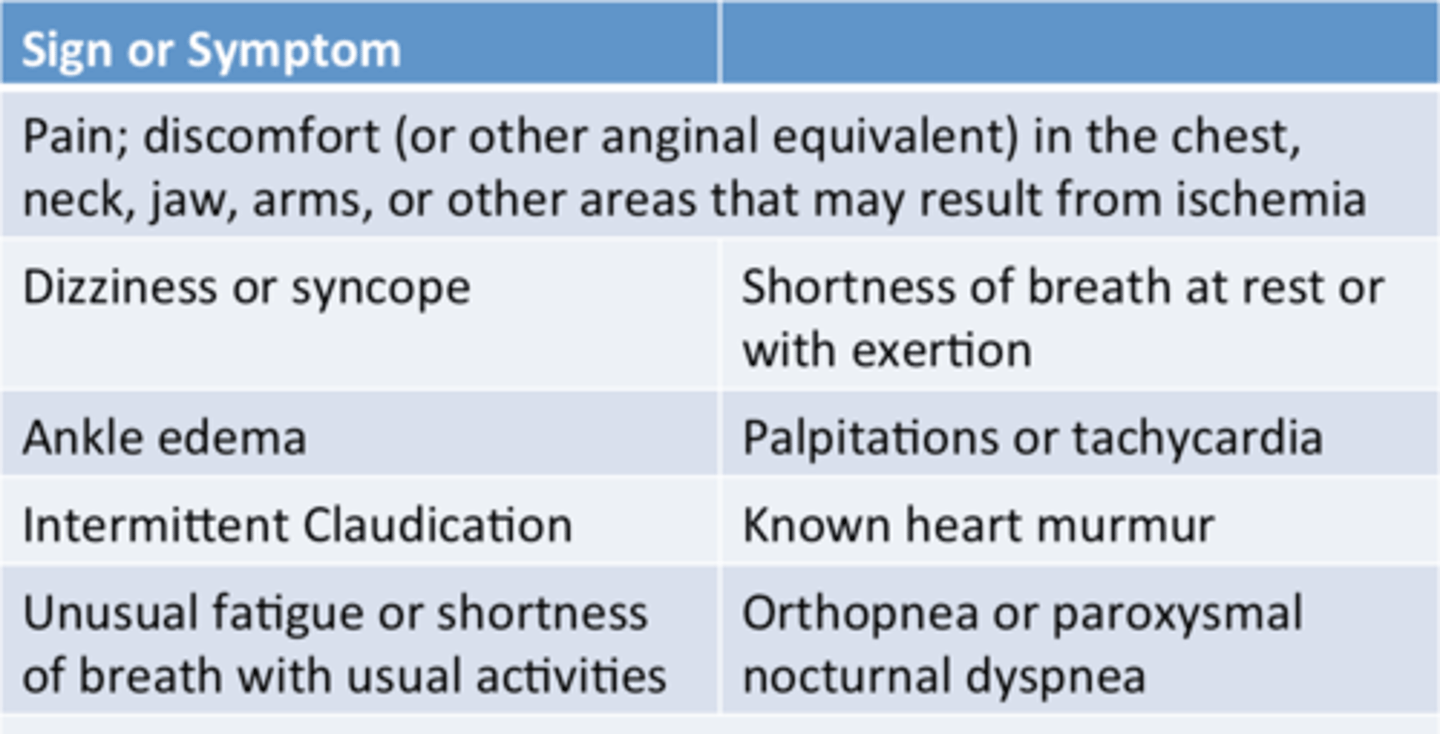
Signs and symptoms of disease
•Pain, discomfort (or other anginal equivalent) in the chest, neck, jaw, arms or other areas that may result from ischemia (lack of oxygen or blood flow)
•Shortness of breath at rest or with mild exertion
•Dizziness or syncope (fainting)
•Orthopnea or paroxysmal nocturnal dyspnea (shortness of breath during sleep)
•Ankle edema (swelling)
•Palpitations or Tachycardia
•Intermittent Claudication (angina of the leg)
•Known Heart Murmur
•Unusual fatigue or shortness of breath with usual activities
what may individuals confuse angina or ischema as?
heart burn
ischemia
Lack of blood flow
Where can ischemia cause pain?
neck, jaw arm, and back
Syncope
fainting/passing out
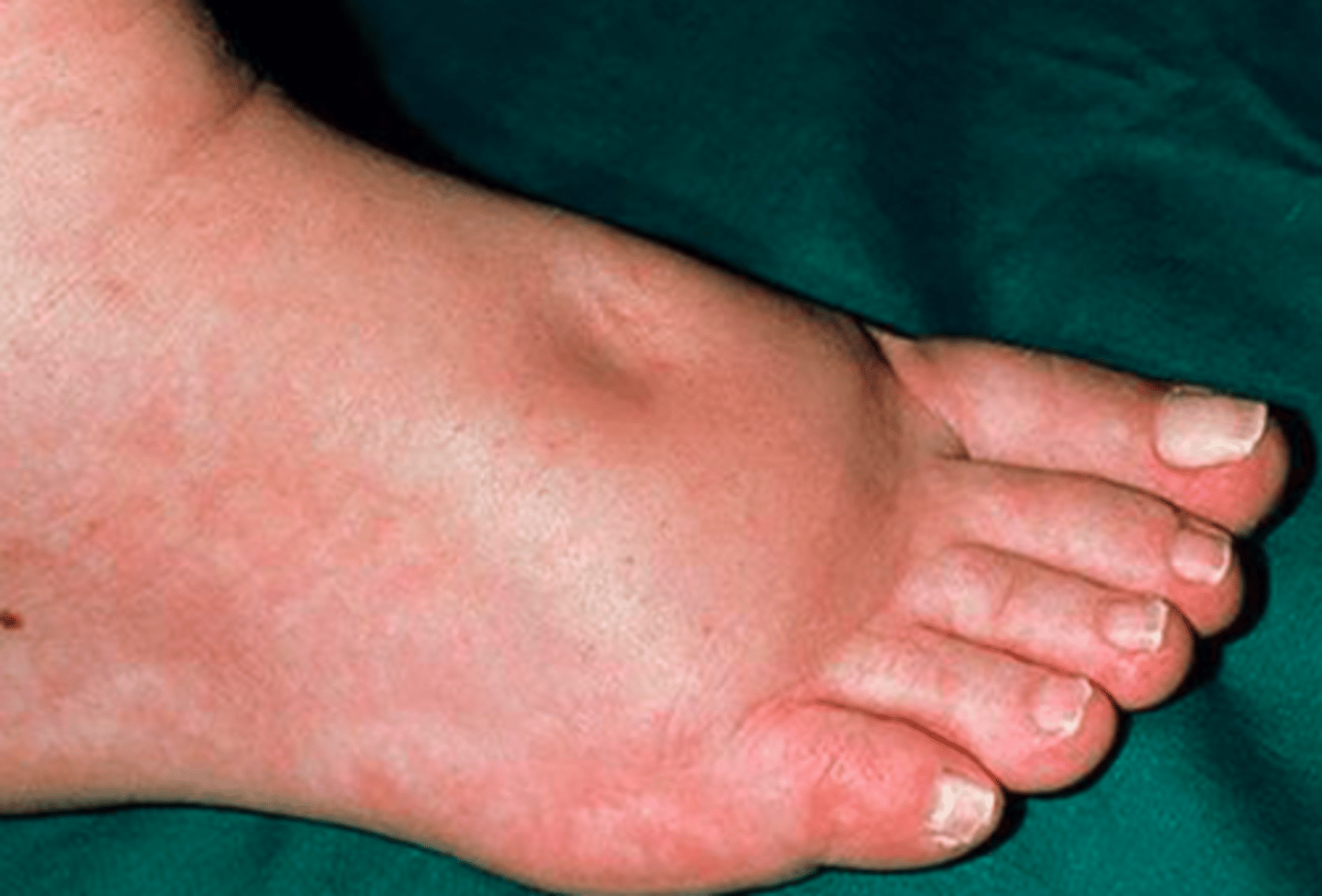
ankle edema
swelling of the ankle
intermittent claudication
sharp cramping in back of legs when activity begins
orthopnea
difficulty breathing when lying down
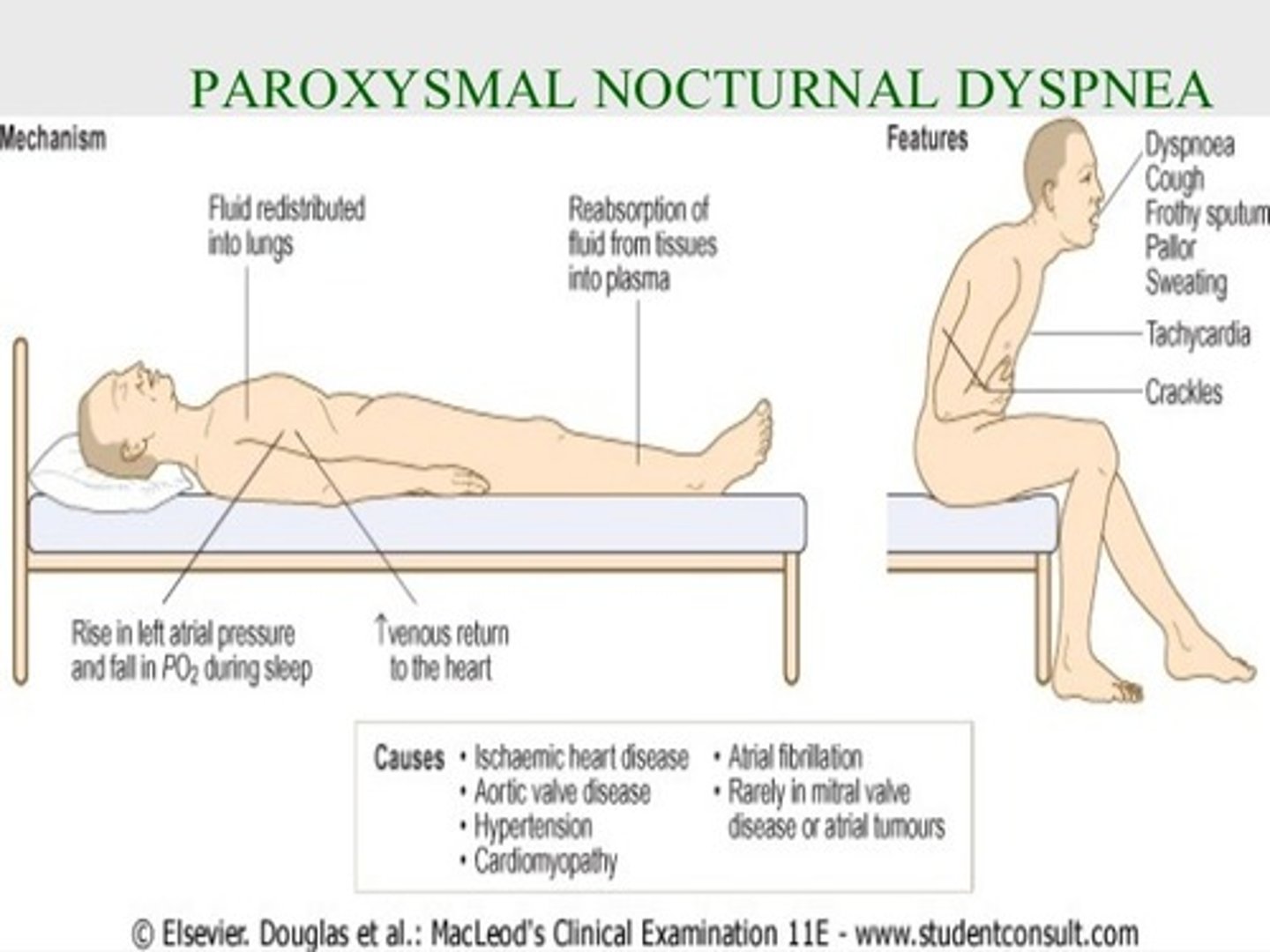
paroxysmal nocturnal dyspnea
Severe shortness of breath, especially at night after several hours of reclining; the person is forced to sit up to breathe.
-trouble breathing at night
heart murmur
an abnormal sound from the heart produced by defects in the chambers or valves
Palpitations or tachycardia
unexplained rapid increase in heart beat
ACSM Algorithm does not participate in exercise
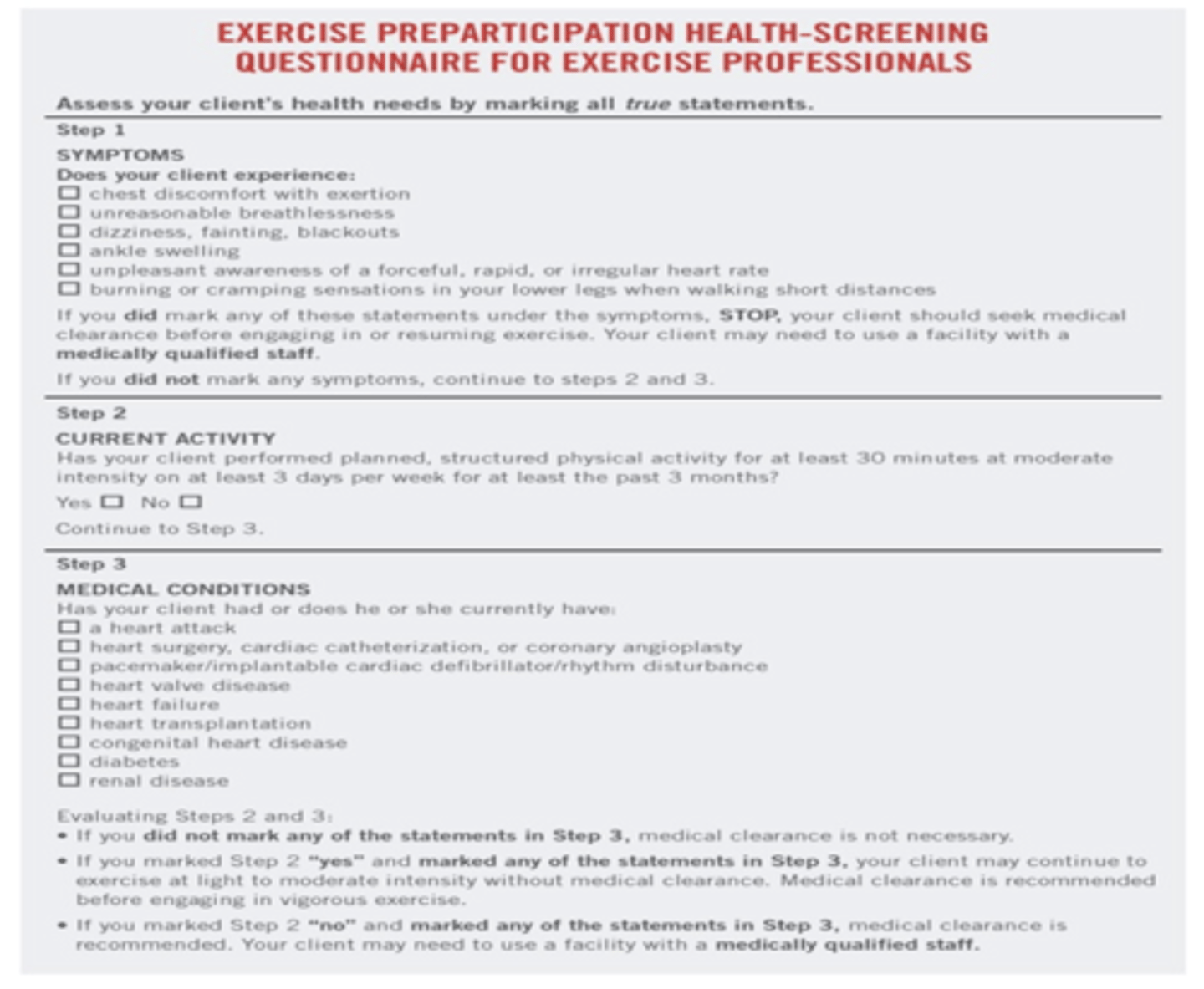
Exercise preparticipation health-screening questionaire
informed consent purpose
Provides client with complete information prior to obtaining agreement by client to accept a course of treatment or procedure
Components of informed consent
-Purpose and Explanation of Procedure
-Risks
-Benefits
-Confidentiality
Questionnaire
-ACSM Exercise Preparticipation Health Screening Questionnaire for Exercise Professionals
-ACSM Health History Questionnaire
-Par-Q+
medical professionals
•Sometimes it's appropriate for the individual to connect you to their medical professional or you can advise your patient to have a check up done by their physician to obtain biochemical markers
•Many individuals may not be aware of their biochemical markers and the numbers associated
Blood Glucose
Lipids
Lipoproteins
•Leave this up to the medical professionals, this is why we ask for medical clearance and do the essential screening
Comprehensive fitness evaluation
•Informed Consent
•Pre-Exercise Evaluation
•Resting Measurements
•Anthropometrics
•Measurement of CRF
•Measurement of Muscular Fitness
•Measurement of Flexibility
Measurement of Body Composition