Materials test 1
 Call Kai
 Learn
Learn Practice Test
 Spaced Repetition
 Match
Match Flashcards
 Knowt Play
1/44

There's no tags or description
Looks like no tags are added yet.
Name | Mastery | Learn | Test | Matching | Spaced | Call with Kai | Chat |
|---|
No analytics yet
Send a link to your students to track their progress
45 Terms
Design Intentions in Material Selection
Using materials deliberately to reinforce design principles like rhythm, repetition, scale, and unity.
ADAAG (ADA Accessibility Guidelines)
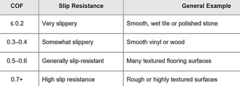
Guidelines suggesting measures/performance for accessibility, such as recommended floor Coefficient of Friction.
Coefficient of Friction (COF)
A measurement used to evaluate the slip resistance of floor surfaces.
Anthropometrics
The science of measuring the human body, serving as the foundation for ergonomics.

Ergonomics
Applied science investigating interactions between built form, task actions, and human body limits.
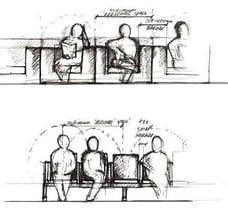
Proxemics
The study of spatial distances between people as they communicate in space.
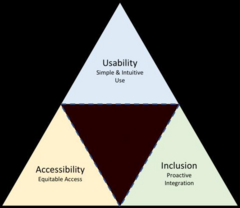
Universal Design
Design approach aiming to accommodate all people through accessibility, intuitive use, and equity.
5 Senses in Spatial Perception
Visual (sight), Tactile (touch), Thermal (comfort), Auditory (hearing), and Olfactory (smell).
Haptic Sensation
Tactile interaction with materials, influenced by air movement, temperature, and humidity.
Stair Nosing Profile Function
A material change on a stair edge that enhances safety and surefootedness.
Sick Building Syndrome
Health issues caused by toxic vapor off-gassing, often worsened by poor HVAC systems.
Volatile Organic Compounds (VOCs)
Chemicals released from adhesives, paints, and solvents causing respiratory and systemic health issues.

ASHRAE Standard for Acceptable IAQ
Air with no harmful contaminant levels where 80%+ of exposed people express satisfaction.
Material Safety Data Sheets (MSDS)
Manufacturer documents published by ANSI detailing material safety and hazardous components.
Biomimicry
Imitating nature's methods and structures as inspiration for design and production.
Life-Cycle Assessment (LCA)
Evaluating environmental impacts across extraction, manufacturing, use, transport, and disposal.
7 Environmental Sustainability Strategies
Local, Natural/Synthetic, Rapidly Renewable, Reclaimed, Recycled, Upcycled, and Low-VOC materials.
Sound Diffusion
When sound originates from a single source and spreads out into surrounding areas.
Sound Attenuation
Sound waves bouncing and reflecting throughout a space, gradually losing strength.
Sound Absorption
The ability of interior materials and surfaces to absorb sound waves.
Sound Transmission
Unabsorbed sound passing through materials into surrounding spaces, causing noise pollution.
Acoustic Placement Strategy
Ceiling treatments are most effective for large rooms; wall treatments for small rooms.
Decibel (dB)
The unit used to measure sound intensity.
Absorption Coefficient Scale
A rating from 0 (no sound absorbed) to 1 (all sound absorbed).
Sound Transmission Class (STC)
A numeric rating evaluating an assembly's ability to reduce sound transmission; higher is better.
Patina
Surface condition produced on a material by age, wear, or exposure to natural elements.
Cellular Structure Influence
Determines technical properties like porosity, density, hardness, flammability, and moisture resistance.
Compressive vs. Tensile Strength
Compressive resists pushing/crushing forces; tensile resists pulling/stretching forces.
Density
The weight of a material relative to its volume or mass.
Dimensional Movement
Relative expansion or contraction between adjoining materials that designers must accommodate.
Ductility
A material's ability to be shaped or impacted without breaking.
Durability
Ability of a material to withstand wear, damage, and environmental conditions over time.
Elasticity
The ability of a material to return to its original shape after deformation.
Emissivity
Measurement (0-1) of how well a material releases heat versus reflecting it.
Flame and Smoke Spread Ratings
Classifications (such as NFPA/UL Class A, B, C) defining fire safety performance.
Material Stability
Ability to remain dimensionally inert during changes in temperature, moisture, or force.
Thermal Conductivity
Speed at which heat moves through a material (measured in BTU); higher rates feel colder.
Thermal Transmittance
How easily heat passes through an entire structural assembly or building material.
Workability
A material's degree of resistance to being cut, drilled, sanded, planed, or shaped.
Factors Influencing Material Cost
Availability, transportation, manufacturing, installation, maintenance, and life-cycle duration.
LEED Certification
A rating system evaluating environmental sustainability and performance in building design and material selection.
Permeability
The rate at which liquids or gases pass through a material's cellular structure.
Modulus of Elasticity
A measurement of a material's stiffness and resistance to elastic deformation under load.
Off-Gassing
The release of trapped chemicals or VOCs into interior air from manufactured materials.
Flame Spread Index (FSI)
A numeric rating measuring how rapidly fire propagates across the surface of a material.